
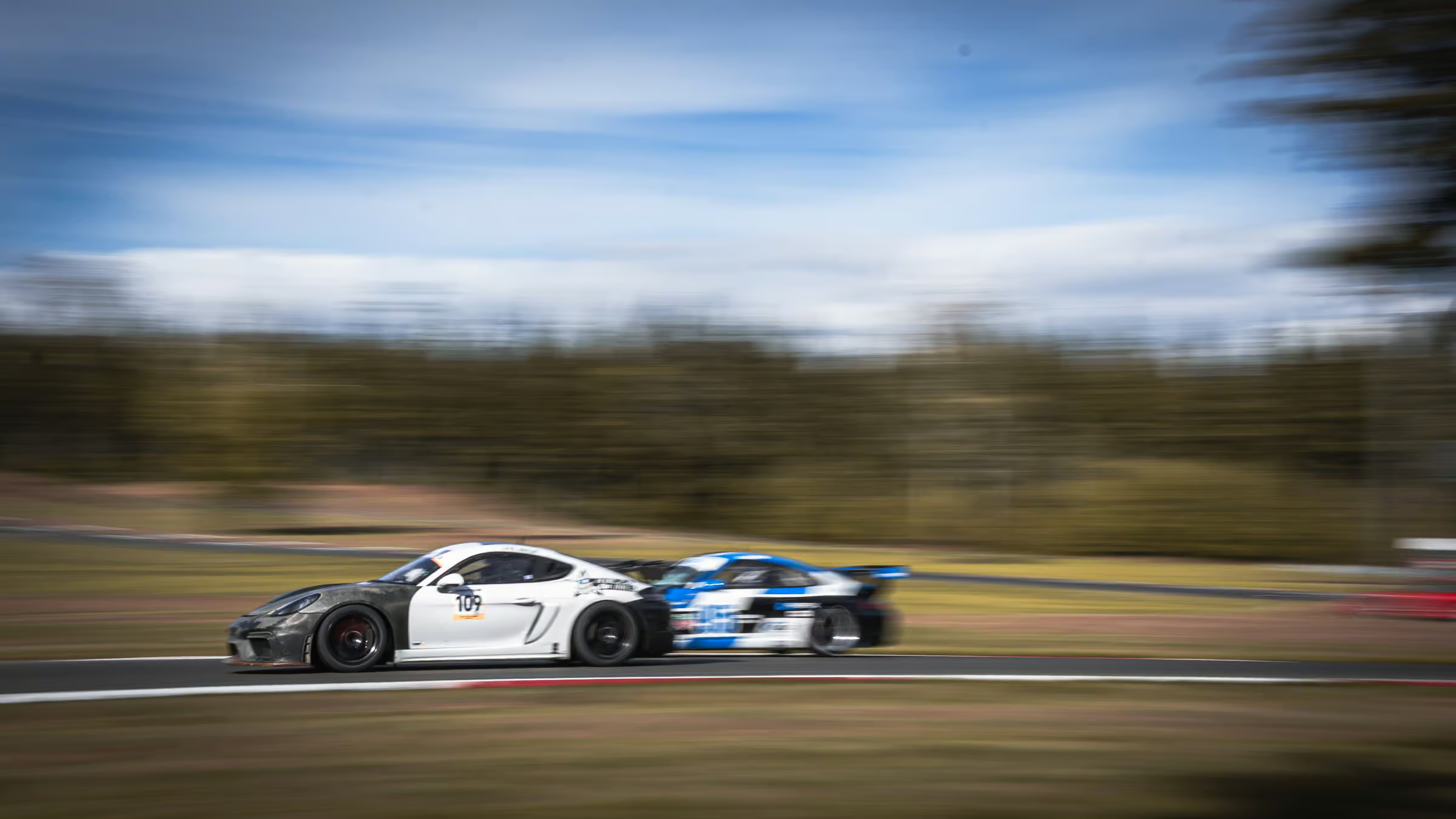
We bought a wrecked GT4 race car.
Not a GT4 race car with a story. Not a GT4 race car with “some assembly required.” A 2020 Porsche 718 Cayman GT4 Clubsport MR that had been hit hard enough at Road Atlanta to end its day, its season, and — as far as most people were concerned — its career.
The previous owner, Thad Berger, did what serious racers do. He assessed the damage, made the economic call, and moved on to a GT3 Cup car.
We made a different call.
This is the story of that car: what a Clubsport MR actually is, what it takes to bring one back from the dead properly, and why this specific car has become the standard our whole shop is measured against.
First, What Is a Clubsport MR?
Some context first, because “Clubsport” gets used loosely. A Clubsport is a customer race car built by Porsche Motorsport itself — designed, assembled and supported as a race car from day one, in the same factory ecosystem that produces the 911 GT3 Cup. The GT4 part of the name is the category: SRO’s GT4 class, the global formula for production-based GT racing that sits one step below GT3. When you buy a Clubsport, you are not buying a car and a pile of parts. You are buying into a factory program — documentation, parts supply, software and support included.
For this generation, Porsche offered the 718 GT4 Clubsport in three trim levels. The Trackday was built for track days and club events — factory race car underneath, but specified for running hard without a rulebook: simpler, more forgiving, and not homologated for competition (we know this one well; our previous GT4 Clubsport was a Trackday). The Competition is the full racing version — homologated for GT4 series around the world, with the adjustable motorsport electronics, equipment and setup range that real competition demands. And at the top sits the MR: the Competition car, developed further by Manthey-Racing with carbon-fiber bodywork and refined aerodynamics. Three flavors of the same idea, sharpened for three different jobs. Ours is the sharp one.
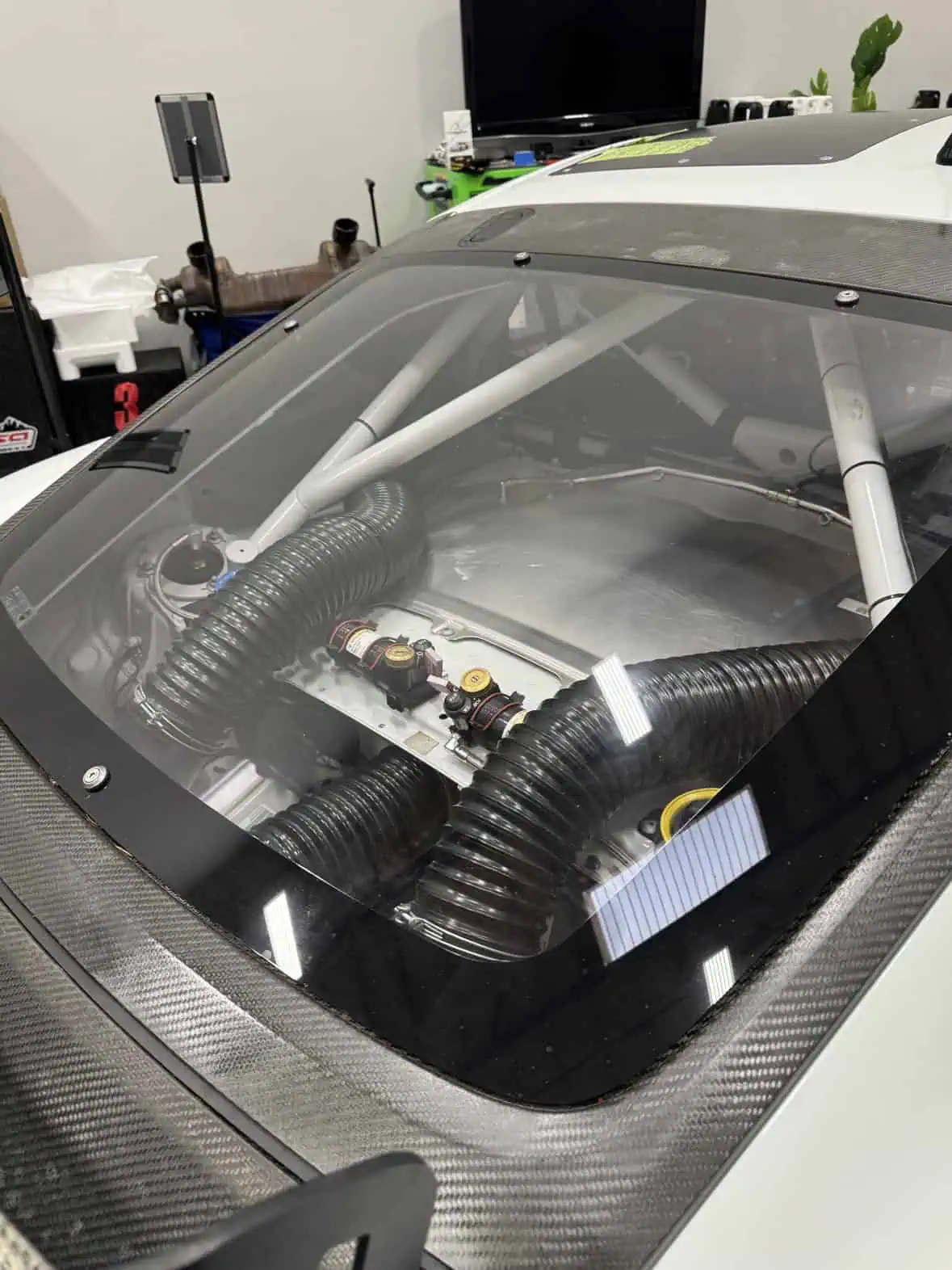
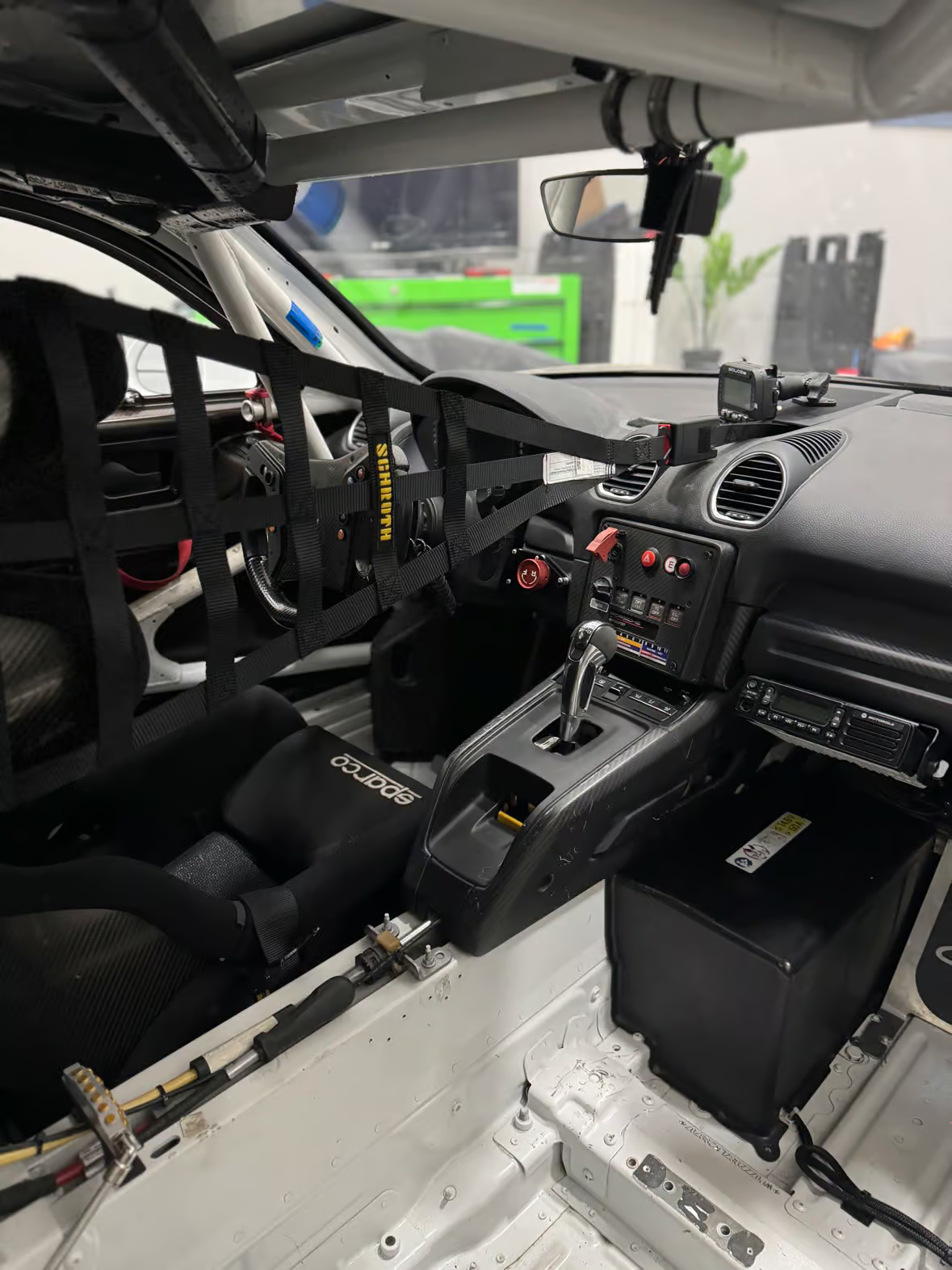
The 718 Cayman GT4 Clubsport is Porsche Motorsport’s factory-built race car based on the GT4 road car — and “factory-built” is doing real work in that sentence. This is not a street car we converted. It was assembled as a race car: welded-in roll cage, racing safety cell, fire system, air jacks, a motorsport wiring loom, and a 3.8-liter flat-six that shares its architecture with the road car’s engine but lives an entirely different life.
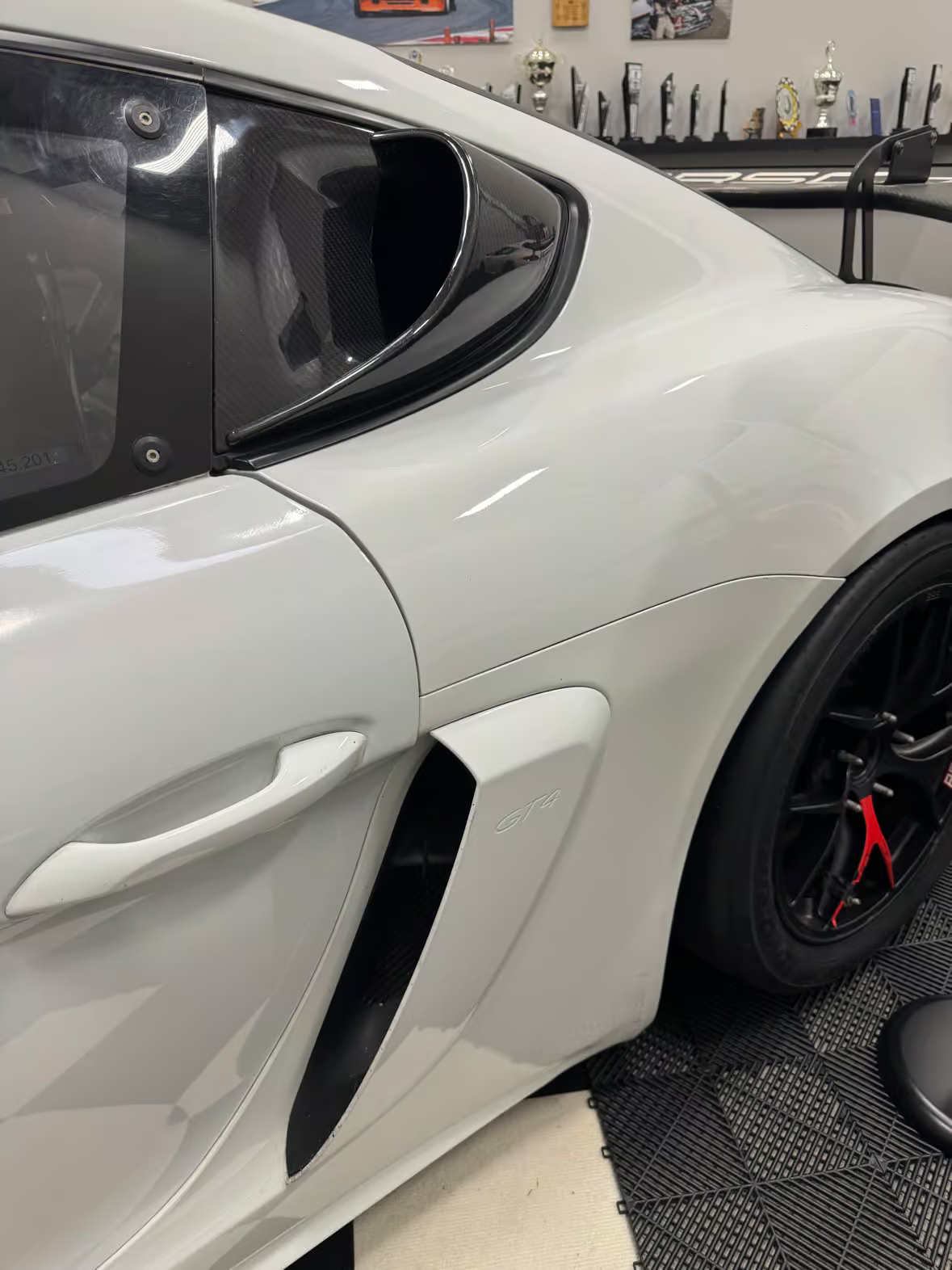
The MR takes that car one step further. MR stands for Manthey-Racing — the Nürburgring-based outfit that runs Porsche’s factory GT programs — and the MR package is their development of the Clubsport: extensive carbon-fiber bodywork including the front clip, fenders, doors and rear wing, developed aerodynamics, and a chassis setup refined by the same people who set up cars for Le Mans.
When people in our shop talk about “the standard,” this is what they mean. Porsche Motorsport North America plus Manthey-Racing is the combination that built this car. Every other car we touch gets measured against how this one was done.
The Car, By the Numbers
- Car: 2020 Porsche 718 Cayman GT4 Clubsport MR (Typ 982)
- Engine: 3.8-liter flat-six, water-cooled, 425 hp at 7,500 rpm, 425 Nm at 6,600 rpm
- Transmission: 7-speed PDK, motorsport calibration
- Chassis: Factory welded roll cage, Recaro racing seat, Schroth harness, fire suppression system, air jack system
- Brakes & suspension: Fully homologated Clubsport specification
- Body: Manthey-Racing carbon-fiber front clip, fenders, doors and rear wing
- Electronics: Cosworth ICD display and motorsport data logging, PMNA-supported PIWIS diagnostics
Numbers only tell part of it. A Clubsport is a system — every part of the car assumes every other part will be maintained to factory motorsport standards, on factory motorsport intervals, with factory documentation. That assumption drives everything that follows in this story.
The Wreck, and the Bet
At a Hoosier Super Tour weekend at Michelin Raceway Road Atlanta, another car spun in oil and collected the GT4 in the passenger door. That is the kind of hit that bends more than bodywork. It is the kind of hit that makes a car a “mechanic’s special” — sold as-is, worth a fraction of a running car, with the difference made up entirely of unknowns.
Most people looked at those unknowns and saw risk. We looked at them and saw the actual business we are in.
Racer on Rails exists to run factory-built race cars at a national level. If we could not take a bent Clubsport and return it to factory standard — documented, verified, every system gone through — then the rest of our claims about expertise were just marketing. This car was a chance to prove, not posture.
So we bought it.
What Actually Showed Up
Honesty matters here, because this is where resurrection stories usually get romanticized.
The car came to us through Race Cars for You, and their team was straightforward about it from the start: the car had been collected from the previous shop in pieces — a ton of pieces, in their words — with all kinds of things missing. Not just the crash-damaged parts. Small things. Hardware. Trim. The thousand details that separate a race car from a pile of very expensive components.
That is the reality of a mechanic’s special. The purchase price is the beginning of the invoice, not the end of it. Anyone who tells you different has not done one.
The Rebuild: No Shortcuts, Because Shortcuts Are Expensive
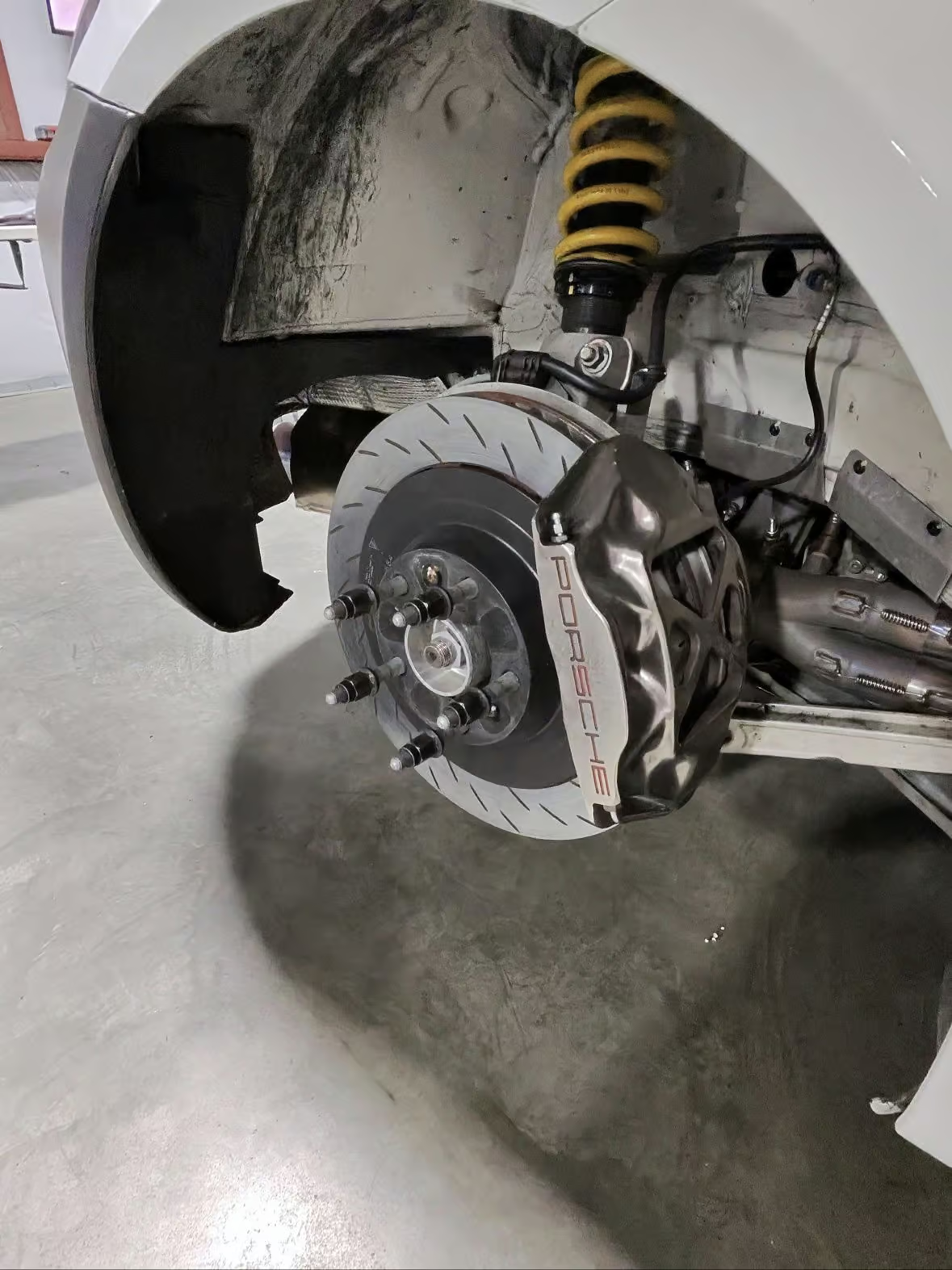
The rebuild followed one rule: return the car to factory specification, using factory information, and document everything. Where a part was damaged, it was replaced with the correct part. Where a part was missing, we found the correct part — not a substitute that “should work.”
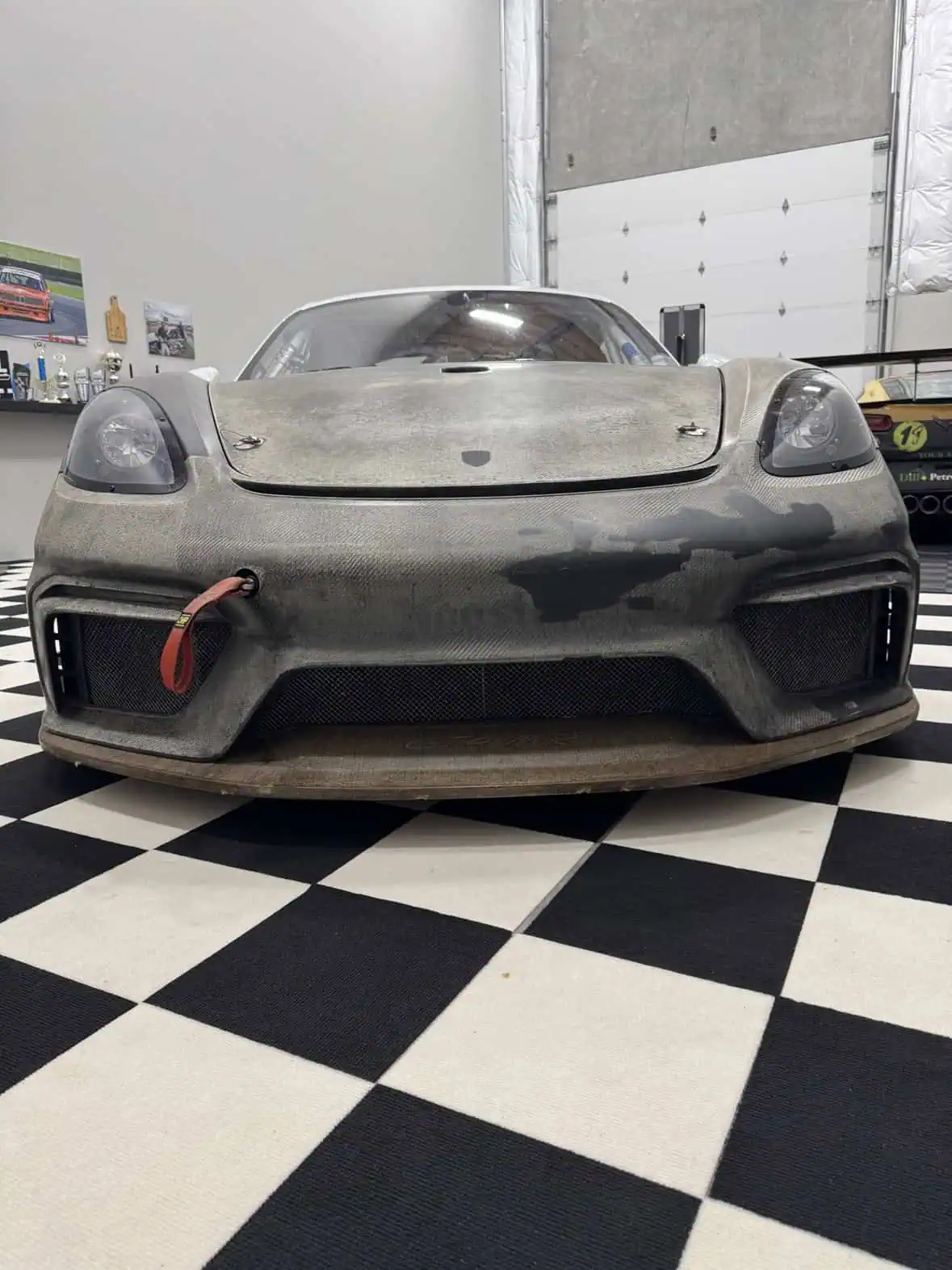
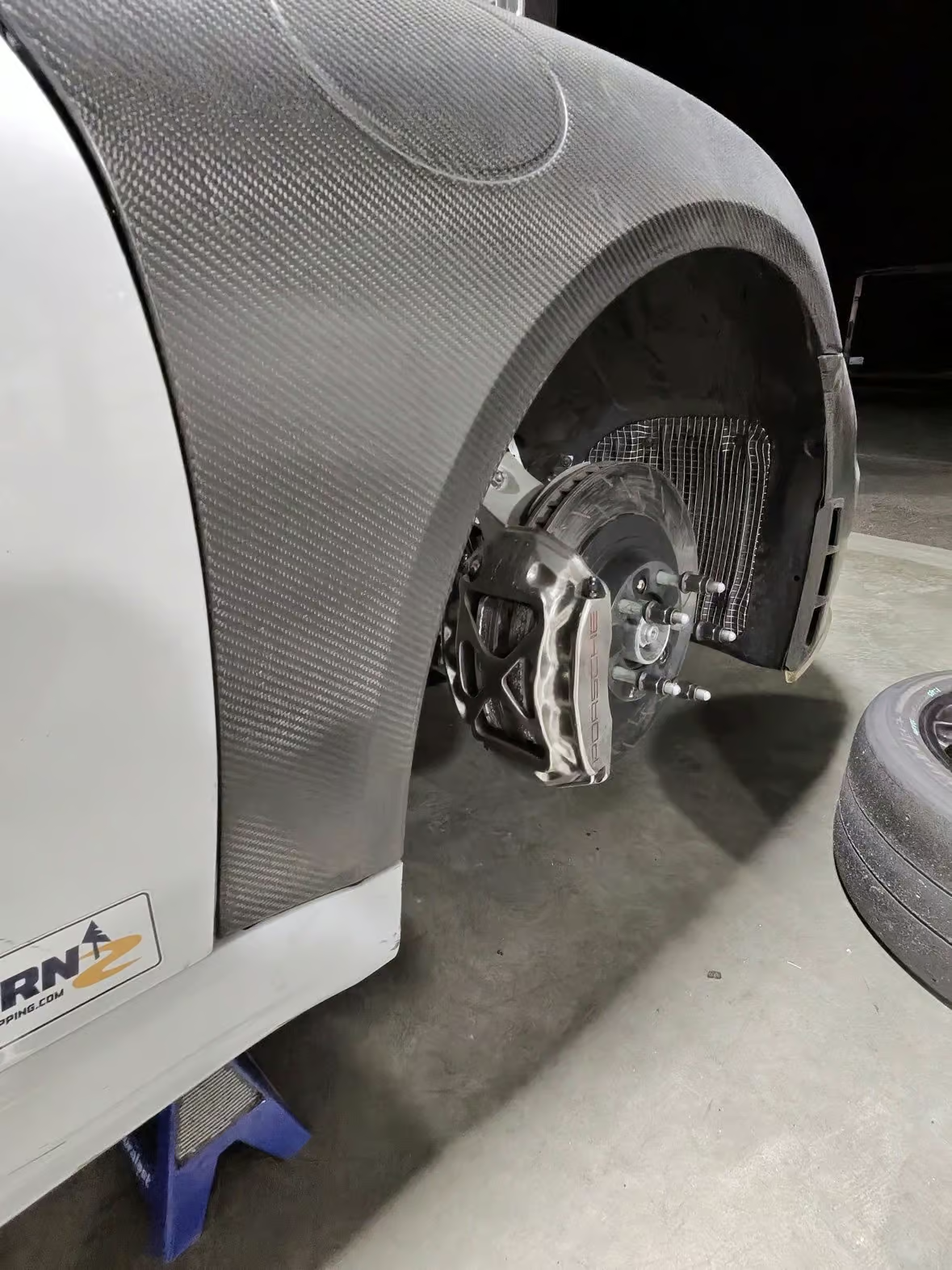
The front end is the obvious example. The MR’s carbon front clip is a Manthey-Racing component set, and the rebuild panels went on in raw, unpainted carbon. We have left them that way. Partly because paint adds nothing to how the car works, and partly because the raw carbon tells the truth about what this car is: a working race car that was rebuilt properly, not a showpiece pretending it was never hurt.
Underneath, the work was less photogenic and more important. The cage was inspected. Safety systems were gone through end to end — harness, seat, fire system. Cooling, brakes, suspension pickup points, steering: every system that a door hit can silently reach was checked against the factory manual, torqued to factory specification, and recorded.
One upgrade we made without hesitation: the exhaust. The car now runs Dundon’s full race exhaust system, and it sounds amazing — a 3.8-liter flat-six with its voice fully uncorked. Factory specification got this car right in almost every way. The soundtrack was the exception.
A Steering Wheel, and What It Taught Us
One detail deserves its own section, because it captures the whole philosophy.
The steering wheel that arrived with the car was not the factory wheel. It was a replacement from another builder, and it was missing functions the factory wheel carries — including the radio and acknowledge buttons the driver uses constantly in a race. The cord was frayed. For a street car, that is an annoyance. For a race car, it is a systems problem: the wheel is an interface, and the interface was wrong.
So the hunt began — for an original wheel, through every channel we have. In parallel, we traced the factory repair path, which runs through bf1systems in the UK, the electronics firm behind these wheels, under a Porsche Motorsport service bulletin. Two tracks, one standard: the car ends up with a correct, fully functional factory wheel.
That is the difference between fixing a car and finishing a car. A missing radio button will never show up in a photograph. It shows up at 140 mph when your driver needs to answer the pits.
The Factory Ecosystem Behind the Car
Here is the part of Clubsport ownership that does not appear on a spec sheet.
A factory race car comes with a factory information ecosystem: the technical manual, the parts catalog, a running library of service bulletins and updates issued by Porsche Motorsport, software for the Cosworth dash and data systems, and a support structure at Porsche Motorsport North America behind all of it. Registered owners get access. The access is not automatic, and it is not casual — it is a professional system, run for professional programs.
We did the work to get this car registered properly and to bring its full factory documentation into our team’s library, organized the same way we now organize documentation for every car we manage: per-car, complete, and available to the technicians actually turning the wrenches. When a bulletin exists for this car, we know. When a component has a factory service life, we know that too.
This is what “done right” looks like when nobody is watching. Not the photograph. The file cabinet.
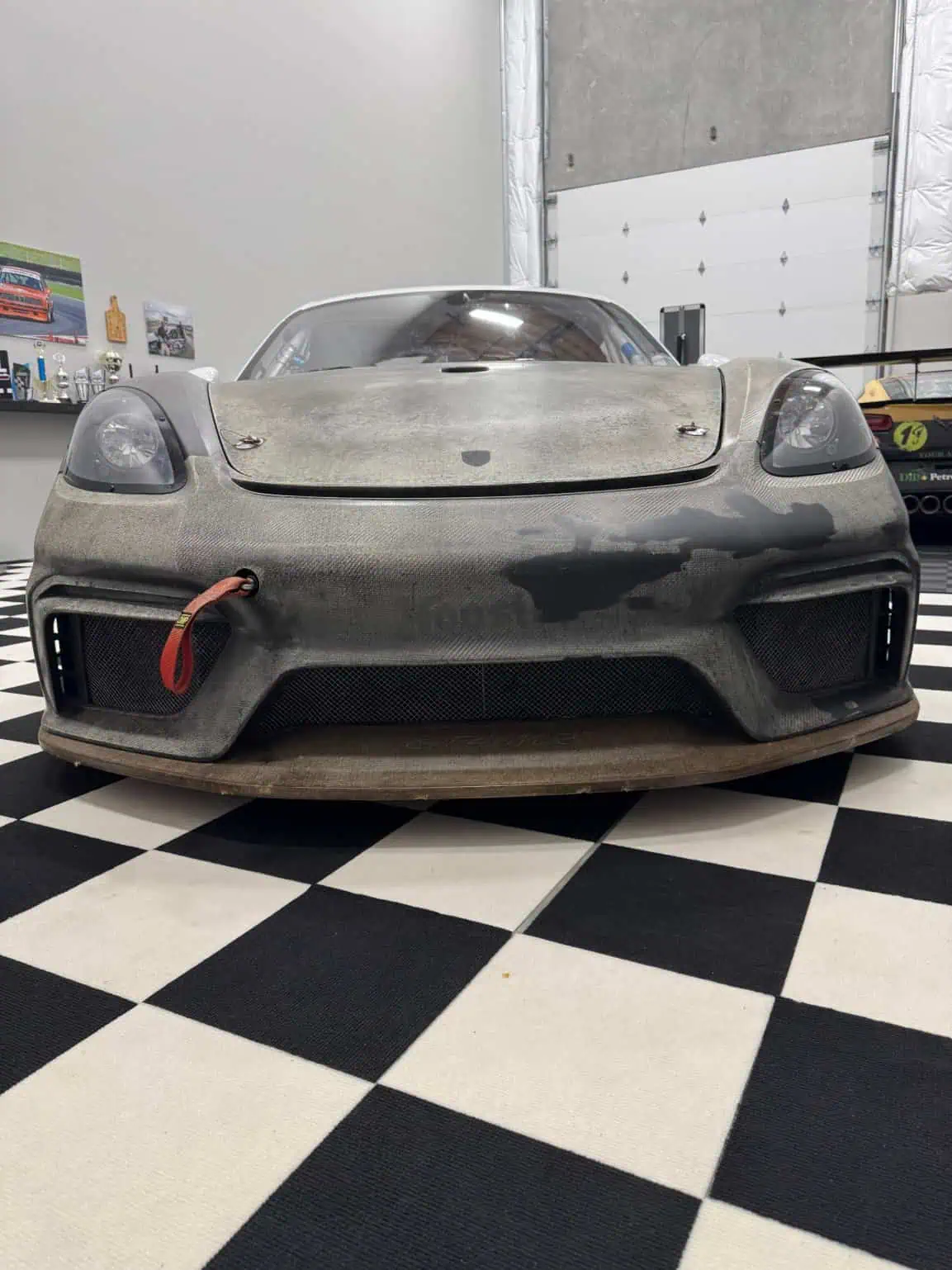
First Dance: Back on Track
A rebuild is a theory until the car turns a lap in anger.
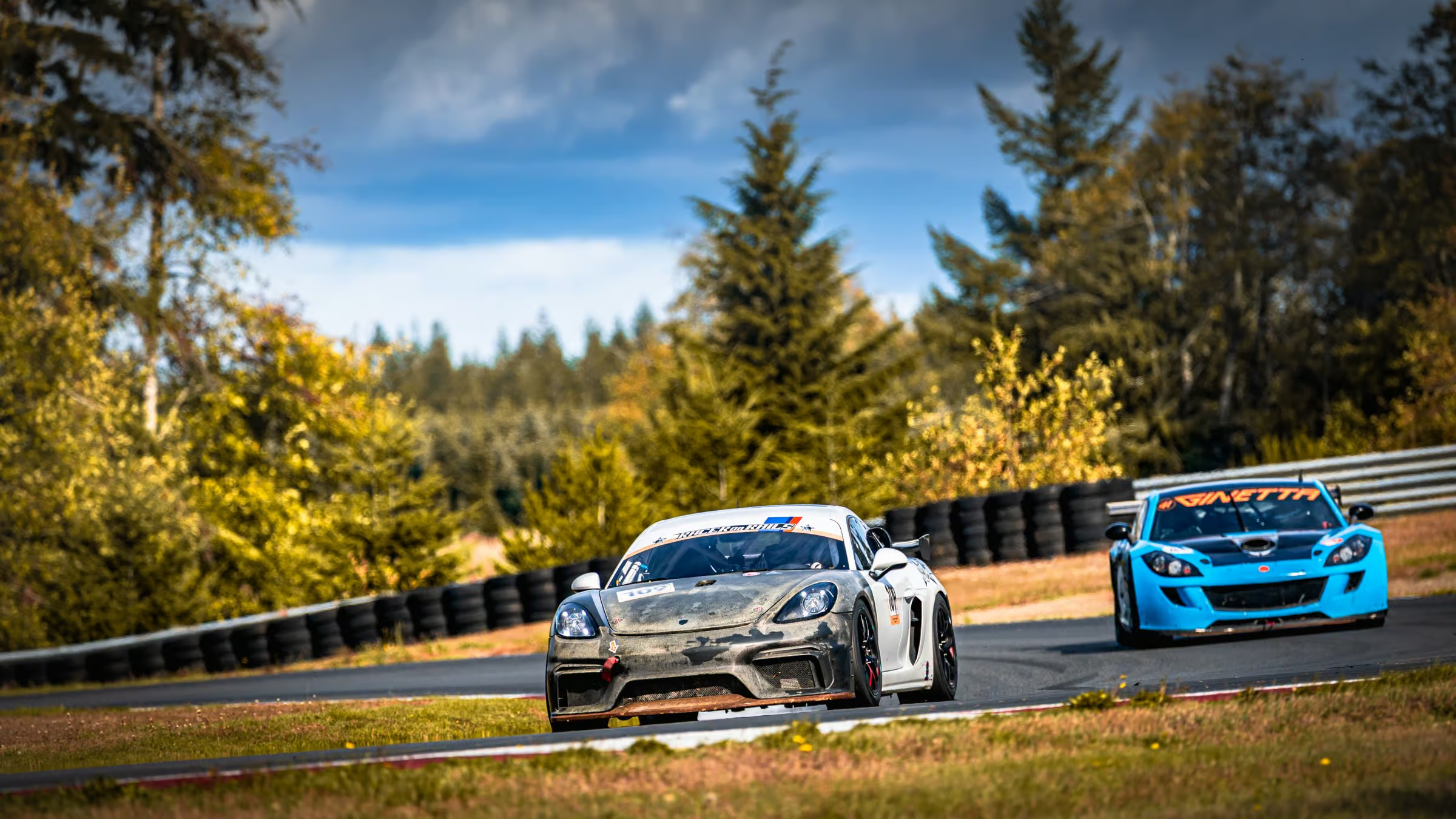
The GT4’s first full weekend came at the Ridge Motorsports Park in October, at the IRDC weekend — and racing, as it does, improvised. When Dirk’s T3 Cayman developed an issue, the GT4 went out wearing number 109 and did double duty. It ran. It raced. It came home confirmed as a healthy, working competition car.
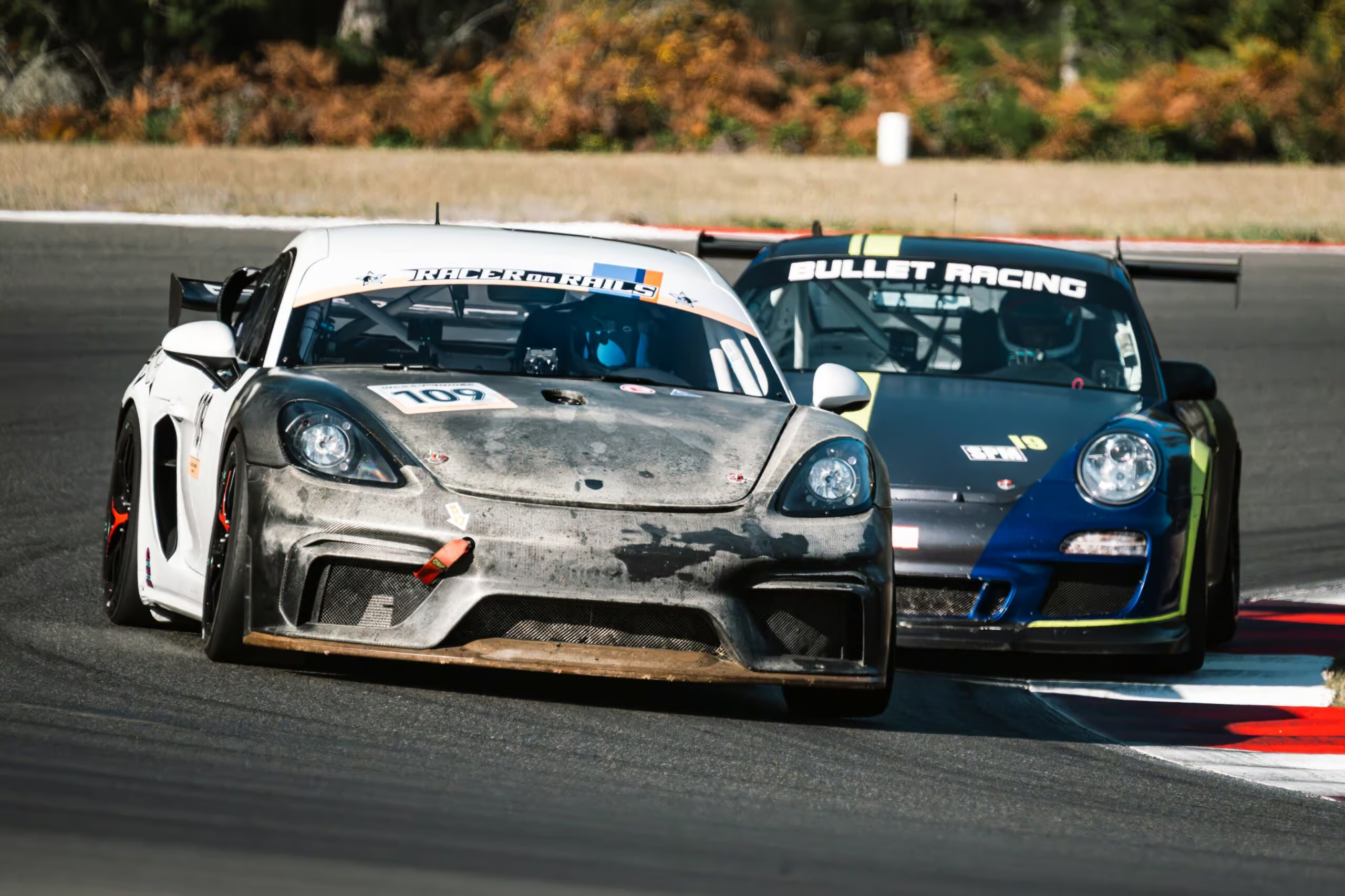
That weekend mattered more than any dyno sheet could. A car that has been hit, stripped, rebuilt and then run hard in real competition — wheel to wheel, session after session — has answered the only question that ever really mattered:
Is it right?
It is right.
What This Car Does for Racer on Rails
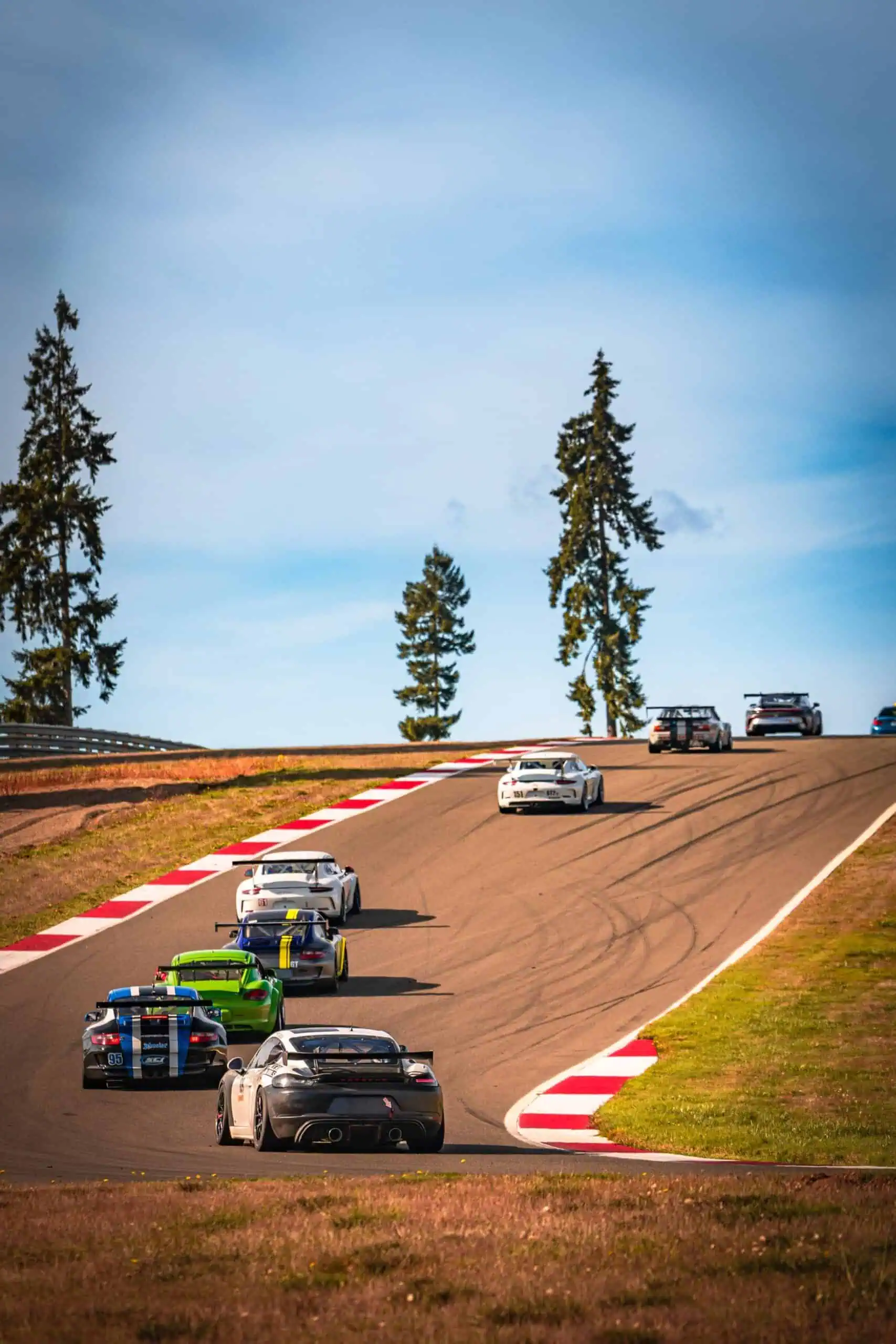
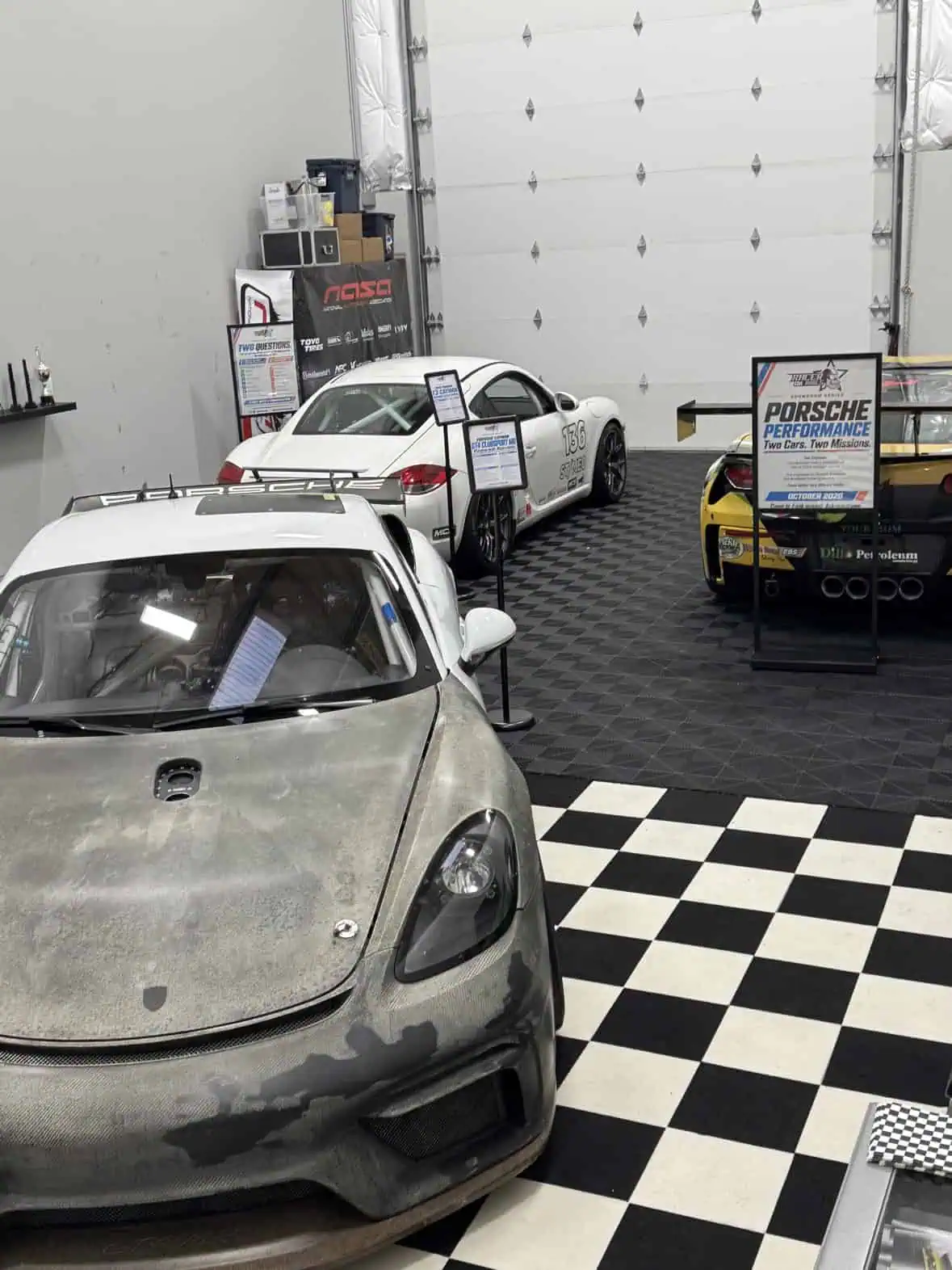
The GT4 MR now anchors our Porsche program. It is the car our GT customers’ cars get compared to, the benchmark our technicians train against, and — because it is ours — a car we can offer for arrive-and-drive and rental programs with total confidence in what is underneath the driver.
It is also, quietly, our credential. Any shop can say it understands factory race cars. We bought a wrecked one, in pieces, with parts missing — and returned it to factory standard, documented end to end. That is a different sentence.
Where It Goes From Here
The car’s 2027 season is already taking shape, and there is a symmetry we cannot help but aim at. Road Atlanta — the track where this car’s story nearly ended — hosts both the SCCA Super Tour in March and the Runoffs in October of 2027. Bringing this car back to that track, at that level, is the penciled-in homecoming.
The development list is already written. The brakes and dampers stay on the fully homologated Clubsport specification for now — that is the baseline this car was built to — but the dampers will not stay stock forever: a set of 3-way adjustable MCS shocks is planned, the same setup we run on most of the cars we campaign. And the aero gets the full treatment as well: Dundon’s Valkyrie aero kit, the same package we ran on our previous GT4 Clubsport Trackday car, is going on this one.
Between now and then: seat time, development, and the unglamorous factory maintenance rhythm that keeps a Clubsport a Clubsport. Software current. Safety systems in date. Everything documented.
We bought a wrecked GT4 race car.
We would do it again.