
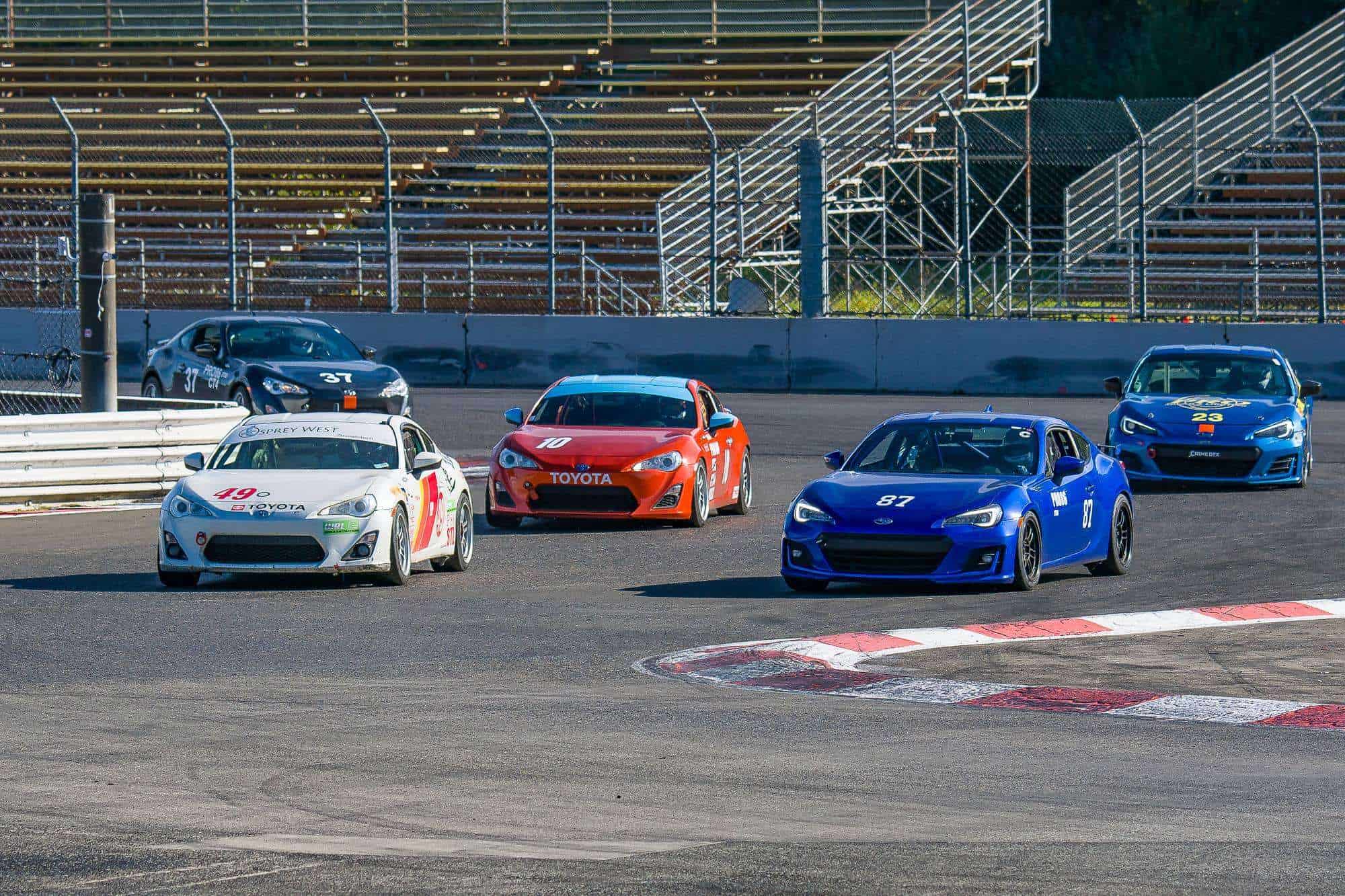
There’s a new class in the Pacific Northwest. It’s the cheapest honest way I know to go wheel-to-wheel racing in a modern car. It’s called PRO86. And the whole point of it is the driver.
This is the guide: why PRO86 exists, what the car is, how you build and run one, and when and where you race it.
Why PRO86 exists
Most classes let you spend your way out of a driving problem. More power, more tire, more aero — until the car is fast and the driver never had to get better.
PRO86 does the opposite. Same cars. Same tires. Stock internals. The gains come from braking later, carrying more speed, and putting the car exactly where it needs to be — lap after lap, with someone right on your bumper.
That’s driver development. That’s the whole reason the class exists: spend more dollars driving than on the car.
And the racing itself is the point. PRO86 runs in ICSCC Group 2, on track alongside PRO3, PRO7, PRO44, and ITX. That means a PRO86 race is never just PRO86 cars in isolation — you’re racing your class and managing traffic at the same time, with faster and slower cars working around you. That is the skill the class is built to teach, and it is the skill that carries into every other class you ever race.
That Group 2 mix is worth a word, because PRO86 sits between two classes we know well. PRO3 is where RoR got started. It is awesome racing, but it is not a true spec class — it is closer to improved touring, more open on parts and more room to spend.
Spec E46 is a true spec class, and we built it and scaled it nationally, but the build and the running costs run about 25–30% higher than PRO86, by my estimate. PRO86 is the middle of that: a true spec class on a modern car, with the costs held down on purpose.
The class was started by Colton Edwards, Will, Colin Koehler, and others. The goal was a true spec class based on a modern production car: modern chassis and tech, but truly spec, so racing costs stay controlled.
Colin explains it himself — why the class, and why it works:
What it is — the car and the formula
PRO86 is a true spec class for 2013–2020 Toyota 86, Subaru BRZ, and Scion FR-S — the first-gen ZN6/ZC6 cars with the FA20 engine. Second-gen GR86 and BRZ cars don’t run PRO86; they run time attack, like Jeremy Ussery’s BRZ.
The platform is the reason the class works. The 86 was a joint Toyota–Subaru car from the start — a project that began in 2008, led by Tetsuya Tada, inspired by the AE86, and built at Subaru’s Gunma plant. A flat-four engine sitting low in the chassis, rear-wheel drive, a Torsen limited-slip differential, around 2,800 pounds, and a center of gravity just 18.1 inches off the ground. It was built to be a driver’s car first. PRO86 takes that car, locks the formula down, and turns it into a race car you can actually afford to run.
The rulebook runs on one golden rule: if it isn’t explicitly authorized, it’s prohibited. That sounds strict. It is. That’s what makes the racing good.
In practice, that means there are no grey areas to spend money in. The arguments that eat other classes — is that shock legal, is that brake kit really a stock replacement — don’t happen here, because the answer is in the book. What you can spend on is seat time.
| PRO86 spec | |
|---|---|
| Car | 2013–2020 Toyota 86 / Subaru BRZ / Scion FR-S (ZN6/ZC6) |
| Engine | FA20 2.0L flat-four, stock internals; headers, cats, and cat-back open; OEM ECU hardware, tuning permitted |
| Dry tire | Hankook Ventus RS4, max 245mm |
| Rain tire | Continental ExtremeContact Sport 02 |
| Shocks | Off-the-shelf single-adjustable (1-way) or non-adjustable only; no remote reservoirs; OEM mounting points |
| Brakes | OEM sliding calipers, OEM Performance Pack Brembo (complete four-corner system), or aftermarket 4-piston; rotors max 300mm (326mm front / 316mm rear on Brembo cars); no two-piece rotors, nothing over 4-piston |
| Wheels | 17-inch, max 9 inches wide, minimum 15 lb per wheel |
| Minimum weight | 2,775 lb including the driver |
| Sanctioning | ICSCC, Group 2 (with PRO3, PRO7, PRO44, ITX) |
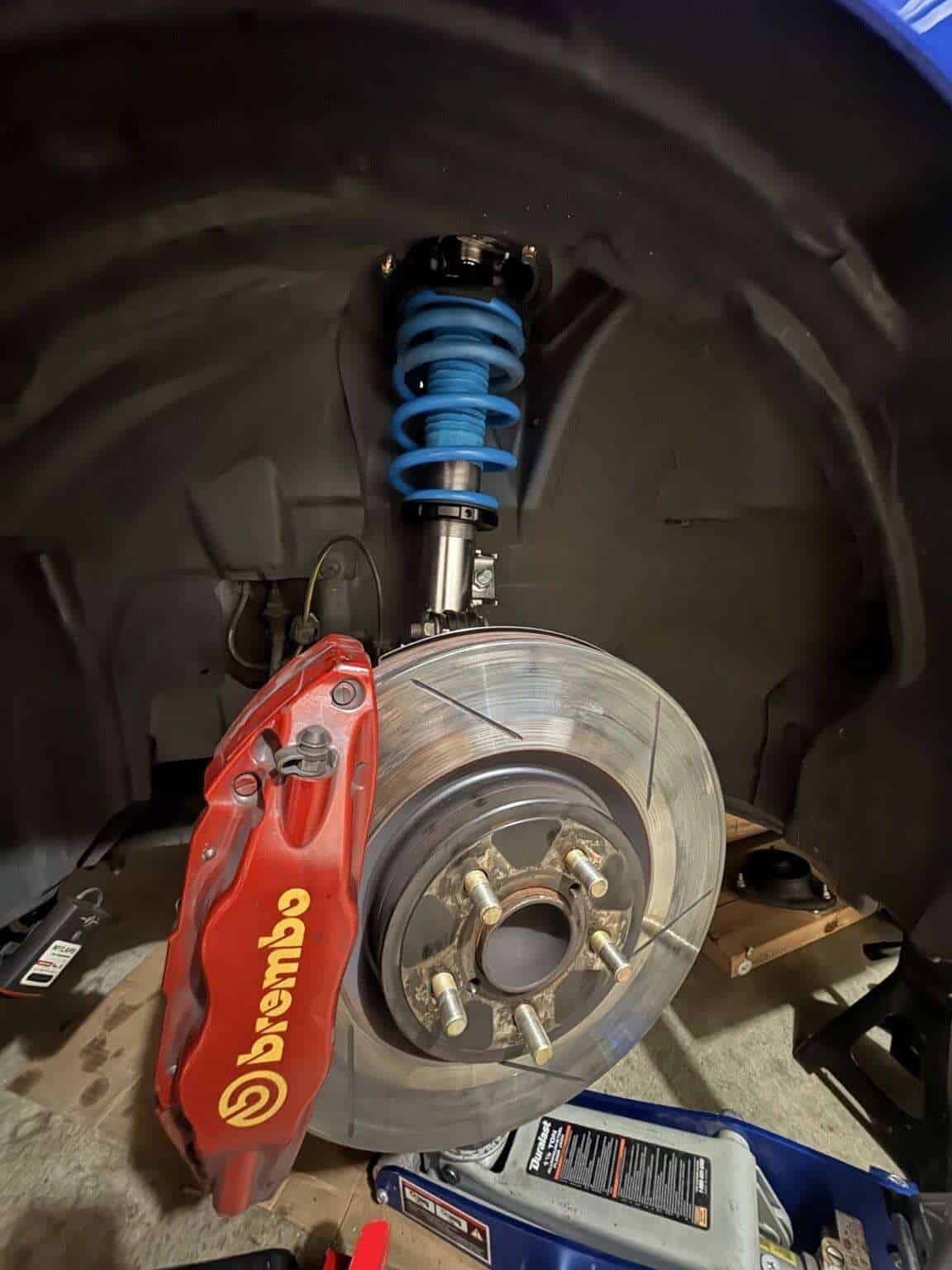
The suspension rule is the one that shapes the car most. One-way or non-adjustable shocks, off the shelf, on the stock mounting points. The Bilstein B16 is the working end of most PRO86 cars — this is Ray Lo’s, wheel off.
Why a spec tire matters more than horsepower: the same rubber on every car means the gains come from the driver, not the parts catalog. Everyone on the same Hankook RS4, the same 245mm max width, the same stock internals. The RS4 is a 200-treadwear tire — it lasts, it stays consistent over a race, and it doesn’t reward the driver who can afford a fresh set every session. When you get faster, you know it’s you.
The same logic runs through the rest of the formula. Stock engine internals, so nobody buys a motor. One-way or non-adjustable shocks, so nobody buys a damper program. A 2,775-pound minimum with the driver, so nobody buys lightness. Every rule in the book is a spending cap disguised as a technical regulation — and every dollar it saves is a dollar that goes to entry fees, tires, and seat time.
How to run one
A basic, compliant build runs $15,000–$18,000 in parts. A complete build — the full spec, done properly — runs $18,000–$26,000 in parts. For the full breakdown with real prices, see Colin Koehler’s #10 PRO86: The Build, Part by Part.
What you need to get on track: a 2013–2020 car, the spec parts, safety gear (cage, seat, harness, and the rest — see Colin’s build post for the full list), and an ICSCC license and membership. Then an entry to a race weekend, and you’re racing wheel-to-wheel.
The build itself is the accessible part. A clean first-gen 86, BRZ, or FR-S is still an affordable donor, and the spec keeps the parts list short — coilovers, a brake kit, wheels and the spec tire, headers and a tune, an oil cooler, and the safety gear. The two budgets in Colin’s build post show both ends of it: a basic, compliant car and the complete build, with every part priced. Start with the basic car, learn to drive it, and add the rest as you go — the formula rewards the driver who shows up, not the one who spends first.
Picking the donor is straightforward: any 2013–2020 car with the FA20 engine, straight and clean, with a title you can race on. The first-gen cars are old enough now that the donor pool is deep and the prices are honest — and because the spec locks the expensive decisions for you, there is no wrong choice between an 86, a BRZ, or an FR-S. They are the same car under the badges, and the rulebook treats them that way. We have a donor BRZ/GT86 build of our own in the shop, and the build series will follow it — the same formula, the same parts list, the same goal.
Your first weekend is a normal ICSCC race weekend: practice and qualifying, then championship races in Group 2. If you’ve never raced wheel-to-wheel, ICSCC runs a novice program and driver training to get you licensed — and we run driver development and coaching at RoR for exactly this step. The fastest way in is to come to a race weekend, watch Group 2, talk to the PRO86 drivers in the paddock, and then decide. They built the class to grow it, and they will tell you what it takes.
The car isn’t a dead end, either. A PRO86 car converts to Conference Touring 4 (CT4), Touring 4 (T4), SPM, and select WRL classes. So the car you build for PRO86 has somewhere to go — and the seat time you get in PRO86 carries straight over.
And once you’re racing, the running costs stay low on purpose. Colin’s advice on making PRO86 components last under racing conditions:
When and where you race
The 2026 season ran 15 championship rounds. Colin Koehler won the championship with 207 points. He started 12 races and finished all 12. Behind him: John Morris with 103 points, Ray Lo with 84, and Jack Ramie with 44. The fields got started and are growing.
There were no official PRO86 championship races in 2025. The class’s first championship season was 2026. In 2025 Colin raced his #10 in CT4, not PRO86.
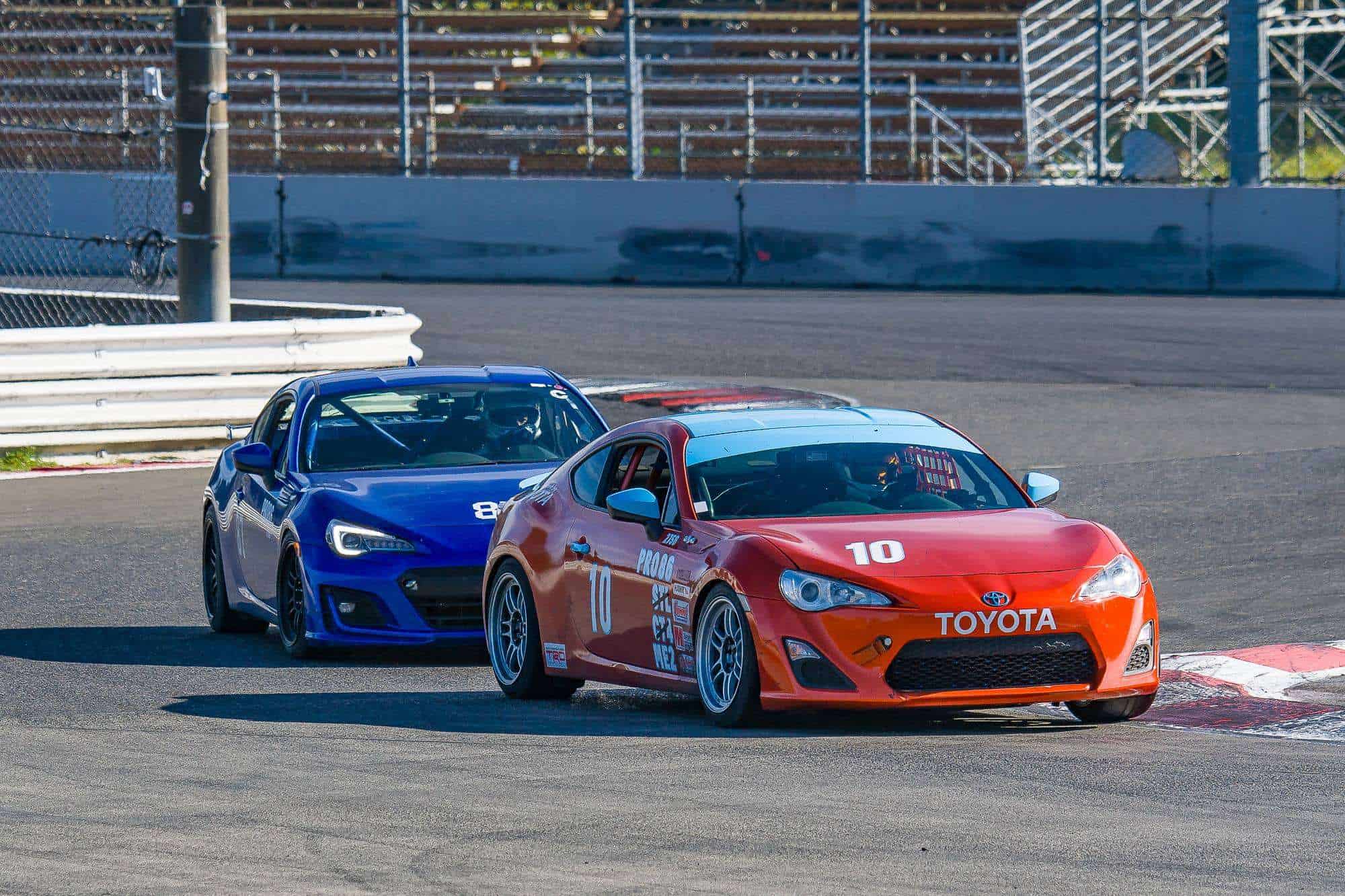
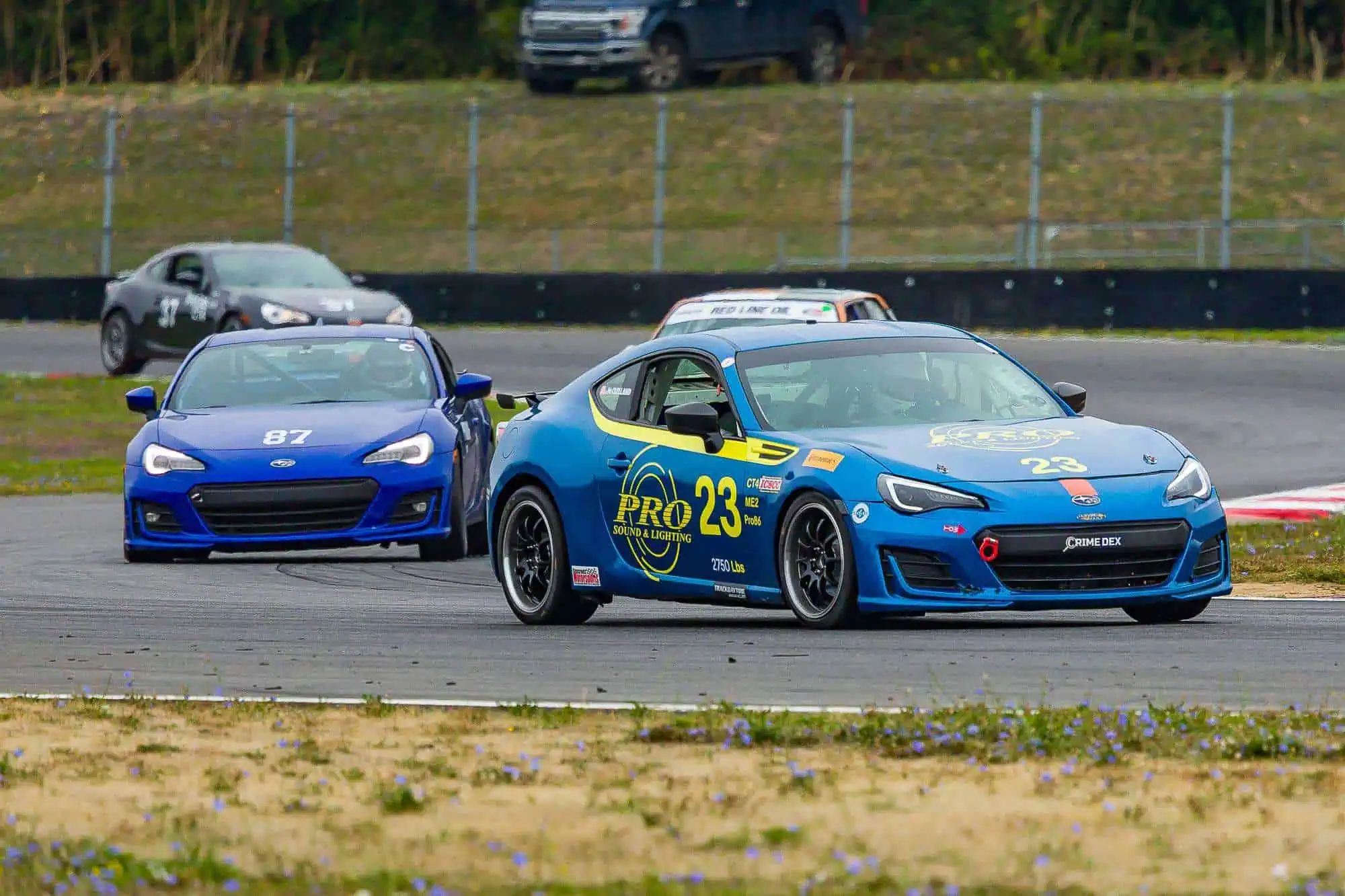
Watch the racing — the final two PRO86 races of the 2026 season, from Colin’s own channel:
And the battle at The Ridge — Colin’s #10 against the #49, cut short by a grass fire and a safety car:
More of Colin’s PRO86 racing is on his Sashimi Moto channel — including the Mini-Enduro at The Ridge, where he went in down three points in the ME2 championship and won it.
For the in-car view, the class’s own Instagram reel from the June 13 race at Portland is Colin’s #10 from the driver’s seat — red cage, NRG wheel, orange harness — working through the field. That is what a PRO86 race feels like: close, busy, and always with someone right on your bumper.
The 2027 ICSCC schedule is published: 17 championship races on 8 weekends, and PRO86 races at each event that isn’t an enduro-only event.
| Dates | Track |
|---|---|
| April 23–25 | Portland International Raceway |
| May 13–16 | Qlispe Raceway Park, Spokane |
| June 11–13 | Portland International Raceway |
| July 9–11 | Pacific Raceways, Kent |
| August 13–15 | The Ridge Motorsports Park, Shelton |
| September 3–6 | Pacific Raceways, Kent |
| September 24–26 | Portland International Raceway |
| October 15–17 | The Ridge Motorsports Park, Shelton |
That is four tracks, all in the Northwest: Portland International Raceway, Pacific Raceways in Kent, The Ridge Motorsports Park in Shelton, and Qlispe Raceway Park in Spokane. Portland hosts the most weekends, Pacific is our home track here in Kent, The Ridge is the technical one in Shelton, and Qlispe takes the series to Spokane. A PRO86 season is a tour of the Northwest’s road courses — and every one of them is within a day’s tow.
The wider 86 platform
PRO86 sits on a platform with a real motorsport record behind it. Toyota’s GR Cup in North America runs identical GR86 Cup cars, built at Toyota’s GR Garage in Mooresville, North Carolina. It started in 2023 and has run four seasons, with four different champions — and a champion cannot come back and defend the title. In Japan, the GR86/BRZ Cup regularly draws over 100 entries per event. And in 2021 the second-generation BRZ GT300 won the Super GT championship in its debut season — Subaru’s first-ever Super GT title.
The 86 is a driver’s car that happens to be cheap to race. PRO86 is the class that takes that seriously.
Come see it
Colin Koehler’s #10 PRO86 car is in our showroom all November, next to Jeremy Ussery’s second-gen BRZ time-attack car — first-gen spec and second-gen time attack, side by side. Come see them up close and you’ll get the idea faster than any rulebook can explain it. Our November showroom post has the full month.
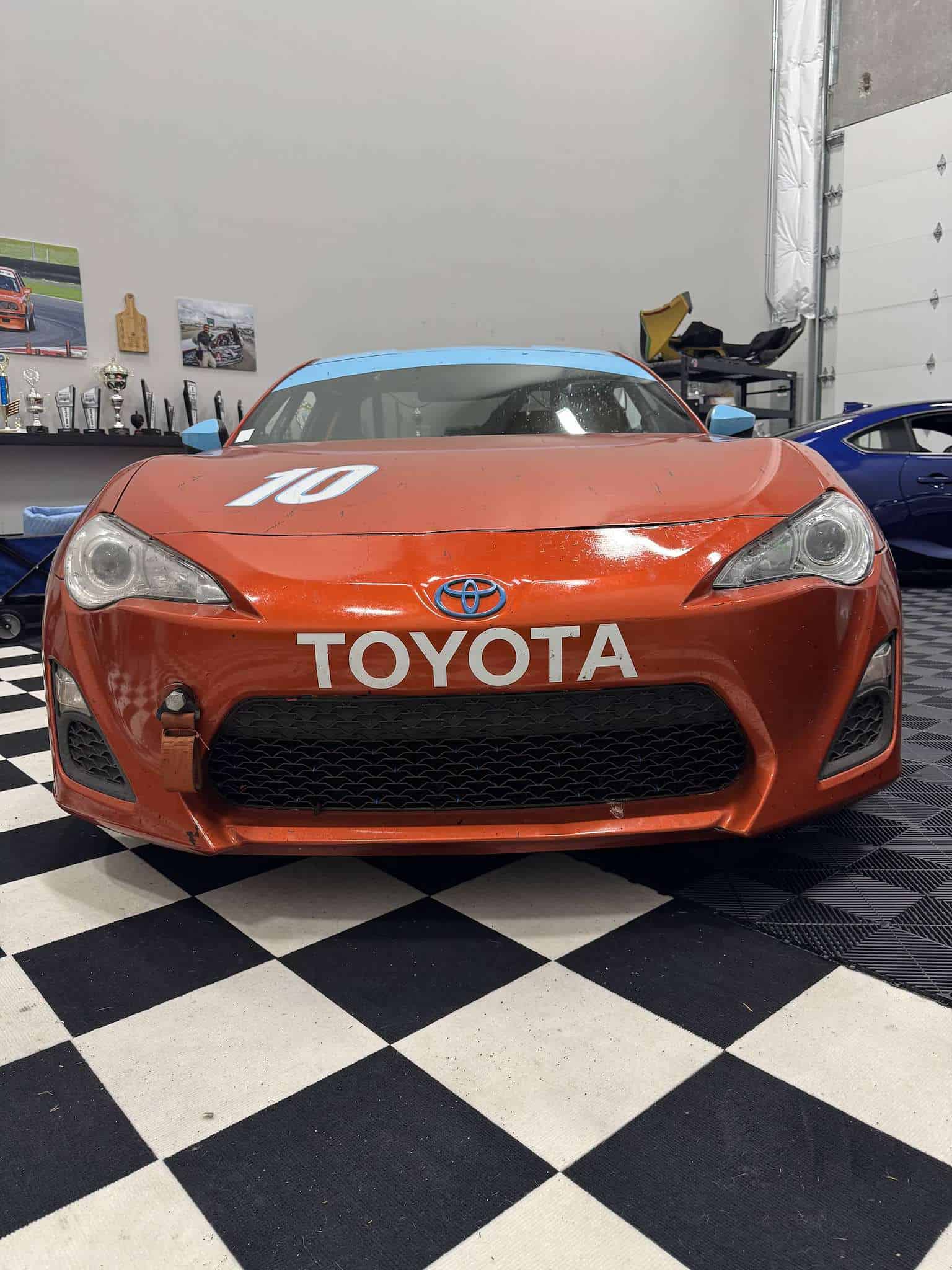
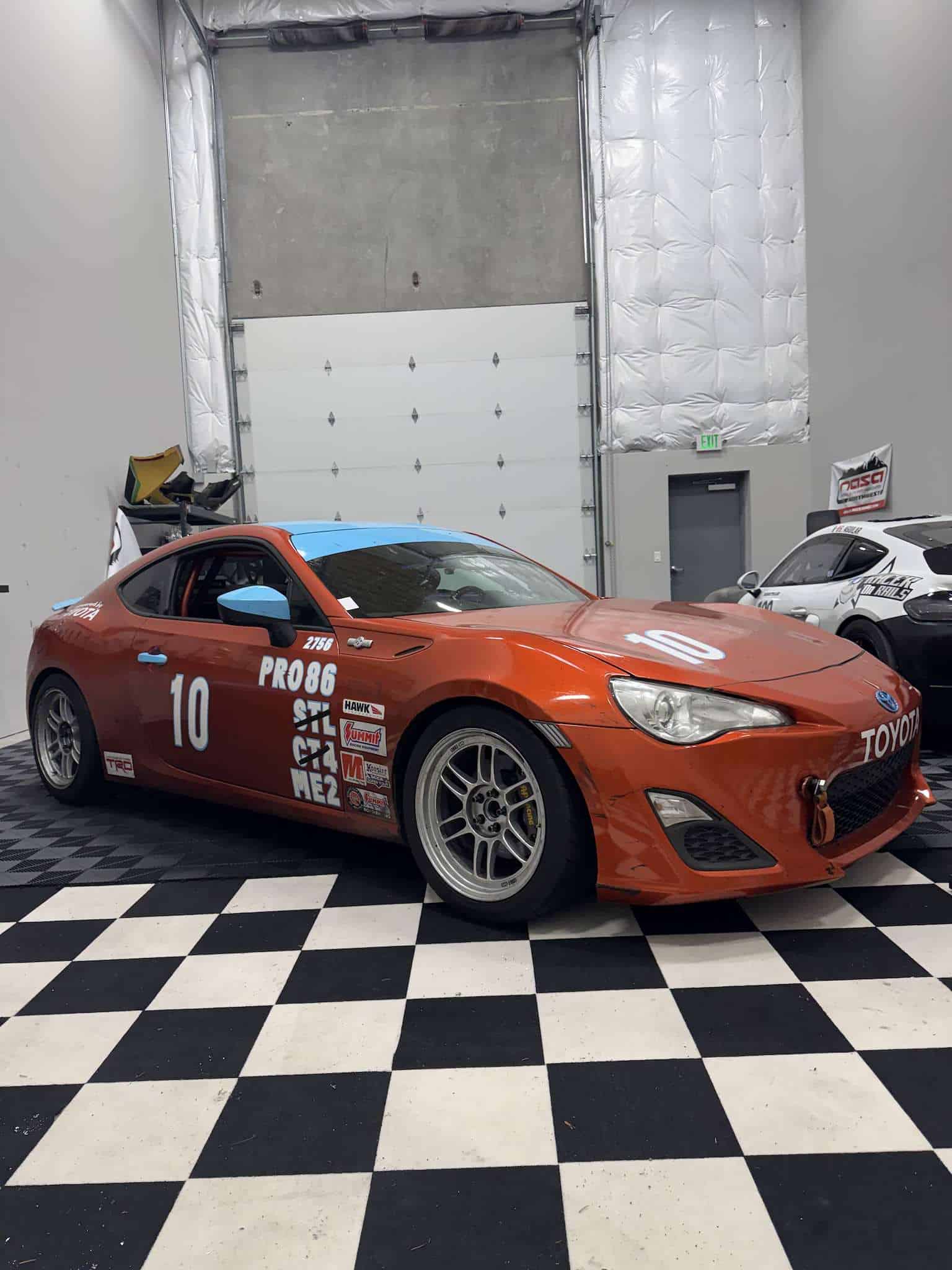
If you’ve been waiting for a way in — this is it. Talk to us about starting your build, or about getting seat time first and deciding from there. Read Colin’s build post for the full build, and Jeremy’s BRZ post for what the second generation does in time attack. The class lives at pro86racing.com, and the racing runs under ICSCC. The fields got started and are growing — the next car in the class could be yours.