Posted on

Portland Hoosier Super Tour Recap: Setup Windows, Mental Unlocks, and a T3 Weekend Sweep

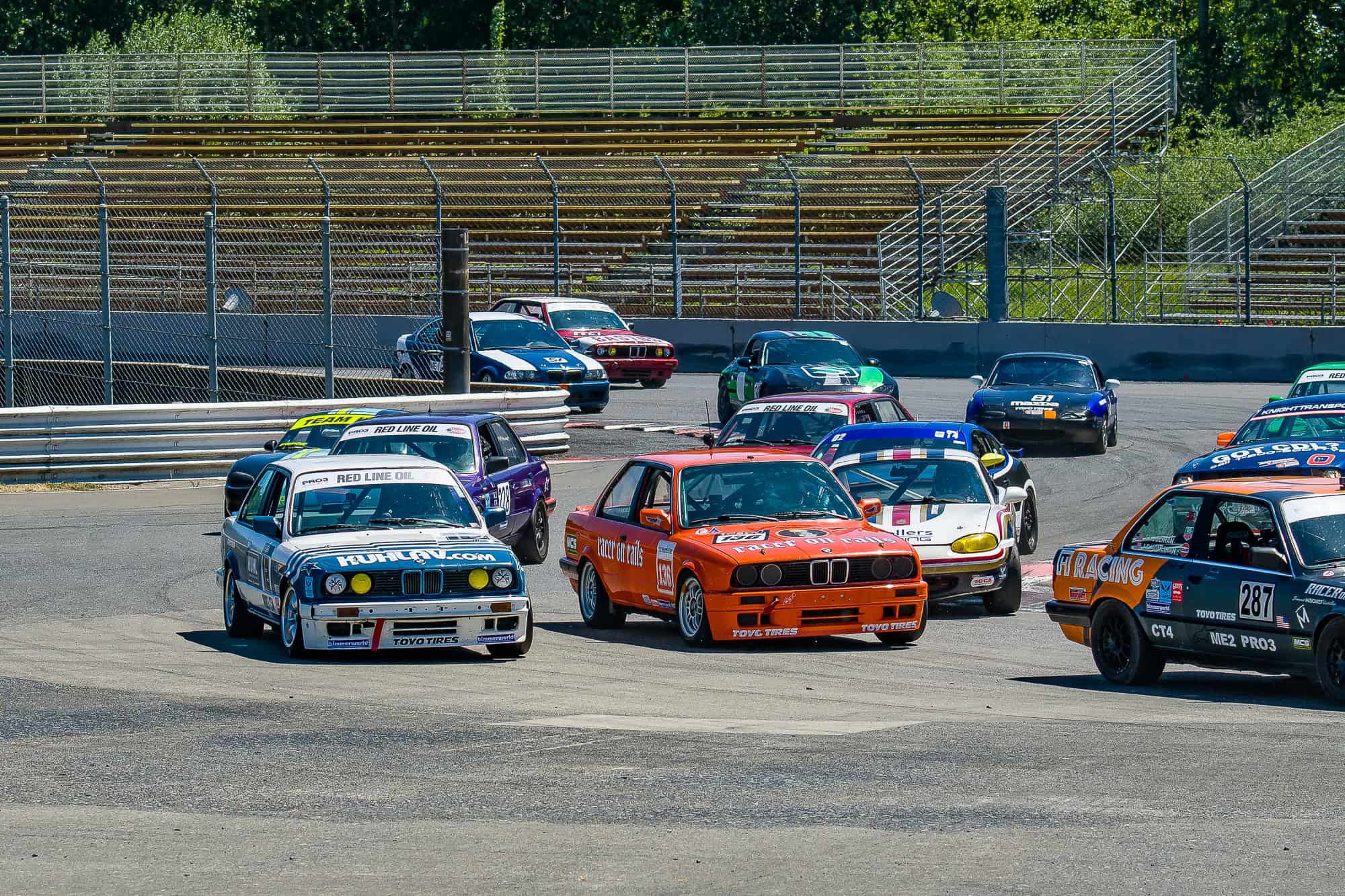
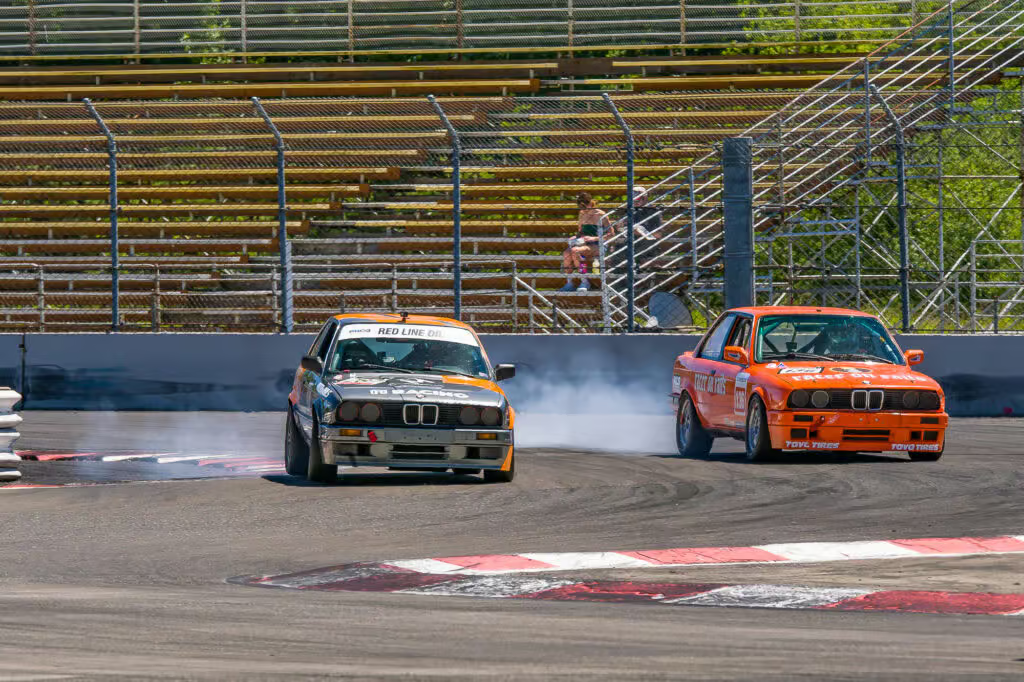
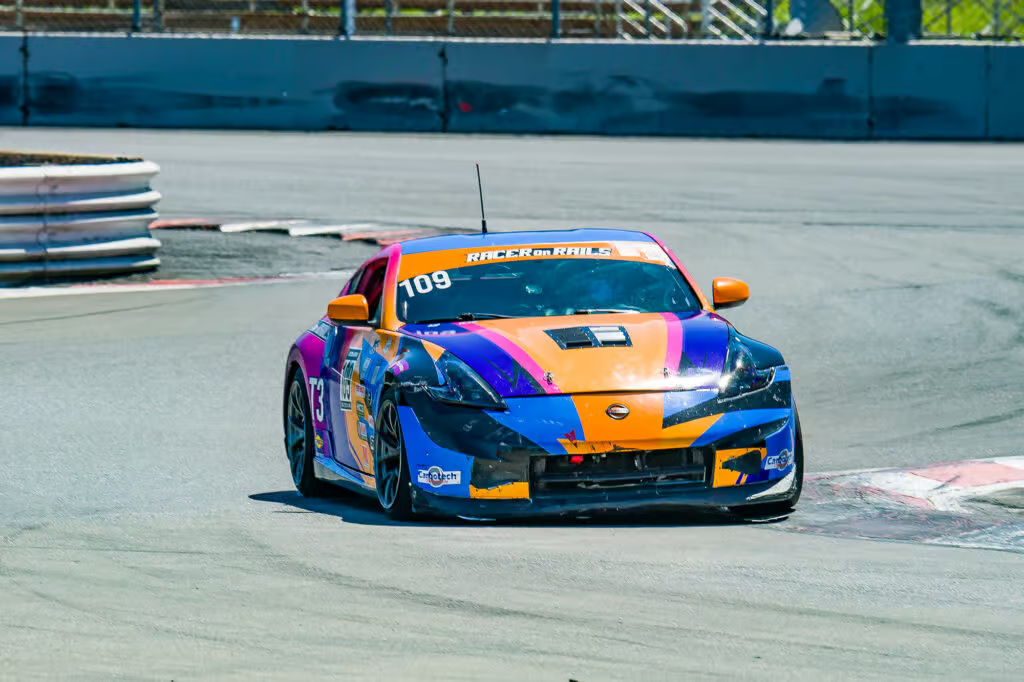
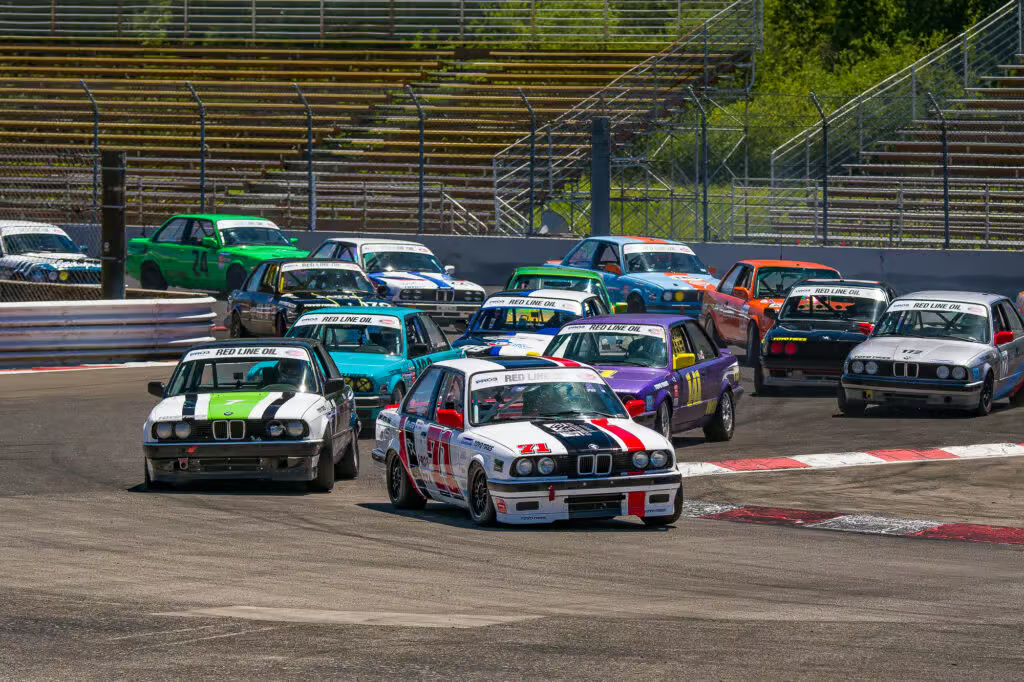
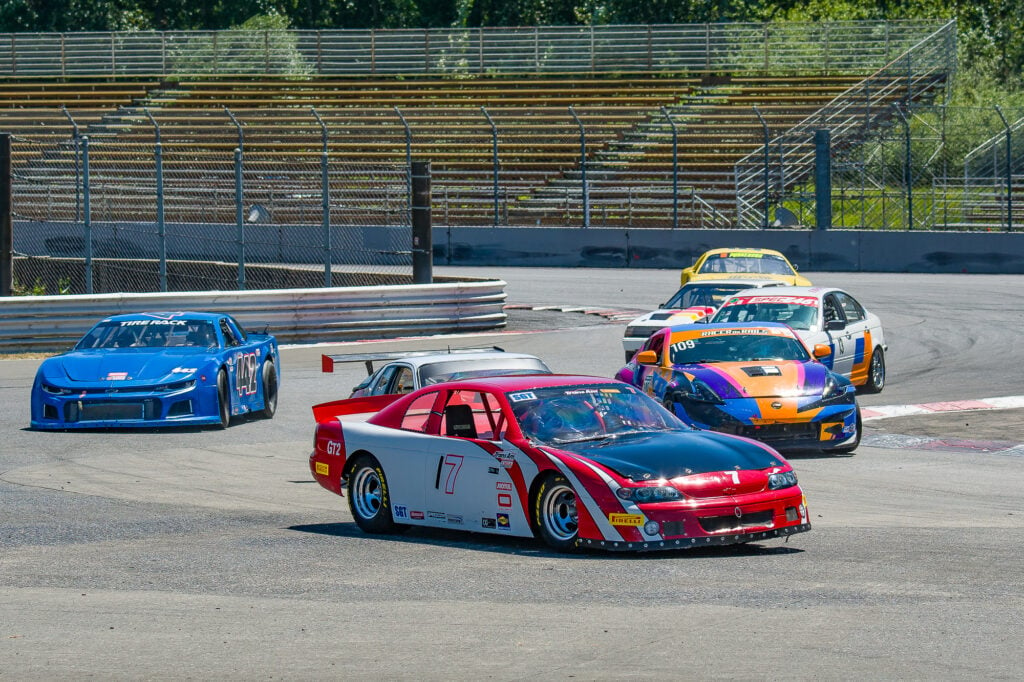
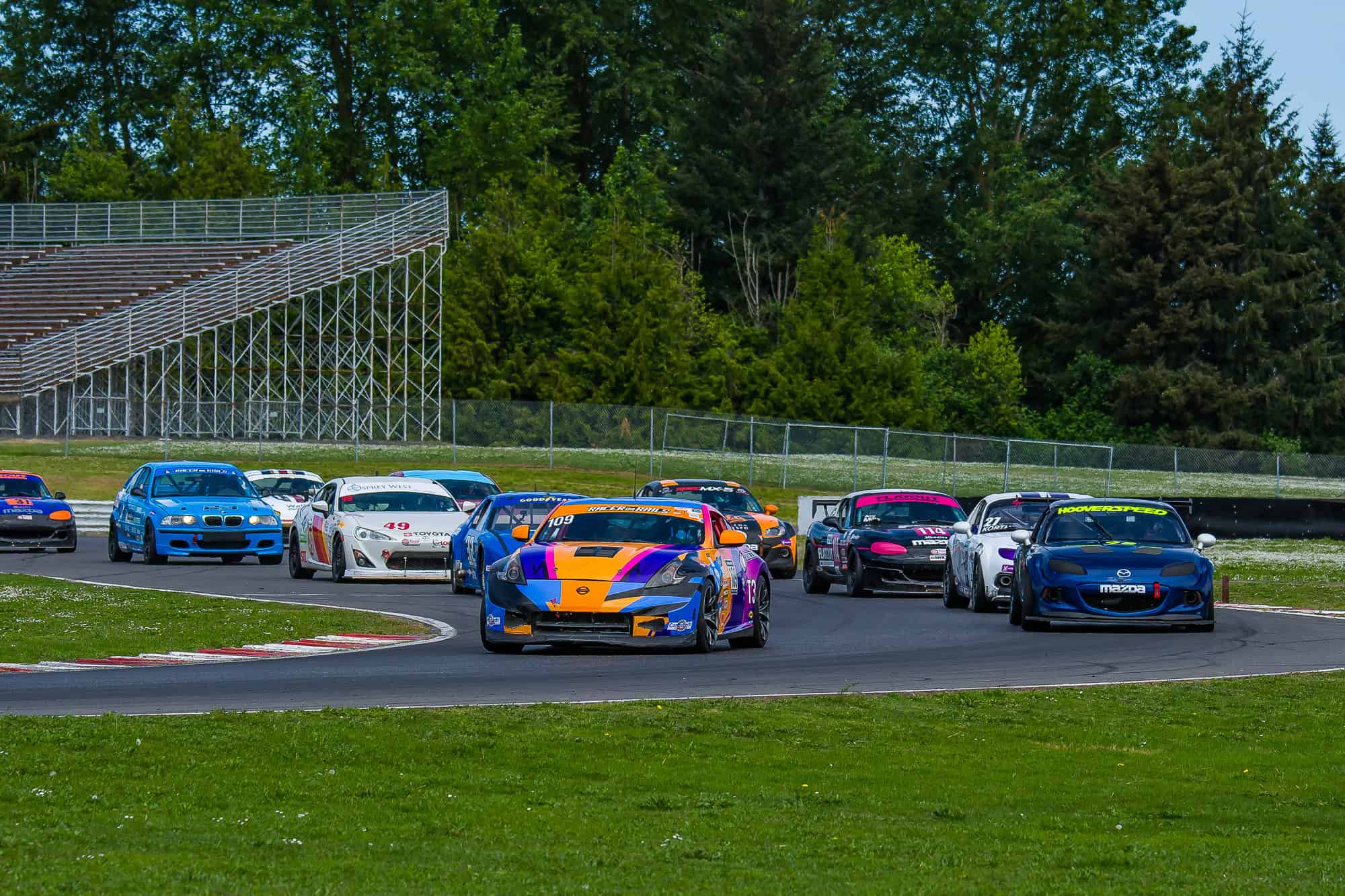
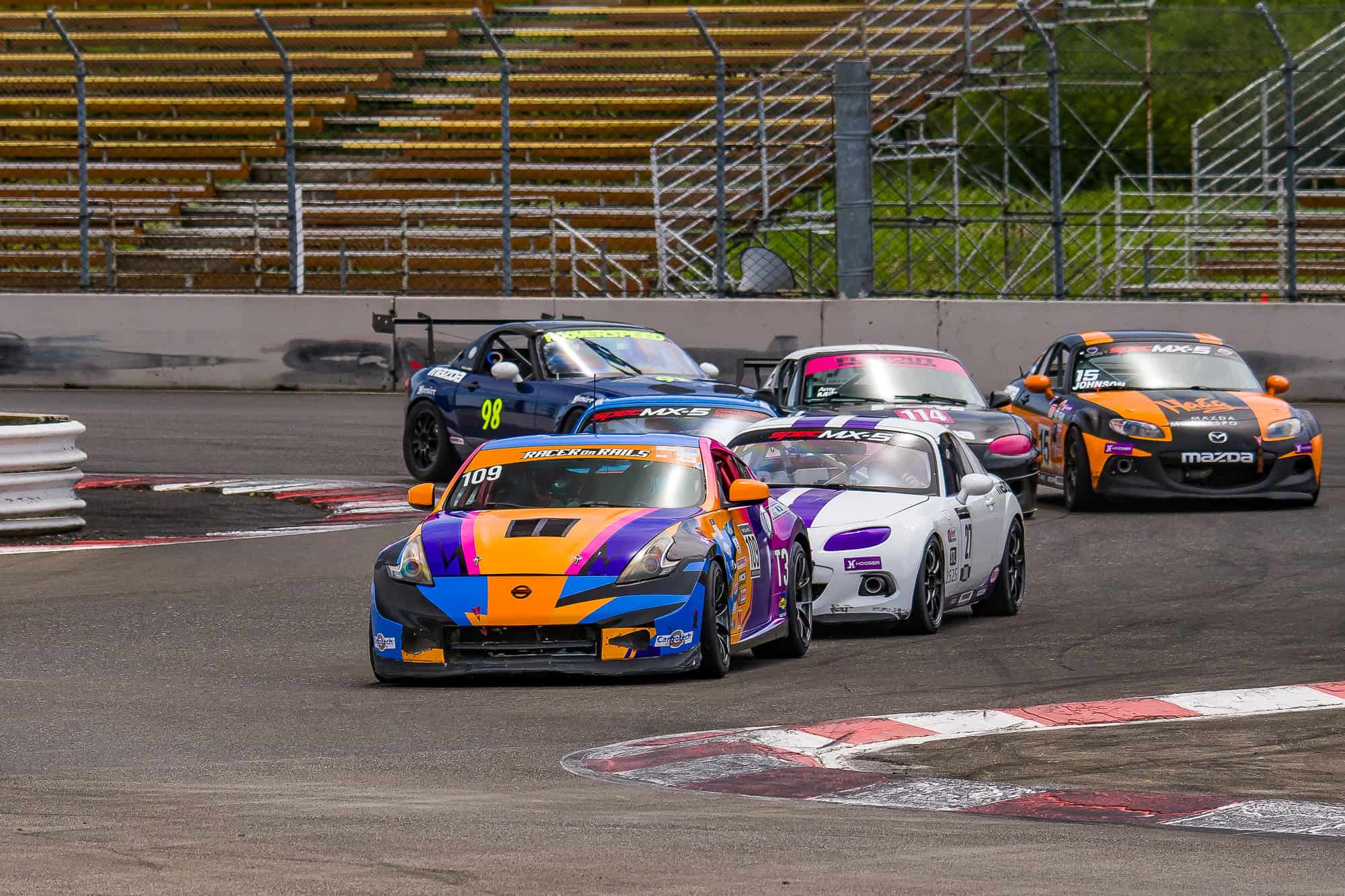
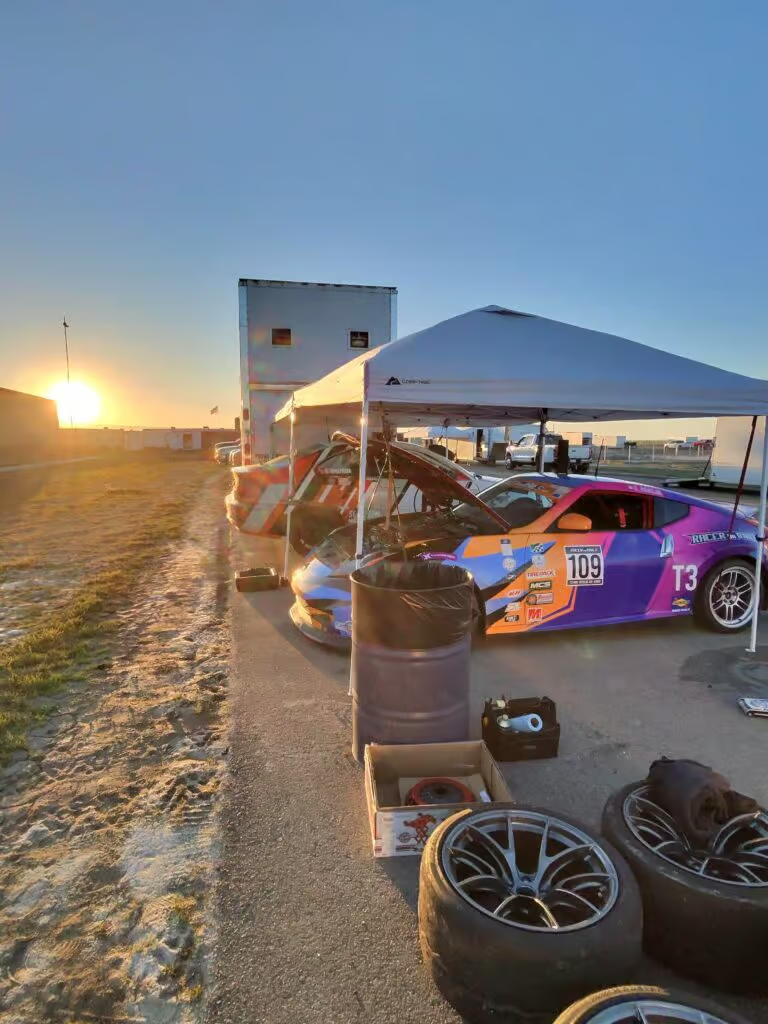
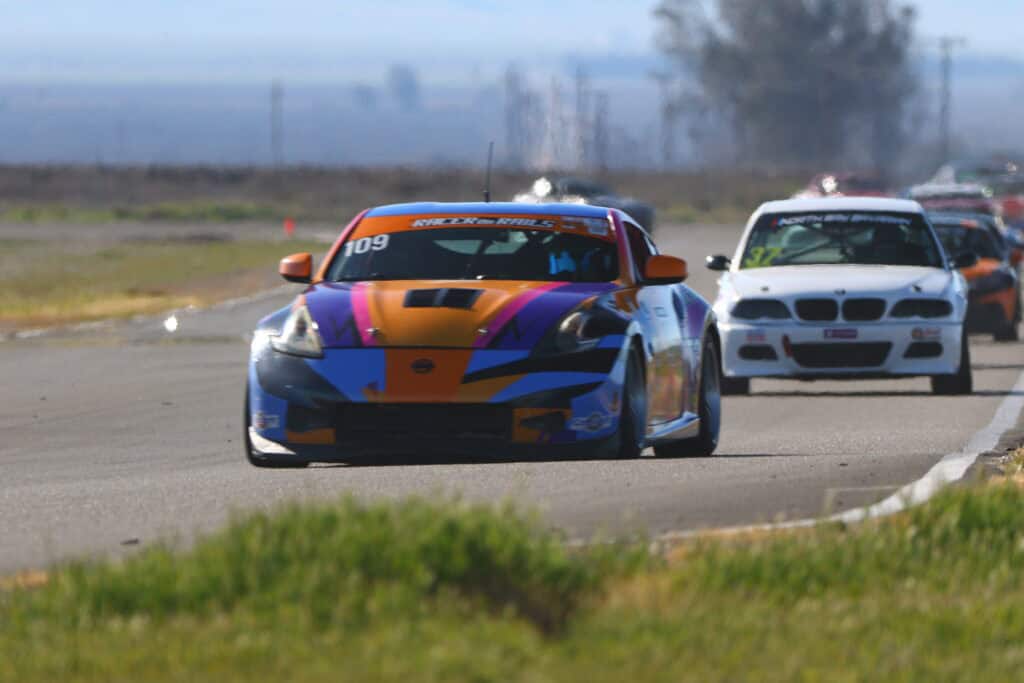
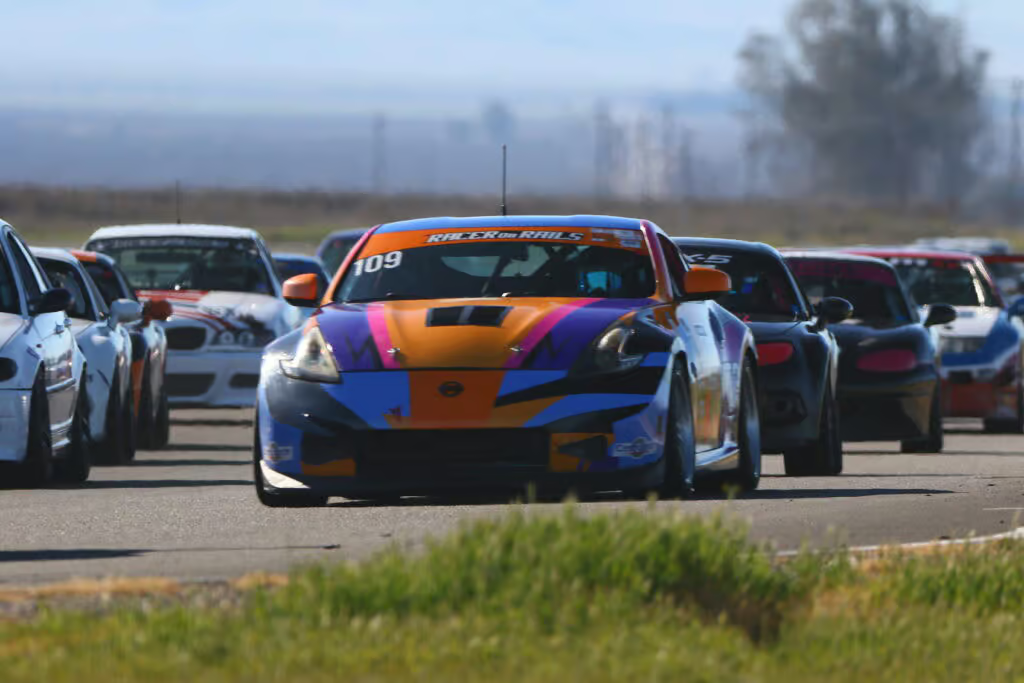
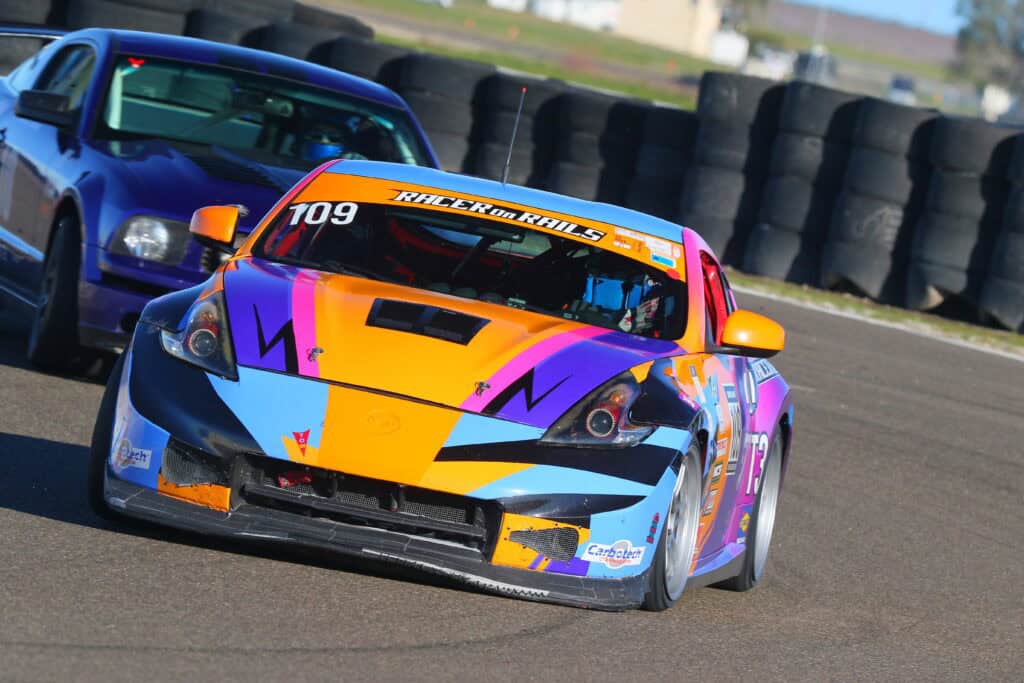
Racer on Rails Nissan 370Z leading a mixed Touring 3 race group through Portland International Raceway during the Oregon SCCA Hoosier Super Tour.
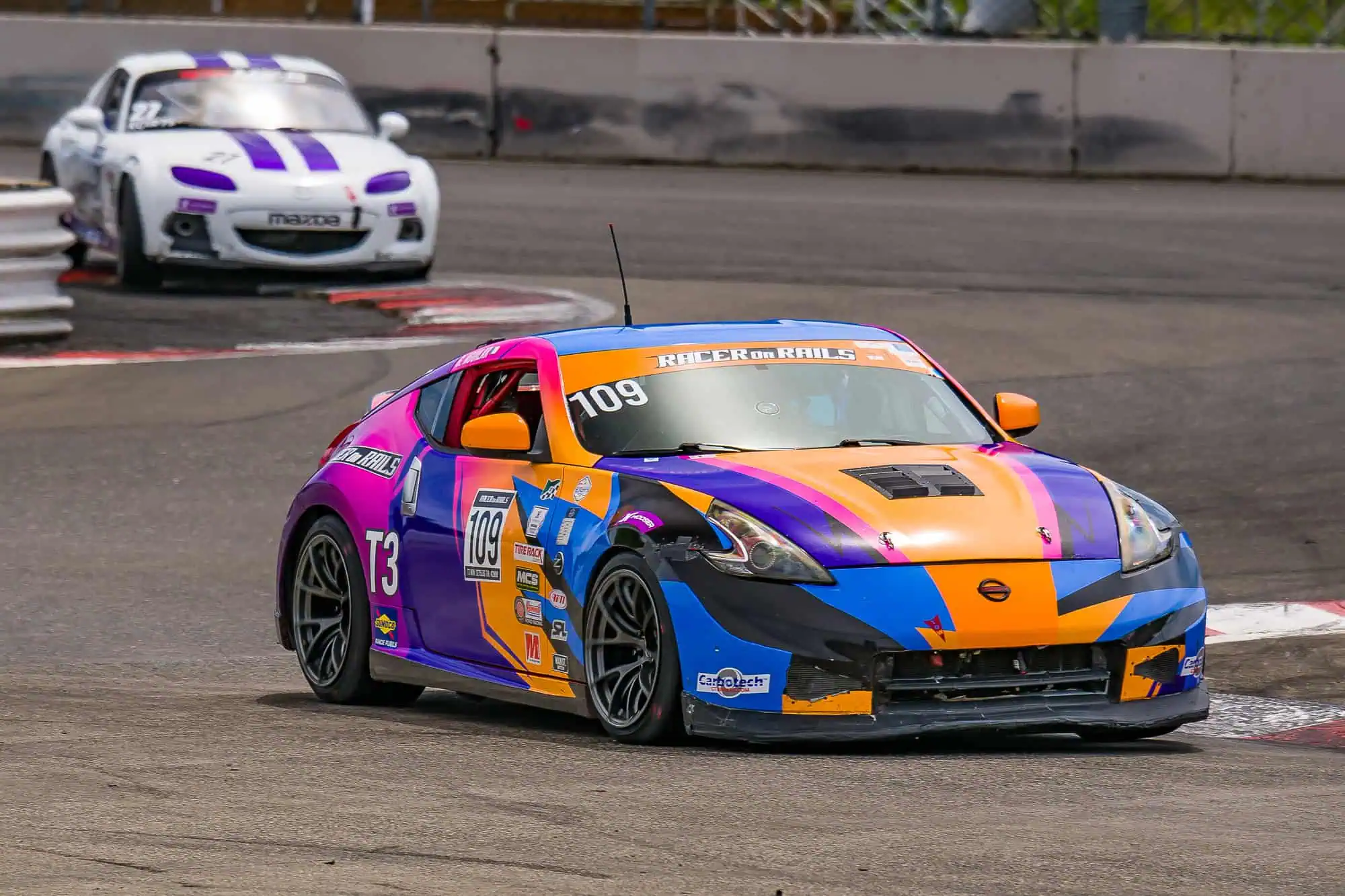
Gama Aguilar-Gamez leads the Touring 3 field in the Racer on Rails Nissan 370Z during the Oregon SCCA Hoosier Super Tour at Portland International Raceway.

The SCCA Hoosier Super Tour is one of the biggest stages in amateur road racing. It is where regional racers, national contenders, Runoffs hopefuls, longtime club racers, and professionally prepared teams all end up in the same paddock, chasing the same thing: speed that holds up when the stopwatch and the field both get serious.

For Racer on Rails, weekends like this matter because they are more than another race on the calendar. They are measuring sticks. They show where the cars are, where the drivers are, where the team is operating well, and where the next layer of performance is hiding.

This round brought us back to Portland International Raceway for the Oregon SCCA Hoosier Super Tour. PIR is a uniquely Northwest kind of racetrack. It sits inside a major city, close to the Columbia River, built on land with real history, surrounded by trees, planes, cyclists, and the strange calm of a public park that also happens to host serious race cars. It is one of those places that feels easy until you try to be fast there.

On paper, Portland looks simple. It is flat, relatively short, and does not have the obvious “monster corner” personality of a place like Road America, Thunderhill, or Sonoma. But that is exactly the trap. PIR asks for precision everywhere. The lap is full of medium-speed commitment, heavy braking moments, curb usage, track-out discipline, and small setup decisions that either build confidence or quietly steal time every lap. If the car is not underneath you, the track exposes it. If the driver is not fully committed, the stopwatch tattles immediately.

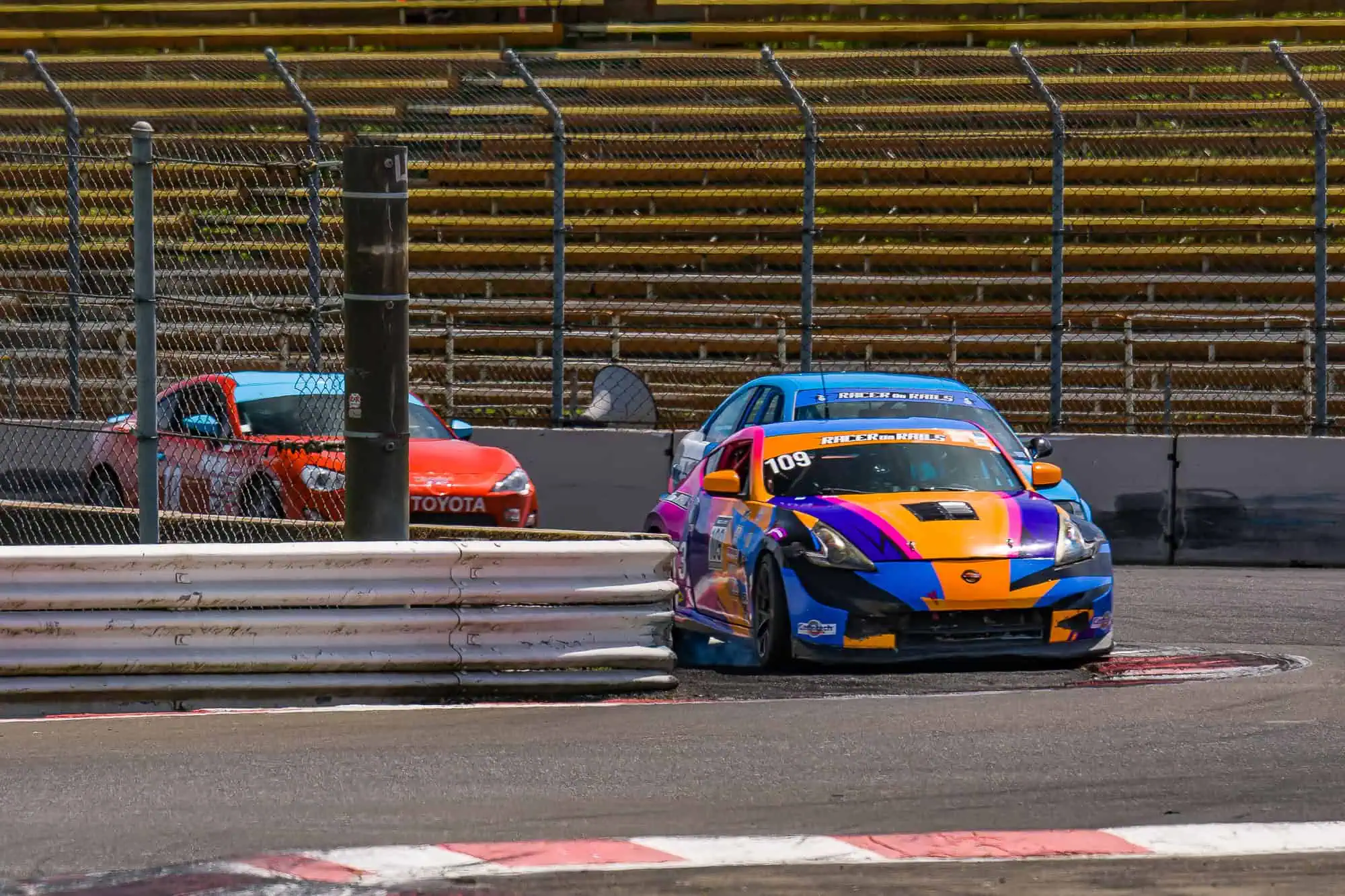
Racer on Rails Nissan 370Z Touring 3 race car driving over the curbing at Portland International Raceway with race traffic behind.  | (C) 2025 Doug Berger | DBPics
The Portland chicane rewards commitment, curb confidence, and a car that stays predictable under braking and turn-in. (C) 2025 Doug Berger | DBPics

Our weekend lineup had a little bit of everything.

Chris Johnson was back in his Spec E46 in Touring 3 for the first time since last July. Gama Aguilar was in the Nissan 370Z, also in Touring 3, continuing the development push from Thunderhill. Beef Wellington brought out his Touring 2 BMW M240iR. And while Ron Tanemura was not technically in one of our cars, he was still part of the broader Racer on Rails driver development program, racing a Spec Racer Ford Gen3 with Flat Out Racing and continuing to work with Tyler through our coaching services.

Different cars. Different goals. Same weekend. Same stopwatch.

Chris Johnson: Back in the Saddle, Then Fully Lit

Chris started the weekend exactly where you might expect after nearly a year away from the car: knocking the dust off.

The Spec E46 was on older tires, Chris was rebuilding rhythm, and the first part of the test day was about getting reconnected with the car. Braking points. Corner entries. Trust. References. The little internal checklist every driver has to rebuild after time away.

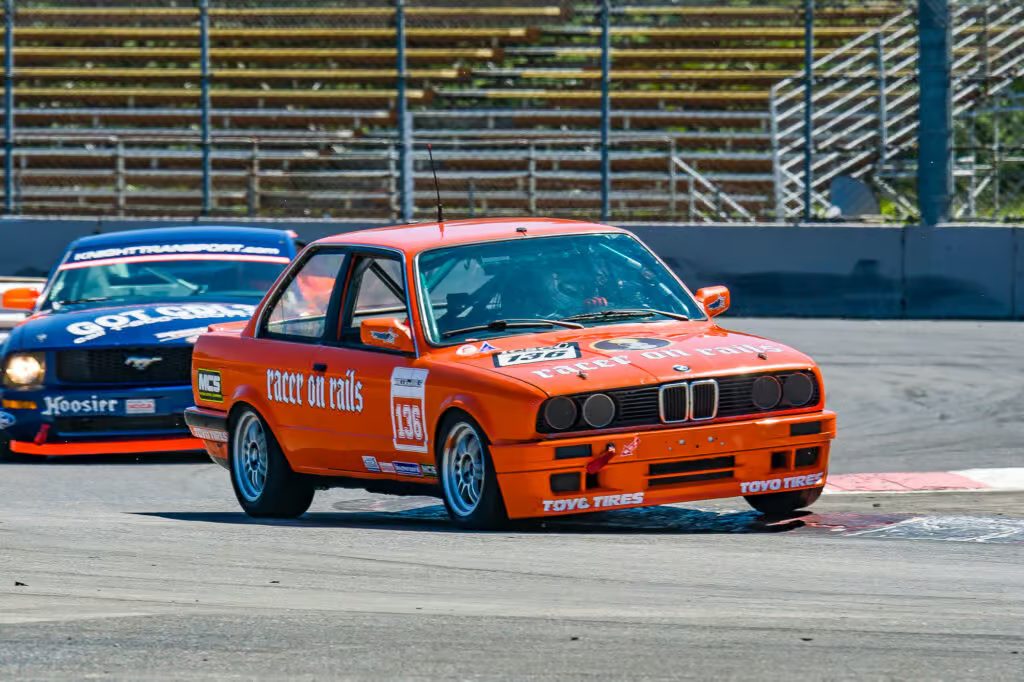
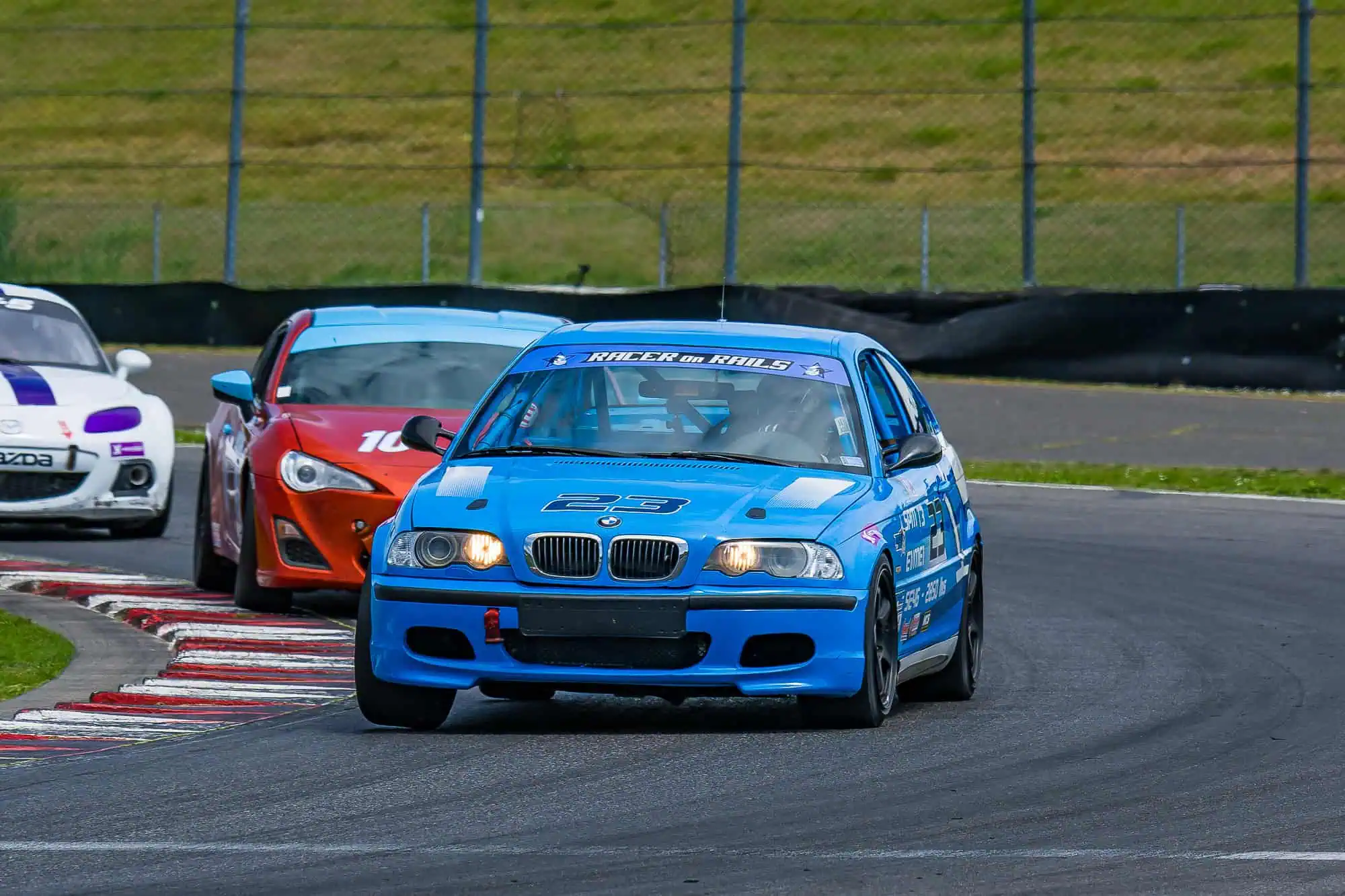
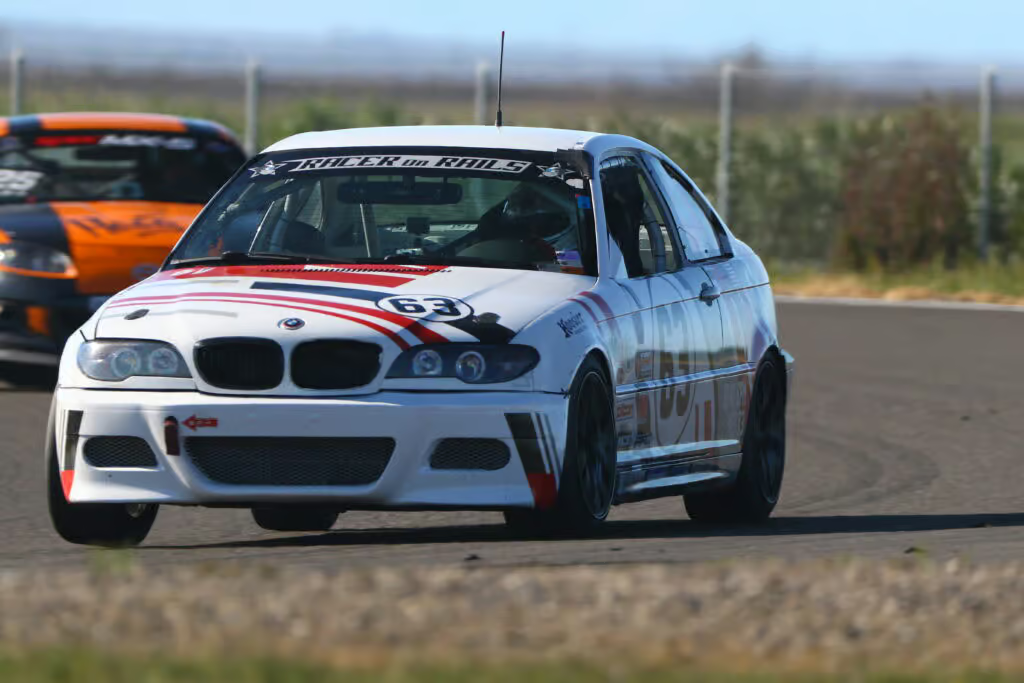
Chris Johnson driving the blue Racer on Rails BMW Spec E46 Touring 3 race car through Portland International Raceway with race traffic close behind.
Chris Johnson returned to the seat of his Spec E46 in Touring 3 and spent the weekend rebuilding rhythm, confidence, and pace. (C) 2025 Doug Berger | DBPics

By the end of the first test day, though, the fog was clearing. Even as the track got hotter and conditions worsened, Chris started closing back in on his personal best lap times. That was the first sign that the speed had not gone anywhere. It was still there, sitting under the surface, waiting for him to believe it was available again.

The next day, we had one of those conversations that matters more than a shock adjustment or tire pressure change.

Chris was talking through what he was feeling in the car, but underneath the words were a few limiting thoughts. Not excuses. Not weakness. Just the normal stuff drivers tell themselves when confidence is still a lap or two behind capability.

The conversation was about the things we tell ourselves. What we accept as true. What we assume is possible. What we decide is “about where we are” before the car and the data have actually said that.

Something clicked.

In Saturday’s race, Chris came alive. He got pulled into a tight battle with a few out-of-class cars that were absolutely flying, and that extra competitive energy did exactly what a good race battle should do. It sharpened him. It pulled his eyes forward. It made him stop driving the idea of the lap and start racing the car in front of him.
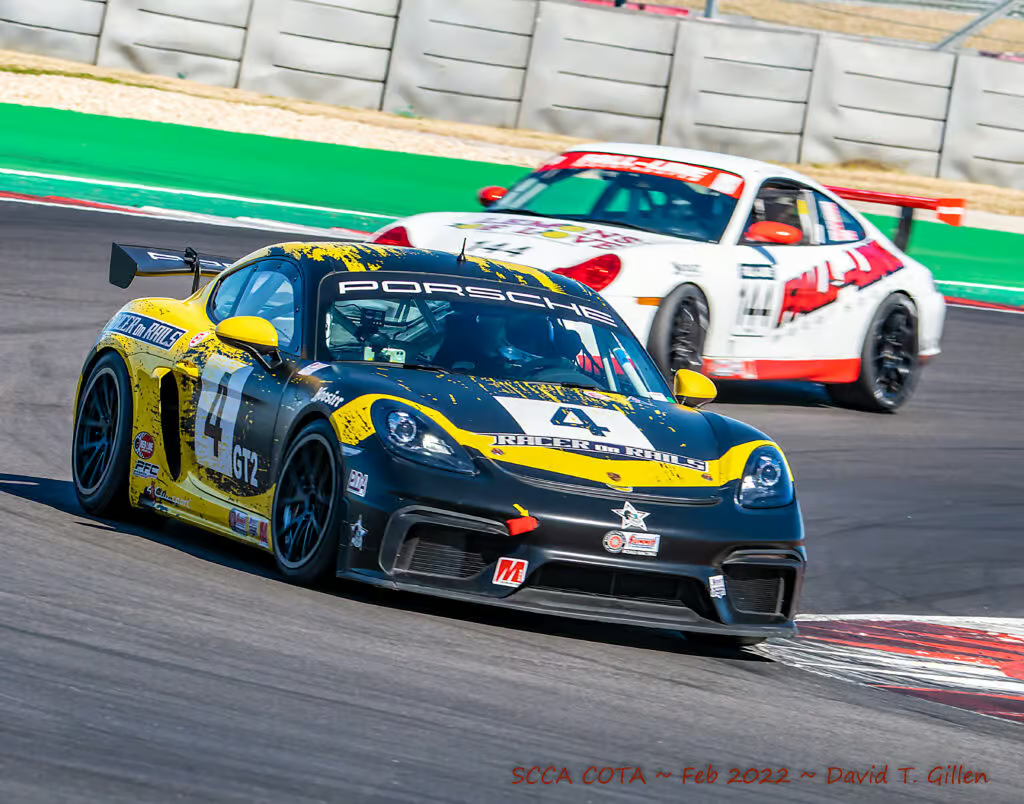
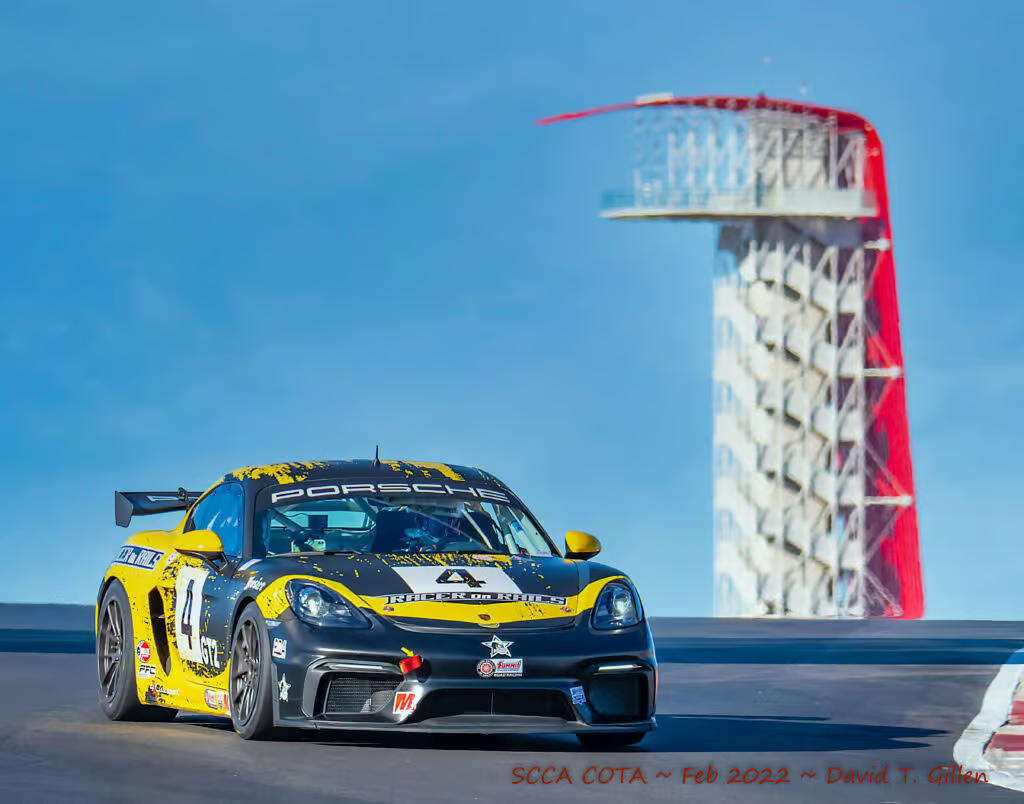
The result was a major unlock. Chris knocked roughly a second from his previous bests and started driving with the kind of intent we knew was still there.

Sunday morning, he was determined to prove Saturday was not a one-off. He wanted to build on the confidence instead of simply enjoy the memory of it.

He did.

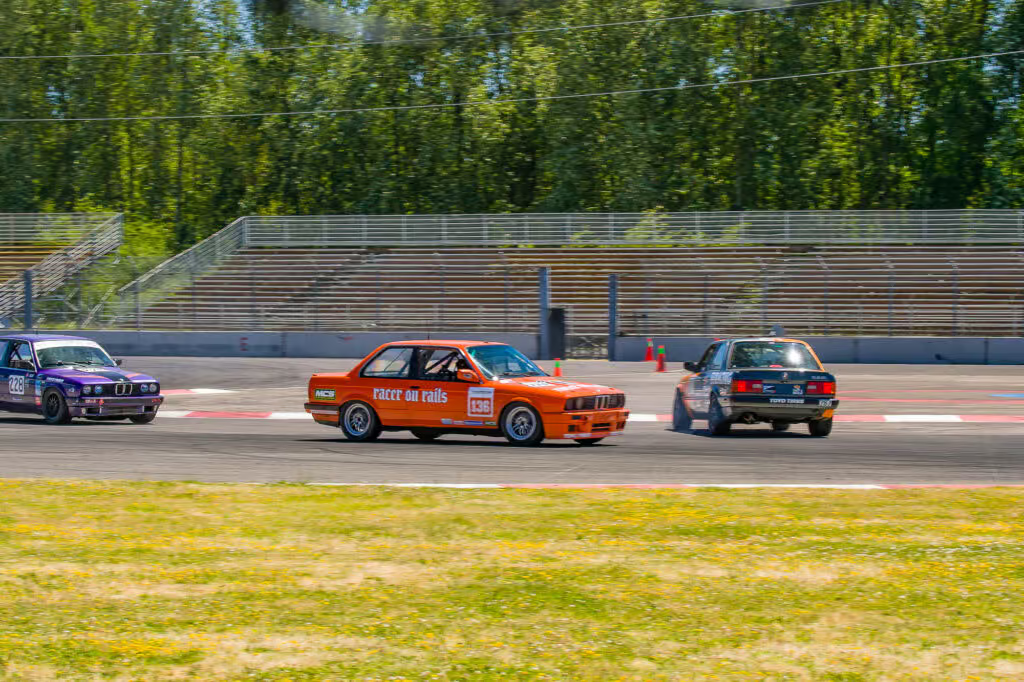
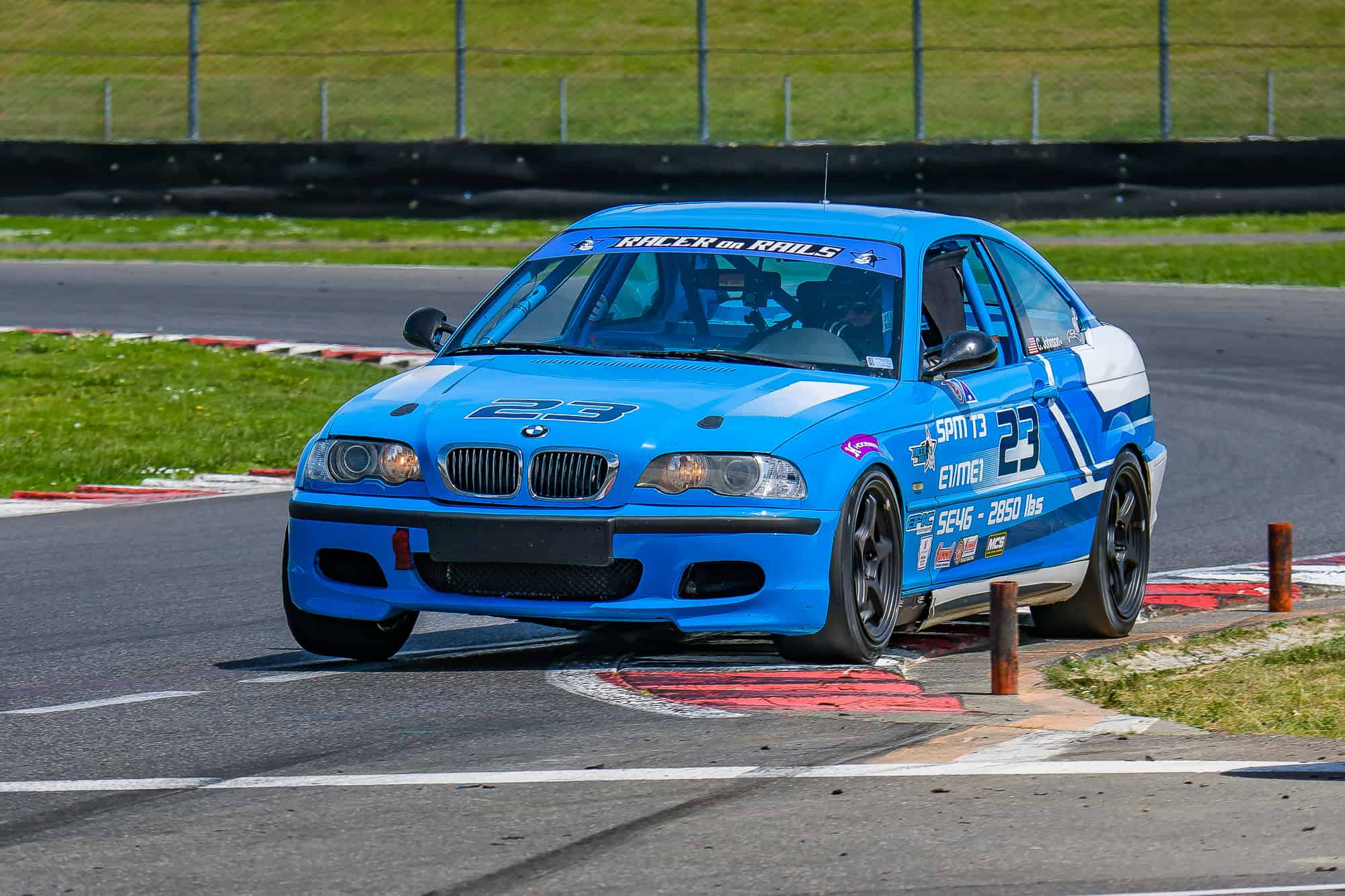
Blue Racer on Rails BMW Spec E46 Touring 3 race car using the curbing at Portland International Raceway during the Oregon SCCA Hoosier Super Tour.
By Sunday, Chris was driving with more commitment and using the confidence from Saturday’s race to unlock another step forward. (C) 2025 Doug Berger | DBPics

In Race 2, Chris carried the lessons forward. He cleared the cars he had been battling with on Saturday and found himself racing farther up the field, with new competition and a new target. That is always one of the best signs in driver development: yesterday’s mountain becomes today’s baseline.

The wild part? He did all of this while nursing an engine that had given us a scare on Friday. Chris had an over-rev, followed by white smoke out the tailpipe. Jordan kept a close eye on the car for the rest of the weekend, and thankfully it made it through without getting worse.

So yes, Chris had a big weekend on the stopwatch. But the bigger unlock was mental. This was a driver remembering that confidence is not something you wait around to receive. Sometimes you have to go take a bite out of the lap and let the confidence catch up.

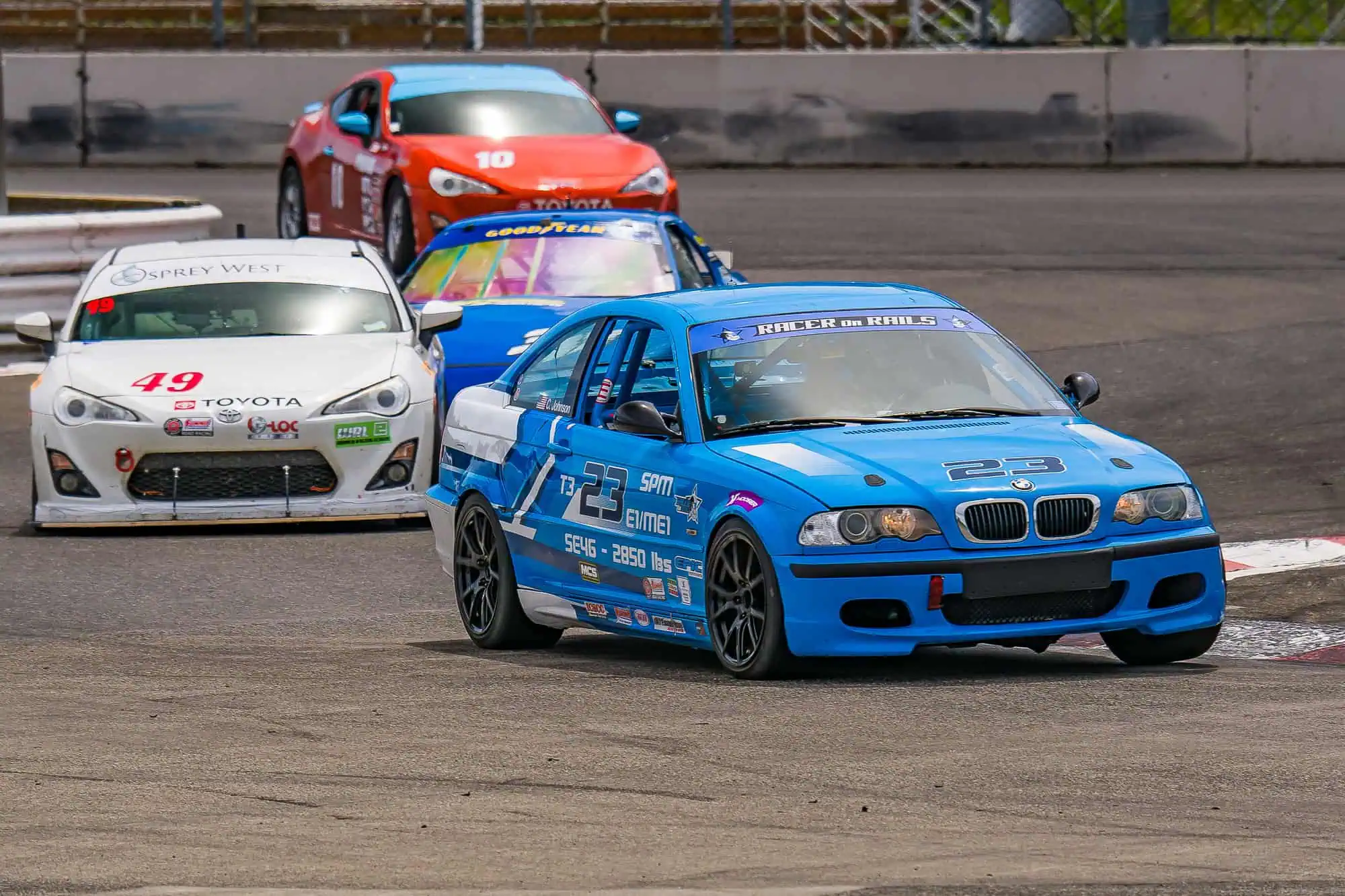
Chris Johnson driving the blue Racer on Rails BMW Spec E46 Touring 3 race car ahead of race traffic at Portland International Raceway.
Chris found himself racing harder, cleaner, and farther up the field as the weekend progressed. (C) 2025 Doug Berger | DBPics

Beef Wellington: A Short Weekend, But the Right Call

Beef’s weekend ended earlier than anyone wanted.

The BMW M240iR had a solid shakedown at Pacific Raceways the week before, so we came into Portland expecting to continue learning the car and building momentum. Instead, the car started overheating after only four or five flying laps.

At first, it looked like the usual race-car mystery novel: temperatures okay, then suddenly not okay. The car would run fine, then start building too much coolant pressure and blow through the expansion tank valve.

The team worked through the problem methodically. Cooling system. Pressure behavior. Failure pattern. Repeatability. The ugly little clues all started pointing in the same direction.

Head gasket.

Mega bummer.

That is never the way we want a weekend to end, especially with a new-to-him but still used/junkyard engine. But there is a version of this story that is much worse. We caught it before destroying the whole engine, avoided turning a repair into a full-scale catastrophe, and got the car pointed toward the work needed before June Sprints at Road America later in the month.

Sometimes race weekends are about trophies. Sometimes they are about knowing when to stop digging.

This was the right call. Not fun. Not glamorous. But right.

Ron Tanemura: Expanding the Driving Toolbox

Ron’s Portland weekend had a different purpose.

He was in a Spec Racer Ford Gen3 rental with Flat Out Racing, while continuing to work with Tyler as part of the Racer on Rails coaching program. The goal was not simply to jump in a new car and chase a number. The goal was to expand his driving range.

That matters.

Ron has been intentionally building a broader driving education. Different platforms. Different sensations. Different demands. The SRF3 is a very different animal from a BMW sedan. It is lighter, more direct, more exposed, and less forgiving of half-commitment. It wants clearer inputs. It rewards decisiveness. It asks the driver to be comfortable with the car moving underneath them.

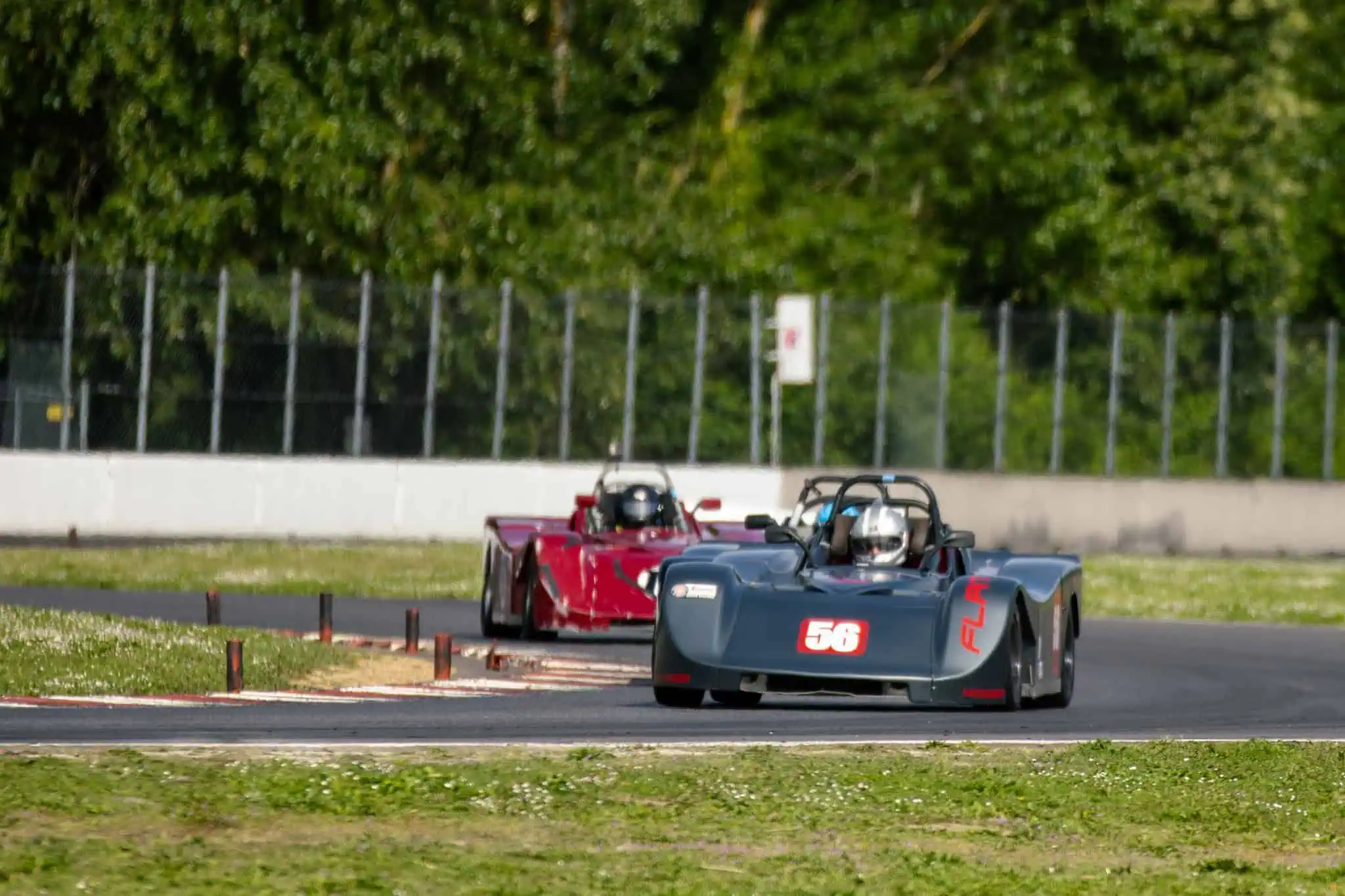
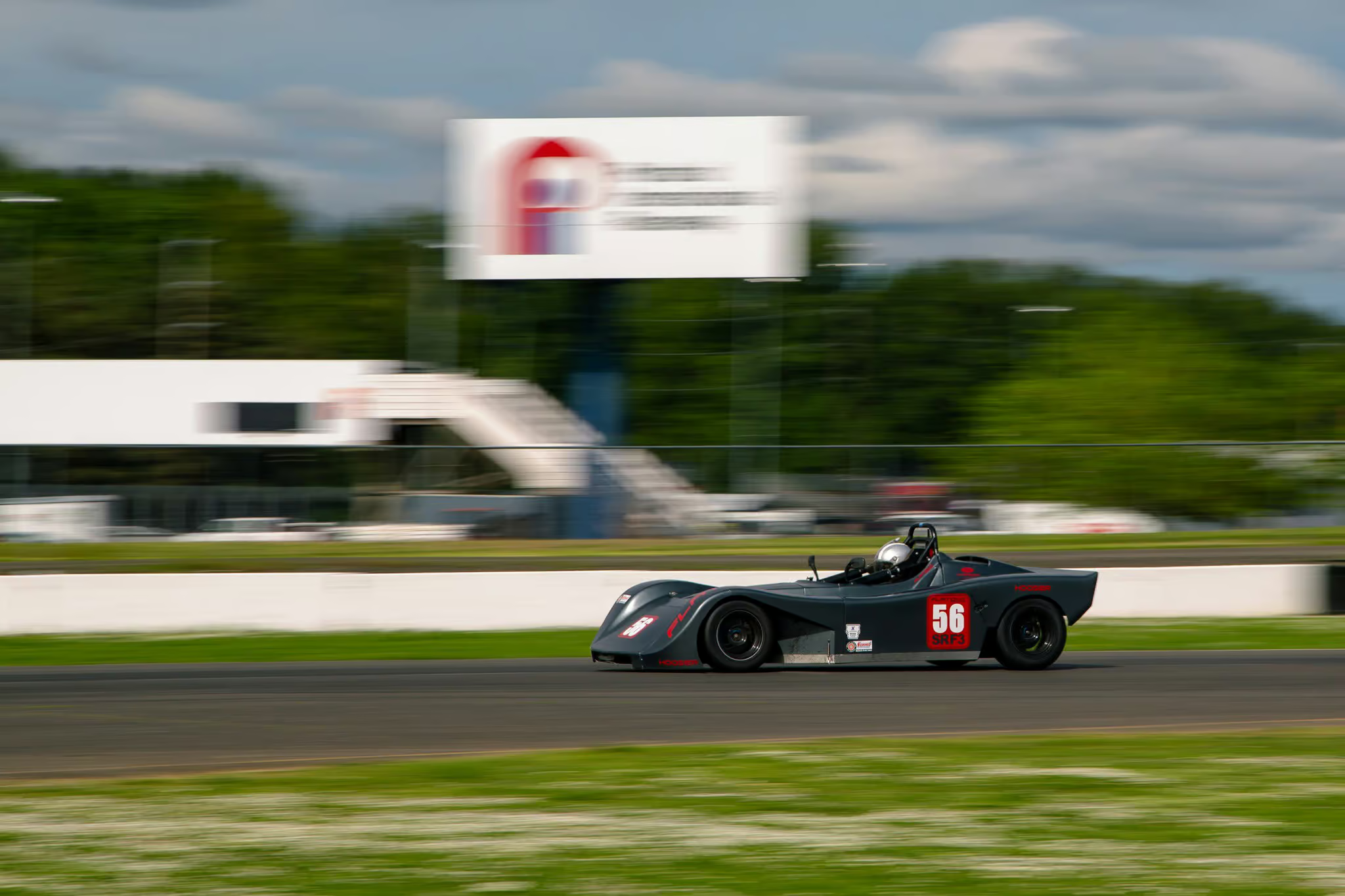
Ron Tanemura driving a black Spec Racer Ford Gen3 through Portland International Raceway during an SCCA race weekend.
Ron Tanemura used the Spec Racer Ford Gen3 weekend to expand his driving range and build a new real-car baseline. (C) 2025 Doug Berger | DBPics

For Ron, the weekend established something important: racing the SRF3 is viable for him. He handled the starts well, showed good awareness, avoided major self-inflicted issues, and built a baseline he can come back to.

The next layer is not secret. It is also not simple.

It is about closing the gap between understanding and execution. Ron has done real work in the sim. He knows a lot of the “recipe” for the car and track. But the real car adds sensation, consequence, tire feel, traffic, imperfect references, and the pressure of being around other drivers. That gap between knowing and doing is where driver development actually lives.

The coaching takeaway was clear: more commitment, more decisive brake release, clearer throttle discipline, more willingness to let the car rotate, and more assertive racecraft once the race settles in.

That is exactly why this was a valuable weekend. Ron did not just collect laps. He collected a sharper understanding of what the next phase of work needs to be.

Black Spec Racer Ford Gen3 race car speeding past the Portland International Raceway front straight during an SCCA race weekend.
A new car, a new rhythm, and another layer in Ron’s broader driver development plan. (C) 2025 Doug Berger | DBPics

And that is the whole point of a driver development plan. Not every weekend is supposed to be a finished product. Some weekends are supposed to reveal the next door.

Gama Aguilar: Engineering the Window

For Gama and the Nissan 370Z, Portland was about building on the lessons from Thunderhill.

At Thunderhill, we had speed, but we were still fighting the car. The Z had pace in flashes, but it was not yet living in a consistent, repeatable window. Under braking and turn-in, the car still had moments where it felt like it was asking for trust without giving enough trust back.

Before Portland, Ian spent a full week digging into the chassis, working through an engineering workbook, checking assumptions, and giving the car the kind of measured attention that separates guessing from development. We are not going to give away every detail of what we found, but the big picture was clear: there was systemic pace hiding in the car.

That was the unlock.

This was not about finding one magic adjustment or chasing a one-lap setup. It was about understanding the car at a deeper level, getting it into a healthier operating window, and creating a foundation we could actually build on across a full weekend.

From there, we reset the approach. The chassis setup moved in a better direction. The car became more predictable. We switched to nitrogen in the tires, including multiple purge cycles to reduce the influence of air and moisture. Then we started fresh on understanding pressure build, temperature behavior, and how to keep the tire in a usable window from the first hard lap to the last.

That became the real work of the weekend.

Not “what makes one fast lap?” but “what makes the car fast, repeatable, and trustworthy every time we lean on it?”

By Friday, the difference was obvious. For the first time ever in the 370Z, we could push the car hard every session and have it respond the same way. The car was no longer giving us a narrow little keyhole of performance. It gave us a window. And once we had a window, we could finally start doing real race-car work.

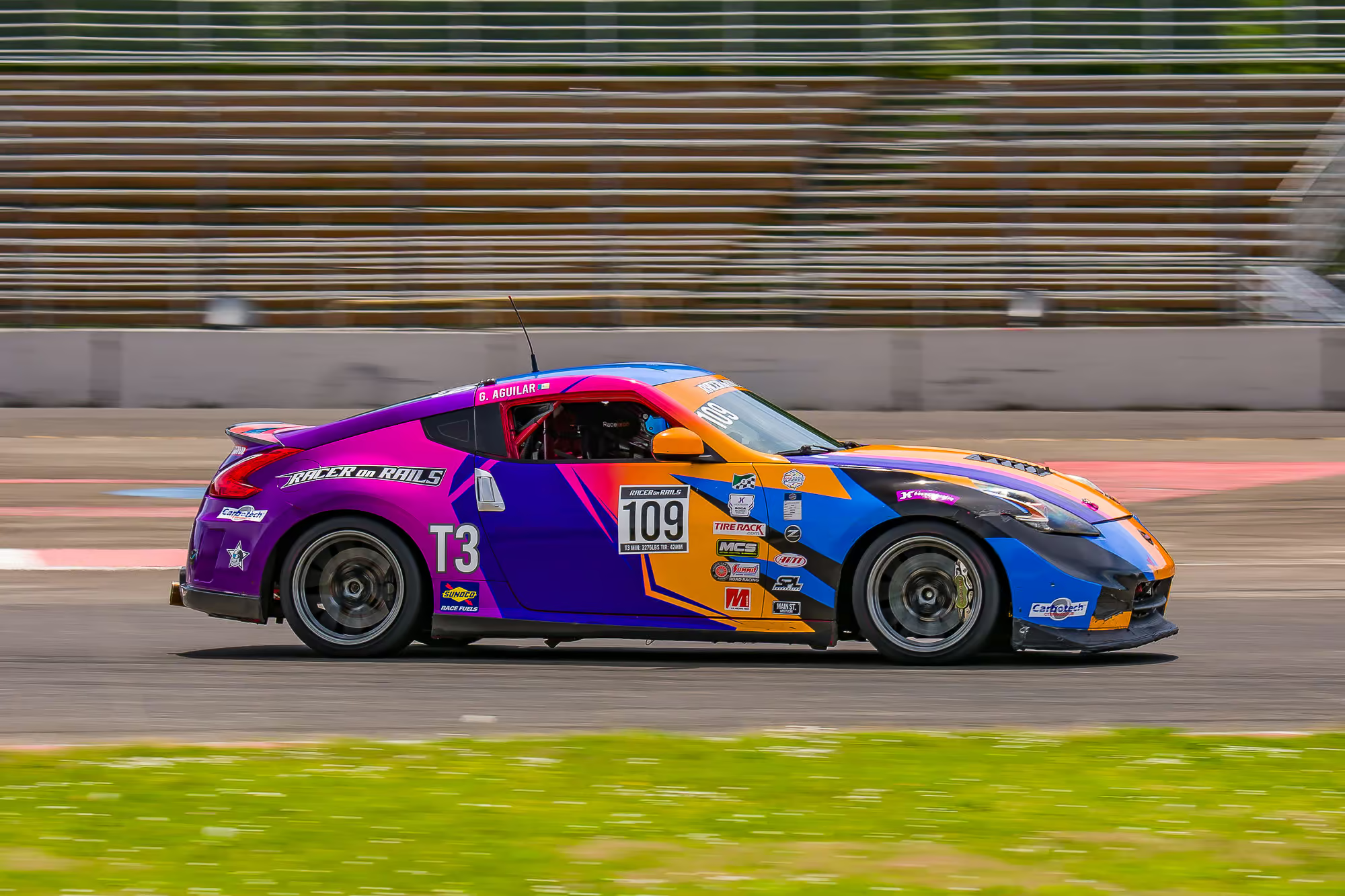
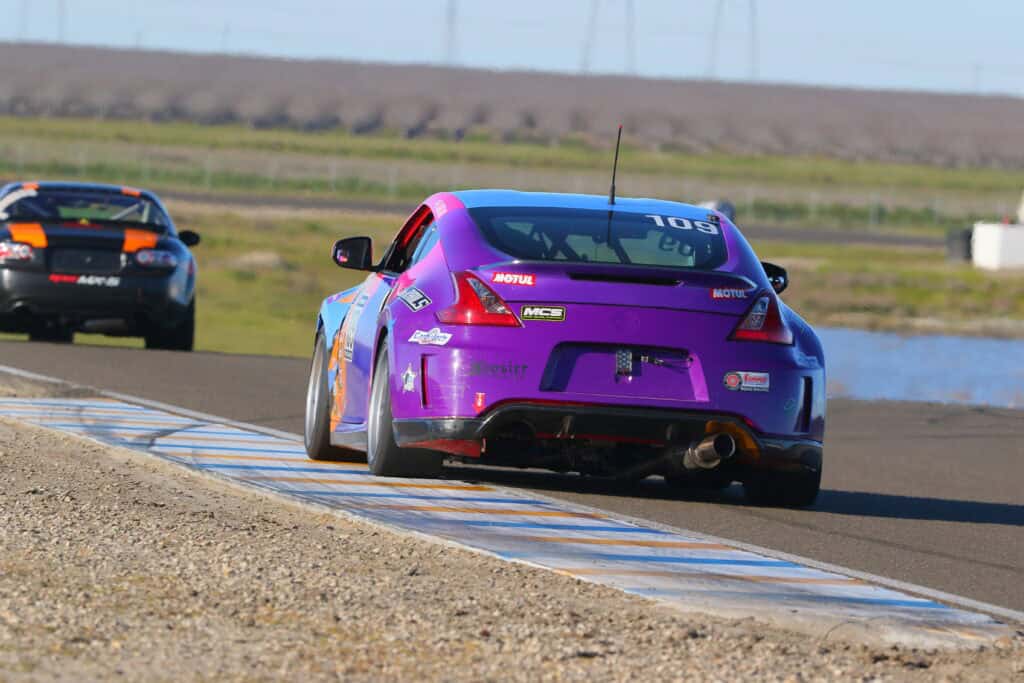
Side profile of the Racer on Rails Nissan 370Z Touring 3 race car at speed on the front straight at Portland International Raceway.
After ride height, suspension geometry, nitrogen, and tire pressure work, the 370Z finally delivered a repeatable setup window. (C) 2025 Doug Berger | DBPics

That is a big deal.

The official Race 1 time cards showed the progress starting to show up on paper, with the #109 370Z quickly moving from a 1:26.946 opening lap into a 1:24.759, then a 1:24.526, then a 1:24.701. More important than the single lap was the shape of the run. The car stayed in the window. The laps stayed usable. The team finally had a platform we could tune instead of survive.

By the race weekend, we were fine-tuning instead of firefighting.

The result was an easy Touring 3 pole, a Saturday T3 win, and then another T3 win on Sunday to complete the weekend sweep.

Saturday was not without drama. At the start, there was unnecessary contact with the STU pole sitter that could have ended the race before it properly got going. Thankfully, the Apex forged wheel took an absurd hit and somehow held on. The car survived, the tire held, and we were able to finish.

Racer on Rails Nissan 370Z leading a tight pack of race cars through the Portland International Raceway chicane during the SCCA Hoosier Super Tour.
Saturday’s race had contact, traffic, and plenty of chicane chaos, but the 370Z stayed together and brought home the Touring 3 win. (C) 2025 Doug Berger | DBPics

On Sunday, we replaced the damaged wheel and tire, put our heads down, and went for a maximum race-pace push.

That was the most encouraging part of the weekend. Not just winning. Not just getting through the races. But seeing that the car had pace in conditions that were not perfect. The overcast morning cloud cover had burned off by the time our Sunday race started, the track was warmer, and the car still had the ability to push toward the kind of pace we have seen from some of the strongest Touring 3 drivers at this event in prior years.

Gama Aguilar-Gamez driving the Racer on Rails Nissan 370Z Touring 3 race car through Portland International Raceway with a Spec MX-5 behind.
The weekend’s biggest win was not just the result. It was finally having a 370Z that could be leaned on lap after lap. (C) 2025 Doug Berger | DBPics

That is the good stuff.

The kind of weekend where the notebook matters as much as the trophy.

The Team Behind the Weekend

Like most race weekends, Portland had its share of curveballs.

Jordan’s personal car broke down on the way to Portland. Beef’s M240iR tried to turn Friday into a cooling system crime scene. Chris’s Spec E46 had to be monitored all weekend after an over-rev and smoke. The Z needed continued tuning and then a wheel/tire change after race contact.

None of that is unusual in racing. That is the job.

What mattered was how the team responded.

Ian’s engineering work before the event gave the Z a new foundation. Jordan kept Chris’s car alive and monitored. Tyler continued guiding drivers through both technical and mental development. The crew absorbed the chaos, kept working the problems, and moved the weekend forward.

That is what we want Racer on Rails to be.

Not just a shop that brings cars to the track. A team that develops cars, develops drivers, solves problems, and helps people leave the weekend with better tools than they arrived with.

Portland gave us a lot.

A Touring 3 weekend sweep for the 370Z. A major mental unlock for Chris. A hard but smart diagnostic call on Beef’s BMW. A valuable SRF3 baseline for Ron. A stronger engineering process for the team. And a reminder that race weekends are rarely clean, but they can still be deeply productive.

We left Portland feeling like the whole program moved forward.

Goals. Smiles. Memories. LFG.

Posted on

SCCA US Majors Tour – Thunderhill 2026 – The Last Stop South

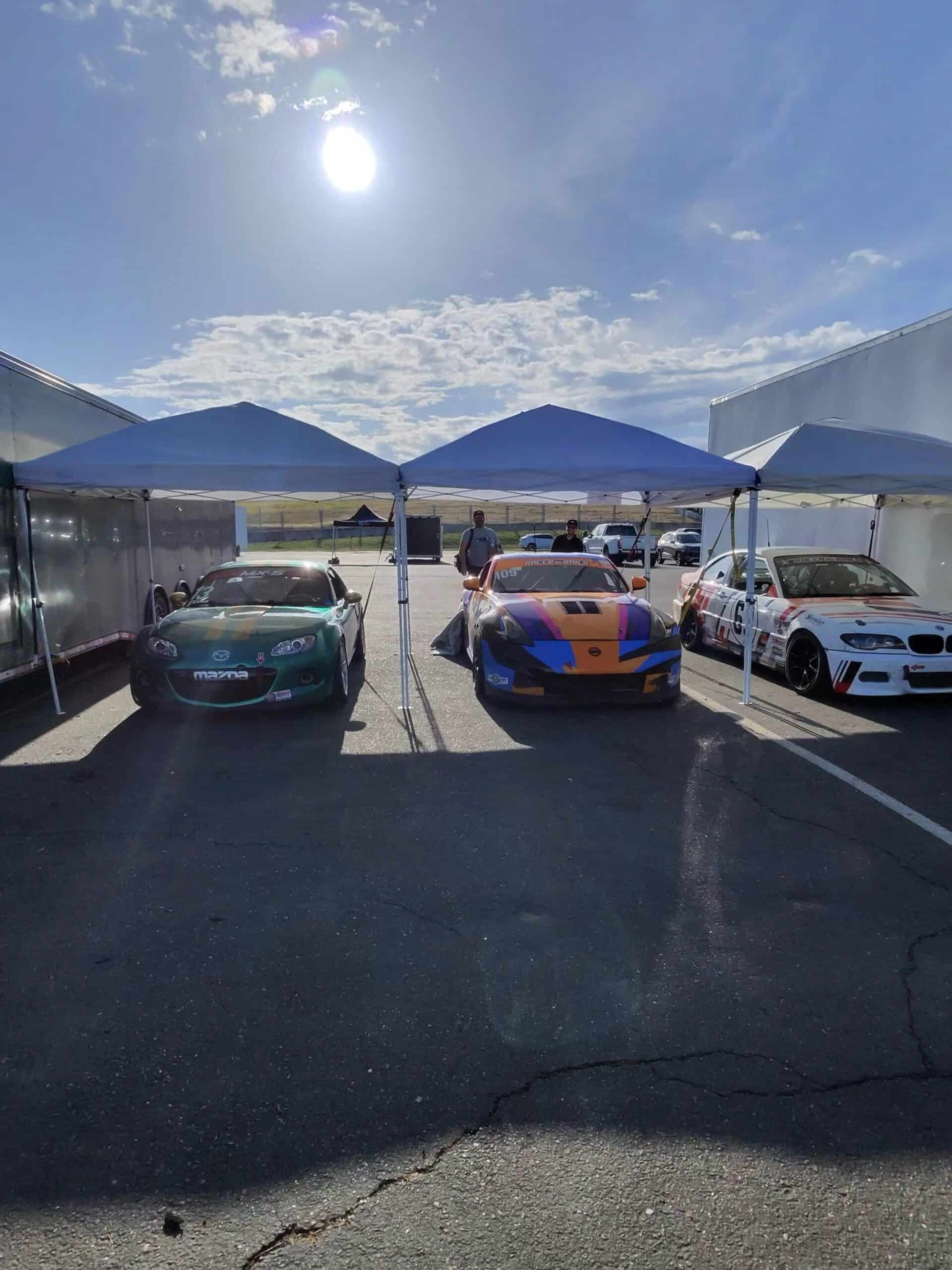
Racer on Rails paddock'ed at Thunderhill Raceway Park

In late April, we wrapped up the final stop of our early-season West Coast racing trip with the 2026 SCCA U.S. Majors Tour at Thunderhill Raceway Park.

This trip started in February at Buttonwillow’s new “The Circuit” layout, continued through a NASA NorCal weekend at Sonoma Raceway, and finished at Thunderhill before the cars, hauler, and team made the long drive back to the Pacific Northwest.

For anyone newer to club racing, the SCCA U.S. Majors Tour is one of the national-level competition paths within the Sports Car Club of America. It brings together strong regional and national drivers, gives racers a chance to measure themselves against deeper fields, and, for many drivers, forms part of the path toward the SCCA National Championship Runoffs.

Thunderhill is always a fun place to end a trip like this. It has elevation, fast commitment corners, technical braking zones, and enough rhythm changes to keep a driver honest. For this event, we ran the Crows Nest configuration, which adds its own personality to the lap and rewards drivers who can stay patient, committed, and precise.

For Racer on Rails, this weekend had two main drivers:

Gama Aguilar-Gamez in the No. 109 Nissan 370Z, competing in Touring 3

Ron Tanemura in his BMW Spec E46, competing in Touring 3 and STU

On paper, it was another race weekend. In reality, it was exactly the kind of weekend that shows why we love this sport so much. There were clear goals, real progress, hard-earned smiles, and a few memories that will probably get retold in the paddock for a long time.

Why We Were There

Every driver came into Thunderhill with a different mission.

For Gama, the weekend was an important step in the 2026 Runoffs journey. To qualify for the SCCA National Championship Runoffs, drivers need to complete the required number of race weekends and race finishes. After completing two races earlier in the season, Thunderhill became a critical opportunity to add two more finishes and move much closer to locking in the qualification path.

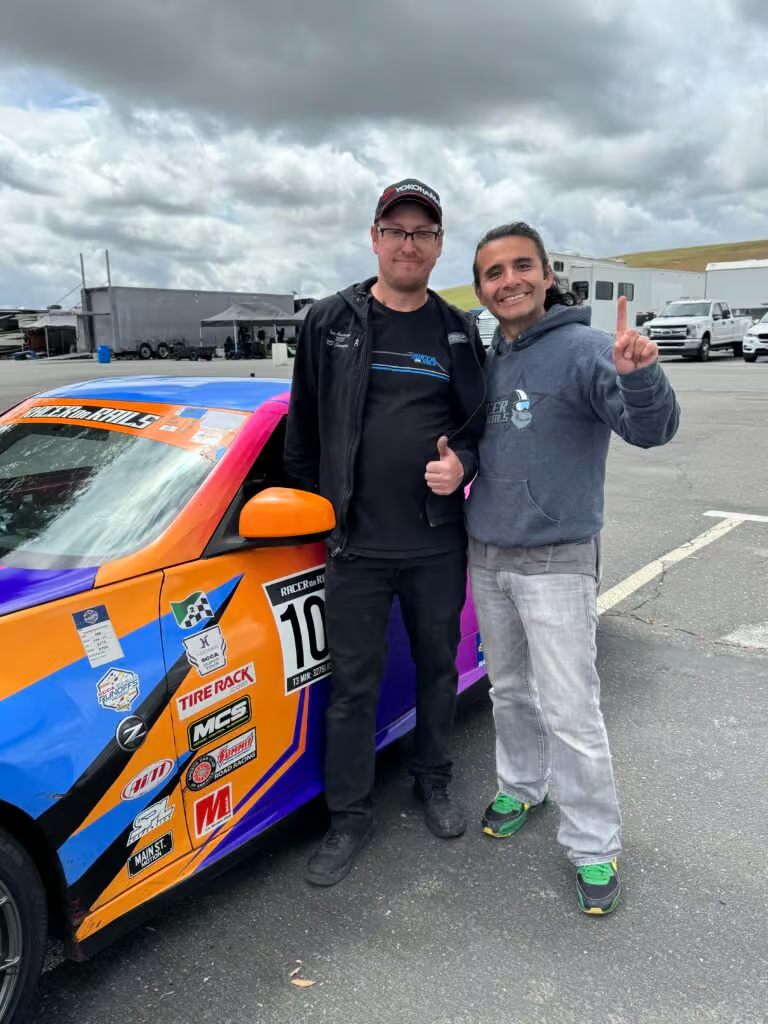
Ron Tanemura never stops looking for opportunity!

But the weekend was not just about checking a box.

The 370Z is still a car we are actively developing. It has shown strong pace, but like most serious race cars, especially one being pushed toward national competitiveness, the work is never really finished. Reliability, braking behavior, tire temperature, chassis balance, setup range, and driver confidence all remain part of the larger development puzzle.

For Ron, the goal was different but just as important.

Ron’s bigger mission this year is driver development. Not just getting faster in one car, at one track, in one situation, but becoming more adaptable, more trusted, and more complete as a driver.

A big part of that is variety. Different tracks. Different race groups. Different cars around him. Different levels of pressure. The long-term target is for him to be the kind of driver who can step into different racing environments, learn quickly, run cleanly, stay close enough on pace, and be trusted by the people around him.

That does not happen by accident.

It happens by putting yourself in new situations, then doing the work to understand them. It happens by learning how to drive a car when it moves around underneath you. It happens by getting comfortable being uncomfortable.

Thunderhill gave Ron exactly that kind of opportunity.

Ron’s Weekend: Raising the Baseline

Ron came into Thunderhill with a very clear goal: build on last year, get more comfortable with the car moving underneath him, and leave with a higher baseline as a driver.

That is one of the things we love about working with Ron. He is not just chasing a result. He is actively working on his craft. He pays attention to what the car is doing, what he is doing, and where the next layer of performance might be hiding.

Thunderhill gave him a perfect environment for that.

Last year, Ron’s best lap at Thunderhill was a 2:06.24. This year, he came close with a 2:06.46. On paper, that means he did not beat his previous personal best. But the timing sheet does not tell the full story.

The bigger win was consistency.

Last year, Ron had one lap in the 2:06 range, one lap in the low 2:07 range, and a handful of laps in the 2:08s. This year, he had five laps in the 2:06s, eight laps in the 2:07s, and seventeen laps in the 2:08s.

That matters.

A single fast lap is fun. A higher baseline is progress.

Ron’s own takeaway from the weekend was that he did not feel quite as “on it” as he did at Sonoma, but he was close enough to feel like his pace is becoming more real and more repeatable. That is exactly the kind of step we want to see from a developing driver.

The biggest learning was around car control.

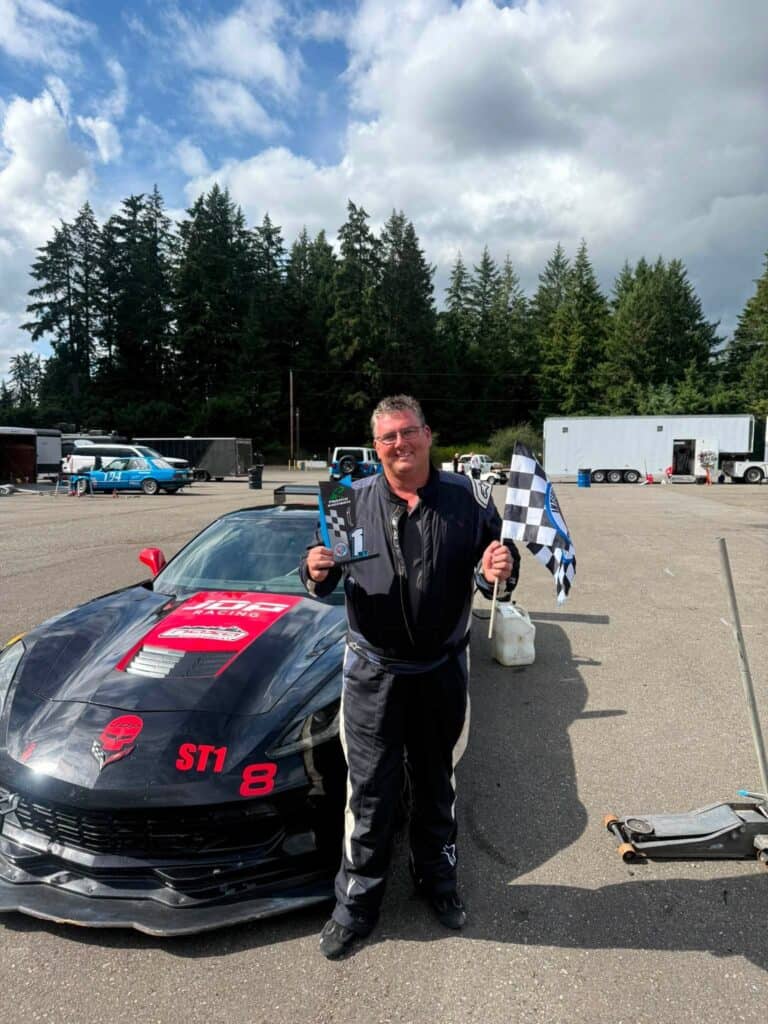
Post session – getting that Chequered flag for Ron!

When Ron was faster, the car was moving. It was rotating. He was catching it, correcting it, and working with it instead of waiting for the car to feel perfectly settled. During Friday testing, especially in the later sessions, he started getting more comfortable with that feeling. The next challenge is learning how to access that level of commitment earlier in a session, instead of needing several laps to build into it.

That became one of his biggest themes from the weekend: push earlier, trust the car sooner, and learn to drive closer to the limit on demand.

Saturday showed that progress.

In his first Touring 3 qualifying session, Ron was quick and consistent, including a run of laps in the 2:06s before the session ended. Later, in his second qualifying session, he was fast immediately after the restart, showing that the pace was starting to become easier to access.

The races gave him a different kind of experience.

In Touring 3, Ron finished second in class. It was a solid result, but he did not have as much direct class competition around him as he would have liked. At Sonoma, he had more sustained battles, and Thunderhill was a little quieter in that regard.

But the weekend still gave him valuable race craft notes.

He worked on starts. He worked on positioning. He got reminders about following closer before the green, not over-defending Turn 1 when there is an opportunity to open the gap, and using commitment through fast corners to set up passing opportunities later in the lap.

Then Sunday threw the team a curveball.

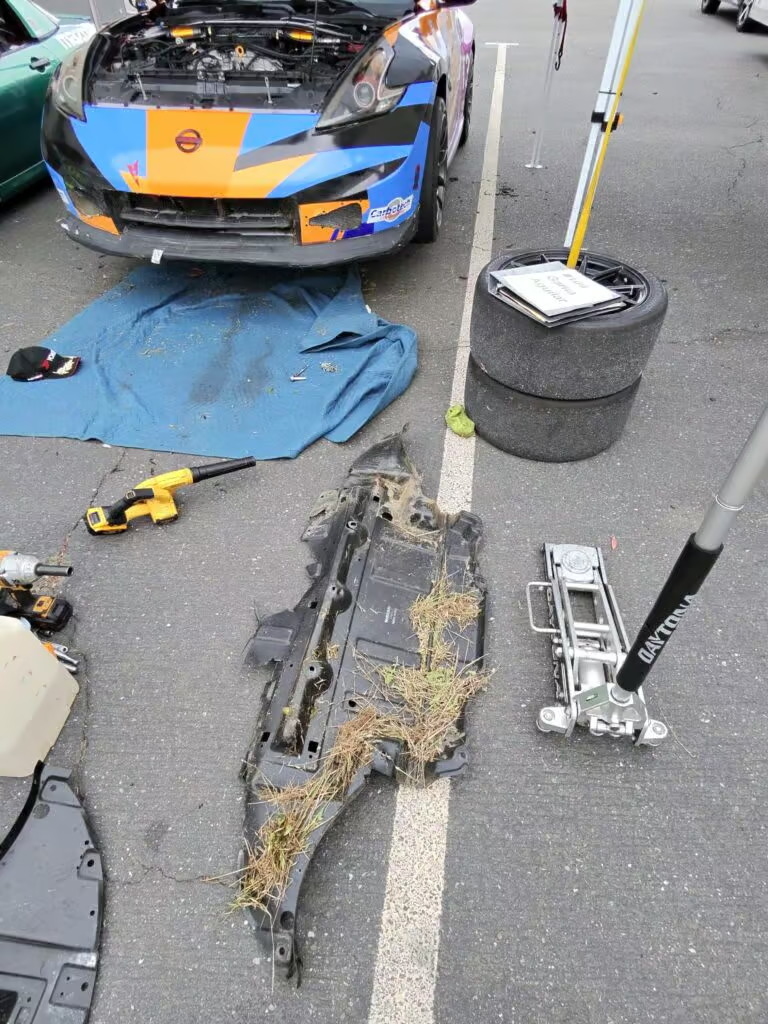
During Touring 3 qualifying, Ron quickly realized he had lost fourth gear. The transmission needed to be replaced, and the clock was not exactly being generous.

Thankfully, we had a spare transmission available.

The team looked at the schedule and knew it was going to be tight, but there was still a chance to get Ron back out for the STU race later that afternoon.

There was also something special waiting at the end.

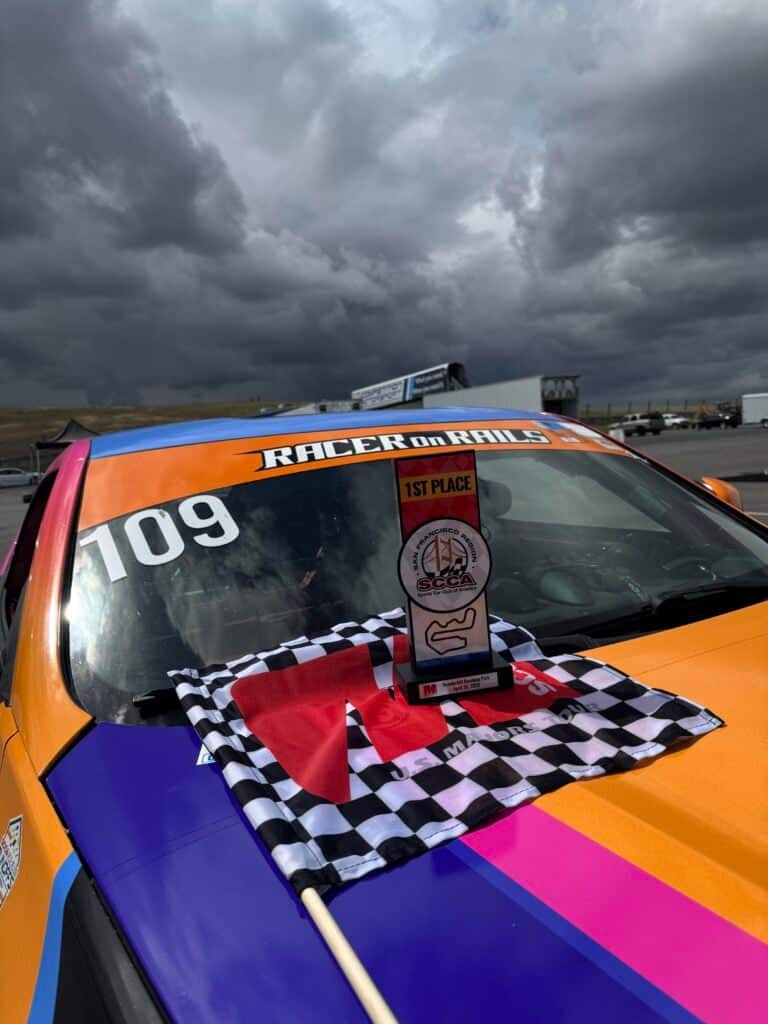
At SCCA Majors events, class winners often receive more than a trophy. This event was hosted by the San Francisco Region, and the class-win flags were a cool keepsake from the weekend.

So we made the call: let’s get Ron that flag.

The team jumped on the transmission swap, got the car buttoned up, warmed up, checked over, and ready. Ron made it to the race.

And he delivered.

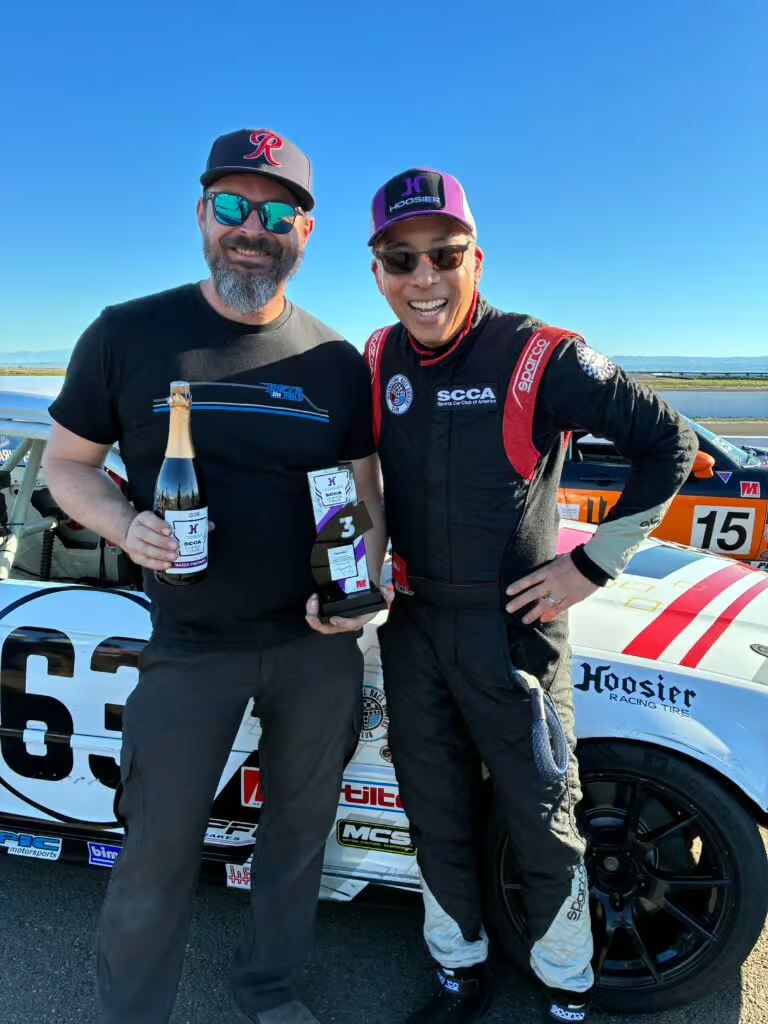
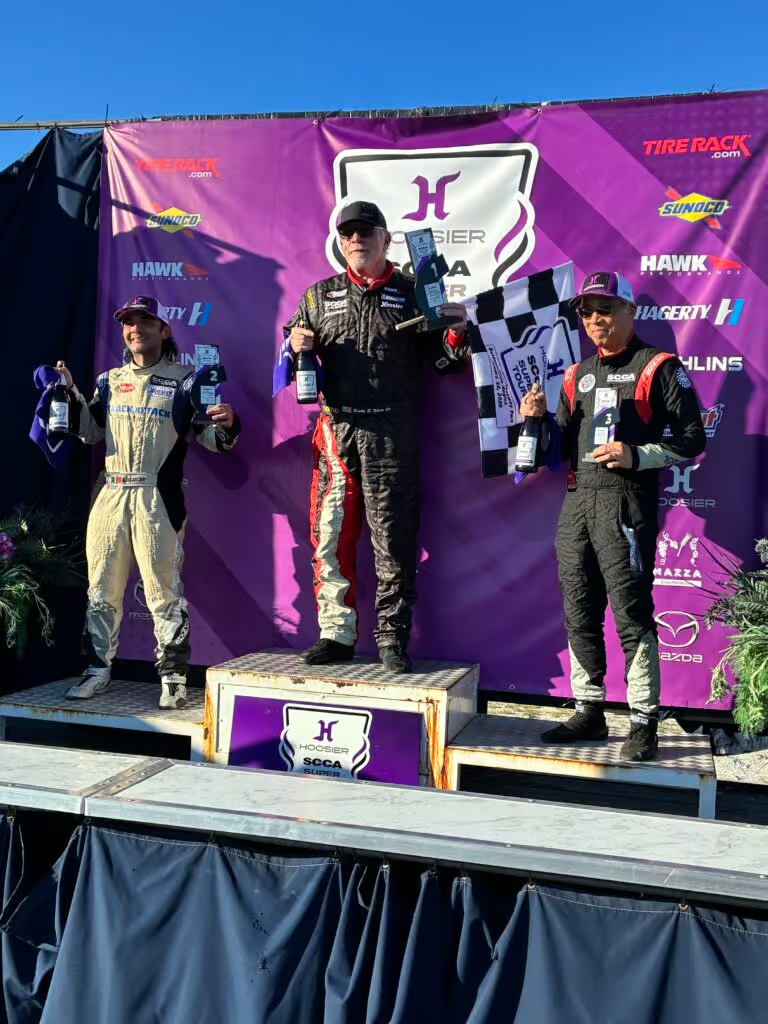
He finished third overall in Group 2, won STU, and brought home the flag.

But the real story was not just the flag. It was the full arc of the weekend: clear goals, honest self-assessment, measurable progress, a mechanical setback, a team thrash, and one more chance to go race.

That is the kind of weekend that builds a driver.

Gama’s Weekend: Runoffs Progress and More 370Z Development

For Gama, Thunderhill was about two things: continuing the Runoffs qualification path and continuing to develop the No. 109 Nissan 370Z into a nationally competitive Touring 3 car.

This was only the second full race weekend of the season for the Z, and we came in with some important new learning.

Before the event, Tyler spent time with our partners at Motion Control Suspension to better understand the internal behavior, adjustment range, and service considerations of our three-way dampers with external reservoirs. The details matter, and we came away with more tools in our toolbelt that have helped us start fine tuning the car’s behavior.

For a car like the 370Z, which has shown both pace and some sensitivity around braking behavior and tire temperature management, that kind of learning matters. We have been trying to understand how to make the car more compliant, more consistent, and easier to extract speed from over a full race distance.

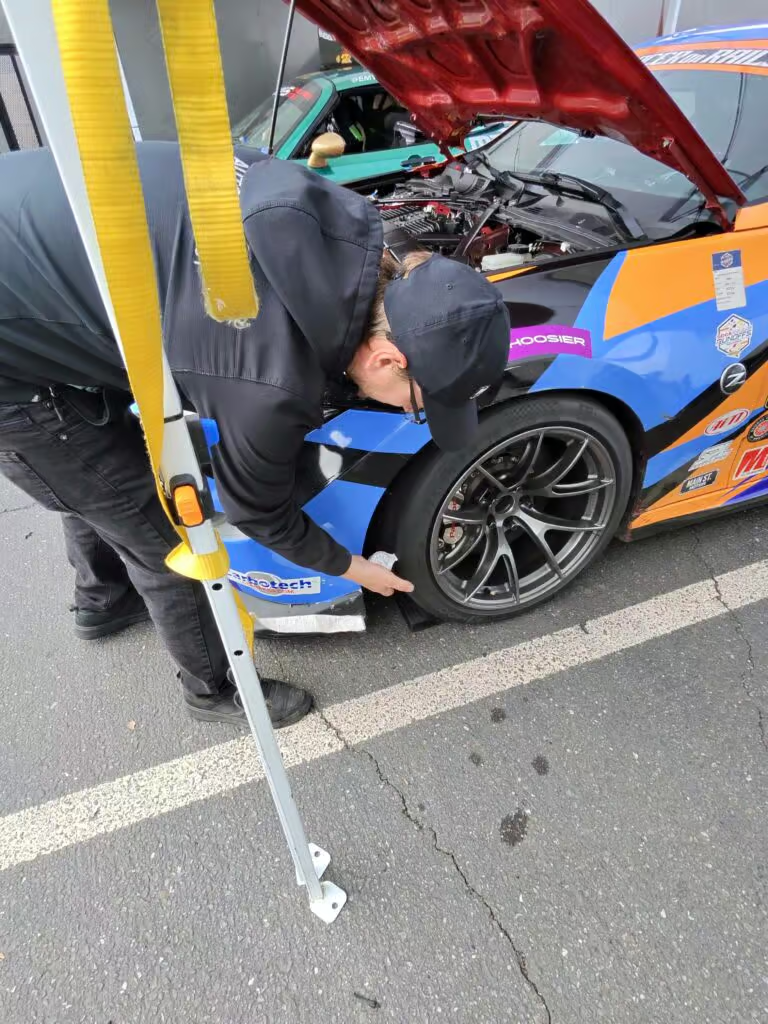
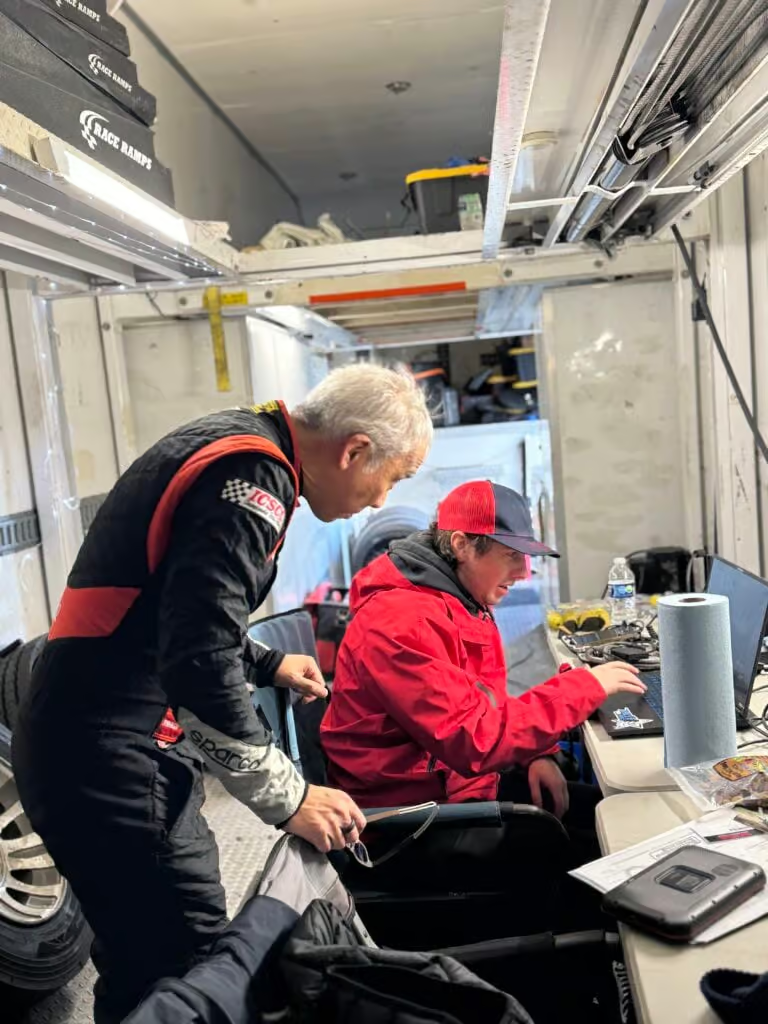
Ian Anderson getting the tire pressures dialed in before a session

The goal was not to find one magic adjustment. Race cars rarely work that way.

The goal was to understand the platform better, continue chipping away at reliability concerns, give the driver a car that communicates more clearly, and keep moving the program forward with discipline.

That is the unglamorous part of race car development. It is not always fireworks. Sometimes it is pressure checks, damper notes, tire readings, brake feel, driver feedback, and the quiet little decisions that add up to real progress.

Thunderhill gave us more of that.

On Saturday, Gama finished fifth overall in Group 1 and first in Touring 3, with a best lap of 2:02.789. That result mattered for the points and the Runoffs path, but it also showed that the 370Z had real speed in the class.

On Sunday, the priority was clear: finish the race, keep stacking Runoffs qualification progress, and bring the car home. Gama finished fourth overall and again first in Touring 3, adding another strong finish to the season.

That's another P1 sweep of a race weekend for Ian, Gama, and the Nissan 370z in SCCA Touring 3
That’s another P1 sweep of a race weekend for Ian, Gama, and the Nissan 370z in SCCA Touring 3

Just as importantly, the weekend helped validate some of the direction we are taking with the chassis. The car became easier to work with, more predictable, and more useful as a development platform.

For Gama’s season, the biggest objective was to continue stacking the race finishes needed for Runoffs qualification. In that sense, the weekend did exactly what it needed to do.

For the car, it gave us more data.

It’s not all roses and daisies when chasing speed. Sometimes you find yourself in the grass…

For the driver, it gave more confidence.

For the team, it gave another reminder that the path to national-level competitiveness is built one weekend, one session, and one decision at a time.

The Bigger Picture

The easy version of a race recap is to talk about qualifying positions, lap times, race results, and trophies.

Those things matter. We care about them. We work hard for them.

But the best weekends usually have another layer.

Ron’s weekend was a perfect example. He hit the goals he came in with, but still left wanting more. That is a good place to be. He raised his baseline, got more comfortable with the car moving, built more race craft notes, identified where the next step is, and still came home with a class win flag after the team thrashed to get him back on track.

Gama’s weekend was different, but connected. The 370Z program took another step forward, the Runoffs path became more achievable, and we continued learning how to get more out of the platform without losing sight of reliability and drivability.

That is the heart of what Racer on Rails is becoming.

Yes, we prepare race cars. Yes, we support race weekends. Yes, we care deeply about setup, reliability, data, execution, and all the thousand little details that make a race car work.

But ultimately, we are here to help drivers become better drivers.

Sometimes that means building a faster car. Sometimes that means making a car easier to trust. Sometimes that means helping a driver understand what they are feeling. Sometimes that means creating the right environment for a driver to stretch, learn, and come back wanting more.

We want to help people set goals that matter to them, whether that is winning a national championship, earning a Runoffs invite, becoming more comfortable with car control, developing race craft, or simply leaving the track knowing they took a real step forward.

That is why weekends like Thunderhill matter.

P1 both races in SCCA Touring 3 and collecting some hardware before the weather rolled in!

The cars came back north to the Pacific Northwest with more miles on them, more notes in the book, and a few more stories for the paddock. For us, it felt like the right ending to the first chapter of the season.

And for our drivers, it was another reminder that progress in racing rarely arrives as one giant leap.

Most of the time, it shows up as one better corner, one cleaner race, one smarter adjustment, one hard-earned finish, and one flag you almost did not make it back on track to win.

Posted on

Porsche Cayman GT4 Clubsport Build Overview

(2020 718 GT4 Clubsport – Track Day Edition)

If you’ve followed Racer on Rails for a while, you already know our philosophy: take great cars, make them better, and then drive the hell out of them. This 2020 Porsche Cayman GT4 Clubsport Track Day Edition is the perfect example — a factory-built Porsche Motorsports car with real pedigree and a second life that spans endurance racing, time attack, and driver development.

Before we go deeper, it’s important to understand which Clubsport variant this is, because Porsche built several versions:


718 Cayman GT4 Clubsport Variants

Track Day Edition (This Car)

  • Designed for private owners and track day use
  • Same 425 hp 3.8L flat-six as Comp version
  • Lighter-duty fuel system
  • No air-jack system (but provisions exist)
  • Not homologated for GT4 racing

Competition Version (Not This Car)

  • Fully homologated for GT4 racing
  • Air-jack system included
  • Larger motorsport fuel cell
  • Endurance switches & safety electronics
  • Homologation restricts power/aero changes
  • Carbon and natural fiber material body panels

Newer 718 Cayman GT4 RS Clubsport

  • 4.0L RS-based platform
  • More power, higher RPM ceiling
  • Improved aero and suspension
  • The current model used in IMSA/SRO GT4
  • Much closer to a “mini Cup Car”

Our car — the Track Day Edition — gives us the freedom to pursue more aero, more setup range, and more developmental headroom than the rules-restricted Competition version.


Where This GT4 Clubsport Came From

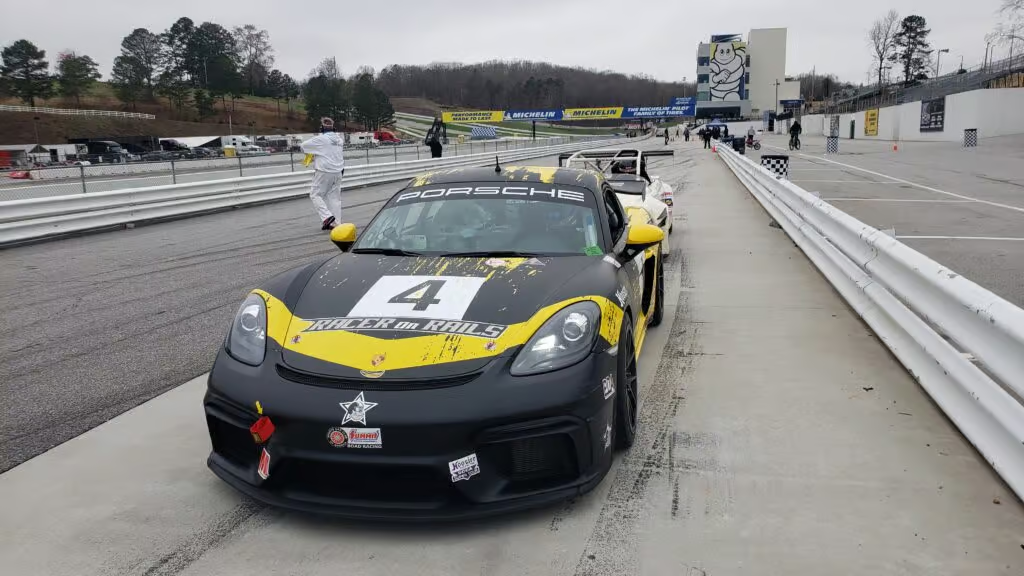
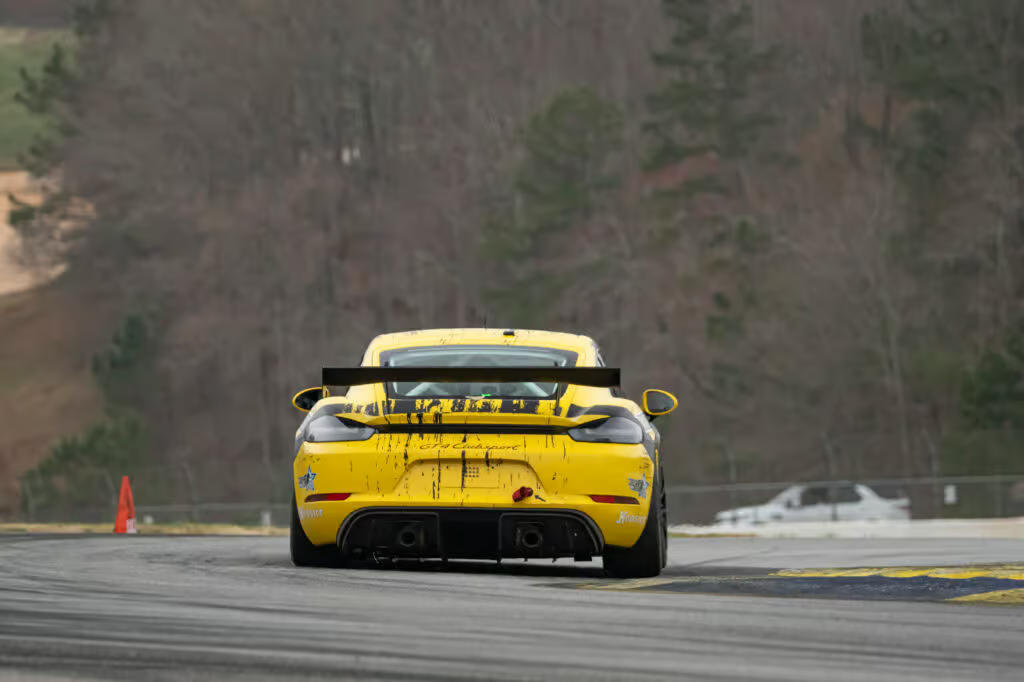
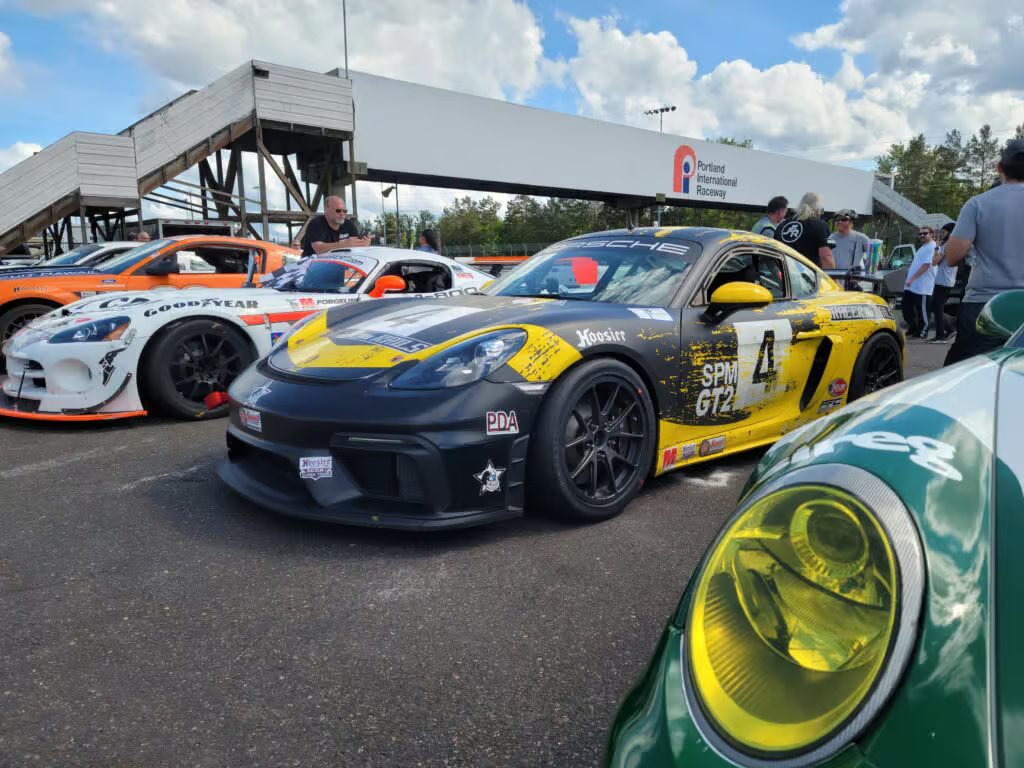
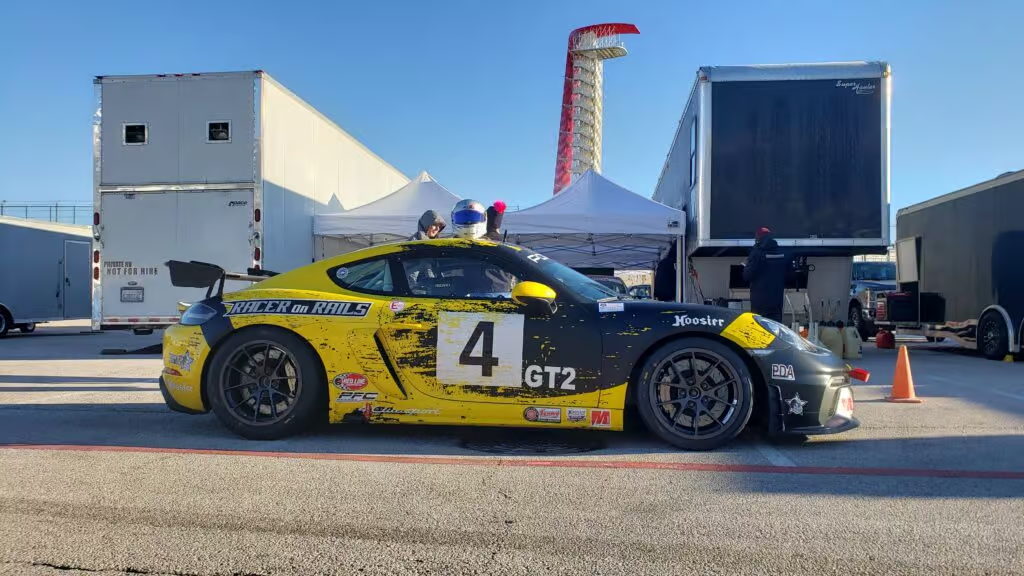
Photos of the car from its Ann Doherty era after arriving at RoR.

This GT4 Clubsport began its life with Ann Doherty, who ran it competitively in SCCA T1 and GT2 before upgrading to a 991.2 GT3 Cup Car.

Because the car came from Ann, we gained two major benefits:

  1. It had been maintained at a true professional standard.
  2. It had already proven itself at a national competition level.

When she moved to the Cup Car, we took ownership of the GT4 and immediately put it to work.


What We Used It For

1. Endurance Racing (2024)

Bombing down Turn 5 at Road America with World Racing League

The first chapter of this car’s life with us was national-level endurance racing:

  • WRL Road America — April 2024
    Our first outing. Strong pace, great aero learning, and flawless reliability.
  • ICSCC Cascade 8 Hours of Portland — October 2024
    A full-day grind that gave us massive data on tire wear, pit strategy, and aero balance.

The car was consistent, predictable, and incredibly reliable — exactly what you want in an endurance platform.


2. OnGrid Time Attack (2025)

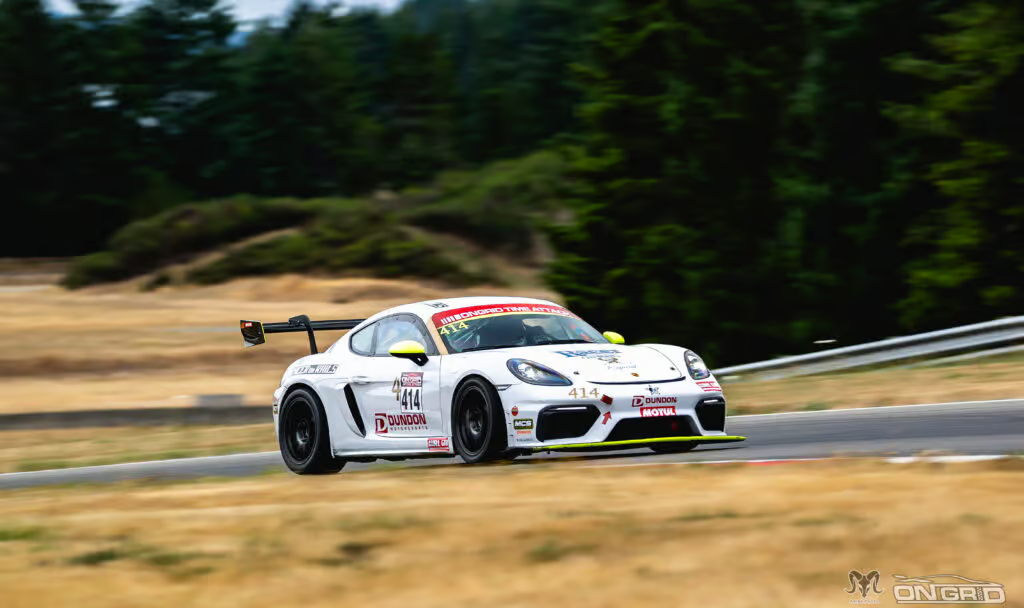
With the Dundon Valkyrie aero package installed, the car moved into OnGrid GT+ and instantly became a serious contender.

Huge downforce. Big mid-corner speed. Better braking stability. It was a transformation.

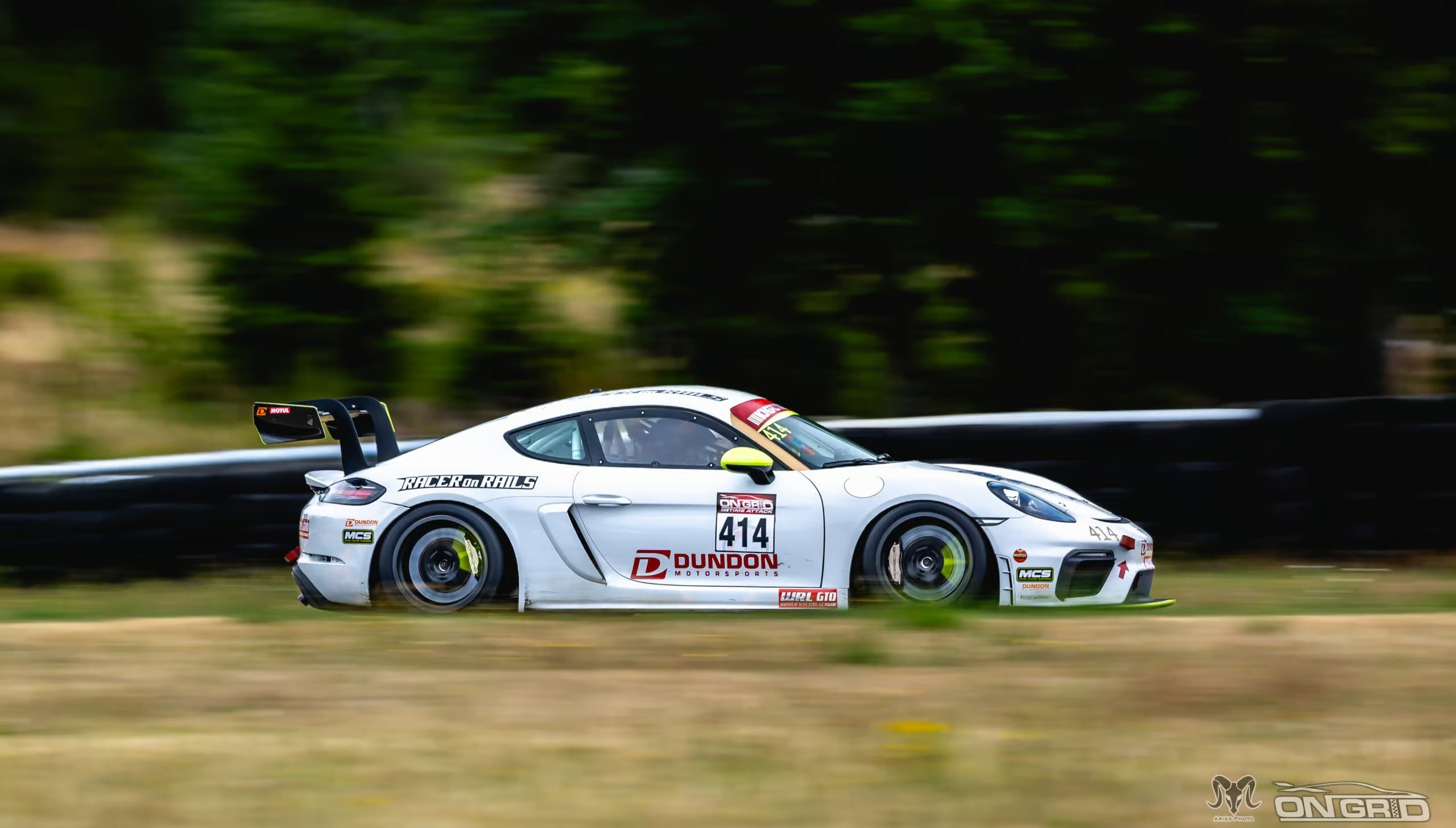
Check out one of the flying laps from this past summer – matching 992 and 991.2 GT3 Cup car lap times!

YouTube player

3. Driver Development & Testing Tool

This GT4 became one of our strongest tools for:

  • Advanced driver coaching
  • Back-to-back setup testing
  • Tire comparisons
  • Driver development beyond Spec E46, T3, and regional touring classes

Turnkey speed. Zero drama. Endless data.


Factory Specs — 2020 Porsche Cayman GT4 Clubsport (Track Day Edition)

PHOTO SUGGESTION: Interior cockpit photo or engine bay shot.

Engine & Drivetrain

  • 3.8L naturally aspirated flat-six
  • 425 hp @ 7,500 RPM
  • 7-speed PDK w/ motorsport tuning
  • Motorsport cooling system
  • Mechanical LSD

Chassis & Safety

  • FIA welded cage
  • Motorsport wiring harness
  • Composite doors
  • Fire system
  • Air-jack provisions (air jack system not currently installed)
  • Recaro race seat + 6-point harness

Suspension & Brakes

  • 3-way MCS motorsport dampers (upgrade)
  • Fully adjustable alignment
  • Porsche Motorsport ABS
  • Motorsport stability control

Aero

  • GT4-spec splitter but currently running the full Dundon Motorsports Valkyrie Aero package (front splitter, canards, rear wing)
  • Adjustable rear wing
  • Factory Flat floor
  • Factory cooling and airflow optimization

Our Modifications & Upgrades

Dundon Motorsports Valkyrie Aero Package

  • Full-length carbon splitter
  • Functional multi-channel front diffuser
  • Canards
  • Swan-neck rear wing
  • High-efficiency rear diffuser

This fundamentally changes the car’s downforce ceiling and high-speed stability.

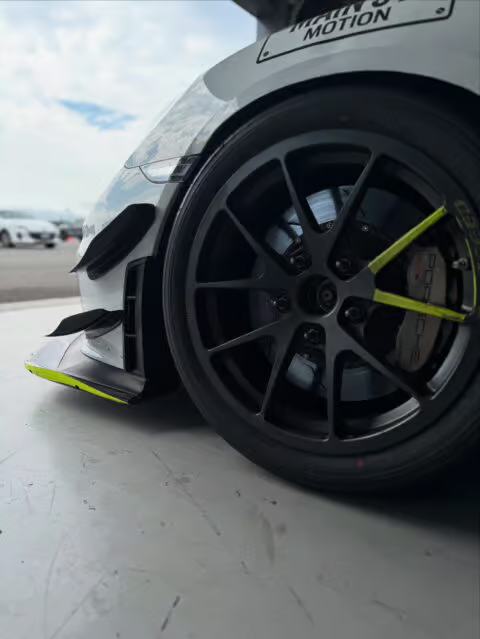
Dundon Motorsports Valkyrie Aero front Bumpcer Canards in focus

Data & Electronics

  • AIM data integration
  • Radio/comms upgrades

Race Prep & Setup

  • Multiple alignment profiles
  • Corner balance for sprint, endurance, and time attack
  • Dundon headers/exhaust (optional configuration)
  • Tire mapping across A052, F200, and slicks

Deep Dive: Dundon Valkyrie Aero vs. Porsche Factory vs. Manthey Racing

Porsche Factory GT4 Aero

  • Designed to be predictable and safe
  • Built to meet strict GT4 regs
  • Limited splitter/wing/diffuser scope
  • Great for consistency but capped on downforce

Manthey Racing Aero

  • Refined airflow
  • Cleaner front-end efficiency
  • Slightly more downforce than OEM
  • Still constrained by GT4 rulebook

Dundon Valkyrie Aero

  • Not rule-limited
  • Significant downforce increase
  • Real front-end loading under trail braking
  • Balanced with a serious rear aero package
  • Center of pressure stability improves with speed

At The Ridge, the difference was dramatic: the car stopped washing out in the T3–T4 transition and gained real front-end authority.


Real-World Lap Time Proof

This wasn’t a pure A/B test — different drivers, power levels, tires, and conditions — but the result is hard to ignore.

June 2023 — Homologated GT4 Aero @ Road America

  • Hoosier A7 (sprint tire)
  • Full GT4 power
  • Lap: 2:25.6

April 2024 — Dundon Aero @ Road America

  • Yokohama A052 (endurance tire)
  • WRL power restrictions (¾ intake blocked)
  • Full endurance fuel levels
  • Laps: Low 2:24s — consistent

Less power.
Heavier car.
Slower tire.
Faster laps.

Conclusion:

The aero works. It transforms the platform. Check out this video comparison of the Dundon vs Manthay aero on the faster Cayman RS GT4.

YouTube player


What Types of Racing This Car Excels In

Endurance Racing (WRL, AER, ICSCC Enduros, ChampCar Pro)

  • Ultra-consistent
  • PDK-friendly
  • Great tire life
  • Zero drama across long stints

Time Attack (OnGrid, GTA, SCCA TT)

With Dundon aero?
It’s a legitimate GT+-class weapon.

Sprint Racing (SCCA ST, ICSCC ST/SPO, NASA ST1/ST2)

Great for drivers moving beyond grassroots or regional programs.

Driver Development

One of the best “advanced learning” platforms we’ve ever used.


Interested in Renting or Developing a GT4 Clubsport?

If you’re curious what a Porsche Cayman GT4 Clubsport can do, we’d love to help.

  • Want to rent this GT4 Clubsport for a race weekend or time attack?
    We offer full arrive-and-drive + coaching.
  • Already own a GT4 or Porsche race car?
    We can help you extract more from the car and yourself with setup, aero, maintenance, and coaching.

Reach out anytime. Let’s build something fast together.

Posted on

SCCA Hoosier Super Tour – Buttonwillow The Circuit

High Performance Race Cars on Track at Racer on Rails.

The Setting: Why Buttonwillow Matters

The opening round of our 2026 SCCA season brought us to Buttonwillow Raceway Park for the first SCCA Hoosier Super Tour of the year, February 21 – 22, 2026.

We raced on The Circuit configuration — Buttonwillow’s newer layout that’s been operating for over a year now and we were here last year, for the very first competition race weekend and event ever held at the new track. Ron competed here twice last season. For the rest of the team, we’ve logged time here supporting customers. But this was our first time bringing the Nissan 370Z to this configuration in race trim.

Touring 3 remains one of the most competitive, tightly regulated classes in SCCA road racing. The cars are production-based, but execution is everything. Small setup shifts matter. Tire management matters. Driver discipline matters.

Buttonwillow’s The Circuit layout also brings a very different technical personality compared to the original “Buttonwillow 13CW” configuration that many West Coast racers grew up on. Traditional Buttonwillow rewards aggression, commitment over bumps, and managing long-flowing corner sequences with a little bit of chaos built into the surface and sightlines. The Circuit, by comparison, feels more modern and much more precise. The pavement quality is smoother, the transitions are faster, and the corners tend to stack technical decisions on top of each other.

Sun is setting at Buttonwillow The Circuit – when the sun goes down, the air and track temps drop fast in February.

Several sections reward sacrificing entry speed to maximize minimum corner speed and throttle commitment on exit, while other complexes punish even tiny balance mistakes with lost momentum that carries for multiple corners afterward. It’s also a track where aero drag, mechanical grip, brake release timing, and tire temperature management all become more interconnected than people initially expect. A car that feels “pretty good” for one lap can quickly become difficult over a race run if the balance isn’t properly managed. In many ways, The Circuit feels less like old-school club racing Buttonwillow and more like a purpose-built modern technical circuit that rewards disciplined engineering and adaptable drivers.

At just over 2.5 miles in length, The Circuit combines roughly two dozen corners and transitional elements ranging from slow, technical rotation zones to fast, committed sweepers that reward precision and patience. The layout constantly shifts between decreasing-radius corners, long loaded exits, quick direction changes, and several areas where throttle timing matters more than outright bravery. For Touring 3 cars, gearing becomes especially important because many sections sit right on the edge between carrying momentum in a taller gear versus risking upsetting the platform with an additional shift.

The track surface itself is relatively smooth compared to the original Buttonwillow layouts, but the environment still plays a huge role in grip evolution. Located in California’s Central Valley, the circuit is frequently impacted by wind carrying fine dust and sand onto the racing line, while dramatic temperature swings between cold mornings and warmer afternoons can significantly change tire behavior and overall balance throughout a race weekend.

Buttonwillow’s Circuit layout rewards rhythm and precision. There aren’t many places to hide mistakes. It’s a track that exposes imbalance — mechanical or mental.

That made it the perfect place to start the year.


The Mindset: Process Over Outcome

Coming into the weekend, our objectives were clear:

  • Establish a stable performance baseline for the 370Z
  • Continue refining Ron’s throttle application and adaptability
  • Validate our tire pressure management process
  • Execute cleanly as a team

We intentionally chose to run lightly used tires instead of bolting on fresh rubber. Not to handicap ourselves, but to operate with discipline and long-term planning in mind.

For Ron, this season is about expanding his toolbox. He’s put in serious off-season work — simulator training, Porsche ice driving, DirtFish advanced programs — all focused on becoming more adaptable and decisive with inputs.

Ron Tanemura carving corners in his Touring 3 BMW Spec E46

For the team, this season is about raising our operational standard. When something breaks, we fix it properly. When development is needed, we create bandwidth for it.

No chasing. No scrambling.

Build it right.


The Weekend Story

The Journey South

Jordan and Ian drove the truck down through snow over the Oregon passes. Enough weather to keep things interesting, but they maintained traction and avoided chains. We arrived in California clean and on schedule.

That matters more than people think.


Testing: Cold Mornings, Steady Gains

Thursday brought cold temps and passing showers. Ron used early sessions to reacquaint himself with slip and rotation. By Friday he was back at 2:00.0 pace — only tenths off his personal best from last year at this track.

The 370Z test sessions were structured and deliberate. Controlled three-lap tire validation runs. Minor line adjustments through Turn 3, 5, 8, and 10. By Friday afternoon, we were consistently in the 1:56s with room left in the data.

The car was stable. Predictable. Repeatable.

Baseline established.


Mechanical Curveballs

Late Friday we discovered the Nissan’s clutch was nearing end-of-life.

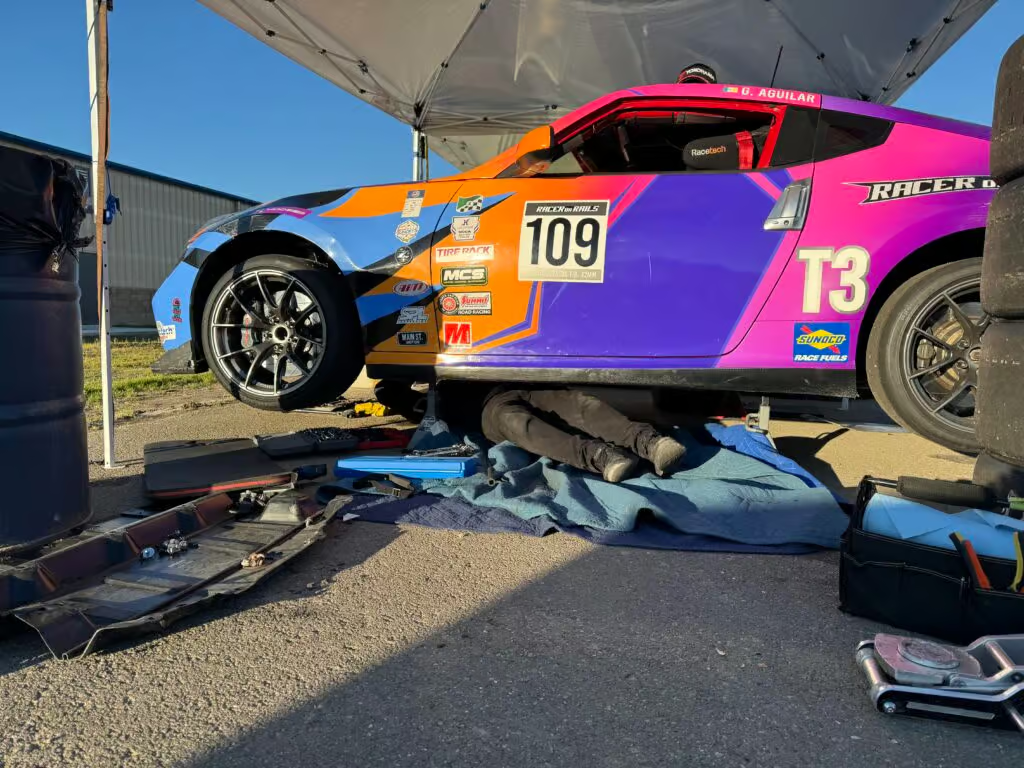
Ian working his tail and back off, getting the clutch replaced on the Touring 3 Nissan 370z Nismo

Saturday morning became paddock surgery.

Transmission out.
Clutch replaced.
Qualifying missed.

Ron’s clutch was also right at a season’s worth of cycles, so we proactively replaced his as well. Two clutch jobs in one weekend.

It wasn’t glamorous work, but it was done calmly and correctly.

That’s culture.


Saturday Race: From the Back

Starting P28 overall after missing qualifying, the only direction was forward.

The opening lap was tight but clean. From there, it was controlled aggression and patience.

Twenty-two passes in twenty-five minutes.

Finished:

  • P6 overall
  • P2 in Touring 3

Fastest lap of the race would have placed us P2 on the grid for Sunday.

Gama in his Nissan 370z Nismo working his way through field during race 1.

All on used tires.


Sunday: Clean Execution

Sunday qualifying required careful temperature management after diagnosing a cooling fan issue. Despite traffic on both flying laps:

  • P2 in class
  • P4 overall
Gama and Ron making laps and loving every braking zone at Buttonwillow The Circuit

The race start was steady. The leaders stretched a gap as the rear tires began to show their age around lap five. Turn 1 required finesse and progressive inputs to manage increasing rotation.

Post-race inspection confirmed tire edge wear consistent with heavy cycling.

Final result:

  • P2 in class

Not quite the fight for P1 we would have liked, but an honest and disciplined run.

Starting the Race 2 from the front of the grid but not enough pace to truly challenge for P1.

Ron: Double Podium Weekend

Ron started P3 in class Sunday and battled closely with Spec MX-5 cars running in STL for additional seat time. Those cars were quick and the racing was tight.

There was side-to-side contact exiting Turn 3 that pushed him wide, but he stayed composed and fought back.

He finished:

  • P3 in class
  • Double podium weekend

Both races resulted in an all-Pacific Northwest podium sweep, with Scotty B White completing the trio.

Ron left energized and sharper. More sensitive to the car. More decisive on throttle. Clear on what to improve next.

That’s exactly what this weekend was for.

Tyler and Ron obsessing over the data, trying to figure out how to go faster, faster!

What We Take With Us

We worked through:

  • Snow-covered travel
  • Two clutch replacements
  • Cooling fan troubleshooting
  • Traffic-filled qualifying sessions
  • Tire degradation management

None of it materially impacted our results.

More importantly, the 370Z now has a clear and repeatable performance baseline. The upgraded big brake kit performed flawlessly. The car responds predictably to setup changes.

That’s a full PNW podium sweep for the Buttonwillow Hoosier Super Tour

We leave Buttonwillow not chasing something unknown — but building on something understood.

That’s the difference.

Goals were pursued with discipline.
Smiles were earned in the paddock and at dinner tables.
Memories were made in the moments that required composure.

Next stop: Sonoma Raceway with NASA.

The foundation is set.
Now we build.

Gama making most of the camber near corner apex to get the most speed through the corner.
Posted on

2026 Racing Schedule Announcement

Where Racer on Rails Will Be — Come Drive With Us

The 2026 season is officially underway, and our calendar is set. If you’ve been thinking about getting on track, racing more seriously, or stepping into a new program, then right now is the moment to get aligned. Once the season starts stacking, and things are heating up now, prep windows tighten quickly — especially for multi‑event campaigns.

With that in mind, here’s where Racer on Rails will be throughout the 2026 racing season. If any of these events are on your radar, reach out ASAP so we can map out your prep with intention.

SCCA West Coast — Majors, Super Tour & Runoffs

  • Feb 20–22 – Buttonwillow
  • March 27-29 Thunderhill SCCA Regional
  • May 8–10 – Portland SCCA Hoosier Super Tour (Mother’s Day Weekend)
  • May 23–24 – Pacific Raceways SCCA US Majors (Memorial Day Weekend)
  • Sept 25-27 & Oct 2–Oct 4 – Road America SCCA Runoffs

If you’re aiming for a Runoffs qualification campaign or national level competition, this is the ladder.

ICSCC Conference — Pacific Northwest Core Program

  • April 24–26 – Portland
  • May 15–17 – Pacific
  • June 19–21 – Portland
  • June 26–28 – Pacific
  • July 31–Aug 2 – QRP
  • Aug 14–16 – The Ridge
  • Sept 18–20 – Portland
  • Oct 9–11 – Portland (8‑Hour)

For Northwest‑based drivers looking to build racecraft, consistency, and confidence in a tight‑knit paddock, this is home base.

NASA — HPDE, Time Trial & Racing Ladder

  • Mar 6–8 – Sonoma
  • June 19 – 21 Oregon Raceway Park (ORP)
  • Aug 14–16 – Portland
  • Sept 4–6 – Pacific
  • Oct 23–25 – The Ridge

NASA offers one of the clearest progression paths from HPDE to Time Trial to wheel‑to‑wheel racing.

PCA Club Racing

  • Jan 30–Feb 1 – Sebring
  • April 10 – 12 – Road Atlanta
  • July 10–12 – Watkins Glen
  • Sept 4–6 – Road America

If you’re running a Porsche platform and want structured, national‑level competition, this is a strong calendar.

OnGrid Time Attack — Full PNW Calendar

We will be supporting the full OnGrid PNW calendar in 2026.

  • March 27-29 – The Ridge
  • May 22-24 – The Ridge
  • May 29-31 – Thunderhill (GTA)
  • June 19-21 – Pacific
  • July 24-26 – The Ridge

If you’re building a time attack car, refining aero, or sharpening qualifying pace, we’ll be there.

GLTC — Laguna Seca

We will be attending GLTC at Laguna Seca in 2026 as part of our Time Attack and related driving programs.

  • April 17-19 – Carolina Motorsports Park
  • May 8-10 – Road Atlanta
  • June 12-14 – Gingerman Raceway
  • July 24-26 – Watkins Glen
  • Aug 21-23 – Lime Rock Park
  • Sept 18-20 – Laguna Seca – committed to this event only for 2026

If national exposure, high‑energy sprint racing, and a dynamic paddock appeal to you, this is an event to plan early for.

Track Days & Competition License Schools — ProFormance Racing School

For drivers earlier in the journey — or those ready to earn a competition license — we will continue supporting participation in track days and competition school programs with ProFormance Racing School.

ProFormance Racing School Calendar

ProFormance Racing School Accredited Competition Race Licensing Calendar

ProFormance offers:

  • High‑quality foundational instruction
  • Structured HPDE progression
  • Competition license schools
  • A strong on‑ramp into wheel‑to‑wheel racing

If you are:

  • Brand new to the track
  • Looking to build fundamentals
  • Working toward a competition license
  • Or simply wanting more seat time

We can help align your goals, prepare your car, and integrate your track day progression into a broader racing plan.

Track days aren’t separate from racing — they’re often the first step toward it.

What This Means for Your 2026 Season

If you:

  • Want to run even one of these events
  • Need race prep, dyno, setup, or Test Ready certification
  • Want coaching support
  • Are exploring a full‑season campaign
  • Are starting with track days or license school

Our shop capacity, coaching calendar, and trackside support structure are built around this schedule. Aligning early ensures we can support your goals with the time and attention they deserve.

Tell us now.

Goals. Smiles. Memories.                 2026 is here.

Posted on

Welcome Keri and Ian!

Welcome Keri and Ian Anderson to the Racer on Rails Team!

We’re excited to officially welcome Keri and Ian Anderson to the Racer on Rails crew!

If you’ve been around us at the track the last few seasons, you’ve probably already seen them in action — whether it’s wrenching in the paddock, reviewing data late into the night, or debating the finer points of shock tuning, telemetry, tire graining, and simulator setups. We’ve worked alongside Keri and Ian for years as part of our race weekend crew, and before that, we knew each other as friendly competitors and fellow motorsport nerds for over a decade.

Keri joins the team as Service Advisor, Race Car Engineer, and Project Manager, bringing her sharp technical insight and deep experience managing complex race programs from start to finish.

Ian joins as Race Car Technician, Fabricator, and Dyno Operator, where his hands-on expertise, mechanical creativity, and dedication to precision will help keep our cars fast, reliable, and ready to perform.

Together, they bring even more power to our mission: helping drivers reach their goals, create lasting memories, and leave every weekend with a huge smile.

If you’re curious about what it’s like to work with the Racer on Rails team — whether you’re prepping for your first track day, chasing a national championship, or just looking to take your driving to the next level — reach out and connect with us. We’d love to talk about how we can help you go faster, safer, and smarter.

Goals. Smiles. Memories.

That’s what it’s all about.

Posted on

June Sprints at Road America – A Weekend of Grit, Growth, and Podiums

Turn 1 at the start of the Touring 3 race at SCCA Chicago Region June Sprints race!

A few weeks ago, we were at Road America for one of the most iconic events in club racing: the SCCA June Sprints.

There are tracks—and then there’s Road America. Nestled in the rolling hills of Elkhart Lake, Wisconsin, Road America is one of the most iconic and demanding circuits in North America. At 4.048 miles, it’s one of the longest permanent road courses in the country, with 14 turns that blend technical precision with full-send bravery. Corners like the Kink, the Carousel, and Canada Corner don’t just test your car—they test your commitment. Turn 5 is the “slowest” min-speed corner at a target min-speed of 55-60 mph, depending on the car! That is the “slowest” with the rest of the corners having target min-speed of 65, 80, 90 and 110 mph. ????

And then there’s the June Sprints—a race weekend steeped in history. Since 1956, the June Sprints have stood as a cornerstone of American amateur road racing. It’s a proving ground for national champions and future pros, where every lap carries the weight of decades of racing tradition.

But what truly sets this weekend apart is Elkhart Lake itself. This little town breathes motorsport. Historic restaurants like Siebkens and The Osthoff are filled with old racing photos and stories, and the street signs and commemorative plaques around town proudly mark the original road course from the 1950s, when racing took place on public roads. It’s a place where history isn’t just remembered—it’s woven into the landscape.

Just down the road is RealTime Racing HQ, a name familiar to any longtime fan of World Challenge or Honda racing, SO COOL! And everywhere you look during June Sprints weekend, the town is buzzing with performance cars—from vintage Porsches to modern GT4 machines. It’s a car lover’s paradise, and for racers like us, it’s nothing short of heaven.


Big Brains, Big Gains – Engineering First

Before a single lap was turned, Tyler Campbell was already deep in the work: suspension geometry, brake data, tire modeling—he put in the kind of effort that sets great teams apart. We showed up with one of the most dialed-in testing plans we’ve ever run, and it paid off.

We don’t show up to look cool (or at least we think we try to look cool but look like a bunch of racing and track nerds! ????) and bench race. We’re here to science the crap out of our race cars and racing!

Gama and Tyler discussing setup options, data collected and how to move forward.
Gama and Tyler discussing setup options, data collected and how to move forward at June Sprints.

Wednesday & Thursday – Building the Foundation

We rolled in Tuesday night with storms on the radar. Wednesday morning was still wet, but once the track dried, we got to work. We missed the first test session due to the wet track and expected dry conditions through the rest of the race week, but kicked off our structured setup plan with back-to-back sessions focused on testing our hypotheses.

I ran our Spec E46, not because we expected to win overall, but because it gave us a solid, familiar platform to test against elite-level competition (and the Touring 3 Nissan 370Z needed another heart transplant, we’ll get into that more in a future post).

Every change delivered something new—every lap taught us something valuable.

Dave Orem in his BMW Z4M Coupe bombing through Turn 7 at Road America during the 2025 June Sprints
Dave blasting through Turn 7, building speed and confidence lap after lap.

Thursday, we mounted fresh tires and saw a measurable step forward. All signs pointed toward progress, and it gave us confidence heading into the official sessions.


Friday – Contact, Recovery, and Grit

Morning practice started off well… until it didn’t.

Dave Orem got dive-bombed in Turn 1. The hit spun him, left him stalled, and another car—unable to avoid him—collected the Z4M hard.

Bryce and Rene hammer away at fixing a nearly fully destroyed front passenger side corner.
Bryce and Rene hammer away at fixing a nearly fully destroyed front passenger side corner. Within 12 hours of total work time, across a couple days and with overnight delivery of parts, Dave and his Z4M Coupe were online and ready for qualifying session 2 and the race weekend!

Thankfully, Dave was okay. And thanks to an incredible community, we pulled off a minor miracle: sourcing every part needed to get him back on track.

Shoutout to Trevor and Wyatt at Motion Control Suspension for building a replacement MCS shock on short notice and getting it to us overnight.


Friday Qualifying – Almost There

Meanwhile, I was out for qualifying in the E46. Brand new tires. Low Super Tour points meant I was gridded at the back of the T3 field. But we knew we had pace.

Twice, I was on flying laps that would’ve moved me to P2 or P3—both times caught in traffic at the carousel and kink. Absolutely destroyed those laps.

Gama Aguilar in the Racer on Rails silver bullet rental Spec E46,

We finished the day P4. Not ideal, but we knew more was coming.


Saturday – Reset & Rebound

With Dave’s car repaired, he jumped back in for qualifying.

“I didn’t think about the car at all. I was able to focus on finding space and putting down lap times.”

Exactly what you want to hear after an incident. He wasn’t fully back to pace yet but showed strong progress.

Dave building confidence in qualifying after the hit that took him out of Q1.

For me, Saturday qualifying locked in P4. Solid lap. Solid position. Not a perfect lap, but enough to put us in contention for Sunday.


Sunday – Race Day

Dave’s Race

Sunday morning, Dave started deep in mixed-class traffic. Lost a few spots at the start, but once the field spread out, he got to work.

Lap by lap, he found rhythm, overtook competitors, and with just a few laps to go—reset his personal best lap time.

He finished P5 in Touring 3, proud of the recovery but wishing he had the two missed sessions to build more momentum.

Dave making moves through the Sunday main Touring 3 race at the SCCA Chicago Region June Sprints.
Dave making moves through the Sunday main Touring 3 race at the SCCA Chicago Region June Sprints. BMW Z4M Coupe T3 race car.

Gama’s Race

Hot, humid, and with storms on the radar. The goal? Finish to qualify for the Runoffs—and go for a podium if the opportunity was there.

Turn 1 at the start of the Touring 3 race at SCCA Chicago Region June Sprints race!
Gama looking for a way through at the start of the Touring 3 SCCA Chicago Region June Sprints race.

Great start, dicing for P2 and P3 early. Lap 2 brought a jam up into Turn 3 behind a slowing T2 car. Another T3 car got through; I had to wait. That 3–4 second gap to P3 took several laps to close.

Then it happened.

P3 (another Spec E46) dropped a tire into the dirt under braking. Big wiggle. Lost momentum. I got in the draft, faked right, popped left, held side draft as we bent left—and completed the pass into Turn 5 with a wheel in or nibbling at the grass.

Gama looking to grow the gap to P4 during the SCCA Chicago Region June Sprints race at Road America in the Racer on Rails Spec E46 rental race car, the Silver Bullet!

From there? Hit marks. Build gap. Don’t look back.

By the final laps, the lead over P4 was 30+ seconds. P2 and P1 had gotten through the local yellow before me, and that ultimately determined the gap. I brought it home in P3.


???? Watch the Race

Want to see the full race and that battle for the podium?
???? Click here to watch the in-car + SCCA broadcast replay.

YouTube player

What Racing Teaches Us

One of the things I love most about racing is how often we’re proven wrong—and how that’s a good thing. What we “know” is always based on the best data and insight we’ve gathered up to that point. The goal isn’t to be right all the time—it’s to stay curious, stay humble, and keep growing.

And that’s what we did at Road America.


Let’s Build Your Path in Motorsports

If the way we race—the way we prepare, develop, and pursue excellence—resonates with you, let’s talk.

We’re not just about cars. We’re about people, progress, and purpose.
And we’d love to help you chase your motorsport goals.

???? Contact us and let’s get started.

Posted on

MEGA Weekend at The Circuit @ Buttonwillow Raceway Park!

Double Podium and the top step for Dave and Ron!

The 2025 Racer on Rails SCCA racing program kicked off in California at The Circuit, the newly built racecourse at Buttonwillow Raceway Park. This was a weekend of firsts—not just for us, but for the entire everyone, as we took part in the first-ever sanctioned race on the new track! 

Everything about The Circuit was new; new track, new tire brand for both slick and wet setups, new coaching program, new competitors, and new adventures. Our drivers and crew had plenty to learn, and we approached the weekend with specific goals and a detailed game plan for each driver. With two days of testing, racing, and strategy calls, the team made incredible strides, achieving personal bests, podiums, and a 1-2 finish in Race 2 on Sunday. 

Meet the team 

Ron and Reid in impound, post-session

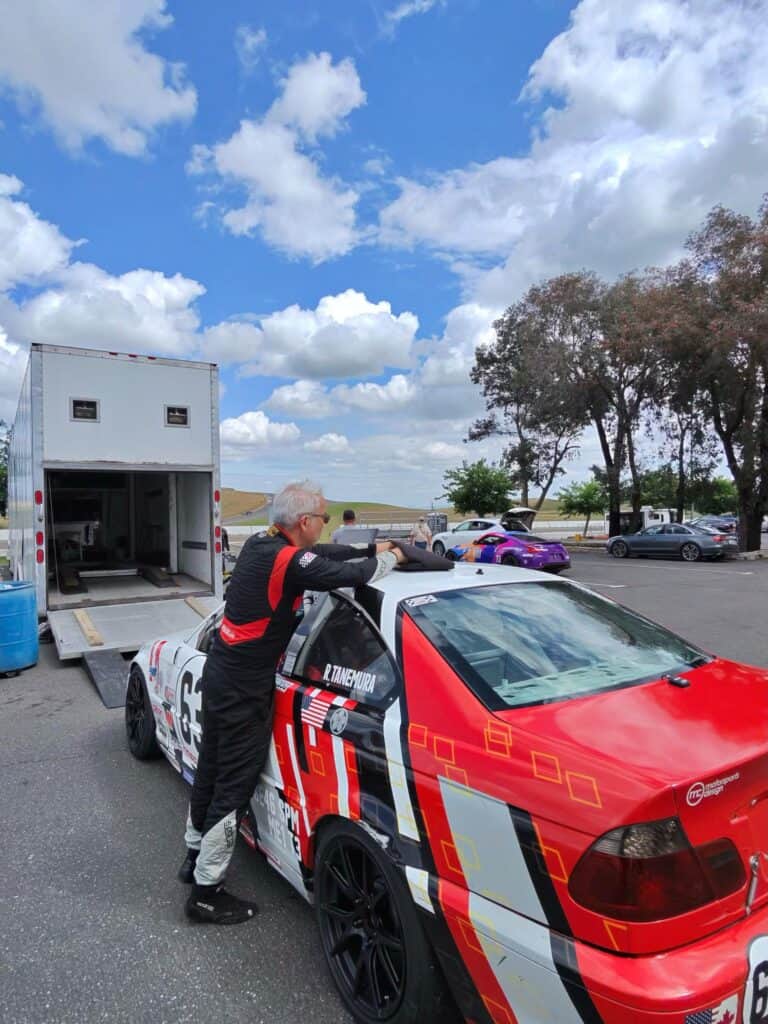
Ron Tanemura & Car Chief Reid Morris 

#63 SE46 BMW 330i | SCCA Class – Touring 3 (T3) 

  • 2024 ICSCC SPM Class Champion ???? 
  • First-ever SCCA U.S. Majors Tour event 
  • Entering Racer on Rails’ SCCA Competition Program 

Ron has been racing with Racer on Rails in the Pacific Northwest for a few years, but this was his first-ever SCCA Majors Tour race and his fist season working full time with Reid. After earning the 2024 ICSCC SPM Class Championship, he stepped up to challenge himself further in national competition. This weekend was a big new challenge —a brand-new track, new competitors, and a stomach bug. But Ron came ready to party, and nothing was stopping him. 

Rene getting Dave strapped in for race 1.

David Orem & Car Chief Rene Perez 

#6 BMW Z4 M Coupé | SCCA Class – Touring 3 (T3) 

  • Touring 3 podium finisher 
  • Has mastered Heel-Toe Shifting during the off-season 
  • Goal-Oriented approach 

Dave returns to our SCCA program looking to reach the sharp end of the T3 field. With a fresh rebuild on his Z4 M Coupé including a stunning new vinyl wrap, Dave arrives fit, focused and determined.  The pairing showed steady progression all weekend, culminating in a checked bag fee on the flight home for a bag containing new hardware. 

Simon’s sweet Porsche GT3 Cup Car in post race impound

Simon Asselin & Car Chief Jordan Allen (“The Doctor”) 

#81 Porsche Motorsport 991.2 GT3 Cup | SCCA Class – GT2 

  • 2023 SCCA Touring 3 Points Champion 
  • Racing in one of the most competitive SCCA grids, GT2 
  • Third-fastest GT2 lap time of the weekend 

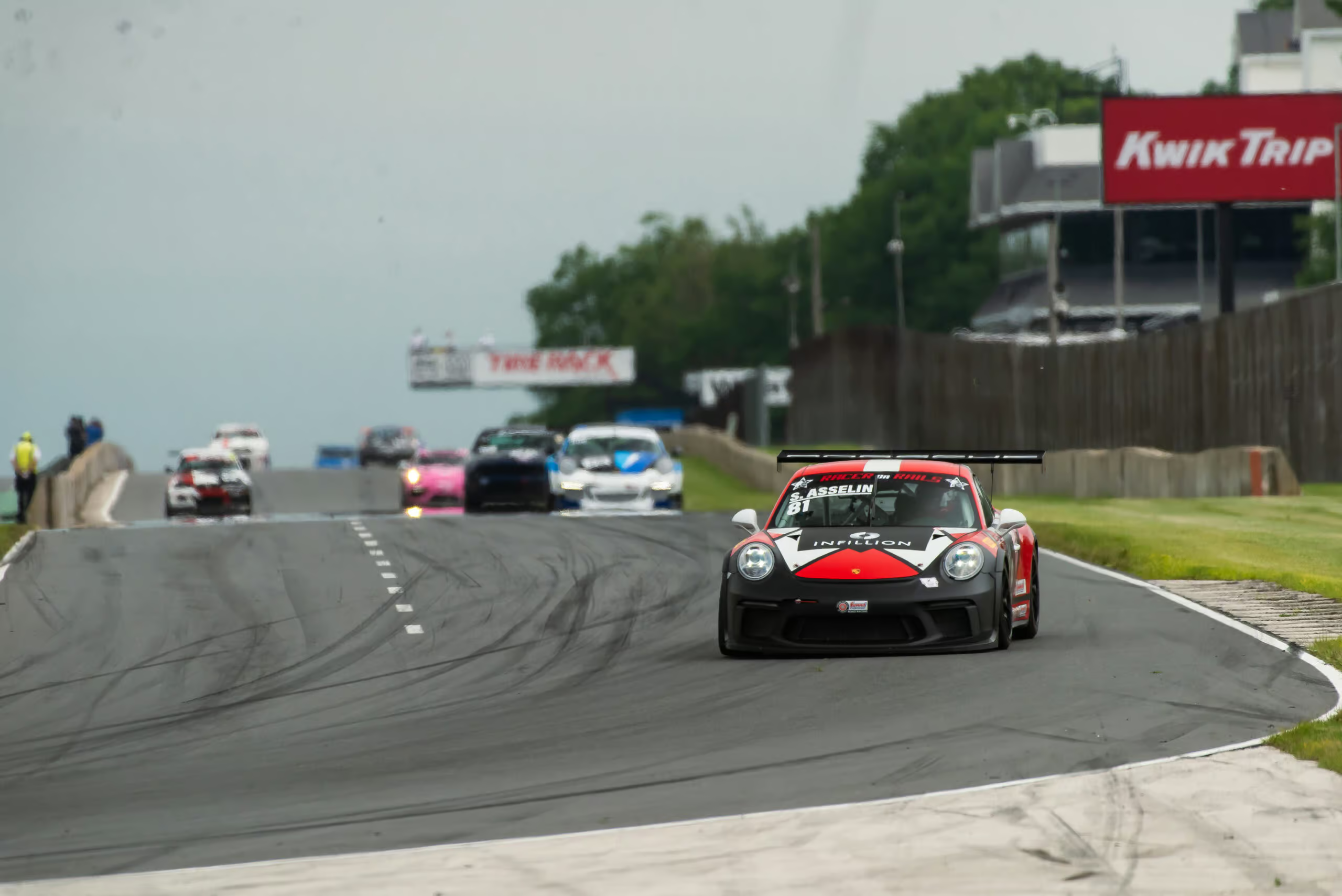
Simon and Jordan have been working together for multiple seasons, and after a strong debut year in GT2 last season, they returned to challenge for the podium in 2025. This series offers the challenge of multi-class race groups including a large Spec Corvette field, Simon’s consistency and pace kept him at the front of the GT2 field, all while navigating the pack of slower class cars. 

Friday Test Day – Cold Starts and First Impressions 

We arrived at The Circuit before sunrise on Friday, greeted by well-below-freezing temperatures and frost covering everything—cars, buildings, and the track. Luckily, the team had already set up the night before, allowing us to jump straight into unloading and prepping for the 9:00–9:30 AM test session. 

By the time the first cars hit the track, the frost had lifted, and the sun was breaking through. This was the first real-world drive for any of our drivers on the new layout, making it a crucial day of adaptation

Driver Progress: 

  • Simon Asselin: Locked in the 1:45 range, pushing near the expected top pace. 
  • Dave Orem: Improved into the 2:06 range, showing steady progress. 
  • Ron Tanemura: Battling fatigue, made strides before sitting out the final session to recover. 

With simulator prep translating well to reality, we ended the day confident in the team’s progress heading into Saturday. 

Saturday – Practice, Qualifying & Race 1 

Saturday morning started with feedback sheets from Tyler Campbell, analyzing Friday’s data to pinpoint one or two focus areas for each driver. The goal: apply the learnings immediately in the morning practice and first qualifying session. 

Ron had an early spin during morning practice, leading to the discovery of a failing battery. Missing part of practice, he rebounded well in qualifying.  Dave executed perfectly, shaving seconds off his previous best lap.   

Simon struggled with traffic in qualifying but still secures a start from row 2. 

Saturday Qualifying Results: 

  • Touring 3: Dave P2, Ron P5 
  • GT2: Simon P3 

Saturday Race 1 – Making History 

T3 Race 1: 

The first-ever sanctioned race on The Circuit was a split start, with Spec MX-5 Cup cars leading and Touring 3 cars behind.  The race brings improving track conditions and with the help of lots of data and video analysis, defined goals and executing on our action plans, Dave charges to a 2nd place finish, while Ron continues to improve despite still recovering from food poisoning, finishing the race in 4th

GT2 Race 1: 

Better track conditions and cool air set the stage for Race 1 in GT2.  Simon has some great racing of his own, as he trades positions with a few GT2 cars before finishing the race in 4th place.    

Sunday –  Morning Qualifying, Wet Track, Big Decisions 

Early morning rain rolls in leaving us with a damp but drying track.  Our turn is up for T3 qualifying and mixed conditions still exist.  We are forced to make a strategy call on tires, so we go to Jordo at our Weather Desk.  The decision is slicks, and it pays off as the track conditions improve and we begin finding speed in quali #2. 

Sunday Qualifying Results: 

  • Touring 3: Dave P2, Ron P3 
  • GT2: Simon P3 

Touring 3, Race 2 – The 1-2 punch! 

The race begins with a 6-car battle into the first corner making for an exciting start.  Dave sets the pace in class, while Ron, after fending off some light contact from another competitor, sticks to the the Z4M’s bumper and RoR takes a 1-2 finish in Race 2 for Touring 3.  BOOM! 

GT2 Race 2: 

Simon has a solid start and runs in P3, involved in a 3-car battle for most of the race.  After a restart from a full course caution, several cars experience wheelspin, resulting in a loss of 2 spots.  Despite the setback, he fights his way back up, improving his personal best lap time by nearly three seconds (1:44.5) and finishes in P4

Wondering what it’s like on the new circuit? Check out a fast lap in Simon’s Porsche 911 GT3 991.2 Cup Car

YouTube player

Final Thoughts – Goals, Smiles, Memories 

As we packed up, we reflected on an incredible opening weekend. The new track, unpredictable conditions, and intense racing made for an unforgettable event

  • Dave & Ron delivered a 1-2 finish in Touring 3. 
  • Simon clocked the third-fastest GT2 lap of the weekend. 
  • No major damage, only progress. 

Now, we prep for Race 2. Stay tuned! 

#Goals #Smiles #Memories 

Posted on

2024 Hoosier Super Tour Race 3 – Road Atlanta

Stop #3 in the 2024 Hoosier Super Tour took us back to legendary Road Atlanta, our 3rd year in a row and crossing our fingers for at least not a mega thunderstorm, snow, or freezing temps? It didn’t pan out like that at all but one could dream, right???

Coming into the weekend, we had Ann Doherty going for her second race in her new-to-her Porsche 911 GT3 Cup Car (991.2), Dave Orem in his BMW Z4M, Gama Aguilar in his Nissan 370Z and making his 2024 debut, Thad Berger in his Porsche Cayman GT4 Clubsport MR competing in Touring 1.

Road Atlanta: A Track Like No Other

Road Atlanta is a bucket-list track for racers worldwide. Nestled in the rolling hills of Braselton, Georgia, it’s known for its high-speed back straight away, technical corners, and dramatic elevation changes. The track demands respect and skill, as drivers navigate iconic sections like the Esses and the infamous Turn 12, a downhill blind corner that tests both bravery and car setup.

The track’s layout, with a mix of medium and high-speed corners, challenges a car’s balance and requires a careful blend of mechanical grip, aerodynamic efficiency (where applicable), and driver finesse. Long straights demand top-end power, while technical sectors, like Turns 3 through 5, test the setup and throttle control. Adding to the challenge, elevation changes require cars to manage weight transfer effectively, which puts additional emphasis on precise braking and cornering. This is a fun track, a scary track, and it requires drivers be on top of their game to get the most out of themselves and the car, with high consequences on the outside of most corners due to limited runoff.

The Wild Card: Mixed Weather Conditions

The weekend at Road Atlanta was a perfect example of how unpredictable weather can add another layer of complexity to motorsport. Cold mornings, sudden rain showers, drying lines, and gusty winds all made an appearance, pushing both cars and drivers to their limits.

From a car’s perspective, fluctuating weather conditions impact nearly every system:

  • Tires: Tire pressures and compounds become critical as track temperatures rise or plummet. Wet or intermediate tires need careful management to avoid overheating on a drying line, while slicks can struggle to find grip on damp patches.
  • Braking: Wet weather reduces braking efficiency and increases the likelihood of lock-ups, especially in high-speed zones like the run into Turn 10A and 10B.
  • Aerodynamics: Strong winds can affect a car’s stability, especially in high-speed sections like the back straight. This requires drivers to stay vigilant and adjust their steering inputs accordingly.
  • Traction and Balance: Mixed grip levels from a drying track demand precise throttle and steering inputs, as any abrupt movements can unsettle the car and lead to costly mistakes.

For drivers, preparation is key to handling these challenges. We as a team are glued to various weather services and adjust the approach based on the session’s conditions.

In wet conditions, smoothness is paramount—gentle braking, progressive throttle application, and careful steering are all necessary to maintain control. When the track begins to dry, drivers need to identify and exploit the developing racing line, where grip is highest, without overworking the tires (like we did last year, going on wet tires for what ended up being a mostly dry race).

Ann’s Focus: Learning and Feeling the Car

The goal for race 1 in her new car was simply to operate the car and start to acquaint herself with how the car drove; results were a non-variable. As we covered in the last race report for NOLA – mission accomplished! The biggest take-away Ann had from the first weekend was, this thing is a BEAST and without the driver aids of her former car (Porsche Cayman GT4 Clubsport) her inputs had to be that much more precise, especially on brake release and throttle application.

Ann Doherty in Baby Shark - 991.2 Porsche GT3 Cup Car
Ann Doherty cutting up through the Esses at Road Atlanta

At Road Atlanta, we moved to a second phase of learning the car. She knows how to operate the car and where all the switches and buttons are located, now it was time to start focusing on how the car truly feels. Specifically, how the car communicates weight transfer from side to side (how do we know when the car takes a set?), the balance of the car rear to front when hitting the brakes and most importantly, getting on that throttle.

Throttle application is critical for every corner but especially at Road Atlanta which is dominated by medium to high-speed corners (the slowest corners have a target min speed of 48-50 mph!) and multiple corners with a target min-speed of >70mph, how she applies throttle, even with some of those exits going into a hill-side, would be critical.

By focusing on her inputs throughout the test day, Ann got herself into a competitive window in the first qualifying session on Friday mid-day with a 1:28.743 and P6 out of 14 in GT2 – great start and knowing there was more potential waiting to be unlocked.

Saturday AM was supposed to be a second qualifying session but with a MAJOR storm rolling through Friday overnight, the track was fully wet and zero chance of anyone going faster than the day prior. Ann and most competitors took the session off to focus on the race which would end up taking place on a mostly dry and green track. Ann had a great start to the race, losing one out-of-class position on lap 1 and holding her own through the first FCY of the race. With the cars packed back up for the restart, she lost positions trying to avoid contact and started picking her way through the field and battling an out-of-class Porsche GT3 Cup Car (running in GT1).

Multiple FCY’s ended up stopping competitors from getting into a flow and after another re-start, she got on throttle just a bit too aggressively and ended up having the rear end of the car come around on her. It also didn’t help that there was clay mud all over the exit curbs from the weather throughout the weekend.

Ann gathered herself up, got back on the track and finished in 9th place. Lots more learned and Ann is ready to keep figuring out her Cup Car at VIR!

Dave’s Focus: Better Feel for the BMW Z4M

This would be Dave’s second race weekend in his Touring 3 2023 SCCA National Championship winning car. Dave started cutting his teeth on the Z4M at Sebring but mixed weather conditions and adjusting to car that is not as heavily prepared as a Spec E46 on the drivetrain front, meant that Dave would need to focus hard on those heel-toe downshifts to maintain the car balance as he entered corners.

Dave Orem climbing the hill at the Road Atlanta Esses

Dave put his head down and started chipping away at the lap time qualifying P12 but unfortunately the ear on the rear diff cover had enough. The ear failed which started causing harsh clunking/vibrations and while we were able to locate another diff cover, it wouldn’t arrive on time for Dave to make the race.

Big Bummer for Dave but on the bright side and as preview for a future post, this was the straw that broke the camels back. Dave left the paddock determined to learn to heel-toe downshift and leave these issues behind.

Stay tuned for the lengths and efforts Dave went to become a heel-toe master downshifter!

Thad’s Unfortunate Debut

Due to scheduling conflicts, this was Thad’s first race of the season and after an off-season of sim training and building off an incredible driving experience at the previous year’s June Sprints, Thad was ready to hit the asphalt hard!

On the test day, Thad went out for the first session to just shake the dust off himself and the car. Thad came back with smiles and starting to feel it as his best lap time of the session was already near the front of the mid-pack T1 pace that we expected for the weekend! Let’s go!

Second practice session and towards the end of the session, another car loses control coming down the back straight away collecting Thad and causing significant damage to the passenger side of the car.

Thankfully, all safety systems worked properly and Thad walked away from the incident without injury. The Porsche Cayman GT4 MR will need significant repairs and will likely be the last we see the car for at least the 2024 season.

Gama’s Focus: Touring 3 Maximum Results

Quite the race weekend already, right??? For Gama, the focus was on continuing to develop the car by ensuring that we didn’t see anymore the electrical issues and fine tuning the braking system.

The car felt okay through the test sessions leading up to the qualifying sessions but the brake release continued to not feel great, especially when we got into mixed conditions. This meant that I couldn’t attack really any braking zones so the goal was to get up front and stay up front so that I didn’t have to get into too many out-braking duels.

Welp, that plan didn’t pan out too well. haha! Ended up P2 in the Qualy 1 session and P1 in Qualy 2 session, but combined and overall across both qualifying sessions, I’d start race 1 in P3 overall, behind Simon Foweather (Spec E46 in T3) and a Ford Mustang in T2 (out of class car).

Below is a link to a compilation of what would end up being nearly all our green flag running across both races. Each race had multiple FCY incidents where the net result was a P2 in Race 1 and P3 in Race 2. Race 1 started in wet conditions and eventually got to mixed, so it was a game of traction and requiring full wet tires.

YouTube player

Race 2 was full dry but due to the FCY, we simply didn’t have enough green flag laps for anyone to get into a groove and show any sustainable pace.

Was a bummer to not be standing on the top step when we believed the car had the potential and just needed more green flag laps. But all things considered, it’s still a double podium weekend in very tricky conditions, at a fun but dangerous track, and the car is one piece. #grateful

Posted on

New Track, New Car, Who Dis?

The second stop in the 2024 SCCA Hoosier Super Tour schedule for the team was NOLA Motorsports Park – a new track for all the drivers and most of the team. Relatively flat, built on a swamp and host of SRO GT Americas race events the past few years, NOLA ended up being a decently technical track and the Louisiana weather initially welcomed us with 70F, sunny and with a breeze weather. But once the test day came, the cold air from up north and a weather system from down south decided to join the party and aside from Sunday, we had low 40F temps, rain, and wind. Why do we even leave the PNW to go racing???

Thoughts on NOLA

Flat, minor (but critical) banking in some corners, no point-n-shoot corners and not a lot of time above 120mph meant that balancing the car in the cornering bits was going to be a premium.

NOLA has 16 corners with 10-11 of them (depending on how you count the corners) are right hand corners and there are two sections of the track where you have consecutive right hand-corners, which makes those left-side tires important. From Turn 4, you are only making right hand turns until Turn 10! Turn 4 is a slower speed corner which requires a good amount of mechanical grip. Turns 5, 6 and 7 are higher speed corners where you are trying really hard to not over-slow for turns 5 and 6 but as you try to carry the speed into those corners, the left rear tire is taking a beating from the slight high-speed yaw action when trying to rotate the car and then accelerating through the corner.

The esses complex is relatively straight forward but carrying speed into Turn 9 (the first ess) is critical and sets up the rhythm through the rest of the complex.

Finally, the left side tires only get a mini-break before needing to turn hard at Turn 13 and then suffer through a long duration compound section of Turns 13-14, which leads onto the main straightaway.

If you’d like a more detailed walkthrough of the track, check out this video that came in super handy from ASM and Tom O’Gorman.

YouTube player
Credit: ASM + TOMO Coaching

Ann’s new baby shark! 991.2 Porsche GT3 Cup Car

As some of you may have read in past posts, Ann has been developing at a rapid pace the past couple of years and driven the wheels off a Porsche Cayman GT4 Clubsport, mostly in SCCA GT2 and T1 classes. At the end of the 2023 season, with the repairs needed on the car from a failed tire during the runoffs, Ann made the decision to move on from the Cayman and jump into a GT3 Cup Car. So she spent the off-season looking for options and just in time for the NOLA race, we took delivery of her new steed on the Wednesday before the race weekend. Exciting but yikes!

With her car being new to the team and her and limited information of the running state, we set low expectations for the weekend: get the car on track, have it circulate consistently and have Ann start to build confidence in the car. Any specific result was not a consideration at all for the weekend.

Look at the butt on that! Yeah – it must work out. Ann’s new 991.2 Porsche GT3 Cup Car!

Jordan got to work on the car and after completing a full inspection, we were in decent shape! There were a couple of suspension bits to monitor, some to proactively replace but aside from that, it was just work to get the car personalized to Ann’s preferences and get the car out on the track so we could know more confidently, what we had on our hands. The car was ready to test on Friday but straight up gross, wet, and cold conditions, we made the team decision we’d wait until Saturday where there was a window of potential dry weather.

Saturday started off wet but the rain started slowing around 9-10am, just in time for qualifying. Ann went out on wet tires in case it started raining again (it didn’t) for her maiden voyage and by the end of the session, we had a clean bill of health! By the afternoon race, we fitted a set of the used tires the car came with and sent her out to get more laps, see what breaks and build confidence! After race 1, she moved up several positions, finished P6, nothing broke and ended the race with the last 2-3 laps at a decent enough pace where we could actually start looking at performance.

On Sunday, we finally got a break in the weather with the system that ended up delaying the Daytona 500, moving south of us, leaving us with clear skies but COLD winds. Beggars can’t be choosers! Ann continued to take time off her lap times during qualifying and exchanged places to finish P6 out of 13 in her first race! In race 2, Ann picked right back up where she left off, took another 2 seconds off her fastest lap time to finish with 4 laps in the low 1:50’s. All again on 2 year old used tires with unknown number of heat cycles. Safe to say that Ann is loving her new Porsche GT3 Cup Car and is ready to build on this for the next race at Road Atlanta!

One last thing on Ann to put things in perspective. Just a few years ago, she had never been on a race track, let alone raced wheel to wheel. ~3 years in and developing at a very high rate in a Cayman GT4 Clubsport which is mega fast but has a lot of driver aides, she decided to move onto a monster of a platform. She not only jumped in with full confidence to drive, but she truly slayed this beast on her first outings in it. Incredible job, Ann!!!

Ann driving back into the pits from her first on-track session in her new Porsche 911 GT3 Cup Car!

Dave continues building on his BMW Z4 M Coupe

Dave took his new-to-him BMW Z4 M-Coupe out at Sebring for the first race weekend and made solid progress on the new platform but NOLA brought a whole new set of challenges with the weather and the gearing. The Z4M has won the SCCA Runoffs the last 2 years in a row, in large part due to the M3 based gearing. Nice and tall gears to let it stretch it’s legs out on the long straight aways. NOLA doesn’t have any long straight aways, so we knew going into the weekend that the gearing wouldn’t be optimal for the car but we’d still make the most of it.

Dave took part in all of the test day sessions but as covered previously, the conditions were horrible so they were good for getting a sense of the track from simulator preparations but gave next to no representative data for what ended up being dry the rest of the weekend.

Dave (and Gama) qualified on Saturday AM on wet tires (along with the rest of the field) but it ended up being damp to drying track surface. In race 1 Dave got out to a good start, avoided spinning on the oil left by a T4 car that dropped oil around the final corners leading to the main straight away and finished P6, one spot behind Gama who spun on that oil and had to battle his way back from last place.

On Sunday, Dave worked committing to throttle in one smooth motion during qualifying and dropped another almost 2 seconds from his personal best! In the race, which finally brought some track temperature with the sun appearing, he built on those learnings, took advantage of mistakes from other drivers and came in P5, chipping away at the gap to P4! Road Atlanta should be better suited for the powerhouse BMW Z4M with that long back straight away, two uphill sections where torque pays off big time and it being Dave’s 3rd time back to the track!

NISMO 370Z Starts to Deliver on it’s Potential

At Sebring, we saw signs that the 370z could compete for podium positions but rain in the wiring and dealing with the ice mode issue held us back from being able to truly show the car’s potential. Fast forward to NOLA where the brake vacuum controller that was requested to be allowed, was approved (yay!!) but not legal until March 1st, we had to figure out how to make due with an ABS System that could freak out at any point. We tried a few different things and while not perfect, they were good enough for us to feel comfortable running the car for the weekend.

On the morning of the test day, we decided to switch to wet tires due to the rain that had started but a wheel stud failed when trying to remove the wheel. Ugh! Memo jumped on the problem and 3-4 hours later, the car was ready to go, only to make the last test session of the day, just to make sure everything stayed together. Hats off to Memo’s effort and problem solving – as we chatted on the sidelines through the repair, had this type of an issue occurred while any of us drivers would have been there on our own – game over. Someone help me push this thing into the trailer but with Memo and or team on-hand, dang near anything can come up and as long as it’s safe, they’ll get the car back on the grid.

In the Saturday AM qualifying, we went out on wet tires like everyone else and finished P4, believing we had more pace in the car and on the second row, so all the things to play for. In the Saturday afternoon race, towards the end of lap 2, someone lost an engine, dropped oil all around the last couple corners. In the heat of the battle and with wet spots all around, I didn’t spot the oil (though the team had radio’ed it in) and got caught out when the rear tires hit the oil.

It took me a bit to get the car re-fired and out of the completely soaked grass but got going again, put my head down, worked my way back to P5 and was catching the leading group at 1-2 seconds per lap (of which I didn’t realize at the time and was somewhat frustrated with my pace).

The next day for the Sunday AM qualifying, we swapped on some lower heat cycle tires (specifically, the tires that I used during the VIR Runoffs in the installation laps/sessions) and a new tire on the front left corner. Better tires but still not a full on sticker run. First flying lap was good but I wasn’t pushing 100% and tires weren’t fully into the working window. The 3rd flying lap I let it all out and found myself a very fast Danny Stein in his Mazda STL car which provided a nice tow around the track, which resulted in a 1:55.2XX and pole for T3! On the next lap, I was slightly up on that 1:55.2XX lap time and I was going for another flyer to try and improve. I braked at the same point for Turn 1, did my downshift, turned in and then full front end lock up – sigh. This would end up being a telling sign of the rest of the day.

For the race, we decided to raise the car all around to help with compliance around the bumpy track. Thanks to fellow Nissan racers Rick Kulach and Richard Baldwin, we were able to get our hands on some taller front springs and made the change in time for the race.

YouTube player
Watch the Sunday Touring 3 Race where Gama Aguilar starts in P1 and leads from flag to flag.

When the race started, I focused on getting a good start and ideally not be competing for the corner going into Turn 1. Luckily that happened and after the first lap, decided to pump out the fastest laps I can could muster so that I could build a healthy gap to P2. All was going to plan until I locked up going into T13 and had to take the escape road. Lesson learned that even though I thought the tires were still fresh, it was simply too much speed for this *awesome* (sarcasm) brake system to handle. From then on, I focused on braking a little earlier and softer in all braking zones, knowing I’d be leaving some time on the table but that would be better than locking up and flying off the track.

My plan was to steadily build the gap so that by the time we hit lapped traffic, I could use that pull away. Unfortunately, the rest of the competitors were not aware of my plan. haha

Sometime about mid-way through the race, someone lost a big lip spoiler or some strip of something that was 4-5′ long and right at the exit of Turn 8 of which I didn’t see until it was too late to do anything but run right over it. There was some loud banging as it went under the car and I had to slow to figure out if anything had impacted the handling/safety of the car. No issues but I lost a solid 1-2 seconds.

The next couple of laps, I had to take Turn 8 more cautiously so that I could see where that object was and not run over it again. Perfect. 🙁

Some laps later, Richard’s 350Z had a tire failure and he pulled off to the right of the essess, causing a local yellow. I ran up on a lapped T3 Mustang right in that spot and there went my entire gap to P2. From then on, it was a battle to steadily build up that gap.

2011 Nissan NISMO 370Z SCCA Touring 3 Spec at night with lights on.
Clearly bias but look at this thing!

Another thing that I have been struggling with is the shifter and specifically, the 5th to 4th shift where the shifter doesn’t self-center and will easily drop into 6th gear, not 4th gear. That shift is critical for Turn 8 and I had to over slow to make sure I got the shift done right and even then, I screwed it up a couple of times – another .5-.75 seconds lost on each screw up.

With a few laps left in the race, started coming up fast on a T4 car going into the essess and made the judgement call to make the pass before we got perpendicular to the standing yellow flag – barely made it!

Finally, going into the last lap, I was focused on matching or improving my personal best, knowing the left side tires were struggling. Half way through the lap, I was almost matching my fastest lap but knew I was vulnerable in the essess due to the 5th to 4th shift but still had a decent run through the section. P2 car was on my rear bumper so going into Turn 13, I ran a more defensive line, braked earlier and softer, go the downshift done and when I started turning, the front end locked up again.

My only choices were to continue plowing forward and straight into the grass, of which when that happens, I would have likely lost control of the car until it hit the asphalt again OR come of the brake and straighten the wheel so I could take the escape road. I did the second path as I had earlier in the race, then focused on making sure I didn’t make contact with anyone while rejoining the course. Coasted through the escape road, looked to my right, saw no cars and then rejoined with a primary concern of not causing a wreck.

Ended the race in P1 but post-race, the stewards felt like I gained an unfair advantage by taking the escape road and while that wasn’t my intent at all, I had no argument against it. Minor disappointment but in the grand scheme of things, very pleased with the results.

We made it through a weekend without the brake vacuum regulator and no damage to the car or other cars, learned more about the car and finally got consecutive on-track sessions to build base level confidence in the car. This car is finally showing the potential we know it has!

Mega thanks to the whole Racer on Rails team that made the NOLA SCCA Hoosier Super Tour weekend a massive success! Next up is Road Atlanta in March where the team is looking to build on success and momentum in 2023. Let’s go!!!