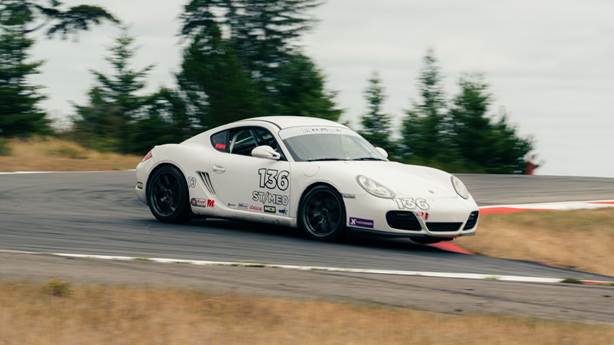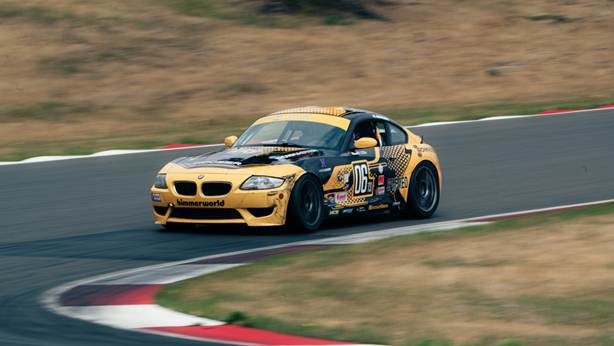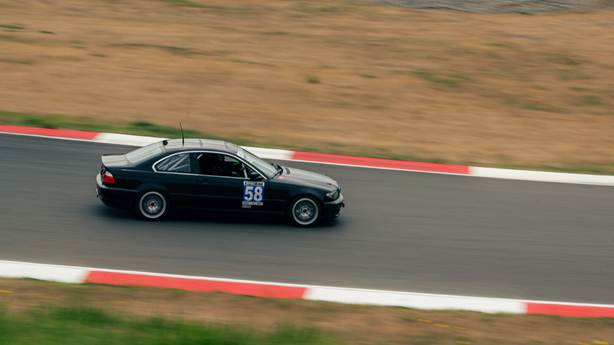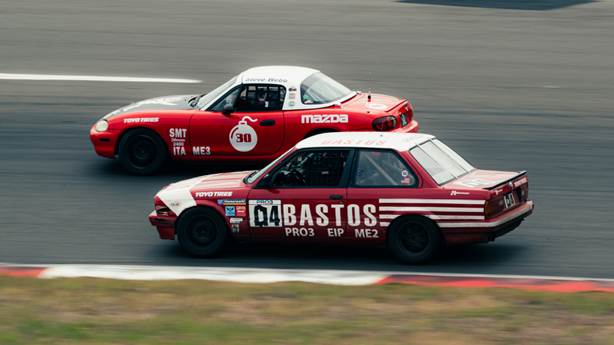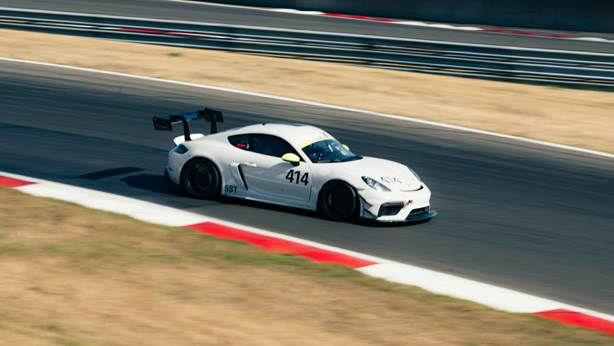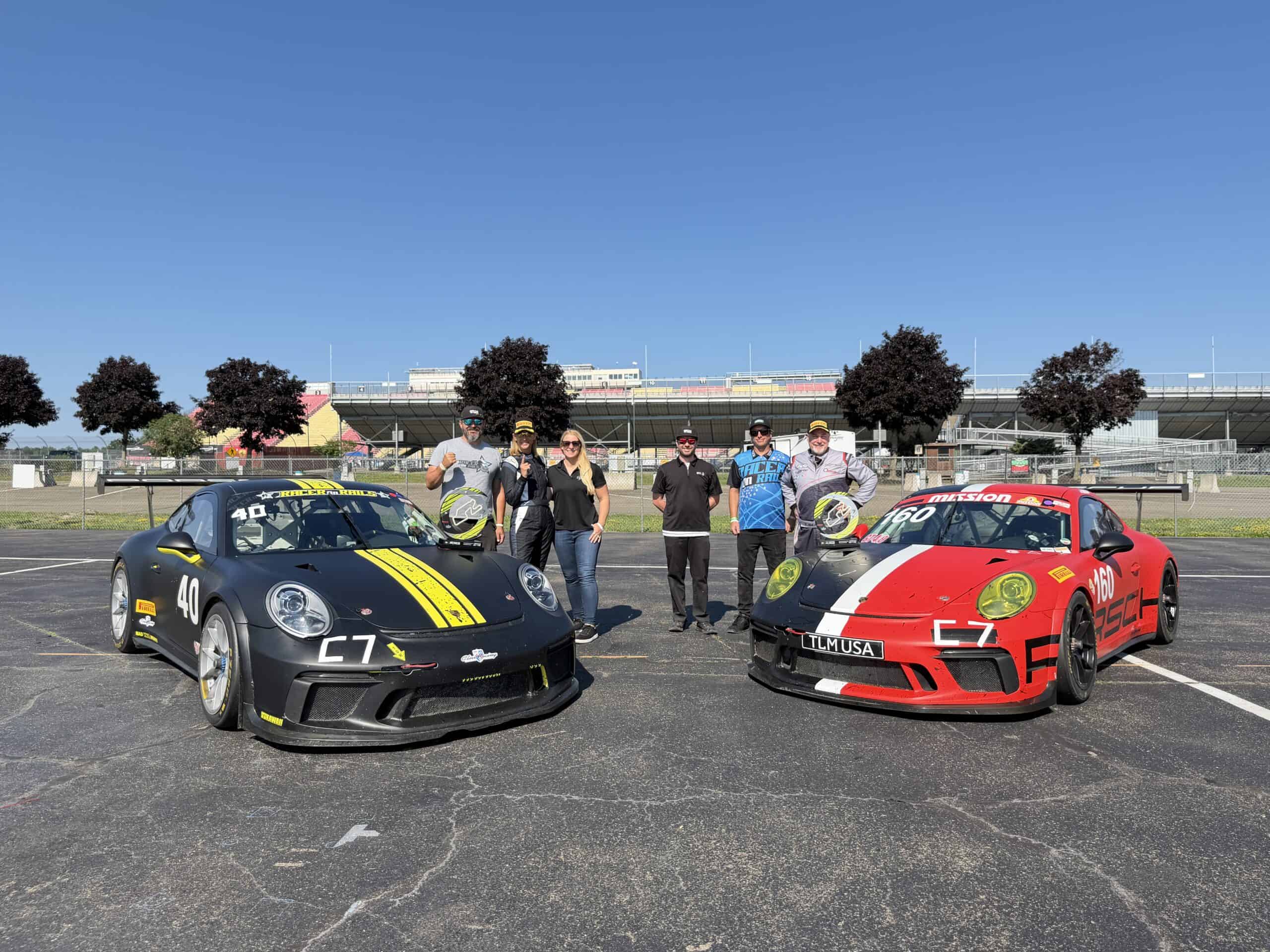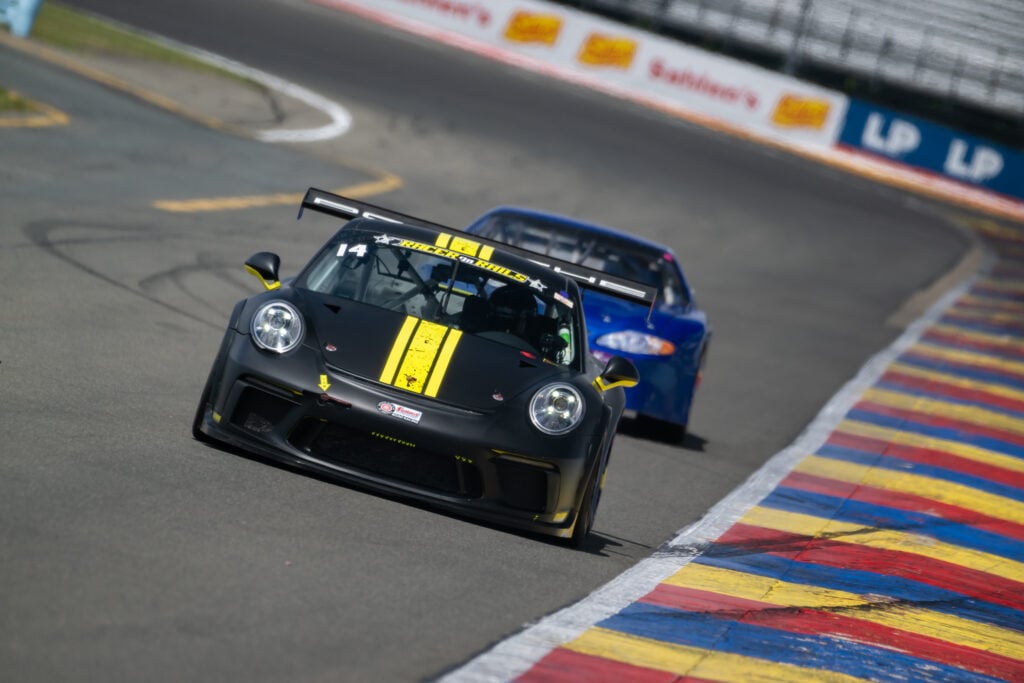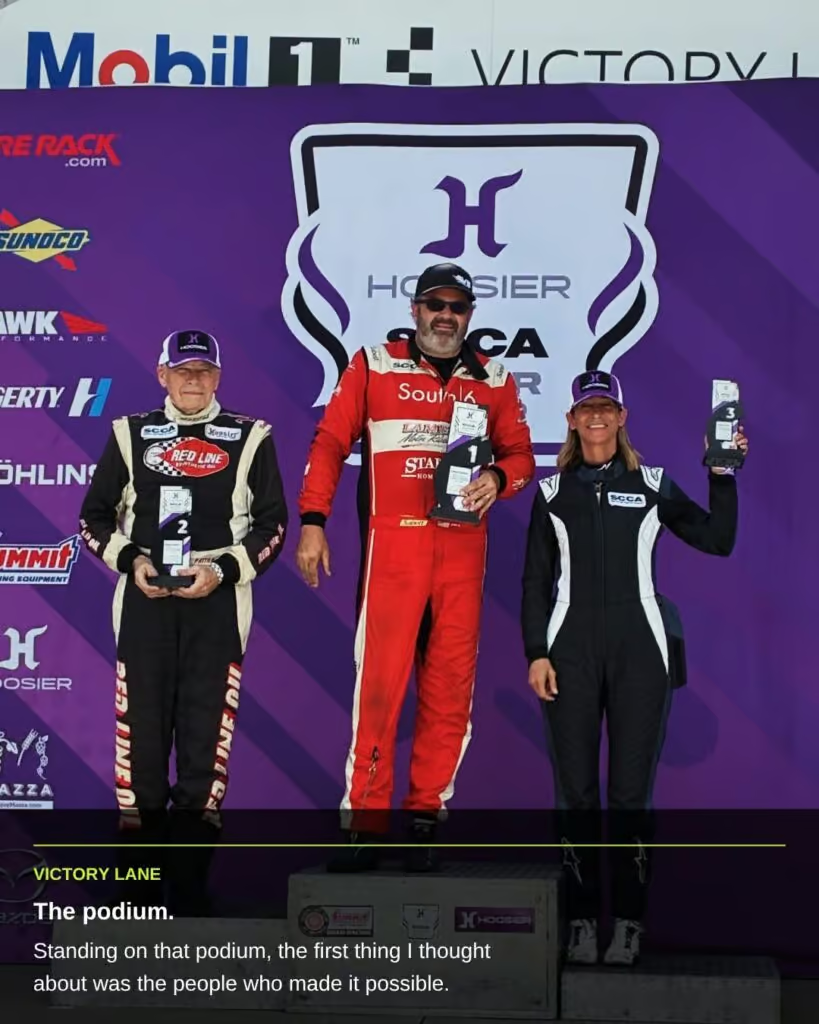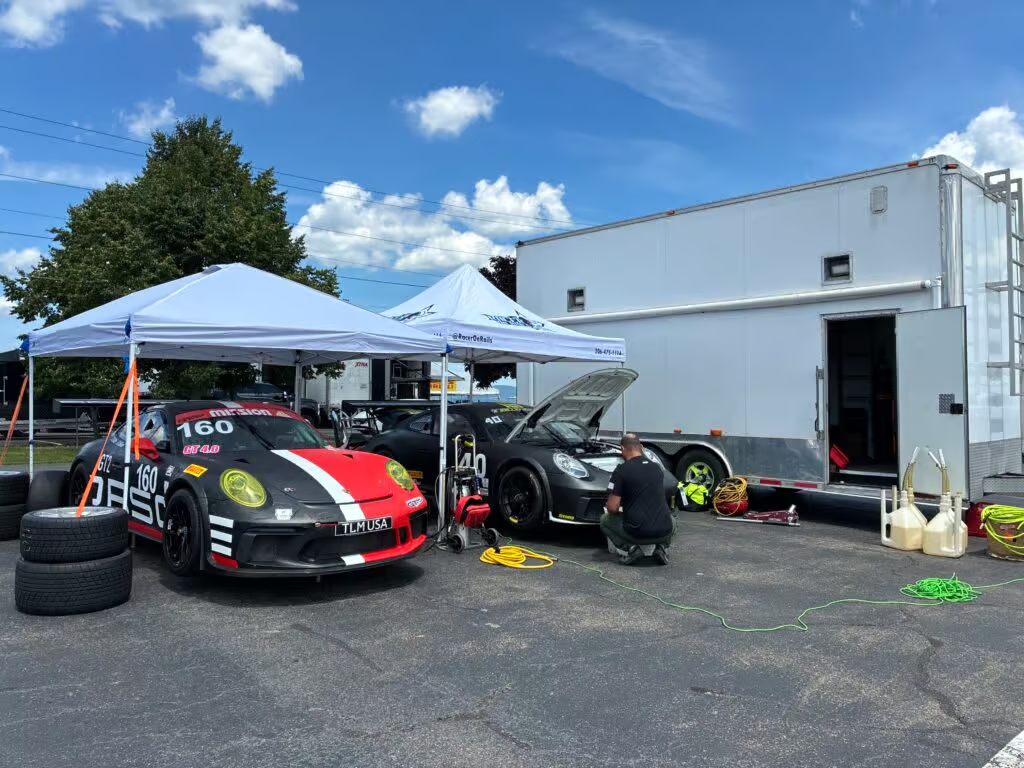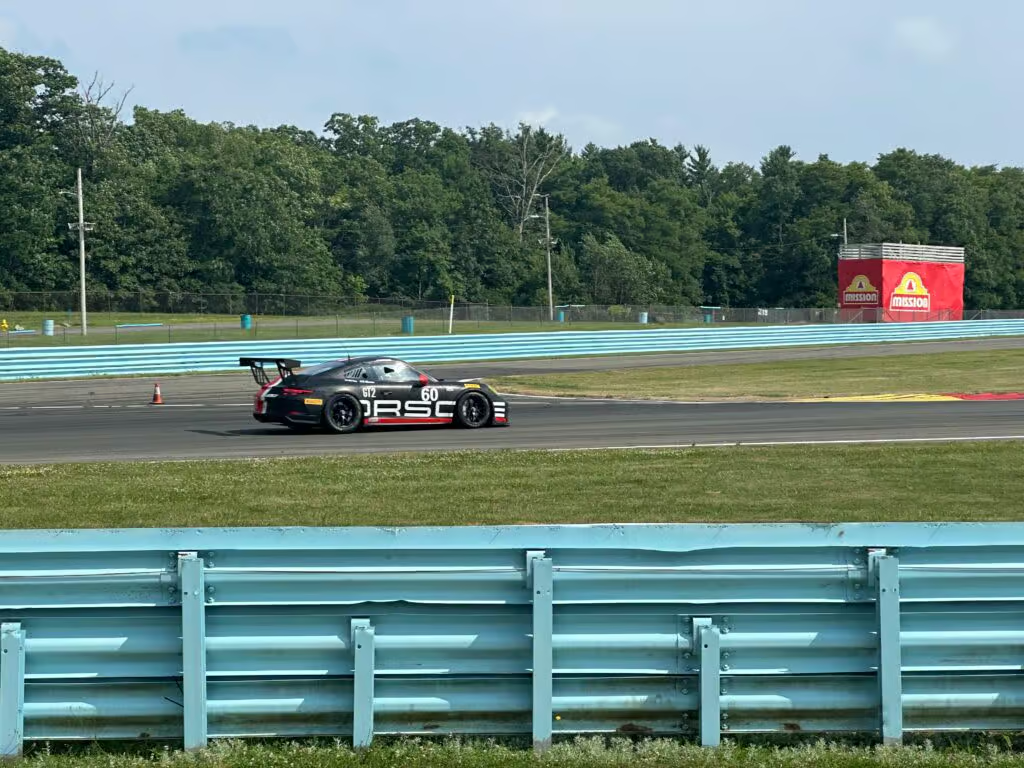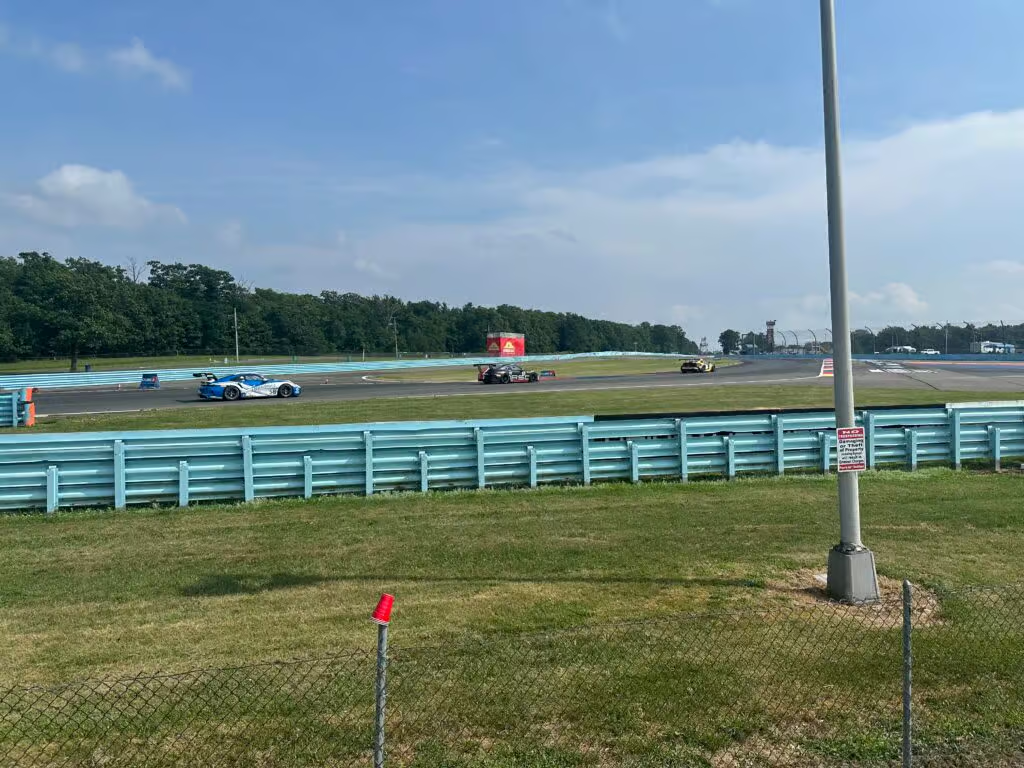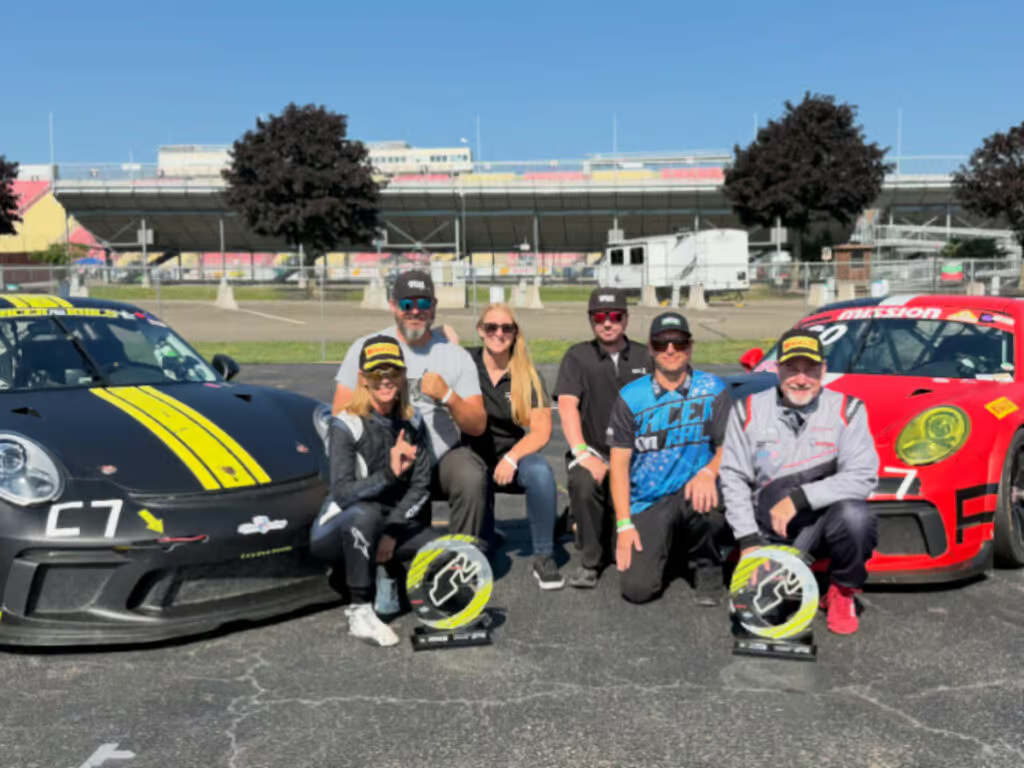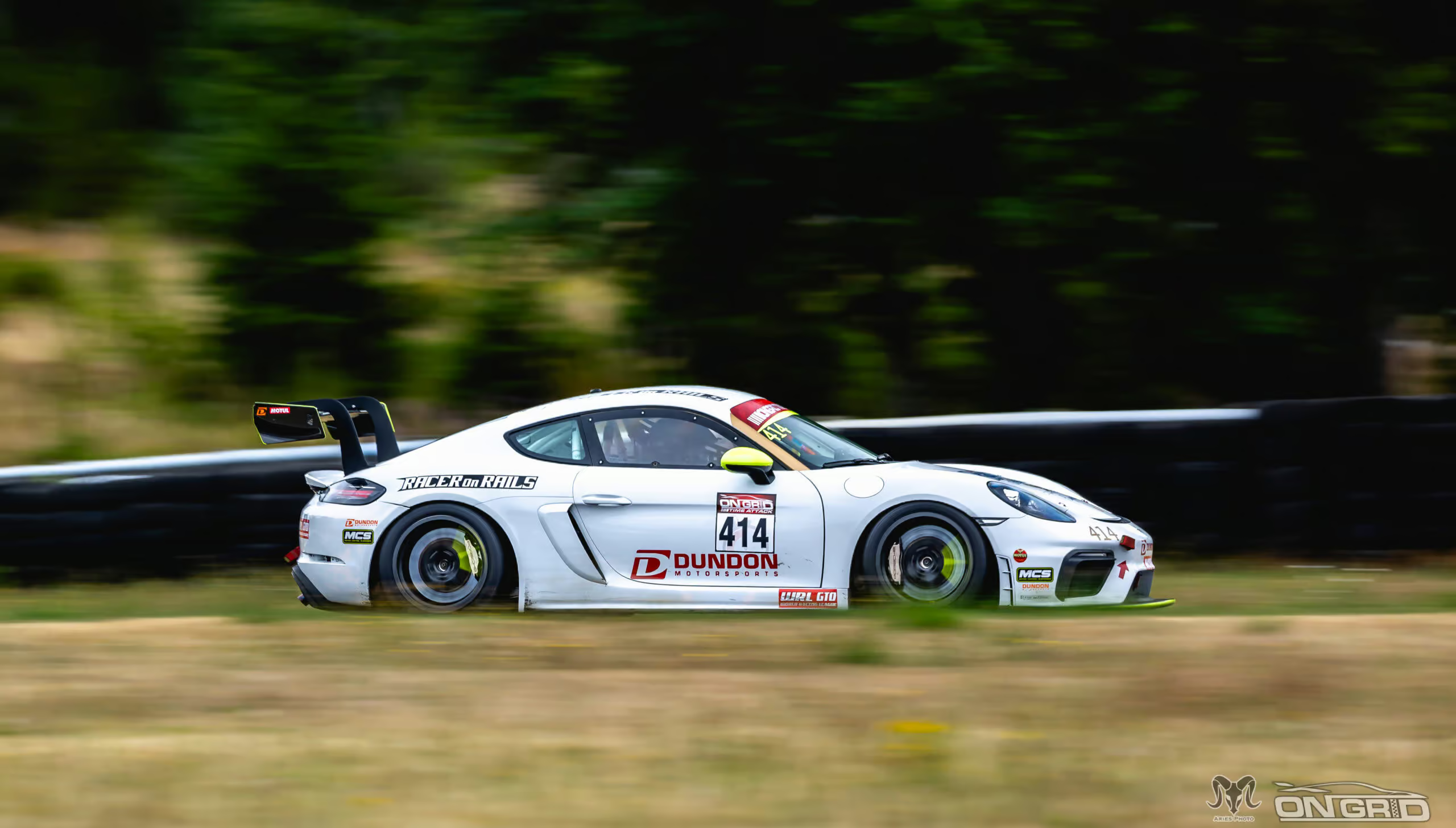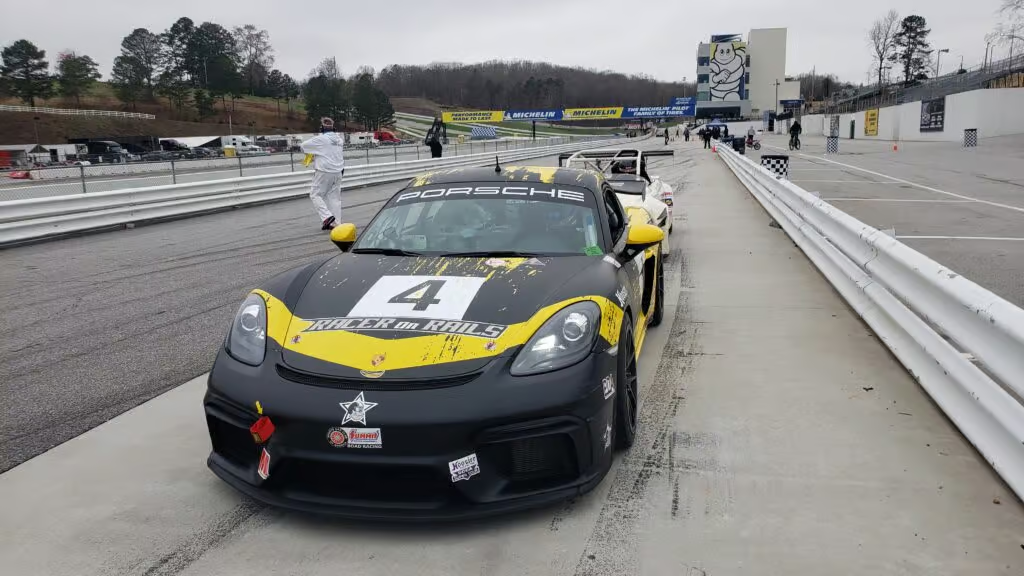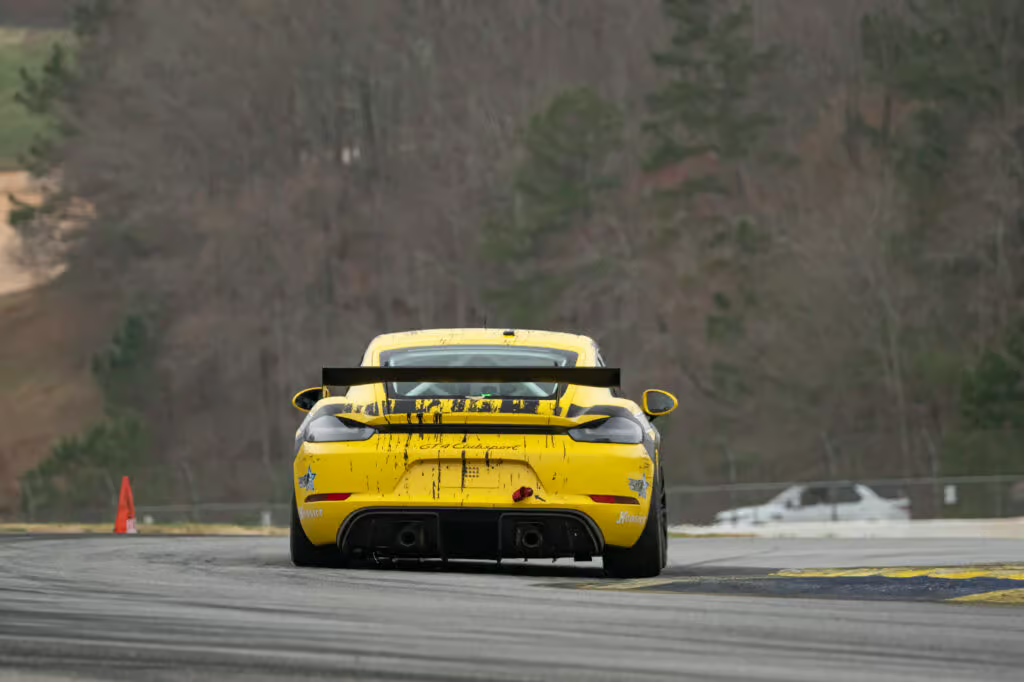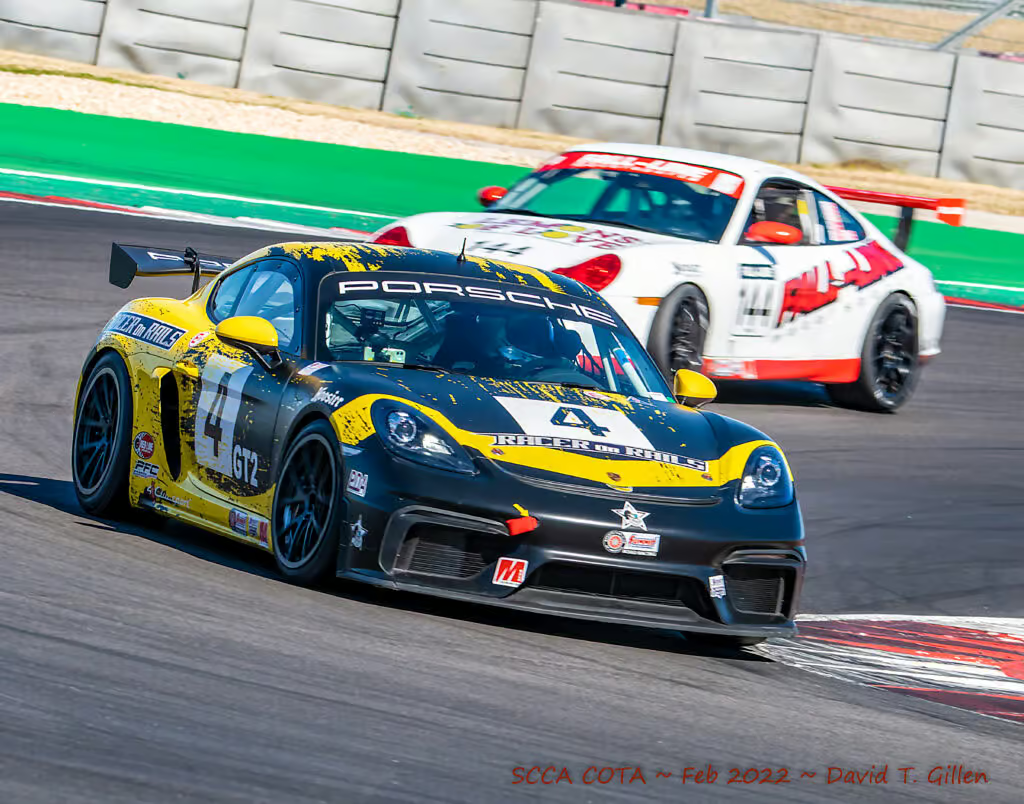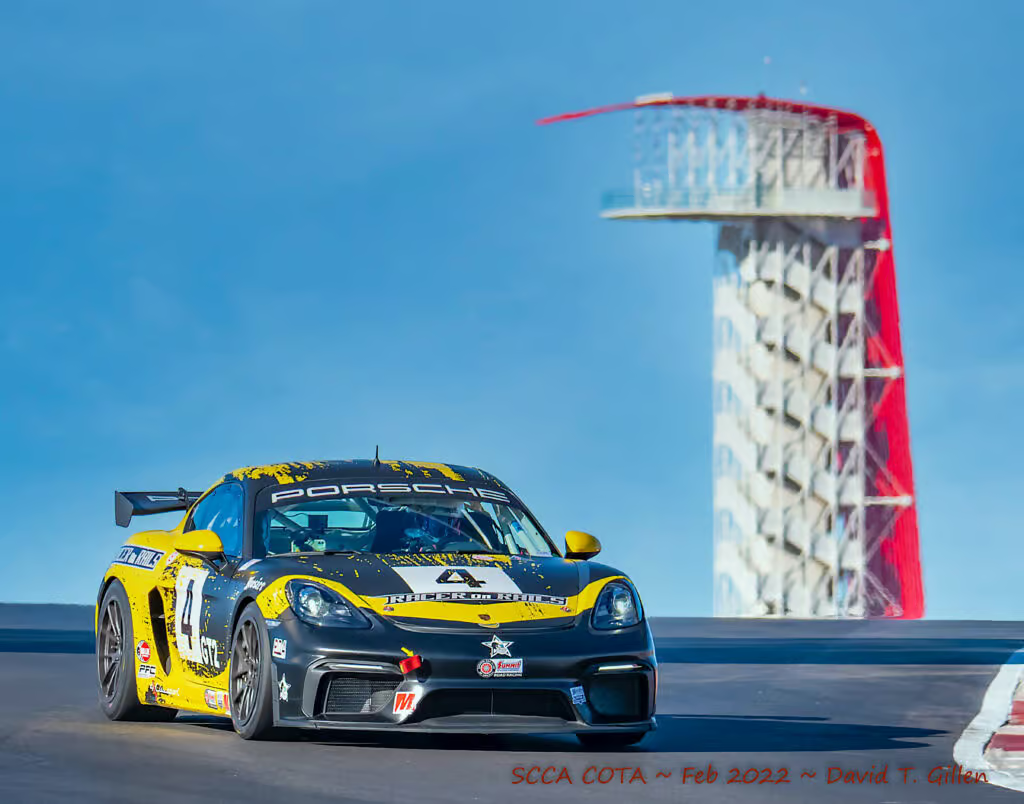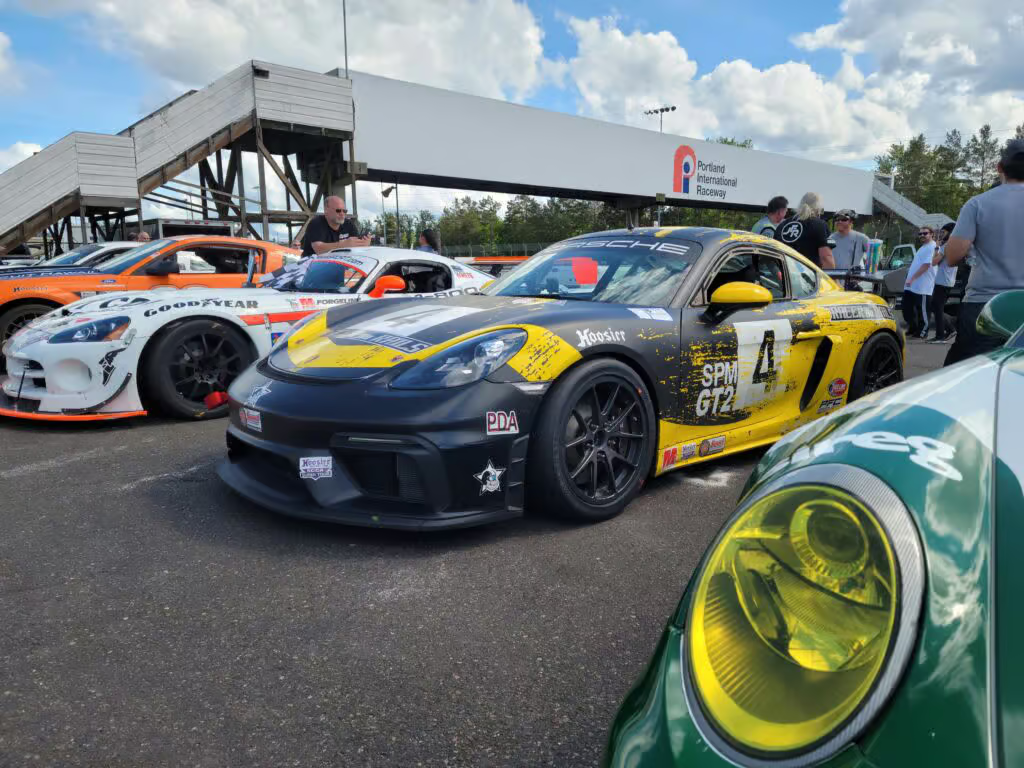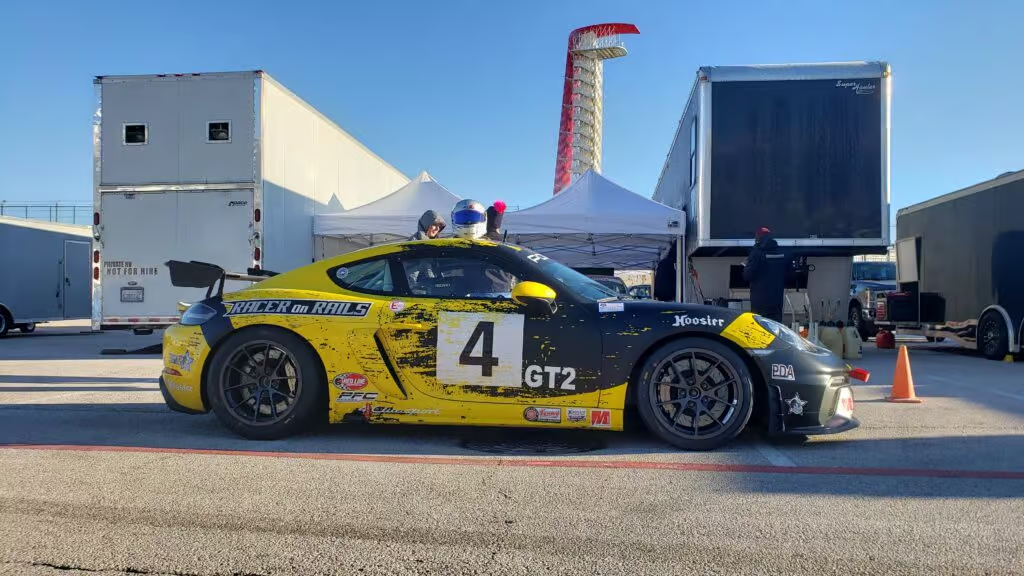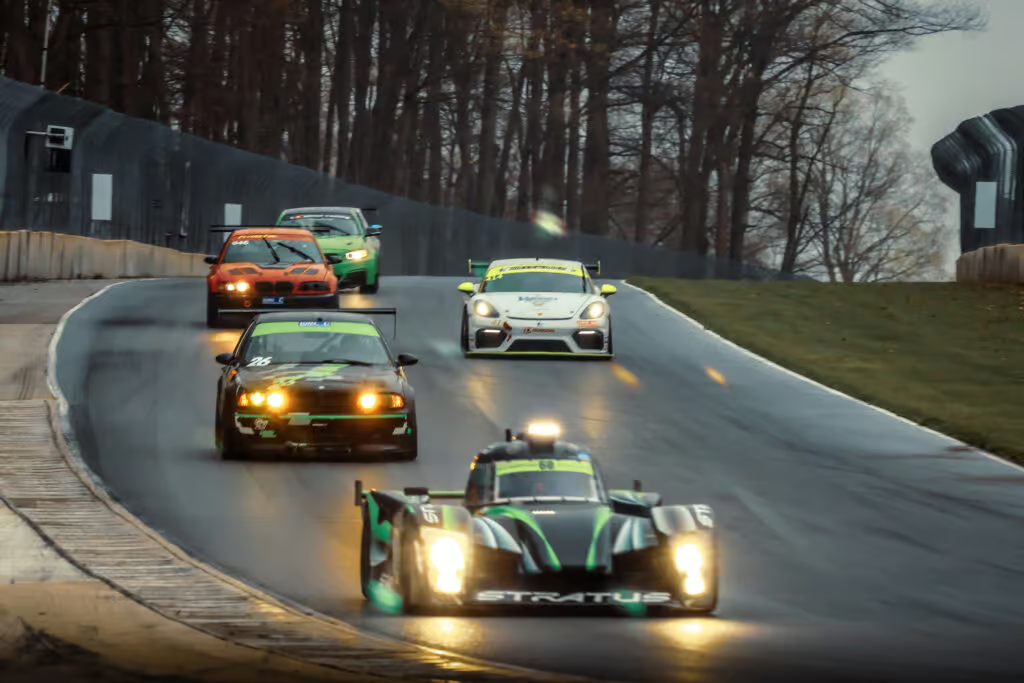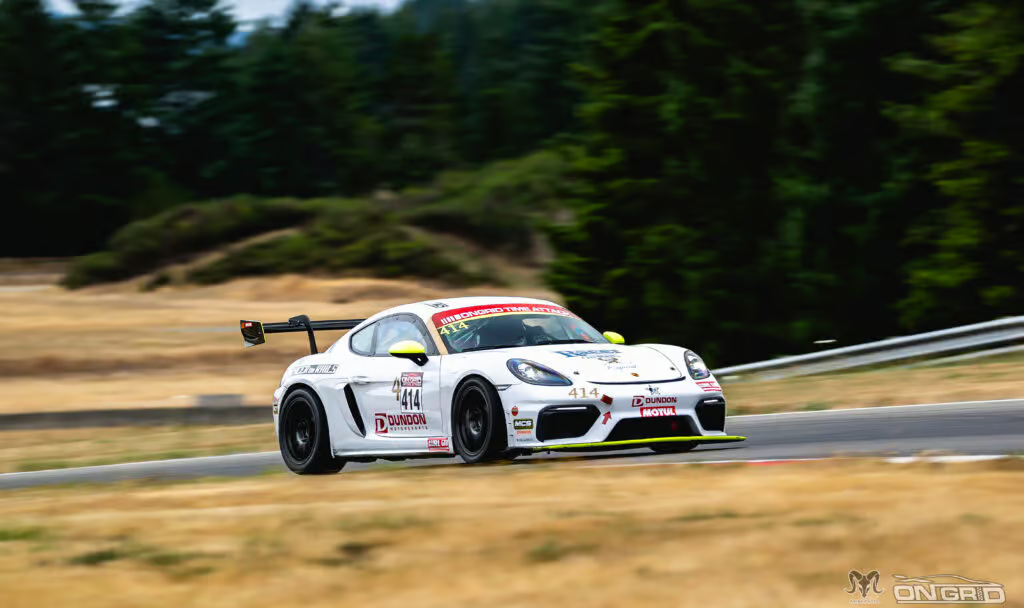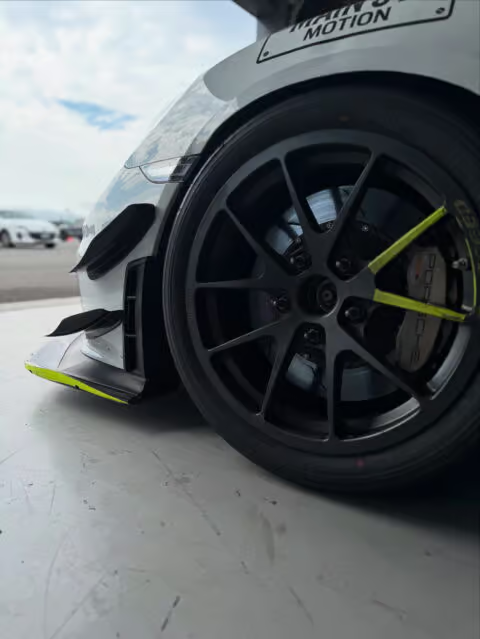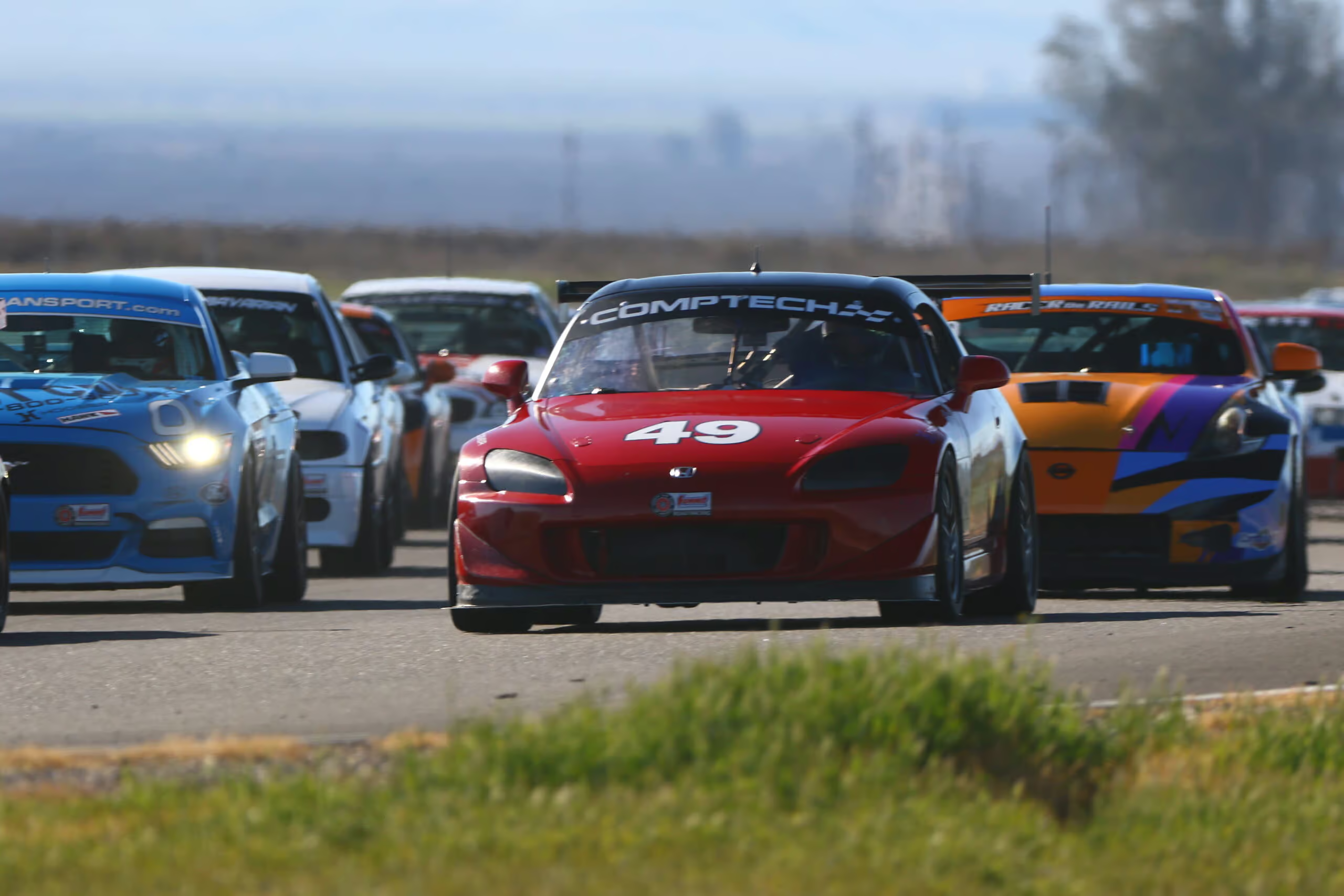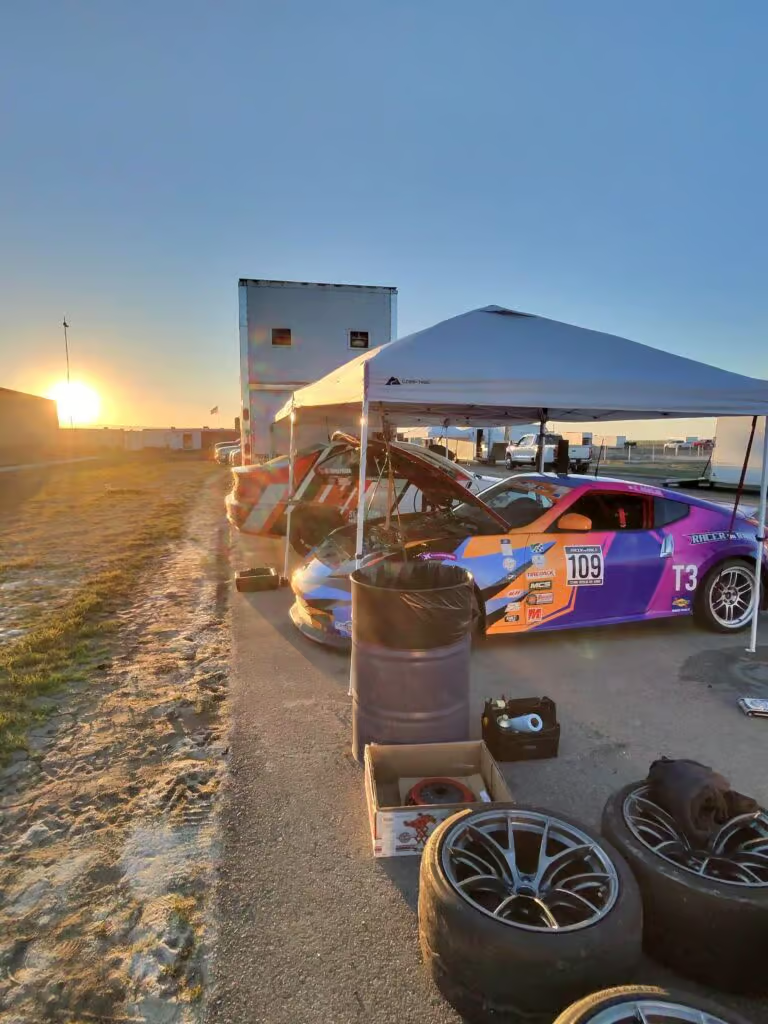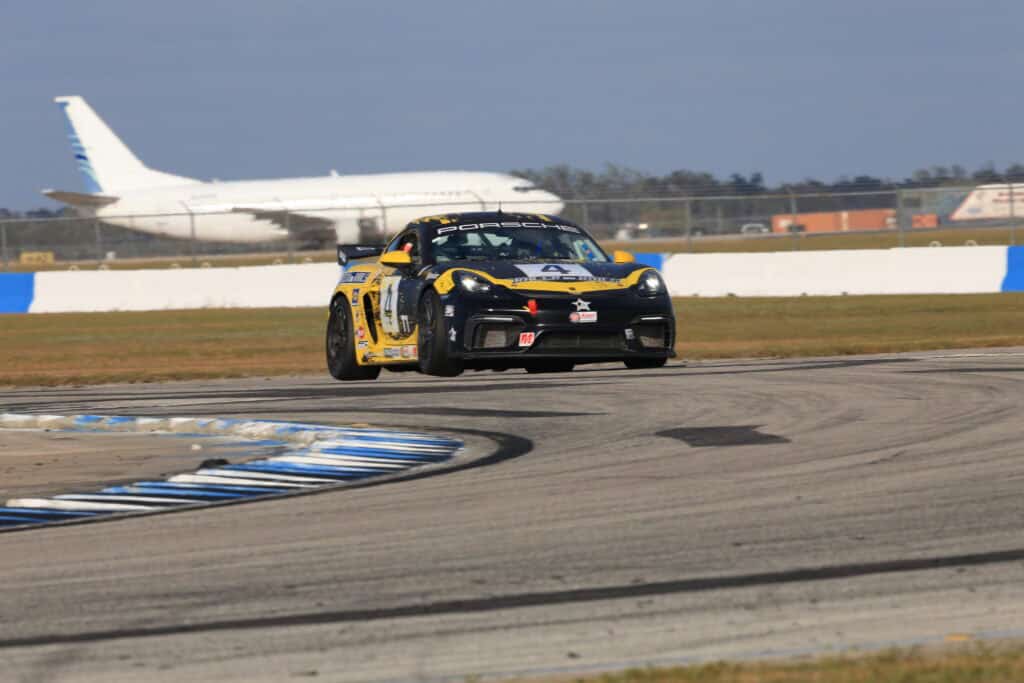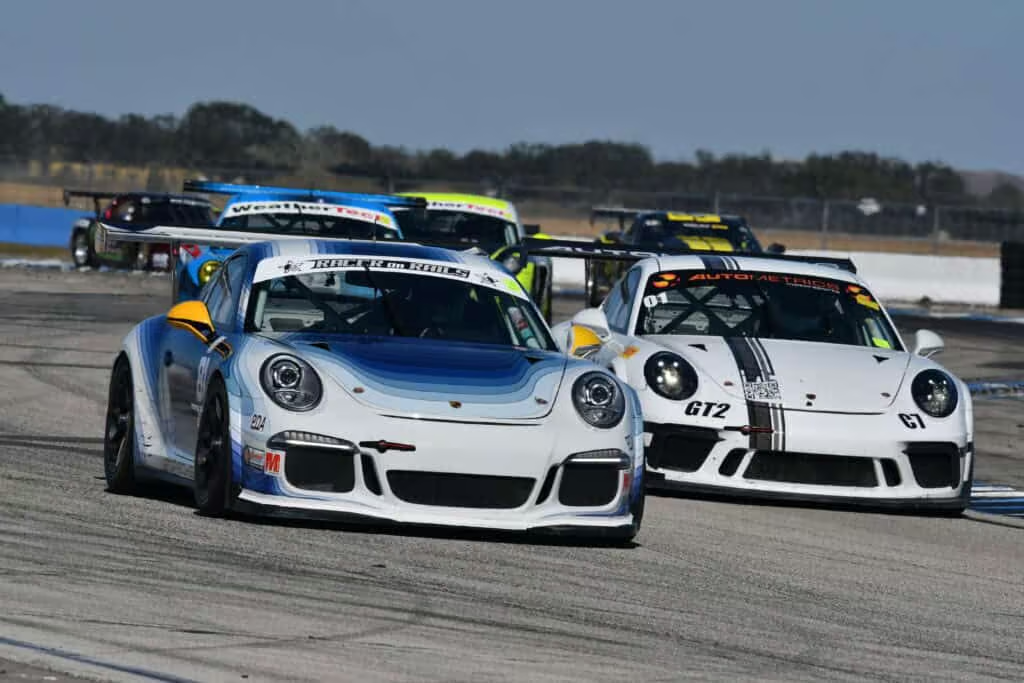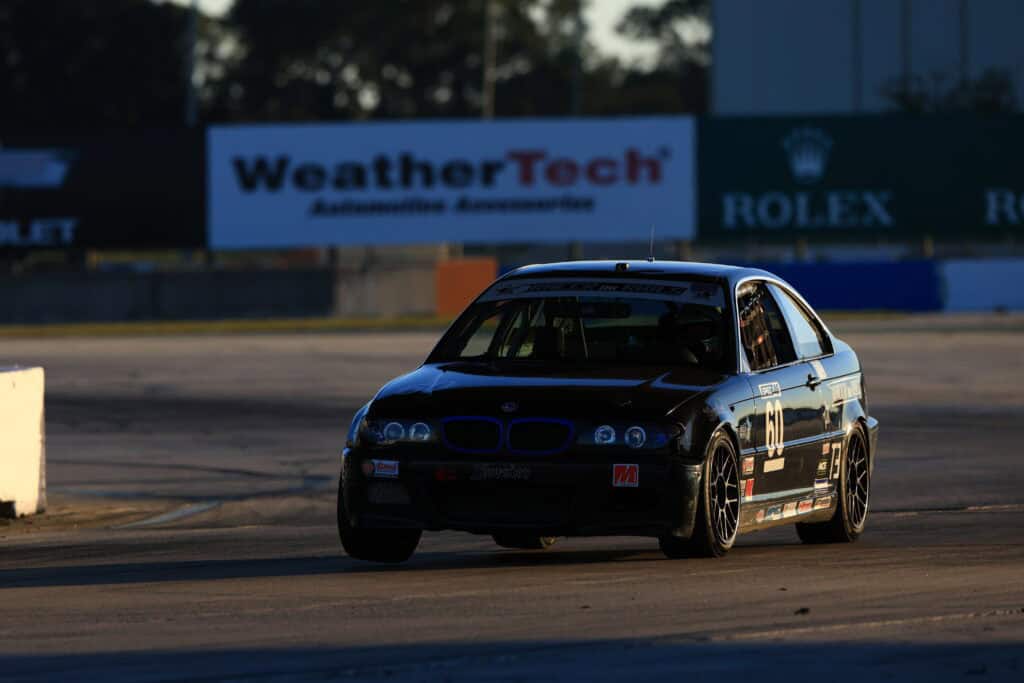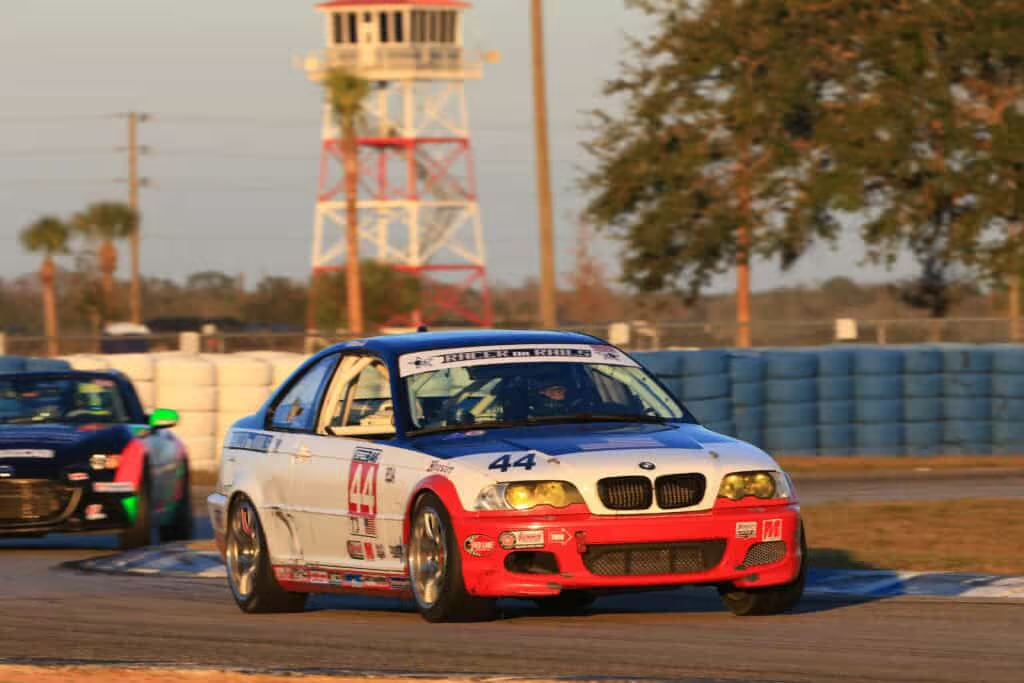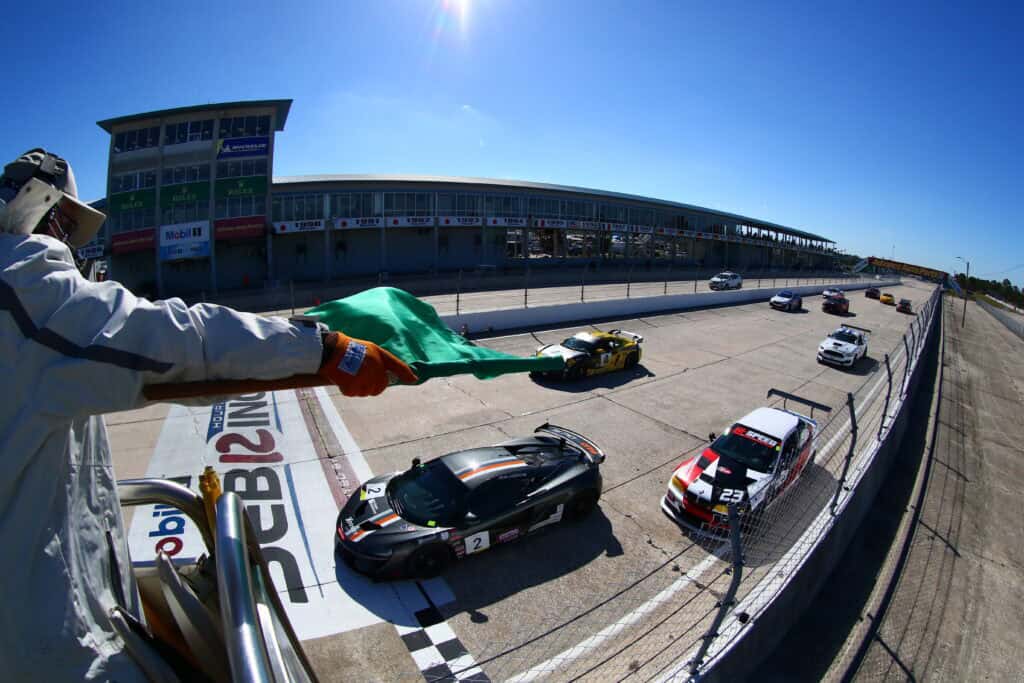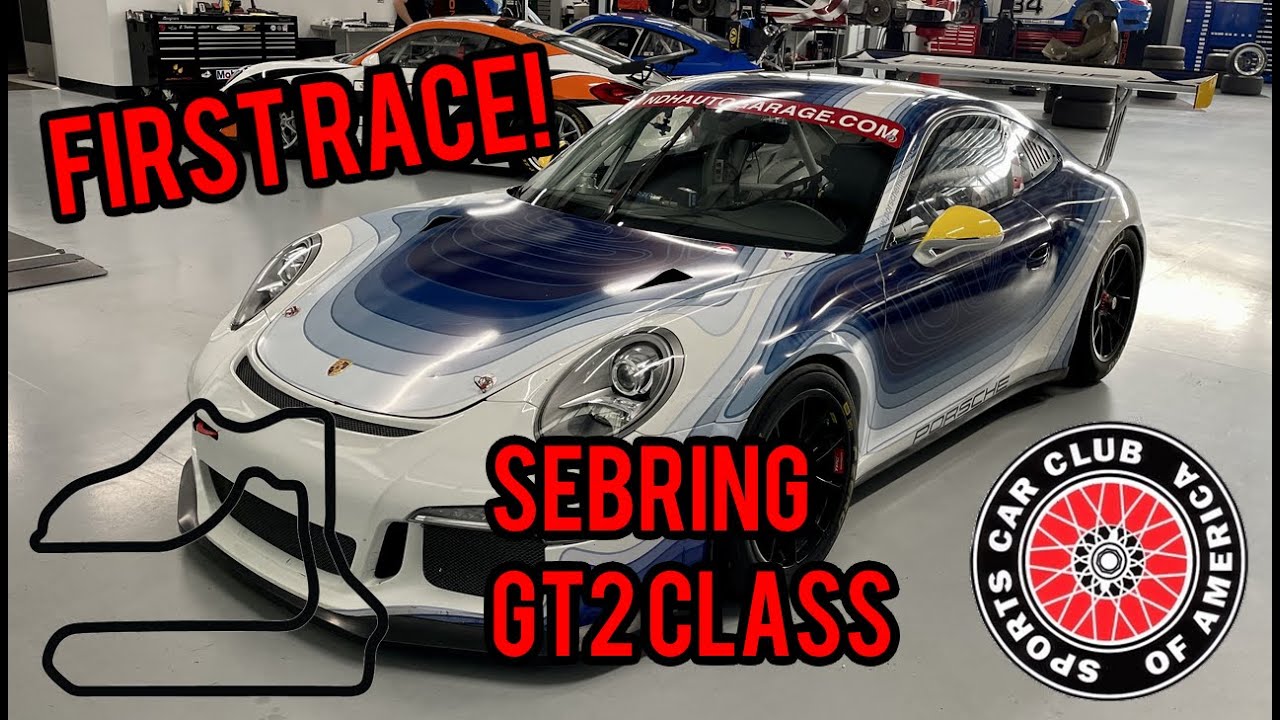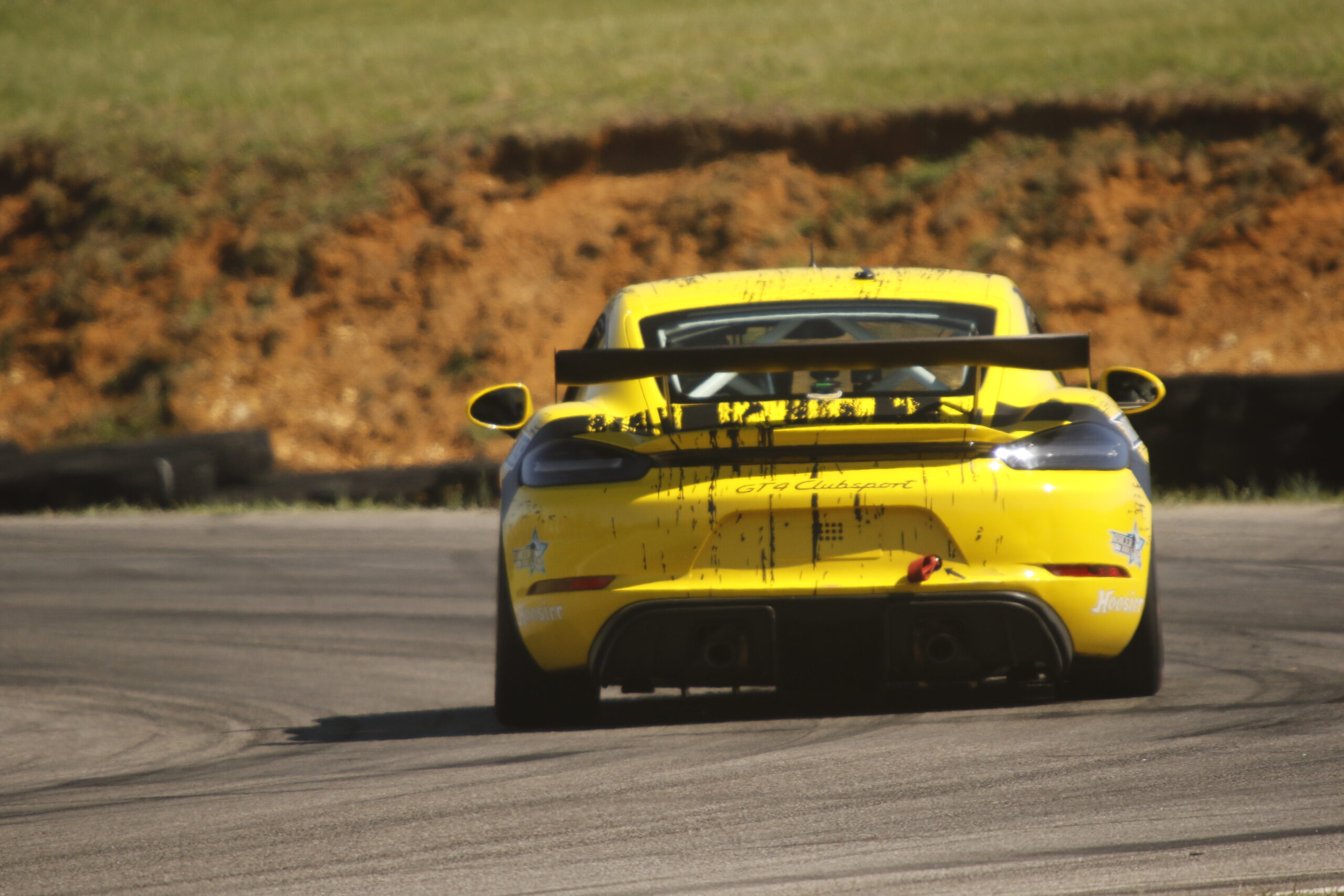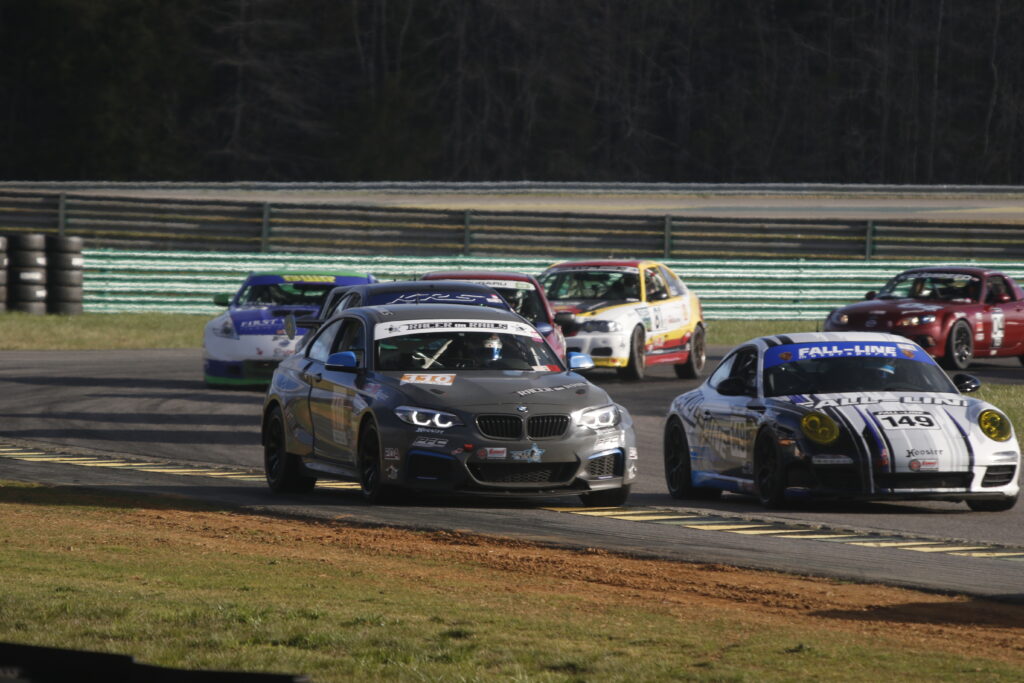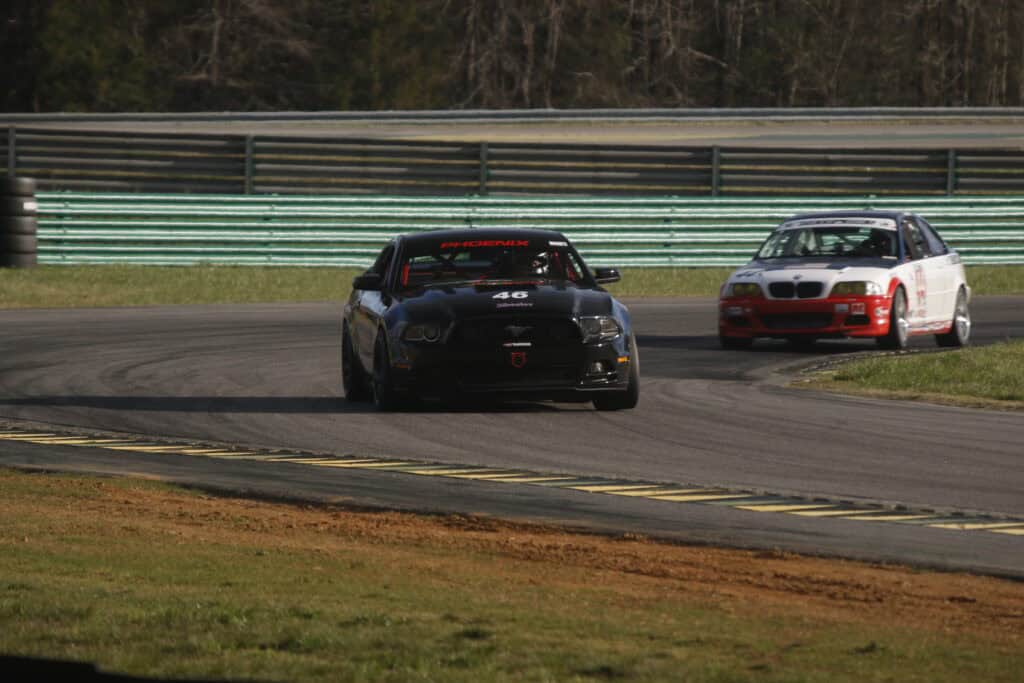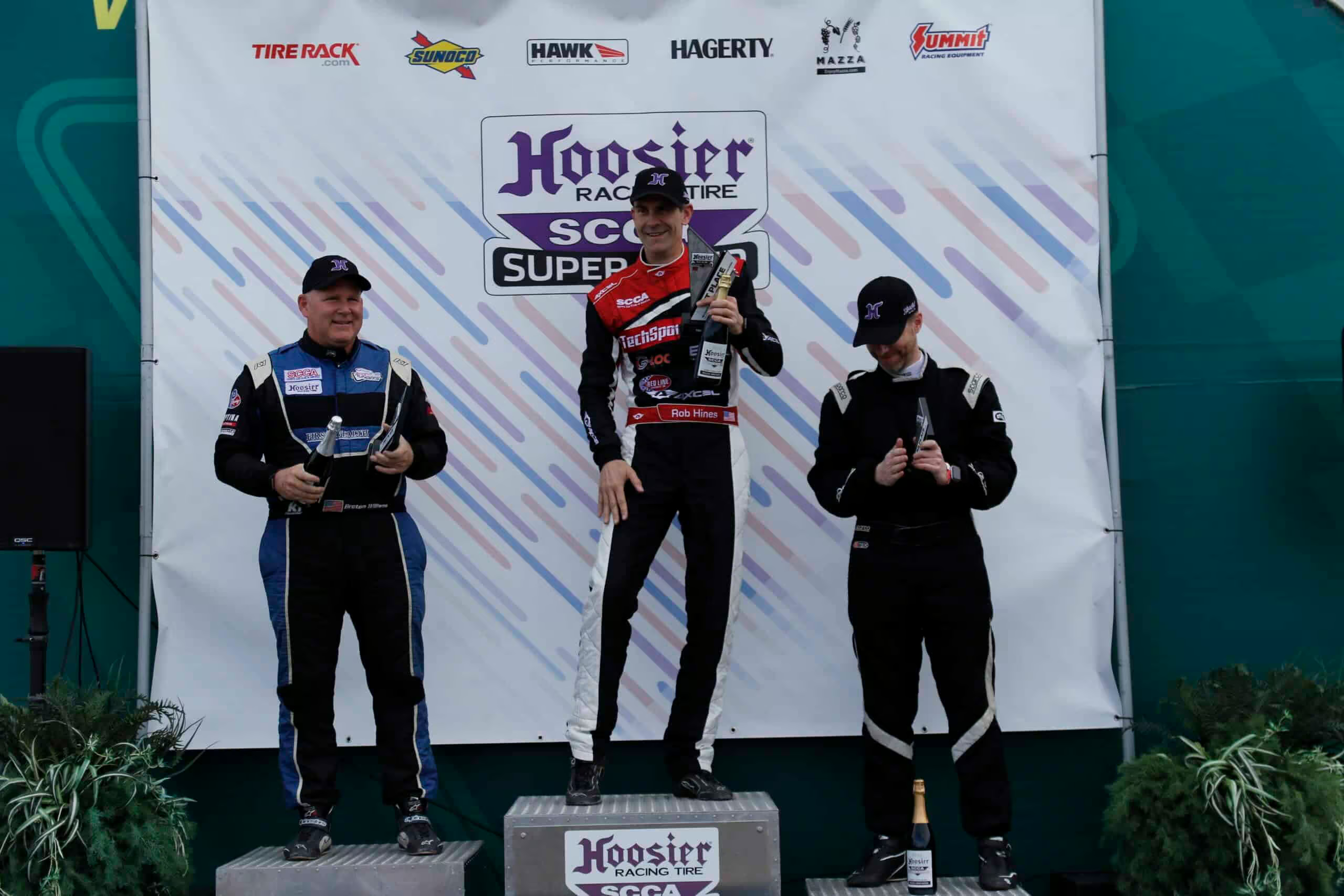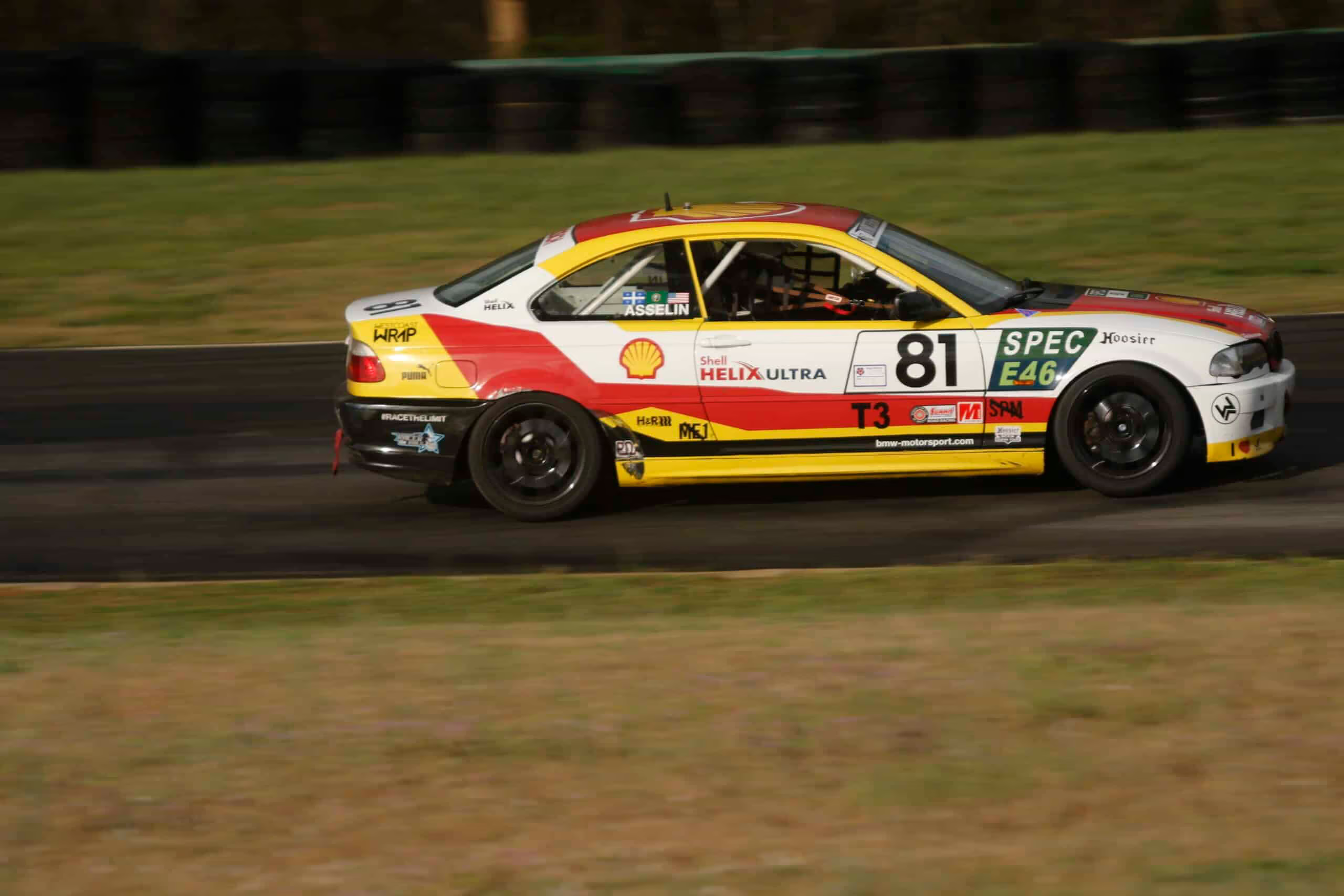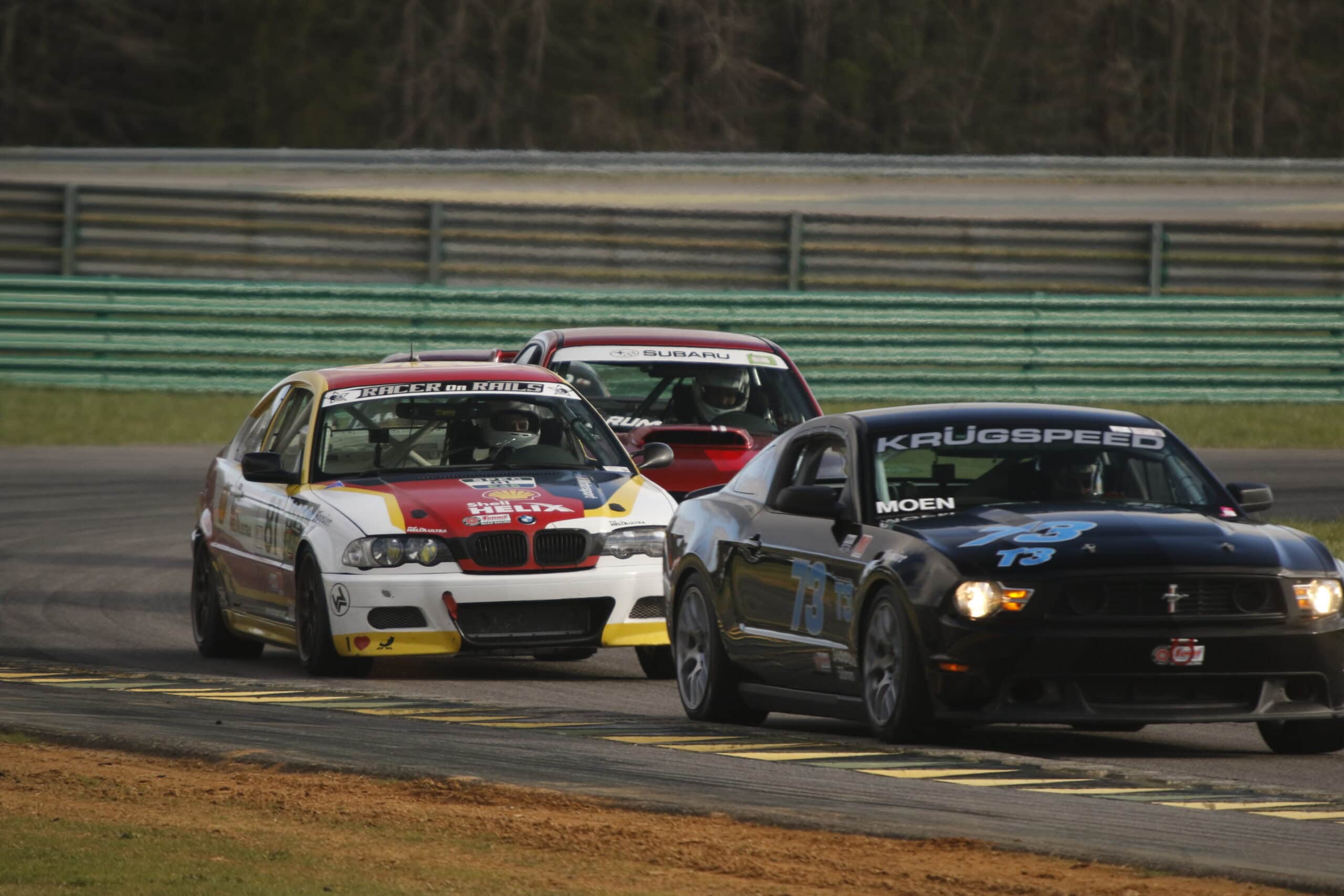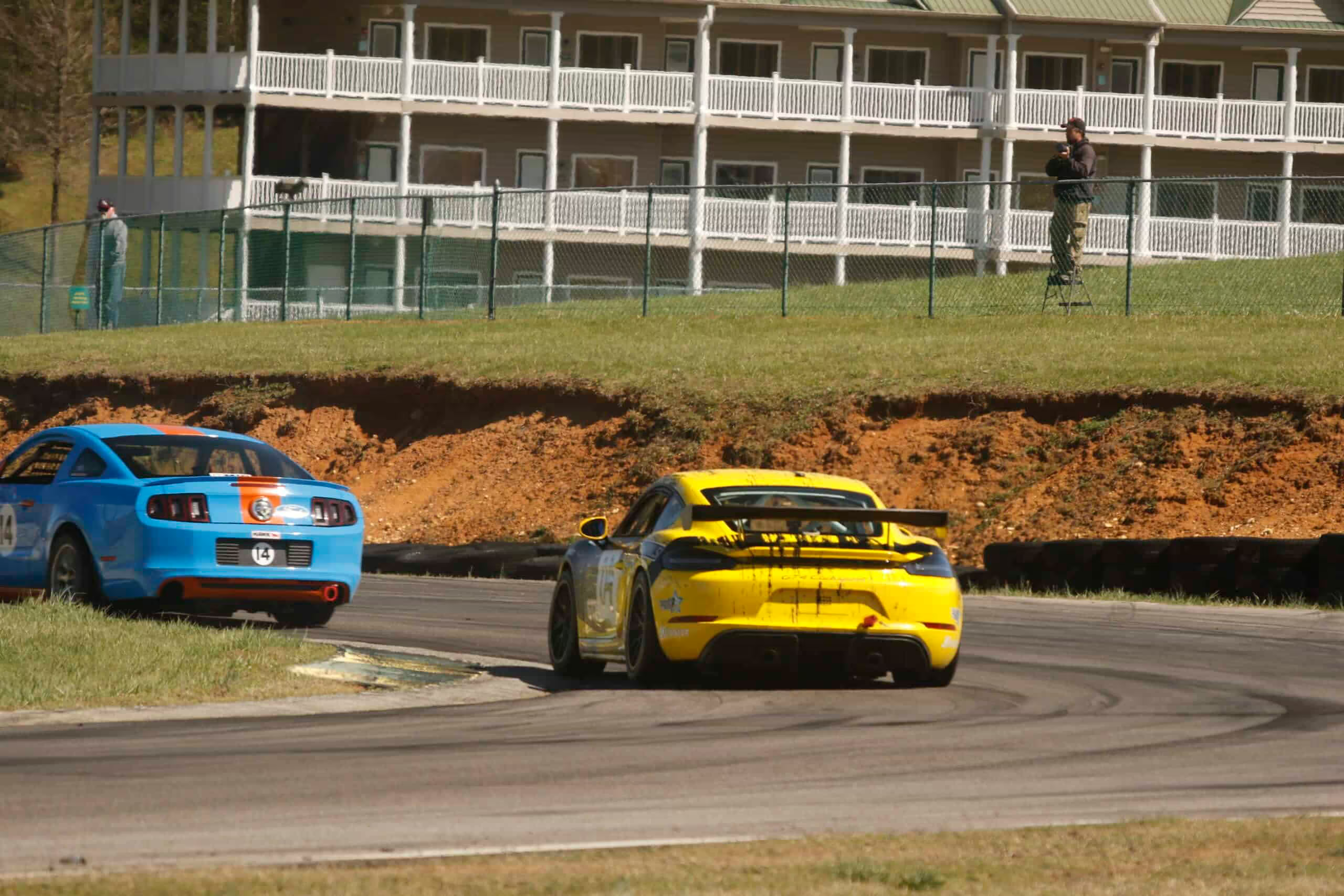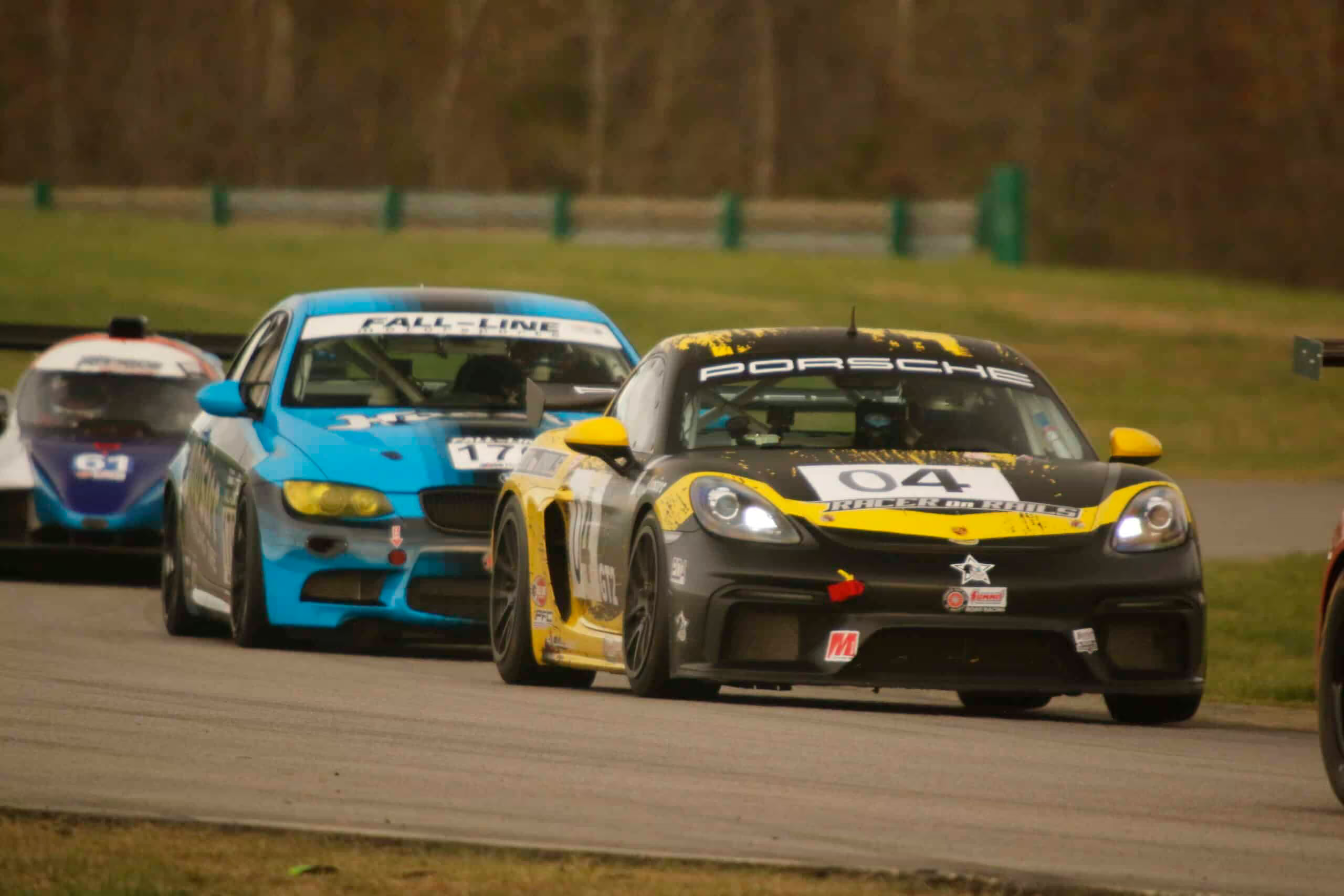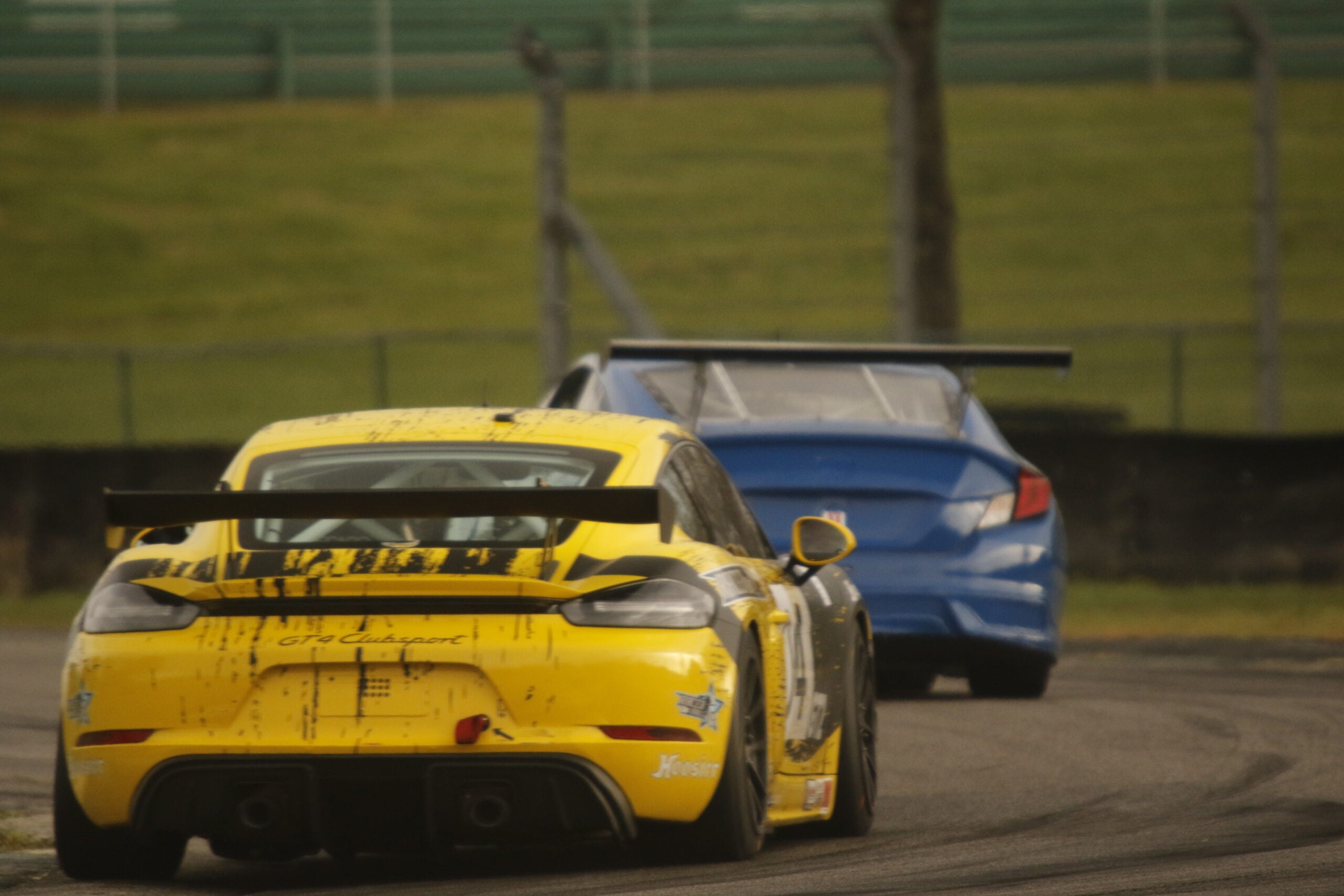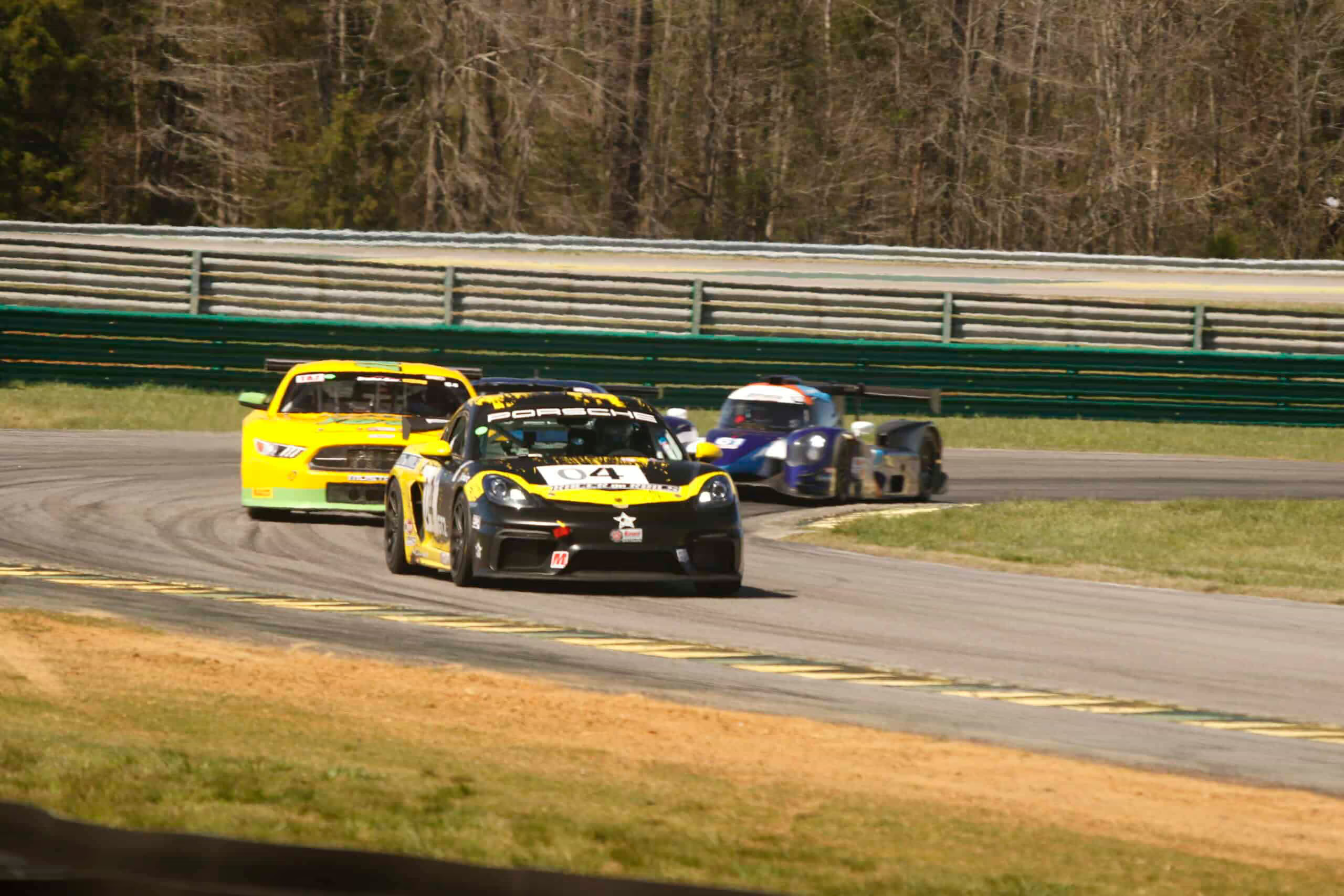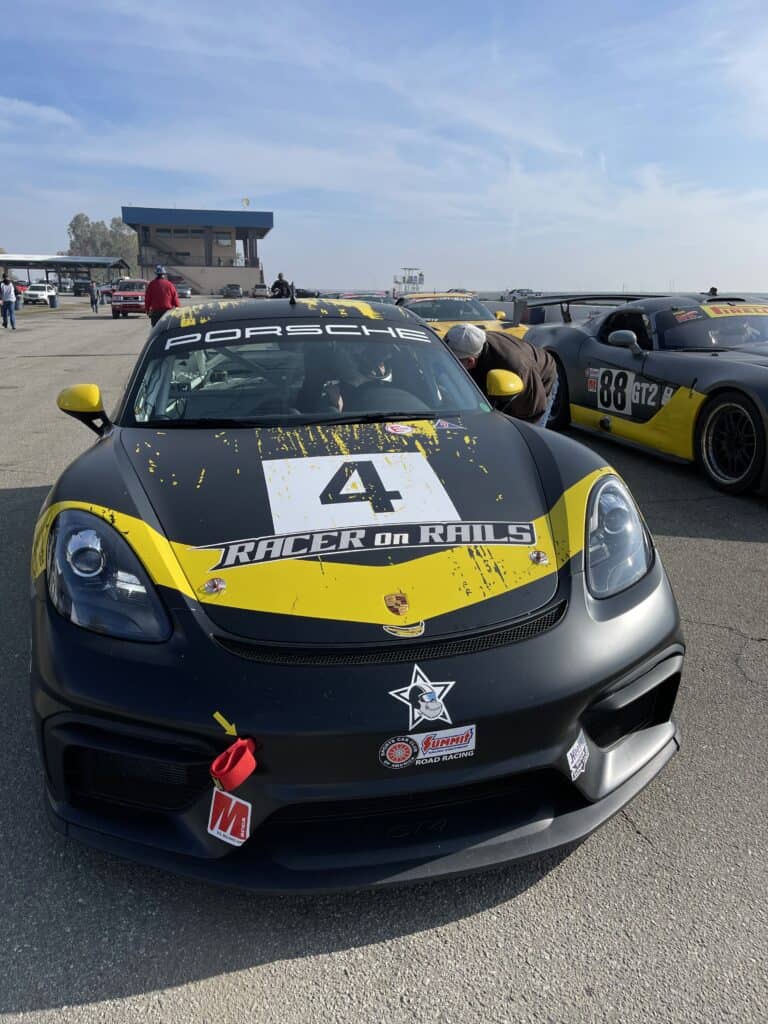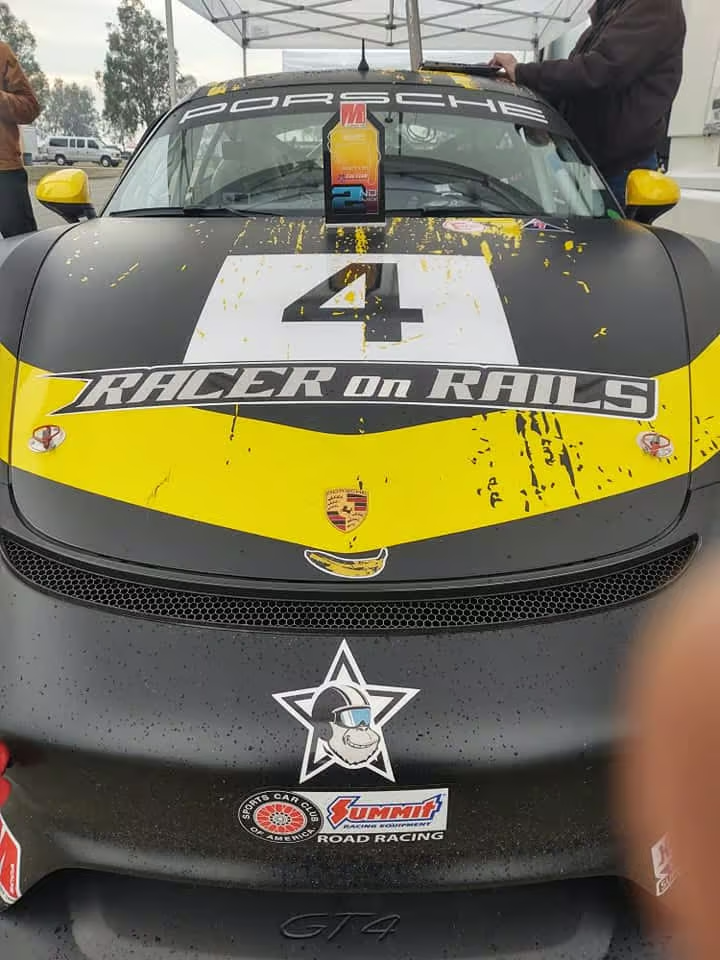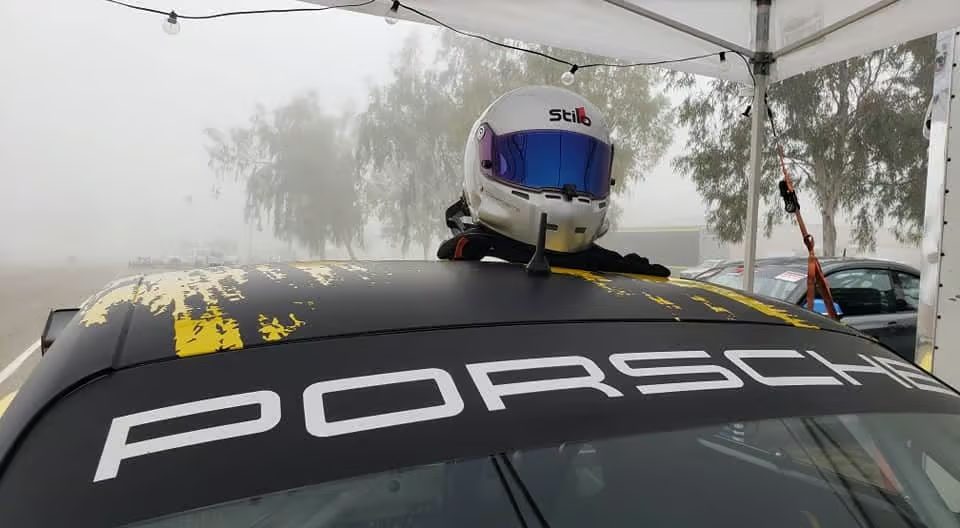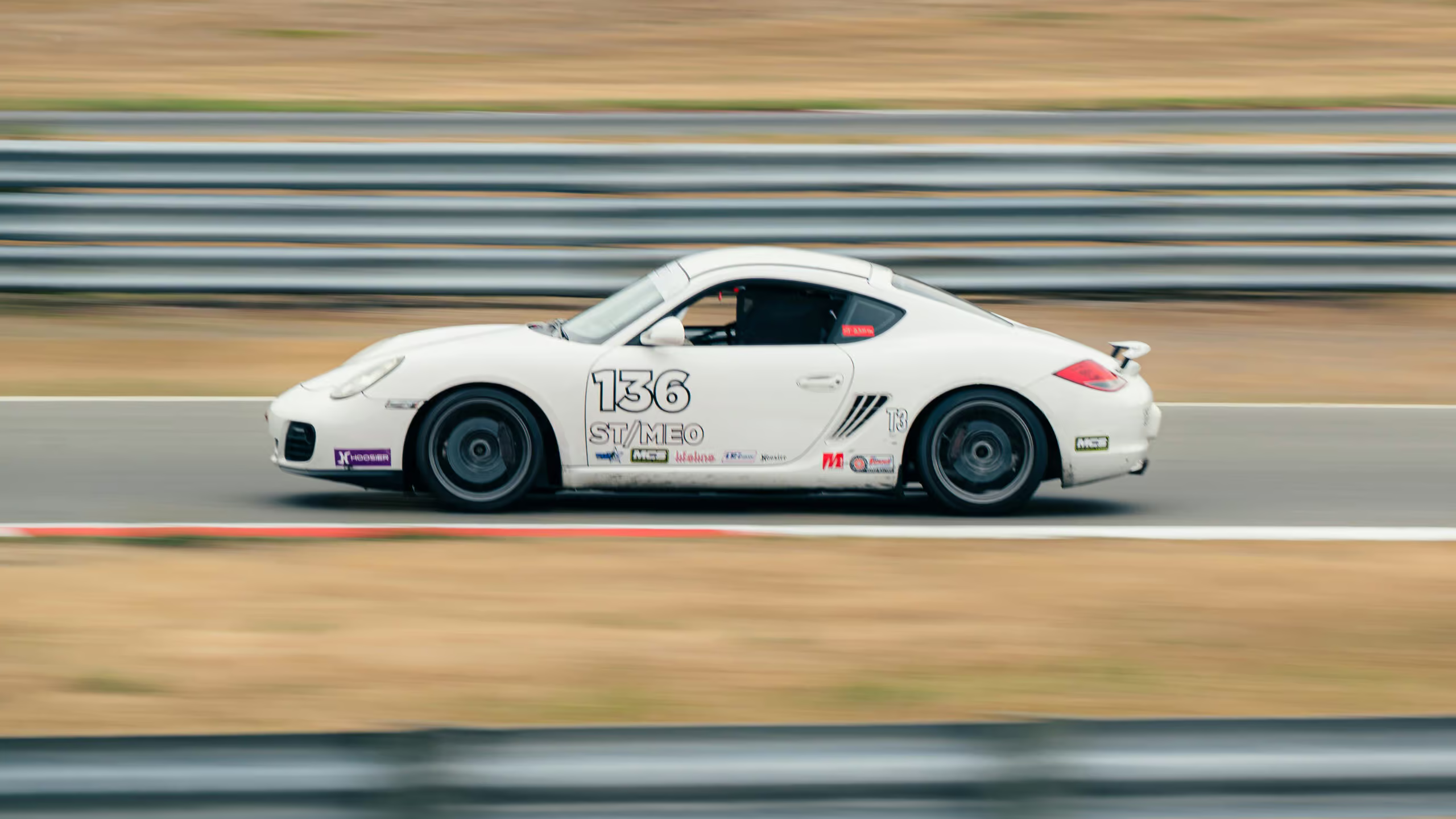
If you’ve followed Racer on Rails for a while, you already know our philosophy: take great cars, make them better, and then drive the hell out of them. This 2020 Porsche Cayman GT4 Clubsport Track Day Edition is the perfect example — a factory-built Porsche Motorsports car with real pedigree and a second life that spans endurance racing, time attack, and driver development.
Before we go deeper, it’s important to understand which Clubsport variant this is, because Porsche built several versions:
718 Cayman GT4 Clubsport Variants
Track Day Edition (This Car)
Designed for private owners and track day use
Same 425 hp 3.8L flat-six as Comp version
Lighter-duty fuel system
No air-jack system (but provisions exist)
Not homologated for GT4 racing
Competition Version(Not This Car)
Fully homologated for GT4 racing
Air-jack system included
Larger motorsport fuel cell
Endurance switches & safety electronics
Homologation restricts power/aero changes
Carbon and natural fiber material body panels
Newer 718 Cayman GT4 RS Clubsport
4.0L RS-based platform
More power, higher RPM ceiling
Improved aero and suspension
The current model used in IMSA/SRO GT4
Much closer to a “mini Cup Car”
Our car — the Track Day Edition — gives us the freedom to pursue more aero, more setup range, and more developmental headroom than the rules-restricted Competition version.
Where This GT4 Clubsport Came From
Photos of the car from its Ann Doherty era after arriving at RoR.
Pit lane at Road AtlantaChris Green | ChrisGreenPhoto.comHitting the back straight at COTAPost race at PortlandFelt cute, might delete later
This GT4 Clubsport began its life with Ann Doherty, who ran it competitively in SCCA T1 and GT2 before upgrading to a 991.2 GT3 Cup Car.
Because the car came from Ann, we gained two major benefits:
It had been maintained at a true professional standard.
It had already proven itself at a national competition level.
When she moved to the Cup Car, we took ownership of the GT4 and immediately put it to work.
What We Used It For
1. Endurance Racing (2024)
Bombing down Turn 5 at Road America with World Racing League
The first chapter of this car’s life with us was national-level endurance racing:
WRL Road America — April 2024 Our first outing. Strong pace, great aero learning, and flawless reliability.
ICSCC Cascade 8 Hours of Portland — October 2024 A full-day grind that gave us massive data on tire wear, pit strategy, and aero balance.
The car was consistent, predictable, and incredibly reliable — exactly what you want in an endurance platform.
2. OnGrid Time Attack (2025)
With the Dundon Valkyrie aero package installed, the car moved into OnGrid GT+ and instantly became a serious contender.
Huge downforce. Big mid-corner speed. Better braking stability. It was a transformation.
Check out one of the flying laps from this past summer – matching 992 and 991.2 GT3 Cup car lap times!
3. Driver Development & Testing Tool
This GT4 became one of our strongest tools for:
Advanced driver coaching
Back-to-back setup testing
Tire comparisons
Driver development beyond Spec E46, T3, and regional touring classes
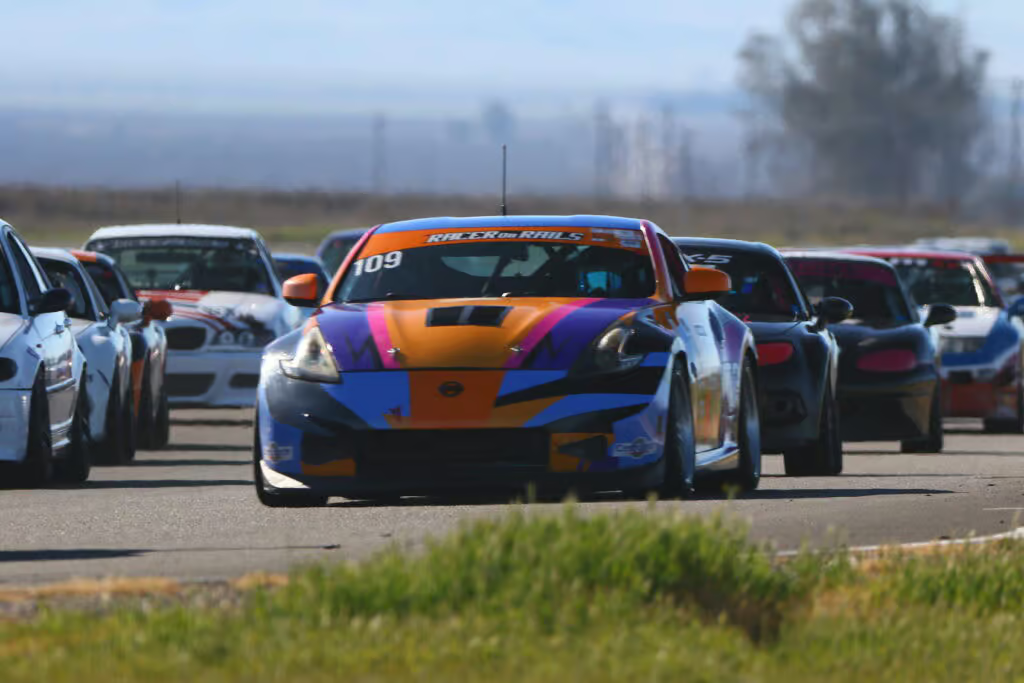
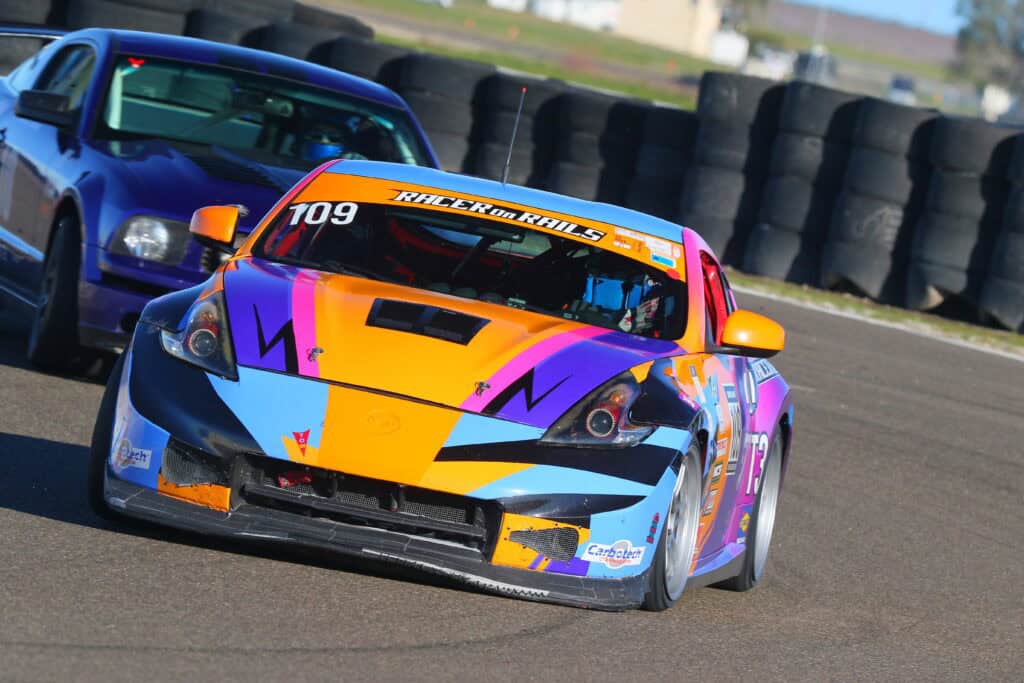
The opening round of our 2026 SCCA season brought us to Buttonwillow Raceway Park for the first SCCA Hoosier Super Tour of the year, February 21 – 22, 2026.
We raced on The Circuit configuration — Buttonwillow’s newer layout that’s been operating for over a year now and we were here last year, for the very first competition race weekend and event ever held at the new track. Ron competed here twice last season. For the rest of the team, we’ve logged time here supporting customers. But this was our first time bringing the Nissan 370Z to this configuration in race trim.
Touring 3 remains one of the most competitive, tightly regulated classes in SCCA road racing. The cars are production-based, but execution is everything. Small setup shifts matter. Tire management matters. Driver discipline matters.
Buttonwillow’s The Circuit layout also brings a very different technical personality compared to the original “Buttonwillow 13CW” configuration that many West Coast racers grew up on. Traditional Buttonwillow rewards aggression, commitment over bumps, and managing long-flowing corner sequences with a little bit of chaos built into the surface and sightlines. The Circuit, by comparison, feels more modern and much more precise. The pavement quality is smoother, the transitions are faster, and the corners tend to stack technical decisions on top of each other.
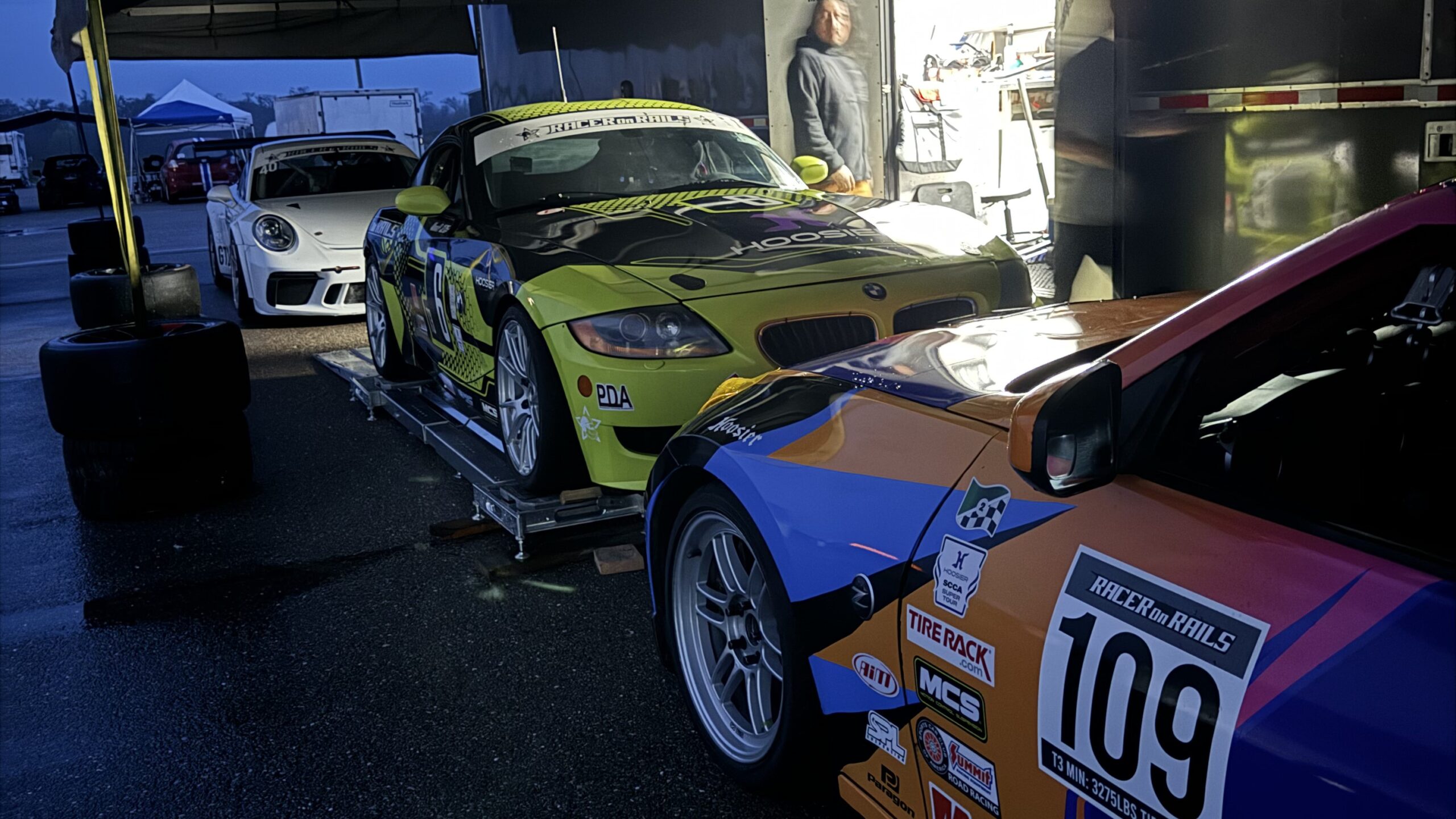
Sun is setting at Buttonwillow The Circuit – when the sun goes down, the air and track temps drop fast in February.
Several sections reward sacrificing entry speed to maximize minimum corner speed and throttle commitment on exit, while other complexes punish even tiny balance mistakes with lost momentum that carries for multiple corners afterward. It’s also a track where aero drag, mechanical grip, brake release timing, and tire temperature management all become more interconnected than people initially expect. A car that feels “pretty good” for one lap can quickly become difficult over a race run if the balance isn’t properly managed. In many ways, The Circuit feels less like old-school club racing Buttonwillow and more like a purpose-built modern technical circuit that rewards disciplined engineering and adaptable drivers.
At just over 2.5 miles in length, The Circuit combines roughly two dozen corners and transitional elements ranging from slow, technical rotation zones to fast, committed sweepers that reward precision and patience. The layout constantly shifts between decreasing-radius corners, long loaded exits, quick direction changes, and several areas where throttle timing matters more than outright bravery. For Touring 3 cars, gearing becomes especially important because many sections sit right on the edge between carrying momentum in a taller gear versus risking upsetting the platform with an additional shift.
The track surface itself is relatively smooth compared to the original Buttonwillow layouts, but the environment still plays a huge role in grip evolution. Located in California’s Central Valley, the circuit is frequently impacted by wind carrying fine dust and sand onto the racing line, while dramatic temperature swings between cold mornings and warmer afternoons can significantly change tire behavior and overall balance throughout a race weekend.
Buttonwillow’s Circuit layout rewards rhythm and precision. There aren’t many places to hide mistakes. It’s a track that exposes imbalance — mechanical or mental.
That made it the perfect place to start the year.
The Mindset: Process Over Outcome
Coming into the weekend, our objectives were clear:
Establish a stable performance baseline for the 370Z
Continue refining Ron’s throttle application and adaptability
Validate our tire pressure management process
Execute cleanly as a team
We intentionally chose to run lightly used tires instead of bolting on fresh rubber. Not to handicap ourselves, but to operate with discipline and long-term planning in mind.
For Ron, this season is about expanding his toolbox. He’s put in serious off-season work — simulator training, Porsche ice driving, DirtFish advanced programs — all focused on becoming more adaptable and decisive with inputs.
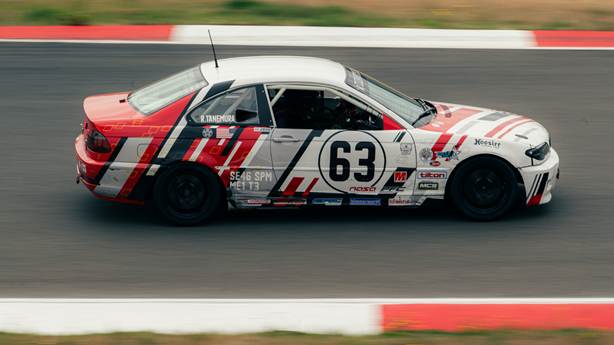
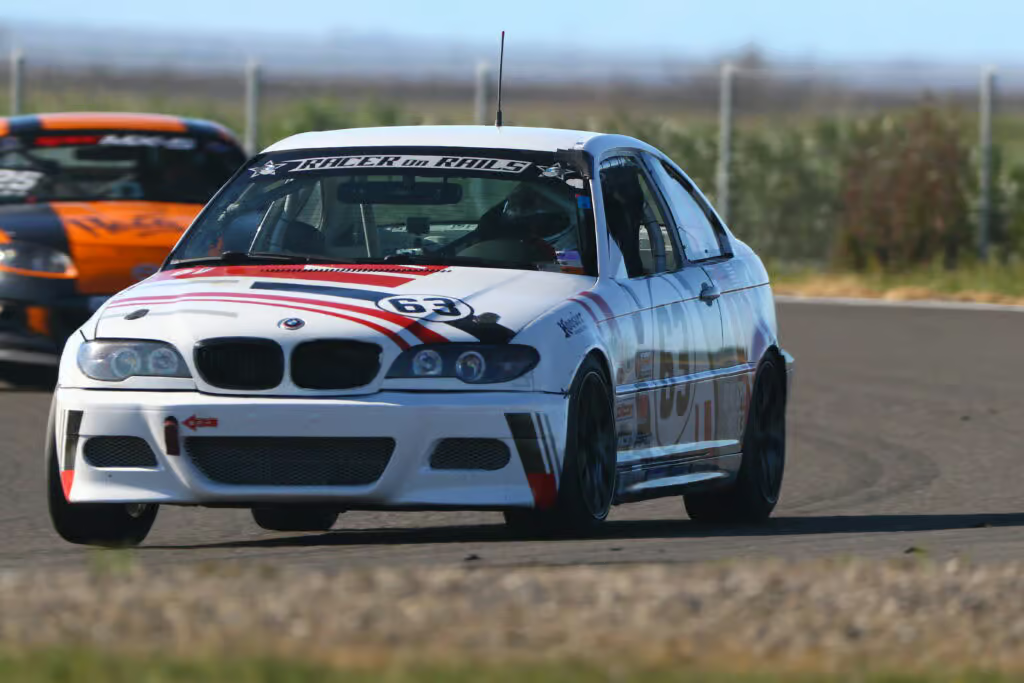
Ron Tanemura carving corners in his Touring 3 BMW Spec E46
For the team, this season is about raising our operational standard. When something breaks, we fix it properly. When development is needed, we create bandwidth for it.
No chasing. No scrambling.
Build it right.
The Weekend Story
The Journey South
Jordan and Ian drove the truck down through snow over the Oregon passes. Enough weather to keep things interesting, but they maintained traction and avoided chains. We arrived in California clean and on schedule.
That matters more than people think.
Testing: Cold Mornings, Steady Gains
Thursday brought cold temps and passing showers. Ron used early sessions to reacquaint himself with slip and rotation. By Friday he was back at 2:00.0 pace — only tenths off his personal best from last year at this track.
The 370Z test sessions were structured and deliberate. Controlled three-lap tire validation runs. Minor line adjustments through Turn 3, 5, 8, and 10. By Friday afternoon, we were consistently in the 1:56s with room left in the data.
The car was stable. Predictable. Repeatable.
Baseline established.
Mechanical Curveballs
Late Friday we discovered the Nissan’s clutch was nearing end-of-life.
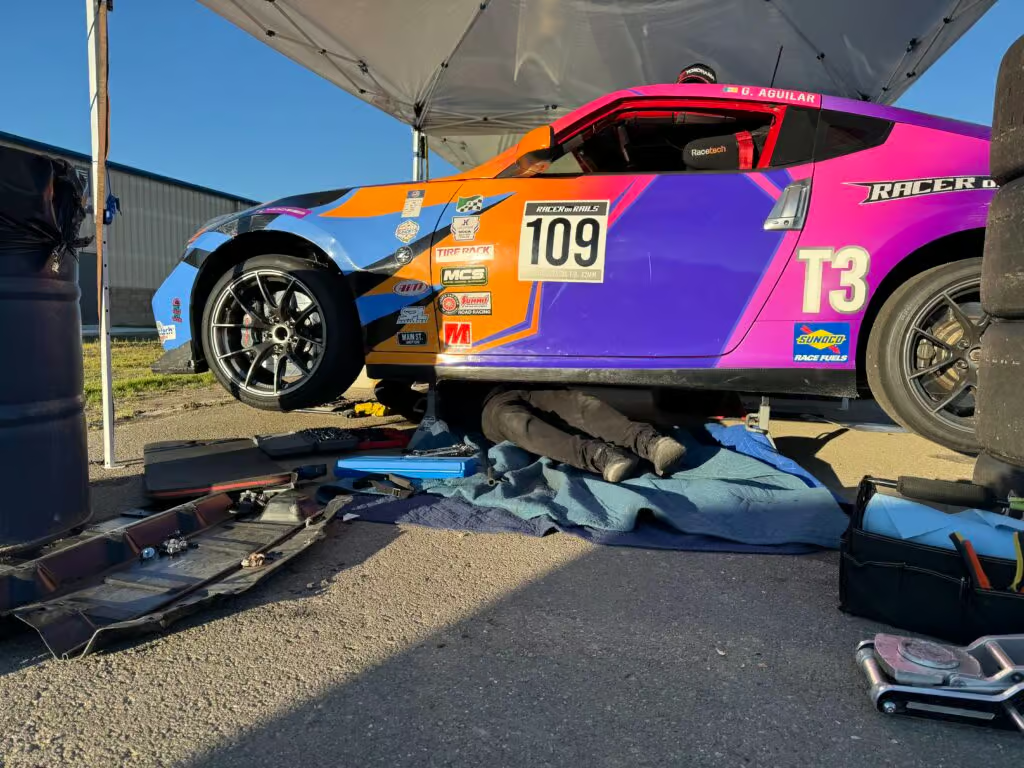
Saturday morning became paddock surgery.
Transmission out. Clutch replaced. Qualifying missed.
Ron’s clutch was also right at a season’s worth of cycles, so we proactively replaced his as well. Two clutch jobs in one weekend.
It wasn’t glamorous work, but it was done calmly and correctly.
That’s culture.
Saturday Race: From the Back
Starting P28 overall after missing qualifying, the only direction was forward.
The opening lap was tight but clean. From there, it was controlled aggression and patience.
Twenty-two passes in twenty-five minutes.
Finished:
P6 overall
P2 in Touring 3
Fastest lap of the race would have placed us P2 on the grid for Sunday.
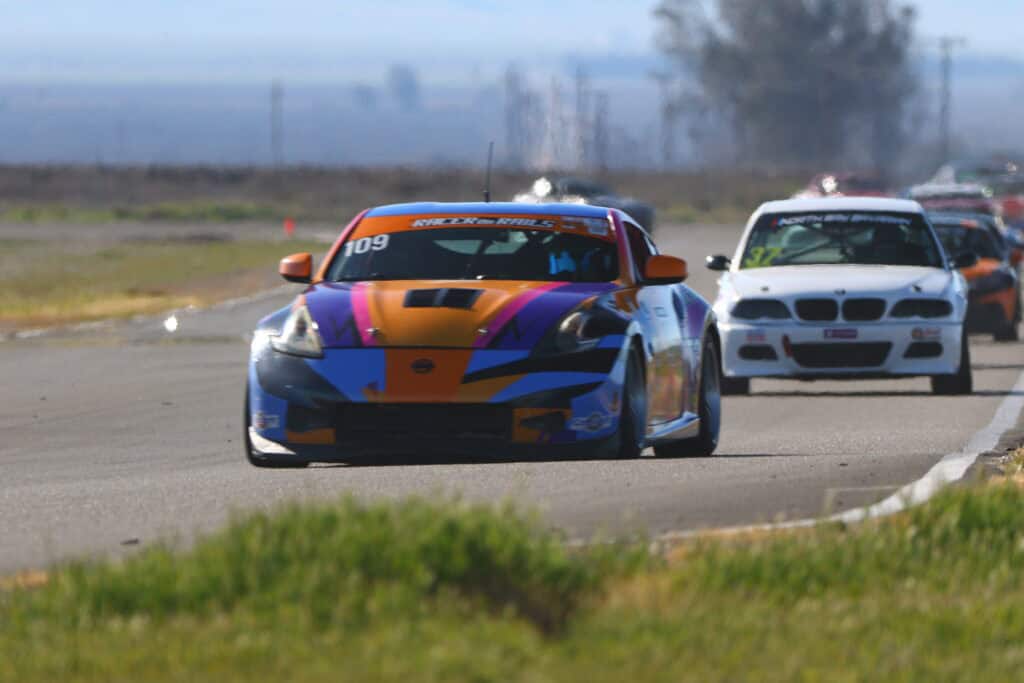
Gama in his Nissan 370z Nismo working his way through field during race 1.
All on used tires.
Sunday: Clean Execution
Sunday qualifying required careful temperature management after diagnosing a cooling fan issue. Despite traffic on both flying laps:
P2 in class
P4 overall
Gama and Ron making laps and loving every braking zone at Buttonwillow The Circuit
The race start was steady. The leaders stretched a gap as the rear tires began to show their age around lap five. Turn 1 required finesse and progressive inputs to manage increasing rotation.
Post-race inspection confirmed tire edge wear consistent with heavy cycling.
Final result:
P2 in class
Not quite the fight for P1 we would have liked, but an honest and disciplined run.
Ron: Double Podium Weekend
Ron started P3 in class Sunday and battled closely with Spec MX-5 cars running in STL for additional seat time. Those cars were quick and the racing was tight.
There was side-to-side contact exiting Turn 3 that pushed him wide, but he stayed composed and fought back.
He finished:
P3 in class
Double podium weekend
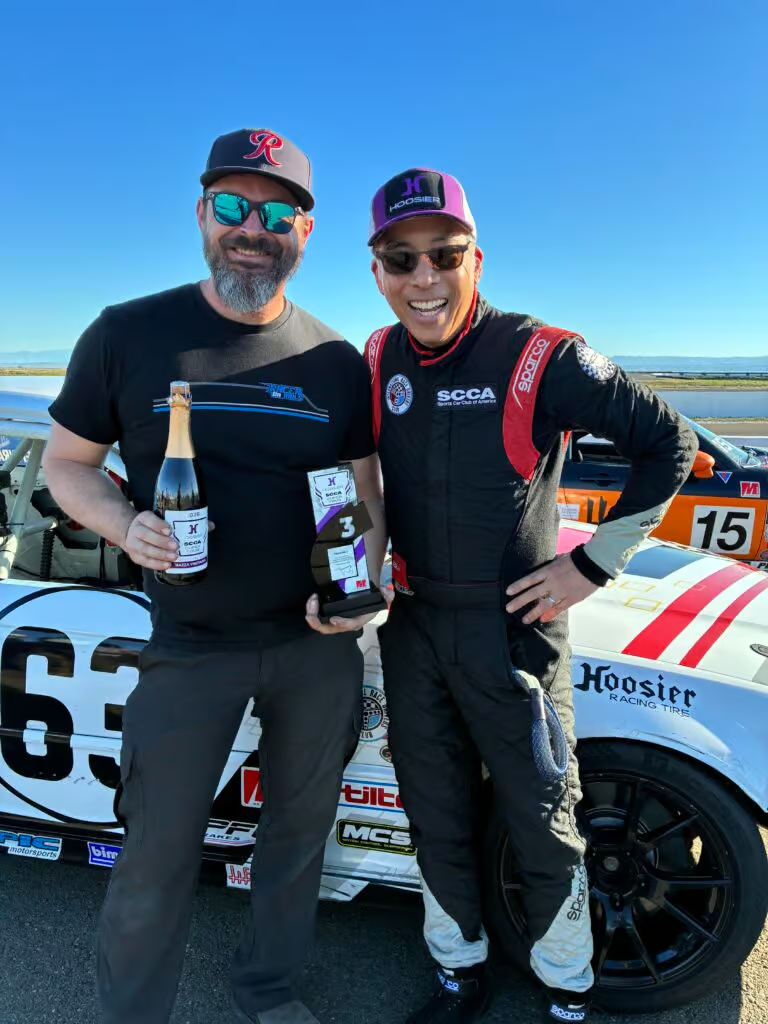
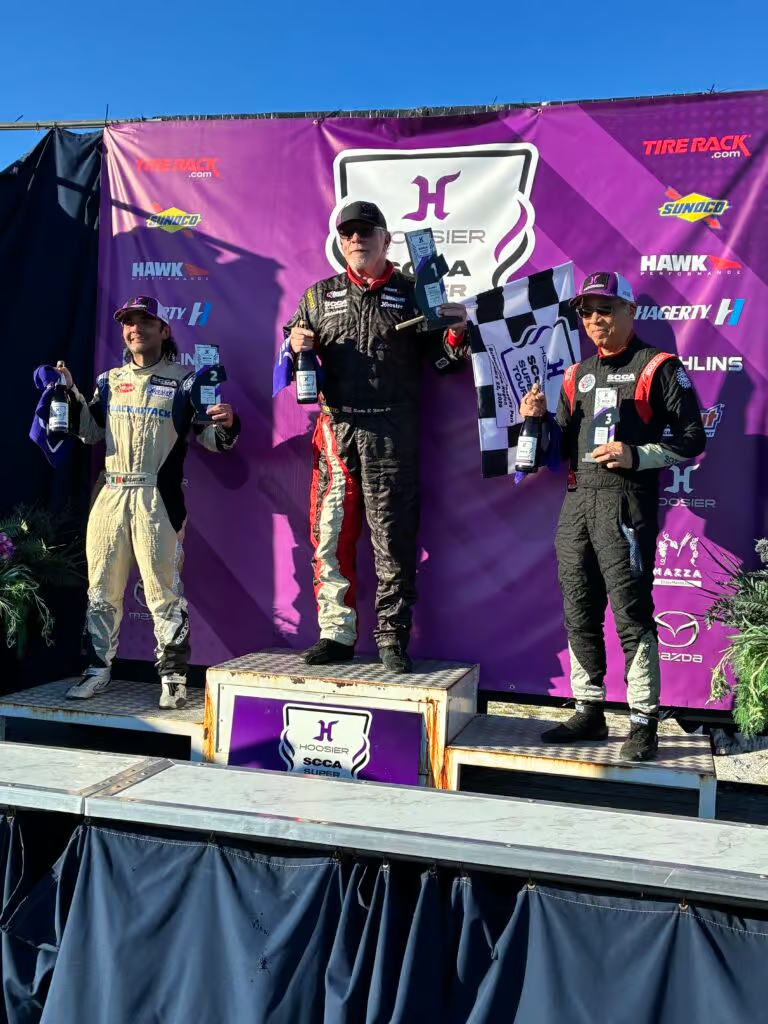
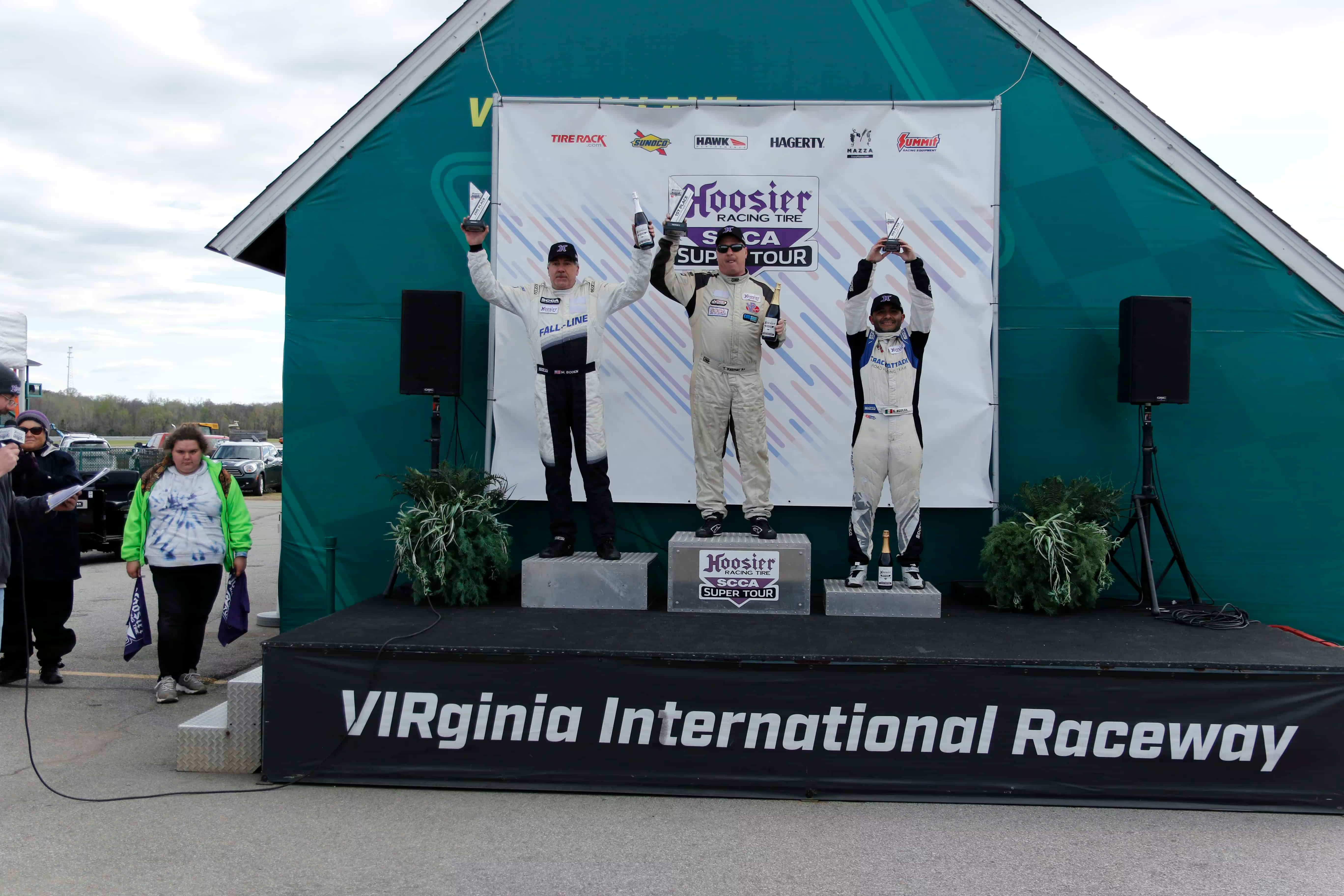
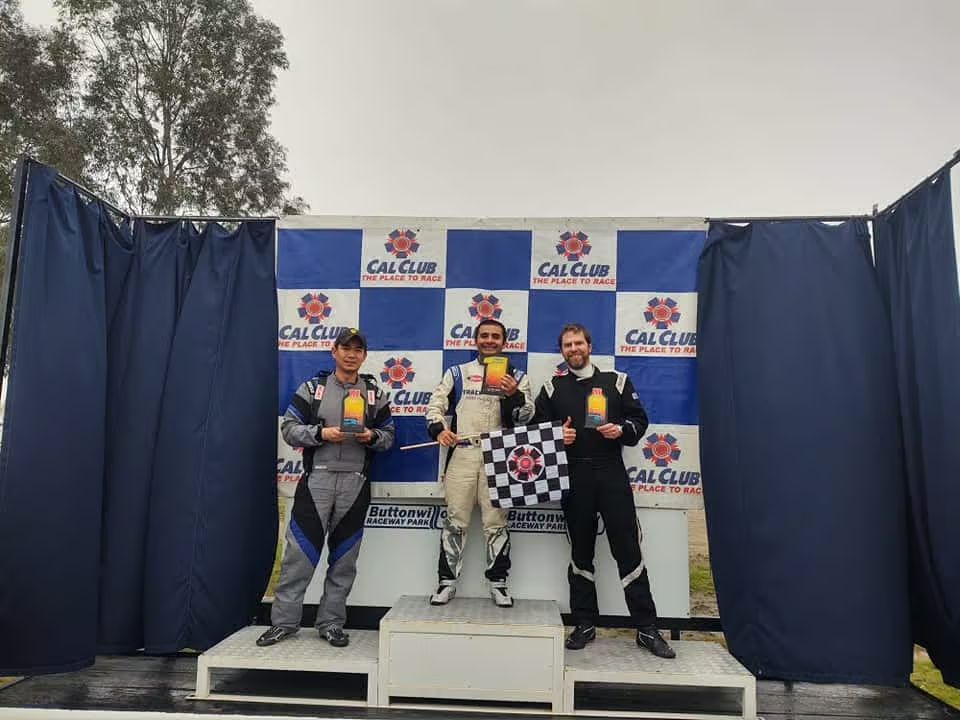
Both races resulted in an all-Pacific Northwest podium sweep, with Scotty B White completing the trio.
Ron left energized and sharper. More sensitive to the car. More decisive on throttle. Clear on what to improve next.
That’s exactly what this weekend was for.
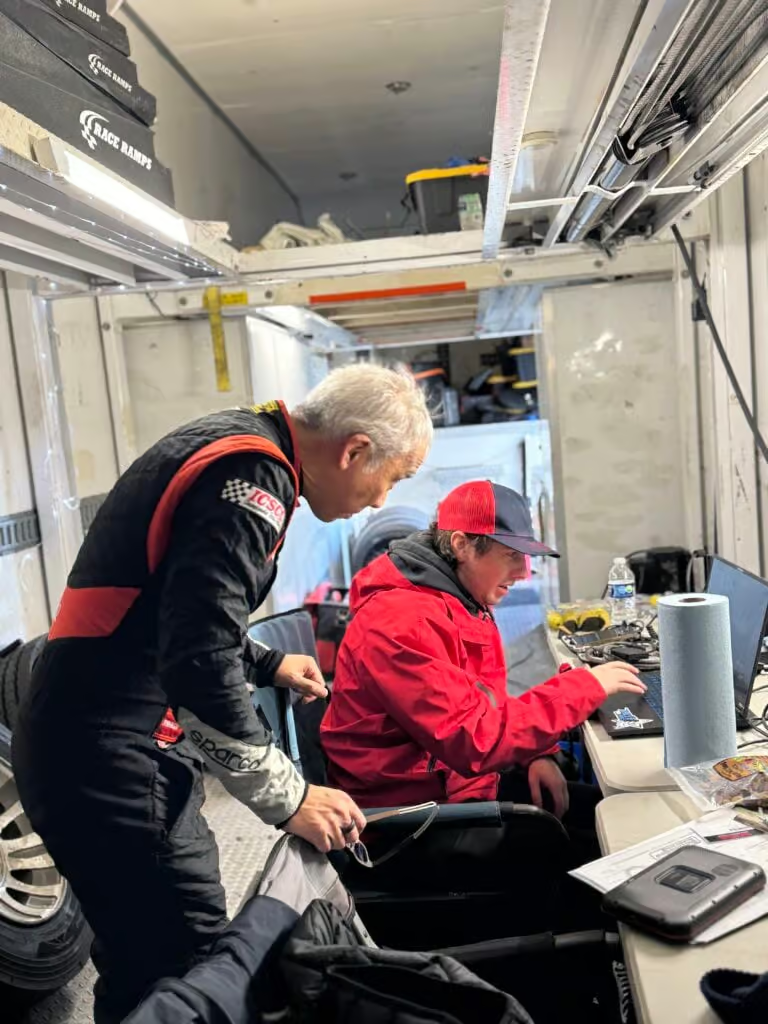
Tyler and Ron obsessing over the data, trying to figure out how to go faster, faster!
What We Take With Us
We worked through:
Snow-covered travel
Two clutch replacements
Cooling fan troubleshooting
Traffic-filled qualifying sessions
Tire degradation management
None of it materially impacted our results.
More importantly, the 370Z now has a clear and repeatable performance baseline. The upgraded big brake kit performed flawlessly. The car responds predictably to setup changes.
That’s a full PNW podium sweep for the Buttonwillow Hoosier Super Tour
We leave Buttonwillow not chasing something unknown — but building on something understood.
That’s the difference.
Goals were pursued with discipline. Smiles were earned in the paddock and at dinner tables. Memories were made in the moments that required composure.
Next stop: Sonoma Raceway with NASA.
The foundation is set. Now we build.
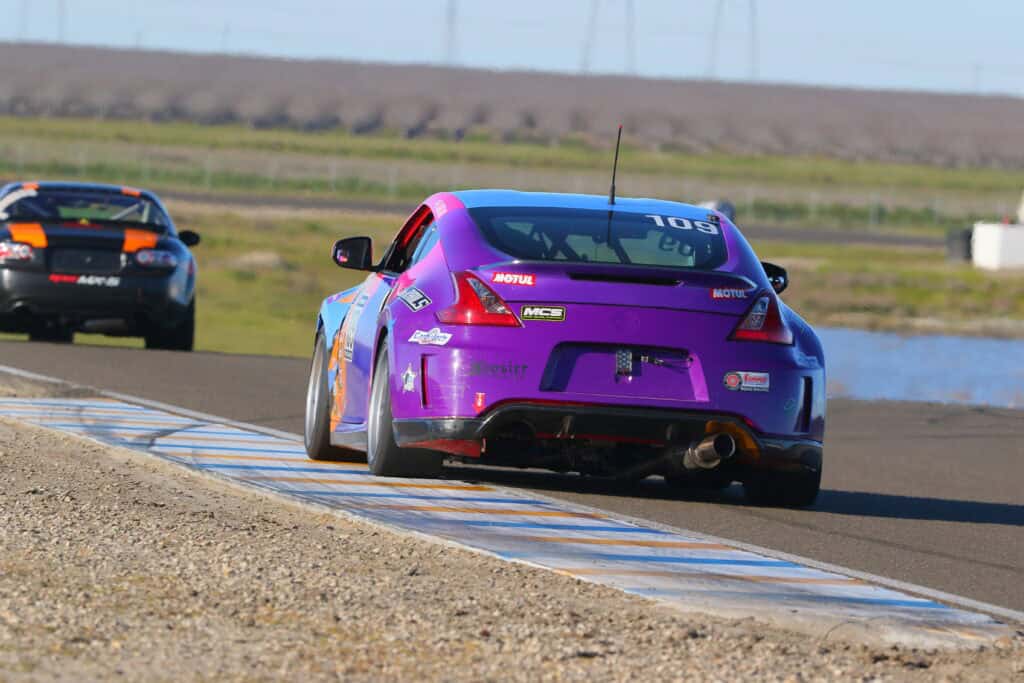
Gama making most of the camber near corner apex to get the most speed through the corner.
Welcome Keri and Ian Anderson to the Racer on Rails Team!
We’re excited to officially welcome Keri and Ian Anderson to the Racer on Rails crew!
If you’ve been around us at the track the last few seasons, you’ve probably already seen them in action — whether it’s wrenching in the paddock, reviewing data late into the night, or debating the finer points of shock tuning, telemetry, tire graining, and simulator setups. We’ve worked alongside Keri and Ian for years as part of our race weekend crew, and before that, we knew each other as friendly competitors and fellow motorsport nerds for over a decade.
Keri joins the team as Service Advisor, Race Car Engineer, and Project Manager, bringing her sharp technical insight and deep experience managing complex race programs from start to finish.
Ian joins as Race Car Technician, Fabricator, and Dyno Operator, where his hands-on expertise, mechanical creativity, and dedication to precision will help keep our cars fast, reliable, and ready to perform.
Together, they bring even more power to our mission: helping drivers reach their goals, create lasting memories, and leave every weekend with a huge smile.
If you’re curious about what it’s like to work with the Racer on Rails team — whether you’re prepping for your first track day, chasing a national championship, or just looking to take your driving to the next level — reach out and connect with us. We’d love to talk about how we can help you go faster, safer, and smarter.
One of the questions we spend the most time on around the shop and track is talking with people who are interested in getting into track driving but they simply don’t know where or how to start. So we figured we’d share our knowledge and recommendations over a series of blog posts so that these are easily accessible to anyone, at any time.
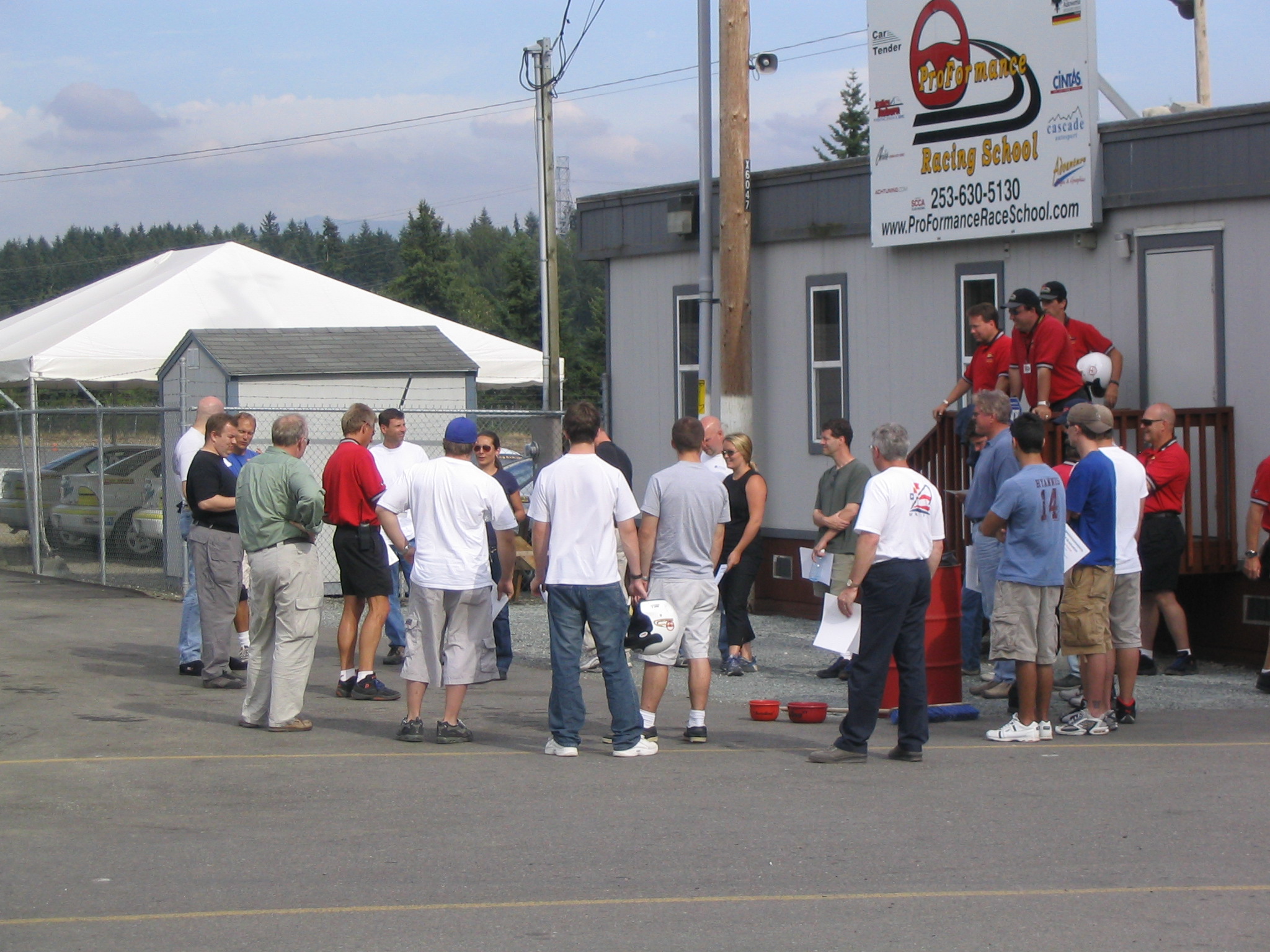
Track day drivers at ProFormance Racing School Track Day
For many aspiring drivers, the hardest part of breaking into high-performance driving is figuring out where to start. The idea of taking your car to a race track can feel daunting. What if you’re not ready? What if you don’t have the right car? What if you… spin out? The truth is, every seasoned racer once stood where you are now, full of questions and excitement. The good news? You’re not alone—and there are programs specifically designed to help you take that first step with confidence.
One of the best ways to begin your journey is by attending a High Performance Driving Education (HPDE) course. For example, ProFormance Racing School at Pacific Raceways in Kent, WA, offers a structured, supportive, and hands-on environment to help you master the fundamentals of car control and experience the thrill of driving on a race track for the first time. However, there are many similar high-performance driving schools across the country that provide a comparable experience tailored to beginners.
For those of you in the Pacific Northwest or willing to travel to the PNW, ProFormance isn’t just one of the best options on the west coast for an HPDE course because they are the home school for Pacific Raceways, but they legit have some of the best instruction and coaching available anywhere. Their team is made up of current and past active drivers who have climbed and hung on various steps of the racing ladder, all the way up to IMSA/SRO levels of driving.
What Makes a High Performance Driving School a Great First Step?
For most schools, car options are open, meaning you can either bring your own street car or rent a car from the school. Using your own car is entirely fine, as the focus isn’t on breaking lap records but instead on developing car control skills, awareness, and safety. Modern cars—even non-sports cars—have more performance potential than most drivers realize. As long as your street car has been well-maintained with healthy tires, brakes, and brake fluid, it’s likely ready for the track.
Additionally, formal schools like ProFormance Racing School emphasize the fundamentals of car control. These fundamentals are critical because a lack of solid basics can lead to bigger and more expensive mistakes when drivers exceed the limits of traction and don’t have the skills to recover. Learning these essentials early can save you from trouble later and set you up for success as you progress in your driving journey.
A high-performance driving school typically offers a one-day program thoughtfully split into two parts: a Skills Clinic in the morning and Lapping Sessions in the afternoon. Together, they provide a comprehensive introduction to high-performance driving that’s perfect for anyone—whether you’re looking to get into track days, time attack, or wheel-to-wheel racing.
Morning Skills Clinic: Building the Foundation
The day often begins with a classroom session where you’ll learn the essential principles of high-performance driving. This isn’t just a lecture; it’s an interactive session covering topics like:
Vehicle dynamics (understanding how your car responds to your inputs).
Skid control techniques (what to do if you lose grip).
Brake application (maximizing stopping power without losing control).
Vision skills (learning to look ahead and anticipate).
Once the classroom portion wraps up, you’ll take to the track for hands-on exercises. These drills are designed to sharpen your skills in real-world scenarios. You’ll practice emergency braking, skid recovery, cornering techniques, and more. The focus is on teaching you to think faster than you drive, making split-second decisions while staying composed behind the wheel. By the end of the clinic, you’ll have a solid understanding of how to handle your car in both routine and high-stress situations.
Afternoon Lapping: Putting It All Together
After a morning of skill-building, the afternoon is all about applying what you’ve learned. With an experienced instructor riding shotgun, you’ll transition to full laps on the track. The focus shifts to flow and precision, combining your new skills into a seamless driving experience.
The instructors work closely with each driver to:
Refine your technique in real-time.
Help you develop a better connection with your car.
Build your confidence at higher speeds and in more complex situations.
The afternoon lapping session is not about going as fast as possible. Instead, it’s about smoothness, consistency, and control—the building blocks of any successful track driver. By the end of the day, you’ll have not only improved your driving but also gained a deeper appreciation for your car’s capabilities.
Why High Performance Driving Schools Work
The beauty of these programs is their approachability. You don’t need a race car to participate; a street-legal car in good condition is perfectly fine. The instructors meet you where you are in your driving journey, tailoring their feedback to your skill level. This ensures that every driver, from absolute beginners to more seasoned enthusiasts, leaves with valuable insights and improvements.
Another major benefit? Safety. These schools prioritize creating a safe and controlled environment for all participants. You’ll learn how to push the limits of your car without endangering yourself or others, which is essential for anyone planning to progress to more advanced forms of motorsport.
The Next Step: Earning Your Sports Driving License
Once you’ve successfully completed a one-day high-performance driving course, you’ll typically leave with what’s referred to as a “Sports Driving License.” While not an official license, this credential is widely recognized by track day organizers as proof that you’ve received foundational training in high-performance driving. With this license, you’ll be eligible to participate in track day events, often under the oversight of an instructor.
This is where the real fun begins. After earning your sports driving license, it’s time to sign up for track days. We encourage new drivers to attend as many track days as their schedule and budget allow. Why? Because practice is everything. The more seat time you get, the more you’ll hone your car control skills and build muscle memory for critical driving techniques. Think of it as applying the “1,000 hours of practice” rule—consistent seat time leads to significant improvement and confidence behind the wheel.
Sports Driving License? Unlocks driving at many track day organizer events across the country… in your own car!
Alternative Options for Practice
Not everyone has access to a race car, a track car, or the resources to participate in frequent track days. But that doesn’t mean you can’t continue developing your driving skills. One excellent alternative is using a racing simulator on platforms like Xbox, PlayStation, or PC. Games such as Forza Motorsport, Gran Turismo, Assetto Corsa, ACC, and iRacing provide a surprisingly effective way to practice car control, learn new tracks, race against the clock in time attack events and even race wheel to wheel against AI-powered drivers and real people all over the world.
Sim racing is not just for fun; it’s a valuable tool for honing your driving instincts and mental focus. Many professional racers use simulators as part of their training routine and not just the incredibly expensive simulators. If you’re serious about improving but need a more accessible option, simulator racing is a fantastic next step. Stay tuned for an upcoming blog post that dives deeper into getting started with sim racing and how it can complement your on-track journey.
Can’t afford to do as many track days as you want? Get a simulator! Yes, even an Xbox or PlayStation 5 will work!
Step 2: Picking a Car to Drive at Track Days
Once you’re ready to take your driving journey to the next level, the question arises: What car should you drive in the future track days? This decision can range from using your daily driver to renting a fully prepared race car. Each option has its benefits and challenges, depending on your goals, budget, and level of experience. Stay tuned for a future blog post where we’ll explore these options in detail, helping you find the best fit for your track adventures.
Take the Leap
If you’ve ever dreamed of driving on a race track but didn’t know where to begin, a high performance driving school is the perfect place to start. Programs like those offered at ProFormance Racing School and similar institutions across the country will teach you the fundamentals of high-performance driving, build your confidence, and give you an unforgettable introduction to the world of motorsport.
Ready to get started? Look for a reputable high-performance driving school near you, book your first session, and take the first step toward becoming the driver you’ve always wanted to be. Trust us—once you’re out there, you’ll wonder why you waited so long.
The second stop in the 2024 SCCA Hoosier Super Tour schedule for the team was NOLA Motorsports Park – a new track for all the drivers and most of the team. Relatively flat, built on a swamp and host of SRO GT Americas race events the past few years, NOLA ended up being a decently technical track and the Louisiana weather initially welcomed us with 70F, sunny and with a breeze weather. But once the test day came, the cold air from up north and a weather system from down south decided to join the party and aside from Sunday, we had low 40F temps, rain, and wind. Why do we even leave the PNW to go racing???
Thoughts on NOLA
Flat, minor (but critical) banking in some corners, no point-n-shoot corners and not a lot of time above 120mph meant that balancing the car in the cornering bits was going to be a premium.
NOLA has 16 corners with 10-11 of them (depending on how you count the corners) are right hand corners and there are two sections of the track where you have consecutive right hand-corners, which makes those left-side tires important. From Turn 4, you are only making right hand turns until Turn 10! Turn 4 is a slower speed corner which requires a good amount of mechanical grip. Turns 5, 6 and 7 are higher speed corners where you are trying really hard to not over-slow for turns 5 and 6 but as you try to carry the speed into those corners, the left rear tire is taking a beating from the slight high-speed yaw action when trying to rotate the car and then accelerating through the corner.
The esses complex is relatively straight forward but carrying speed into Turn 9 (the first ess) is critical and sets up the rhythm through the rest of the complex.
Finally, the left side tires only get a mini-break before needing to turn hard at Turn 13 and then suffer through a long duration compound section of Turns 13-14, which leads onto the main straightaway.
If you’d like a more detailed walkthrough of the track, check out this video that came in super handy from ASM and Tom O’Gorman.
Credit: ASM + TOMO Coaching
Ann’s new baby shark! 991.2 Porsche GT3 Cup Car
As some of you may have read in past posts, Ann has been developing at a rapid pace the past couple of years and driven the wheels off a Porsche Cayman GT4 Clubsport, mostly in SCCA GT2 and T1 classes. At the end of the 2023 season, with the repairs needed on the car from a failed tire during the runoffs, Ann made the decision to move on from the Cayman and jump into a GT3 Cup Car. So she spent the off-season looking for options and just in time for the NOLA race, we took delivery of her new steed on the Wednesday before the race weekend. Exciting but yikes!
With her car being new to the team and her and limited information of the running state, we set low expectations for the weekend: get the car on track, have it circulate consistently and have Ann start to build confidence in the car. Any specific result was not a consideration at all for the weekend.
Look at the butt on that! Yeah – it must work out. Ann’s new 991.2 Porsche GT3 Cup Car!
Jordan got to work on the car and after completing a full inspection, we were in decent shape! There were a couple of suspension bits to monitor, some to proactively replace but aside from that, it was just work to get the car personalized to Ann’s preferences and get the car out on the track so we could know more confidently, what we had on our hands. The car was ready to test on Friday but straight up gross, wet, and cold conditions, we made the team decision we’d wait until Saturday where there was a window of potential dry weather.
Saturday started off wet but the rain started slowing around 9-10am, just in time for qualifying. Ann went out on wet tires in case it started raining again (it didn’t) for her maiden voyage and by the end of the session, we had a clean bill of health! By the afternoon race, we fitted a set of the used tires the car came with and sent her out to get more laps, see what breaks and build confidence! After race 1, she moved up several positions, finished P6, nothing broke and ended the race with the last 2-3 laps at a decent enough pace where we could actually start looking at performance.
On Sunday, we finally got a break in the weather with the system that ended up delaying the Daytona 500, moving south of us, leaving us with clear skies but COLD winds. Beggars can’t be choosers! Ann continued to take time off her lap times during qualifying and exchanged places to finish P6 out of 13 in her first race! In race 2, Ann picked right back up where she left off, took another 2 seconds off her fastest lap time to finish with 4 laps in the low 1:50’s. All again on 2 year old used tires with unknown number of heat cycles. Safe to say that Ann is loving her new Porsche GT3 Cup Car and is ready to build on this for the next race at Road Atlanta!
One last thing on Ann to put things in perspective. Just a few years ago, she had never been on a race track, let alone raced wheel to wheel. ~3 years in and developing at a very high rate in a Cayman GT4 Clubsport which is mega fast but has a lot of driver aides, she decided to move onto a monster of a platform. She not only jumped in with full confidence to drive, but she truly slayed this beast on her first outings in it. Incredible job, Ann!!!
Ann driving back into the pits from her first on-track session in her new Porsche 911 GT3 Cup Car!
Dave continues building on his BMW Z4 M Coupe
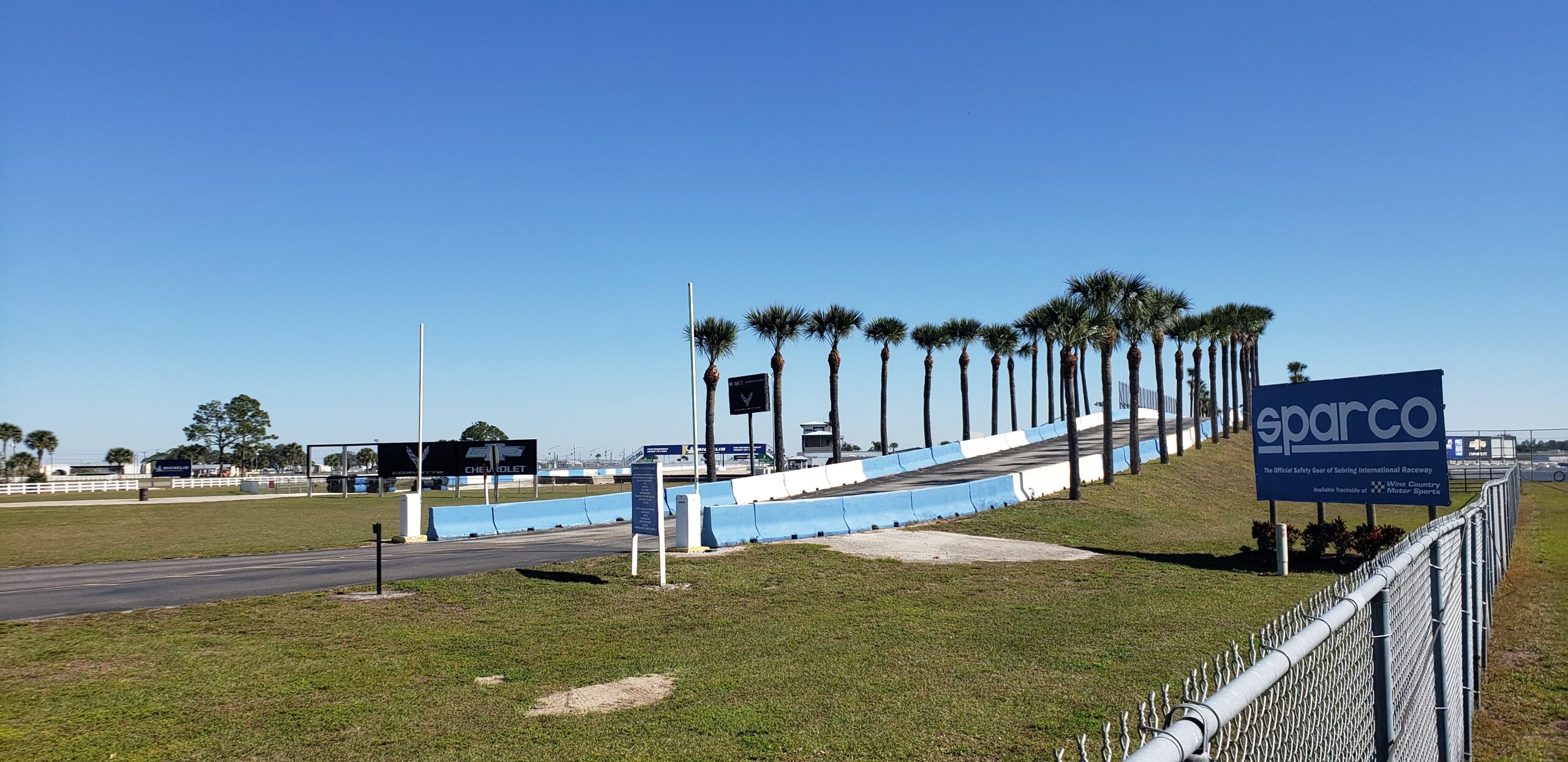
Dave took his new-to-him BMW Z4 M-Coupe out at Sebring for the first race weekend and made solid progress on the new platform but NOLA brought a whole new set of challenges with the weather and the gearing. The Z4M has won the SCCA Runoffs the last 2 years in a row, in large part due to the M3 based gearing. Nice and tall gears to let it stretch it’s legs out on the long straight aways. NOLA doesn’t have any long straight aways, so we knew going into the weekend that the gearing wouldn’t be optimal for the car but we’d still make the most of it.
Dave took part in all of the test day sessions but as covered previously, the conditions were horrible so they were good for getting a sense of the track from simulator preparations but gave next to no representative data for what ended up being dry the rest of the weekend.
Dave (and Gama) qualified on Saturday AM on wet tires (along with the rest of the field) but it ended up being damp to drying track surface. In race 1 Dave got out to a good start, avoided spinning on the oil left by a T4 car that dropped oil around the final corners leading to the main straight away and finished P6, one spot behind Gama who spun on that oil and had to battle his way back from last place.
On Sunday, Dave worked committing to throttle in one smooth motion during qualifying and dropped another almost 2 seconds from his personal best! In the race, which finally brought some track temperature with the sun appearing, he built on those learnings, took advantage of mistakes from other drivers and came in P5, chipping away at the gap to P4! Road Atlanta should be better suited for the powerhouse BMW Z4M with that long back straight away, two uphill sections where torque pays off big time and it being Dave’s 3rd time back to the track!
NISMO 370Z Starts to Deliver on it’s Potential
At Sebring, we saw signs that the 370z could compete for podium positions but rain in the wiring and dealing with the ice mode issue held us back from being able to truly show the car’s potential. Fast forward to NOLA where the brake vacuum controller that was requested to be allowed, was approved (yay!!) but not legal until March 1st, we had to figure out how to make due with an ABS System that could freak out at any point. We tried a few different things and while not perfect, they were good enough for us to feel comfortable running the car for the weekend.
On the morning of the test day, we decided to switch to wet tires due to the rain that had started but a wheel stud failed when trying to remove the wheel. Ugh! Memo jumped on the problem and 3-4 hours later, the car was ready to go, only to make the last test session of the day, just to make sure everything stayed together. Hats off to Memo’s effort and problem solving – as we chatted on the sidelines through the repair, had this type of an issue occurred while any of us drivers would have been there on our own – game over. Someone help me push this thing into the trailer but with Memo and or team on-hand, dang near anything can come up and as long as it’s safe, they’ll get the car back on the grid.
In the Saturday AM qualifying, we went out on wet tires like everyone else and finished P4, believing we had more pace in the car and on the second row, so all the things to play for. In the Saturday afternoon race, towards the end of lap 2, someone lost an engine, dropped oil all around the last couple corners. In the heat of the battle and with wet spots all around, I didn’t spot the oil (though the team had radio’ed it in) and got caught out when the rear tires hit the oil.
It took me a bit to get the car re-fired and out of the completely soaked grass but got going again, put my head down, worked my way back to P5 and was catching the leading group at 1-2 seconds per lap (of which I didn’t realize at the time and was somewhat frustrated with my pace).
The next day for the Sunday AM qualifying, we swapped on some lower heat cycle tires (specifically, the tires that I used during the VIR Runoffs in the installation laps/sessions) and a new tire on the front left corner. Better tires but still not a full on sticker run. First flying lap was good but I wasn’t pushing 100% and tires weren’t fully into the working window. The 3rd flying lap I let it all out and found myself a very fast Danny Stein in his Mazda STL car which provided a nice tow around the track, which resulted in a 1:55.2XX and pole for T3! On the next lap, I was slightly up on that 1:55.2XX lap time and I was going for another flyer to try and improve. I braked at the same point for Turn 1, did my downshift, turned in and then full front end lock up – sigh. This would end up being a telling sign of the rest of the day.
For the race, we decided to raise the car all around to help with compliance around the bumpy track. Thanks to fellow Nissan racers Rick Kulach and Richard Baldwin, we were able to get our hands on some taller front springs and made the change in time for the race.
Watch the Sunday Touring 3 Race where Gama Aguilar starts in P1 and leads from flag to flag.
When the race started, I focused on getting a good start and ideally not be competing for the corner going into Turn 1. Luckily that happened and after the first lap, decided to pump out the fastest laps I can could muster so that I could build a healthy gap to P2. All was going to plan until I locked up going into T13 and had to take the escape road. Lesson learned that even though I thought the tires were still fresh, it was simply too much speed for this *awesome* (sarcasm) brake system to handle. From then on, I focused on braking a little earlier and softer in all braking zones, knowing I’d be leaving some time on the table but that would be better than locking up and flying off the track.
My plan was to steadily build the gap so that by the time we hit lapped traffic, I could use that pull away. Unfortunately, the rest of the competitors were not aware of my plan. haha
Sometime about mid-way through the race, someone lost a big lip spoiler or some strip of something that was 4-5′ long and right at the exit of Turn 8 of which I didn’t see until it was too late to do anything but run right over it. There was some loud banging as it went under the car and I had to slow to figure out if anything had impacted the handling/safety of the car. No issues but I lost a solid 1-2 seconds.
The next couple of laps, I had to take Turn 8 more cautiously so that I could see where that object was and not run over it again. Perfect. 🙁
Some laps later, Richard’s 350Z had a tire failure and he pulled off to the right of the essess, causing a local yellow. I ran up on a lapped T3 Mustang right in that spot and there went my entire gap to P2. From then on, it was a battle to steadily build up that gap.
Clearly bias but look at this thing!
Another thing that I have been struggling with is the shifter and specifically, the 5th to 4th shift where the shifter doesn’t self-center and will easily drop into 6th gear, not 4th gear. That shift is critical for Turn 8 and I had to over slow to make sure I got the shift done right and even then, I screwed it up a couple of times – another .5-.75 seconds lost on each screw up.
With a few laps left in the race, started coming up fast on a T4 car going into the essess and made the judgement call to make the pass before we got perpendicular to the standing yellow flag – barely made it!
Finally, going into the last lap, I was focused on matching or improving my personal best, knowing the left side tires were struggling. Half way through the lap, I was almost matching my fastest lap but knew I was vulnerable in the essess due to the 5th to 4th shift but still had a decent run through the section. P2 car was on my rear bumper so going into Turn 13, I ran a more defensive line, braked earlier and softer, go the downshift done and when I started turning, the front end locked up again.
My only choices were to continue plowing forward and straight into the grass, of which when that happens, I would have likely lost control of the car until it hit the asphalt again OR come of the brake and straighten the wheel so I could take the escape road. I did the second path as I had earlier in the race, then focused on making sure I didn’t make contact with anyone while rejoining the course. Coasted through the escape road, looked to my right, saw no cars and then rejoined with a primary concern of not causing a wreck.
Ended the race in P1 but post-race, the stewards felt like I gained an unfair advantage by taking the escape road and while that wasn’t my intent at all, I had no argument against it. Minor disappointment but in the grand scheme of things, very pleased with the results.
We made it through a weekend without the brake vacuum regulator and no damage to the car or other cars, learned more about the car and finally got consecutive on-track sessions to build base level confidence in the car. This car is finally showing the potential we know it has!
Mega thanks to the whole Racer on Rails team that made the NOLA SCCA Hoosier Super Tour weekend a massive success! Next up is Road Atlanta in March where the team is looking to build on success and momentum in 2023. Let’s go!!!
We made it! Last year (2022) we had Sebring as our first race of the year and first stop on the SCCA Hoosier Super Tour but epic levels of snow across the mountain passes had us locked in the Pacific Northwest but this year, the snow hit earlier in December and by the first week in January, the passes were clear!
The January 12 – 15 race weekend which included a test day on Thursday, qualifying on Friday/Saturday AM and two feature races on Saturday and Sunday, would not only be the first race of the year for the team, organizing body and the drivers! We came prepared with patience, positive attitudes and a singular goal: improvement.
Each of our drivers put in serious hours of training on the simulator, studying historical race videos and watching track walk videos from the likes of Ross Bentley, so that when they got on the track for the first time, they could focus on getting comfortable leaning on the car and not worrying about where to turn next!
Let’s just be honest; racing is just an excuse to get together with friends and have several meals in an empty parking lot/temporary village and an occasional restaurant like Chicane’s in Sebring, FL!
2023 Driver Lineup and a new addition!
For the 2023 tour, we continued with the same driver team from 2022 with Ann Doherty in her Porsche Cayman GT4 Clubsport but now competing in Touring 1 class (versus GT2). Starting in 2023, the Touring 1 SCCA class has changed to allow the GT4 race cars that are currently competing in SRO and IMSA series, a place to race in SCCA Club Racing. You might ask, but why? They are professional level race cars – shouldn’t SCCA club racing be about non-professionally built race cars?
Historically, that has been true and most would agree but a couple things are happening that have forced the hand of SCCA and we are in full support. First, for many years as Pro level cars have aged out of the pro series (new cars have shown up and the “old” cars are no longer allowed to compete in the pro leagues) they have been sold to amateur drivers and teams, who then drive them at track days and increasingly, club racing leagues. For example, many of the old IMSA/Grand Am Continental Tire Series Grand Sport (GS) cars that were retired from pro racing, trickled down into SCCA Touring 1. IMSA Michelin Pilot Challenge GS class is the new version of the old Conti Challenge and the top class (GS) is made up exclusively of FIA homologated GT4 race cars.
Second, and the biggest variable, is that newer street cars come with advanced electronics that need to balance performance with emissions and safety regulations. These systems are so advanced that it has become increasingly difficult, cost prohibitive and in some cases, impossible to tweak the OEM controllers so that the car can run reliably in race conditions.
The net result is it is equally as expensive to build a Touring 1 level car from a street car and less reliable than simply buying a factory built race car, like the GT4 race cars. So in an effort to save the Touring 1 class, SCCA has moved to allow these cars in T1. Not only do we fully support the shift to the future for the class but specifically for the Porsche Cayman GT4 Clubsport, it’s inline with the spirit of Touring class cars (race on Sunday, sell on Monday) and it has a much better chance to compete at the front, compared to GT2 cars that have thrown most connections to the street cars, out the window (along with the windows!).
Ann Doherty piloting her Porsche Cayman GT4 Clubsport in the SCCA Touring 1 Class
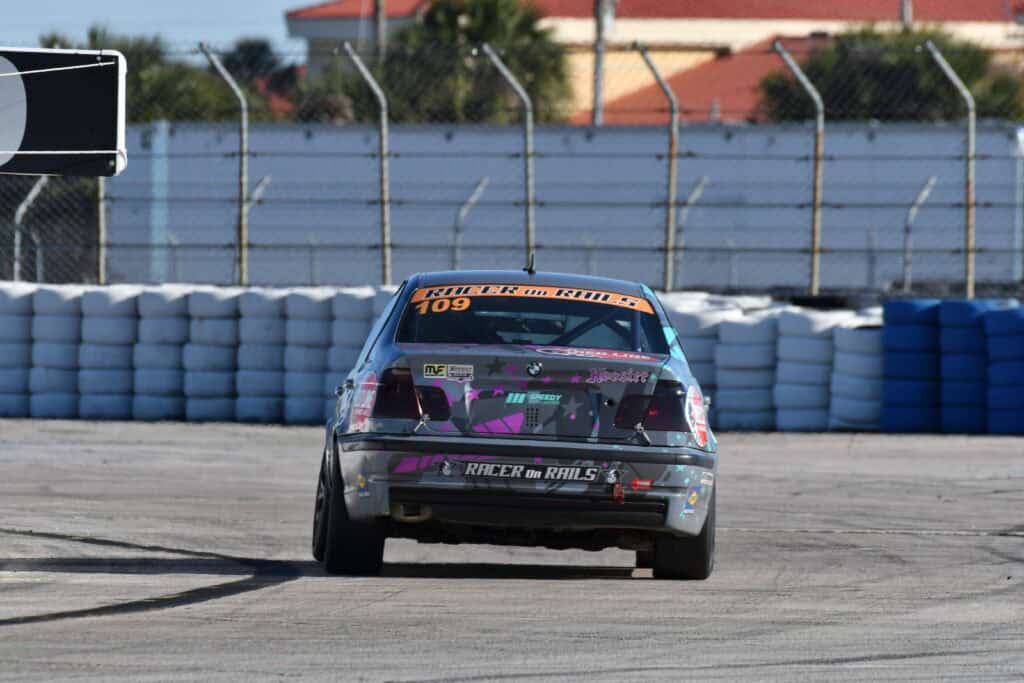
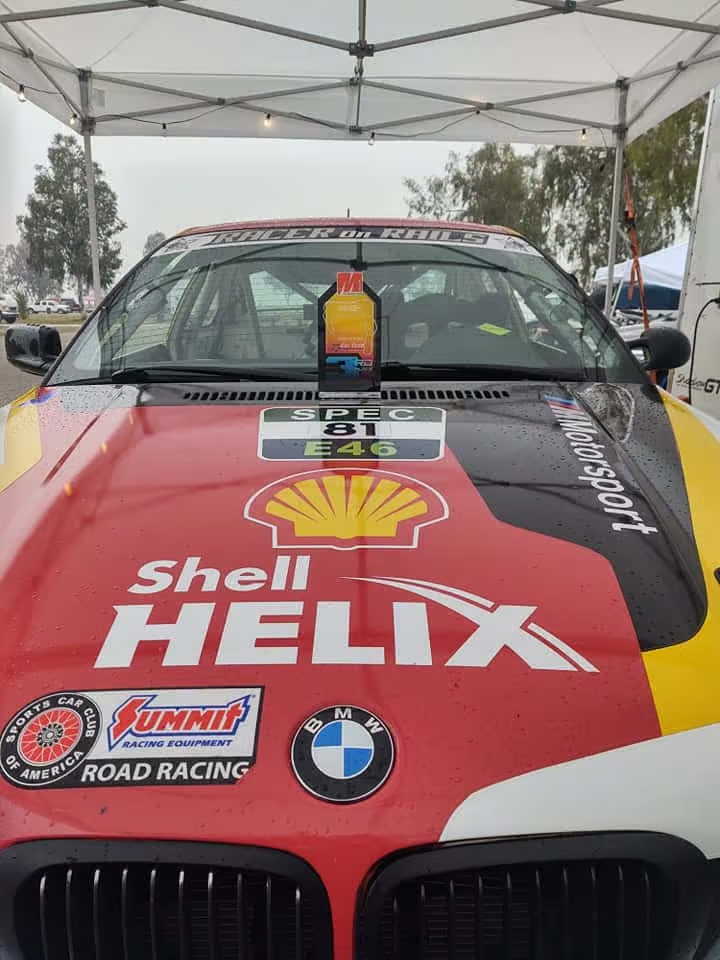
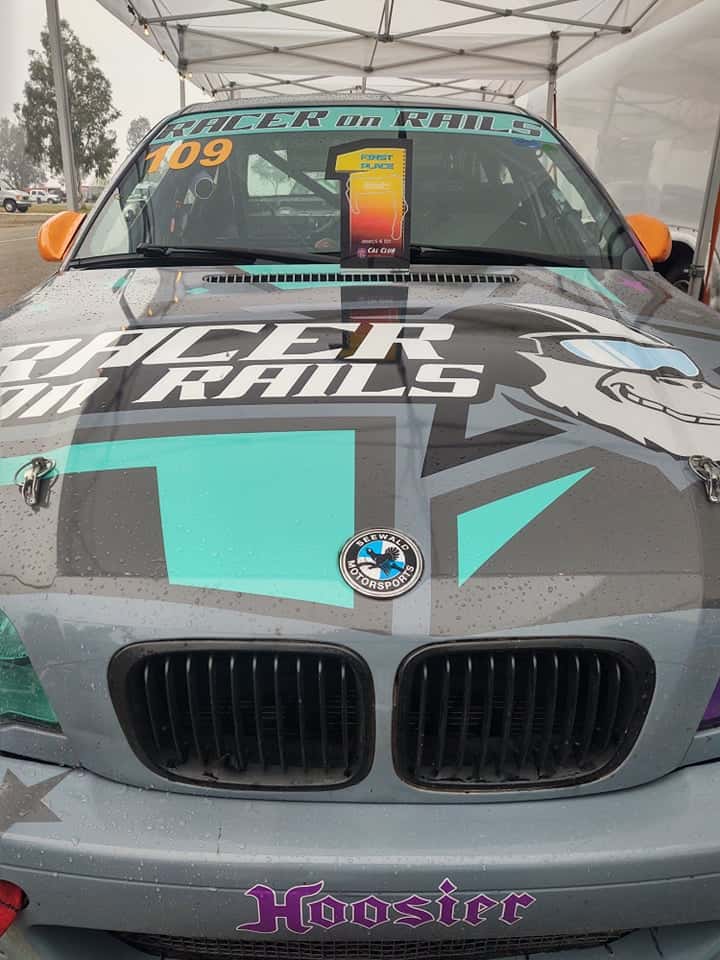
In the Touring 3 class, we had Dave Orem returning in his #44 2001 BMW 330ci in Spec E46 trim, Simon Asselin in his #81 Spec E46, Gama Aguilar in his #109 Spec E46 and joining the group is Thad Berger in his #60 Spec E46! As you can probably tell, we love them BMW Spec E46’s at Racer on Rails!
Dave Orem in his #44 Spec E46 in T3Thad Berger in his #60 Spec E46 in T3Simon Asselin driving the 109 at Sebring
Unfortunately for Simon, his engine developed an issue on the very first test day session which sounded like an engine throwing the white flag so he jumped into Gama’s #109 to finish the weekend. Gama would end up sitting out the weekend and focused on coaching.
Speaking of coaching, we welcomed back Ray Phillips from Precision Driving Analytics and Seth Thomas, who coached the 2022 team to significant improvements, multiple podiums, some race wins and personal bests that simply couldn’t have been possible for drivers coming to the bucket list tracks we drove at in 2022.
Finally, Simon Asselin was not just piloting a Spec E46 but on the way to Sebring, we made a detour stop to pickup his new (to him) 991.1 Porsche 911 GT3 Cup car that races in the GT2 class! While we normally would not advise anyone to pickup a race car on the way to running said race car in a competition weekend, we worked with Autometrics Motorsports out of Summerville, SC (who was the previous custodian of the car) to get it as prepared as possible for competition in SCCA GT2 class. A big thank you to Adam, Gordon and the Autometrics team for helping it a smooth transition process for Simon and our team!
Simon Asselin in a heated battle in GT2 with another Porsche GT3 Cup Car
Ramping up on new tracks fast and competing at the front
One of the biggest challenges of going on the Hoosier Super Tour, being based out of Seattle, WA and generally, the Pacific Northwest, is that these are all new or relatively new tracks for each driver. Drivers can’t lean on their thousands of laps at local tracks like Pacific Raceways (that is literally our back or front yard now!). The competition tough, the fields are big and track time is limited. Even with a test day.
So the drivers and we as a team have to figure out how to get up to a respectable pace fast and improve every session. As mentioned above, each driver put in 10+ hours on the simulator before the race weekend and little by little, each driver progressed, chipping away at lap times and every once in a while, taking large chunks.
The grid had a lot of HRSRS in the GT2 and T1 group!
Over time what has happened, especially for the drivers that were part of this tour in 2022, is that they got a lot of experience learning new tracks and they got better throughout each weekend. Over the races, they started developing not a library of tracks that they reference, but instead a library of corners. So a new track isn’t a completely new thing they haven’t driven before, but instead a track that is a collection of corners that some they have driven before. So for example, turn 1 at Sebring is a lot like turn 1 at the Ridge (high speed left hand corner where you float as much speed as possible into the corner). Turn 7 (Hairpin) is similar to Turn 11 at COTA – slow speed corner where there are multiple lines that can be taken and the exit is paramount due to the straight away that follows. The bumps at Sebring, especially the exit of Sunset Bend (respect the bumps!) is similar to the exit of Turn 9 at Pacific Raceways (respect the bumps!).
We find (and found!) that when drivers start thinking about new tracks in that way, they are able to anchor themselves to a familiar feeling of what the car should feel like and a sensation for the speed. It doesn’t mean that you treat the corners the same but it’s a high informed starting point to begin really leaning on the car and the tires. Because until a driver really starts leaning on the car and tires, the lap times won’t drop materially.
Touring 3
With a solid day’s worth of practice, Thad, Dave and Simon were set to go after a solid qualifying position to start the races. Qualifying 1 was rained out and with no further rain expected the rest of the weekend, most of the grid didn’t quality for T3 including Dave and Thad. In qualifying 2, Simon locked up P3, Dave had a time good enough for P4 but his transponder decided to quit on us so he would start race 1 from the back and need to make his way through the field. Thad started P6 and knew exactly what he needed to to gain positions and lap time.
Race 1 was close battling from start to finish! Simon lost some positions on the start but jumped back in, regained positions and while simultaneously battling T3, T4 and T2 cars, mustered out a P2! Dave let the lap 1, turn 1 mayhem happen and then got to work, moving his way through almost the entire T4 field, five T3 cars and came home in P3, on top of improving on his personal best time of the weekend!
Thad was in the thick of the front T4 battle but he took no prisoners, held his ground and took out 2.6 seconds off his qualifying 2 lap time. Let the big dog eat!
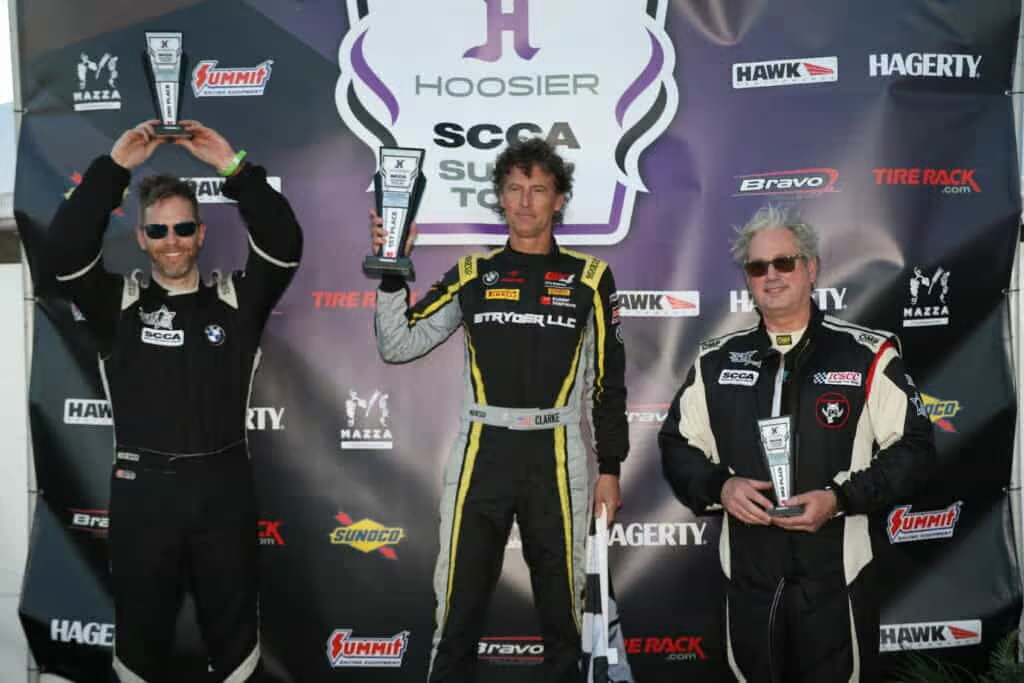
Simon (P2) and Dave (P3) sharing the podium at Sebring AND special bonus, Todd Clarke, also a PNW driver in P1. A full PNW podium in T3, in Florida!
For race 2, everyone started in better positions and the themes were similar. Hard racing the entire race for each driver, further improvements in personal bests and not a moment to catch your breath! Thad dropped a further .9 seconds off his personal best to a 2:32.7 and finished P4 in his second ever Hoosier Super Tour.
Thad Berger, riding into the sunset after an amazing first stop of the Hoosier Super Tour at Sebring International Raceways.
Want to pause here and emphasize what Thad did. Thad has been wheel to wheel racing for less than 1 year. He jumped into the deep end of the pool, competing against experienced/fast drivers, at the Hoosier Super Tour and at a bucket list track that he had never driven. On top of all of that – in qualifying 2, on the first flying lap, he had a real big moment at Sunset Bend (Turn 17) where legitimately almost put the car into the wall. But he didn’t. He gathered the car up, drove through pit lane for a quick visual check on the car – everything looked good and he immediately got back at it. That is something he and we all, will never forget. Great job, Thad!
Dave continued his progress through the field after losing a couple positions on the start, focused on consistency and dropped another .5 seconds off his fastest time of the weekend for a 2:31.4 and with Simon’s DNF, a P3 and a double podium weekend!
Dave Orem holding off a Global MX5 Cup Car in Touring 3 class.
Finally, Simon had one of the most intense races ever, battling T2, T3 and T4 cars again! And while he also took almost a full second out of his fastest time of the weekend for a 2:30.1 lap time, with a lap to go, he went a little hot into a corner, got the car sideways and was unfortunately collected by a really competitive out of class car. That unfortunately ended the race for him but he sustained no issues and the 109 has already been repaired – the incident did not detract from the weekend as a whole. Watch Simon’s race below (with picture in picture of the SCCA broadcast!)
Race 2 of the SCCA Hoosier Super Tour for Simon Asselin in the RoR #109 in Touring 3 class
Touring 1 and GT2
Lucky for us, both Ann and Simon race in the same group but in two different classes so we got lots to follow during their group race!
While Ann hadn’t been to Sebring, she has developed a reputation for ramping up quickly at each new track and by the end of the race weekend, competing towards the front of the grid or the front of the mid-pack and that was last year, in GT2! Well she did not disappoint! After missing qualy 1 as it was also a wet session and no forecasted wet sessions for the rest of the weekend, she qualified P6 out of 10. And while she finished P6 in both races, she finished only about 1.5 seconds off the race pace of the podium finishers and the five drivers in front of her were ex-professional IMSA drivers, current SRO drivers, multi-national champions and seasoned (and fast) Touring 1 cars/drivers. Lots of work left to get close to the top 5 type of drivers but her performance coming out of the gates and through the weekend were amazing!
Ann takes the green flag for the Touring 1 race and in the mix with a combination of new GT4 and historical Touring 1 race cars.
This was Simon’s first weekend with the Porsche GT3 Cup Car and we all came into the weekend with specific expectations: learn the car, get quality laps, and have fun! With a new car to the team and no testing beforehand, we had really no gauge for how the car and Simon could perform. However, we were all extremely pleased to get the car running by mid-morning of the test day. Seth Thomas drove it on it’s maiden track session under the Racer on Rails umbrella, to provide a baseline for how the car simply ran and once confidence built up, a gauge for the pace of the car.
The verdict? It’s a great GT3 Cup Car! While it wasn’t fully compliant to GT2 rules at the time (hadn’t added the full ballast required), the lap times Seth put down were well within the front of GT2 class range that we saw throughout the weekend and it gave Simon a rabbit to chase throughout the weekend. You might be asking – how can you figure that after a single person driving the car in one session/5 laps? First, the team has worked on factory built Porsche’s throughout the years so we had a solid foundation of what to expect re the machinery itself and setups. Second, Seth has driven a wide variety of race cars and including several Porsche GT3 Cup Cars (along with being somewhat of a Porsche nut himself) and he’s driven/raced at Sebring dozens of times, with likely thousands of laps at Sebring. So after he had 3-4 laps underneath him and the tires were finally in a working range, he was able to start really leaning into the car.
The results? Simon finished P5 in race 1 after a hard fought battle with another 991 GT3 Cup car and P6 in race 2 where his tires started to show signs of aging after taking a couple of qualifying sessions and a full race 1. All in all, Simon ended up ~2 seconds off the race winner but only ~1 second off the leading Porsche GT3 Cup car in the field. Awesome first outing and race weekend for Simon in the Porsche GT3 Cup Car.
Check out the in-car and live broadcast from Simon’s first race below!
Catch the next race report that recaps our stop at Circuit of the Americas!
The 4th and final stop of the 2022 Southeast Winter trip for the team was historic Virginia International Raceways, located just north of the Virginia/North Carolina border, in Alton, VA.
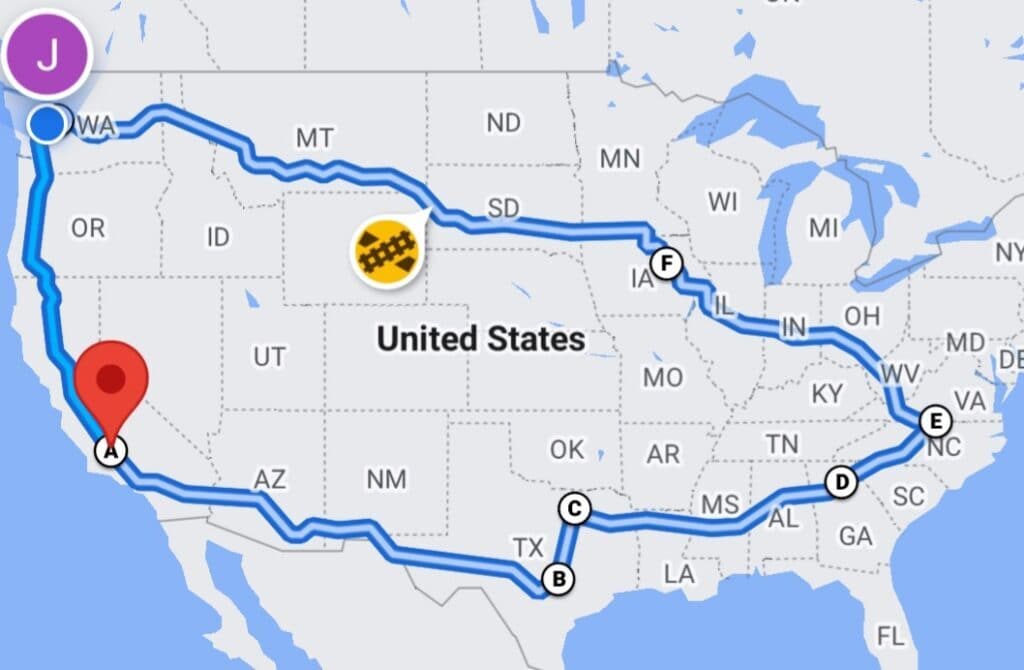
Before dive into the weekend, below is the map we took from January – April and covered nearly 7k miles and through the winter season across most of the country which resulted in catching the cold and wet weather at nearly each stop. Wow!
4 stops and ~7k miles over 4 months. Hats off to Jordan and Memo who drove our trucks, trailers and cars for every single mile.
Preparing for VIR
Road Atlanta ended up being a primer for VIR for the team. VIR is almost like a bigger Road Atlanta in that it is made up of mostly medium and high speed corners. Proper technique and equally proper commitment are critical to get into a groove and start attacking the lap times.
Just as before, each driver logged multiple hours in the simulator so that we all knew the track by heart and could dive into the test day with a focus on establishing a baseline performance and chipping away at the times.
On average, each driver (and crew member) had nearly 100 laps at VIR on Assetto Corsa with similar or the exact same cars as we were driving in real life.
Thursday Test Day – More Inclement Weather (Massive Thunderstorm Edition)
We all arrived and were fully setup on Wednesday night for the weekend and Thursday morning we awoke to some dew on the grass, dry track and chance of a shower here or there throughout the day. The first session was dry and we all got out and started familiarizing ourselves with the track in real life. Conclusion? The simulator model was pretty spot on!
A few minutes after our session ended, a thunder storm rolled in and another, and another, and another. We had 2, maybe 3 cells roll through and the middle two sessions were shot. Not just because it was raining but torrential downpour and the poor souls who decided to go out (and survived) ended up getting black flags in each session as the conditions were just horrible. Further, the forecast didn’t call for rain during the weekend so using up new rain tires under those circumstances wasn’t a good use of the tires.
Completely unedited and it only took a few minutes of rain before we had water running on the ground.
By the afternoon, the cells had passed and the track started drying. We all went out and while times were slower (transitioning to dry conditions), it was valuable time to further familiarize ourselves with the track.
Learning, Improving and Delivering Results!
The weekend had a similar progression as we’ve had at the other stops but we arguable started off at the highest point to start the weekend. All three drivers came out strong out of the gate and were within striking distance of podium positions, just needed to put our heads down and keep chipping away at the times.
Every session was an opportunity to learn and while unseasonably cold air rolled through on Friday night, everyone steadily chipped away at the times and at worst, were in a mid-pack battle but still within striking distance for a podium.
Simon in his Touring 3 Spec E46 managing transitioning conditions.
Below is a look at three of the corners we focused on across most drivers.
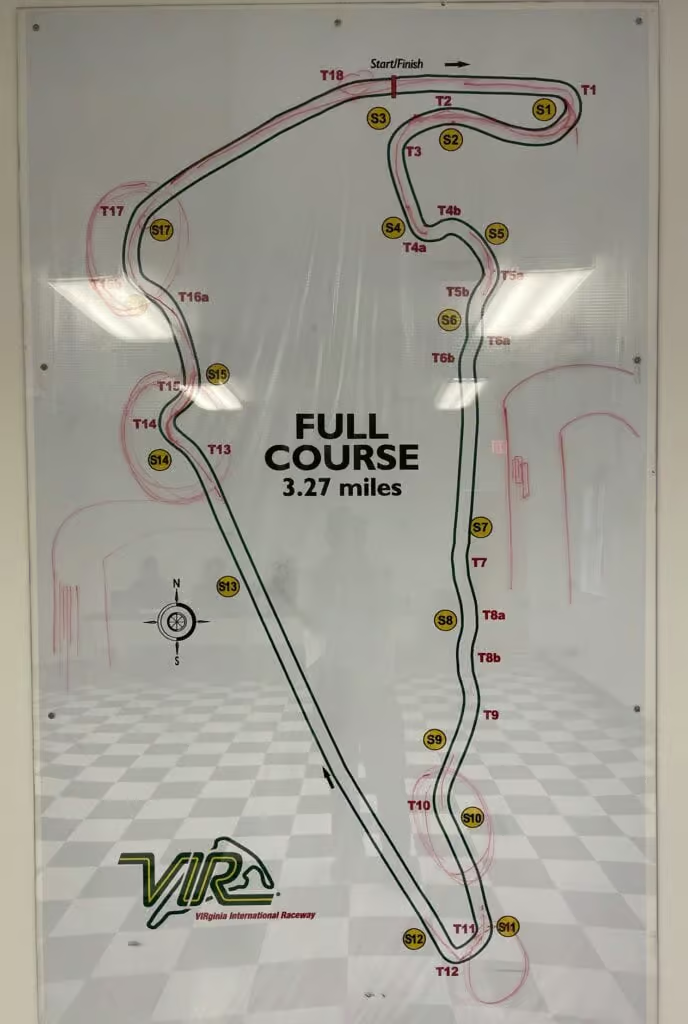
Sweet track map of VIR full course with a clear plexiglass on top that makes for great white board discussions about lines, markers and passing zones.
VIR Corner Focus 1: NASCAR Bend (Turn 3)
NASCAR Bend is the first left-hand corner/complex of the lap where it’s a bit of an awkward, somewhat off-camber corner where there isn’t a ton of time to be gained but very easy to over-slow and lose time. It feels a lot like Turn 6 at Portland International where it’s key to maintain minimum speeds and spend as little time as possible in the complex.
None of us really felt like we consistently hit the corner right but we aimed at being on-throttle at the apex, ascending to full throttle and carrying enough speed that the car had no choice but to use all of the exit curbing on the right. Getting out on that curbing then gave us a wider arch for the next left hand corner, which then left us track left to setup the run through the esses.
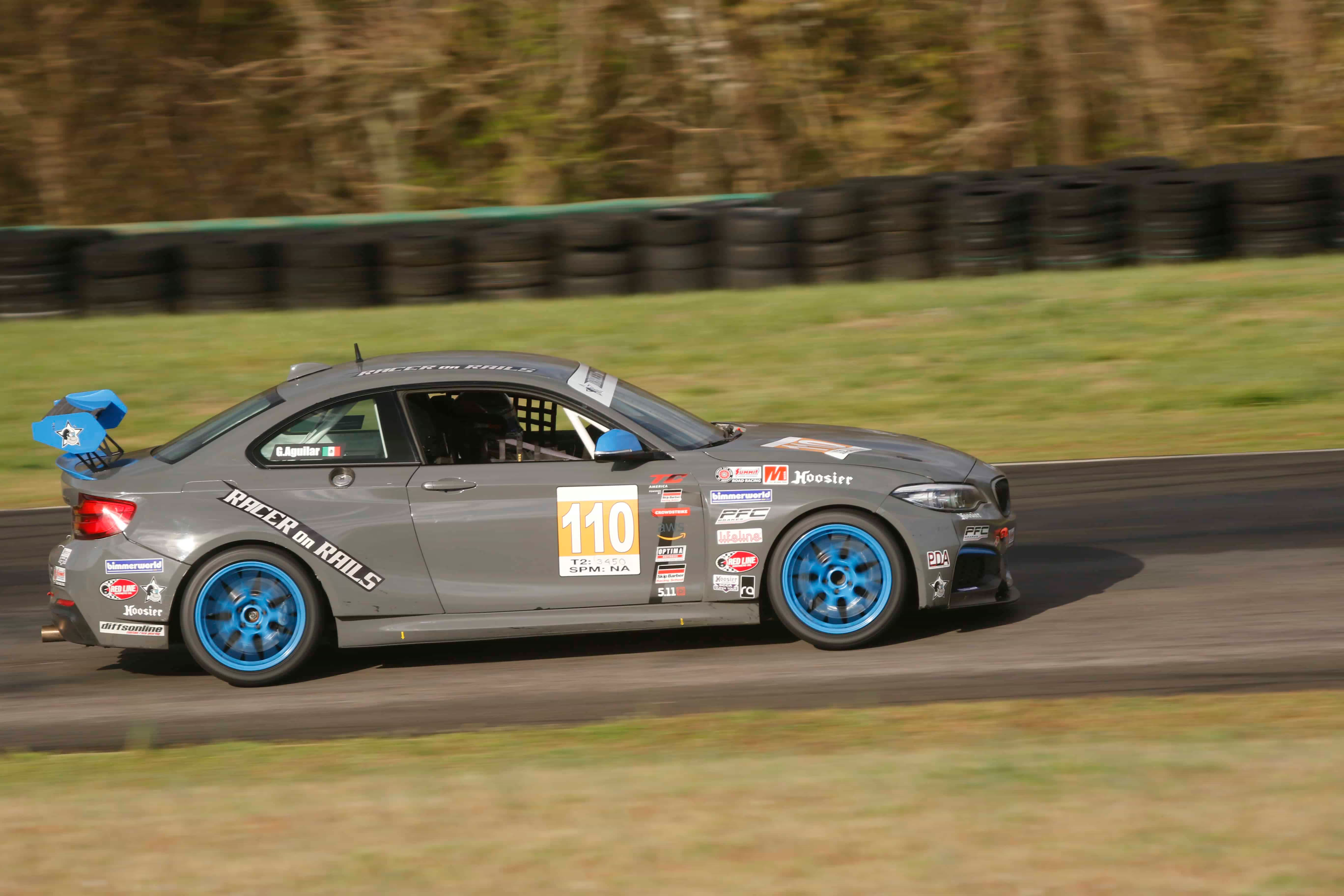
Gama in the Racer on Rails #110 BMW M240iR using all the exit curbing coming out of NASCAR Bend at the start of the Sunday race.
VIR Corner Focus 2: Southbend (exit of the Uphill Esses)
Before there is any controversy, yes – the Uphill Esses (Climbing Esses) are a pretty unique experience. There are few tracks in the world where you are flat out in 5th gear (or 6th gear) and you enter a corner section… without lifting. Thanks to the hours each driver spent in the simulator, after the first few laps in dry conditions, we were all able to take them flat but once you have the right line and rhythm, there’s not much more to them. HOWEVER! What you do on the exit of the Esses is something else.
Check out the Sunday Race 3 video in the M240iR and specifically this video is placed on a flying lap where the car gets light at 129mph and while being flat full throttle. (Note – rewind to start to watch the climb from P5 to P3 in Touring 2 class)
First, yes – it is possible to stay flat through the entire uphill essess complex but doing so compromises the entry into Southbend, of which is a high-speed left hand corner where you’re trying to keep your minimum speed above 90mph.
We found in the simulator that under most conditions, that was the trade-off and instead focused on having the car balanced and turned correctly to brush off minimal speed at Southbend and then carrying that speed into Oak Tree.
VIR Corner Focus 3: Oak Tree
Very much wish we could have been here when Oak Tree had the actual tree still standing. It’s an interesting and challenging corner to begin with but having the tree creating a arch across the corner, would have been majestic. But that’s life and we still enjoyed the scenery and challenge of the corner.
Open wheelers/formula cars showing the line through Oak Tree.
While it’s referred to as a single corner, it’s more like two corners in one and it is *not* a slow speed corner. The entry is best when you can brake into the corner and in a straight line. You can also brake less than you initially think, because the entry is uphill so the grip increases, the further into the corner you go. There is a moment of releasing the brake about mid corner, a focus on getting wide to the left to open up the radius of the corner and then attack the apex with full throttle application right at or before the apex.
In recent years, VIR has added extra pavement beyond the traditional FIA exit curbs which means more track and thus the ability (and requirement) to use all of that extra track on exit. Oak Tree leads to the longest straight away, which makes it the most important corner to hit well and consistently. In the BMW M240iR, we were hitting in the low 140-142mph without a draft and up to 145mph with a draft. The Porsche Cayman GT4 Clubsport was consistently hitting 150mph+ before braking for “Rollercoaster”, which was indeed, a roller coaster!
Race Results: Gains and Podiums
Saturday was a tough day for everyone – full course yellows (not caused by any of our drivers) were rampant, despite dry conditions. There were no gains on personal bests and we all found ourselves battling below the pace we each had demonstrated but struggling to get past cars with better straight line speed.
Dave looking for a way past a T3 Mustang at VIR
Sunday, we all hit the reset button and focused on getting solid starts, creating our own track position/space and getting after it.
Touring 3 Race: Dave and Simon both pounced on mistakes by other drivers and picked up a spot individually, putting Simon in P3 and Dave in P7 before a full course yellow came out that eventually ended the race due to an STU car that had gone deep into the tire wall at the end of the back straight away. Driver and car were all okay. Both ended up with their personal best lap times right before the FCY and were it not for the FCY, each felt like they had the rhythm and pace to further improve.
Simon taking P3 in the Sunday Race#81 Spec E46 gliding through VIRStart of the T3 race, looking for positions
GT2 Race: Ann started in P5 with a mega qualifying effort and quickly jumped into P3 on the first lap with some assertive moves. With a gang of TA2 cars, tube-frame chassis RX7’s and many other ground pounders, her nimble and incredibly impressive under braking, Cayman GT4 Clubsport was under constant attack on the long back and front straight aways but she was able to create distance in the handling sections of the track.
Unfortunately there was a 3 lap long Full Course Yellow which took away the entire gap that she had built up and as soon as the green flag was thrown for the restart, she was back under attack and sitting duck for cars that had nearly a 10mph speed trap advantage.
Ann was busy chasing and being chased all weekend in the GT2 races.
Ann defended hard but ended up losing two positions by the end to finish in P6 BUT she fired in her fastest lap of the weekend on the final lap of the race.
Touring 2 Race: Gama was once again behind the #110 BMW M240iR for this race and faced similar challenges to the previous races – great under braking, handling but lacking 8-10mph to other BMW’s and 10-14mph to the Porsche’s. It became very clear on the Saturday race that if he wasn’t able to keep them behind them before the end of the back straight (coming off of Oak Tree), he’d be stuck behind them for the rest of the race.
The goal was simple – get a solid start (tough with a turbo car), get positions and keep them behind before T13 (Rollercoaster) and then create a gap in the handling sections.
The start was above average but still nothing compared to the naturally aspirated cars. Fortunately, they left a giant gap going into braking for T1 and was able to recover a lost position under braking. The next two laps (switching to first person mode) I was looking for a gap and specifically coming out of the uphill essess because I had noticed the Porsche’s were struggling to carry speed and get a good exit out of Southbend.
In lap 3 of the race, it happened – 997 Porsche got too sideways on the exit and I pounced, getting by him before braking for Oak Tree.
I was getting better exits out of Oak Tree than the Porsche but by about the middle of the straight away, I was a sitting duck so for one lap, I defended like a lion. Right after exiting the corner, I signaled to the Porsche that he’d have to pass me somewhere else on this one lap as I slowly moved from one side of the track to the other so that I could break a draft he might get (not that the Porsche needed it). He got the message and stayed behind.
Gama in the #110 Racer on Rails BMW M240iR
From then on, I put my head down and carried as much speed as I could through Hog Pen (final corner sequence of the lap) and onto the front straight. I had created just enough of a gap that I didn’t think he could make a credible move into turn 1, so last second, I moved back to the left to brake at normal spot and line. The Porsche ducked in to out-brake me into Turn 1 but the line was WAY too shallow for braking that late and with the additional speed the Porsche’s carry, so he easily washed out and off-track.
From then on, I put my head down and hammered out two new personal best lap times (in the 2:04’s) and was chipping away and making my way through traffic. Aside from a big mistake, I simply didn’t have the straight line speed to compete for better than P3.
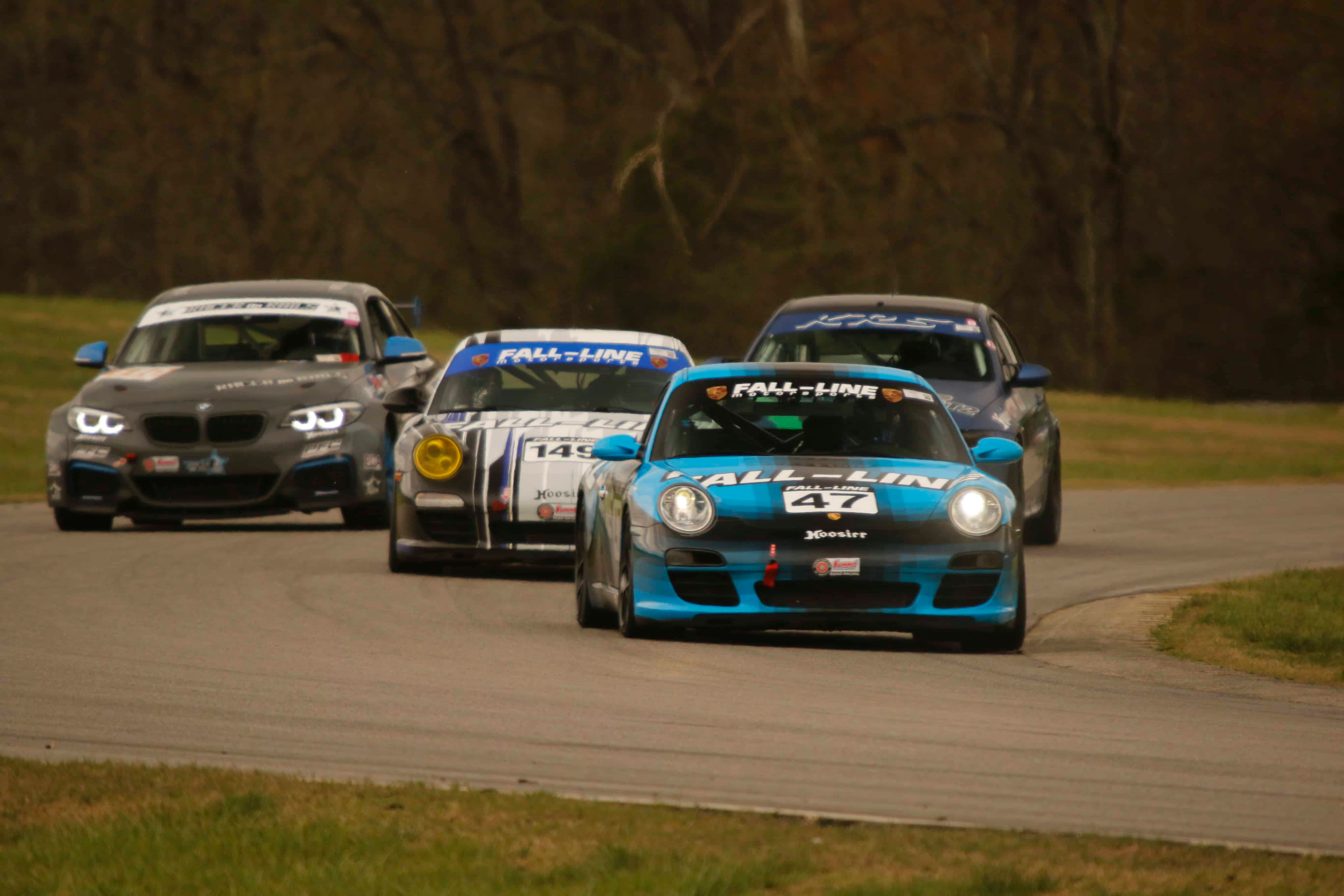
Full course yellow came and my gap had been erased. The following 10-12 minutes were some of the most nerve racking of my life – I was sitting duck on the restart so I’d have to pull some magic out again but luckily, the race ended under FCY and for the first time in my life, I was beyond grateful for that result. P3 in Touring 2 class at Virginia International Raceways and against a fleet of Fall Line Porsche’s and BMW’s – what a weekend!
What’s Next?
We’re a little late in publishing this report but after this we make our way back to the Pacific Northwest to start the regional racing season with races at Portland International Raceways, Pacific Raceways and Spokane County Raceway in May.
VIR was an amazing experience overall and great practice and data gathering for when we return in September for the 2022 SCCA Runoffs.
Note, originally we were supposed to be at Sebring International Raceways for the SCCA Hoosier Super Tour but the beautiful white Christmas we had in the PNW overstayed its welcome and by the time we need to have the trucks on the road to the SE, all the passes out of WA were closed due to blizzard conditions and the alternate route going down the west coast and across the SW was riddled with freezing or snow conditions in New Mexico, Texas and even parts of Alabama.
So with about 10 days’ notice, we made the change to instead to go sunny southern California where last year, we attended this same race but it was held at Autoclub Motor Speedway in Fontana, CA.
The Team
For the first race, we had three Spec E46’s running in Touring 3 (T3) trim and one Porsche Cayman GT4 Clubsport running in GT2 class.
#44 Dave Orem, #81 Simon Asselin, #109 Gama Aguilar and #4 Ann Doherty
The normal crew of Jordan, Bryce and Gama were on hand but this was also the first official race weekend with our new Motorsports Director, Memo Calderon and our service advisor, Reid Morris.
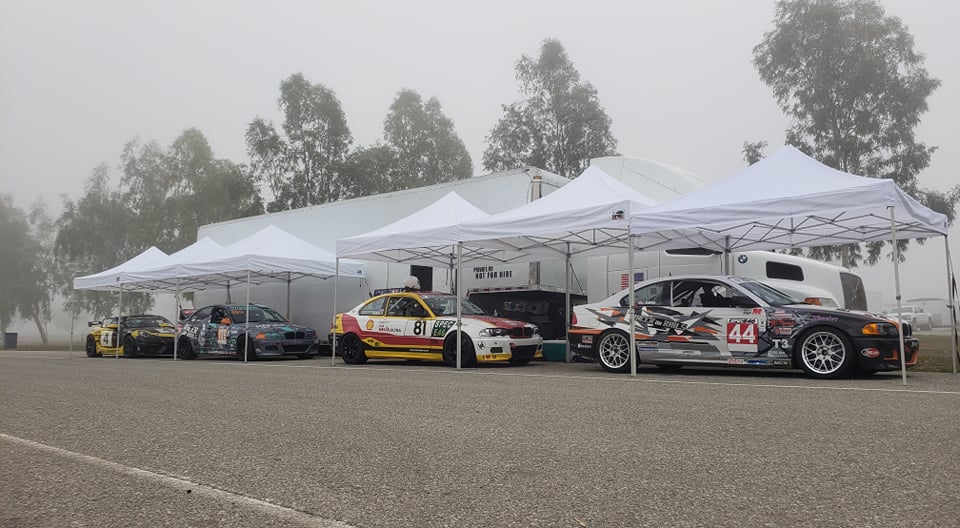
The Fog
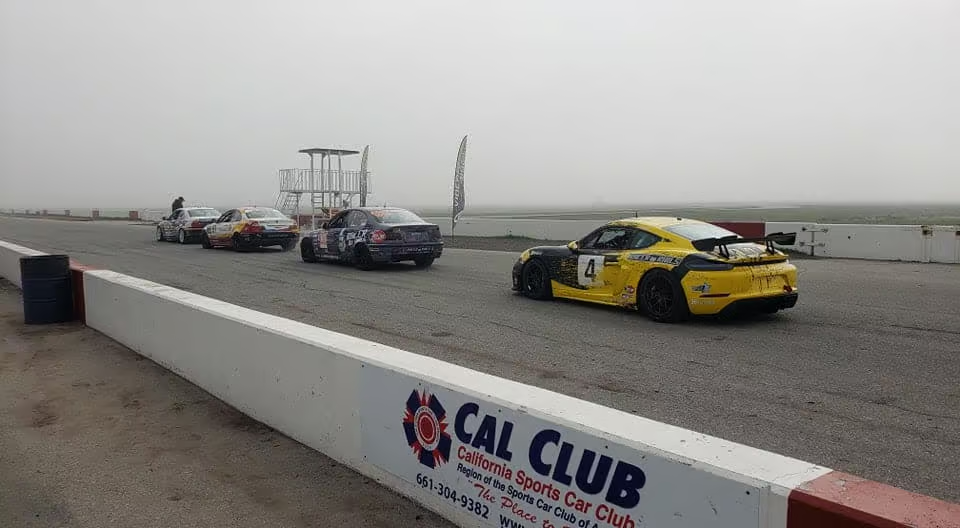
Not going to mince words here, it was a tough weekend and mostly due to dense fog that rolled in each night and resulted in each morning’s scheduled run groups to be postponed due to low visibility conditions. One of the locals at one of the on-site race shops with a retail space mentioned that it had been close to 27 years since they had seen such thick fog and turns out that the volcano eruption in Tonga might have contributed to the fog conditions.
In the end, each day we didn’t get started on-track until 11am – 12noon. On the Friday test day, the run groups ran per the schedule as the organizer simply picked up when we started and had the 3 run groups doing 20 minute sessions each hour, until 5pm.
Racer on Rails cars ready to go on-track but under a fog hold on the Friday test day
Thank You Safety Equipment!
There is never a shortage of reasons to not skimp on safety equipment choices, design and preventative maintenance as we never plan on having an issue where safety equipment is needed but we’re always glad when it’s there and it works.
We had two incidents on the test day:
Failed front-right lower ball joint in the control arm (SE46): The #109 SE36 running in T3 trim got a near complete overhaul prior to the 2021 SCCA Runoffs at Indy, which included brand new lower control arms. Unfortunately it got taken out on lap 1 of the race which resulted in a front end impact with at least energy going through the suspension components but not a direct hit or contact. All in, the control arm and lower ball joint had 1-1.5 hours of run time prior to this weekend. On the very first session when the fog broke, lap 2, braking for Sunset corner (the last corner before s/f), the inner lower ball joint failed and the car went plowing through the corner and came to a stand still on the exit of the corner. On top of needing to make repairs to get the car back up and running, it also caused a black flag which ended running for everyone else.
Rollover on the exit of the kink before Phil Hill: With the fog and being in mid-January, the track was not just green each morning from fog moisture but also stone cold. It was 38F on Friday morning and barely broke 50F once the fog cleared for the afternoon. This meant really tough conditions in terms of finding grip and in the 3rd session of the test day, the #44 took the same line as in previous laps with maybe a tiny bit more steering angle, hit the curb of the kink like normal but this time it upset the car a tad bit too much and the backend came around. The car slid off-track and when it hit the dirt, which with the moisture and temperatures was more like mud, the wheels hooked into the dirt and the car barrel rolled. We’ll have another post in the future to dissect and share how the cage and all the safety equipment faired.
Making Lemonade Out of Lemons
New track, very limited run time and low grip conditions – what do you do? Make the most of it and work on the learning process! Expectations for big results are low, so instead focus on developing and that’s exactly what each driver did, with the help of driver coaches Seth Thomas and Ray Phillips!
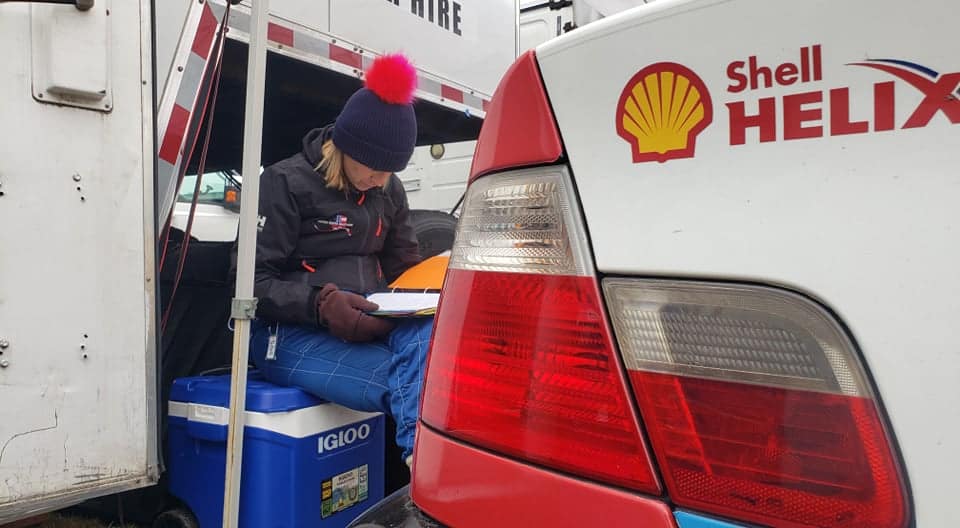
Ann D studying her track notes and mentally preparing for the next time on-track.
Through the coaching from Seth and Ray, each driver made progress across the limited running and culminated in a podium position for each driver! Below are some areas that were focused on throughout the weekend:
Squaring off corners better in low grip/wet conditions and to setup exit of the following straights
Timing of transitions from brake to gas and vice versa
Establishing a connection or translation layer between what driving Buttonwillow in the simulator felt like relative to real life
Mentality to have when going into a race with changing conditions (both getting worse and getting better)
How to explore grip when conditions are improving
Ray Phillips doing a quick debrief after a session while in post-session tech.
Moving forward to COTA in February
So we came out of Buttonwillow with 3 of the 4 cars running, 4 trophies, 1 race win, 5+ second improvements in dry running lap times from Friday afternoon to Sunday afternoon, a new T3 track record for Buttonwillow CW14 configuration with a 1:55.376 and ready for the next round at Circuit of the Americas February 4 – 6, 2022.
Simon made gains across both races and had an epic battle with a T3 Porsche Boxer, having led a good part of Race 2
Ann made a massive step from Saturday to Sunday, dropping 8 seconds in one day and snagging two podium positions in GT2
Dave had limited running due to the incident but was fully healthy after being checked out by medics and will be back on track for COTA
Gama won race 1, broke the track record by multiple seconds and was leading race 2 (and in a battle with an STU car) but the coolant expansion tank failed, resulting in an overheating engine which forced him to retire the race but not before improving on the track record
With one new track for most of our drivers under our belt, we can adjust the preparation in the simulator and the development plans for the test day and each of the on-track race sessions.
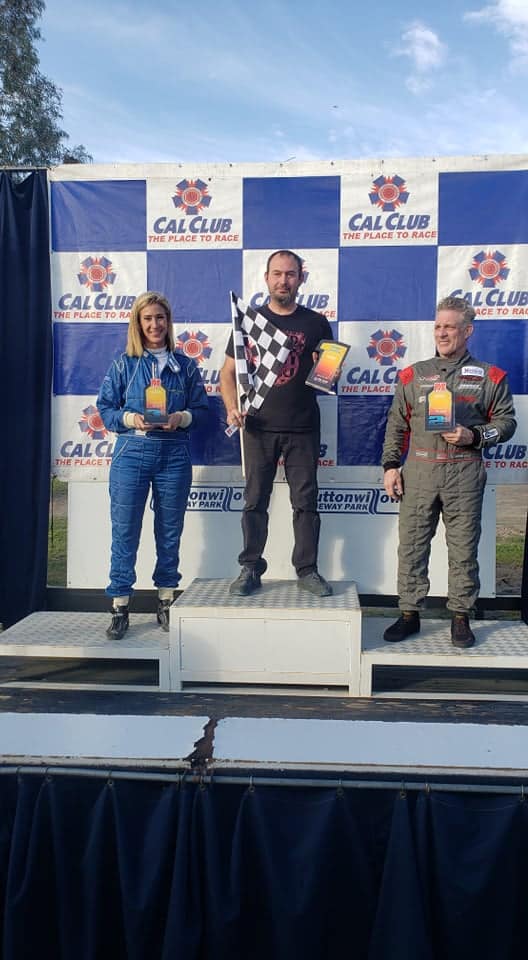
Thanks to the team, Ann, Dave, Simon, Ray, Seth and everyone from the Cal Club who made this weekend possible and making the most out of a pretty tough first race of the year.
2021 was a great way to bounce back from 2020 and while COVID isn’t behind us, we’re thankful that we were able to make it to all but one of the planned competition and racing events that we originally planned and even added in a couple of extra race weekends.
Thank you to everyone who was a part of our journey in 2021!
2022 is shaping up to be an even more jam packed with track action and while we’re mostly booked up for each event, we have limited available capacity to have you join us at the local .
If you aren’t already driving with us, consider this an open invitation. We are here to help! Our current SCCA, ICSCC (Conference), NASA, Revolution Racing League and GT Celebration events are listed below.
If there are any race weekends you would like some crew and coaching support for, please feel free to contact us via e-mail, phone or messenger – raceronrails@gmail.com – (206) 475-1114
The staple of what we do is provide service to the racing community. One of the primary aspects of that is to be at the track, to help you with the car set up and care, as well as trying to improve the performance of both you and the vehicle. We want to announce and extend an open invite for those that are interested that we are here to help. Our team has a calendar of events planned with room for additional support for each weekend as needed! Our current ICSCC Conference as well as intended NASA NorCal events and SOVERN events will be listed below. If there are any race weekends you would like some crew and coaching support for, please feel free to contact us via e-mail, phone or messenger! Let us help you be your best on track!
Give us an E-mail or call to discuss options! raceronrails@gmail.com – (206)475-1114
ICSCC Conference
Event Schedule:
April 19-21 (Fri-Sun) – Mission Race Way Park –
British Columbia
May 3-5 (Fri-Sun) – Portland International
Raceway – Portland, Oregon
May 10-12 (Fri-Sun) – Pacific Raceways – Kent,
Washington
May 31-Jun 2 (Fri-Sun) – Spokane County Raceway
Park – Spokane, Washington
Jun 14-16 (Fri-Sun) – Portland International
Raceway – Portland, Oregon
July 19-21 (Fri-Sun) – Pacific Raceways – Kent,
Washington
Aug 16-18 (Fri-Sun) Portland International
Raceway – Portland, Oregon
Aug 23-25 (Fri-Sun) – The Ridge Motorsports Park
– Shelton, Washington
SOVERN:
June 7-9 (Fri-Sun) – Spokane County Raceway Park
– Spokane, Washington
July 5-7 (Fri-Sun) – Pacific Raceways – Kent,
Washington
July 26-28 (Fri-Sun) – Portland International
Raceway – Portland, Oregon
Sep 7-9 (Fri-Sun) – Portland International
Raceway – Portland, Oregon
Sep 27-29 (Fri-Sun) – Pacific Raceways – Kent,
Washington
October 5-6 (Sat-Sun) – Maryhill Hill Climb –
Mary Hill, Washington
NASA NorCal:
Mar 15-17 (Fri-Sun) – Sonoma Raceway – Sonoma,
California
Aug 2-4 (Fri-Sun) – Thunderhill Raceway –
Willows, California