Posted on

SCCA US Majors Tour – Thunderhill 2026 – The Last Stop South

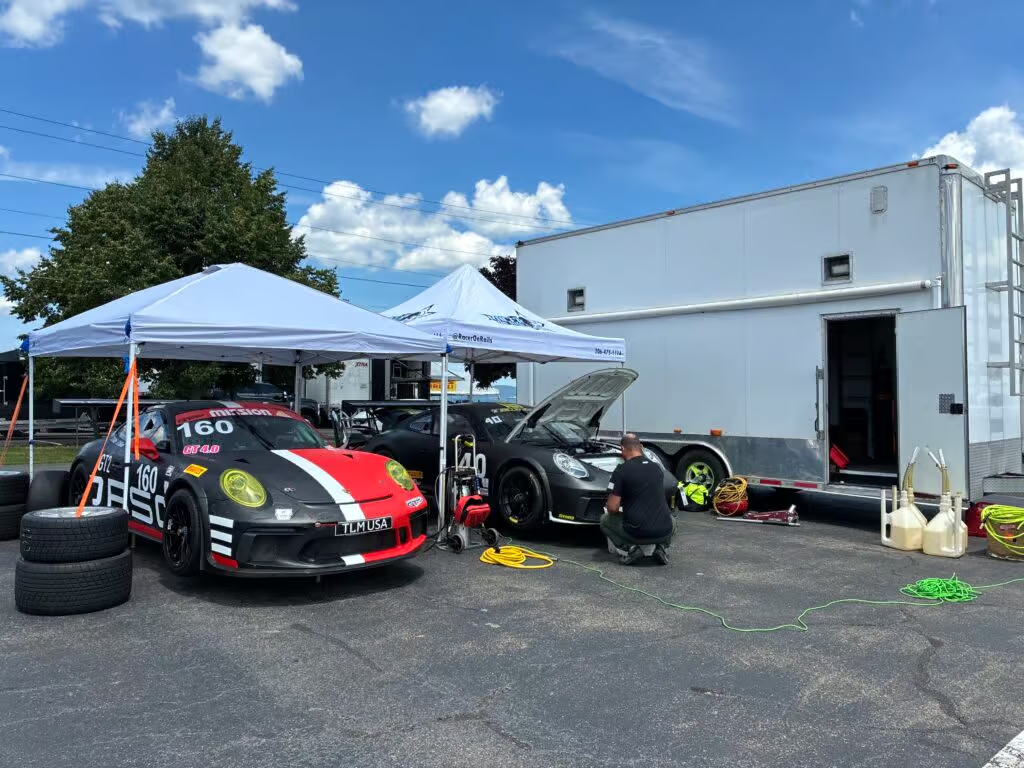
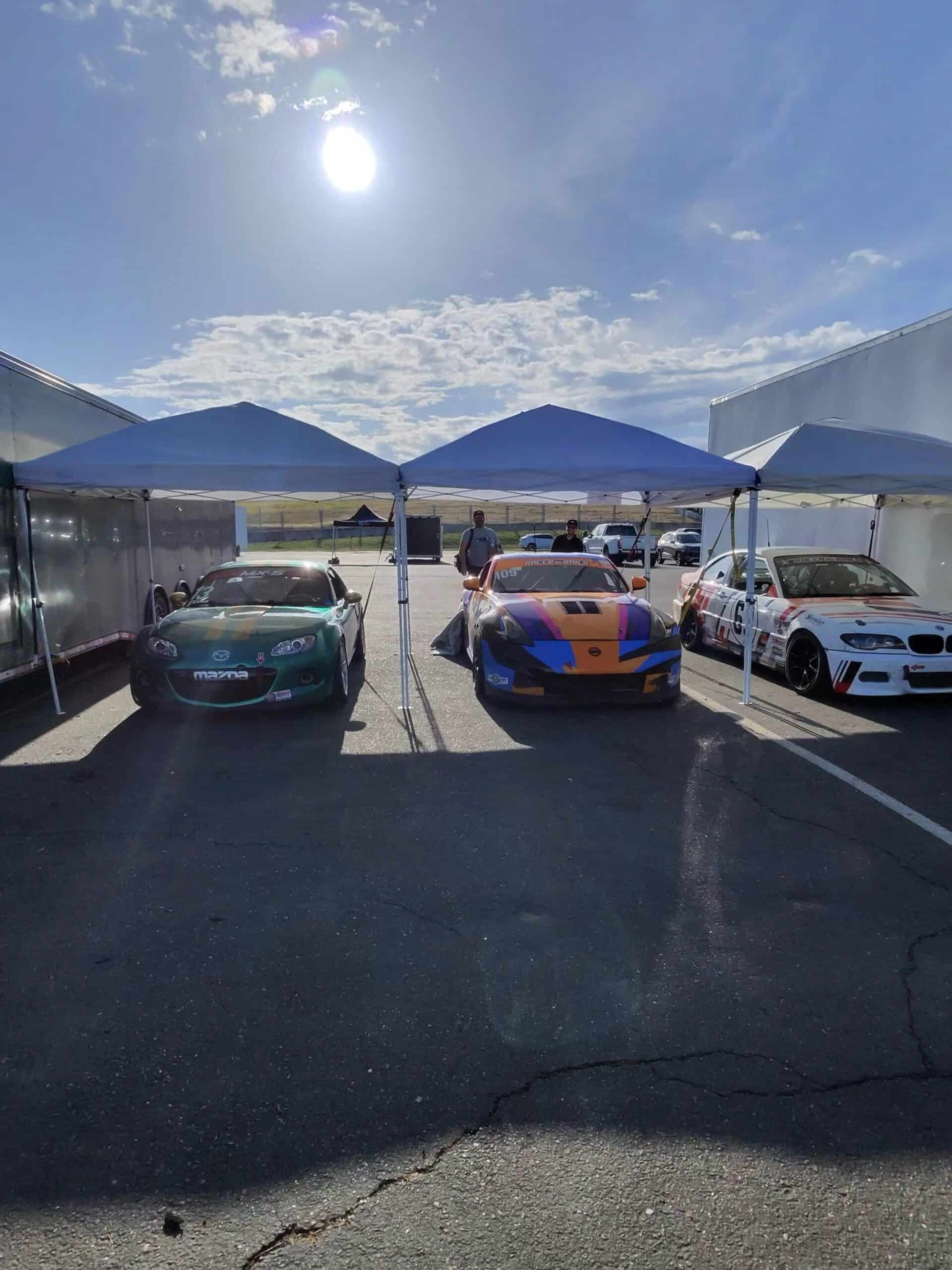
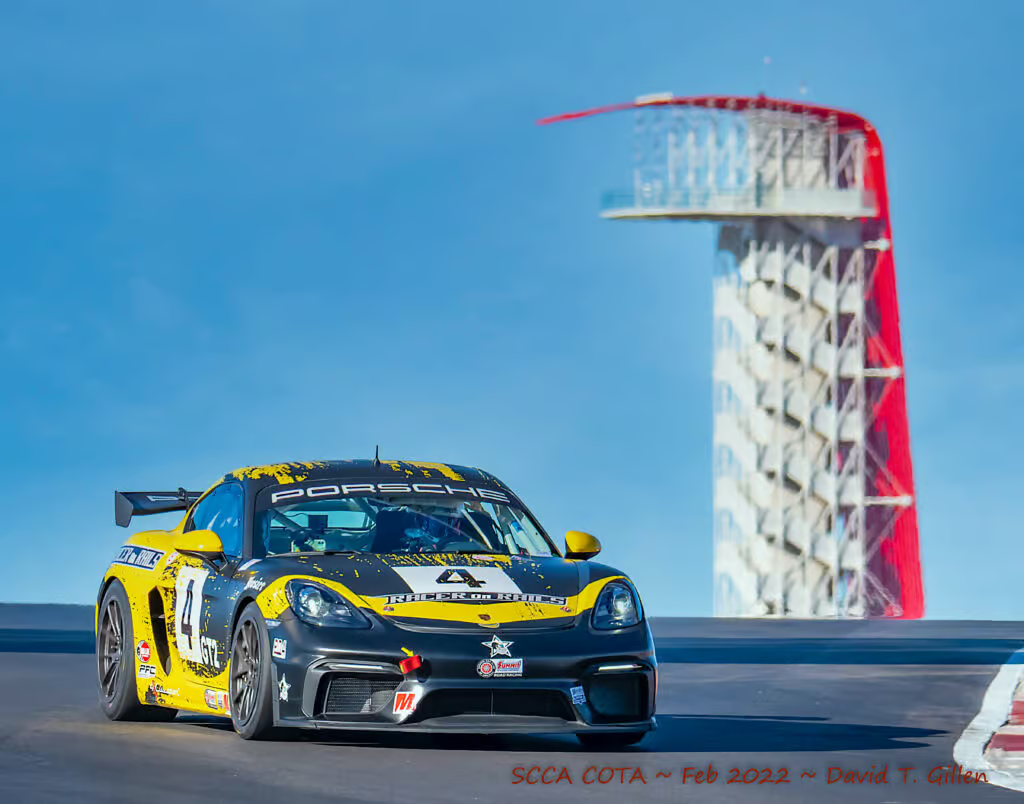
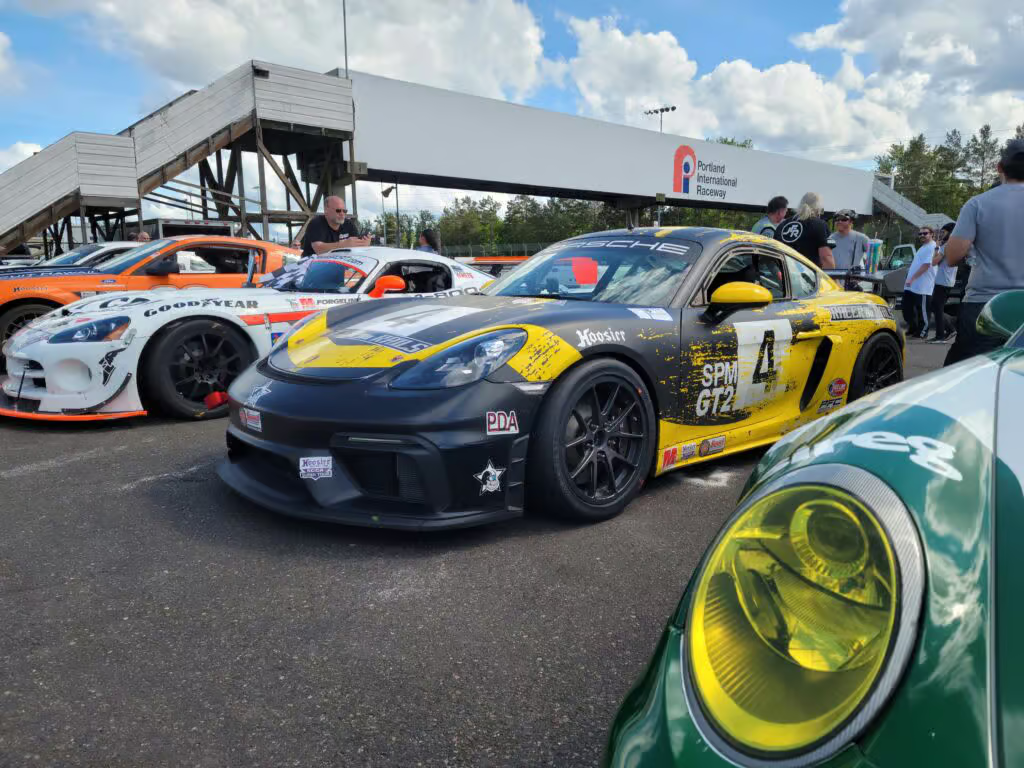
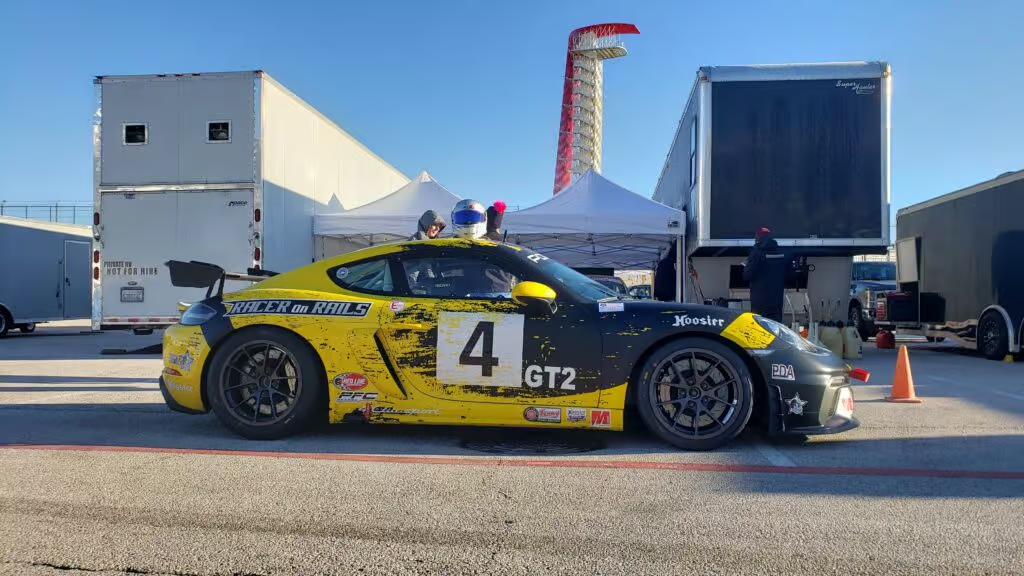
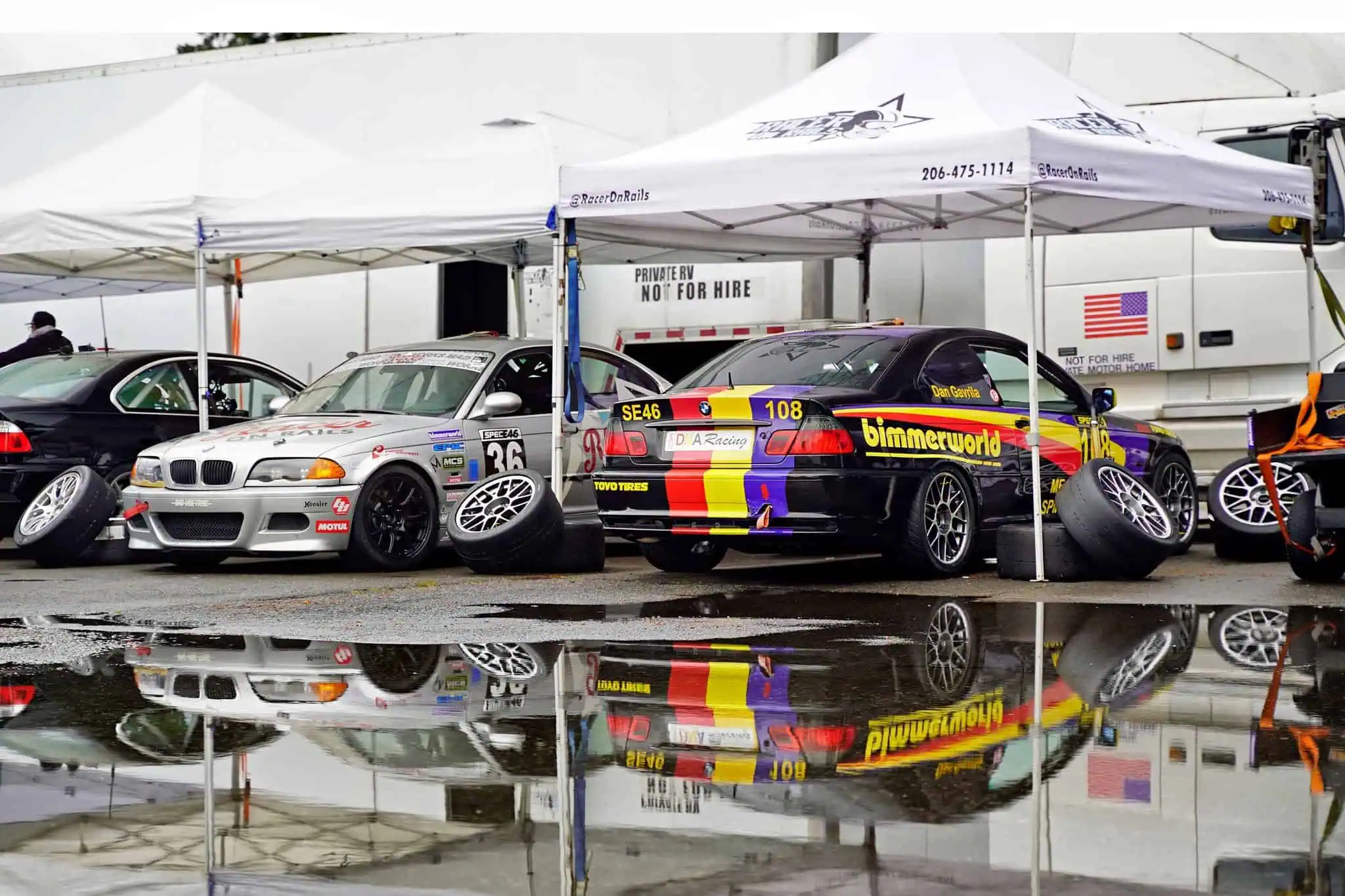
Racer on Rails paddock'ed at Thunderhill Raceway Park

In late April, we wrapped up the final stop of our early-season West Coast racing trip with the 2026 SCCA U.S. Majors Tour at Thunderhill Raceway Park.

This trip started in February at Buttonwillow’s new “The Circuit” layout, continued through a NASA NorCal weekend at Sonoma Raceway, and finished at Thunderhill before the cars, hauler, and team made the long drive back to the Pacific Northwest.

For anyone newer to club racing, the SCCA U.S. Majors Tour is one of the national-level competition paths within the Sports Car Club of America. It brings together strong regional and national drivers, gives racers a chance to measure themselves against deeper fields, and, for many drivers, forms part of the path toward the SCCA National Championship Runoffs.

Thunderhill is always a fun place to end a trip like this. It has elevation, fast commitment corners, technical braking zones, and enough rhythm changes to keep a driver honest. For this event, we ran the Crows Nest configuration, which adds its own personality to the lap and rewards drivers who can stay patient, committed, and precise.

For Racer on Rails, this weekend had two main drivers:

Gama Aguilar-Gamez in the No. 109 Nissan 370Z, competing in Touring 3

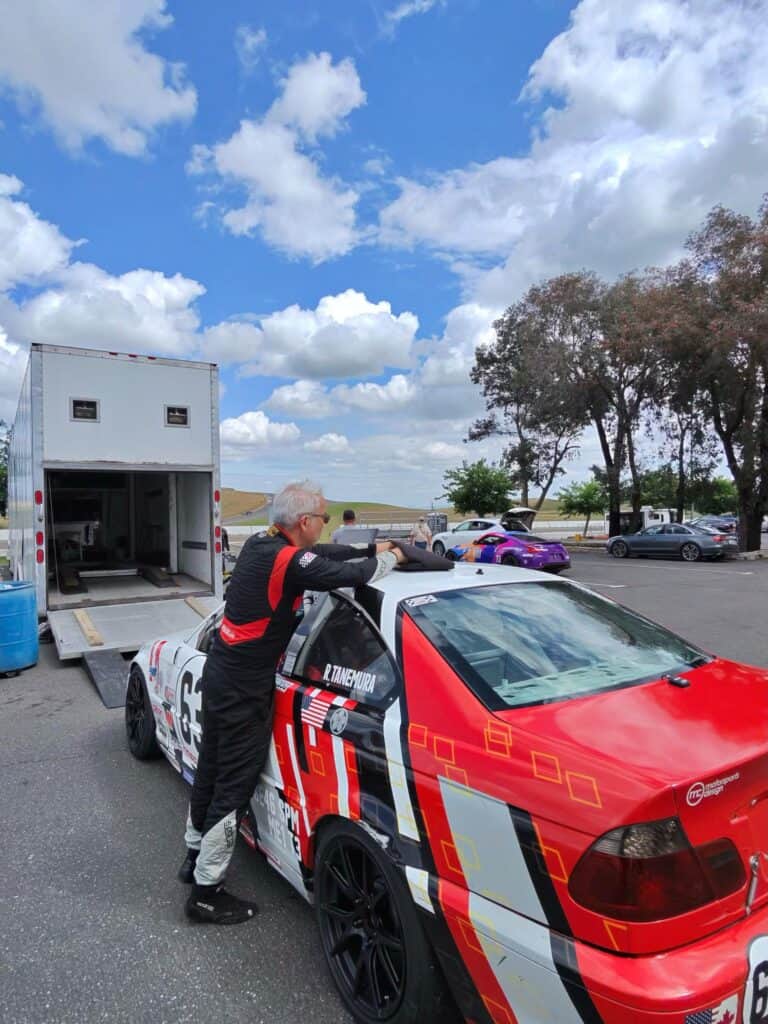
Ron Tanemura in his BMW Spec E46, competing in Touring 3 and STU

On paper, it was another race weekend. In reality, it was exactly the kind of weekend that shows why we love this sport so much. There were clear goals, real progress, hard-earned smiles, and a few memories that will probably get retold in the paddock for a long time.

Why We Were There

Every driver came into Thunderhill with a different mission.

For Gama, the weekend was an important step in the 2026 Runoffs journey. To qualify for the SCCA National Championship Runoffs, drivers need to complete the required number of race weekends and race finishes. After completing two races earlier in the season, Thunderhill became a critical opportunity to add two more finishes and move much closer to locking in the qualification path.

Ron Tanemura never stops looking for opportunity!

But the weekend was not just about checking a box.

The 370Z is still a car we are actively developing. It has shown strong pace, but like most serious race cars, especially one being pushed toward national competitiveness, the work is never really finished. Reliability, braking behavior, tire temperature, chassis balance, setup range, and driver confidence all remain part of the larger development puzzle.

For Ron, the goal was different but just as important.

Ron’s bigger mission this year is driver development. Not just getting faster in one car, at one track, in one situation, but becoming more adaptable, more trusted, and more complete as a driver.

A big part of that is variety. Different tracks. Different race groups. Different cars around him. Different levels of pressure. The long-term target is for him to be the kind of driver who can step into different racing environments, learn quickly, run cleanly, stay close enough on pace, and be trusted by the people around him.

That does not happen by accident.

It happens by putting yourself in new situations, then doing the work to understand them. It happens by learning how to drive a car when it moves around underneath you. It happens by getting comfortable being uncomfortable.

Thunderhill gave Ron exactly that kind of opportunity.

Ron’s Weekend: Raising the Baseline

Ron came into Thunderhill with a very clear goal: build on last year, get more comfortable with the car moving underneath him, and leave with a higher baseline as a driver.

That is one of the things we love about working with Ron. He is not just chasing a result. He is actively working on his craft. He pays attention to what the car is doing, what he is doing, and where the next layer of performance might be hiding.

Thunderhill gave him a perfect environment for that.

Last year, Ron’s best lap at Thunderhill was a 2:06.24. This year, he came close with a 2:06.46. On paper, that means he did not beat his previous personal best. But the timing sheet does not tell the full story.

The bigger win was consistency.

Last year, Ron had one lap in the 2:06 range, one lap in the low 2:07 range, and a handful of laps in the 2:08s. This year, he had five laps in the 2:06s, eight laps in the 2:07s, and seventeen laps in the 2:08s.

That matters.

A single fast lap is fun. A higher baseline is progress.

Ron’s own takeaway from the weekend was that he did not feel quite as “on it” as he did at Sonoma, but he was close enough to feel like his pace is becoming more real and more repeatable. That is exactly the kind of step we want to see from a developing driver.

The biggest learning was around car control.

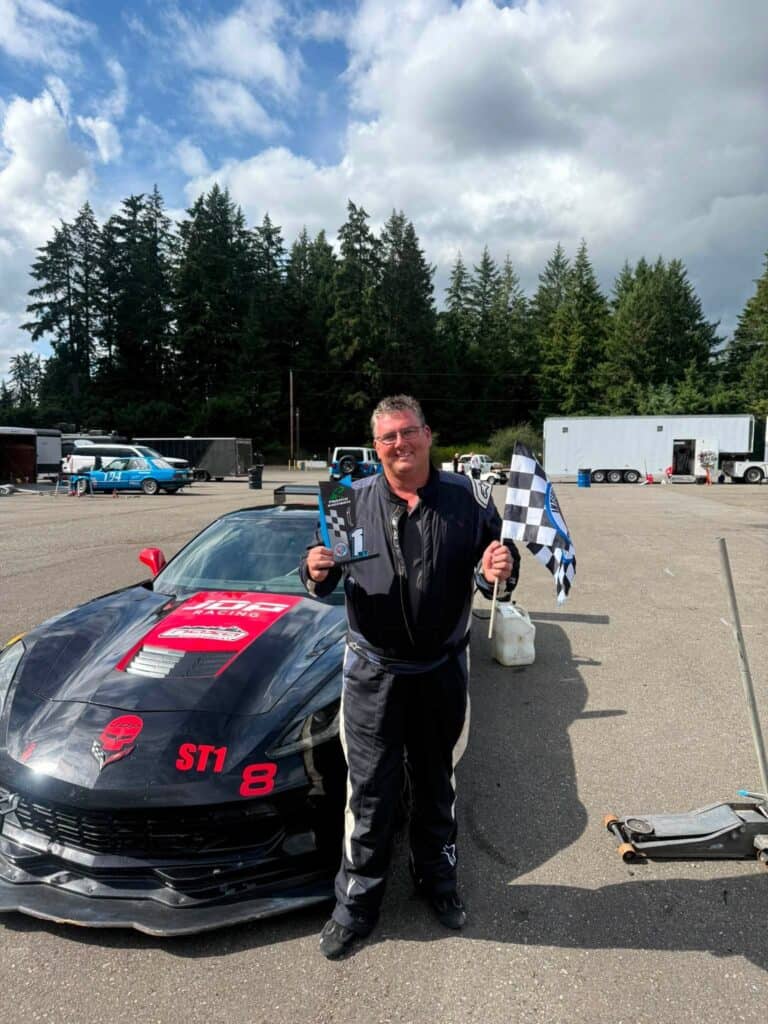
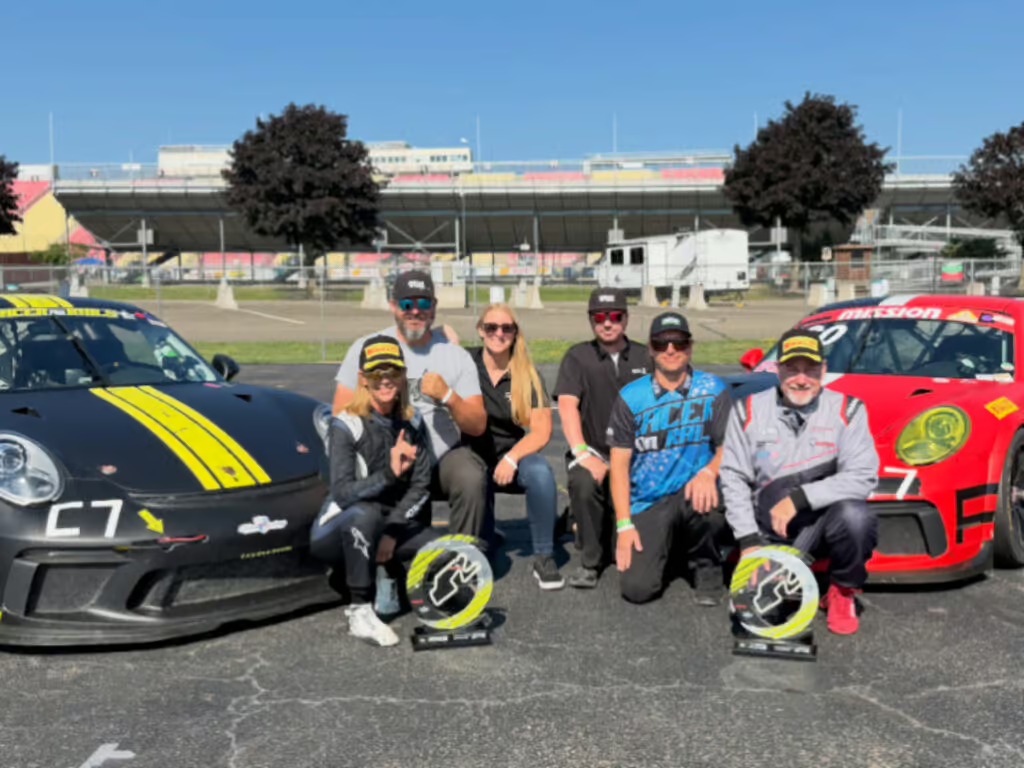
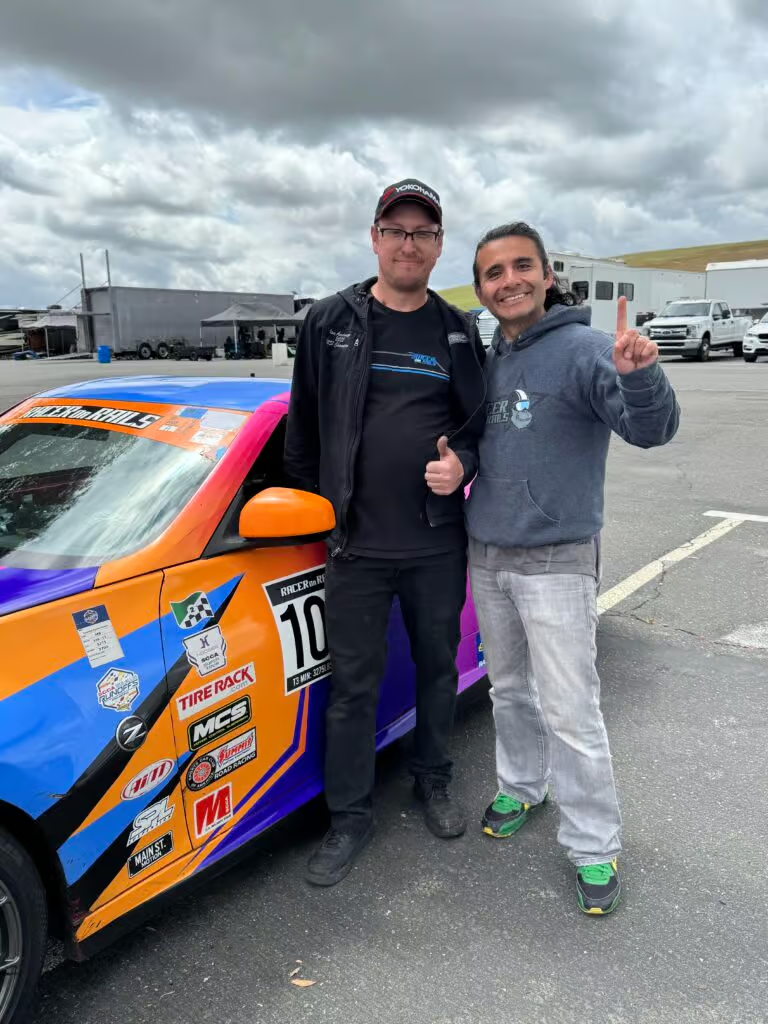
Post session – getting that Chequered flag for Ron!

When Ron was faster, the car was moving. It was rotating. He was catching it, correcting it, and working with it instead of waiting for the car to feel perfectly settled. During Friday testing, especially in the later sessions, he started getting more comfortable with that feeling. The next challenge is learning how to access that level of commitment earlier in a session, instead of needing several laps to build into it.

That became one of his biggest themes from the weekend: push earlier, trust the car sooner, and learn to drive closer to the limit on demand.

Saturday showed that progress.

In his first Touring 3 qualifying session, Ron was quick and consistent, including a run of laps in the 2:06s before the session ended. Later, in his second qualifying session, he was fast immediately after the restart, showing that the pace was starting to become easier to access.

The races gave him a different kind of experience.

In Touring 3, Ron finished second in class. It was a solid result, but he did not have as much direct class competition around him as he would have liked. At Sonoma, he had more sustained battles, and Thunderhill was a little quieter in that regard.

But the weekend still gave him valuable race craft notes.

He worked on starts. He worked on positioning. He got reminders about following closer before the green, not over-defending Turn 1 when there is an opportunity to open the gap, and using commitment through fast corners to set up passing opportunities later in the lap.

Then Sunday threw the team a curveball.

During Touring 3 qualifying, Ron quickly realized he had lost fourth gear. The transmission needed to be replaced, and the clock was not exactly being generous.

Thankfully, we had a spare transmission available.

The team looked at the schedule and knew it was going to be tight, but there was still a chance to get Ron back out for the STU race later that afternoon.

There was also something special waiting at the end.

At SCCA Majors events, class winners often receive more than a trophy. This event was hosted by the San Francisco Region, and the class-win flags were a cool keepsake from the weekend.

So we made the call: let’s get Ron that flag.

The team jumped on the transmission swap, got the car buttoned up, warmed up, checked over, and ready. Ron made it to the race.

And he delivered.

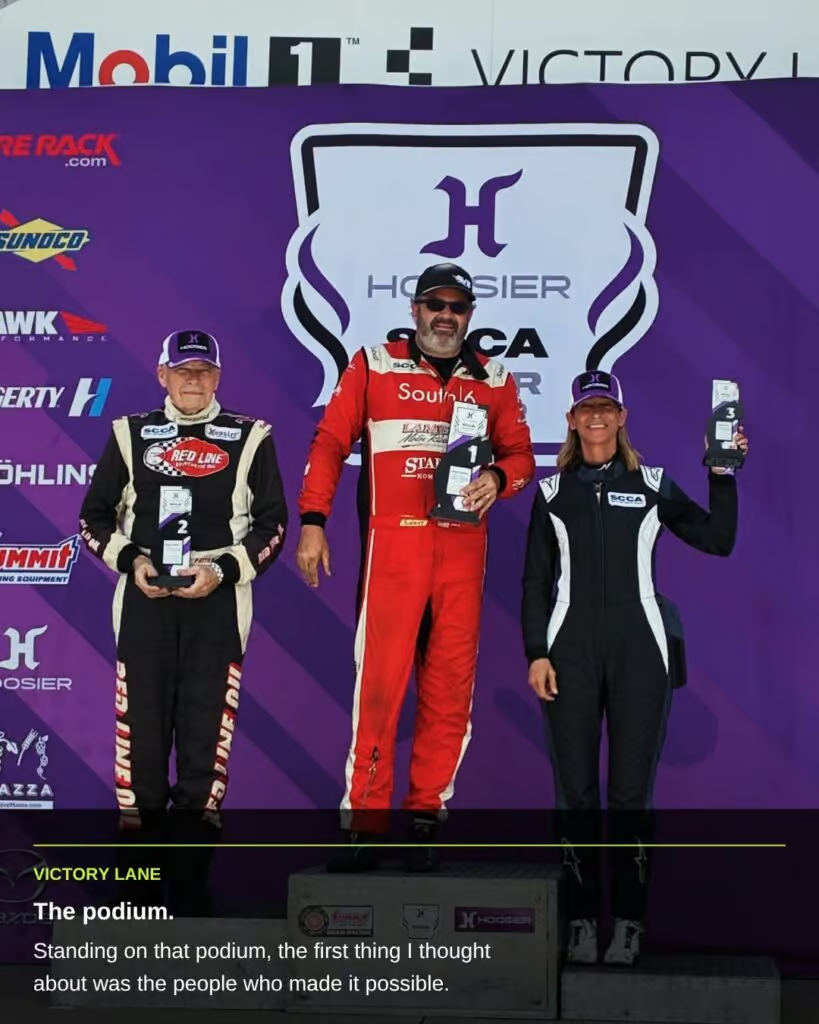
He finished third overall in Group 2, won STU, and brought home the flag.

But the real story was not just the flag. It was the full arc of the weekend: clear goals, honest self-assessment, measurable progress, a mechanical setback, a team thrash, and one more chance to go race.

That is the kind of weekend that builds a driver.

Gama’s Weekend: Runoffs Progress and More 370Z Development

For Gama, Thunderhill was about two things: continuing the Runoffs qualification path and continuing to develop the No. 109 Nissan 370Z into a nationally competitive Touring 3 car.

This was only the second full race weekend of the season for the Z, and we came in with some important new learning.

Before the event, Tyler spent time with our partners at Motion Control Suspension to better understand the internal behavior, adjustment range, and service considerations of our three-way dampers with external reservoirs. The details matter, and we came away with more tools in our toolbelt that have helped us start fine tuning the car’s behavior.

For a car like the 370Z, which has shown both pace and some sensitivity around braking behavior and tire temperature management, that kind of learning matters. We have been trying to understand how to make the car more compliant, more consistent, and easier to extract speed from over a full race distance.

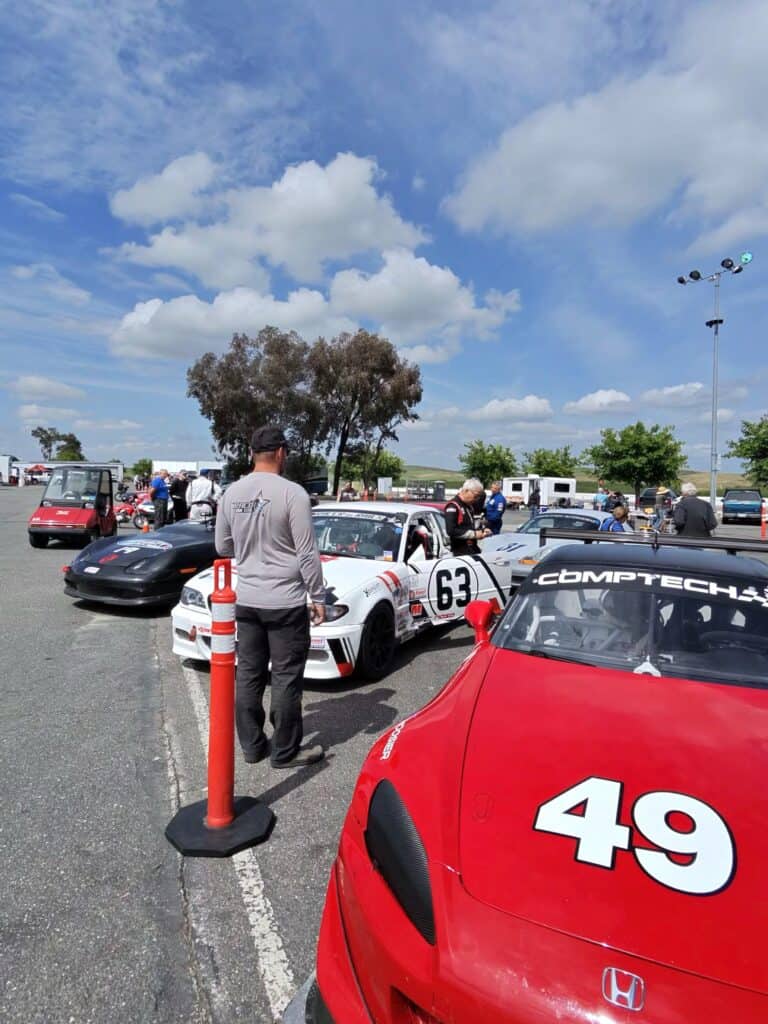
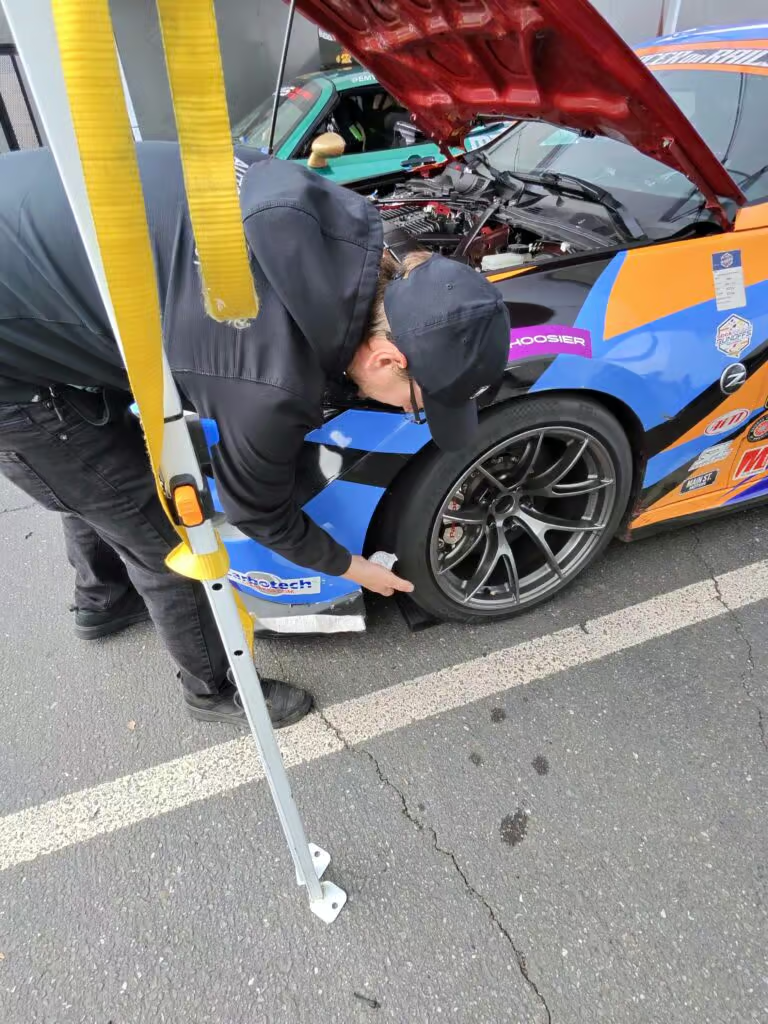
Ian Anderson getting the tire pressures dialed in before a session

The goal was not to find one magic adjustment. Race cars rarely work that way.

The goal was to understand the platform better, continue chipping away at reliability concerns, give the driver a car that communicates more clearly, and keep moving the program forward with discipline.

That is the unglamorous part of race car development. It is not always fireworks. Sometimes it is pressure checks, damper notes, tire readings, brake feel, driver feedback, and the quiet little decisions that add up to real progress.

Thunderhill gave us more of that.

On Saturday, Gama finished fifth overall in Group 1 and first in Touring 3, with a best lap of 2:02.789. That result mattered for the points and the Runoffs path, but it also showed that the 370Z had real speed in the class.

On Sunday, the priority was clear: finish the race, keep stacking Runoffs qualification progress, and bring the car home. Gama finished fourth overall and again first in Touring 3, adding another strong finish to the season.

That's another P1 sweep of a race weekend for Ian, Gama, and the Nissan 370z in SCCA Touring 3
That’s another P1 sweep of a race weekend for Ian, Gama, and the Nissan 370z in SCCA Touring 3

Just as importantly, the weekend helped validate some of the direction we are taking with the chassis. The car became easier to work with, more predictable, and more useful as a development platform.

For Gama’s season, the biggest objective was to continue stacking the race finishes needed for Runoffs qualification. In that sense, the weekend did exactly what it needed to do.

For the car, it gave us more data.

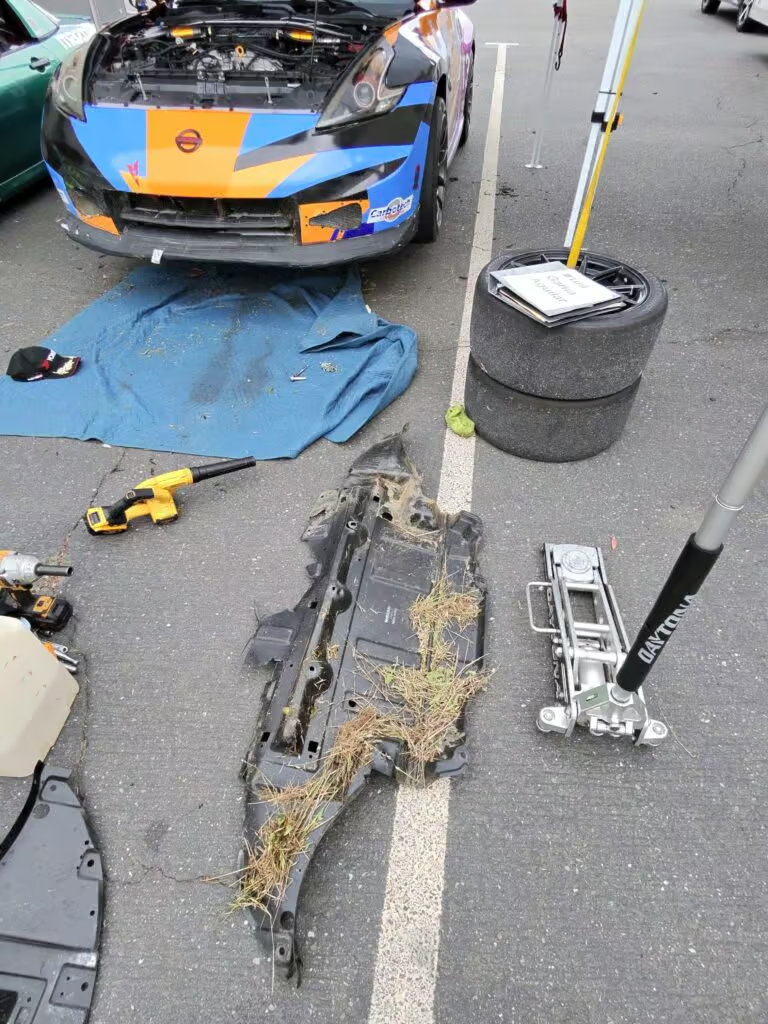
It’s not all roses and daisies when chasing speed. Sometimes you find yourself in the grass…

For the driver, it gave more confidence.

For the team, it gave another reminder that the path to national-level competitiveness is built one weekend, one session, and one decision at a time.

The Bigger Picture

The easy version of a race recap is to talk about qualifying positions, lap times, race results, and trophies.

Those things matter. We care about them. We work hard for them.

But the best weekends usually have another layer.

Ron’s weekend was a perfect example. He hit the goals he came in with, but still left wanting more. That is a good place to be. He raised his baseline, got more comfortable with the car moving, built more race craft notes, identified where the next step is, and still came home with a class win flag after the team thrashed to get him back on track.

Gama’s weekend was different, but connected. The 370Z program took another step forward, the Runoffs path became more achievable, and we continued learning how to get more out of the platform without losing sight of reliability and drivability.

That is the heart of what Racer on Rails is becoming.

Yes, we prepare race cars. Yes, we support race weekends. Yes, we care deeply about setup, reliability, data, execution, and all the thousand little details that make a race car work.

But ultimately, we are here to help drivers become better drivers.

Sometimes that means building a faster car. Sometimes that means making a car easier to trust. Sometimes that means helping a driver understand what they are feeling. Sometimes that means creating the right environment for a driver to stretch, learn, and come back wanting more.

We want to help people set goals that matter to them, whether that is winning a national championship, earning a Runoffs invite, becoming more comfortable with car control, developing race craft, or simply leaving the track knowing they took a real step forward.

That is why weekends like Thunderhill matter.

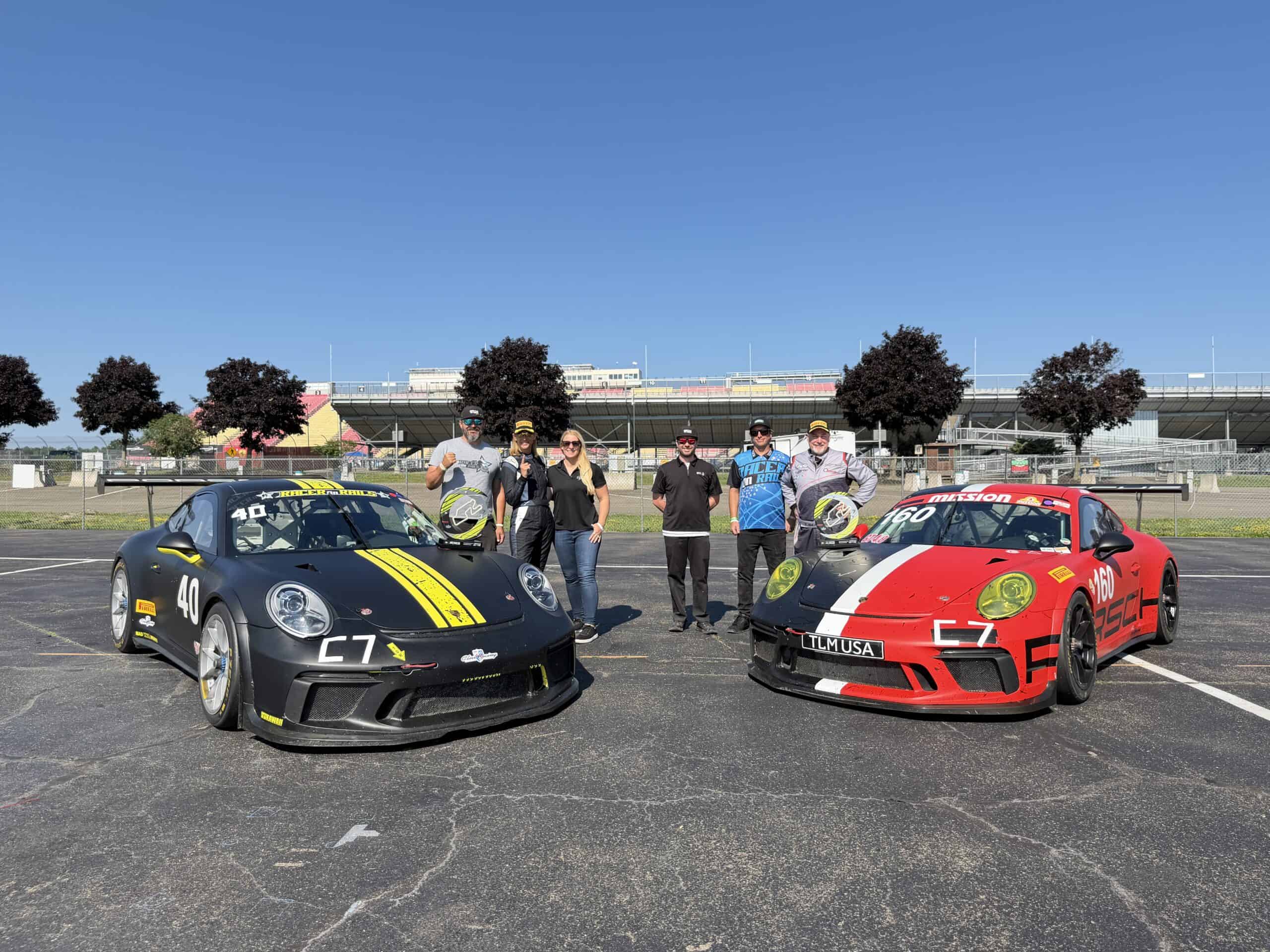
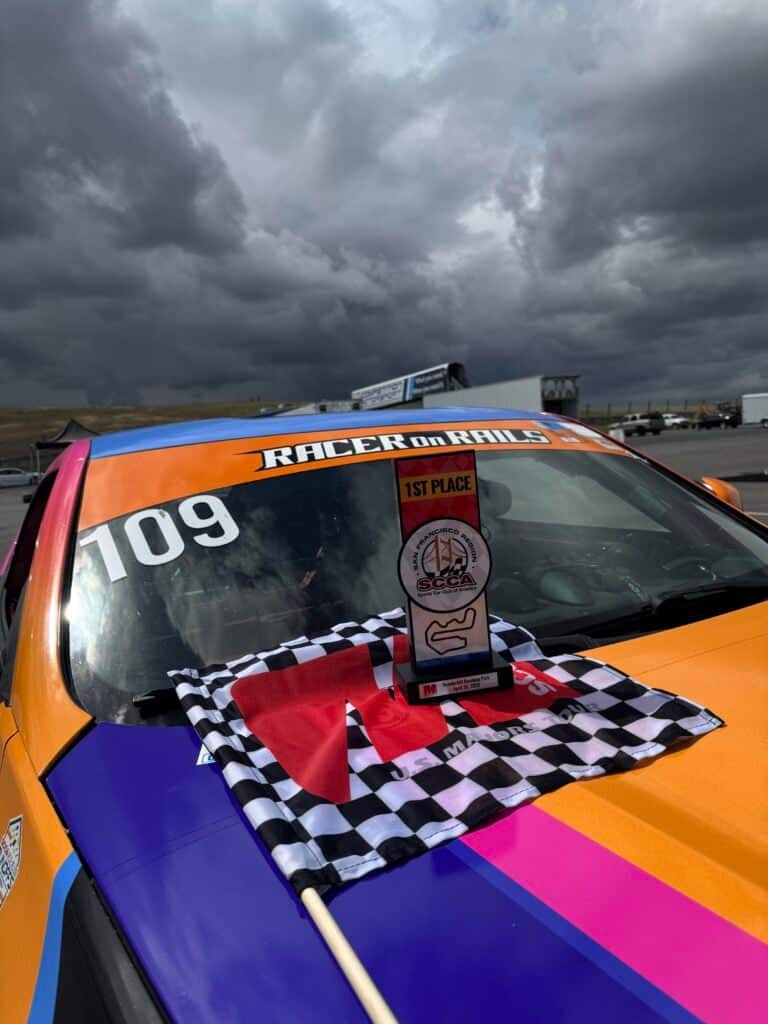
P1 both races in SCCA Touring 3 and collecting some hardware before the weather rolled in!

The cars came back north to the Pacific Northwest with more miles on them, more notes in the book, and a few more stories for the paddock. For us, it felt like the right ending to the first chapter of the season.

And for our drivers, it was another reminder that progress in racing rarely arrives as one giant leap.

Most of the time, it shows up as one better corner, one cleaner race, one smarter adjustment, one hard-earned finish, and one flag you almost did not make it back on track to win.

Posted on

Porsche Cayman GT4 Clubsport Build Overview

(2020 718 GT4 Clubsport – Track Day Edition)

If you’ve followed Racer on Rails for a while, you already know our philosophy: take great cars, make them better, and then drive the hell out of them. This 2020 Porsche Cayman GT4 Clubsport Track Day Edition is the perfect example — a factory-built Porsche Motorsports car with real pedigree and a second life that spans endurance racing, time attack, and driver development.

Before we go deeper, it’s important to understand which Clubsport variant this is, because Porsche built several versions:


718 Cayman GT4 Clubsport Variants

Track Day Edition (This Car)

  • Designed for private owners and track day use
  • Same 425 hp 3.8L flat-six as Comp version
  • Lighter-duty fuel system
  • No air-jack system (but provisions exist)
  • Not homologated for GT4 racing

Competition Version (Not This Car)

  • Fully homologated for GT4 racing
  • Air-jack system included
  • Larger motorsport fuel cell
  • Endurance switches & safety electronics
  • Homologation restricts power/aero changes
  • Carbon and natural fiber material body panels

Newer 718 Cayman GT4 RS Clubsport

  • 4.0L RS-based platform
  • More power, higher RPM ceiling
  • Improved aero and suspension
  • The current model used in IMSA/SRO GT4
  • Much closer to a “mini Cup Car”

Our car — the Track Day Edition — gives us the freedom to pursue more aero, more setup range, and more developmental headroom than the rules-restricted Competition version.


Where This GT4 Clubsport Came From

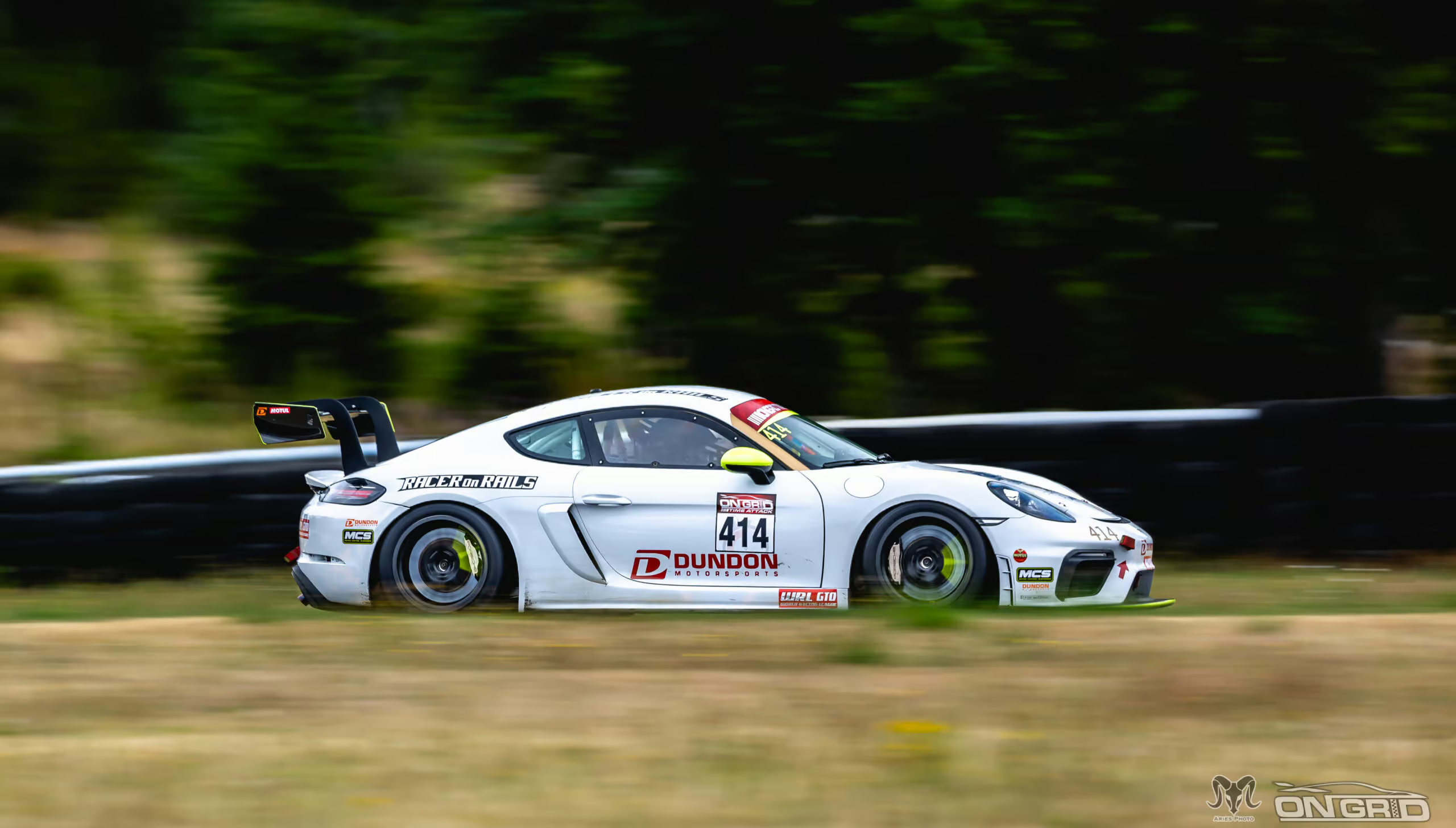
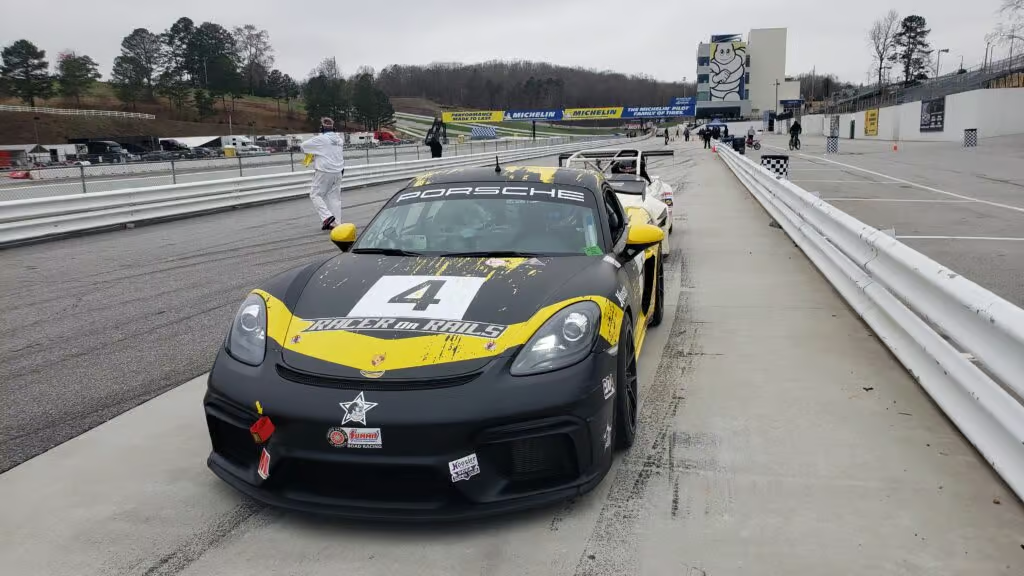
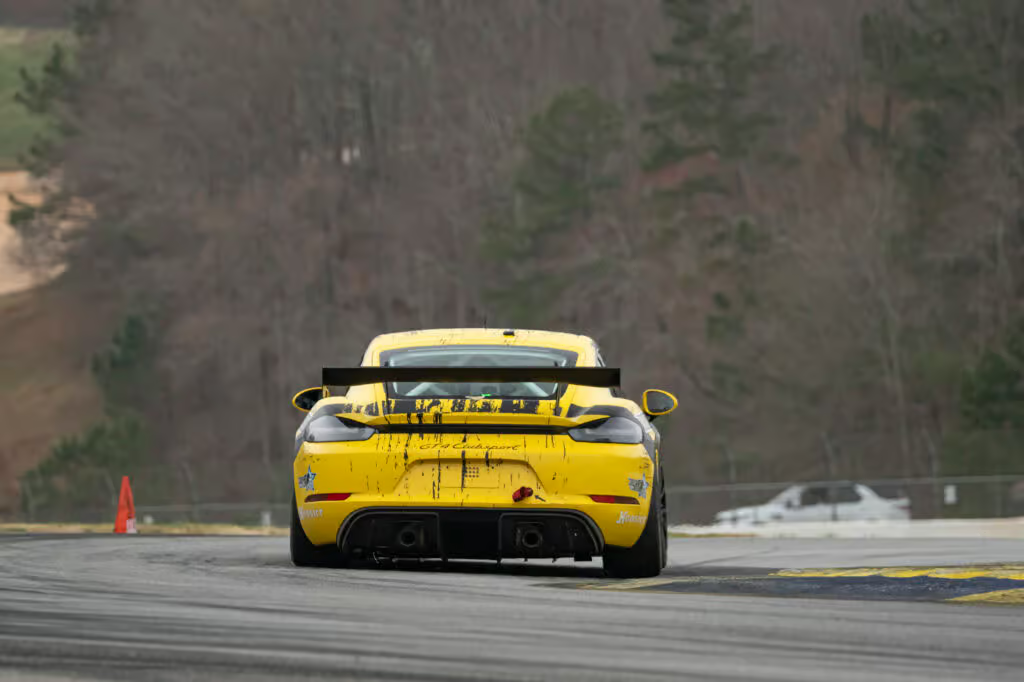
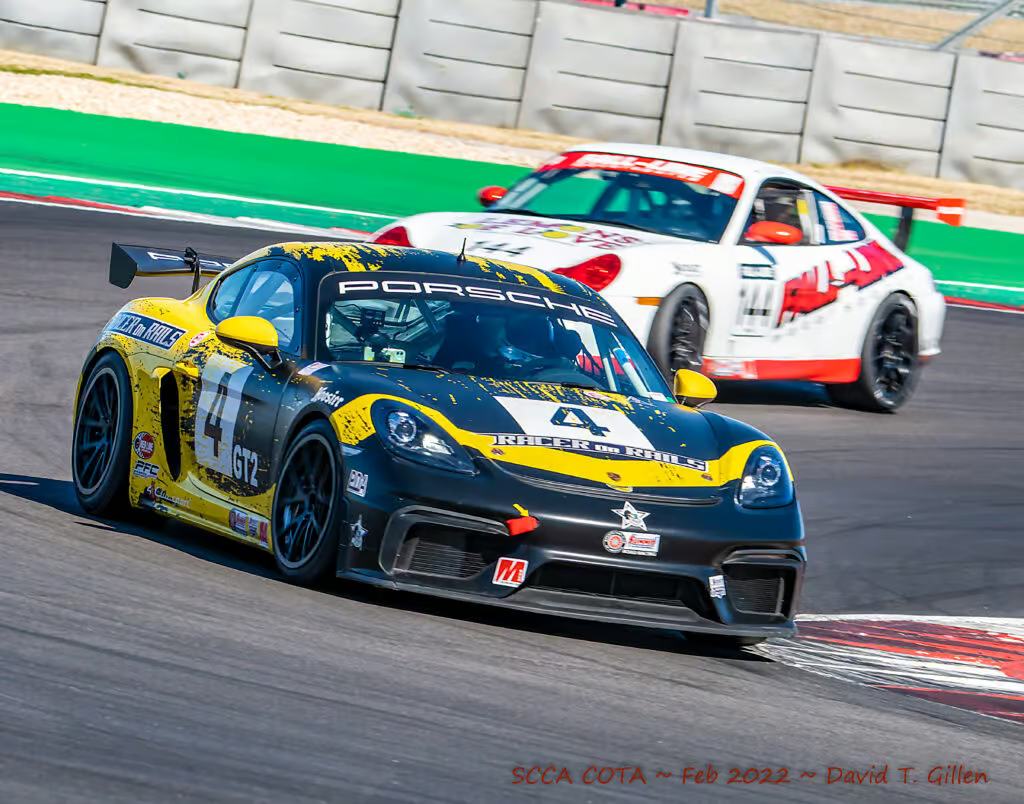
Photos of the car from its Ann Doherty era after arriving at RoR.

This GT4 Clubsport began its life with Ann Doherty, who ran it competitively in SCCA T1 and GT2 before upgrading to a 991.2 GT3 Cup Car.

Because the car came from Ann, we gained two major benefits:

  1. It had been maintained at a true professional standard.
  2. It had already proven itself at a national competition level.

When she moved to the Cup Car, we took ownership of the GT4 and immediately put it to work.


What We Used It For

1. Endurance Racing (2024)

Bombing down Turn 5 at Road America with World Racing League

The first chapter of this car’s life with us was national-level endurance racing:

  • WRL Road America — April 2024
    Our first outing. Strong pace, great aero learning, and flawless reliability.
  • ICSCC Cascade 8 Hours of Portland — October 2024
    A full-day grind that gave us massive data on tire wear, pit strategy, and aero balance.

The car was consistent, predictable, and incredibly reliable — exactly what you want in an endurance platform.


2. OnGrid Time Attack (2025)

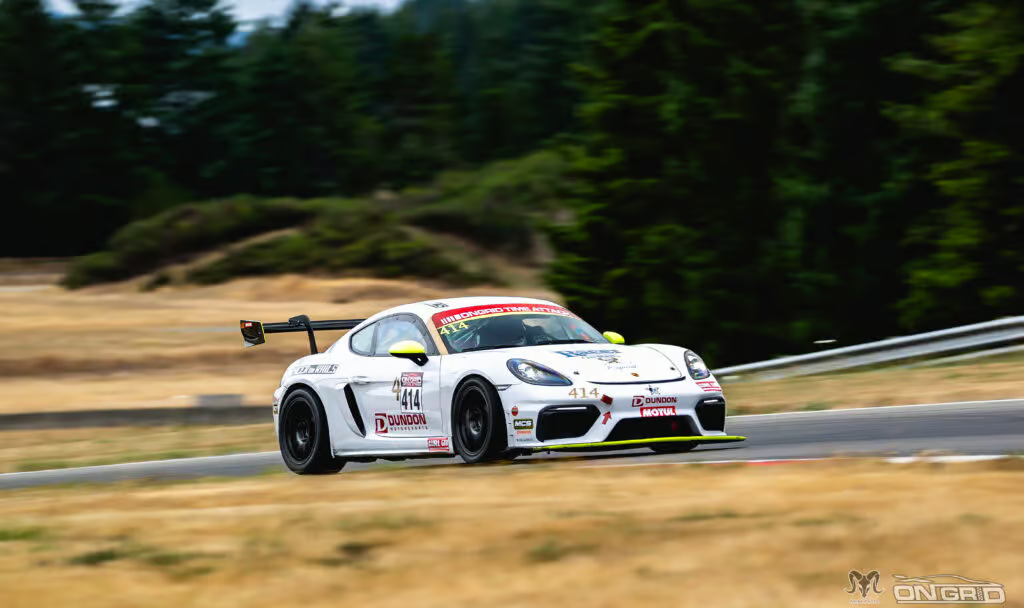
With the Dundon Valkyrie aero package installed, the car moved into OnGrid GT+ and instantly became a serious contender.

Huge downforce. Big mid-corner speed. Better braking stability. It was a transformation.

Check out one of the flying laps from this past summer – matching 992 and 991.2 GT3 Cup car lap times!

YouTube player

3. Driver Development & Testing Tool

This GT4 became one of our strongest tools for:

  • Advanced driver coaching
  • Back-to-back setup testing
  • Tire comparisons
  • Driver development beyond Spec E46, T3, and regional touring classes

Turnkey speed. Zero drama. Endless data.


Factory Specs — 2020 Porsche Cayman GT4 Clubsport (Track Day Edition)

PHOTO SUGGESTION: Interior cockpit photo or engine bay shot.

Engine & Drivetrain

  • 3.8L naturally aspirated flat-six
  • 425 hp @ 7,500 RPM
  • 7-speed PDK w/ motorsport tuning
  • Motorsport cooling system
  • Mechanical LSD

Chassis & Safety

  • FIA welded cage
  • Motorsport wiring harness
  • Composite doors
  • Fire system
  • Air-jack provisions (air jack system not currently installed)
  • Recaro race seat + 6-point harness

Suspension & Brakes

  • 3-way MCS motorsport dampers (upgrade)
  • Fully adjustable alignment
  • Porsche Motorsport ABS
  • Motorsport stability control

Aero

  • GT4-spec splitter but currently running the full Dundon Motorsports Valkyrie Aero package (front splitter, canards, rear wing)
  • Adjustable rear wing
  • Factory Flat floor
  • Factory cooling and airflow optimization

Our Modifications & Upgrades

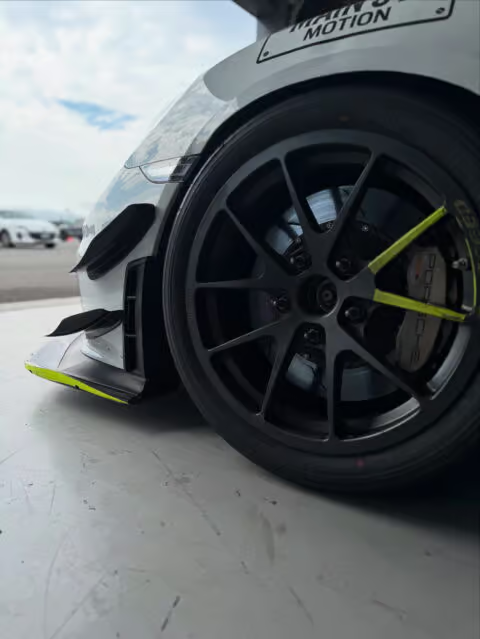
Dundon Motorsports Valkyrie Aero Package

  • Full-length carbon splitter
  • Functional multi-channel front diffuser
  • Canards
  • Swan-neck rear wing
  • High-efficiency rear diffuser

This fundamentally changes the car’s downforce ceiling and high-speed stability.

Dundon Motorsports Valkyrie Aero front Bumpcer Canards in focus

Data & Electronics

  • AIM data integration
  • Radio/comms upgrades

Race Prep & Setup

  • Multiple alignment profiles
  • Corner balance for sprint, endurance, and time attack
  • Dundon headers/exhaust (optional configuration)
  • Tire mapping across A052, F200, and slicks

Deep Dive: Dundon Valkyrie Aero vs. Porsche Factory vs. Manthey Racing

Porsche Factory GT4 Aero

  • Designed to be predictable and safe
  • Built to meet strict GT4 regs
  • Limited splitter/wing/diffuser scope
  • Great for consistency but capped on downforce

Manthey Racing Aero

  • Refined airflow
  • Cleaner front-end efficiency
  • Slightly more downforce than OEM
  • Still constrained by GT4 rulebook

Dundon Valkyrie Aero

  • Not rule-limited
  • Significant downforce increase
  • Real front-end loading under trail braking
  • Balanced with a serious rear aero package
  • Center of pressure stability improves with speed

At The Ridge, the difference was dramatic: the car stopped washing out in the T3–T4 transition and gained real front-end authority.


Real-World Lap Time Proof

This wasn’t a pure A/B test — different drivers, power levels, tires, and conditions — but the result is hard to ignore.

June 2023 — Homologated GT4 Aero @ Road America

  • Hoosier A7 (sprint tire)
  • Full GT4 power
  • Lap: 2:25.6

April 2024 — Dundon Aero @ Road America

  • Yokohama A052 (endurance tire)
  • WRL power restrictions (¾ intake blocked)
  • Full endurance fuel levels
  • Laps: Low 2:24s — consistent

Less power.
Heavier car.
Slower tire.
Faster laps.

Conclusion:

The aero works. It transforms the platform. Check out this video comparison of the Dundon vs Manthay aero on the faster Cayman RS GT4.

YouTube player


What Types of Racing This Car Excels In

Endurance Racing (WRL, AER, ICSCC Enduros, ChampCar Pro)

  • Ultra-consistent
  • PDK-friendly
  • Great tire life
  • Zero drama across long stints

Time Attack (OnGrid, GTA, SCCA TT)

With Dundon aero?
It’s a legitimate GT+-class weapon.

Sprint Racing (SCCA ST, ICSCC ST/SPO, NASA ST1/ST2)

Great for drivers moving beyond grassroots or regional programs.

Driver Development

One of the best “advanced learning” platforms we’ve ever used.


Interested in Renting or Developing a GT4 Clubsport?

If you’re curious what a Porsche Cayman GT4 Clubsport can do, we’d love to help.

  • Want to rent this GT4 Clubsport for a race weekend or time attack?
    We offer full arrive-and-drive + coaching.
  • Already own a GT4 or Porsche race car?
    We can help you extract more from the car and yourself with setup, aero, maintenance, and coaching.

Reach out anytime. Let’s build something fast together.

Posted on

SCCA Touring 3 Nissan Nismo 370Z #109 — Build Overview

Introduction

Every race car has a story, and our goal with these build overviews is to pull back the curtain a bit and share the why behind each one. Not just the spec list or the shiny parts bolted on, but the decisions that shaped the build, the lessons we learned the hard way, how the car performs today, and where we’re taking it next. Think of this as a guided walk through the full journey — the good, the bad, the breakthroughs — so that whether you’re dreaming up your first build, refining a current project, or planning something wild for the future, you’ve got real-world insight to draw from. And hey, if any of this sparks ideas or you’re curious about building a similar car, we’re always happy to talk shop and help you get pointed in the right direction.

Gama shaking down and testing things to figure out the brakes in his 2011 Nissan Nismo 370Z in SCCA Touring 3 Class

How We Ended Up in a Nissan 370Z for Touring 3

Our path to campaigning a Nismo Nissan 370Z in SCCA Touring 3 didn’t start with a Z-car at all — it started with a fleet of BMW Spec E46s and a once-in-a-lifetime opportunity.

Back in 2021, the SCCA Runoffs were being held at the Indianapolis Motor Speedway. That’s bucket-list territory. There was absolutely no way we were going to miss the chance to race at Indy, so we brought our Spec E46 drivers and cars and dove into T3 with both feet.

That first year was awesome. The SE46 was decently competitive and, with a 2,950-lb minimum weight in Touring 3 (vs. 2,850 in the spec class), we still felt like the platform had room to grow. We were optimistic.

Even a hurricane couldn’t slow down the field enough to make a Spec E46 competitive at big tracks like VIR

But 2022 at VIR changed everything.

VIR is the polar opposite of Indy when what matters most is top-end speed. And in T3, you simply cannot hide from that reality. While the front-running cars were consistently touching 138–140 mph top speeds, our Spec E46s were essentially tapped at 136 mph, and in reality at VIR, we were barely seeing 132 mph with a draft.

So even if the chassis could somehow theoretically match the lap times, the racing wasn’t viable. It was a harsh reality check, but a necessary one.

Time for a Change

After the 2022 Runoffs, we evaluated realistic alternatives:

  • BMW Z4 M Coupe
  • Nissan 370Z

We also had a 2010 Porsche Cayman PDK ready to build, but the timeline and development curve didn’t match our Runoffs schedule.

The turning point came when a proven, nationally competitive T3 370Z changed hands and landed with our friend Chris Hart. Suddenly, we had access to race-winning data and real experience. Combined with the 370Z’s double-wishbone geometry — perfect under T3’s 3.5-degree camber limit — the choice became clear.


Buying the Car — A True Nismo

In mid-2023, we bought a 2011 Nissan 370Z Nismo — a true, original-owner Nismo.

Because the shop was at max capacity, the entire initial teardown happened in the driveway. Full interior strip, seam sealer removal, weight reduction — everything. We delivered a perfect rolling chassis to Fabtek for a cage that matched Chris’s championship-proven design.

Cage & Safety Fabrication

Once Fabtek completed the cage, we resprayed the interior in OEM Nismo red and began the race against time to assemble the car before the 2023 Runoffs at VIR.


2023 Runoffs — The ABS Reality Check

We made it to VIR… but the first test day exposed the 370Z’s biggest flaw: its factory ABS logic.

We experienced full-on ICE mode, where the ABS system dramatically reduces braking pressure unpredictably. It ended our Runoffs before the weekend truly began — but thank God, the car and driver were safe.

Post-Runoffs: Fixing the Brakes

That failure changed everything. We went deep into:

  • pad compounds
  • rotor configurations
  • wheel-speed ratios
  • heat management
  • master cylinder behavior
  • ABS trigger logic

We broke things. Tested everything. Logged everything. Even pushed for rule adjustments when needed.

And now? The brakes are one of the absolute strengths of the car.


Current State of the Car

Chassis

  • 2011 Nissan 370Z Nismo
  • SCCA-compliant Fabtek cage
  • OEM interior respray (red)
  • OEM front strut bar
  • No additional chassis stiffening (per T3 rules)

Interior & Safety

  • Racetech 119 seat
  • Schroth 6-point
  • Safecraft nets
  • Lifeline fire system
  • OMP wheel
  • Helmet blower + cool shirt
  • Lots of heat shielding at the transmission tunnel to protect driver’s feet

Brakes

  • Paragon PA015 calipers
  • Paragon 2-piece rotors
  • Carbotech XP12 front pads / 1521 rear pads
  • Motul RBF660
  • Goodridge stainless lines
  • Racer on Rails custom brake ducts
  • Fully optimized ABS strategy

Suspension

  • MCS 3-way coilovers
  • Eibach T3-compliant springs
  • SPL adjustable arms & endlinks
  • AFE sway bars
  • Urethane diff mount

Engine

  • Nissan reman VQ37HR
  • Z1 baffled oil pan
  • OEM intakes (required)
  • 42mm restrictor
  • Motordyne test pipes
  • Z1 single-exit exhaust
  • ECUTek tuned on 100 octane
  • Comprehensive cooling upgrades
It's a Z battle at the 2025 SCCA Runoffs!
It’s a Z battle at the 2025 SCCA Runoffs!

Aero

  • OEM Nismo V1/V2 aero
  • Race Louvers center hood louver
  • OEM body panel constraint for T3

Electronics

  • AIM MXS v2 + SmartyCam 3 dual
  • Switch-Pro control system
  • Full auxiliary sensor package
  • Motorola long-track radio

Drivetrain

  • CAE shifter (350Z variant custom-adapted)
  • Tomei 1.5-way LSD
  • OEM mounts (urethane where allowed)
  • Diff & trans coolers
  • Enkei RFP1 18×10.5 + Hoosier A7s

Racing & Driving Highlights

???? 2024 Hoosier Super Tour Win — NOLA Motorsports Park

The car’s first national-level win (but technically a P2 due to post-race adjustment). New track, technical course, colder weather and still figuring out the brakes.

Video:

???? 2025 CAT Majors Win — Road America

90°F, extreme humidity, and the car delivered a dominant run once we were in clear air.

Video:

???? Global Time Attack — The Ridge Motorsports Park

Unrestricted laps on Yokohama A052s showed the Z’s true potential.

Video:


What We’ve Learned

  • The car loves mechanical grip.
  • Weight distribution & stiffness tuning are critical.
  • The ABS and braking system is both the biggest weakness and the biggest opportunity.
  • Heat management is everything in longer races/sessions and when air temps get above 80F.
  • The Z rewards smooth inputs and stability.
  • Parts availability is excellent with the right partners.

Future Direction — Where #109 Is Headed

  • More engine & cooling refinement
  • Testing Paragon PA015 big-brake upgrade
  • Further alignment/tire data development
  • Weight management improvements
  • Full prep for 2026 Hoosier Super Tour + Runoffs

Thinking About Building a Production-Based Race or Track Car?

If this build sparks any questions, ideas, or “should I do this with my car?” thoughts, reach out. Whether you’re dreaming up a production-based track car, considering something in the SCCA Touring 3 or Touring 2 world, or want to explore a power-to-weight package similar to this build, we’re always happy to help you think through the right path.

From full builds to setup refinement, from brake and cooling solutions to driver development, we love partnering with drivers to create fast, reliable, confidence-inspiring cars. If something here resonated with you — let’s talk.

Posted on

From Console to Cockpit: Using Simulators to Develop Real-World Driving Skills

Breaking into high-performance driving can feel overwhelming, even with resources like driving schools and track days. For those new to this world, the challenges of cost, access, and preparation can seem daunting. Thankfully, there’s a way to build your driving skills and confidence right from the comfort of your home: simulators.

Why a simulator? Because you have to practice driving a car in a high performance manner and figure out and learn tracks.

If you’re just getting started, you’re not alone in feeling that even the simulator world can be complex. Gran Turismo 7 and Forza Motorsport have come a long way in recent generations, offering a balance of accessibility and realism. While they may not be as hardcore as iRacing or RFactor2, their physics engines have significantly improved from earlier arcade-style versions. The games now feature photo-realistic graphics, delivering some of the most visually stunning racing environments available in any form of media.

But in this guide, we’re focusing on the simplest and most accessible path: using a simulation-based game like Gran Turismo 7 on PlayStation 5 or Forza Motorsport on Xbox Series S or X, paired with a steering wheel and pedal set from makers such as Fanatec, Moza, Thurstmaster or Logitech. Why consoles? It’s the lowest cost and least complex way to get into sim driving.

In future posts, we’ll cover the more hardcore, usually more expensive, and more complex but more realistic world of PC simulators.


The Wheel and Pedal Set

While a controller technically works (and there are some seriously fast controller based sim drivers in the world), investing in a steering wheel and pedal set transforms the experience. Remember, you’re doing this because you want to drive in the real world, so you need to replicate the real world as best you can. You need to better replicate the sport driving seating and body position. Driving a car via a game controller won’t help you in driving a car with your hands, neck, feet, core, etc…

Here are some recommendations tailored to beginners using Gran Turismo 7 or Forza Motorsport:

  • Moza R3 Racing Wheel and Pedals: A fantastic entry-level option offering responsive feedback and solid build quality. It’s compatible with both PC and consoles, making it a versatile choice for beginners looking for immersive gameplay.
  • Logitech G29/G920: Affordable and compatible with both PlayStation (G29) and Xbox (G920), this set offers solid force feedback and durability.
  • Thrustmaster T248: A step up in features, it supports force feedback and customizable pedal resistance, making it great for beginners aiming for a more immersive experience.
  • Fanatec DD: For those wanting a premium experience, Fanatec offers wheel bases with direct drive technology, providing incredibly realistic feedback. Pair it with the Fanatec pedals and steering wheels for a plug and play experience.

Key features to look for include:

  • Force Feedback: Simulates the forces acting on the car for realistic feel via the steering wheel.
  • Responsive Pedals: Allows precise throttle and brake modulation.
  • Adjustable Settings: Customizable settings to match your preferences and skill level.

A basic setup can cost anywhere from $300 to $1,000, offering a significant return in terms of immersion and skill development.

All of the options above have options where the wheel and pedals can be a fixed to a desk or ultimately not require a full cockpit setup. But at some point, if you’re really dedicated to driving well in real life, you’ll end up needing to get a cockpit solution but there are many to choose from (something we’ll cover in future blog posts).

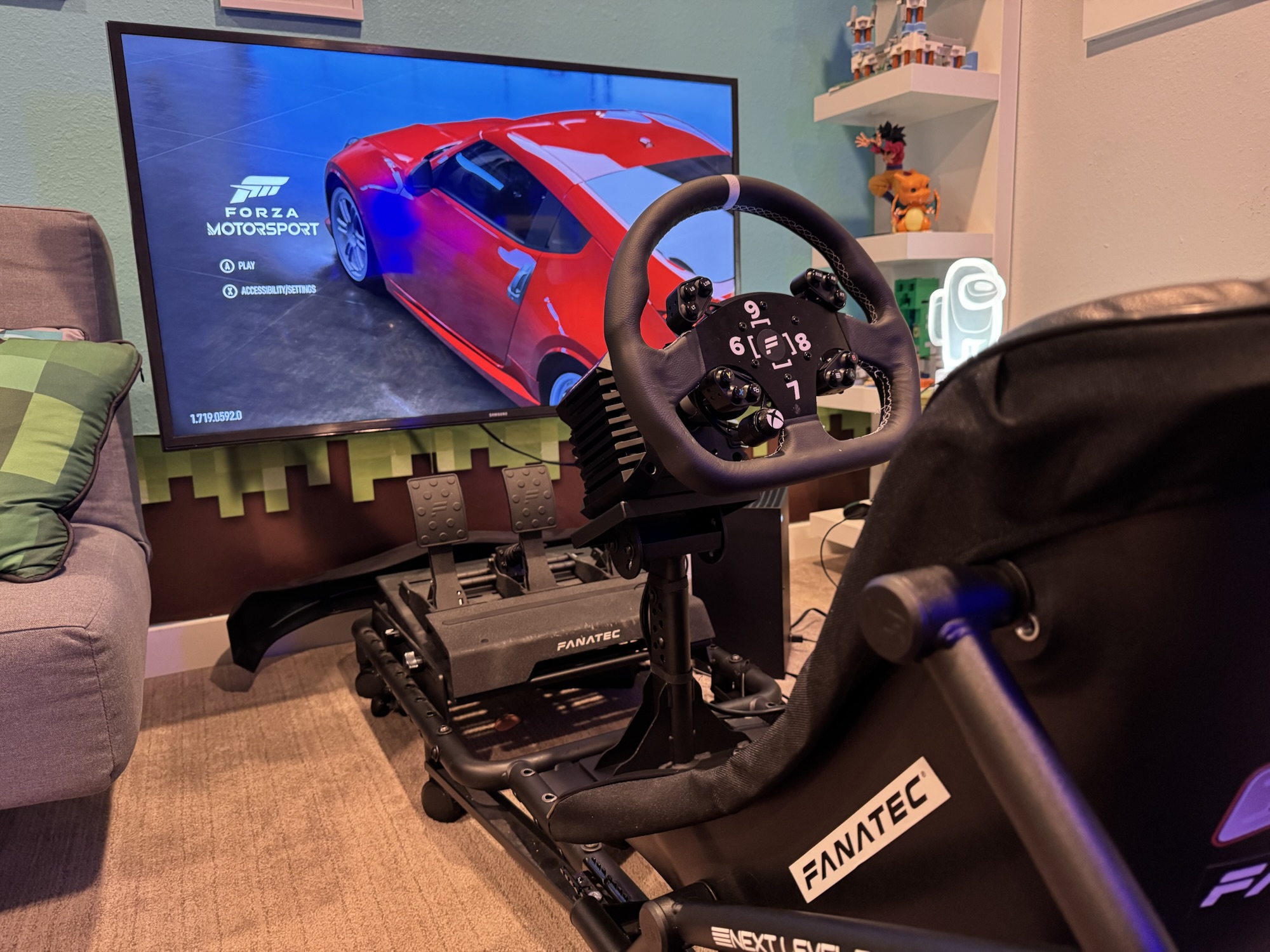
Below is the simulator setup we put in my son’s room:

  • We had an extra LG LCD TV around the house (wall mounted) – $0
  • Xbox Series X – $500
  • Fanatec CSL DD QR2 bundle w/Xbox and PC compatible wheel – $500
  • Fanatec CSL pedals – $300
  • Next Level Racing Go Kart Plus Cockpit – $500
  • Forza Motorsport – included in Game Pass subscription but base price is $60

Everything was plug and play. No drivers or software to install. Everything just works and you still have the ability to adjust wheel feedback settings within each game.

Note that unless you are for sure going to drive a manual car in real life, stick to getting a 2-pedal set. Since this is my son’s simulator (though I drive it a ton!) we haven’t gotten close to having him drive an H-Pattern shifter. The extra cost of the 3-pedal set was unnecessary.


How to Practice Effectively on a Simulator

To help our drivers develop real-world skills through simulators, we recommend following a structured approach with clear benchmarks:

  1. Master Consistency: Start by choosing any car and track combination. If there is one that you can drive in real life, pick that one but it honestly doesn’t matter much. Maybe don’t start with the Nordschleife at the Nürburgring due to the massive length of a lap. The goal is to complete at least 10 consecutive laps within 0.5 seconds of your fastest time, without spinning or crashing. This builds smoothness and precision.
  2. Progress to Career Mode Races: Once consistent lap times are achieved, begin participating in career mode races against AI drivers. This introduces racecraft, such as overtaking, defending, and maintaining focus in a competitive environment.
  3. Increase AI Difficulty Gradually: After completing 10+ races without incidents of your own making, start increasing the difficulty of the AI opponents. This challenges you to compete against faster and more skilled virtual drivers, simulating a more realistic race environment.
  4. Transition to Multiplayer Racing: When you’re consistently driving within 0.5 seconds of your best lap time and have completed multiple incident-free races against high-difficulty AI, it’s time to take on human competition. Join private or public multiplayer lobbies to test your skills against real-world opponents. There are some seriously fast simulator drivers all over the world so go in eyes wide open! Remember, your goal is to work on your skills for the real world, not to be a simulator racing champion.

Simulators are more than just games—they’re training tools. To get the most out of your time:

  1. Start Slow: Begin with easier tracks and lower powered/lighter cars to focus on fundamentals like braking and cornering.
  2. Learn the Racing Line: Follow track guides and in-game tutorials to understand the ideal line.
  3. Focus on Consistency: Aim for smooth, repeatable laps before pushing for speed.
  4. Experiment with Settings: Adjust car setups and difficulty levels as you improve.
  5. Use Ghosts and Replays: Analyze your laps and compare them to faster drivers to identify areas for improvement.

From Virtual to Reality: Bridging the Gap

While simulators provide invaluable practice, transitioning to real-world driving requires adapting to physical forces and sensory feedback – it’s real! But the habits you develop on a simulator—like the foundational driver inputs, spatial awareness, and car control —make this transition significantly easier.

Many professional drivers, including F1 and endurance racing, credit simulators as a vital part of their training regimen. Even for am’s, the benefits are clear: more confidence, better instincts, and a deeper understanding of vehicle dynamics for when you hit the track in real life.


Your Next Steps

Whether you’re using a simulator to prepare for your first track day or simply want to enjoy the thrill of driving from home, this is a fantastic way to develop your skills. In future posts, we’ll dive deeper into advanced simulator setups, track-specific tips, and how to take your virtual driving to the next level.

Ready to start? Grab your wheel, fire up Gran Turismo 7 or Forza Motorsport, and begin your journey toward becoming a confident and skilled driver—one lap at a time.

Posted on

Your First Step to Track Driving: Learning the Basics at a High Performance Driving School

One of the questions we spend the most time on around the shop and track is talking with people who are interested in getting into track driving but they simply don’t know where or how to start.  So we figured we’d share our knowledge and recommendations over a series of blog posts so that these are easily accessible to anyone, at any time. 

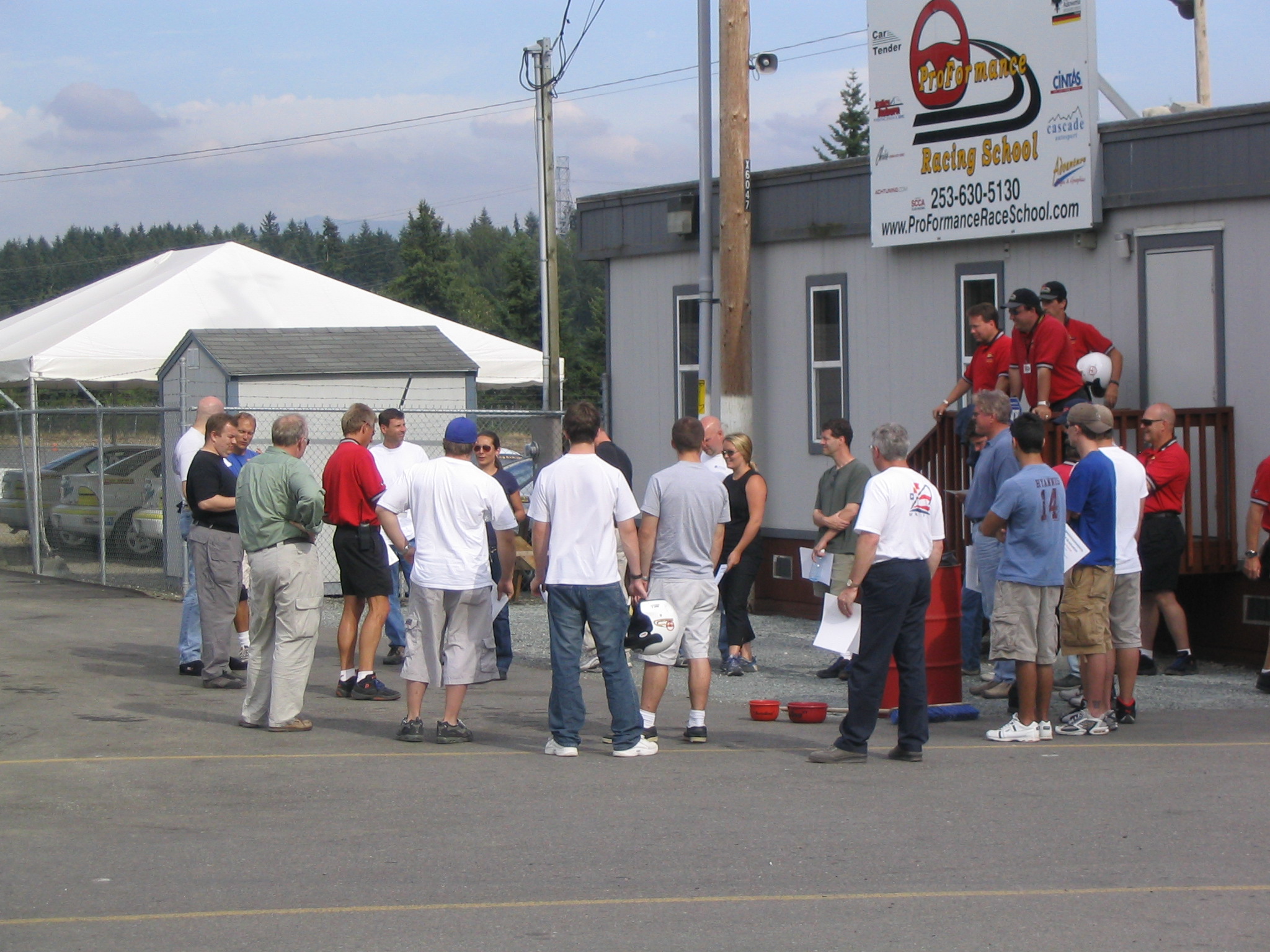
Track day drivers at ProFormance Racing School Track Day

For many aspiring drivers, the hardest part of breaking into high-performance driving is figuring out where to start. The idea of taking your car to a race track can feel daunting. What if you’re not ready? What if you don’t have the right car? What if you… spin out? The truth is, every seasoned racer once stood where you are now, full of questions and excitement. The good news? You’re not alone—and there are programs specifically designed to help you take that first step with confidence.

One of the best ways to begin your journey is by attending a High Performance Driving Education (HPDE) course. For example, ProFormance Racing School at Pacific Raceways in Kent, WA, offers a structured, supportive, and hands-on environment to help you master the fundamentals of car control and experience the thrill of driving on a race track for the first time. However, there are many similar high-performance driving schools across the country that provide a comparable experience tailored to beginners.

For those of you in the Pacific Northwest or willing to travel to the PNW, ProFormance isn’t just one of the best options on the west coast for an HPDE course because they are the home school for Pacific Raceways, but they legit have some of the best instruction and coaching available anywhere. Their team is made up of current and past active drivers who have climbed and hung on various steps of the racing ladder, all the way up to IMSA/SRO levels of driving.


What Makes a High Performance Driving School a Great First Step?

For most schools, car options are open, meaning you can either bring your own street car or rent a car from the school. Using your own car is entirely fine, as the focus isn’t on breaking lap records but instead on developing car control skills, awareness, and safety. Modern cars—even non-sports cars—have more performance potential than most drivers realize. As long as your street car has been well-maintained with healthy tires, brakes, and brake fluid, it’s likely ready for the track.

Additionally, formal schools like ProFormance Racing School emphasize the fundamentals of car control. These fundamentals are critical because a lack of solid basics can lead to bigger and more expensive mistakes when drivers exceed the limits of traction and don’t have the skills to recover. Learning these essentials early can save you from trouble later and set you up for success as you progress in your driving journey.

A high-performance driving school typically offers a one-day program thoughtfully split into two parts: a Skills Clinic in the morning and Lapping Sessions in the afternoon. Together, they provide a comprehensive introduction to high-performance driving that’s perfect for anyone—whether you’re looking to get into track days, time attack, or wheel-to-wheel racing.

Morning Skills Clinic: Building the Foundation

The day often begins with a classroom session where you’ll learn the essential principles of high-performance driving. This isn’t just a lecture; it’s an interactive session covering topics like:

  • Vehicle dynamics (understanding how your car responds to your inputs).
  • Skid control techniques (what to do if you lose grip).
  • Brake application (maximizing stopping power without losing control).
  • Vision skills (learning to look ahead and anticipate).

Once the classroom portion wraps up, you’ll take to the track for hands-on exercises. These drills are designed to sharpen your skills in real-world scenarios. You’ll practice emergency braking, skid recovery, cornering techniques, and more. The focus is on teaching you to think faster than you drive, making split-second decisions while staying composed behind the wheel. By the end of the clinic, you’ll have a solid understanding of how to handle your car in both routine and high-stress situations.

BMW E30 doing car control drills at a high performance driving day

Afternoon Lapping: Putting It All Together

After a morning of skill-building, the afternoon is all about applying what you’ve learned. With an experienced instructor riding shotgun, you’ll transition to full laps on the track. The focus shifts to flow and precision, combining your new skills into a seamless driving experience.

The instructors work closely with each driver to:

  • Refine your technique in real-time.
  • Help you develop a better connection with your car.
  • Build your confidence at higher speeds and in more complex situations.

The afternoon lapping session is not about going as fast as possible. Instead, it’s about smoothness, consistency, and control—the building blocks of any successful track driver. By the end of the day, you’ll have not only improved your driving but also gained a deeper appreciation for your car’s capabilities.


Why High Performance Driving Schools Work

The beauty of these programs is their approachability. You don’t need a race car to participate; a street-legal car in good condition is perfectly fine. The instructors meet you where you are in your driving journey, tailoring their feedback to your skill level. This ensures that every driver, from absolute beginners to more seasoned enthusiasts, leaves with valuable insights and improvements.

Another major benefit? Safety. These schools prioritize creating a safe and controlled environment for all participants. You’ll learn how to push the limits of your car without endangering yourself or others, which is essential for anyone planning to progress to more advanced forms of motorsport.


The Next Step: Earning Your Sports Driving License

Once you’ve successfully completed a one-day high-performance driving course, you’ll typically leave with what’s referred to as a “Sports Driving License.” While not an official license, this credential is widely recognized by track day organizers as proof that you’ve received foundational training in high-performance driving. With this license, you’ll be eligible to participate in track day events, often under the oversight of an instructor.

This is where the real fun begins. After earning your sports driving license, it’s time to sign up for track days. We encourage new drivers to attend as many track days as their schedule and budget allow. Why? Because practice is everything. The more seat time you get, the more you’ll hone your car control skills and build muscle memory for critical driving techniques. Think of it as applying the “1,000 hours of practice” rule—consistent seat time leads to significant improvement and confidence behind the wheel.

Sports Driving License? Unlocks driving at many track day organizer events across the country… in your own car!

Alternative Options for Practice

Not everyone has access to a race car, a track car, or the resources to participate in frequent track days. But that doesn’t mean you can’t continue developing your driving skills. One excellent alternative is using a racing simulator on platforms like Xbox, PlayStation, or PC. Games such as Forza Motorsport, Gran Turismo, Assetto Corsa, ACC, and iRacing provide a surprisingly effective way to practice car control, learn new tracks, race against the clock in time attack events and even race wheel to wheel against AI-powered drivers and real people all over the world. 

Sim racing is not just for fun; it’s a valuable tool for honing your driving instincts and mental focus. Many professional racers use simulators as part of their training routine and not just the incredibly expensive simulators. If you’re serious about improving but need a more accessible option, simulator racing is a fantastic next step. Stay tuned for an upcoming blog post that dives deeper into getting started with sim racing and how it can complement your on-track journey.

Can’t afford to do as many track days as you want? Get a simulator! Yes, even an Xbox or PlayStation 5 will work!

Step 2: Picking a Car to Drive at Track Days

Once you’re ready to take your driving journey to the next level, the question arises: What car should you drive in the future track days? This decision can range from using your daily driver to renting a fully prepared race car. Each option has its benefits and challenges, depending on your goals, budget, and level of experience. Stay tuned for a future blog post where we’ll explore these options in detail, helping you find the best fit for your track adventures.


Take the Leap

If you’ve ever dreamed of driving on a race track but didn’t know where to begin, a high performance driving school is the perfect place to start. Programs like those offered at ProFormance Racing School and similar institutions across the country will teach you the fundamentals of high-performance driving, build your confidence, and give you an unforgettable introduction to the world of motorsport.

Ready to get started? Look for a reputable high-performance driving school near you, book your first session, and take the first step toward becoming the driver you’ve always wanted to be. Trust us—once you’re out there, you’ll wonder why you waited so long.

Posted on

Avants Member Benefit – 15% Off Labor!

That’s right! Racer on Rails crew have been big fans of the Avants community for a while now and providing discounts but in 2022, we made it officially OFFICIAL!

What’s the deal?

  • Active Avants Members get 15% discount off all labor
  • $500 max discount for any single job
  • $5,000 max discount for a rolling 12-month period
  • That’s it! For reals!

What is Avants?

Do you like cars and car cultures? As in, you really like cars and car culture? You like hanging out, chatting and meeting up with other like-minded car nuts? Do you like those meetups to be legit and super cool events like dyno-runs, drives, car clinics, off-roading, photoshoots, track days, etc?

If you do, Avants is THE place to be, especially if you live in the Pacific Northwest – there’s a Seattle and Portland chapter.

With events going on almost literally every weekend, there’s no shortage of fun times with the Avants Community.

I’m an Avants Member! What kind of work can you all do for me?

Racer on Rails works on everything starting from high-performance street cars and up to fully dedicated track and race cars.

Normal daily drivers are awesome but there are many other places to give them some love. Below are some of the things that Racer on Rails can help out with:

  • Pre-purchase inspection of a track or race car
  • Pre-track day/race weekend inspection and nut/bolt
  • Alignments and full competition setups
  • Complete fabrication and chassis prep for roll bars and competition cages
  • General maintenance and repairs for track and race cars
  • Install of high performance power bolt-ons and suspension upgrades
  • Complete brake service and upgrades
  • Maintenance and support of factory based race cars
  • Full arrive and drive support with your own car or one of our race cars
  • Something else? Get in touch – if we can help, we’re on it and if not, we’ll help find the right path for you!

How do I get my car scheduled and my discount?

Email us at raceronrails@gmail.com, call the shop at 206.475.1114 or shoot us a message on Facebook

Posted on

Getting an FIA racing license

So you want to go ‘Pro’ racing?  Or maybe you want to have the license that gives you access to every regional sanctioning body in the US? Odds are, you’re going to need more than the regular regional racing license.  And if it is international competition, you’ll very likely need an FIA (Fédération Internationale de l’Automobile) racing license.  For the Creventic 12 hours of Imola race, that’s exactly what was needed, so here is what that experience was like.

What’s different between an FIA and a national/regional (e.g. SCCA/NASA/ICSCC) type license?

One major thing: FIA licenses are for experienced racing drivers, not just accredited racing drivers.  For just about all other racing licenses, you need to prove that you’ve completed a [insert level of quality here] racing curriculum.  You need not have actually completed many races or been ‘fast’ to get an SCCA, NASA or for me personally, ICSCC racing license.  This level of training shows that you have a base level understanding of race car dynamics, how event is organized, what the flags mean and how to be safe on-track.

From the application process for FIA, they have a higher bar.  They are looking for some level and amount of experience.  They want to know who you are as a racing driver, via the driver biography.

The second thing is the general global acceptance of the license.  At least within the US, if you have an SCCA license, it will be accepted at various levels by other sanctioning bodies.  SCCA being the most widely accepted, NASA following closely behind and more regional licenses also being accepted but having to provide more proof the further outside the region you go because there is a lower probability a licensing director has heard of the regional body.

Bottom line: When you have a valid, in good standing FIA license, you can pretty much race anywhere in the world.

How to get an FIA license: Step by step

Step 1: Collect these pieces of information before you start the application process

  • A passport compliant photograph of yourself.  It doesn’t need to be exactly a passport photo but must follow the general rules.  Here is a link to the United States passport photo requirements.
    • I used a head-shot from a photo shoot at work, cropped to be 2×2 inches or 51x51mm.  Make sure it is saved in .jpeg format for best picture quality.
  • A racing biography.  This was a little confusing as there is no standard template.  So I simply created a ‘resume’ style biography of my driving.  I’ve included a PDF copy of that below for reference.  It needs to cover things like how long you’ve been racing, what organizations, how many races, finishes, etc.
  • A current copy of a medical exam form for racing, that was completed in the past 3 months.  The FIA also does not provide a template, so I used the medical exam for used for an ICSCC competition license and that worked just fine.
  • Your credit card to use for payment.

Step 2: Go to the US FIA Licensing website and fill out the application

  • Application link for United States based FIA licenses
  • Fill out the form.  The first section is your personal details.
  • Select ‘No’ for Have you had a previous FIA competition license.
    • Select and upload your racing driver bio document.  PDF format is your best bet.
  • The second section you should select ‘Competition License only’ and yes for the additional fee for International Competition Authorization.
    • Select Grade ‘C’ unless you are driving a GT3 race car or higher.
  • Upload your passport style photo and completed medical exam form.
  • Check the waivers and acknowledgements.
  • Click next

Step 3: Pay the fee

Yes, this is expensive and resulting in almost $500 USD.  The positive side is that this should be the only license you need if you compete in US national and regional club racing competitions.  You might still need to pay a guest fee of some sort but that’s it.

You will get a confirmation screen and document which outlines everything and even provides a handy QR code to track the progress of your application.

Summary: Simple and straight forward

I personally did not request the expedite service and in under 2 weeks, I got the license in the mail!

My license to kill… tires and lap times!

From the moment I first clicked on the link to apply for the license, to when I got the license in the mail was about 1.5 months.  This was because I had to ask questions about what does a racing bio look like?  What medical form should I use?  Then I had to make and get to a doctor’s appointment, of which was a little hard because work-life and life-life has been a bit crazy.

But overall, if you’re looking to do FIA sanctioned competition its not a difficult process to get through, especially with this guide.  😉

Let us know how it goes for you?  Did you have a different experience?  Have you applied for a B or an A license?  Share other driver bios!


Posted on

Pad Knock-Back for Drivers: What is it, how to anticipate it and how to best clean up your undies!

It was August 2015 at Portland International Raceways – the second time at Portland of the year, running the chicane configuration.  It was the second year with my BMW E30 PRO3 race car and this year, was sporting a fresh engine, baller status OS Giken rear-slip LSD rear differential and a fresh exterior paint job.

On the second session of the day, I am feeling good and starting to get into a groove.  Come off turn 7 into the back-straight away, hammer down… 4th gear… 5th gear… BRAKES, hit the FIA curbing on the left, downshift, back to throttle… BRAKES!!!  I said BRAKES!!!  OH $H!%!?!?!?!  No BRAKES!!! Grass… sliding… spinning… no, please no wall!!!  Pump the brake pedal again… oh, brakes!  They work!  I’m alive!  The car isn’t destroyed!  But WTF just happened?!?!?

This is the infamous pad knock-back zone at PIR

What is it?

Pad Knock-back is when for various reasons, the brake pad loses contact with the caliper piston that presses the brake pad against the brake rotor/disc.  The contact is lost for one of two reasons (below) and the result is that the driver goes to apply the brakes and the pedal falls to the floor, with little to no brake pressure on that first application.  The brake system is moving the piston but the piston lost contact with the pad, so it’s moving air and slowing down nothing.

As soon as the the driver releases the brake pedal and pumps the pedal again, the pressure usually returns and the brakes work again.  The problem is that sometimes drivers don’t realize what has happened and don’t hit the brake pedal again, that second time around at all or in time.  And bad stuff can happen when you need to hit the brakes but they aren’t there.

How and why #1: Worn out caliper components

Caliper components live a hard life, especially on a race car.  They are called on to not only slow the car down aggressively with degressive braking but also help the car rotate with long durations of trail-braking.

All of this hot and cold and hot and cold and hot and cold… action makes seals burn up, brake fluid overheat or even boil if it contains water or air bubbles and the metal components deform and lose their snug fit amongst the other brake components.  According to this great and much more technical deep dive analysis from NASA Speed News, even a slightly deformed rotor can cause the pads to separate from the pistons and the pistons to fall deep into their bores.

The fix? Rebuild or replace your calipers at least.  For us, this quickly fixed the problem.  On that first experience, we had back in August of 2015, we bled the brakes and went out for a 1 Hour mini endurance race – the brakes felt better but were still getting knock back every lap before braking for turn 12.

Before Sunday AM qualifying, we sourced a new set of calipers from Advance Auto Fabrication (who also did all of the off season upgrade work), got them installed and presto!

Putting the finishing touches on new calipers for the weekend at Portland International Raceways

Pad nock-back was gone! Over the subsequent years and travels to various tracks we realized that PIR uniquely had the most FIA curbing of all the tracks on our schedule. If a set of calipers had more than 3 race weekends on them prior to heading to PIR, we’d slap on a new/rebuilt set of calipers.

Here is a video of a competitive race at PIR – note the use of the FIA curbing towards the end of each lap (turns 10 – 12):

YouTube player

How and why #2: Driving hard on the curbing/gators

You might have fresh brake components but if you’re driving hard, eating up apexes and letting the car track out, odds are you are driving on the curbing, if the track has them.

Tracks have a variety of curbing designs but the end result is almost always the same, they cause vibrations that can and do shake up brake components – pad knock-back! This is so common that if you were to watch any pro-level sports car racing on TV or online, you’ll see brake lights light up as the cars are roaring through straight-aways. The drivers aren’t brake checking or trying to confuse a trailing opponent. They are lightly tapping the brakes to get the pistons seated back next to the pads and ultimately, make sure they have a brake pedal.

This is part of what happened to us in Portland in 2015 and just about every other time we went back. But this past June of 2017, we were at Spokane County Raceways, who does have apex and exit curbing.

Here is a pretty fast qualifying lap at Spokane County Raceways.  Note the elevation chart – it shows that it is pretty flat but if you listen closely, each of one those changes in elevation is going over a seam in the road.  Each of those bumps plus the curbing result in harsh vibrations applied to the braking system.

YouTube player

We’ve been there twice before this, all have been 3-4 days of being on track and not a single issue.

Well this year, we were competing for pole and wins – nearly breaking the track record for a PRO3 car on Sunday AM qualifying. Sunday afternoon, final race of the season – qualified 2nd and was ready to make a great start and pull away.

Coming around the final turn and… GREEN FLAG! Full throttle in 3rd gear… I got a decent start and I have the inside for turn 2. Exit of turn 2 and in the lead, barely positioning myself for the outside of turn 4. Full throttle… 3rd gear… 4th gear… 5th gear… wait for it, wait for it, wat for it… BRAKES! NO BRAKES!?!? WTF is going on? I don’t want to die!

Note – Spokane is an old school track. High speed, built on a budget and in the high desert of Eastern Washington. The pavement nowadays is good. Not great, not horrible – but good. Stay on track with maybe a dropped wheel here and there, and everything is good. Go on an excursion, there will be pain. There are big rocks and boulders watching the action, waiting for a visit.

I was able to pump the brake pedal and luckily – this was the first lap of the race. We were still in traffic with faster cars so we weren’t going at full speed for that corner, which is usually a 4th gear corner.

We’ll update this post later on with the video from the race but what does pad knock-back look from a data standpoint?

An not annotated version of the pad knock-back session

Here is what is really happening on the lap

A few positions were the only thing lost in this occasion but it hammered home the lesson, always pump the brake pedal in between braking zones.

What should you do? Pump that brake!

The more I’ve been racing and steadily improving, getting closer to the front of the pack, stuff just keeps breaking or getting tweaked.  It’s a natural consequence of just pushing the equipment to the limit.  The braking system is not just the most powerful system on road racing and street cars, but it is the thing (and how it’s used) that separates the good from the great and the great from the greatest.

If you watch any form of pro-level racing, even NASCAR, you’ll see the drivers pumping that brake with their left foot because pad knock-back and other potential failures are a fact of life.  It happens all the time, so from now on, assume it will happen every time you go on track, every lap and on just about every braking zone.  PUMP THAT BRAKE!

YouTube player

Posted on

I crashed: HPDE Edition

What: The very first time I crashed, which happened to be an HPDE road trip/event.

If I knew then, what I know now:

  1. I would have actively sought out training on how to handle “going off track.” Going off track is not a bad thing inherently and will happen. Handling it properly would have saved me a ton of money.
  2. Had a HANS or NecksGen device: the impact was a classic sudden forward neck movement, with a concrete wall.
  3. Reinforced that in motorsports, even recreational – if you’re competitive (I am) it’s not if you will crash, but when you will crash.  How are you going to move forward?

Things you should check out:


The car: 2006 Mitsubishi Lancer Evolution 9 GSR

This car, was technically, my wife’s car. A few years prior, I had decided it was time to get back into ‘car game’. It was about 3-4 years from when I had graduated from college, had paid off my student loans and bought a house. Prior to college and for some time in college, I was active in ‘modifying’ street cars.  But after several cars, experiments, blown engines and essentially sunk money, I bought a 1999 Ford Contour SVT (black), which had an aftermarket exhaust, broken sun-roof and called it good.  So I thought.

Fast forward to 2011 and we had a heavily modified (and unnecessarily) 2008 Subaru WRX STi (mine) and a 2006 Mitsubishi Lancer Evolution GSR (my wife’s).

Soon after we bough a house, we had an STi and then an Evo 9. This was in 2008, maybe 2009 but not sure why the pictures look like it was in 1988 or 1989.

Yes, we did car shows and here is my wife claiming a prize for best something. Oh the shame…

Proof from the car shows…

And we even did photo shoots. Oh, the double shame!!!

I slowly took over the Evo because I had gone too far with the STi, making it not track-capable.  With an upgraded turbo and 400whp, it was too much car for to handle and very likely wouldn’t make it a day or two without over-heating or blowing up as EJ25 engines were and are notorious for not liking even mild track sessions.

I’ll be writing a car profile post and update this article later on, but in terms of specs, it had the basic bolt-on’s, a tune by Cobb Tuning, a harness bar, some gauges, upgraded brakes (lines, pads and rotors) and I removed the rear seats for “weight reduction.”  😆  Functionally, it allowed space to bring alone a full set of track tires/wheels, a jack, jack-stands and pretty much everything I needed for a track day.

My experience thus far: Intermediate run group, on the cusp of Advance

This was the first year that I had decided I was done with simply modifying cars and hard-parking.  I had taken an HPDE full-day event the prior November and the bug had bit.  I had spent that entire spring and summer, attending track days and this was also the first year a friend and I had started developing Track Attack.  Each time we went out on-track, it was not only fun but a chance to test and improve Track Attack.

At the time, I had somewhere around 8-10 track days, without any real incident; a spin here and there.  Generally, I felt quite ‘seasoned’ by the time this trip came around but by no-means did I feel fast.  I had also done a couple autocross events and had decided that was not my path.  Nothing wrong with Autocross but all that standing around, with no practice runs and for at most 4 under 60 second runs (of which I sucked at all of them) – I was OK sticking with track days.  🙂

YouTube player

The setting: A three-day track day road trip (Portland International Raceways and Oregon Raceway Park)

Most of my track days were with either ProFormance Racing School or The Ridge Racing School (now the majority of their events run by Turn 2 Lapping).  Each year, ProFormance racing school would organize a ‘road trip’, hitting Portland International Raceways for two days and Oregon Raceway Park for another two days (Thursday through Sunday).

I was excited and intimidated a little about Portland, mainly because it had the ‘International’ in the name – implying, at least in my head, the more professional and potentially hard aspect of the track.

The back-straight at PIR getting some instruction and likely told I suck.

Coming off Turn 12 at PIR

Holding up traffic in the Festival Chicane

The first two days at Portland went great!  I had hired an instructor for the first day at each track, to help guide me through the track as it was my first time at each.  At the end of the day on Friday, we caravaned over the mountain range.  I stayed with a friend (Robert) I had made in my modifying days, that was a Shop and History (I think) teacher, in The Dalles, OR.  He was/is a big car guy and had just gotten into Evo’s and was gracious enough to let me stay at his house.

That first day went really well and aside from frustrations with the Track Attack app (no cell phone reception at all) was ready to get back to the track and make some serious gains on my lap times.  That Sunday morning, Robert came out in the AM and we were able to give parade rides, which was fun to show him around the track.  Once he left, it was time to get back on it.

What happened

It was what would have been the second to last session of the day.  I forget my exact lap times, but I want to say they were in the 2:10-2:15 range, of which looking back on it now, is well below the abilities of that car.  I honestly don’t recall having too much of a structured learning or driver development plan, so I was pretty much just lapping around “trying to go faster” but no real thing I was actively or consciously working on.

Oregon Raceway Park is an incredible track, with lots of rolling hills, blind corner exits and no real long straightaway, giving little time for brakes to cool down or a rest for the driver.  It is ran primarily in the clock-wise direction, though it is regularly run counter-clockwise.  It’s out in the middle of nowhere, high central desert, Oregon, where if you go off, there really isn’t anything to hit.  Generally, go off, pick up small rocks and dust – come back into the paddock, clean and vacuum your car and you’re back at it.

Except one section: Start/Finish main straight with a wall

Check out this video of one of the best club racers (and drivers in general), Cody Smith in a race at ORP.  You’ll see that right at the last corner, there is a wall that protects the hot-pits.  The only real place to get in trouble here is that wall and that’s what I learned.

YouTube player

You see what happened at 2:32 mark?  That’s exactly what happened to me. 

On what would end up being my last lap for that weekend, I was coming up on the final turn, I braked, turned but turned in too early and probably too lazily.  As I started exiting the corner, was on throttle but noticed I was going to run out of road and I lifted.  🙁

Off-Throttle Oversteer: Engaged

Not sure if the car actually dropped a tire but the rear end whipped around and next thing you know, I am sitting there, staring at a wall and corner workers running over to me.  I then look to my left to see if any other car is going to collect me and this awesome green E36 M3 purposefully goes off-track, along with a nice 370z.  No damage to them, aside from a dusty car.

Within 10 minutes, I’m out of the car, physically fine and am able to limp the car back to the paddock, where front end is pushed in a few inches, the Seibon carbon fiber hood latch is broken but that’s about it.  If it weren’t for the leaking radiator, I might have even tried to drive it home.

The aftermath

First, I have to thank Don Kitch Jr on how calmly he handled himself (not having been his first rodeo by a lot) as that helped calm me down.  I had recently started working with English Racing, in Camas, WA and made the call to see if I could have the car towed to their shop, so they could take over assessing and fixing the car.

I also called my insurance and told them I had run into a mechanical issue while on a road trip and needed a tow truck.  With no approved partner within 100 miles, they allowed me to use the local tow truck provider (a story for another time) and I had the car towed to English Racing, with me going along for the ride.  Myles Kerr (Gringo Integra) was incredibly awesome, meeting me at the shop (I think they were actually there anyway) and giving me a ride to the local airport, where I picked up a rental car and drove home.

At the end of the day, the damage wasn’t bad at all and the learnings were great.  The majority of the front end needed to be replaced (front bumper cover, lower lip, radiator support, radiator, intercooler, headlights [I think]).  The rest of the body parts were repairable and while it was at a body shop, I had the body shop massage all of the fenders so I could easily fit the 275/45/17 rubber I was running without rubbing and had English do a full mechanical evaluation, tune-up, install a new TRE rear differential, bigger injectors, new fuel pump and a new tune, bringing the power to 334whp and 276ft/lb torque.

YouTube player

The Dark Side

I’m not gonna lie, I had some dark thoughts in the first 24-36 hours after the incident.  Even before I got out of the car, staring at the wall, I thought to myself – “What the hell am I doing?  This isn’t for me.  I’m not good at this and I can’t afford this.  Did I just financially ruin us?”

The scariest thoughts were those “this isn’t for me and I’m not good at this” thoughts.  I had already heard from Don and other experienced drivers that crashing on-track isn’t a question of “if but when” it will happen.  And multiple “when’s.”

Luckily (or maybe not), I’ve had a history of dealing with thinking and being told that certain things weren’t for me and that I sucked at them.  In most cases, I’ve been stubborn and hard working enough to prove others and myself wrong.  So it took some time, but I consciously decided that this incident would not hold me back.  Motorsports and specifically, being the best driver I could possibly be was something I wanted to be a significant part of my life.  So I picked myself up, dusted off, fixed my car and got back it.

At ORP a year later and more than 10 seconds faster than the prior year.

Posted on

My track car – 1987 BMW 325is

What: My track car – 1987 BMW 325is

If I knew then what I know now:  not a lot… have a larger budget.  My track car has evolved as I feel I have needed at a rate that has been on a equal plain as my skill.  Could use a little more power now……

Check out:  Any of your local track’s and driving schools!


Early days of my track car.

My track weapon of choice is a 1987 BMW 325is. I bought it in 2007 with the idea that it would become my track car. It is what i wanted in a track car, it was in my price range, it was the color I wanted, it was well maintained by the previous owner, and all the work done on the car was at the company/shop I was working for at the time. the only thing it didn’t have was the small plastic late series bumpers. Not to sound snoody but I could look past the bumpers as that was the only bad mark I could come up with when looking at the car. At first i was also going to drive it on the road as well. Well that lasted about two weeks and a car with a bunch of good track race parts that had been wrecked in the guys driveway by a drunk driver became available. This was going to help my rack budget out very much that year. By the time
I had got my parts car home and used what i wanted and parted the rest, I was onto my car pretty cheap. And it had some good stuff at this point. The first parts push ended up with a full Ground Control coilover set, Treehouse Racing front control arm brackets, a set of SSR Comp wheels with Falken rt-215 tires ( in the day one of the top street tires), a new set of stainless brake lines, a low miles E30 M3 4.10 limited slip diff, a set of Powerflex subframe and rear trailing arm bushings, a Momo steering wheel hub adapter, and a new OEM set of euro head lights and grills and a pair of Bride sport seats. I added a set of brake pads, a steering wheel, and a pair of harnesses i had picked up a year or two before on sale. All these ended up costing about $1500. Like I said my track budget looked good that year. others have cost a bit more.

It still had some style at this point.

At this point I would say it was still a street car. It still had a back seat and carpet and a radio. I drove it like this for a couple months, but the track bug kept calling. So soon later I found a real race seat. No more reclining. This did now mean I was going to need to look into some sort of roll over protection as I had now defeated that safety measure. I did a lot of shopping and research about fit, style, cost, shipping, availability ect. The one that went in the car was made by a company called VSROne. It had the best clearance and fit in the car. It was not the cheapest option but for sure one I was OK with paying for. Remember I am not a fan of that compromised safety thing. So now the radio has half its speakers, there is no rear carpet or side panels anymore. The seat is in a fixed position. There is scaffolding in the back of the car. but looking forward from the drivers seat it could play the street car part for now……

And out goes the rear seat.

A couple events into the life there was a thirst for more cornering load. Need to find some tires. Lucky for me there is a local race series that runs a similar car to mine and they tend to go through a lot of tires. So after a little hunting I acquired some real track rubber. in this case early on it was Toyo RA1 tires. These are great tires! They last along time, they can take many heat cycles, they made a lot of sizes, they are one of the cheapest track tires around. If they were still in production I would still be on them. Anyway, now I got some rubber and the car is pretty good. Springs in the car are now a little soft, I can feel the car hitting bump stops and floating a little on the grippy tires. The car already had pretty stiff springs. It was a bit stiff for the street, but not to bad. Front springs were rated ant 375 lbs/ in and the rears 475 lbs/in. At this point I had been working on a few Pro3 cars and had learned a few things. I almost doubled the spring rate of the car. Went to 650 lbs/in front and 800 lbs/ in in the rear. This was the next level of feel I was looking for at the track. Man is it stiff. Think of driving a skate board. So in making the suspension on my car up to track use I ruined the street ride quality. Not the best street car anymore.

Gripped up at Portland.

Then there was the day I killed the carpet. Was still daily driving the car at this point when almost home from work the heater core blew a end tank and sprayed the entire left side of the carpet with coolant. For me at this point the decision was easy. Yank that smelly coolant soaked carpet out! All the rear was already gone so why not. The heater core fix itself is pretty easy, but the mess was amazing. couple issues I found with no carpet. The car is super loud, the passengers feet can get a bit warm, and I had no place to rest my foot when not on the clutch. So I built a dead pedal for it and that is all I reinstalled. Screw the passengers feet, and I can deal with a little noise, because racecar. Speaking of noise. I have had at least five different exhausts on the car. I bought it with a Dinan muffler, I killed that one looping turn 6 at Pacific Raceways in the rain. Then the custom Magnaflow cat back, this was great until I smashed it beyond repair at a PGP Time Attack on the rumble strips back when you could do that. Then I scored a IE stainless that was on the car for maybe three days, it was way to quite. I then built a Meghan racing muffler catback out of some spare parts. Didn’t look that cool but it was cheap and it worked. This was on the car until it was no longer driven everyday. It now has a pulse tuned equal length header and a flow matched exhaust built by the now closed Volvo custom shop RSI (R-Sport International) when they were developing a Pro3 race exhaust system. The sound on this is amazing but its is on the very loud side.

This is a street car still?

So now I have been tracking and driving this absurd track car that I have convinced myself is still a street car to the point that it has worn out again. The shocks are all worn and the fronts are dead. DEAD. All the rear suspension bushings, rear wheel bearings, the drive shaft, and a couple other normal maintenance items. So as you should do with any track car i went through and replaced all worn items i found again. I also took this opportunity to think about things I would want to change and the largest one I could come up with was the the shock travel. The car always felt a little held back by the shocks. The valving in them was set for a way softer spring combo, the travel was near the bottom of the shock stroke and they seemed to bottom out a lot because of this. So after much deliberation I got a set of BC Racing coilovers. you can order them valved to specific springs and come with some pretty good hardware. I got a set valved to the springs I had, and because I had springs I had them ship me a softer set (These will be used in another car). I did have to weld the strut tube to my spindle but that is something well in my comfort zone. Once installed and set and tested, I was able to get the result out of the car i was looking for. if felt way better on track, the shock adjustments are now felt, the cat doesn’t bottom on the shocks and they are running in there normal stroke range. I also again made another safety up date at this time. I removed the old race belts and my trusty Sparco race seat and installed a new set of Hans device compliant belts and a Momo head restraint seat. Also upgraded the passenger side belts from 5 pt to 6 pt. Again you can never be to safe.

Wooof!

The look of the car was also something that needed a update. Wheels and tires are getting long in the tooth so lets start with that. We are gonna put a little larger tire on it as well. So off come the old trusty 15×7 wheels and 225-50/15 tires and on go the new Roto 17×8 wheels and the same Toyo tire in a larger 235-40/17. This has created a new problem. The slightly larger size is now hitting the bumper trim and stop the tire. Bring on the fender roller. Little work there and they are in! Thats pretty up to date on the car as of this blog. Still on this seasons update list is a set of Massive Brakes big brake kit and a Diff limited slip unit rebuild. then next season the removal of the old roll bar and sunroof and the installation of a roll cage and clean up the interior wiring. Stay tuned in!

Bonus action shot!