Posted on

More Than a Race Weekend: Competition, Development and Community at the 2026 IRDC Summer Classic

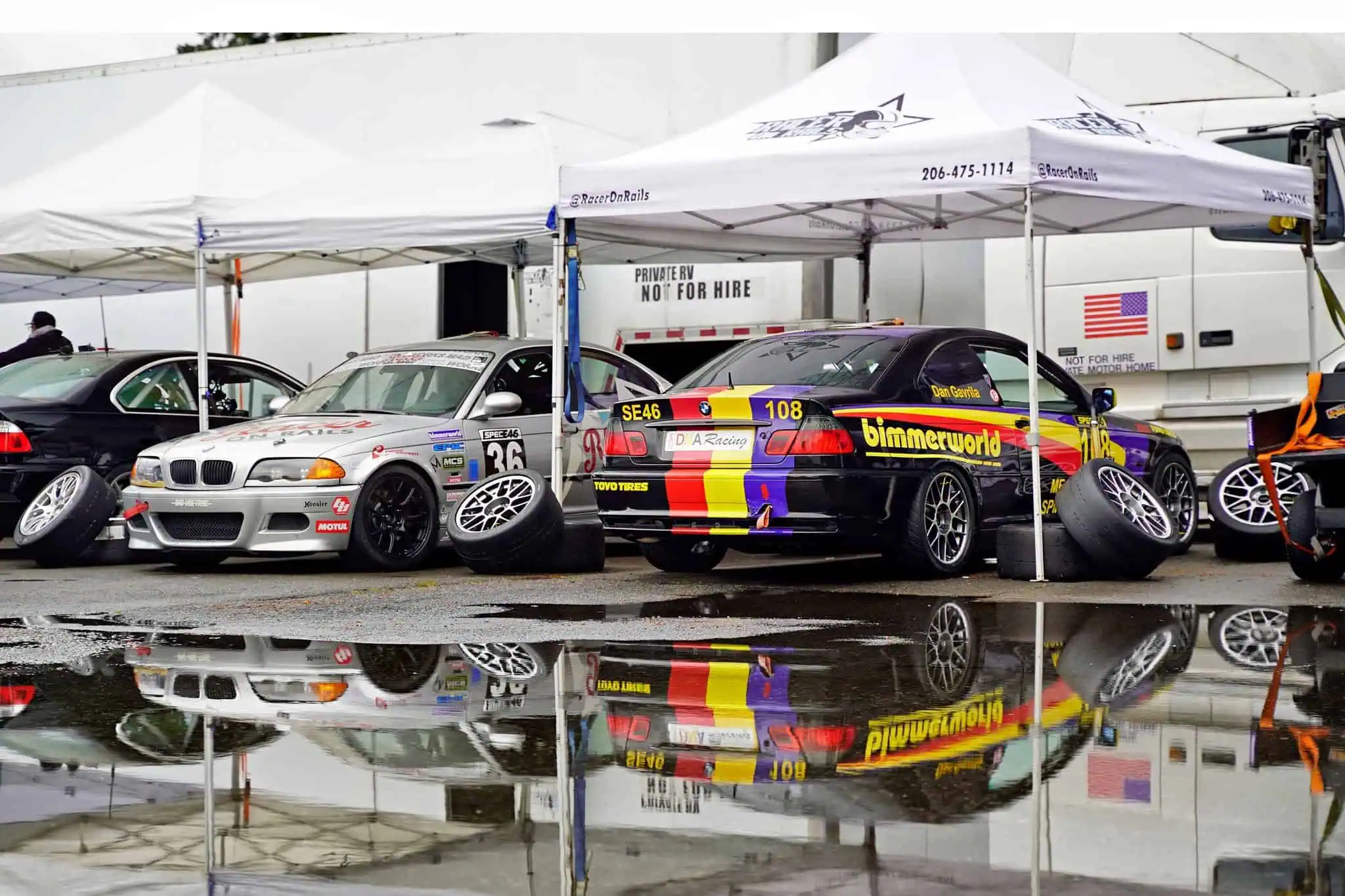
Racer on Rails-supported Spec E46 BMW race cars beneath paddock tents, reflected in rainwater at Pacific Raceways.

The IRDC Summer Classic is not just another race weekend at Pacific Raceways.

IRDC’s May event can produce excellent racing, but spring in the Pacific Northwest always arrives with an asterisk. Cold temperatures and rain can thin the entry list, scramble preparation plans and turn the weekend into an exercise in weather-radar interpretation.

The Summer Classic, traditionally held in late June or July, carries a different energy.

Good weather is never truly guaranteed around here, but the odds are much better. The fields grow, the paddock fills and the competition becomes stronger. It is one of the cornerstone events on the International Race Drivers Club calendar and, in many ways, the weekend when the local racing community is most fully assembled.

The 2026 Summer Classic took place June 26 through 28, with Friday testing leading into two days of qualifying, championship races and a one-hour mini-enduro on Pacific Raceways’ 2.25-mile road course. The event was held under the umbrella of the International Conference of Sports Car Clubs, the Pacific Northwest sanctioning body commonly known throughout the paddock as Conference.

For Racer on Rails, the weekend became a concentrated example of nearly everything we are trying to build.

We supported drivers fighting at the front of Spec E46. We helped another driver make systemic progress through coaching. We introduced a new novice to wheel-to-wheel competition. We kept Stefan Tomalik race-sharp while his own car was being prepared for GRIDLIFE GT competition. We welcomed NASA Northwest’s Jay Perry to Pacific Raceways for the first time and watched him progress from learning the circuit to winning on it. We helped Ellen Porter and Mathieu Martin fit racing into the realities of careers and parenthood. We supported more than half of the Spec E46 field in one form or another.

Then, after the engines went quiet, we partnered with Racecentric to bring racers, volunteers, tuners, time-attack competitors and automotive enthusiasts together at the Racer on Rails facility.

It was more than a race weekend.

It was competition, development and community sharing the same piece of pavement.

A Difficult Start to the Weekend

Saturday morning’s qualifying session provided an immediate reminder that even the Summer Classic can retain a little Pacific Northwest unpredictability.

The track was mixed and drying.

Everyone faced the same decision: wait for the surface to improve, choose wet-weather tires that might quickly overheat, or go onto the circuit with dry tires and accept that parts of the lap were not ready for them.

Most of the field chose dry tires.

The front half of the track was beginning to develop a usable line, but the back side remained damp in places. That mattered because the moisture was concentrated around the part of Pacific Raceways where drivers least want uncertainty: Turns 5A through 6.

That sequence is fast, committed and unforgiving. The car becomes light as the road falls away, the walls feel increasingly close and a driver must trust that the grip waiting on corner entry will still be there when the car reaches the apex.

Damp patches in that section are not merely inconvenient. They change the entire risk calculation.

Everyone had to balance the same questions. How quickly was the track improving? Where was the remaining water? How much commitment was justified when conditions could change from one corner to the next?

No risk, no reward.

Stefan Tomalik navigated the conditions with a 1:38.551, taking the top Spec E46 qualifying position. Dan Gavrila followed with a 1:38.645.

After an entire lap of changing grip, the difference between them was only 0.094 seconds.

It was an early indication that the two of them were going to spend the weekend operating in the same narrow window.

Keeping Stefan Race-Sharp

Stefan has spent much of the season rebuilding his BMW M3 for GRIDLIFE GT competition at WeatherTech Raceway Laguna Seca in September.

Preparing the car is only one part of that project.

The driver also needs preparation.

GLGT will place Stefan in a fast and varied field, surrounded by cars that generate lap time in very different ways. He will need to manage traffic, adapt to changing situations and make good decisions while racing against unfamiliar competitors.

That cannot be recreated through casual track time alone.

The best preparation for racing is racing, especially against people who demand your best.

For the Summer Classic, Stefan returned to the Racer on Rails Silver Bullet in Spec E46. The goal was to keep him competing, keep the decision-making muscles active and measure him against some of the strongest club racers in the region.

Dan Gavrila provided exactly that benchmark.

Dan is exceptionally fast at Pacific Raceways. He knows the circuit intimately and is capable of extracting pace from the car almost immediately. Stefan’s ability to qualify within a tenth of him in difficult conditions was impressive, but Saturday’s race would require something different.

Qualifying rewards the fastest individual lap.

Racing rewards the driver who can keep doing the work while managing traffic, pressure, tires and the changing behavior of the car.

Stefan converted the mixed-condition pole into a Spec E46 victory.

According to the official Saturday race results, he completed 17 laps with a best time of 1:31.346. Anthony Lo finished second, Dan third and Matt Dawson fourth, putting four Racer on Rails-supported or managed cars into the first four positions in class.

The strength of Stefan’s race was not limited to one lap.

The Saturday lap chart showed him repeatedly operating in the low 1:31s, 1:32s and 1:33s, continuing to apply pressure without allowing the quality of his driving to unravel.

That ability to repeat pace is essential.

A driver preparing for a larger, more unpredictable competition environment does not need a single firework of a lap. He needs an entire box of matches.

Sunday morning shifted the order.

With a dry circuit, Dan qualified on the Spec E46 pole with a 1:31.239. Stefan followed at 1:31.574, just 0.335 seconds behind.

Charles Beach qualified third at 1:32.197, while Anthony’s 1:32.199 left him only two thousandths of a second from the second row. Matt followed at 1:32.923, according to the official Sunday qualifying results.

The stage was set for another battle between Dan and Stefan.

Unfortunately, a mechanical concern that had been following Dan’s car throughout the season finally caught up with it.

The engine had regularly produced blue smoke on startup, suggesting that something inside was no longer entirely happy. Dan remained fast despite the warning signs, but the problem ultimately developed into a head-gasket failure and engine damage.

Even with the car deteriorating, Dan recorded a 1:32.031 during Sunday’s race. The speed remained, but the machinery could not carry him through to the finish at the front.

Stefan could.

The Sunday race results showed Stefan completing 17 laps and earning his second Spec E46 victory of the weekend, finishing 15.341 seconds ahead of Charles Beach.

Anthony placed third, Matt fourth and Wes Griffith seventh. Dan was classified eighth after completing 15 laps.

Stefan left the Summer Classic with two victories against serious competition.

More importantly, he had spent the weekend practicing exactly the kind of driving he will need at Laguna Seca: adapting to changing conditions, operating under pressure and delivering pace repeatedly rather than occasionally.

Anthony Lo’s Quiet Level-Up

Anthony Lo’s weekend deserves more attention than a pair of podium finishes alone might suggest.

Although we were not providing Anthony’s full trackside support program at the Summer Classic, Racer on Rails manages and maintains his car. That has given us a close view of the work he has put into his driving and the progress he has made over the past year.

The difference is visible from outside the car.

It is also visible in the timing sheets.

At the 2025 Summer Classic, Anthony qualified third in Spec E46 on both days. His Saturday qualifying time was a 1:32.751, followed by a best race lap of 1:33.002 and a second-place finish in the Saturday race.

On Sunday, he qualified with a nearly identical 1:32.752. His race ended after 13 laps, leaving him classified sixth, with a best lap of 1:33.018. The full progression can be seen in the 2025 Sunday qualifying, race results and lap-time report.

One year later, Anthony returned and delivered a more complete weekend in a nine-car Spec E46 field.

Saturday’s damp qualifying session does not provide a meaningful year-over-year comparison, but once the circuit dried, Anthony recorded a 1:32.637 during the race.

That was more than three-tenths quicker than his best race lap from the same event in 2025, and it helped carry him to another second-place finish.

Sunday provided the clearest measurement.

Anthony qualified with a 1:32.199, improving on his 2025 Sunday qualifying time by 0.553 seconds. That placed him only 0.002 seconds behind Charles Beach and less than one second from Dan’s class pole.

He followed qualifying with a third-place finish and a best race lap of 1:32.677, completing all 17 laps.

At this point in a driver’s development, progress is rarely measured in enormous chunks of lap time.

It lives in tenths.

It appears in consistency, confidence and the ability to execute across an entire weekend. It shows up when the driver is no longer searching for a fundamentally different technique, but refining braking points, releases, minimum speeds and the quality of every transition.

Anthony has put in the work, and he has genuinely leveled up.

Last year, the pace of drivers like Stefan and Dan represented something Anthony was chasing.

Now he is close enough that they need to keep checking their mirrors.

Systemic Progress for Wes Griffith

The Summer Classic was our first weekend working directly with Wes Griffith as a coaching client.

The objective was not to manufacture one spectacular lap. It was to understand the underlying behaviors limiting his performance and help him build a process that could produce repeatable improvement.

There is an important distinction between finding speed and learning how to become faster.

A driver can stumble into a personal best through favorable traffic, fresh tires, a particularly brave moment or a lap where several variables happen to align. That lap may be real, but it is not always transferable.

Systemic progress appears when the driver understands what changed, why it worked and how to reproduce it.

That was the work with Wes.

We focused on giving him clearer references and a more structured approach to the lap. Rather than trying to attack every corner at once, the goal was to reduce ambiguity, identify the largest opportunities and make deliberate changes that could be evaluated through data and driver feedback.

The results began appearing immediately.

Wes recorded a 1:36.135 during Saturday’s race, breaking through his previous personal-best territory. On Sunday, he lowered the mark again with a 1:35.927.

The lap times were exciting, but the more meaningful development was the process behind them.

Wes was not simply trying harder. He was becoming more precise about where and how he applied that effort.

He began improving his understanding of what the car needed, how the corner phases connected and where commitment would produce speed rather than merely additional risk.

He did not beat his personal best once and spend the rest of the weekend admiring it.

He reset it, learned from it and moved it again.

That is the kind of progress that can continue long after the weekend is over.

Matt Dawson and the Joy of 8,500 RPM

Matt Dawson arrived at the Summer Classic with two very different BMWs and two very different assignments.

In Spec E46, he continued developing within one of the weekend’s most competitive classes. Matt finished fourth on both Saturday and Sunday, recording best race laps of 1:33.069 and 1:33.645.

Then there was the Z4 M Coupe.

Matt purchased the car earlier this year, adding a machine with an SCCA National Championship-winning history to his collection.

It is a wonderfully distinctive race car, powered by an engine that rewards commitment all the way to its 8,500-rpm redline.
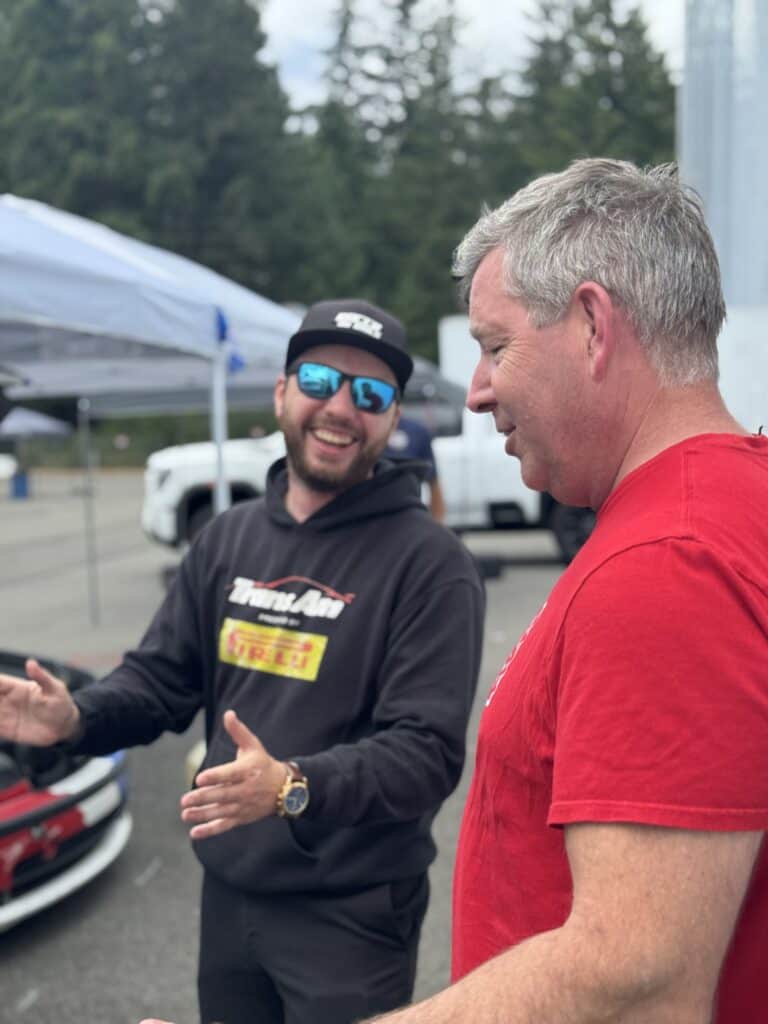
Tyler Campbell and Matt Dawson talk beside a race car in the Pacific Raceways paddock.
Tyler Campbell and Matt Dawson catch up in the paddock during a busy weekend of Spec E46 racing and seat time in Matt’s BMW Z4 M Coupe.

Matt was more than happy to explore the entire tachometer.

He entered the Z4 in the one-hour mini-enduro, completing 36 laps and finishing fourth in the MEO class. His best lap was a 1:30.689.

Learning a new race car is serious work.

The driver must recalibrate nearly everything: braking references, control effort, visibility, gearing, tire behavior and the subtle signals that indicate whether the car has more to give.

It can also be enormous fun.

Every time Matt climbed out of the Z4, he was grinning from ear to ear. Some cars make their case through engineering diagrams and trophy cabinets. Others make it every time the engine reaches the top of the rev range.

The Z4 managed all three.

Jay Perry’s First Visit to Pacific Raceways

The Summer Classic also welcomed Jay Perry from NASA Northwest for his first opportunity to race at Pacific Raceways.

Jay arrived with his C7 Corvette and a substantial learning assignment ahead of him.

Pacific Raceways is not a circuit that reveals all of its secrets immediately.

Its elevation changes obscure sightlines, several important corners are connected in ways that are not obvious from behind the wheel, and the fastest sections require a driver to build trust gradually.

Learning the track is one challenge.

Learning it while racing a powerful Corvette against experienced local competitors adds several more layers.

Jay embraced all of it.

He became quicker and more comfortable throughout the weekend, gradually piecing together the circuit while learning where the Corvette’s power, braking capability and balance could be used most effectively.

By Saturday’s race, Jay was already battling Dan Rogers in his BMW M3 GTR at the front of the SPO class.

Dan won, but only barely.

After 14 laps, the two cars were separated by just 0.347 seconds, with Jay recording a best lap of 1:27.930 in his first race at the circuit.

Jay returned Sunday with another day of knowledge stored away and immediately put it to use.

He lowered his best lap to a 1:25.046 and beat Dan to the finish by 1.894 seconds, splitting the weekend’s two races with a driver who brought both serious pace and extensive Pacific Raceways experience.

That is a serious achievement.
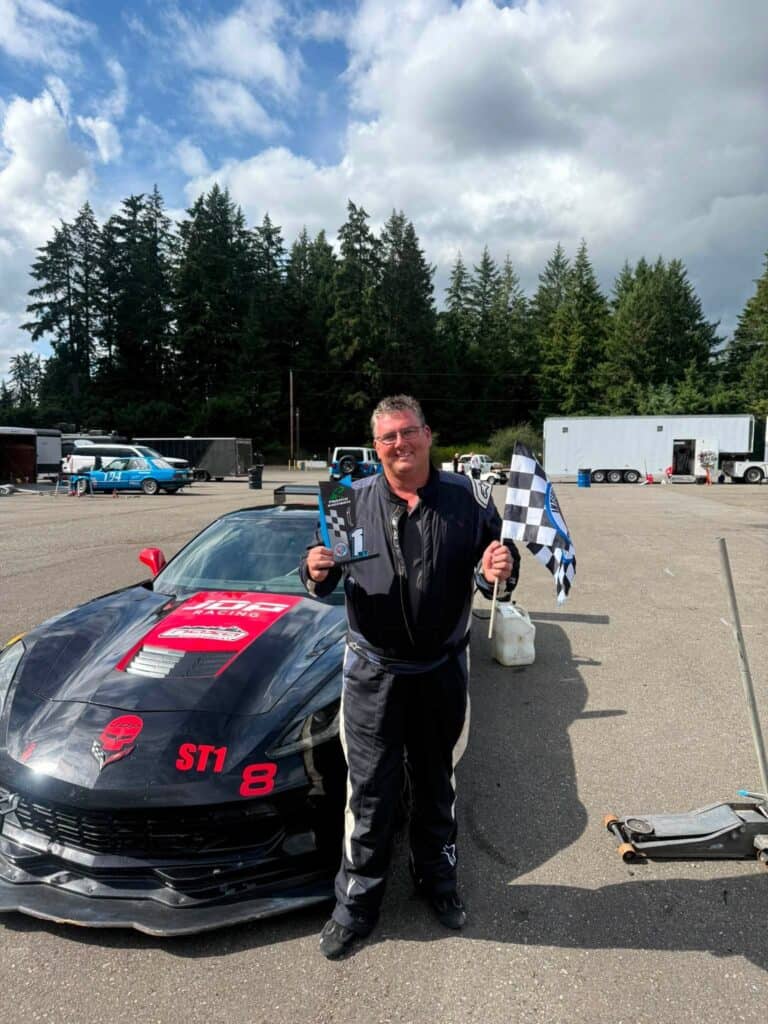
Jay Perry holds a first-place trophy and checkered flag beside his black C7 Corvette at Pacific Raceways.
NASA Northwest’s Jay Perry celebrates an SPO victory beside his C7 Corvette after learning Pacific Raceways and splitting the weekend’s races with Dan Rogers.

Jay did not simply visit a new track, collect some laps and head home. He learned quickly enough to challenge an established local front-runner, race him closely on Saturday and then find the additional performance needed to reverse the order on Sunday.

It was also exactly the kind of crossover we want to see more often.

Organizations such as NASA Northwest, IRDC and Conference may operate their own events and championships, but they are all part of the same regional motorsport community.

Drivers moving between them bring new cars, different experiences and fresh competition into each paddock.

Jay arrived to experience Pacific Raceways for the first time.

He left with a victory, a rapidly expanding notebook and a very good reason to come back.

Federico Mira Picone’s First Novice Weekend

Federico Mira Picone arrived at Pacific Raceways for his first novice race weekend in the Racer on Rails Jägermeister-liveried PRO3 car.

A first wheel-to-wheel event asks a great deal from a driver.

There are race starts, flags, traffic, passing decisions and procedures that cannot be fully recreated during a track day. The driver must learn to allocate attention across the entire environment while still operating the car quickly and accurately.

The objective is not simply to go faster.

It is to build awareness, judgment and capacity without allowing enthusiasm to outrun experience.

Federico’s first qualifying session took place on the same mixed and damp circuit that complicated the Spec E46 session.

He recorded a 1:55.205, but the time was much more representative of the conditions than his actual dry-weather potential.

Once the circuit dried and Federico became more comfortable, the stopwatch began shedding seconds in large handfuls.

During Saturday’s race, he recorded a 1:40.098, completed all 16 laps and won the novice class.

The roughly 15-second difference from qualifying was not the result of a magical transformation. It reflected the enormous contrast between a damp, mixed-condition session and a dry race, combined with Federico’s growing understanding of the car and the environment around him.

He returned Sunday and continued moving forward.

Federico qualified with a 1:40.674. In the race, he lowered his best to a 1:39.219 and earned his second novice-class victory, finishing only 0.952 seconds ahead of Kevin Sun after 13 laps.

Federico’s family and friends were present throughout the weekend, turning the occasion into more than a licensing exercise.

They were able to see the work, the nerves, the progress and the satisfaction that came with completing his first races successfully.

The car’s reliability also played an important role.

During earlier weekends with Ron Tanemura, we had worked through the transmission issues that previously affected the PRO3 car. That work meant Federico could focus on learning how to race rather than wondering which gear the car might choose to surrender next.

He is scheduled to complete his remaining two novice weekends with Racer on Rails this year, earn his full competition license and then decide what the next stage of his racing journey should become.

The first chapter was a strong one.

Ellen Porter and Mathieu Martin Make Space for Racing

Motorsport has a habit of consuming every available hour.

That makes participation especially challenging for Ellen Porter and Mathieu Martin, who are balancing demanding professional careers with raising two young daughters.

Getting both of them to the racetrack required its own exercise in scheduling, logistics and teamwork.

At the Summer Classic, they split the championship races. Mathieu competed in the large PRO3 field, while Ellen raced in CT4.

Ellen completed 15 laps in Saturday’s race, finishing 12th in CT4 with a best time of 1:39.887.

They then combined their efforts for the one-hour mini-enduro.

Mathieu and Ellen shared the No. 26 car, completing 32 laps and finishing third in the ME2 class. Their best lap was a 1:39.874.

Couples who race together may not eliminate every disagreement, but at least they can arrive at the discussion with timing data.

More importantly, Ellen and Mathieu demonstrate that motorsport does not need to be an all-or-nothing pursuit.

With the right equipment, planning and support system, racing can remain a meaningful part of a busy life.

Sometimes that means competing in separate classes. Sometimes it means sharing a car. Sometimes it means handing the steering wheel to your partner and trusting them to bring it back in one piece.

They made the space, shared the work and left with a podium.

Supporting More Than Half of the Spec E46 Field

The Spec E46 results also illustrated how deeply Racer on Rails has become connected to the local class.

We were providing trackside support for Stefan, Dan, Montey Mathison and Matt. Wes was working with us through coaching, and Anthony’s car remained under our management and maintenance program.

In one form or another, Racer on Rails was connected to six of the nine cars in the Spec E46 field.

The purpose is not to create a protected island inside the paddock.

It is the opposite.

When more drivers have access to strong preparation, dependable trackside support, engineering and coaching, the entire class improves.

Cars become more reliable. Drivers become more capable. The racing grows closer, and everyone is required to continue raising their level.

Saturday’s first four Spec E46 finishers were Stefan, Anthony, Dan and Matt.

On Sunday, Stefan won again, Anthony finished third and Matt fourth. Wes lowered his personal best multiple times, while Dan demonstrated race-winning pace before the engine problem ended his challenge.

That is the kind of environment we want to help create.

Competitive on the racetrack.

Collaborative in the paddock.

Relentlessly focused on improving both the drivers and the machinery.

Connecting the Motorsport Ecosystem

The weekend’s most important activity may not have appeared on a timing sheet.

Racer on Rails partnered with Racecentric to host a club and volunteer dinner and mini car show at our facility.

There was barbecue, cold soda, race cars, beautifully prepared show cars and people from several different corners of the automotive world.

Racers and volunteers spent the evening alongside tuners, builders, enthusiasts and time-attack competitors who might not ordinarily occupy the same paddock.

That mixture was intentional.

Motorsport is often presented as a pyramid, with professional racing at the top and every other form of participation stacked somewhere beneath it.

In practice, it behaves much more like an ecosystem.

Club racers need mechanics, engineers, fabricators, photographers, organizers and volunteers. Tuners benefit from lessons developed through competition. Time-attack drivers may eventually become wheel-to-wheel racers. Show-car owners can become track-day participants. Young enthusiasts can discover careers they did not know existed. Volunteers can build relationships with teams, and teams can become stronger members of the clubs that make their racing possible.

Every part feeds another.

The goal of the evening was to celebrate the club, thank the volunteers and create more opportunities for those different communities to rub shoulders.

Not through a formal conference or a carefully scheduled networking exercise, but over food, cars and the shared language of people who care deeply about machines.

For one evening, the Racer on Rails facility became more than a place where race cars are stored, prepared and repaired.

It became a gathering point for the broader automotive community.

That matters because the long-term health of racing will not be determined solely by what happens between the green and checkered flags.

It will also depend on whether there is an inviting, connected world surrounding the competition.

Progress in Every Direction

The 2026 IRDC Summer Classic produced strong results for Racer on Rails, but no single trophy or finishing position captures the weekend.

Stefan Tomalik won both Spec E46 races while sharpening the skills he will need for GRIDLIFE at Laguna Seca.

Dan Gavrila demonstrated front-running speed before a known mechanical concern developed into an engine failure.

Anthony Lo turned the promise of his 2025 Summer Classic into a more complete 2026 performance, improving his dry-weather pace and earning podium finishes on both days.

Matt Dawson raced hard in Spec E46, then spent the mini-enduro exploring the upper reaches of the Z4 M Coupe’s tachometer.

Jay Perry learned Pacific Raceways at remarkable speed, battling Dan Rogers throughout the weekend and leaving his first visit with an SPO victory.

Wes Griffith broke through previous limitations and lowered his personal best multiple times during our first coaching weekend together.

Federico Mira Picone completed his first novice event, won his class twice and took a major step toward earning his full competition license.

Ellen Porter and Mathieu Martin found a way to balance careers, parenthood and competition, then shared a podium finish in the mini-enduro.

Around them was a Racer on Rails operation preparing cars, coaching drivers, solving problems and supporting more than half of the Spec E46 field.

Then, when racing finished for the day, we opened the doors and brought the wider community together.

That was the real story of the Summer Classic.

Competition, driver development, vehicle preparation and community building do not need to exist as separate activities.

When they are connected intentionally, each one makes the others stronger.

That is the ecosystem we believe in.

And that is exactly what we are trying to build.
Posted on

New Year, New Shop and New Faces!

And just like that, 2022 is gone and 2023 is here! And with the new year, comes some changes for Racer on Rails that have been in the works for several months.

We’ve moved to Pacific Raceways!

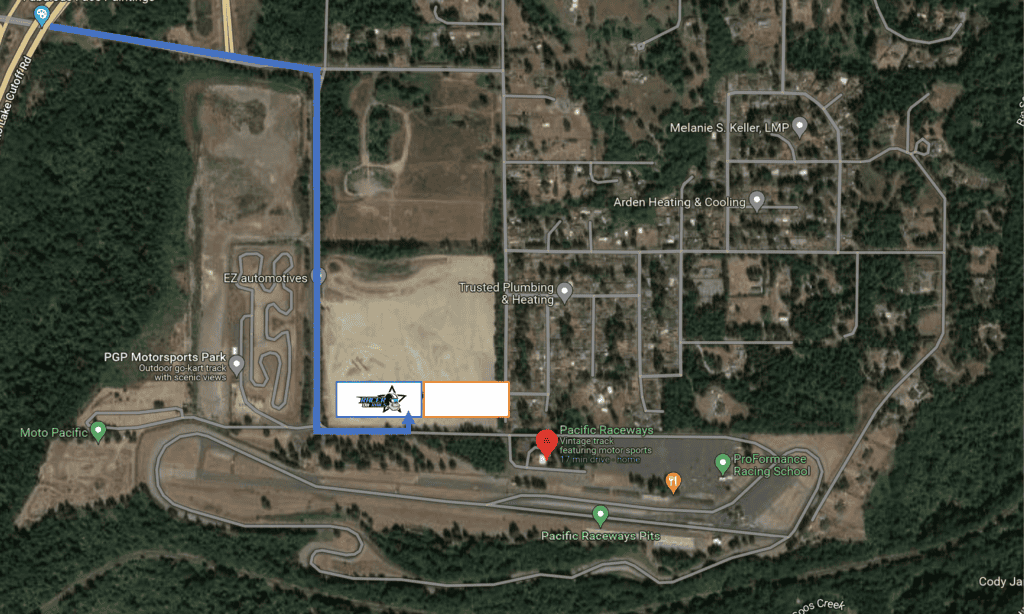
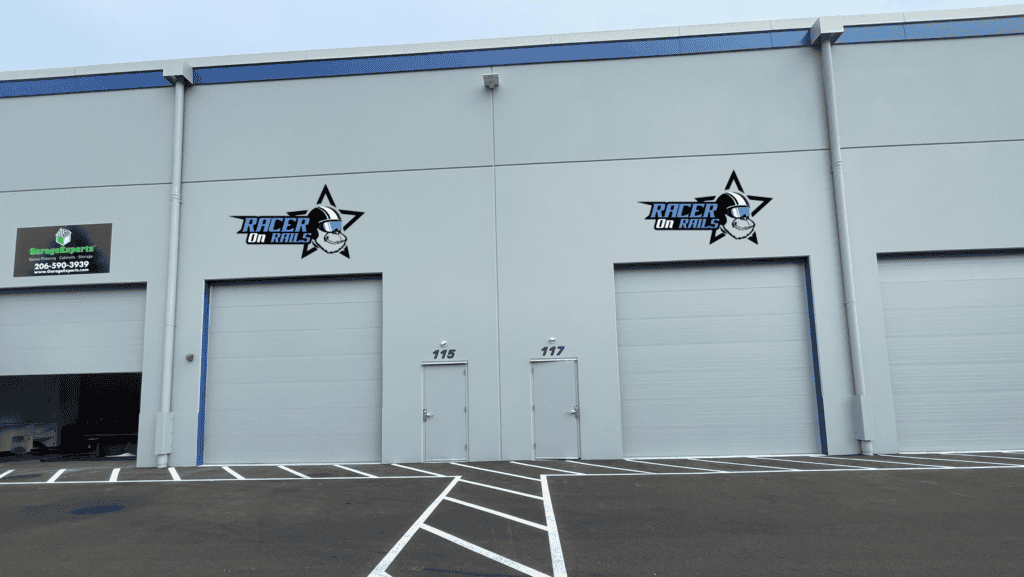
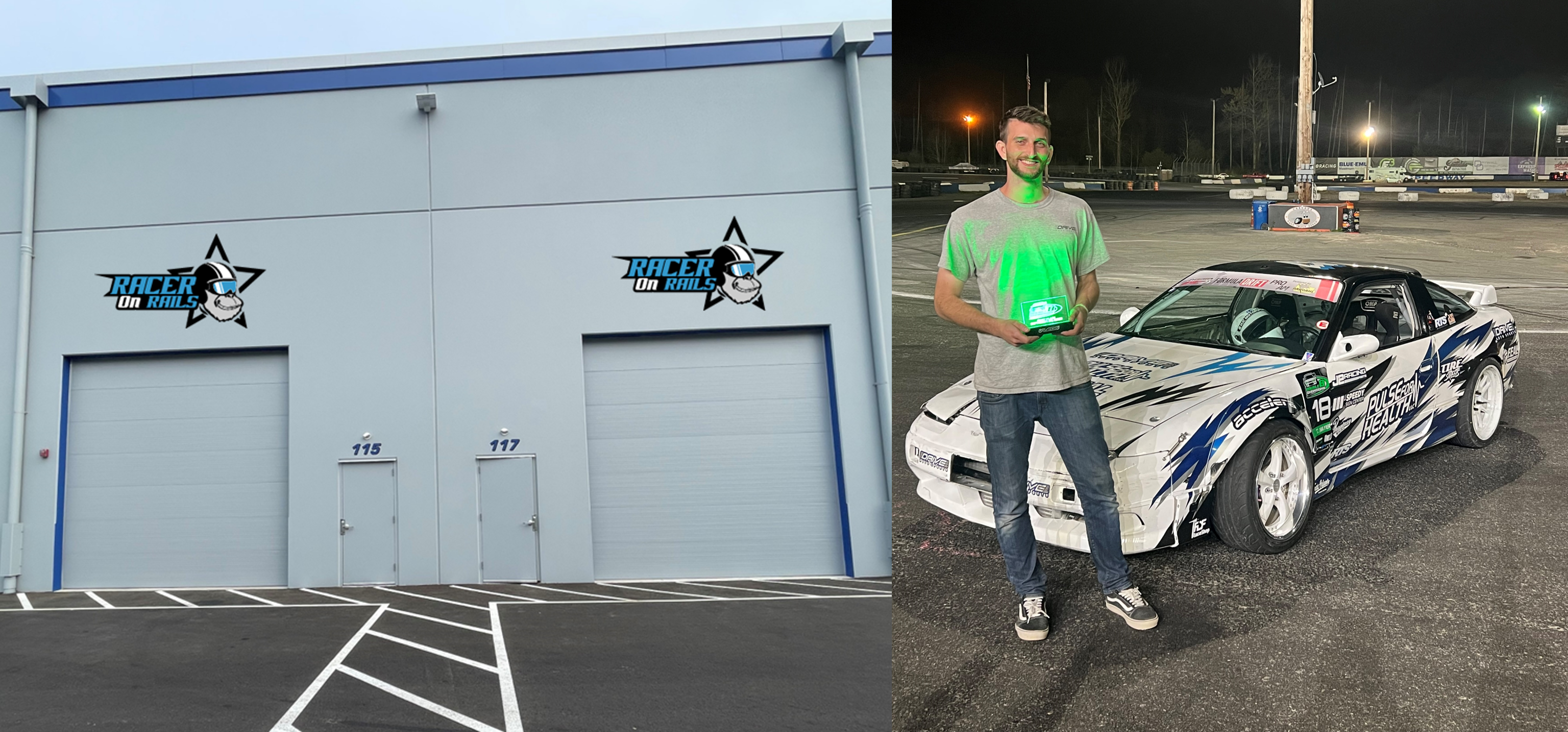
Starting tomorrow (Tuesday, January 3, 2023) we will be fully operating out of our new location at Pacific Raceways. We are in the new commercial buildings as you enter the Pacific Raceways main paddock on the left in bays 115, 117 and 119. There are two buildings – a “blue one” and an “orange one”. We are right in the middle of the “blue one”. Signs above the bay doors will be going up in January.

Official Address:

31001 144th Ave SE, Suite 115

Kent, WA 98042

We couldn’t be happier or more grateful for the new space and the multiple years of work Pacific Raceways and Proformance Racing School have done to get the development to this milestone. For those who have been to other major tracks across the country, having an ecosystem of automotive and motorsport companies on-site is invaluable.

Note: The signs above are rendered. Signs will go up in January. Find us in garage bays 115, 117 and 119.

The space is a big upgrade as we more than doubled the available indoor space to ~5,500 square feet. This will enable us to grow the team, add new race technicians (spoiler alert!), offer indoor storage, finally get our AWD dyno running in a dedicated garage bay (119) and all while being located right where our customers want to be… the race track!

Phone number, email and everything else stays the same. We will be setting up shop equipment throughout the month and kicking off a mezzanine construction project where we’ll have a dedicated customer lounge area, parts inventory room, clean room for engine assemblies and conference rooms. Crossing our fingers that this will be completed sometime in the spring/summer.

Welcome Tyler Mayer, Race Technician!

Tyler joins the team as our new race car technician and brings a wealth of experience and talent working on high performance cars in the Seattle area. Everything from alignments, corner balancing/setups to full custom fabrication projects, Tyler has worked on many projects.

But wait, there’s more! Tyler has been competitively drifting for the past 6 years, is Formula Drift Prospec Licensed, has been a drift instructor for the past 3 years and is an avid simulator driver/racer. We couldn’t be more happy to welcome Tyler to the team. He can not only work on almost any aspect of a race car but he has an in-depth understanding of what we’re trying to accomplish with motorsports.

Welcome, Tyler!

Posted on

2019 Race Support Schedule

The staple of what we do is provide service to the racing community.  One of the primary aspects of that is to be at the track, to help you with the car set up and care, as well as trying to improve the performance of both you and the vehicle.  We want to announce and extend an open invite for those that are interested that we are here to help.  Our team has a calendar of events planned with room for additional support for each weekend as needed!  Our current ICSCC Conference as well as intended NASA NorCal events and SOVERN events will be listed below.  If there are any race weekends you would like some crew and coaching support for, please feel free to contact us via e-mail, phone or messenger!  Let us help you be your best on track!

Give us an E-mail or call to discuss options! raceronrails@gmail.com – (206)475-1114

ICSCC Conference Event Schedule:

  • April 19-21 (Fri-Sun) – Mission Race Way Park – British Columbia
  • May 3-5 (Fri-Sun) – Portland International Raceway – Portland, Oregon
  • May 10-12 (Fri-Sun) – Pacific Raceways – Kent, Washington
  • May 31-Jun 2 (Fri-Sun) – Spokane County Raceway Park – Spokane, Washington
  • Jun 14-16 (Fri-Sun) – Portland International Raceway – Portland, Oregon
  • July 19-21 (Fri-Sun) – Pacific Raceways – Kent, Washington
  • Aug 16-18 (Fri-Sun) Portland International Raceway – Portland, Oregon
  • Aug 23-25 (Fri-Sun) – The Ridge Motorsports Park – Shelton, Washington

SOVERN:

  • June 7-9 (Fri-Sun) – Spokane County Raceway Park – Spokane, Washington
  • July 5-7 (Fri-Sun) – Pacific Raceways – Kent, Washington
  • July 26-28 (Fri-Sun) – Portland International Raceway – Portland, Oregon
  • Sep 7-9 (Fri-Sun) – Portland International Raceway – Portland, Oregon
  • Sep 27-29 (Fri-Sun) – Pacific Raceways – Kent, Washington
  • October 5-6 (Sat-Sun) – Maryhill Hill Climb – Mary Hill, Washington

NASA NorCal:

  • Mar 15-17 (Fri-Sun) – Sonoma Raceway – Sonoma, California
  • Aug 2-4 (Fri-Sun) – Thunderhill Raceway – Willows, California
  • Sep 14-16 (Fri-Sun) – Mid-Ohio Sports Car Course – Lexington, Ohio

Current Unavailable dates:

 – Mar 3-4 (Sat-Sun)

– April  25-29 (Thus-Mon)

 – June 6-10 (Thurs-Mon)

 – June 22-25 (Sat-Tues)

 – July 11-15 (Thurs-Mon)

 – Aug 29 – Sep 1 (Thurs – Mon)

 – Sep 19-23 (Thurs-Mon)

 – Oct 17-21 (Thurs-Mon)

Posted on

My track car – 1987 BMW 325is

What: My track car – 1987 BMW 325is

If I knew then what I know now:  not a lot… have a larger budget.  My track car has evolved as I feel I have needed at a rate that has been on a equal plain as my skill.  Could use a little more power now……

Check out:  Any of your local track’s and driving schools!


Early days of my track car.

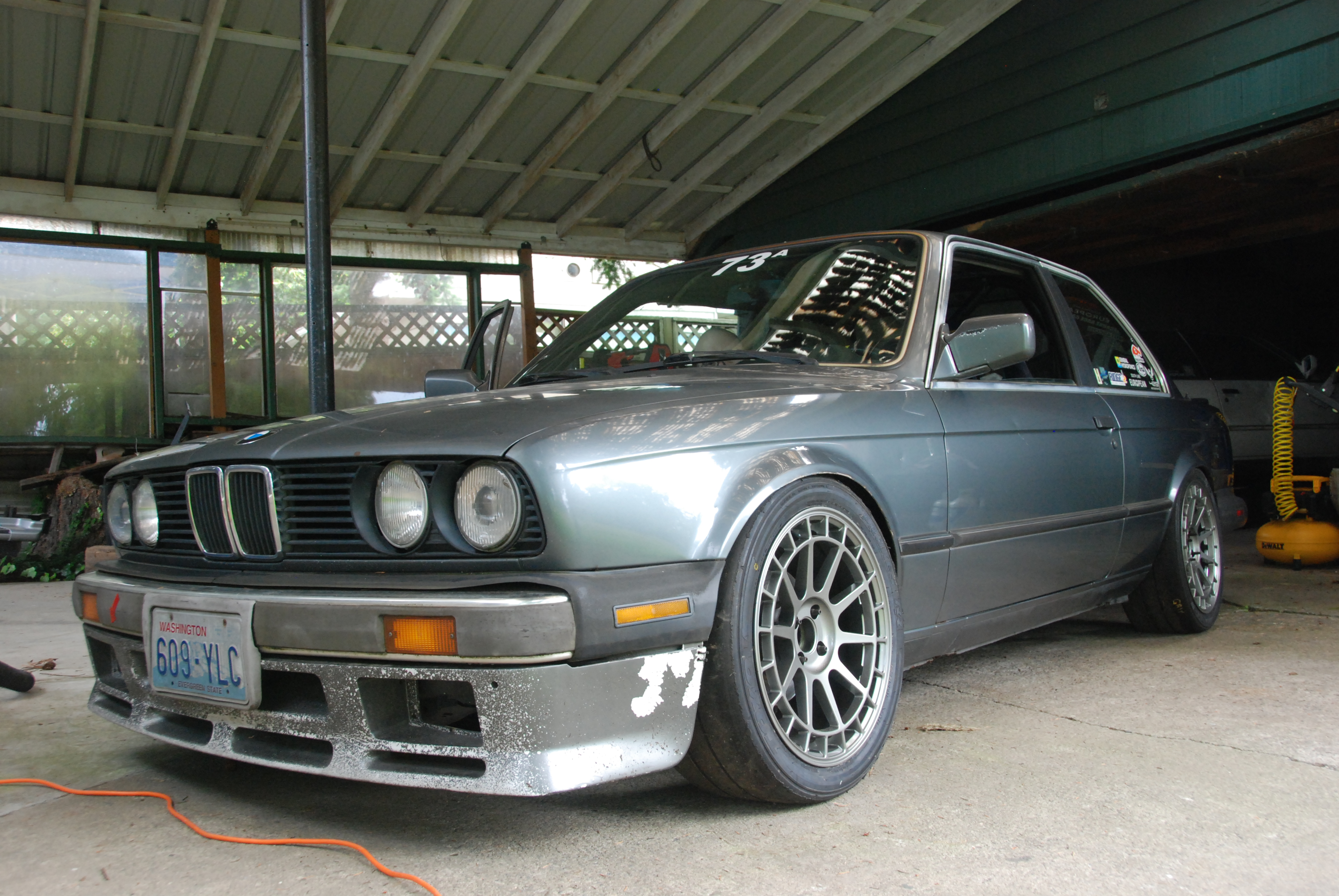
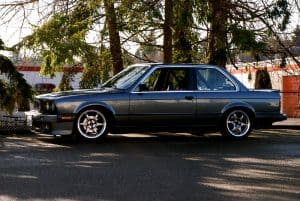
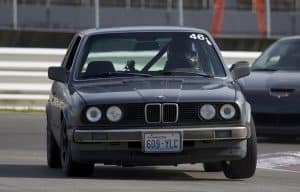
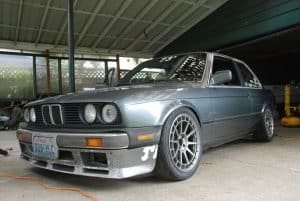
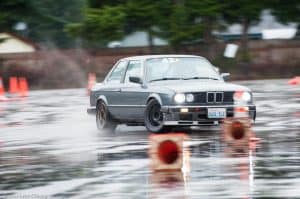
My track weapon of choice is a 1987 BMW 325is. I bought it in 2007 with the idea that it would become my track car. It is what i wanted in a track car, it was in my price range, it was the color I wanted, it was well maintained by the previous owner, and all the work done on the car was at the company/shop I was working for at the time. the only thing it didn’t have was the small plastic late series bumpers. Not to sound snoody but I could look past the bumpers as that was the only bad mark I could come up with when looking at the car. At first i was also going to drive it on the road as well. Well that lasted about two weeks and a car with a bunch of good track race parts that had been wrecked in the guys driveway by a drunk driver became available. This was going to help my rack budget out very much that year. By the time
I had got my parts car home and used what i wanted and parted the rest, I was onto my car pretty cheap. And it had some good stuff at this point. The first parts push ended up with a full Ground Control coilover set, Treehouse Racing front control arm brackets, a set of SSR Comp wheels with Falken rt-215 tires ( in the day one of the top street tires), a new set of stainless brake lines, a low miles E30 M3 4.10 limited slip diff, a set of Powerflex subframe and rear trailing arm bushings, a Momo steering wheel hub adapter, and a new OEM set of euro head lights and grills and a pair of Bride sport seats. I added a set of brake pads, a steering wheel, and a pair of harnesses i had picked up a year or two before on sale. All these ended up costing about $1500. Like I said my track budget looked good that year. others have cost a bit more.

It still had some style at this point.

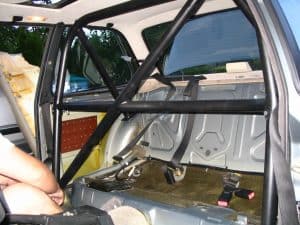
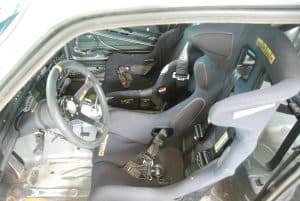
At this point I would say it was still a street car. It still had a back seat and carpet and a radio. I drove it like this for a couple months, but the track bug kept calling. So soon later I found a real race seat. No more reclining. This did now mean I was going to need to look into some sort of roll over protection as I had now defeated that safety measure. I did a lot of shopping and research about fit, style, cost, shipping, availability ect. The one that went in the car was made by a company called VSROne. It had the best clearance and fit in the car. It was not the cheapest option but for sure one I was OK with paying for. Remember I am not a fan of that compromised safety thing. So now the radio has half its speakers, there is no rear carpet or side panels anymore. The seat is in a fixed position. There is scaffolding in the back of the car. but looking forward from the drivers seat it could play the street car part for now……

And out goes the rear seat.

A couple events into the life there was a thirst for more cornering load. Need to find some tires. Lucky for me there is a local race series that runs a similar car to mine and they tend to go through a lot of tires. So after a little hunting I acquired some real track rubber. in this case early on it was Toyo RA1 tires. These are great tires! They last along time, they can take many heat cycles, they made a lot of sizes, they are one of the cheapest track tires around. If they were still in production I would still be on them. Anyway, now I got some rubber and the car is pretty good. Springs in the car are now a little soft, I can feel the car hitting bump stops and floating a little on the grippy tires. The car already had pretty stiff springs. It was a bit stiff for the street, but not to bad. Front springs were rated ant 375 lbs/ in and the rears 475 lbs/in. At this point I had been working on a few Pro3 cars and had learned a few things. I almost doubled the spring rate of the car. Went to 650 lbs/in front and 800 lbs/ in in the rear. This was the next level of feel I was looking for at the track. Man is it stiff. Think of driving a skate board. So in making the suspension on my car up to track use I ruined the street ride quality. Not the best street car anymore.

Gripped up at Portland.

Then there was the day I killed the carpet. Was still daily driving the car at this point when almost home from work the heater core blew a end tank and sprayed the entire left side of the carpet with coolant. For me at this point the decision was easy. Yank that smelly coolant soaked carpet out! All the rear was already gone so why not. The heater core fix itself is pretty easy, but the mess was amazing. couple issues I found with no carpet. The car is super loud, the passengers feet can get a bit warm, and I had no place to rest my foot when not on the clutch. So I built a dead pedal for it and that is all I reinstalled. Screw the passengers feet, and I can deal with a little noise, because racecar. Speaking of noise. I have had at least five different exhausts on the car. I bought it with a Dinan muffler, I killed that one looping turn 6 at Pacific Raceways in the rain. Then the custom Magnaflow cat back, this was great until I smashed it beyond repair at a PGP Time Attack on the rumble strips back when you could do that. Then I scored a IE stainless that was on the car for maybe three days, it was way to quite. I then built a Meghan racing muffler catback out of some spare parts. Didn’t look that cool but it was cheap and it worked. This was on the car until it was no longer driven everyday. It now has a pulse tuned equal length header and a flow matched exhaust built by the now closed Volvo custom shop RSI (R-Sport International) when they were developing a Pro3 race exhaust system. The sound on this is amazing but its is on the very loud side.

This is a street car still?

So now I have been tracking and driving this absurd track car that I have convinced myself is still a street car to the point that it has worn out again. The shocks are all worn and the fronts are dead. DEAD. All the rear suspension bushings, rear wheel bearings, the drive shaft, and a couple other normal maintenance items. So as you should do with any track car i went through and replaced all worn items i found again. I also took this opportunity to think about things I would want to change and the largest one I could come up with was the the shock travel. The car always felt a little held back by the shocks. The valving in them was set for a way softer spring combo, the travel was near the bottom of the shock stroke and they seemed to bottom out a lot because of this. So after much deliberation I got a set of BC Racing coilovers. you can order them valved to specific springs and come with some pretty good hardware. I got a set valved to the springs I had, and because I had springs I had them ship me a softer set (These will be used in another car). I did have to weld the strut tube to my spindle but that is something well in my comfort zone. Once installed and set and tested, I was able to get the result out of the car i was looking for. if felt way better on track, the shock adjustments are now felt, the cat doesn’t bottom on the shocks and they are running in there normal stroke range. I also again made another safety up date at this time. I removed the old race belts and my trusty Sparco race seat and installed a new set of Hans device compliant belts and a Momo head restraint seat. Also upgraded the passenger side belts from 5 pt to 6 pt. Again you can never be to safe.

Wooof!

The look of the car was also something that needed a update. Wheels and tires are getting long in the tooth so lets start with that. We are gonna put a little larger tire on it as well. So off come the old trusty 15×7 wheels and 225-50/15 tires and on go the new Roto 17×8 wheels and the same Toyo tire in a larger 235-40/17. This has created a new problem. The slightly larger size is now hitting the bumper trim and stop the tire. Bring on the fender roller. Little work there and they are in! Thats pretty up to date on the car as of this blog. Still on this seasons update list is a set of Massive Brakes big brake kit and a Diff limited slip unit rebuild. then next season the removal of the old roll bar and sunroof and the installation of a roll cage and clean up the interior wiring. Stay tuned in!

Bonus action shot!

Posted on

Burn 1,000 calories in an hour, lower back pain, kidneys and dehydration

What: A small addendum to the cardio training post, let’s expand on it with a real world experience that happened just a few weeks ago at Pacific Raceways.

If I knew then what I know now: Hydration, hydration, hydration – start it at least 5 days prior the first day on track and keep it up while you are on track.  Simply drinking lots of water the weekend of, is not enough.

Check out: 


1 Hour Mini Enduro’s as a Workout

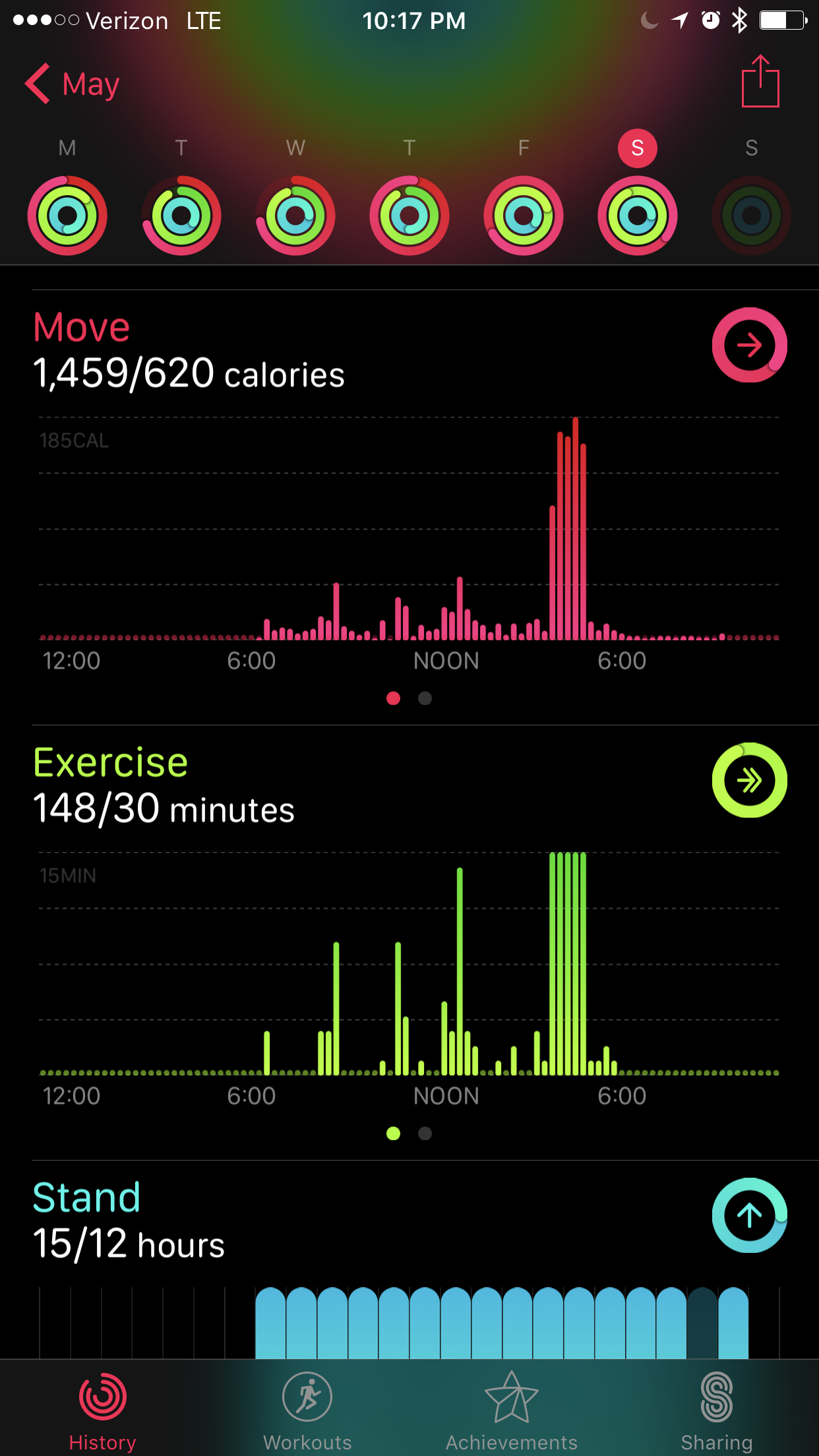
Most of my racing is a sprint format, but each Saturday afternoon, there is a 1 Hour Mini-Endurance race (referred to as Enduro’s but spell check hates this word). During the May 20th 1-Hour Enduro at Pacific Raceways, I decided to start a ‘workout’ using my Apple Watch to track my heart rate and calories burned, more accurately.  In this mode, the watch samples movement, skin temperature, heart rate, etc. at least 1x per second, versus about 1x per minute, while generally going about your day.

So what happened?

First, Pacific Raceways is already a physically demanding race track – super old school, banked turns, big time elevation change and even catching air on all 4 wheels.  Before I even looked at the data, this is how I felt:

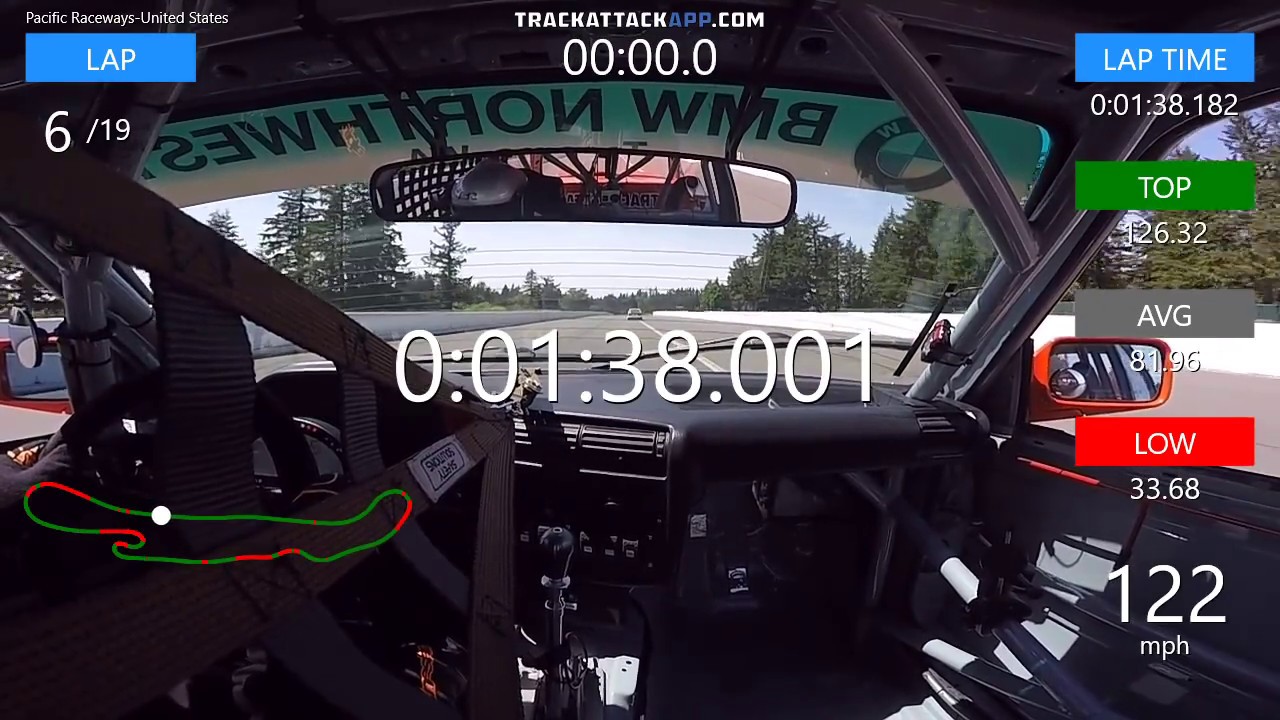
Thank Goodness for the Dead Pedal: While you probably aren’t going to be able to tell from the video, the combination of braking, lateral g-forces, camber in the road and downhill ascent of 3a and 3b complex, make it super grueling as you are carrying a good amount of speed.  I found myself hanging on for dear life, thanking my OMP seat, Schroth harnesses and most importantly – the dead pedal.  After each session I found myself thinking – “man, if it weren’t for the dead pedal – I think I would have fallen out of the seat.”

Oh dead pedal, how I love thee!

Dehydration: That day was warm but not ‘hot’ with a high of 72 degrees Fahrenheit.  I have a helmet blower system hooked up to my Stilo ST5 GT Wide Composite SA2015 Helmet with Noise Attenuating Ear Muffs (Large), of which after experiencing this – I don’t know how everyone doesn’t have one.  And we were planning to run the Cool Shirt CS-12 Club System but we forgot to pickup ice.  No worries, we went on regardless.  Well after a day of two qualifying sessions, one 20 minute race and an hour race, I felt drained and truly dehydrated – with my lips feeling chapped, which is a rare occurrence for me.  I’ve probably used chap-stick or lip balm maybe a half-dozen times in my life.  I have a rule that 7 days prior to stepping into a race car, I don’t drink any alcohol (usually wine) and that week, I bent the rules and I think that didn’t help.  While I only had a couple glasses with dinner, I could feel the difference.

Lower-Back Pain: Yeah – even this!  WTF!?!?!  I climbed out of the car with my lower back, not throbbing, but sure as crap not feeling great.  During the race I felt sharp pains and while I’ve had back issues the past few years – a combination of physical therapy, cross-training, plyometrics, stretching and chiropractor visits have my back in pretty good shape. Even still, I had back pain.  One theory, was that this was actually kidney related as it is common to have lower back pain, from your kidneys, when you’re too dehydrated and I felt it.

As an aside, the following morning I was pretty sore – especially on my right foot, calf, lower back, right shoulder, forearm and hand.  These PRO3 cars don’t have power-steering or ABS, so they are quite the analog animal to manhandle.

The data says… holy crap!

Calories burned during an auto race
This is the health data from throughout the day. You can see the spike when I logged a workout during the 1-hour endurance race. I didn’t log a workout during the earlier three sessions (two qualifying sessions and one non-points race)

Here is an hour by hour breakdown of my heart rate – note that during the 1-hour endurance race, my heart rate reached around 160-165 beats per minute.


Think about this – when was the last time you did a workout and burned (approximately) 1,000+ calories?  I am talking about just the logged ‘workout’ because in the previous three sessions, I didn’t have the Apple Watch Nike+ 42mm logging calories or else the full day of calories burned would have been 2,000+.  That is a TON of calories and physical effort.
Conclusion

Competitive racing is a legit, physical sport that is incredibly demanding.  We are using our hand-foot-eye coordination, reflexes, core-strength, neck-strength, arm-strength, leg-strength, cardio stamina and mental stamina, just like happens in many other ‘high intensity sports’.

If you are and an avid racer, actually competing and on a regular basis – I highly encourage you to have a regular training program and eat well at minimum to avoid injury and really, to help improve your performance.  Yes, you need to know what to do with your driver inputs to go fast but you also need to be able to physically do this, consistently and over long periods of time – especially for all those endurance racers.  If you aren’t exhausted when you get out of a race car – you’re just not driving hard/fast enough.

Posted on

My first track day!

What: My first ever track day experience

If I knew then, what I know now:  I would have bought a Miata or E30!!!

Check out:  Proformance Racing School if you are in the Pacific Northwest.  One of the best driving and racing schools around with everything from half day track days to 2-day competition licensing school and more.


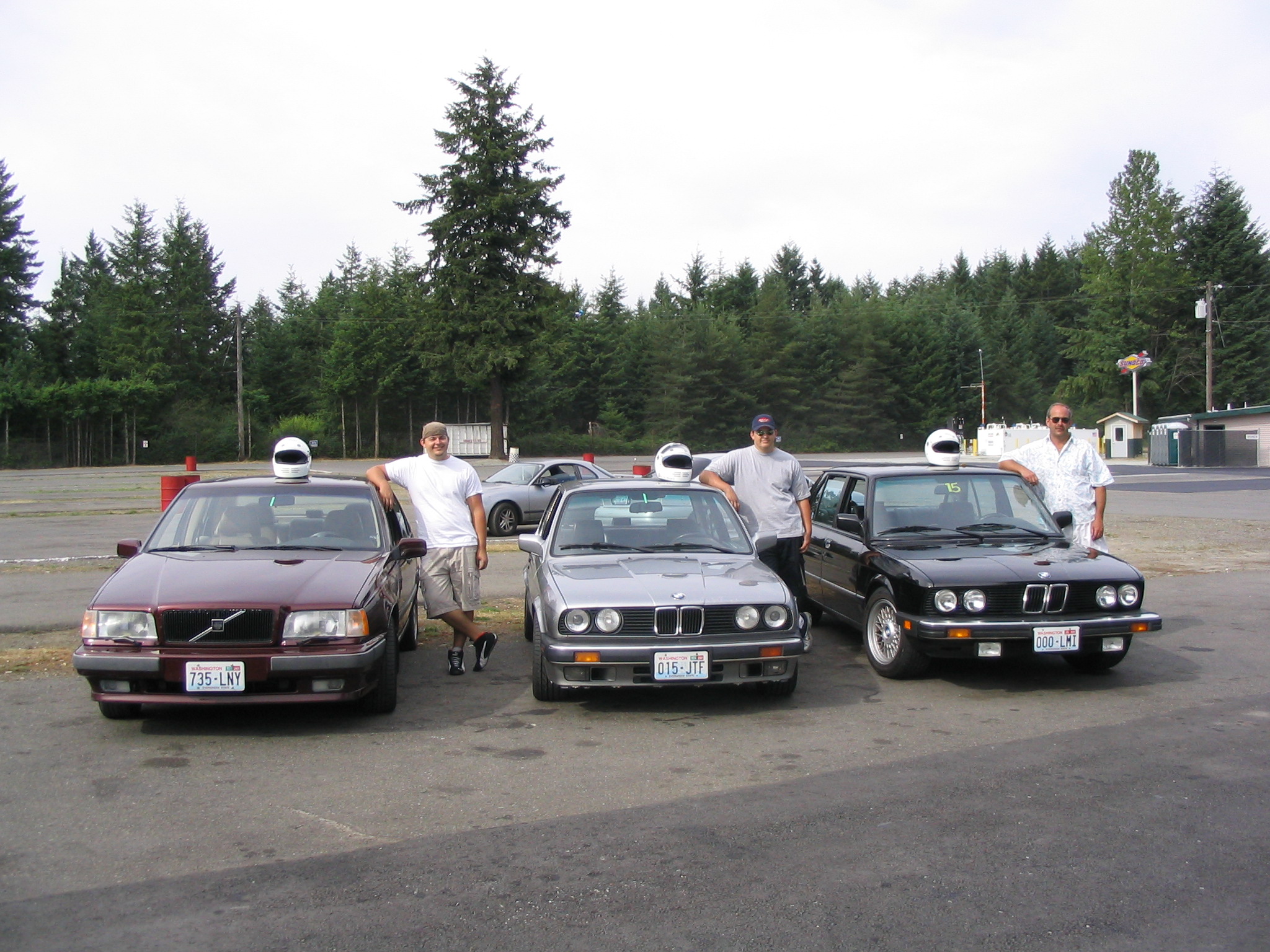
It has been almost 15 years since the first time I drove on track for the first time. When I started thinking about writing about it I was like, dang, it has been a long time. How am I going to be able to recall some of this stuff. I remember it like it was yesterday! It was a really nice day in June and my Dad had gotten both my twin brother and I “racing school” for a combination of our 18th birthday, and graduation presents from high school. It was a wicked good gift! At the time I had a Volvo. It was an 850, and did actually have a manual transmission. In all fairness, it was a terrible car for a track day. But for me, at the time, it was a great chariot for hustling for the first time. I started off the day a bit jealous. My brother already had a way cooler car than I did, and even though it was broken, he got to use another cool car which was an E30 BMW. I had my Volvo. Never the less. it was school day, and time to get after it!


We both attended the Proformance Race School at Pacific Raceways in Kent, Washington. I have actually been through their one day course, 2 times and each time was great! The second time I paid for it myself, and it was still worth it! It is a good balance of classroom instruction, low speed car control skills building, then a half of a day on the track with an instructor.

I remember being pretty intimidated when we started the classroom session. Lots of people there. Lots of serious machines also. None of that ended up mattering. Each instructor is set with you, for the day. They don’t care what you are driving, they just want you to learn how to drive the snot out of it, safely.

1. Classroom sessions

The classroom session was the part I did not care for. Having done some auto-x in the past, and lots of race watching in my past and felt I had a pretty good idea of what the flags were, and what a turn station was. Things got deeper than that though, and it was much more informative than I was expecting. The classroom session was not long and was out of the way first thing in the morning. Once you break in the class room it is time to get into the cars and start driving.

2. Low speed car-control skills

The first part of the driving curriculum is the low speed car control skills session. This was a lot of fun. We went through a few different scenarios and I found that later in life, these skills paid off in spades in the real life. There were emergency lane change drills. Braking and turning sharp (like making a ‘J’ with your car), Threshold braking, which is very different depending on if your car does or does not have anti-lock brakes. My Volvo obviously did. We did eyes up drills using a man with a flag, and a slalom course. These skills seem so basic, but being taught how to use them, and then implement them at higher speeds will make a huge difference in your skill set both on and off the race track and street.

This brings us to lunch break at this school. During lunch my brother, my dad and I got to chat a bit about the morning. Both of us were more excited with driving on the track that afternoon though.

3. Track Time!

After lunch it was track time. We took two laps in our cars with the instructor driving to show you the basic line and where each corner goes. After those 2 laps it was game time. My first session in the car was great. I was going fast, relatively anyway. I was turning laps on a race track! It was an amazing feeling. Not having to worry about cars in driveways. Kids playing the street were non-factor. You just get to haul ass!

I started getting into it more. My instructor was great, and encouraging throughout the afternoon as I picked up pace. We picked up enough pace to send my street welly tires strait to a fiery hell. They were by all accounts and purposes a street all season tire. By the end of the second session on track, they were screaming for mercy on every brake zone and corner. I also started to run into a fuel starve, or electrical issue. When exiting a left hand corner (of which Pacific has a majority of) the car would bog down, and then get on its way. It started to get frustrating. I felt like it was dampening my total experience, but it really was not. I needed to focus on skills building at that time, not how fast my car was going.

The start of a lifetime of motorsports

By the end of the day. I had not broken my car. I had not crashed into anything and I had learned a lifetime skill set that, as I said before, would show itself to pay off many times over in the real world. Mainly by avoiding idiots trying to crash into me! I was hooked. As it may be apparent. I found sport driving and racing to be what I truly love to do. It is a way for me to show aggression and not be physical (like boxing or wrestling, or martial arts). I can work my butt off in the car and it is a good work out. The mechanical symphony that is a race car is fascinating to me. I know this was going to be fun!

Posted on

Day 9 – Going for the win!

It’s race day!  Although I had races yesterday, today was the big race – the race that counts towards the PRO3 Championship, one of the most contested and desired club racing crowns in the pacific northwest and if this series was national, I think it would be up there with a Spec E30 or Spec Miata national championship.  Big fields, hard racing and really needing to drive these cars to the limit, without losing momentum to go fast.

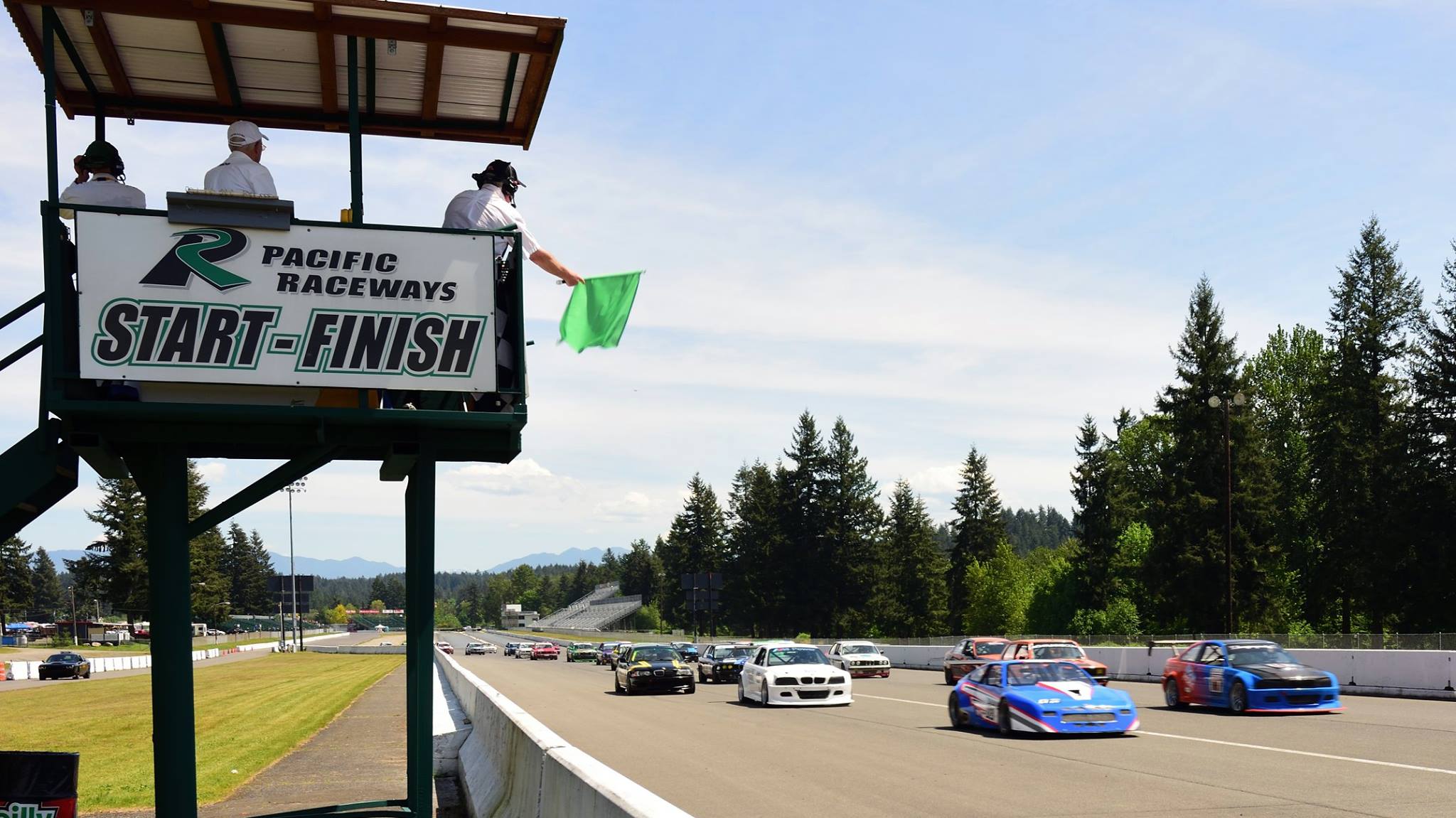
Taking the green flag on race day at Pacific Raceways

The plan of attack

Yesterday, I improved some of my personal best lap times by over a second and in worsening conditions.  I turned a 1:37.2xx in the afternoon, which was nearly 10 degrees warmer than during qualifying in the AM and repeated that almost exactly, in the second half of the 1-hour endurance race… with tires going on their 11th and 12th heat cycle!

So today my goal was to keep improving and try as best as I could to crack the 1:36.xxx range of lap times, of which in my going back through official race records on the ICSCC.com website, there are less than ten people who have ever gone under 1:37.000 in a PRO3 car, at Pacific Raceways on official record.

Part of this is that up until a few years ago, the track surface turns 8 and 9 were absolutely horrendous.  They were the original concrete or whatever the surface type was, full of bumps, pot holes and smoothened over years and years of beatings.

Pacific Raceways – it’s a beast!

It got so bad that a few track day organizations essentially boycotted holding events there because they had customers, with really nice cars, suffer bent wheels and damaged tires.  The reality was that it wasn’t great, not the worst ever but because it was deterring people from coming to the track, it needed to be fixed.   Here is a video of Cody Smith, of Code Red Racing, who also won the PRO3 Championship in 2013, flying through Pacific Raceways.  Cody is fast and smooth!

YouTube player

How’d it go?  1:37.104!

This time, we decided to start towards the back of the field and use the first few laps to warm up the tires, build tire pressures, get a solid lap in and then adjust track position.  We did just that and towards the middle of the session, I fell back to latch on a to pack of PRO3 cars running together.  Though I didn’t know for sure, I felt like I was faster than the whole group, so I fell back, created some space so that ideally, I’d be catching them the hardest at the end of the lap and getting the tow from them on the main straight away.

So close!!!

And it worked!  I actually had a 1:36.9xx going for most of the lap but on the turn 8, I got just the tiniest bit of sideways and I think that caused the lap to not be better.  Regardless, I was happy to get it and in the end, it would have been a stretch, in that session to go faster.  The consolation for me was that in that session specifically, I made an improvement but the competition ahead and behind did not.

So how did I make the improvement?

Data and video.  I recorded the video below to go into more detail but essentially, I focused on three things (see below the video):

YouTube player
  1. Comparing with a faster driver: I had the benefit of getting a hold of data and video from another driver, who was faster than me (and won the PRO3 championship last year) and leveraged an alpha tool we’ve been working on with Track Attack.  Essentially, with Track Attack, we’ve figured out how to make data from different systems, comparable with each other.  Olivier uses RaceLogic’s Video VBOX and I use AIM or Track Attack on iOS.  In the video below, you can see how I used this tool to compare the data and see where Olivier was gaining the advantage.  Conclusion? Corner entry and mid-corner.  Oliver was consistently able to roll more speed into a corner, maintain it mid-corner and then carry that advantage on the straights.  He was and still is, much better under braking and controlling the slide of the car.
  2. Understand the line and what the differences looked like: Similar to Olivier, I am also a very visual learner.  Though I understand data, graphs and tables, I have an athletic background, where muscle memory and training are critical.  So being able to see what a faster lap time and specific segments look like from outside the car and from the driver inputs, was incredibly valuable.  I was able to see in the track map comparisons, the differences in the lines taken.  He would usually brake earlier and turn in later for most corners, trying to carry as much speed as possible.  You could visibly see how he had to dance with the car in mid-corner and be more precise getting on throttle, to not light up the tires.
  3. Theoretical fastest lap: Lastly, one awesome feature we have in the Track Attack alpha product, is the ability to generate segment times AND the video associated with each of those segments.  Further, we stitched together all of those segments, to show what the theoretical fastest lap time actually looks like.  I generated this video and watched it over, and over, and over and over again, trying to program the muscle memory of that lap into my eyes, mind, hands, feet and core.  I wanted that low 1:36.xxx lap time infused into every fiber of my being.

When will this be available?!?!?!

Soon! Racer on Rails is intended to be un-biased about products, so I won’t talk about it much here but know that we’re working on this with the Track Attack team and that this summer, this type of analysis and capabilities will be available to everyone and support all major data acqusition system file types (AIM, MoTec, Bosch, RaceLogic, TraqMate, Alfano and Unipro).

Race Result: Qualified P3 and Finished P3

This was an awesome race, see the video below.  The high points are that I got a decent start, positioned myself exactly where I wanted to be and was able to make a really fun overtake on lap 2, turn 2 to get into 2nd position.  I knew that if I got behind Brian Bercovitz, I would have to stay with him and pressure him into making mistakes because he is a good driver and has a rocket ship car (not that mine is a slouch).

YouTube player

I found myself in just that position a couple laps in and determined that I had an advantage on him under heavy braking (for turns 2, 3a, 3b and to a lesser extent, 8) but he did a great job through 5a, 5b, 6 and 7.  So at the end of each lap, we’d end up about the same distance and with me being close enough to tuck under his draft.  Trying to go for an overtake going into turn 2, I decided to try to get an incredible run out of turn 8 and while doing so, carried too much speed into the corner, got sideways, saved it but let two cars by.

That was just under halfway through the race and while I had a better pace than those to cars, with the rear tires getting lit up during that drift, I had to baby the tires and by then, the gap was too big to overcome.  I technically finished 4th but due to the 2nd place finisher being disqualified for being under-weight, I inherited 3rd place.

Taking the green flag on race day!

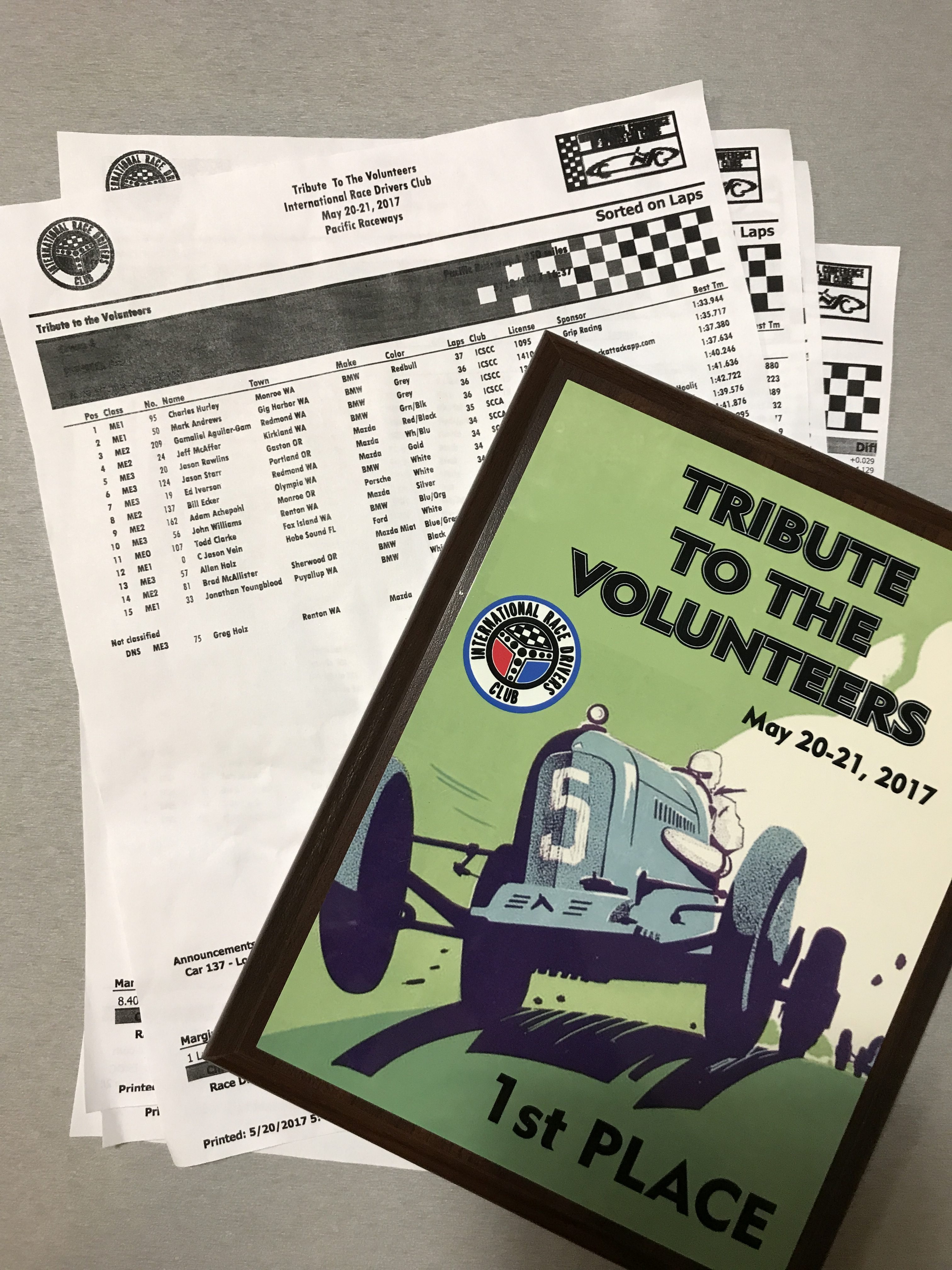
Although I was disappointed a little with my mistake, overall, the weekend and day was a great success.  We made improvements on the car, the driver and lap times.  We established that we can compete for wins and just need to be more consistent.  Thanks to the whole crew for all the work before, during and after the weekend.  This hardware is for you all!


Posted on

Day 8 – First Real World Race Day

As I mentioned yesterday, today was the first official day of the race weekend, with four sessions on the schedule:

  • Group 1 Qualifying
  • Group 8 Qualifying
  • Group 1 Non-Points Sprint Race: ~20 minute race with results not counting towards the PRO 3 championship but your fastest lap counting towards the final qualifying grid)
  • Group 8 Race: 1 Hour mini-endurance race that counts towards the 2017 Mini-Endurance championship (I’ve won the championship the last two years in a row!)

Yesterday, I felt like I had established a new level of performance with the car and my driving, by improving my personal best lap time at Pacific Raceways by nearly .5 seconds and being able to repeat it, though in just one lap, with a set of brand new tires on a ‘heat cycle’ run.

Today, my goal was to take those new tires, and do a qualifying run in them for Group 1, improve on my personal best lap time and then put them away until Sunday.  Then swap back on the older set of tires, which would be going on their 10 – 12th heat cycles and while still good from a tread standpoint, I fully expected the performance to start wearing off towards the end of the 1 hour endurance race.

How’d it go?

Group 1 AM Qualifying 

Time of Day: 9:26 AM

Conditions: Mostly sunny, 61 degrees Fahrenheit

Result: 1:37.617 (new personal best by ~.2 seconds)

Similar issue as I had during qualifying for Group 1 in Portland but I didn’t position myself best in the pack during pre-grid.  I got out early in the line up and while I was at the front, I didn’t have the benefit of a draft like when running in a pack.  I did about 4 laps but not cracking the 1:38 barrier.  So I decided to back off a bit and get behind a pack of PRO3 cars to catch their draft.  After a couple laps, I was able to get a 1:37.766 but then was too close to them and basically started ‘racing’, so I tried to back off a little before the start of a lap and then make a run but I’d get too close about halfway through the lap and the lap would get ruined.  Either way, minor improvement and felt like I at least collected enough data of several low 1:38’s, which used to be my personal best and figure out what to do.

Group 8 (Mini Enduro) AM Qualifying 

Time of Day: 11:30 AM

Conditions: Mostly sunny, 68 degrees Fahrenheit

Result: 1:37.533 (new personal best by ~.1 seconds)

With the field being lighter for Group 8, track position wasn’t as important, so I just went out and tried to put down fast laps immediately after doing more of a warm up lap on my out-lap.  Since these were the old tires, we were trying to make sure we’d get them up to temperature and pressures for the race in the afternoon.  I did two fast laps of 1:37.855 and then 1:37.533. BOOM! Another personal best.  What was I doing?  Just focusing on having next to no transition period from ending trail-braking to throttle application, especially on the longer corners like turn 2 and turn 8.  I came in to the hot-pits for a pressure and tire temp check and was out but was only able to put down a 1:37.792.  The good news?  1:37’s were starting to feel like the new normal!

Group 1 – 20 Minute Non-Points Race 

Time of Day: 1:50 PM

Conditions: Mostly sunny, 75 degrees Fahrenheit

Result: 2nd place finish and 1:37.258 (new personal best by ~.3 seconds)

These races are interesting.  It’s racing but it doesn’t count towards point, so this year they changed it so that the laps count towards qualifying.  So, you should never try to win at all costs but the goal is more to get into a flow and go for some fast laps.  I qualified 4th but started third in class, because the pole setting car decided to start from the back OR they were late to grid.  Either way, my goal was the same – get a good start and stick my front bumper to the rear-bumper of the fastest PRO3 this year, Brian B in the Blaupunkt liveried car.

And that’s what happened!  Man, I am so happy about how this race went (video link below soon).  I knew at least at the time that I would have to work really hard to get the start I wanted and then work even harder/smarter to stick with Brian.  I pushed myself even more to be on maintenance, plus a little more, sometimes mid-corner and I found myself using throttle to get that final phase of rotation going in the slower corners of 3a and 3b.

2nd Place and a new personal best lap time!

The best thing?  Mid 1:37’s became the new normal, even in greasier but not horrible conditions.

Group 8 – 1 Hour Endurance Race 

Time of Day: 4:30 PM

Conditions: Sunny, 78 degrees Fahrenheit

Result: 1st Place finish and 1:37.364 (only .1 seconds off of personal best)

The fields aren’t typically super-stacked for the endurance races, usually only about 10-15 cars per class and with the SCCA Majors Tour happening in Portland this weekend, the overall field was much lower, with only about 19 or so total cars on the grid.  There would only be one strong competitor battling me, Jeff M in the newly painted green and black #24.  Jeff and I have shared many battles the last couple of years and he and his car are a rocket.  With tires nearing the end of their top end performance life, my goal was to just drive clean, consistent laps and hopefully win but not do anything stupid.

Enduro’s are an opportunity for more seat time for me, in a racing environment and over a long period of time to try different things.  I also like that one mistake won’t kill you and there is a strategy aspect to the race.

In the end, Jeff and I traded spots a couple times.  I was able to get him in the beginning and get in front but a mistake in turn 8 gave him the position back and I had to work to get it back.  After the mandatory pit-stop, I was able to get him back but due to traffic, worsening track conditions and his driving, I wasn’t able to pull away.  Aside from winning, what I am incredibly happy about is being able to put down a 1:37.364 in the second half of the race!  Man, I am so happy about that.

1st Place and almost matching my personal best!

Takeaways? A new normal and 1:36’s – here I come!

Today was an absolutely awesome day and from a driving standpoint, I believe the reason is that I have fresh in my body and mind, what it feels like to drive, look at data, see what to do differently, visualize what that looks like and make it happen.  I will create a separate post that looks only at the data analysis I did over the whole weekend and what I did to prepare myself to do things differently.

The last thing here, especially from the lap times from the endurance race, if I am getting near my personal best lap times on a nearly 80 degree day, in the second half of a 1-hour race and on 11 heat cycle tires, that means this car is capable of so much more.  If the driver can get it together or with a pro-level driver behind the wheel, today, this car could have probably turned a low 1:36.xxx.  Lots of progress but so much more to go!


Posted on

Day 7 – Driving in the real world!

Today is the first day I have driven in the real world since I started this 30 day challenge. As I mentioned in the race reports for the April 6 Hour Endurance race at the Ridge Motorsports Park and the sprint season opener at Portland International Raceways, I primarily compete with ICSCC in the PRO3 racing series.  It’s like Spec E30 but with more room for modifications to the car, which translates to them being slightly faster.  Today was Test and Tune Friday, a regular part of a race weekend where can test things out on the car, get the setup all dialed in and practice ourselves.

The goal: Running solid, get a baseline set and scrub in new tires

It’s been since last July 2016 that I’ve driven at Pacific Raceways, a track that is a throwback to the old days of race tracks.  Walls, trees, earth and not much run off are the characteristics of the track.  We’ve made some significant changes to the setup and balance of the car from last year, where we saw big improvements at The Ridge Motorsports Park and PIR after the changes.  So the expectation was that those changes would also benefit Pacific Raceways and coupled with driver development, we’d make some big gains in lap times and overall pace.

Here is the video last year’s August race, where I finished 4th in class

YouTube player

Setting a baseline

During the test and tune, we had four sessions for the day and unfortunately, I would have to miss the 3rd session because of a work conflict (jumping on an important conference call).  That left three sessions to make sure the car was running well, I was back up to speed with the track, make some progress and scrub in some sticker tires.

  • Session 1: After the first few laps of feeling confident the car was running well, I started to pick up the pace but a driver that was taking out his new (to him) PRO3 car out for the first time, had a mechanical issue, which caused a black flag all.  On top of cutting the session short, I did not see two of the black flags and was later given a talking to and I promised to be more watchful.  🙁
  • Session 2: Go time!  I was able to get make my way through traffic and on the second lap, back in the 1:38’s!  My personal fastest had been a 1:38.2xx during the race above.  More 1:38’s and finally – BAM!  1:37.766 – now we’re talking!  I only got one lap in the 1:37’s but I knew I had figured something out and the rest were in the low 1:38’s.  A new normal! 
  • Session 3 (the last session of the day): As much as I wanted to keep the other tires on, I had to be disciplined and put on some sticker tires, knowing that the only goal was to get a healthy heat cycle on them and dial in the tire pressures so that they could be used during qualifying tomorrow.  So I put them on and despite them being new, still easy 1:38’s and a 1:38.064.  KABOOM!  Insert super excited emoji here!

Sticker tires!

So how did I shave .5 seconds off of my personal best lap time?

There are likely more than this but here’s my take:

  1. The weather: Today was mostly sunny, light breeze with a high of 71 degrees Fahrenheit.  It was 81 degrees Fahrenheit on July 24, 2017.  Warmer weather usually results in less power and a slippery track.
  2. Car balance: Last year, we noticed that I was struggling with rear wheel spin getting out of almost all corners, so we made a late-season change by lowering the ride height of the rear and artificially putting more weight back there, to get more traction.  That made a huge difference immediately.  Over the off-season, the folks at Advanced Auto Fabrication installed an absolute work-of-art fuel cell, in conjunction with the OEM fuel tank.  This had two benefits:
    1. Endurance ready – We now had a fuel system with enough fuel to run 3 hours straight!
    2. Weight balance/distribution – due to the new hardware, we could remove the nearly 100lbs of ballast in the passenger seat area and moved all that weight back, where we need it for more traction.  We also can add fuel to the fuel cell, along with ice and water to the cool suit which was moved back there too, to make sure we’re at minimum weight.  More weight backwards is a good thing!
  3. The driver and the driving: My goal was to carry over the learnings from iRacing and Virtual Racing School analysis to the real world.  Brake earlier, softer and longer to carry more speed into the corners, mid-corner and get on the throttle sooner.  And I think it worked!

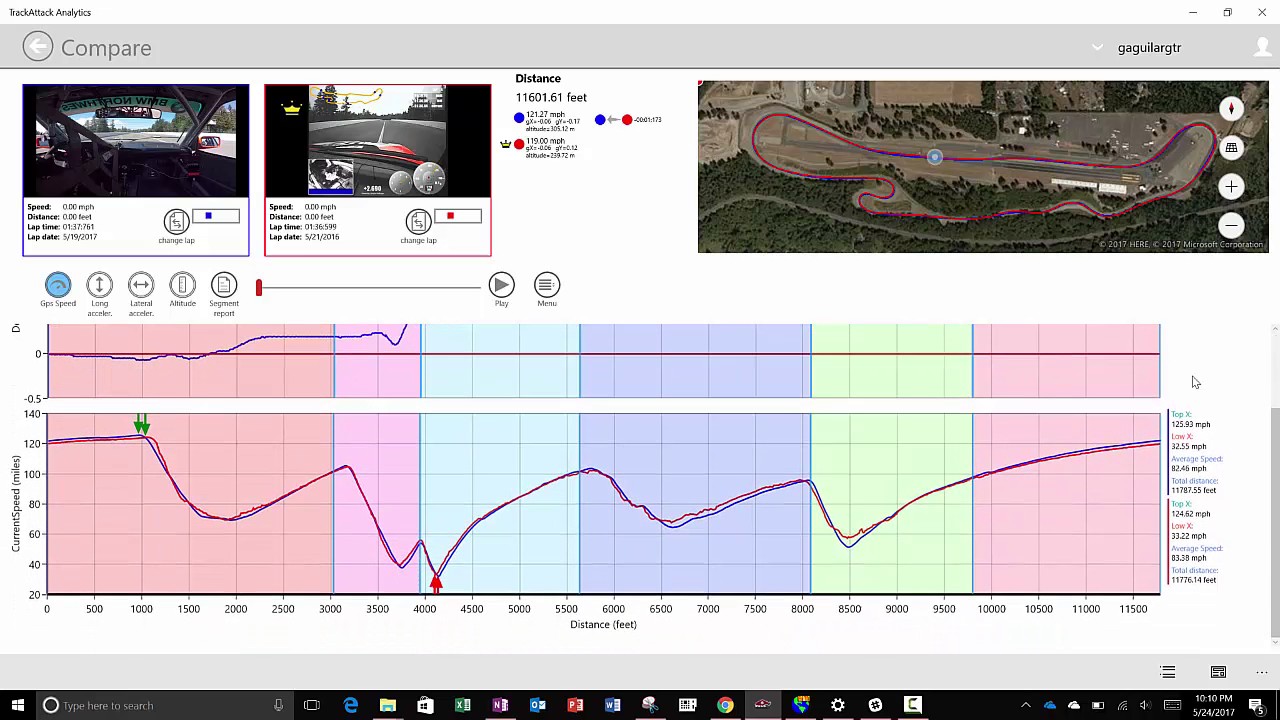
Specifically, here is a comparison of my speed trace from last year’s fastest lap and today.  Note, this is an alpha product of Track Attack that won’t be released but something similar is coming out soon and super excited to share more about that.  Note, Racer on Rails is a completely separate entity from Track Attack, but I am also on the Track Attack team as a co-founder.

Comparing a 1:37.761 from today to a 1:38.215 from July 2016

Notice how in segment one, in the red line, I braked earlier, softer and carried more speed into the corner and it also translated to a higher top speed at the end of that zone.

In segments 2 and 3, I also braked earlier and got on the throttle sooner. In segment 4, I carried more speed into the scariest part of the track (turns 5a and 5b) but I lost a little bit in the exit. Lastly, in segment 5, I braked earlier, got the car turned and back on throttle sooner.

This is what lunch looks like for me. Burritos + data + video. All FTW!

So what change corresponded with how much of the improved times? I have no idea but I think all three helped and since I’m not doing any more major updates to the car, I’m going to believe in the driver changes and continue grinding on the data and video.