Posted on

More Than a Race Weekend: Competition, Development and Community at the 2026 IRDC Summer Classic

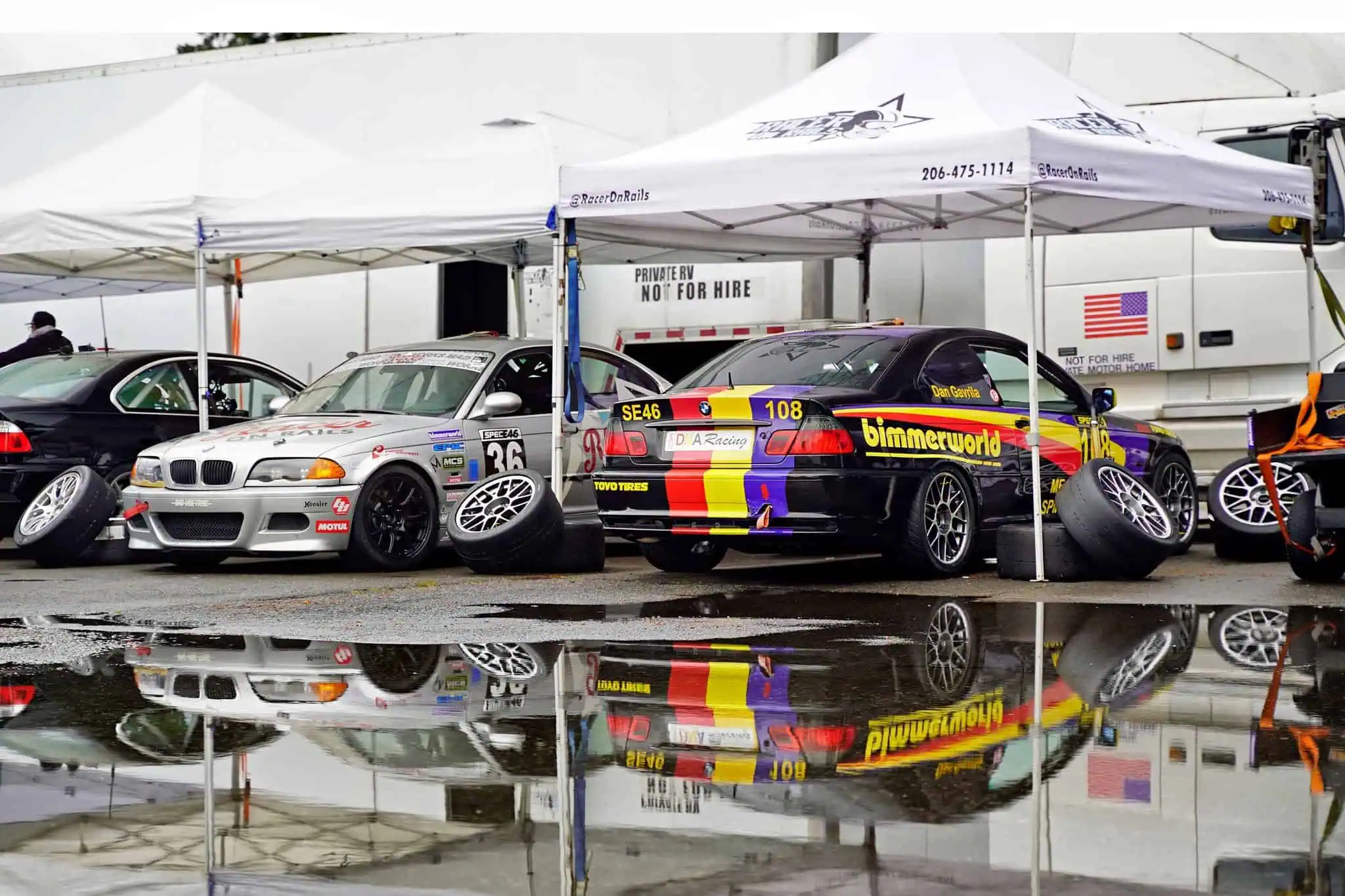
Racer on Rails-supported Spec E46 BMW race cars beneath paddock tents, reflected in rainwater at Pacific Raceways.

The IRDC Summer Classic is not just another race weekend at Pacific Raceways.

IRDCโ€™s May event can produce excellent racing, but spring in the Pacific Northwest always arrives with an asterisk. Cold temperatures and rain can thin the entry list, scramble preparation plans and turn the weekend into an exercise in weather-radar interpretation.

The Summer Classic, traditionally held in late June or July, carries a different energy.

Good weather is never truly guaranteed around here, but the odds are much better. The fields grow, the paddock fills and the competition becomes stronger. It is one of the cornerstone events on the International Race Drivers Club calendar and, in many ways, the weekend when the local racing community is most fully assembled.

The 2026 Summer Classic took place June 26 through 28, with Friday testing leading into two days of qualifying, championship races and a one-hour mini-enduro on Pacific Racewaysโ€™ 2.25-mile road course. The event was held under the umbrella of the International Conference of Sports Car Clubs, the Pacific Northwest sanctioning body commonly known throughout the paddock as Conference.

For Racer on Rails, the weekend became a concentrated example of nearly everything we are trying to build.

We supported drivers fighting at the front of Spec E46. We helped another driver make systemic progress through coaching. We introduced a new novice to wheel-to-wheel competition. We kept Stefan Tomalik race-sharp while his own car was being prepared for GRIDLIFE GT competition. We welcomed NASA Northwestโ€™s Jay Perry to Pacific Raceways for the first time and watched him progress from learning the circuit to winning on it. We helped Ellen Porter and Mathieu Martin fit racing into the realities of careers and parenthood. We supported more than half of the Spec E46 field in one form or another.

Then, after the engines went quiet, we partnered with Racecentric to bring racers, volunteers, tuners, time-attack competitors and automotive enthusiasts together at the Racer on Rails facility.

It was more than a race weekend.

It was competition, development and community sharing the same piece of pavement.

A Difficult Start to the Weekend

Saturday morningโ€™s qualifying session provided an immediate reminder that even the Summer Classic can retain a little Pacific Northwest unpredictability.

The track was mixed and drying.

Everyone faced the same decision: wait for the surface to improve, choose wet-weather tires that might quickly overheat, or go onto the circuit with dry tires and accept that parts of the lap were not ready for them.

Most of the field chose dry tires.

The front half of the track was beginning to develop a usable line, but the back side remained damp in places. That mattered because the moisture was concentrated around the part of Pacific Raceways where drivers least want uncertainty: Turns 5A through 6.

That sequence is fast, committed and unforgiving. The car becomes light as the road falls away, the walls feel increasingly close and a driver must trust that the grip waiting on corner entry will still be there when the car reaches the apex.

Damp patches in that section are not merely inconvenient. They change the entire risk calculation.

Everyone had to balance the same questions. How quickly was the track improving? Where was the remaining water? How much commitment was justified when conditions could change from one corner to the next?

No risk, no reward.

Stefan Tomalik navigated the conditions with a 1:38.551, taking the top Spec E46 qualifying position. Dan Gavrila followed with a 1:38.645.

After an entire lap of changing grip, the difference between them was only 0.094 seconds.

It was an early indication that the two of them were going to spend the weekend operating in the same narrow window.

Keeping Stefan Race-Sharp

Stefan has spent much of the season rebuilding his BMW M3 for GRIDLIFE GT competition at WeatherTech Raceway Laguna Seca in September.

Preparing the car is only one part of that project.

The driver also needs preparation.

GLGT will place Stefan in a fast and varied field, surrounded by cars that generate lap time in very different ways. He will need to manage traffic, adapt to changing situations and make good decisions while racing against unfamiliar competitors.

That cannot be recreated through casual track time alone.

The best preparation for racing is racing, especially against people who demand your best.

For the Summer Classic, Stefan returned to the Racer on Rails Silver Bullet in Spec E46. The goal was to keep him competing, keep the decision-making muscles active and measure him against some of the strongest club racers in the region.

Dan Gavrila provided exactly that benchmark.

Dan is exceptionally fast at Pacific Raceways. He knows the circuit intimately and is capable of extracting pace from the car almost immediately. Stefanโ€™s ability to qualify within a tenth of him in difficult conditions was impressive, but Saturdayโ€™s race would require something different.

Qualifying rewards the fastest individual lap.

Racing rewards the driver who can keep doing the work while managing traffic, pressure, tires and the changing behavior of the car.

Stefan converted the mixed-condition pole into a Spec E46 victory.

According to the official Saturday race results, he completed 17 laps with a best time of 1:31.346. Anthony Lo finished second, Dan third and Matt Dawson fourth, putting four Racer on Rails-supported or managed cars into the first four positions in class.

The strength of Stefanโ€™s race was not limited to one lap.

The Saturday lap chart showed him repeatedly operating in the low 1:31s, 1:32s and 1:33s, continuing to apply pressure without allowing the quality of his driving to unravel.

That ability to repeat pace is essential.

A driver preparing for a larger, more unpredictable competition environment does not need a single firework of a lap. He needs an entire box of matches.

Sunday morning shifted the order.

With a dry circuit, Dan qualified on the Spec E46 pole with a 1:31.239. Stefan followed at 1:31.574, just 0.335 seconds behind.

Charles Beach qualified third at 1:32.197, while Anthonyโ€™s 1:32.199 left him only two thousandths of a second from the second row. Matt followed at 1:32.923, according to the official Sunday qualifying results.

The stage was set for another battle between Dan and Stefan.

Unfortunately, a mechanical concern that had been following Danโ€™s car throughout the season finally caught up with it.

The engine had regularly produced blue smoke on startup, suggesting that something inside was no longer entirely happy. Dan remained fast despite the warning signs, but the problem ultimately developed into a head-gasket failure and engine damage.

Even with the car deteriorating, Dan recorded a 1:32.031 during Sundayโ€™s race. The speed remained, but the machinery could not carry him through to the finish at the front.

Stefan could.

The Sunday race results showed Stefan completing 17 laps and earning his second Spec E46 victory of the weekend, finishing 15.341 seconds ahead of Charles Beach.

Anthony placed third, Matt fourth and Wes Griffith seventh. Dan was classified eighth after completing 15 laps.

Stefan left the Summer Classic with two victories against serious competition.

More importantly, he had spent the weekend practicing exactly the kind of driving he will need at Laguna Seca: adapting to changing conditions, operating under pressure and delivering pace repeatedly rather than occasionally.

Anthony Loโ€™s Quiet Level-Up

Anthony Loโ€™s weekend deserves more attention than a pair of podium finishes alone might suggest.

Although we were not providing Anthonyโ€™s full trackside support program at the Summer Classic, Racer on Rails manages and maintains his car. That has given us a close view of the work he has put into his driving and the progress he has made over the past year.

The difference is visible from outside the car.

It is also visible in the timing sheets.

At the 2025 Summer Classic, Anthony qualified third in Spec E46 on both days. His Saturday qualifying time was a 1:32.751, followed by a best race lap of 1:33.002 and a second-place finish in the Saturday race.

On Sunday, he qualified with a nearly identical 1:32.752. His race ended after 13 laps, leaving him classified sixth, with a best lap of 1:33.018. The full progression can be seen in the 2025 Sunday qualifying, race results and lap-time report.

One year later, Anthony returned and delivered a more complete weekend in a nine-car Spec E46 field.

Saturdayโ€™s damp qualifying session does not provide a meaningful year-over-year comparison, but once the circuit dried, Anthony recorded a 1:32.637 during the race.

That was more than three-tenths quicker than his best race lap from the same event in 2025, and it helped carry him to another second-place finish.

Sunday provided the clearest measurement.

Anthony qualified with a 1:32.199, improving on his 2025 Sunday qualifying time by 0.553 seconds. That placed him only 0.002 seconds behind Charles Beach and less than one second from Danโ€™s class pole.

He followed qualifying with a third-place finish and a best race lap of 1:32.677, completing all 17 laps.

At this point in a driverโ€™s development, progress is rarely measured in enormous chunks of lap time.

It lives in tenths.

It appears in consistency, confidence and the ability to execute across an entire weekend. It shows up when the driver is no longer searching for a fundamentally different technique, but refining braking points, releases, minimum speeds and the quality of every transition.

Anthony has put in the work, and he has genuinely leveled up.

Last year, the pace of drivers like Stefan and Dan represented something Anthony was chasing.

Now he is close enough that they need to keep checking their mirrors.

Systemic Progress for Wes Griffith

The Summer Classic was our first weekend working directly with Wes Griffith as a coaching client.

The objective was not to manufacture one spectacular lap. It was to understand the underlying behaviors limiting his performance and help him build a process that could produce repeatable improvement.

There is an important distinction between finding speed and learning how to become faster.

A driver can stumble into a personal best through favorable traffic, fresh tires, a particularly brave moment or a lap where several variables happen to align. That lap may be real, but it is not always transferable.

Systemic progress appears when the driver understands what changed, why it worked and how to reproduce it.

That was the work with Wes.

We focused on giving him clearer references and a more structured approach to the lap. Rather than trying to attack every corner at once, the goal was to reduce ambiguity, identify the largest opportunities and make deliberate changes that could be evaluated through data and driver feedback.

The results began appearing immediately.

Wes recorded a 1:36.135 during Saturdayโ€™s race, breaking through his previous personal-best territory. On Sunday, he lowered the mark again with a 1:35.927.

The lap times were exciting, but the more meaningful development was the process behind them.

Wes was not simply trying harder. He was becoming more precise about where and how he applied that effort.

He began improving his understanding of what the car needed, how the corner phases connected and where commitment would produce speed rather than merely additional risk.

He did not beat his personal best once and spend the rest of the weekend admiring it.

He reset it, learned from it and moved it again.

That is the kind of progress that can continue long after the weekend is over.

Matt Dawson and the Joy of 8,500 RPM

Matt Dawson arrived at the Summer Classic with two very different BMWs and two very different assignments.

In Spec E46, he continued developing within one of the weekendโ€™s most competitive classes. Matt finished fourth on both Saturday and Sunday, recording best race laps of 1:33.069 and 1:33.645.

Then there was the Z4 M Coupe.

Matt purchased the car earlier this year, adding a machine with an SCCA National Championship-winning history to his collection.

It is a wonderfully distinctive race car, powered by an engine that rewards commitment all the way to its 8,500-rpm redline.
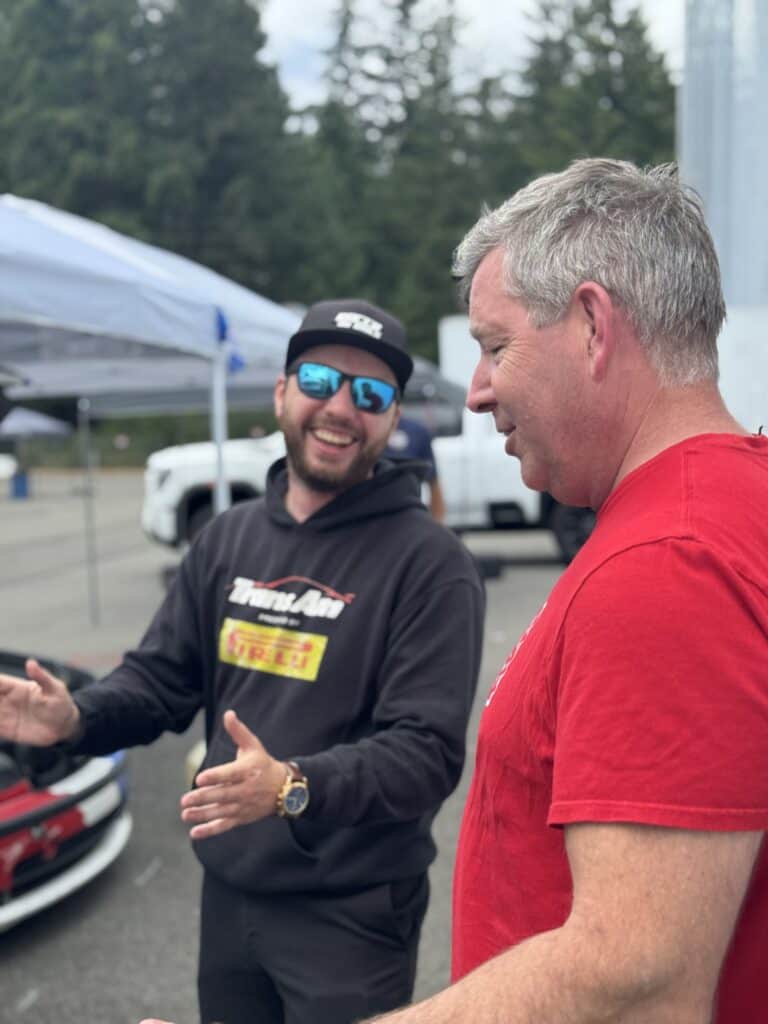
Tyler Campbell and Matt Dawson talk beside a race car in the Pacific Raceways paddock.
Tyler Campbell and Matt Dawson catch up in the paddock during a busy weekend of Spec E46 racing and seat time in Mattโ€™s BMW Z4 M Coupe.

Matt was more than happy to explore the entire tachometer.

He entered the Z4 in the one-hour mini-enduro, completing 36 laps and finishing fourth in the MEO class. His best lap was a 1:30.689.

Learning a new race car is serious work.

The driver must recalibrate nearly everything: braking references, control effort, visibility, gearing, tire behavior and the subtle signals that indicate whether the car has more to give.

It can also be enormous fun.

Every time Matt climbed out of the Z4, he was grinning from ear to ear. Some cars make their case through engineering diagrams and trophy cabinets. Others make it every time the engine reaches the top of the rev range.

The Z4 managed all three.

Jay Perryโ€™s First Visit to Pacific Raceways

The Summer Classic also welcomed Jay Perry from NASA Northwest for his first opportunity to race at Pacific Raceways.

Jay arrived with his C7 Corvette and a substantial learning assignment ahead of him.

Pacific Raceways is not a circuit that reveals all of its secrets immediately.

Its elevation changes obscure sightlines, several important corners are connected in ways that are not obvious from behind the wheel, and the fastest sections require a driver to build trust gradually.

Learning the track is one challenge.

Learning it while racing a powerful Corvette against experienced local competitors adds several more layers.

Jay embraced all of it.

He became quicker and more comfortable throughout the weekend, gradually piecing together the circuit while learning where the Corvetteโ€™s power, braking capability and balance could be used most effectively.

By Saturdayโ€™s race, Jay was already battling Dan Rogers in his BMW M3 GTR at the front of the SPO class.

Dan won, but only barely.

After 14 laps, the two cars were separated by just 0.347 seconds, with Jay recording a best lap of 1:27.930 in his first race at the circuit.

Jay returned Sunday with another day of knowledge stored away and immediately put it to use.

He lowered his best lap to a 1:25.046 and beat Dan to the finish by 1.894 seconds, splitting the weekendโ€™s two races with a driver who brought both serious pace and extensive Pacific Raceways experience.

That is a serious achievement.
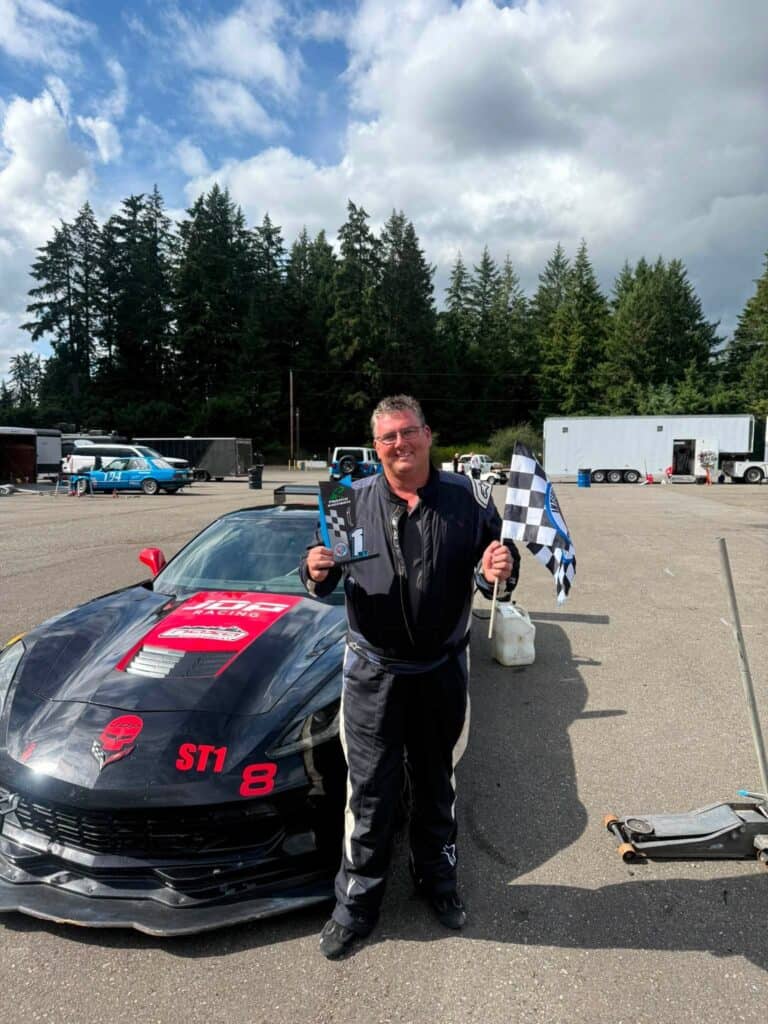
Jay Perry holds a first-place trophy and checkered flag beside his black C7 Corvette at Pacific Raceways.
NASA Northwestโ€™s Jay Perry celebrates an SPO victory beside his C7 Corvette after learning Pacific Raceways and splitting the weekendโ€™s races with Dan Rogers.

Jay did not simply visit a new track, collect some laps and head home. He learned quickly enough to challenge an established local front-runner, race him closely on Saturday and then find the additional performance needed to reverse the order on Sunday.

It was also exactly the kind of crossover we want to see more often.

Organizations such as NASA Northwest, IRDC and Conference may operate their own events and championships, but they are all part of the same regional motorsport community.

Drivers moving between them bring new cars, different experiences and fresh competition into each paddock.

Jay arrived to experience Pacific Raceways for the first time.

He left with a victory, a rapidly expanding notebook and a very good reason to come back.

Federico Mira Piconeโ€™s First Novice Weekend

Federico Mira Picone arrived at Pacific Raceways for his first novice race weekend in the Racer on Rails Jรคgermeister-liveried PRO3 car.

A first wheel-to-wheel event asks a great deal from a driver.

There are race starts, flags, traffic, passing decisions and procedures that cannot be fully recreated during a track day. The driver must learn to allocate attention across the entire environment while still operating the car quickly and accurately.

The objective is not simply to go faster.

It is to build awareness, judgment and capacity without allowing enthusiasm to outrun experience.

Federicoโ€™s first qualifying session took place on the same mixed and damp circuit that complicated the Spec E46 session.

He recorded a 1:55.205, but the time was much more representative of the conditions than his actual dry-weather potential.

Once the circuit dried and Federico became more comfortable, the stopwatch began shedding seconds in large handfuls.

During Saturdayโ€™s race, he recorded a 1:40.098, completed all 16 laps and won the novice class.

The roughly 15-second difference from qualifying was not the result of a magical transformation. It reflected the enormous contrast between a damp, mixed-condition session and a dry race, combined with Federicoโ€™s growing understanding of the car and the environment around him.

He returned Sunday and continued moving forward.

Federico qualified with a 1:40.674. In the race, he lowered his best to a 1:39.219 and earned his second novice-class victory, finishing only 0.952 seconds ahead of Kevin Sun after 13 laps.

Federicoโ€™s family and friends were present throughout the weekend, turning the occasion into more than a licensing exercise.

They were able to see the work, the nerves, the progress and the satisfaction that came with completing his first races successfully.

The carโ€™s reliability also played an important role.

During earlier weekends with Ron Tanemura, we had worked through the transmission issues that previously affected the PRO3 car. That work meant Federico could focus on learning how to race rather than wondering which gear the car might choose to surrender next.

He is scheduled to complete his remaining two novice weekends with Racer on Rails this year, earn his full competition license and then decide what the next stage of his racing journey should become.

The first chapter was a strong one.

Ellen Porter and Mathieu Martin Make Space for Racing

Motorsport has a habit of consuming every available hour.

That makes participation especially challenging for Ellen Porter and Mathieu Martin, who are balancing demanding professional careers with raising two young daughters.

Getting both of them to the racetrack required its own exercise in scheduling, logistics and teamwork.

At the Summer Classic, they split the championship races. Mathieu competed in the large PRO3 field, while Ellen raced in CT4.

Ellen completed 15 laps in Saturdayโ€™s race, finishing 12th in CT4 with a best time of 1:39.887.

They then combined their efforts for the one-hour mini-enduro.

Mathieu and Ellen shared the No. 26 car, completing 32 laps and finishing third in the ME2 class. Their best lap was a 1:39.874.

Couples who race together may not eliminate every disagreement, but at least they can arrive at the discussion with timing data.

More importantly, Ellen and Mathieu demonstrate that motorsport does not need to be an all-or-nothing pursuit.

With the right equipment, planning and support system, racing can remain a meaningful part of a busy life.

Sometimes that means competing in separate classes. Sometimes it means sharing a car. Sometimes it means handing the steering wheel to your partner and trusting them to bring it back in one piece.

They made the space, shared the work and left with a podium.

Supporting More Than Half of the Spec E46 Field

The Spec E46 results also illustrated how deeply Racer on Rails has become connected to the local class.

We were providing trackside support for Stefan, Dan, Montey Mathison and Matt. Wes was working with us through coaching, and Anthonyโ€™s car remained under our management and maintenance program.

In one form or another, Racer on Rails was connected to six of the nine cars in the Spec E46 field.

The purpose is not to create a protected island inside the paddock.

It is the opposite.

When more drivers have access to strong preparation, dependable trackside support, engineering and coaching, the entire class improves.

Cars become more reliable. Drivers become more capable. The racing grows closer, and everyone is required to continue raising their level.

Saturdayโ€™s first four Spec E46 finishers were Stefan, Anthony, Dan and Matt.

On Sunday, Stefan won again, Anthony finished third and Matt fourth. Wes lowered his personal best multiple times, while Dan demonstrated race-winning pace before the engine problem ended his challenge.

That is the kind of environment we want to help create.

Competitive on the racetrack.

Collaborative in the paddock.

Relentlessly focused on improving both the drivers and the machinery.

Connecting the Motorsport Ecosystem

The weekendโ€™s most important activity may not have appeared on a timing sheet.

Racer on Rails partnered with Racecentric to host a club and volunteer dinner and mini car show at our facility.

There was barbecue, cold soda, race cars, beautifully prepared show cars and people from several different corners of the automotive world.

Racers and volunteers spent the evening alongside tuners, builders, enthusiasts and time-attack competitors who might not ordinarily occupy the same paddock.

That mixture was intentional.

Motorsport is often presented as a pyramid, with professional racing at the top and every other form of participation stacked somewhere beneath it.

In practice, it behaves much more like an ecosystem.

Club racers need mechanics, engineers, fabricators, photographers, organizers and volunteers. Tuners benefit from lessons developed through competition. Time-attack drivers may eventually become wheel-to-wheel racers. Show-car owners can become track-day participants. Young enthusiasts can discover careers they did not know existed. Volunteers can build relationships with teams, and teams can become stronger members of the clubs that make their racing possible.

Every part feeds another.

The goal of the evening was to celebrate the club, thank the volunteers and create more opportunities for those different communities to rub shoulders.

Not through a formal conference or a carefully scheduled networking exercise, but over food, cars and the shared language of people who care deeply about machines.

For one evening, the Racer on Rails facility became more than a place where race cars are stored, prepared and repaired.

It became a gathering point for the broader automotive community.

That matters because the long-term health of racing will not be determined solely by what happens between the green and checkered flags.

It will also depend on whether there is an inviting, connected world surrounding the competition.

Progress in Every Direction

The 2026 IRDC Summer Classic produced strong results for Racer on Rails, but no single trophy or finishing position captures the weekend.

Stefan Tomalik won both Spec E46 races while sharpening the skills he will need for GRIDLIFE at Laguna Seca.

Dan Gavrila demonstrated front-running speed before a known mechanical concern developed into an engine failure.

Anthony Lo turned the promise of his 2025 Summer Classic into a more complete 2026 performance, improving his dry-weather pace and earning podium finishes on both days.

Matt Dawson raced hard in Spec E46, then spent the mini-enduro exploring the upper reaches of the Z4 M Coupeโ€™s tachometer.

Jay Perry learned Pacific Raceways at remarkable speed, battling Dan Rogers throughout the weekend and leaving his first visit with an SPO victory.

Wes Griffith broke through previous limitations and lowered his personal best multiple times during our first coaching weekend together.

Federico Mira Picone completed his first novice event, won his class twice and took a major step toward earning his full competition license.

Ellen Porter and Mathieu Martin found a way to balance careers, parenthood and competition, then shared a podium finish in the mini-enduro.

Around them was a Racer on Rails operation preparing cars, coaching drivers, solving problems and supporting more than half of the Spec E46 field.

Then, when racing finished for the day, we opened the doors and brought the wider community together.

That was the real story of the Summer Classic.

Competition, driver development, vehicle preparation and community building do not need to exist as separate activities.

When they are connected intentionally, each one makes the others stronger.

That is the ecosystem we believe in.

And that is exactly what we are trying to build.
Posted on

2026 Racing Schedule Announcement

Where Racer on Rails Will Be โ€” Come Drive With Us

The 2026 season is officially underway, and our calendar is set. If youโ€™ve been thinking about getting on track, racing more seriously, or stepping into a new program, then right now is the moment to get aligned. Once the season starts stacking, and things are heating up now, prep windows tighten quickly โ€” especially for multiโ€‘event campaigns.

With that in mind, hereโ€™s where Racer on Rails will be throughout the 2026 racing season. If any of these events are on your radar, reach out ASAP so we can map out your prep with intention.

SCCA West Coast โ€” Majors, Super Tour & Runoffs

  • Feb 20โ€“22 โ€“ Buttonwillow
  • March 27-29 Thunderhill SCCA Regional
  • May 8โ€“10 โ€“ Portland SCCA Hoosier Super Tour (Motherโ€™s Day Weekend)
  • May 23โ€“24 โ€“ Pacific Raceways SCCA US Majors (Memorial Day Weekend)
  • Sept 25-27 & Oct 2โ€“Oct 4 โ€“ Road America SCCA Runoffs

If youโ€™re aiming for a Runoffs qualification campaign or national level competition, this is the ladder.

ICSCC Conference โ€” Pacific Northwest Core Program

  • April 24โ€“26 โ€“ Portland
  • May 15โ€“17 โ€“ Pacific
  • June 19โ€“21 โ€“ Portland
  • June 26โ€“28 โ€“ Pacific
  • July 31โ€“Aug 2 โ€“ QRP
  • Aug 14โ€“16 โ€“ The Ridge
  • Sept 18โ€“20 โ€“ Portland
  • Oct 9โ€“11 โ€“ Portland (8โ€‘Hour)

For Northwestโ€‘based drivers looking to build racecraft, consistency, and confidence in a tightโ€‘knit paddock, this is home base.

NASA โ€” HPDE, Time Trial & Racing Ladder

  • Mar 6โ€“8 โ€“ Sonoma
  • June 19 – 21 Oregon Raceway Park (ORP)
  • Aug 14โ€“16 โ€“ Portland
  • Sept 4โ€“6 โ€“ Pacific
  • Oct 23โ€“25 โ€“ The Ridge

NASA offers one of the clearest progression paths from HPDE to Time Trial to wheelโ€‘toโ€‘wheel racing.

PCA Club Racing

  • Jan 30โ€“Feb 1 โ€“ Sebring
  • April 10 โ€“ 12 โ€“ Road Atlanta
  • July 10โ€“12 โ€“ Watkins Glen
  • Sept 4โ€“6 โ€“ Road America

If youโ€™re running a Porsche platform and want structured, nationalโ€‘level competition, this is a strong calendar.

OnGrid Time Attack โ€” Full PNW Calendar

We will be supporting the full OnGrid PNW calendar in 2026.

  • March 27-29 โ€“ The Ridge
  • May 22-24 โ€“ The Ridge
  • May 29-31 โ€“ Thunderhill (GTA)
  • June 19-21 โ€“ Pacific
  • July 24-26 โ€“ The Ridge

If youโ€™re building a time attack car, refining aero, or sharpening qualifying pace, weโ€™ll be there.

GLTC โ€” Laguna Seca

We will be attending GLTC at Laguna Seca in 2026 as part of our Time Attack and related driving programs.

  • April 17-19 โ€“ Carolina Motorsports Park
  • May 8-10 โ€“ Road Atlanta
  • June 12-14 โ€“ Gingerman Raceway
  • July 24-26 โ€“ Watkins Glen
  • Aug 21-23 โ€“ Lime Rock Park
  • Sept 18-20 โ€“ Laguna Seca – committed to this event only for 2026

If national exposure, highโ€‘energy sprint racing, and a dynamic paddock appeal to you, this is an event to plan early for.

Track Days & Competition License Schools โ€” ProFormance Racing School

For drivers earlier in the journey โ€” or those ready to earn a competition license โ€” we will continue supporting participation in track days and competition school programs with ProFormance Racing School.

ProFormance Racing School Calendar

ProFormance Racing School Accredited Competition Race Licensing Calendar

ProFormance offers:

  • Highโ€‘quality foundational instruction
  • Structured HPDE progression
  • Competition license schools
  • A strong onโ€‘ramp into wheelโ€‘toโ€‘wheel racing

If you are:

  • Brand new to the track
  • Looking to build fundamentals
  • Working toward a competition license
  • Or simply wanting more seat time

We can help align your goals, prepare your car, and integrate your track day progression into a broader racing plan.

Track days arenโ€™t separate from racing โ€” theyโ€™re often the first step toward it.

What This Means for Your 2026 Season

If you:

  • Want to run even one of these events
  • Need race prep, dyno, setup, or Test Ready certification
  • Want coaching support
  • Are exploring a fullโ€‘season campaign
  • Are starting with track days or license school

Our shop capacity, coaching calendar, and trackside support structure are built around this schedule. Aligning early ensures we can support your goals with the time and attention they deserve.

Tell us now.

Goals. Smiles. Memories.                 2026 is here.

Posted on

From Console to Cockpit: Using Simulators to Develop Real-World Driving Skills

Breaking into high-performance driving can feel overwhelming, even with resources like driving schools and track days. For those new to this world, the challenges of cost, access, and preparation can seem daunting. Thankfully, thereโ€™s a way to build your driving skills and confidence right from the comfort of your home: simulators.

Why a simulator? Because you have to practice driving a car in a high performance manner and figure out and learn tracks.

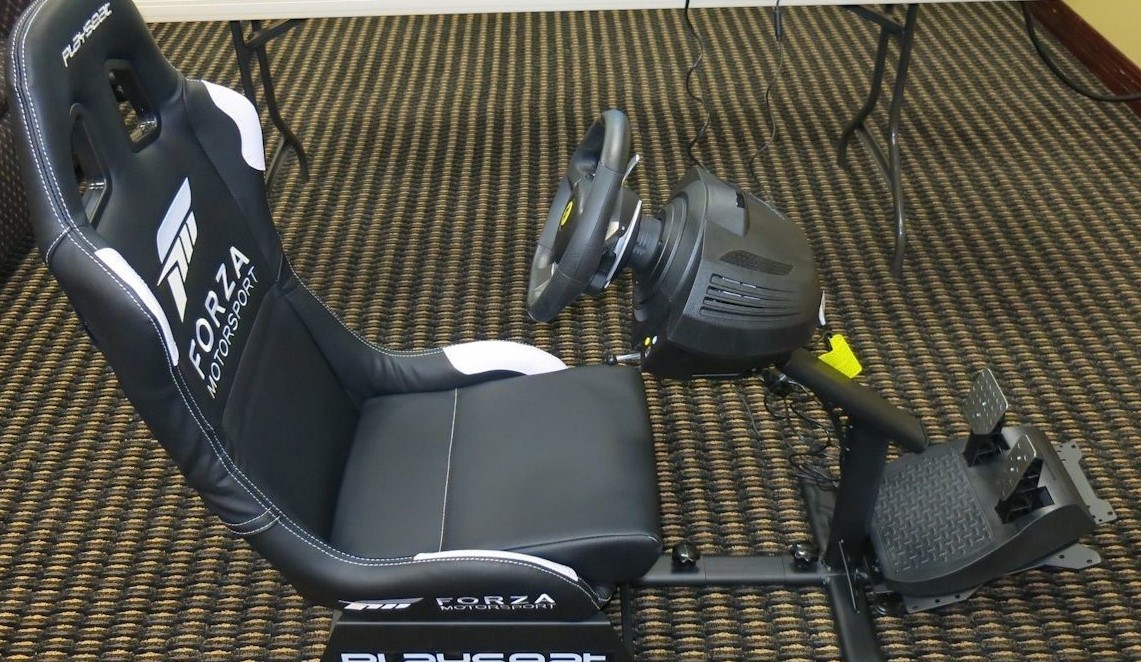
If youโ€™re just getting started, youโ€™re not alone in feeling that even the simulator world can be complex. Gran Turismo 7 and Forza Motorsport have come a long way in recent generations, offering a balance of accessibility and realism. While they may not be as hardcore as iRacing or RFactor2, their physics engines have significantly improved from earlier arcade-style versions. The games now feature photo-realistic graphics, delivering some of the most visually stunning racing environments available in any form of media.

But in this guide, weโ€™re focusing on the simplest and most accessible path: using a simulation-based game like Gran Turismo 7 on PlayStation 5 or Forza Motorsport on Xbox Series S or X, paired with a steering wheel and pedal set from makers such as Fanatec, Moza, Thurstmaster or Logitech. Why consoles? It’s the lowest cost and least complex way to get into sim driving.

In future posts, weโ€™ll cover the more hardcore, usually more expensive, and more complex but more realistic world of PC simulators.


The Wheel and Pedal Set

While a controller technically works (and there are some seriously fast controller based sim drivers in the world), investing in a steering wheel and pedal set transforms the experience. Remember, you’re doing this because you want to drive in the real world, so you need to replicate the real world as best you can. You need to better replicate the sport driving seating and body position. Driving a car via a game controller wonโ€™t help you in driving a car with your hands, neck, feet, core, etcโ€ฆ

Here are some recommendations tailored to beginners using Gran Turismo 7 or Forza Motorsport:

  • Moza R3 Racing Wheel and Pedals: A fantastic entry-level option offering responsive feedback and solid build quality. Itโ€™s compatible with both PC and consoles, making it a versatile choice for beginners looking for immersive gameplay.
  • Logitech G29/G920: Affordable and compatible with both PlayStation (G29) and Xbox (G920), this set offers solid force feedback and durability.
  • Thrustmaster T248: A step up in features, it supports force feedback and customizable pedal resistance, making it great for beginners aiming for a more immersive experience.
  • Fanatec DD: For those wanting a premium experience, Fanatec offers wheel bases with direct drive technology, providing incredibly realistic feedback. Pair it with the Fanatec pedals and steering wheels for a plug and play experience.

Key features to look for include:

  • Force Feedback: Simulates the forces acting on the car for realistic feel via the steering wheel.
  • Responsive Pedals: Allows precise throttle and brake modulation.
  • Adjustable Settings: Customizable settings to match your preferences and skill level.

A basic setup can cost anywhere from $300 to $1,000, offering a significant return in terms of immersion and skill development.

All of the options above have options where the wheel and pedals can be a fixed to a desk or ultimately not require a full cockpit setup. But at some point, if you’re really dedicated to driving well in real life, you’ll end up needing to get a cockpit solution but there are many to choose from (something we’ll cover in future blog posts).

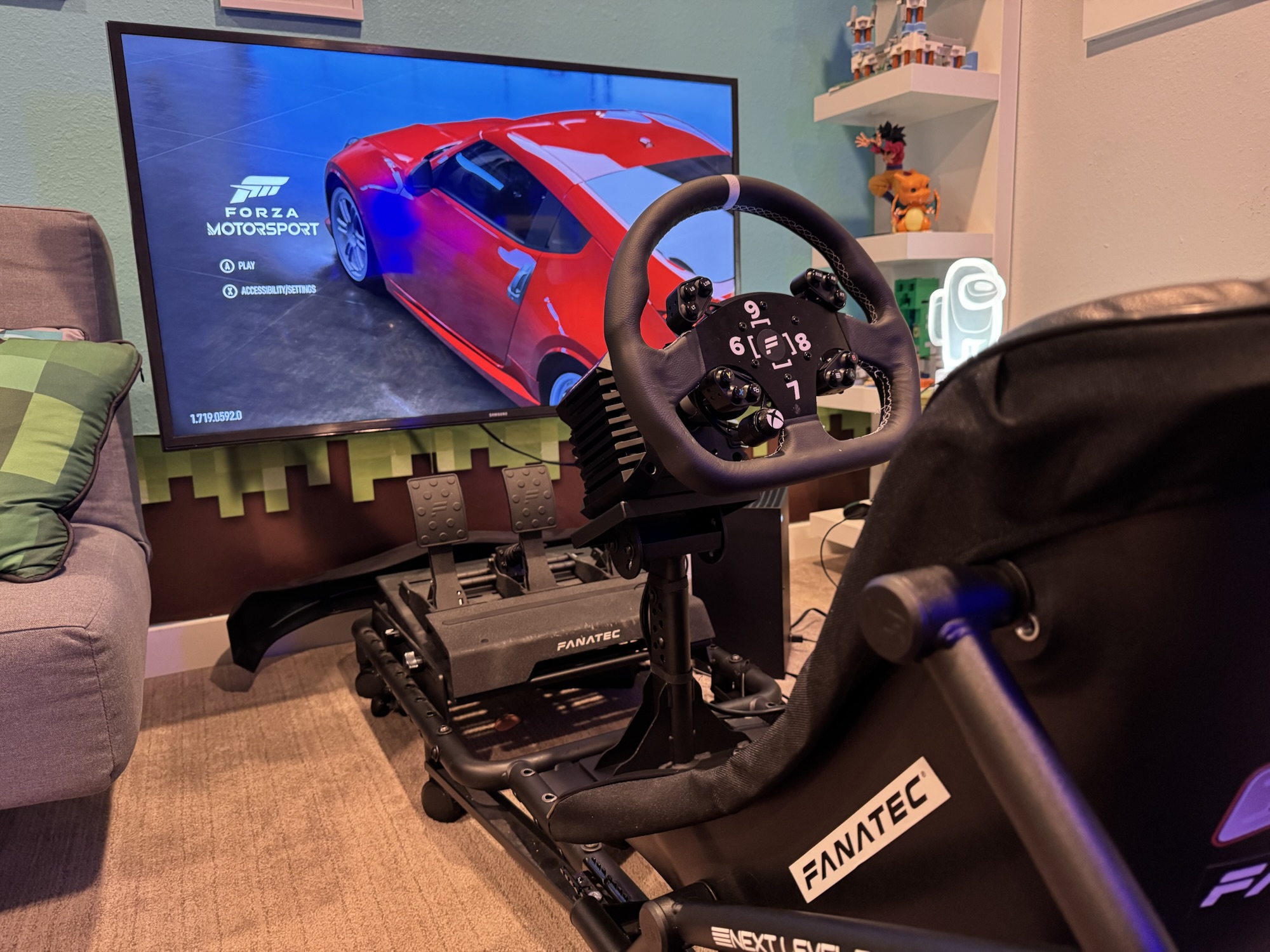
Below is the simulator setup we put in my sonโ€™s room:

  • We had an extra LG LCD TV around the house (wall mounted) – $0
  • Xbox Series X – $500
  • Fanatec CSL DD QR2 bundle w/Xbox and PC compatible wheel – $500
  • Fanatec CSL pedals – $300
  • Next Level Racing Go Kart Plus Cockpit – $500
  • Forza Motorsport – included in Game Pass subscription but base price is $60

Everything was plug and play. No drivers or software to install. Everything just works and you still have the ability to adjust wheel feedback settings within each game.

Note that unless you are for sure going to drive a manual car in real life, stick to getting a 2-pedal set. Since this is my son’s simulator (though I drive it a ton!) we haven’t gotten close to having him drive an H-Pattern shifter. The extra cost of the 3-pedal set was unnecessary.


How to Practice Effectively on a Simulator

To help our drivers develop real-world skills through simulators, we recommend following a structured approach with clear benchmarks:

  1. Master Consistency: Start by choosing any car and track combination. If there is one that you can drive in real life, pick that one but it honestly doesn’t matter much. Maybe don’t start with the Nordschleife at the Nรผrburgring due to the massive length of a lap. The goal is to complete at least 10 consecutive laps within 0.5 seconds of your fastest time, without spinning or crashing. This builds smoothness and precision.
  2. Progress to Career Mode Races: Once consistent lap times are achieved, begin participating in career mode races against AI drivers. This introduces racecraft, such as overtaking, defending, and maintaining focus in a competitive environment.
  3. Increase AI Difficulty Gradually: After completing 10+ races without incidents of your own making, start increasing the difficulty of the AI opponents. This challenges you to compete against faster and more skilled virtual drivers, simulating a more realistic race environment.
  4. Transition to Multiplayer Racing: When youโ€™re consistently driving within 0.5 seconds of your best lap time and have completed multiple incident-free races against high-difficulty AI, itโ€™s time to take on human competition. Join private or public multiplayer lobbies to test your skills against real-world opponents. There are some seriously fast simulator drivers all over the world so go in eyes wide open! Remember, your goal is to work on your skills for the real world, not to be a simulator racing champion.

Simulators are more than just gamesโ€”theyโ€™re training tools. To get the most out of your time:

  1. Start Slow: Begin with easier tracks and lower powered/lighter cars to focus on fundamentals like braking and cornering.
  2. Learn the Racing Line: Follow track guides and in-game tutorials to understand the ideal line.
  3. Focus on Consistency: Aim for smooth, repeatable laps before pushing for speed.
  4. Experiment with Settings: Adjust car setups and difficulty levels as you improve.
  5. Use Ghosts and Replays: Analyze your laps and compare them to faster drivers to identify areas for improvement.

From Virtual to Reality: Bridging the Gap

While simulators provide invaluable practice, transitioning to real-world driving requires adapting to physical forces and sensory feedback – it’s real! But the habits you develop on a simulatorโ€”like the foundational driver inputs, spatial awareness, and car control โ€”make this transition significantly easier.

Many professional drivers, including F1 and endurance racing, credit simulators as a vital part of their training regimen. Even for am’s, the benefits are clear: more confidence, better instincts, and a deeper understanding of vehicle dynamics for when you hit the track in real life.


Your Next Steps

Whether youโ€™re using a simulator to prepare for your first track day or simply want to enjoy the thrill of driving from home, this is a fantastic way to develop your skills. In future posts, weโ€™ll dive deeper into advanced simulator setups, track-specific tips, and how to take your virtual driving to the next level.

Ready to start? Grab your wheel, fire up Gran Turismo 7 or Forza Motorsport, and begin your journey toward becoming a confident and skilled driverโ€”one lap at a time.

Posted on

Your First Step to Track Driving: Learning the Basics at a High Performance Driving School

One of the questions we spend the most time on around the shop and track is talking with people who are interested in getting into track driving but they simply don’t know where or how to start.  So we figured we’d share our knowledge and recommendations over a series of blog posts so that these are easily accessible to anyone, at any time. 

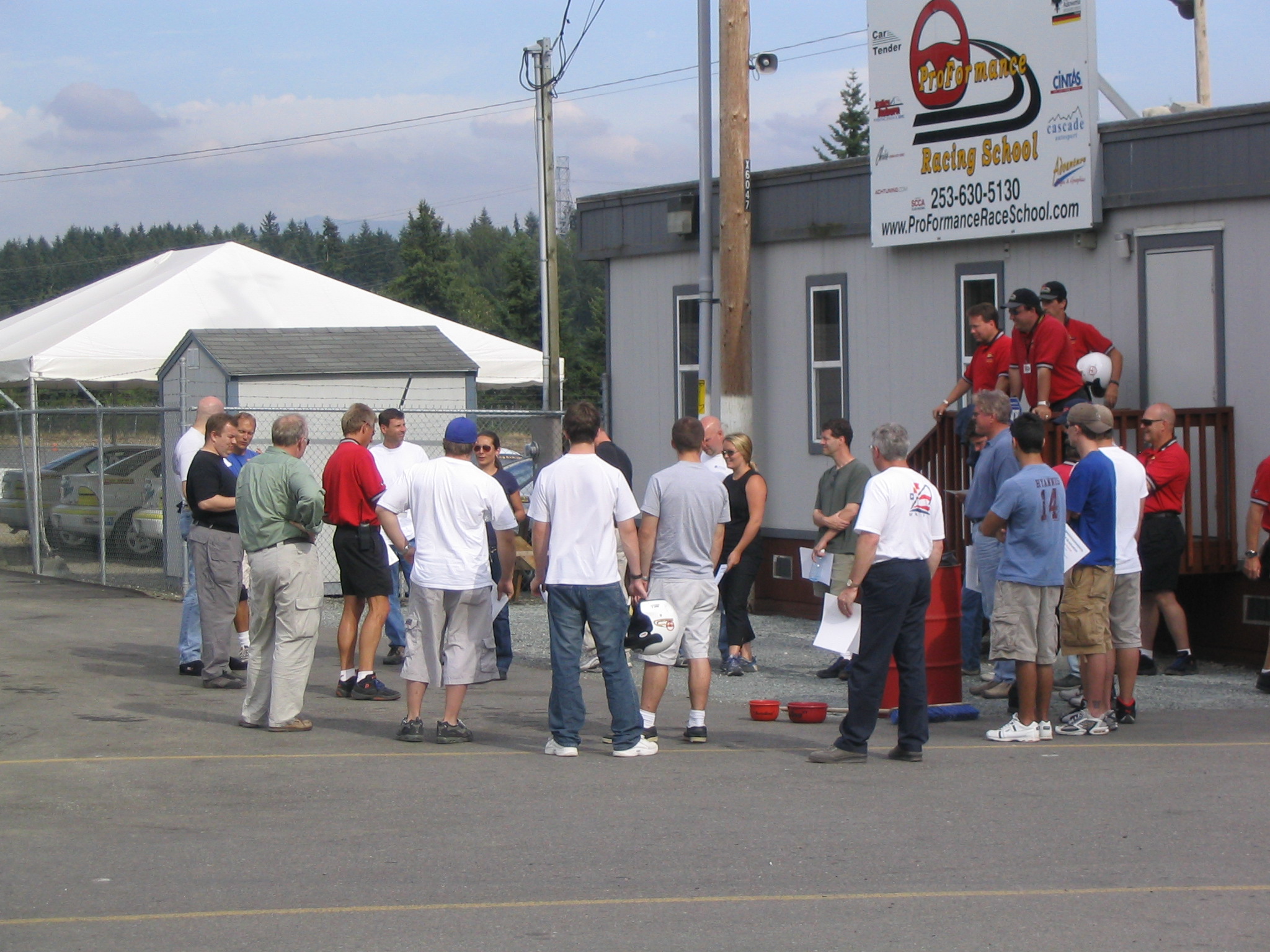
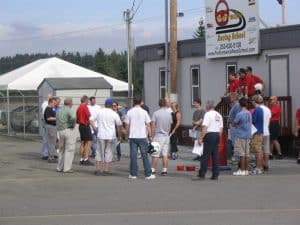
Track day drivers at ProFormance Racing School Track Day

For many aspiring drivers, the hardest part of breaking into high-performance driving is figuring out where to start. The idea of taking your car to a race track can feel daunting. What if youโ€™re not ready? What if you donโ€™t have the right car? What if youโ€ฆ spin out? The truth is, every seasoned racer once stood where you are now, full of questions and excitement. The good news? Youโ€™re not aloneโ€”and there are programs specifically designed to help you take that first step with confidence.

One of the best ways to begin your journey is by attending a High Performance Driving Education (HPDE) course. For example, ProFormance Racing School at Pacific Raceways in Kent, WA, offers a structured, supportive, and hands-on environment to help you master the fundamentals of car control and experience the thrill of driving on a race track for the first time. However, there are many similar high-performance driving schools across the country that provide a comparable experience tailored to beginners.

For those of you in the Pacific Northwest or willing to travel to the PNW, ProFormance isn’t just one of the best options on the west coast for an HPDE course because they are the home school for Pacific Raceways, but they legit have some of the best instruction and coaching available anywhere. Their team is made up of current and past active drivers who have climbed and hung on various steps of the racing ladder, all the way up to IMSA/SRO levels of driving.


What Makes a High Performance Driving School a Great First Step?

For most schools, car options are open, meaning you can either bring your own street car or rent a car from the school. Using your own car is entirely fine, as the focus isnโ€™t on breaking lap records but instead on developing car control skills, awareness, and safety. Modern carsโ€”even non-sports carsโ€”have more performance potential than most drivers realize. As long as your street car has been well-maintained with healthy tires, brakes, and brake fluid, itโ€™s likely ready for the track.

Additionally, formal schools like ProFormance Racing School emphasize the fundamentals of car control. These fundamentals are critical because a lack of solid basics can lead to bigger and more expensive mistakes when drivers exceed the limits of traction and donโ€™t have the skills to recover. Learning these essentials early can save you from trouble later and set you up for success as you progress in your driving journey.

A high-performance driving school typically offers a one-day program thoughtfully split into two parts: a Skills Clinic in the morning and Lapping Sessions in the afternoon. Together, they provide a comprehensive introduction to high-performance driving thatโ€™s perfect for anyoneโ€”whether youโ€™re looking to get into track days, time attack, or wheel-to-wheel racing.

Morning Skills Clinic: Building the Foundation

The day often begins with a classroom session where youโ€™ll learn the essential principles of high-performance driving. This isnโ€™t just a lecture; itโ€™s an interactive session covering topics like:

  • Vehicle dynamics (understanding how your car responds to your inputs).
  • Skid control techniques (what to do if you lose grip).
  • Brake application (maximizing stopping power without losing control).
  • Vision skills (learning to look ahead and anticipate).

Once the classroom portion wraps up, youโ€™ll take to the track for hands-on exercises. These drills are designed to sharpen your skills in real-world scenarios. Youโ€™ll practice emergency braking, skid recovery, cornering techniques, and more. The focus is on teaching you to think faster than you drive, making split-second decisions while staying composed behind the wheel. By the end of the clinic, youโ€™ll have a solid understanding of how to handle your car in both routine and high-stress situations.

BMW E30 doing car control drills at a high performance driving day

Afternoon Lapping: Putting It All Together

After a morning of skill-building, the afternoon is all about applying what youโ€™ve learned. With an experienced instructor riding shotgun, youโ€™ll transition to full laps on the track. The focus shifts to flow and precision, combining your new skills into a seamless driving experience.

The instructors work closely with each driver to:

  • Refine your technique in real-time.
  • Help you develop a better connection with your car.
  • Build your confidence at higher speeds and in more complex situations.

The afternoon lapping session is not about going as fast as possible. Instead, itโ€™s about smoothness, consistency, and controlโ€”the building blocks of any successful track driver. By the end of the day, youโ€™ll have not only improved your driving but also gained a deeper appreciation for your carโ€™s capabilities.


Why High Performance Driving Schools Work

The beauty of these programs is their approachability. You donโ€™t need a race car to participate; a street-legal car in good condition is perfectly fine. The instructors meet you where you are in your driving journey, tailoring their feedback to your skill level. This ensures that every driver, from absolute beginners to more seasoned enthusiasts, leaves with valuable insights and improvements.

Another major benefit? Safety. These schools prioritize creating a safe and controlled environment for all participants. Youโ€™ll learn how to push the limits of your car without endangering yourself or others, which is essential for anyone planning to progress to more advanced forms of motorsport.


The Next Step: Earning Your Sports Driving License

Once youโ€™ve successfully completed a one-day high-performance driving course, youโ€™ll typically leave with whatโ€™s referred to as a โ€œSports Driving License.โ€ While not an official license, this credential is widely recognized by track day organizers as proof that youโ€™ve received foundational training in high-performance driving. With this license, youโ€™ll be eligible to participate in track day events, often under the oversight of an instructor.

This is where the real fun begins. After earning your sports driving license, itโ€™s time to sign up for track days. We encourage new drivers to attend as many track days as their schedule and budget allow. Why? Because practice is everything. The more seat time you get, the more youโ€™ll hone your car control skills and build muscle memory for critical driving techniques. Think of it as applying the โ€œ1,000 hours of practiceโ€ ruleโ€”consistent seat time leads to significant improvement and confidence behind the wheel.

Sports Driving License? Unlocks driving at many track day organizer events across the country… in your own car!

Alternative Options for Practice

Not everyone has access to a race car, a track car, or the resources to participate in frequent track days. But that doesnโ€™t mean you canโ€™t continue developing your driving skills. One excellent alternative is using a racing simulator on platforms like Xbox, PlayStation, or PC. Games such as Forza Motorsport, Gran Turismo, Assetto Corsa, ACC, and iRacing provide a surprisingly effective way to practice car control, learn new tracks, race against the clock in time attack events and even race wheel to wheel against AI-powered drivers and real people all over the world. 
Sim racing is not just for fun; itโ€™s a valuable tool for honing your driving instincts and mental focus. Many professional racers use simulators as part of their training routine and not just the incredibly expensive simulators. If youโ€™re serious about improving but need a more accessible option, simulator racing is a fantastic next step. Stay tuned for an upcoming blog post that dives deeper into getting started with sim racing and how it can complement your on-track journey.

Can’t afford to do as many track days as you want? Get a simulator! Yes, even an Xbox or PlayStation 5 will work!

Step 2: Picking a Car to Drive at Track Days

Once youโ€™re ready to take your driving journey to the next level, the question arises: What car should you drive in the future track days? This decision can range from using your daily driver to renting a fully prepared race car. Each option has its benefits and challenges, depending on your goals, budget, and level of experience. Stay tuned for a future blog post where weโ€™ll explore these options in detail, helping you find the best fit for your track adventures.


Take the Leap

If youโ€™ve ever dreamed of driving on a race track but didnโ€™t know where to begin, a high performance driving school is the perfect place to start. Programs like those offered at ProFormance Racing School and similar institutions across the country will teach you the fundamentals of high-performance driving, build your confidence, and give you an unforgettable introduction to the world of motorsport.

Ready to get started? Look for a reputable high-performance driving school near you, book your first session, and take the first step toward becoming the driver youโ€™ve always wanted to be. Trust usโ€”once youโ€™re out there, youโ€™ll wonder why you waited so long.

Posted on

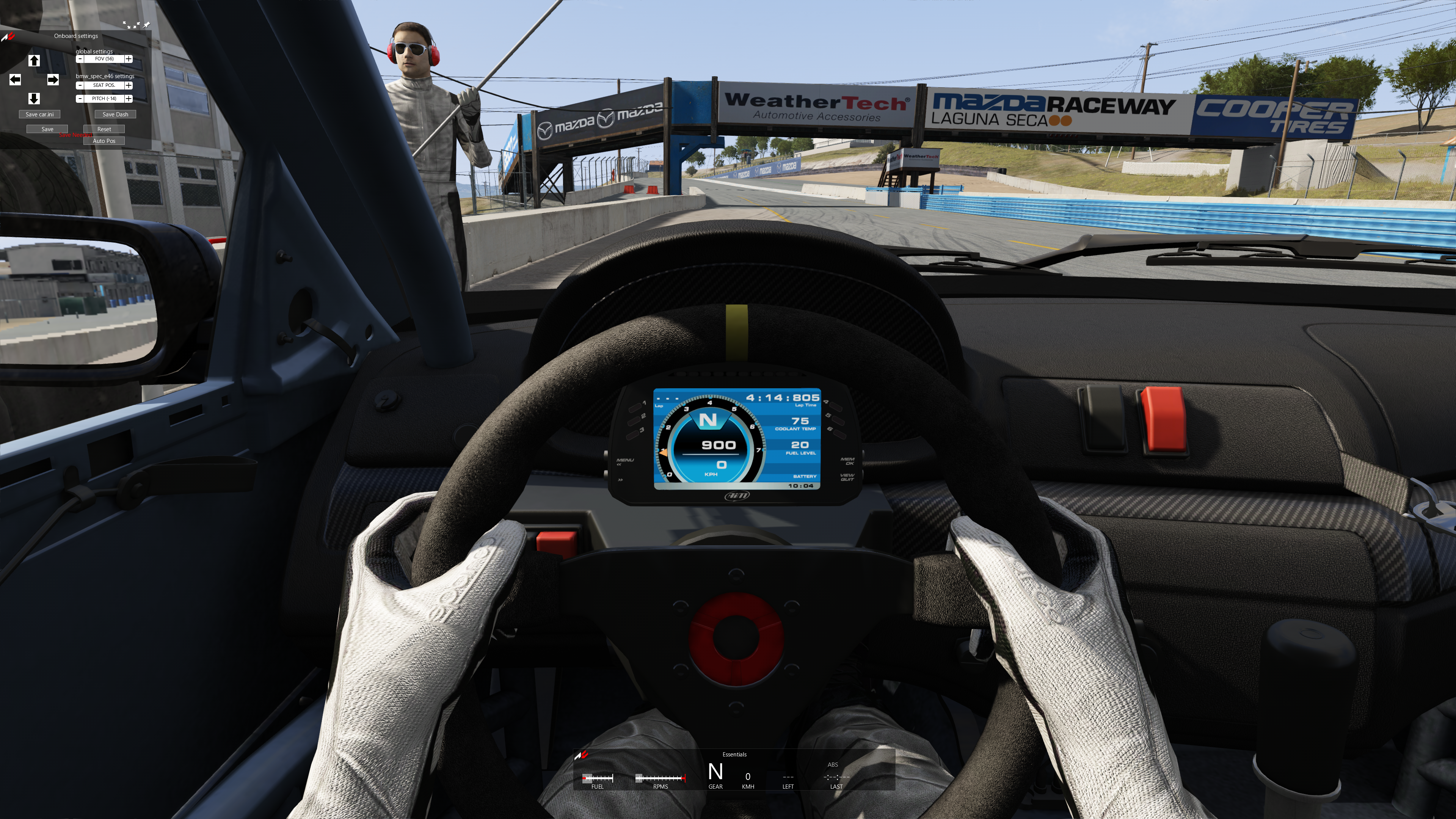
v1.2 of the Assetto Corsa Spec E46 is now available

Thanks to everyone for the support on the SE46 car for Assetto Corsa.  We have an updated build to share!

Here’s what is new:

  • Front and rear anti-roll bars are now adjustable.
  • The car now comes with additional base factory colors for the car.  The sponsored race car livery is still the same and the default but now you have new options.
  • The .zip file now contains a new folder called “Templates”.  This folder contains a Photoshop file (.psd) that you can use to create your own livery.
  • The passenger side cage tube now goes in the proper location (aesthetic change only).
  • Wheels now have motion blur.
  • Enhanced levels of details and interior is now optimized for low resolution graphics cards/monitors
  • The rear-view mirror has been adjusted down so it is more easily viewable when not in VR mode.
  • The description, power figures and graphs have been updated.
  • Dyno graphs are based off a real-world chassis dyno and 15% added to torque and whp for drive-train losses.

How to get the update:

For those who already purchased the car, an email has been sent (including initial contributors to the build) where they can access it and all new purchasers will get the new build in the download link.  Click here to check out and buy the car!

How to install the update:

  1. Download the update
  2. Make sure Assetto Corsa is not running.
  3. Right click the .zip folder and select “Extract All” – do not just double click into the folder.
  4. Find the “contents” folder and copy that folder
  5. Go to this path: C:\Program Files (x86)\Steam\steamapps\common\assettocorsa\content\cars
  6. If you already have the previous version, delete the previous version of the car, which should be a folder called “bmw_m3_e46”.  If not, skip this step and go to step 7.
  7. Go up to levels in that director to: C:\Program Files (x86)\Steam\steamapps\common\assettocorsa\
  8. Paste the “contents” folder you copied above
  9. Close the file explorer window
  10. That’s it!

Over the next couple months, via our friends at Track Attack, we will have the capability to log telemetry data from Assetto Corsa and compare it with the real world data we already have from several tracks.  We’ll use this data to further fine-tune the physics model.

As always, let us know what you think and thanks again for the support!

Posted on

Building a Sim: I Want to Drive Better in Real Life!

With the explosive growth of simulator driving for not just training but actual competition, big time dollars and rewards attached, we get more and more questions about how to get started building a simulator setup and specifically, what to get.

Still wondering if simulator driving is really that worth it?ย  Check out this podcast from Speed Secrets and this video about William Byron โ€“ now a driver for Hendricks Motorsports, who didnโ€™t grow up driving karts or cars but rather, simulators.

This can be a complicated space because there are a lot of options.ย  In this second post, letโ€™s go down one specific path base on what we think is the most important question.

Why do you want a simulator setup?ย  I want to use simulators to accelerate my driving or car in the real world.

eSports is exploding in popularity with games like Madden, Fortnite and Halo being at the center global gaming tournaments.ย  Gamers from around the world train and compete against world-class gamers at in-person and virtual tournaments all over the world and for real money.

This is not a spoof! That is a real picture of thousands of people watching gamers compete on-stage!

There are even several universities who have athletic scholarships for student-gamers.ย  Racing competitions in eSports is no exception โ€“ competing and winning real money for simulator driving is real and itโ€™s here.

This post is focused primarily for those who want currently or are planning to drive in the real-world and want to use simulators to accelerate their development.ย  Getting to the track in the real-life to get quality seat time, driver coaching, and car development is not cheap.ย  Simulators are an excellent path to do all of those things more often, at a lower cost and increasingly with direct correlation to what happens in the real world.

Recommendation: Go with a PC-based simulator like iRacing, Assetto Corsa (PC edition), Assetto Corsa Competizione or RFactor 2.ย  Yes, Gran Turismo and Forza have had tournaments where the winners compete in real life for chances to be race car drivers as a profession but those are the exceptions.

It’s time to get serious with triple monitors and the very best components you can buy.

Things to get:

There is no way to get around it – this will be more expensive because you are trying to replicate real life, of which a lot of what happens in real life is about how the car and track sound and feel of your inputs.

  • A quality PC that can keep up with the display you want. The main thing here is a decent processor and ram but the beefiest graphics card you can get and the bar at this level is a little higher than at the โ€˜simulator onlyโ€™ level.ย  Here are a couple options:
    • A PC desktop with a decent i7 processor, 16GB+ of RAM and a 6GB Nvidia GeForce GTX1070 or equivalent from AMD. Get the absolute best graphics card you can get โ€“ it will be worth it.
  • iRacing, Assetto Corsa, Assetto Corsa Competizione, RFactor 2 or Project Cars 2.
    • Yes, there are a ton more simulators out there, but these are the heavy hitters.
  • The best peripherals you can buy because you want motorsports grade hardware:
  • Display that will give you the best field of view (FOV) you can afford. Here are my preferences, in order:
    • 24โ€+ triple screens – I personally have an older version of this model but it doesn’t have pre-drilled holes for monitor stands, which sucks.
    • 27โ€+ curved screen
    • Virtual reality headset (e.g. Oculus Rift or HTC Vive Pro)
    • 40โ€+ single monitor/TV: this is not really an option. If you want to really focus on improving your real-world driving, you need an immersive experience.
  • Sim rig with a seat
    • A sim rig/cockpit is no longer optional. You need the seating position, field of view and access to the driver controls to be as close to real-life as possible and you can only really do that with a proper and sturdy sim rig.ย  Here are a few options:
  • Motion platform
    • Yes, itโ€™s now close to a requirement. Driving in race cars on tracks is a rough experience where youโ€™re getting tossed around as you go over bumps and curbs.ย  The feeling of the car pitching forward when you hammer the brakes, the car getting upset as you take too much curb or the backend coming loose when you carry too much speed into a corner or get on throttle too quickly โ€“ you need to feel that.ย  All of those things in real life tell you whatโ€™s going on and they remind you of the mortal consequences of having more bravery than talent.
    • Want everything integrated and ready to rock?ย  There several companies who sell fully built and ready to rock motion simulators.ย  Here are a few:

[URISP id=1774]

Pros:

  • There are few other things that will accelerate your driver development than quality motion simulator seat time.
  • The quality of your experience is completely dependent on the components you put into your PC and peripherals. If you want better graphics, get a better graphics card.ย  Want better FOV, change your display setup.ย  Want an even more immersive motion experience with real-time data streaming and coaching?ย  You can do that too!
  • The force feedback and vibration capabilities of the steering hubs and transducers on the market are amazing. You can buy components and configure then so that you feel everything on your feet, butt, abs, legs and hands as you do in real life.ย  ย ย ย You will have a generally authentic steering input and feedback experience.
  • There is a growing number of retail locations where you can rent seat time on very high-end simulators and get coaching from top-level coaches.

Cons:

  • No longer โ€œwelcomeโ€, you are right in the middle of the slippery slope! It is now the cost of a small car to get a decent motion simulator up and running.ย  It starts in the $5-10k range and goes into the $50-75k range.ย  There are simulators well above those ranges but those are reserved for commercial applications.
  • Driving consistently well in a simulator is hard and even more difficult with motion. Most people are lucky to end their first 30 minutes in a simulator simply not crashing or losing control.ย  Stick with it!
  • Pretty much everything is more complicated to setup. There is almost no plug and play experience for any component.ย  You need to connect them, install drivers and configure/calibrate.
  • The physics and tire model are better than the console world but vary across simulator platforms.
  • There is even more you can buy, which can be good – for example, buttkickers are sound based vibration devices that give even more feedback to the seat, pedals and generally corners of the car.

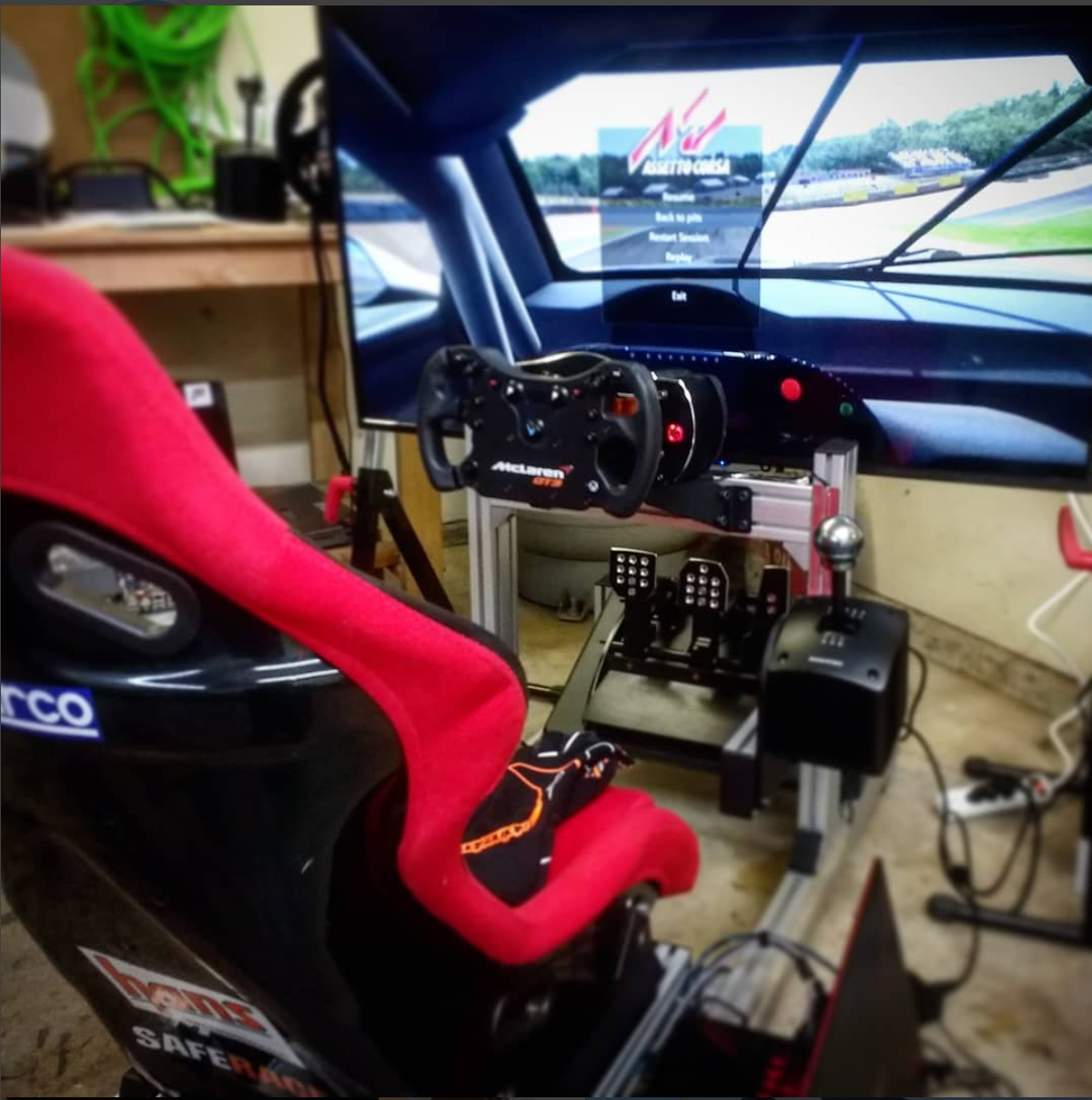
Example setups: Iโ€™ve only built one motion rig and would be considered โ€œentry levelโ€ for a quality motion experience.

  • Example 1: Entry level, motion with a rig: Everything here is exactly what I have on my current motion sim but my graphics card cost a bit more a year ago than they do today.
    • Total Cost: $8,741.39ย (doesn’t include taxes or shipping)
      • Custom built desktop gaming PC w/Nvidia GTX1080Ti:ย $1,200
      • iRacing subscription:ย $80/year
      • SimXperience Accuforce Hub and steering wheel w/button box:ย $1,299.00
      • Fanatec SQ Shifter:ย $199.50
      • Derek Spears Design (DSD) pedals:ย $895.00
      • OMP Racing seat:ย $799.00
      • Logitech 5.1 Speaker system:ย $49.95
      • Next Level Racing Ultimate Cockpit:ย $800.00
      • Next Level Racing V2 Motion Platform:ย $2,999.00
      • 3x AOC 24โ€ gaming monitors:ย $139.98 x 3 = $419.94

If I knew then what I know now, what would I do differently?

The Next Level Racing cockpit is pretty good, and I donโ€™t entirely regret my purchase decision, especially because their motion platform integrates seamlessly BUT if I were building another rig (which I will in the next 6 months or so), I would try the DOF motion cockpit because I don’t love the following about the Next Level Racing cockpit:

  1. The flex in the chassis, especially under heavy braking. First, it flexes and since it wasnโ€™t designed to flex in the first place, the amount of flex is variable.ย  This isnโ€™t great when you are trying to hit your marks lap after lap or making minor adjustments to brake application to shave off tenths of seconds.
  2. Lack ofย adjust ability. Having the seating position, steering wheel, shifter and pedals in the perfect position for your body is critical to driving fast and driving consistent.ย  Any unnecessary mental energy used to figure out where things are or having to adjust to not having the controls in natural/intuitive positions will make you go slower.ย  The NLR rig is essentially fixed in place after you set things up and for me personally, we had to add a wood block to the pedal box so that my heels could stay planted and reach properly.ย  The manual shifter position is okay, but I really wish I could move it another inch or two closer to me.ย  Lastly, with the motion set, the slider doesnโ€™t work.

You listed the Fanatec pedals but you have some other fancy looking pedals.ย  What gives?

Yes, when the Thrustmaster wheel hub failed after about a year of use, I upgraded to the Fanatec hub but I wanted as close to the real-world race car pedal feel as possible.ย  On this rig I currently have the Derek Spears Designs pedals which are amazing and use real Wilwood racing pedal box components.ย  You donโ€™t need these if you are only simulator racing.ย  I also have two other rigs with the Fanatec V2.5 Clubsport pedals, both the floor mounted and the hanging configurations.ย  They are solid and when you add the bump stops for the brake pedal, they are close to the DSD pedals but still substantially lower cost.


Posted on

Building a Sim: I Just Want to Have Fun!

With the explosive growth of simulator driving for not just training but actual competition, big time dollars and rewards attached, we get more and more questions about how to get started building a simulator setup and specifically, what to get.

Still wondering if simulator driving is really that worth it?ย  Check out this podcast from Speed Secrets and this video about William Byron โ€“ now a driver for Hendricks Motorsports, who didnโ€™t grow up driving karts or cars but rather, simulators.

This can be a complicated space because there are a lot of options.ย  In this first post, letโ€™s go down one specific path base on what we think is the most important question.

Why do you want a simulator setup?ย  I just want to have fun!

I want to have fun: Many people simply want to drive some awesome cars and a variety of tracks, without taking things too seriously.ย  You donโ€™t care or want to bother with dealing with things like tire pressures, spring rates, shock settings, etc.ย  You want to jump into a simulator, start driving, sliding and maybe even trade some paint with others or barriers, on your own.ย  Best of all, it’s the cheapest way to get into simulator driving.

My brother and I getting some laps in on Gran Turismo.

Pros:

  • Console-based simulators are generally of super high-quality graphics in the cars and the tracks.
  • The tracks are essentially what they are like in real-life, itโ€™s a great way to learn a track.
  • Tons of cars. Everything from high-performance street cars to Formula 1 cars.
  • The force feedback capabilities of the Fanatec and Thurstmaster lines are great and good, respectively. You will have a generally authentic steering input and feedback experience.
  • A great tool to focus on your getting your eyes to look far ahead and get ahead of what the car is doing.
  • Getting a console is much less expensive than building a gaming PC and the there are some lower cost peripheral options from Fanatec.ย  See our shopping list below, where you can get started for under $1k USD!

Cons:

  • Relative to iRacing, the quality of online racing against other real people is not great. People complain about getting crashed into at the rookie and lower levels of iRacing but online racing, outside of some of the bigger tournaments on Forza and Gran Turismo can be downright horrible.
  • The physics and tire model are simply not as good as iRacing, RFactor and Assetto Corsa.
  • Limited triple screen options. It is doable to get a triple screen setup but itโ€™s much more complicated and expensive.ย  A better option would be a large curved screen or virtual reality headset.
  • Aside from the Fanatec Clubsport V2 and newer pedals, the pedal options are not great. Specifically, is the feel from the brake pedal.ย  Braking is what separates the good from the great and having a realistic and consistent braking feel is critical.ย  Most of these console game quality pedals have limited resistance and you essentially train your braking based on the position of pedal, not the pressure and feedback from the pedal.
    • There are options to add a rubber bump stop to the brake pedal (of which I did to my Thrustmaster setup) which makes things better but still not as great as some of the high-end PC only brake kits.
  • Quality โ€“ this may have improved but just simply the quality of the components is not great. I was using the setup pictured below to really work on my driving, so I was put on hundreds of hours on the components per year.ย  If I recall correctly, the Thrustmaster steering wheel base lasted just over a year before it just stopped responding one day.ย  That was when I decided to upgrade to Fanatec and shift to a PC simulator and iRacing.

Example setups:

  • Thrustmaster, Forza and Xbox One: This was my first โ€œsimulatorโ€ setup going back to 2012 or so. I felt a little intimidated with getting into PC-based stuff, so between a Christmas present from my in-laws, my wife and my own purchases, I had a decent Forza based setup.ย  I spent hours working on fixed setup time attach competitions, primarily in a Mazda Miata and trying to build the cars I had in the real-world, in the game (Mitsubishi Lancer Evoluiont 9).ย  All in, this setup cost about $1,200.
    • Total Cost (assumes you already have a TV):ย $1,428.76 + S/H + Tax w/PlaySeat.ย  Under $1k w/out Playseat.
      • Xbox One S Forza Motorsport Bundle:ย $389.99
      • Thrustmasterย  VG TMX PRO Wheel, Base and pedals:ย $321.81
      • Thrustmaster TH8 shifter:ย $217.96
      • Playseat sim rig:ย $499

Yes, that is the pedal set taped down to the floor base.

Memories of me working my tail off to move up in the leaderboards.

  • For about a 3-month period I had a Gran Turismo and PS3 setup with a Logitech setup but it wasnโ€™t any better than what I had with Forza so I sold everything off. Total cost was right around the same as the Forza.

Do you have an awesome console based sim set up?ย  Post some pics in the comments!

Check out future posts on two other paths:

  • I want to get serious about simulator driving: This means you donโ€™t care at all or much about driving in the real-world. You are all-in on simulator driving.
  • I want to use simulators to help me be a better driver in the real world: This means you currently or plan to be driving on track in the real-world and you want a simulator to help with driver and car development
Posted on

Getting an FIA racing license

So you want to go ‘Pro’ racing?ย  Or maybe you want to have the license that gives you access to every regional sanctioning body in the US? Odds are, you’re going to need more than the regular regional racing license.ย  And if it is international competition, you’ll very likely need an FIA (Fรฉdรฉration Internationale de l’Automobile) racing license.ย  For the Creventic 12 hours of Imola race, that’s exactly what was needed, so here is what that experience was like.

What’s different between an FIA and a national/regional (e.g. SCCA/NASA/ICSCC) type license?

One major thing: FIA licenses are for experienced racing drivers, not just accredited racing drivers.ย  For just about all other racing licenses, you need to prove that you’ve completed a [insert level of quality here] racing curriculum.ย  You need not have actually completed many races or been ‘fast’ to get an SCCA, NASA or for me personally, ICSCC racing license.ย  This level of training shows that you have a base level understanding of race car dynamics, how event is organized, what the flags mean and how to be safe on-track.

From the application process for FIA, they have a higher bar.ย  They are looking for some level and amount of experience.ย  They want to know who you are as a racing driver, via the driver biography.

The second thing is the general global acceptance of the license.ย  At least within the US, if you have an SCCA license, it will be accepted at various levels by other sanctioning bodies.ย  SCCA being the most widely accepted, NASA following closely behind and more regional licenses also being accepted but having to provide more proof the further outside the region you go because there is a lower probability a licensing director has heard of the regional body.

Bottom line:ย When you have a valid, in good standing FIA license, you can pretty much race anywhere in the world.

How to get an FIA license: Step by step

Step 1: Collect these pieces of information before you start the application process

  • A passport compliant photograph of yourself.ย  It doesn’t need to be exactly a passport photo but must follow the general rules.ย  Here is a link to the United States passport photo requirements.
    • I used a head-shot from a photo shoot at work, cropped to be 2×2 inches or 51x51mm.ย  Make sure it is saved in .jpeg format for best picture quality.
  • A racing biography.ย  This was a little confusing as there is no standard template.ย  So I simply created a ‘resume’ style biography of my driving.ย  I’ve included a PDF copy of that below for reference.ย  It needs to cover things like how long you’ve been racing, what organizations, how many races, finishes, etc.
  • A current copy of a medical exam form for racing, that was completed in the past 3 months.ย  The FIA also does not provide a template, so I used the medical exam for used for an ICSCC competition license and that worked just fine.
  • Your credit card to use for payment.

Step 2: Go to the US FIA Licensing website and fill out the application

  • Application link for United States based FIA licenses
  • Fill out the form.ย  The first section is your personal details.
  • Select ‘No’ for Have you had a previous FIA competition license.
    • Select and upload your racing driver bio document.ย  PDF format is your best bet.
  • The second section you should select ‘Competition License only’ and yes for the additional fee for International Competition Authorization.
    • Select Grade ‘C’ unless you are driving a GT3 race car or higher.
  • Upload your passport style photo and completed medical exam form.
  • Check the waivers and acknowledgements.
  • Click next

Step 3: Pay the fee

Yes, this is expensive and resulting in almost $500 USD.ย  The positive side is that this should be the only license you need if you compete in US national and regional club racing competitions.ย  You might still need to pay a guest fee of some sort but that’s it.

You will get a confirmation screen and document which outlines everything and even provides a handy QR code to track the progress of your application.

Summary: Simple and straight forward

I personally did not request the expedite service and in under 2 weeks, I got the license in the mail!

My license to kill… tires and lap times!

From the moment I first clicked on the link to apply for the license, to when I got the license in the mail was about 1.5 months.ย  This was because I had to ask questions about what does a racing bio look like?ย  What medical form should I use?ย  Then I had to make and get to a doctor’s appointment, of which was a little hard because work-life and life-life has been a bit crazy.

But overall, if you’re looking to do FIA sanctioned competition its not a difficult process to get through, especially with this guide.ย  ๐Ÿ˜‰

Let us know how it goes for you?ย  Did you have a different experience?ย  Have you applied for a B or an A license?ย  Share other driver bios!


Posted on

My first track day!

What: My first track day!

If I knew then what I know now: I am not sure I would have changed a lot. The never give up attitude can get you along way at the track, and in the end I ended up driving a great car!

Check out: The Proformance Racing School has many great programs to choose from to fit your driving needs. Also other schools have arrived in the northwest as well like The Ridge Racing School and Dirt Fish Rally School.


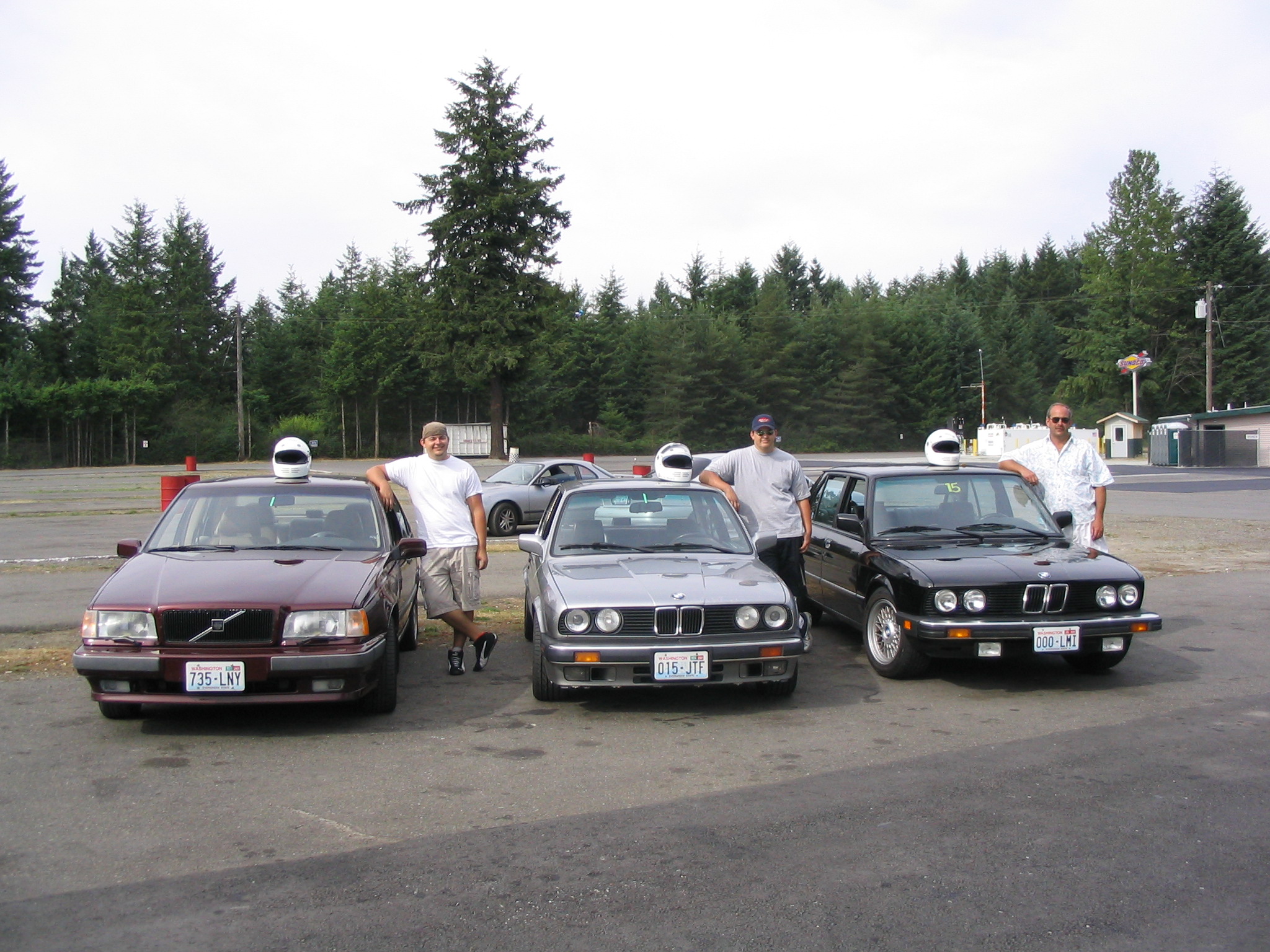
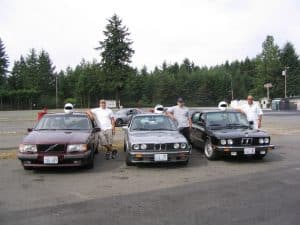
The line up from the Family at my first track day!

My first track day was my 18th birthday gift from my parents. I thought it was the best thing I ever could have received as a gift. A chance to drive as fast as you can and not worry about the law. It turned out to be SO much more than just a thrill. My dad was always into track events as far back as I remember. As kids we would get to go watch him drive his, at the time Porsche 912, at the then called Seattle International Raceway (SIR) now called Pacific Raceways. I was hooked by the motorsport bug early. This brings us back to modern times at Proformance Race School for the One Day Advanced Driving School. Excitement level: high!

My car: 1985 Ford Mustang SVO Comp Prep – needed to be prepped

Leading up to the event we went over the recommended things to do before a day at the track. That list will be covered in another post but needless to say I did non of them. The car I had at the time was going to be great for this event. I was going to drive my 1985 Ford Mustang SVO Comp Prep. It was a bare bones version of the special edition SVO Mustang that was built to be sold to club racers in the 80’s. One problem was the car had no motor. So in the weeks and days leading up to the event we were trashing on the old SVO to get it running again. There is a longer story for another time. Got the car running about 1:30 am the day of the track day. So much for a good nights rest…. Wake up early and warm the cars up and I find a coolant leak from a bad sending unit under the intake manifold. Can’t drive a leaky car on track. Bummer factor: ย Max at this point.

Drivers meeting.

Enter Dad for the save. He had recently got into BMW’s and was getting an E30 325is ready for track duty. He also had gone through and rebuilt an e28 533i BMW to daily drive as well. Being that he had two capable track worthy cars and is a 100% bad ass dude, he offered to let me drive the E30 for my first event. This may have been a bad thing because I have a couple E30 track cars, now. We unload my gear from my car to the E30 and dads gear from the E30 to the E28 and we were on the road. Excitementย Level:ย Back to pumped!

The day of the event

It was the most enlightening thing I have ever done in a car. In the morning we did driver skills training with a panic braking stage, an eyes up flag drill and an emergency lane change drill. In these drills the basics of driver safety are tough, things like steering wheel hand position, seating position and were to look out the windshield. I felt like I was a sporting driver before but I had know idea I was just passing over the simple things to make me a better driver. The main thing that set in was eyes up and forward looking. Look to see whats ahead, what a novel thing. I still practice looking ahead every time I get in a car. Feeling pretty mind blown at this time.

The afternoon was spent lapping at Pacific Raceways. Now we are getting into some speed. Using the ideas we learned in the morning to improve our actions during spirited driving. I had a great instructor. She was calm and was very clear on instruction. As the afternoon progressed my vein tap was deeper and deeper. As I started getting more comfortable in the car the speeds came up and the fun factor as well. I would say I was getting to maybe 70% of the car capabilities but at the time was more than enough to fill my speed fix at time. Later this would change, but being the first time I had done anything at speed on a track I was cool.

All happy after a good day.

Literally the most valuable driving thing I’ve ever done

To this day I think this is the most valuable thing I have done to help my safety as a regular day to day driver. The lessons of eyes up and looking forward has become how I drive, not just something to do when I drive. Following this has saved myself and property from many (read lots of times) events on the road. Being able to see whats coming and react/ anticipate to whats about to happen, you end up being out of a situation before it even happens. You can then watch it and go “man, Glad I wasn’t in that” rather than “damn, I wish I would have seen that.” In my opinion this course should be done by anyone with a drivers license. The roads would be a much safer place. This was my gateway into the track world.

Posted on

Walk This Way! Track Walks:

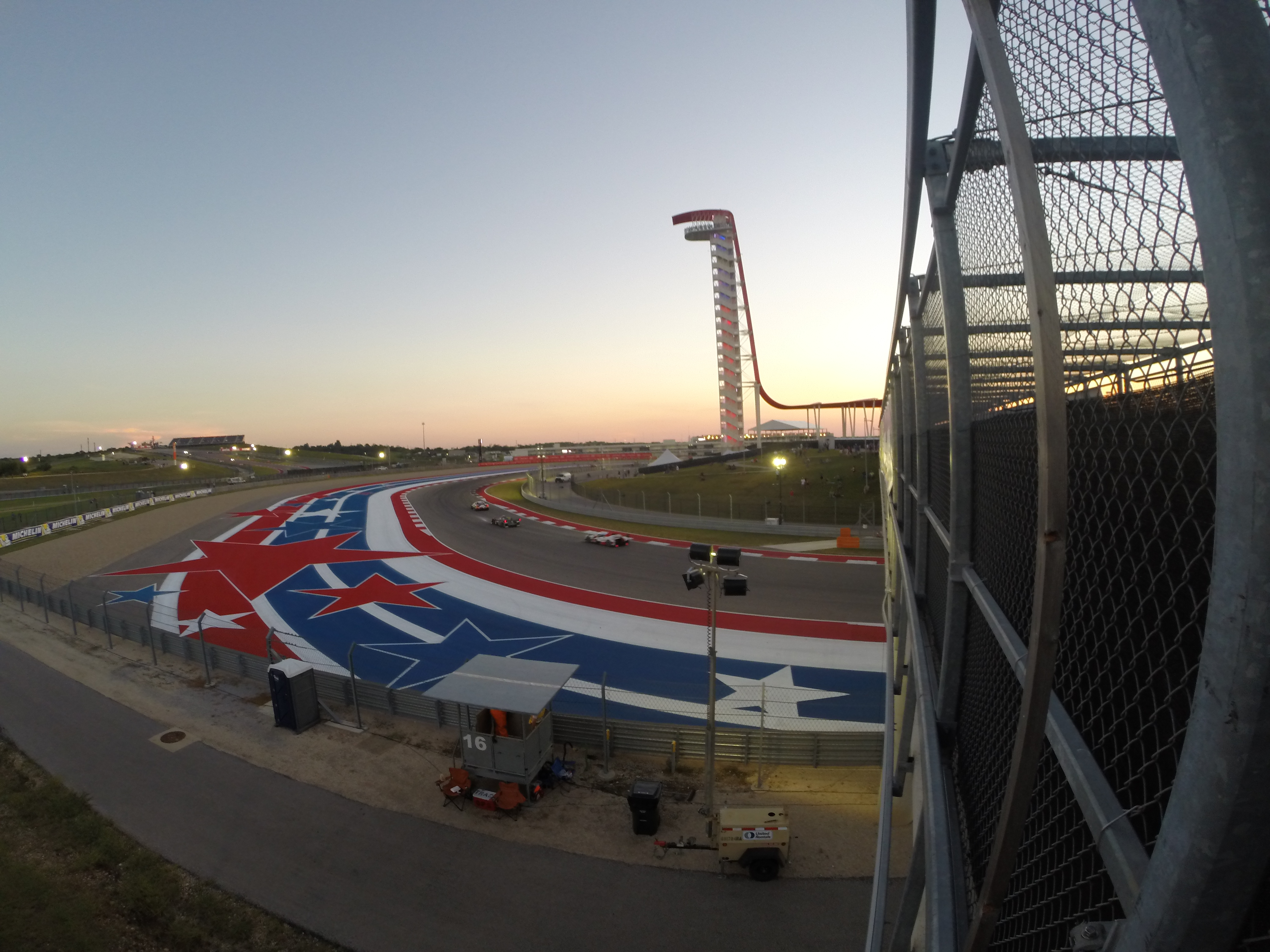
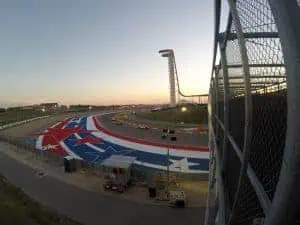
Looking out the pit-lane exit at Circut of the Americas

What: Track walks, why you like them, even if you don’t know it yet

If I knew then, What I know now: ย I would have studied harder on these when I was younger. ย I would be a better driver and team member overall, now as a result.

Walking the track before an event is a very important part of your race or track weekend.ย  It spreads across all forms of motorsports, and any amount of wheels used.ย  Getting your feet on the same ground you will be driving your car on will give you valuable perspective regarding placement or the vehicle, surface conditions, line options and so on.ย  It is a great way to get the track layout in your head prior to getting into or on your machine.ย  There are a couple of key things to pay attention to and try to do while on a track walk.ย  I will try to outline some of them to help you get the most out of your next track walk.ย  I will start with some of my experience from the first events I went to as a young lad in high school with my buddies.

A group of friends of mine in school were also into cars.ย  We would set up a couple of days a year where we would all meet up the day before an auto cross event, hang out at one of the guys cabins, and then take all of our cars to the event the next day. ย Auto cross was a good introduction into motorsports as a driver for me.ย  The first day I went to an event was with the Porsche Club (PNW Region).ย  I had a little old VW Jetta that had some sticky tires on it.ย  We got to the event, stood through the drivers meeting, then everyone set out and walked around the course that had been set up.ย  A course walk at an auto cross is essential.ย  The track will never be the same from event to event, so getting a feel for the layout is an important first step.ย  Auto cross does not allow for a lot of set up and testing time, so getting the most out of your runs is key.ย ย  I learned how valuable it was.ย  I was able to pip my friend on our first time out, and he was driving a 911.ย  There were more events after that, and as I grew to understand the track walk it made perfect sense to me.

Flash forward 15 years and now we are doing track walks every week we go to the track.ย  I went out and rode a new Motocross track a few weeks back โ€“ I did not get a chance to walk it, but I took 4-5 laps at just above a walking pace just to feel the place out โ€“ 2 laps later I was ripping around just fine.ย ย  We will often times end our first night at the track with a track walk.ย  It is a great way to wind down after a work day, and also a good way to walk some miles if you did not get a chance to before!ย  My first race back after a couple of years of just crew work, I ended up racing at the Ridge in Shelton.ย  It is a place I had driven before, but it had been a while.ย  We took the time the night before the race to walk the track, twice actually.ย  It was great.ย  I had one of the instructors at the track walking with us and they provided great insight to where to place the car due to seems in the blacktop in braking zones.ย  Entry and exit lines were discussed.ย  Gear selection (which can depend a lot on your equipment) was discussed.ย  I felt a lot better after walking the track to just jump in the next day and go.ย  Everything was fresh in my mind again.

Elevated view of the turn 17-18 complex at Circut of the Americas

Gama asked me to do a track walk with him this weekend at Pacific Raceways in Kent.ย  We have a race this weekend in the Pro3 car and he will be the only driver for the team this weekend as Manuโ€™s car had a mechanical issue we found during a post-race inspection (more on that later).ย  I was quick to agree, as I have had many track days there, and 2 school days at that track, but had never actually walked a full lap in all of my years.ย  I had been to points of the track, but not all of the way around on foot.ย  We will be walking the track tonight and I am going to make notes, and take pictures to share our experience with the walk!

We try to track walk every weekend. ย it is good exercise, knowledge, and you will have a great feel for the layout the first time you are behind the wheel at speed.ย  Be prepared for a walk, and be prepared for weather as well!ย  Some tracks are large, and weather can be different from one side to the other.ย  One of the other things that will help you a lot with our track walk, is walking with someone with lots of knowledge of that track for insight.ย  Most racers are instructors also, so their points of view are sound usually!ย  Just walking the track can gain you a lot, but having someone there to compare notes and tips with is very beneficial. ย ย Having someone that drives a similar vehicle is even better!