Posted on

One More Weekend, Plenty More to Learn: Haunted Horsepower at the Ridge

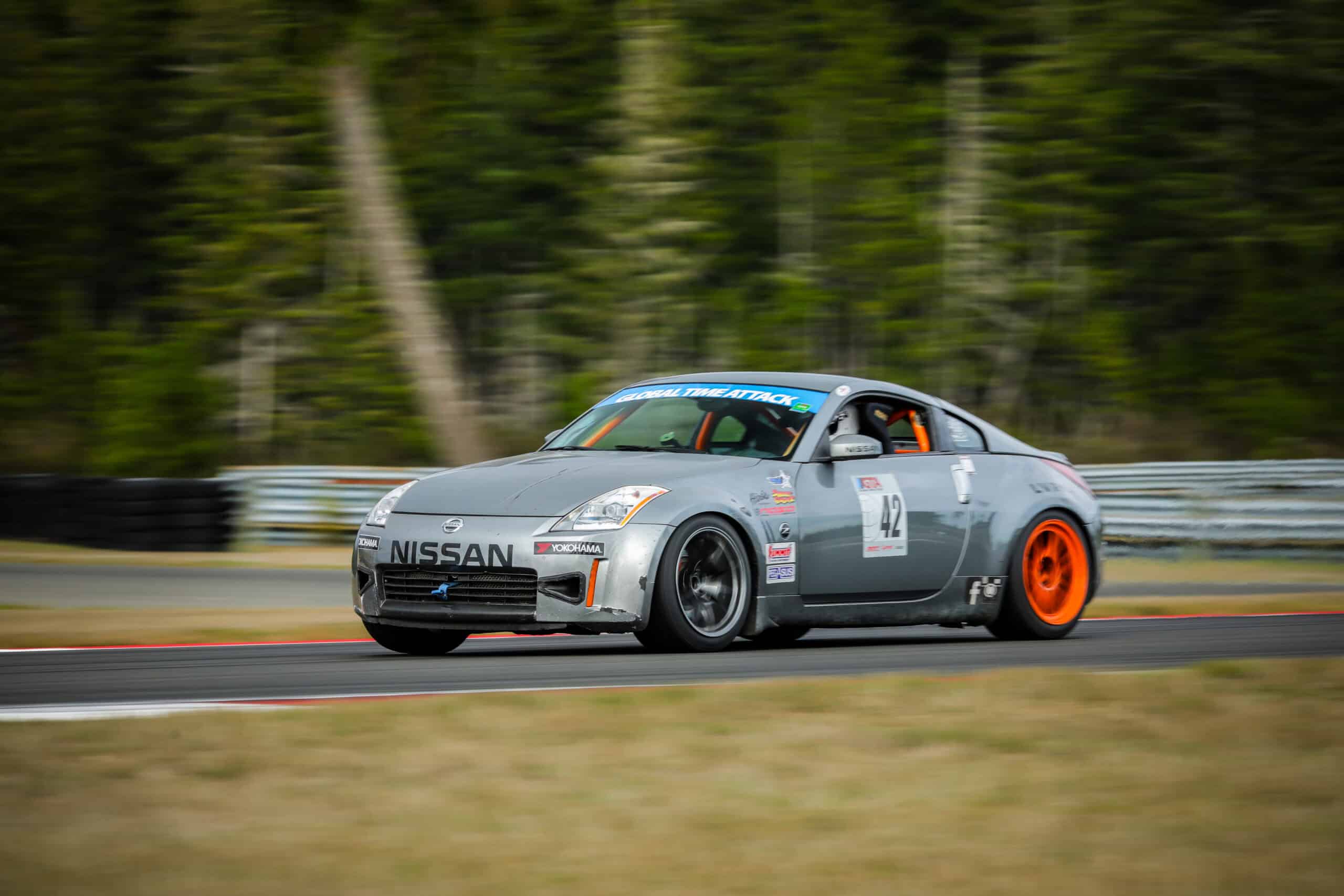
Silver-grey Nissan 350Z number 42 with an orange rear wheel cornering on a racetrack at the Ridge

There are worse ways to finish October than spending two consecutive weekends at the Ridge.

On October 24 and 25, Racer on Rails returned to Shelton for NASA Northwest’s Haunted Horsepower weekend. It was the closing chapter of our Pacific Northwest racing season, and we arrived with three cars, a few ideas to test, and an open mind about what we might learn.

Ron brought his number 63 Spec E46. Gama drove our number 36 Silver Bullet — the numbers conveniently reversed. Joel Bergman joined us in his Nissan 350Z for his first NASA Time Trial weekend.

We also spent the weekend alongside Mario, whom we’d met at the previous event and helped get ready for this one, and Lawrence from GT Exchange, who was working toward his NASA racing license.

By Sunday afternoon, we had a new personal best to celebrate, a promising direction for our Spec E46 development, a mechanical mystery explained, and more reasons to be excited about the people joining our racing community.
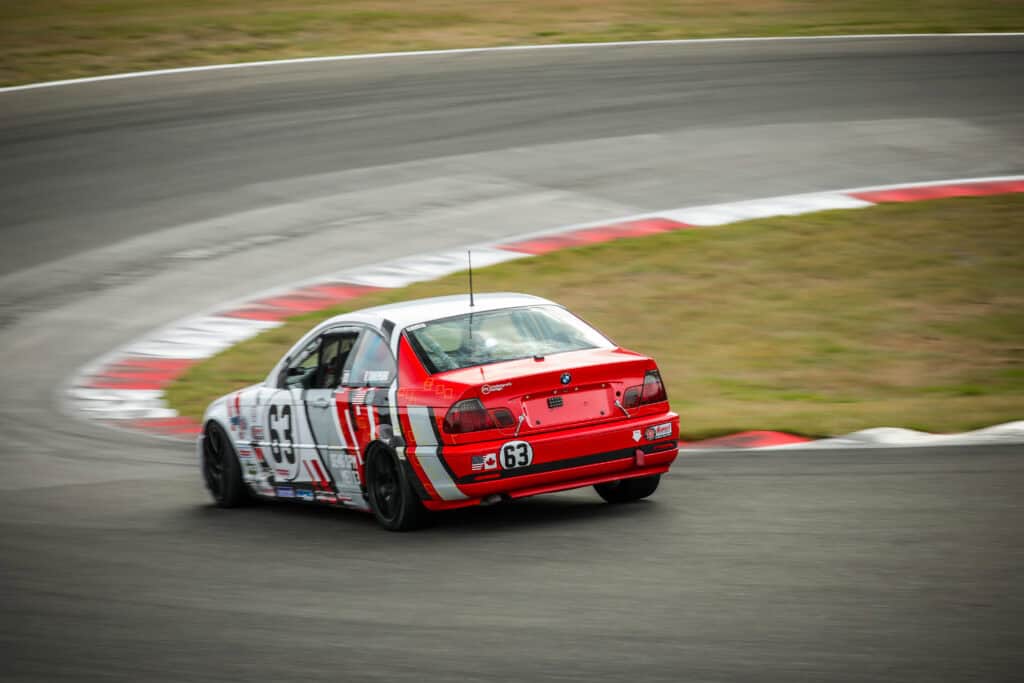
Red and white BMW Spec E46 number 63 cornering on a racetrack at the Ridge
Ron’s #63 Spec E46 at speed at the Ridge. Photo: Kirk Myhre / MC Motorsport Design

NASA’s Return Brings More Ways to Get on Track

NASA — the National Auto Sport Association — returned to the Pacific Northwest in 2026. One of the most valuable things it brings is a connected set of opportunities for drivers at different stages.

  • Arrive for your first-ever day on a racetrack and start in HPDE1 with an instructor.
  • As your skills develop, progress through HPDE 1, 2, 3, and 4.
  • From there, drivers who want to compete can work toward Time Trial or wheel-to-wheel racing, with the training and licensing each requires.
  • Or keep enjoying driver education for its own sake. Racing doesn’t have to be the destination.

For someone looking at all the different organizations and wondering where to start, that structure helps. NASA brings instruction, advanced driving, timed competition, and racing into the same event community. This weekend gave us examples of almost that entire journey right in our own paddock.

Making the Most of a Quieter Weekend

Late October comes with some realities in Northwest racing. Budgets have been stretched over a long season. The weather is turning. Some drivers have already packed things away for winter.

The race fields were light, and we weren’t arriving with a championship to settle. We saw an opportunity to spend time testing, comparing, and developing.

Ron, Tyler, and Gama had been discussing whether lessons from our 370Z, Cayman, and other car-development work could translate to the Spec E46. Those conversations led us toward a substantially different setup direction from what we’d previously used.

Saturday’s expected dry, consistent conditions gave us a chance to evaluate it.

We didn’t know whether it would be faster. We didn’t know whether we would like it. We came prepared to drive it, listen to what the cars told us, and see where the evidence led.

The Silver Bullet Gives Us Something to Work With

Almost immediately, the Silver Bullet felt different.

The car was settled, compliant, and willing to put power down. Gama’s first impression was that it might be the most compliant Spec E46 he had ever driven.

That confidence mattered. Instead of constantly anticipating the car breaking loose, he could gradually ask more of it and explore where the limit actually was.

The lap times came into the one-minute-fifty-twos quickly. Getting into the fifty-ones took more commitment, but soon the laps were repeating: a 1:52.0, a 1:52.1, a 1:51.9, a 1:51.7.

The encouraging part was how consistently the car allowed that pace.

There was still work to do. Gama felt there was more time available in the braking and corner-entry phases, and more to explore through small setup changes. This was an initial day of testing, with room left to refine both the car and the driving.

We’ll keep the technical details in our notebook. What we can share is that we left Saturday with a clear reason to keep pursuing this direction.
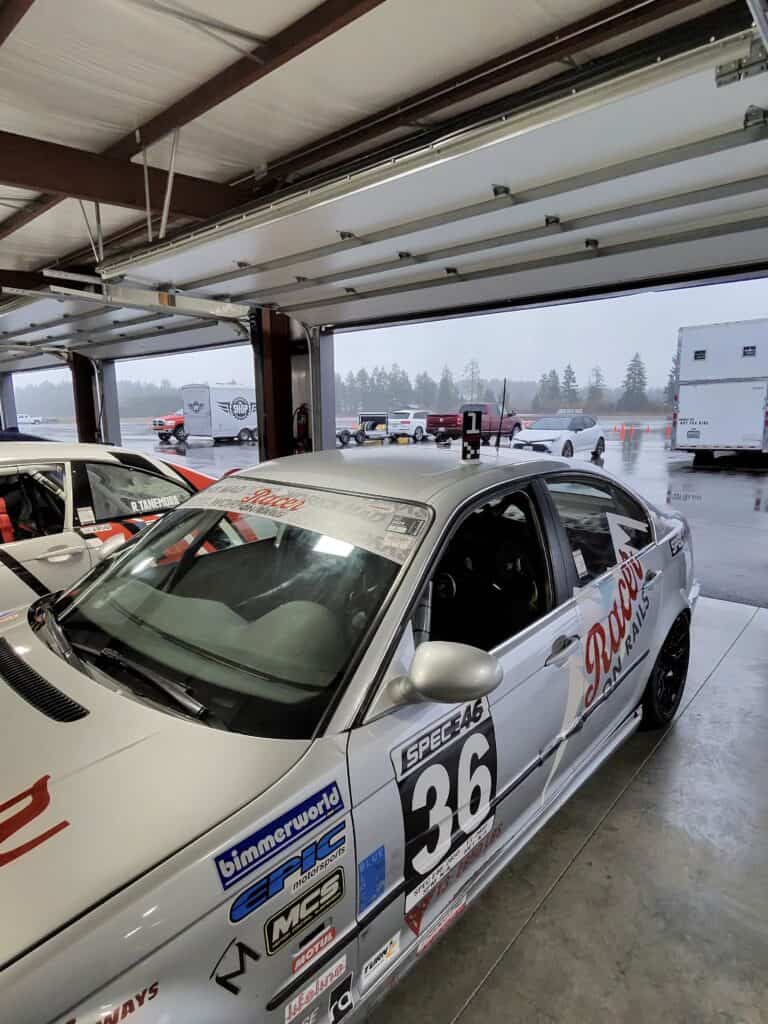
View from inside a race garage looking out at a wet paddock, with the roof of a race car in the foreground
The #36 Silver Bullet in the garage at the Ridge.

Two Similar Setups, Two Different Experiences

Ron felt an improvement in his car, too. But his feedback included something Gama wasn’t experiencing in the Silver Bullet.

His number 63 remained edgy, especially under power. It felt more compliant than before, but it still wanted to step out. He couldn’t lean on it with the same confidence.

For Saturday’s final race, we swapped cars.

Gama drove Ron’s car, and Ron drove the Silver Bullet. That gave both drivers a direct comparison and helped us separate what was specific to the car from what might have been a difference in driving.

Gama came back with a similar assessment to Ron’s. The car was moving in the same general direction, but it didn’t fully settle. There was still an underlying nervousness.

The intended setups were the same. The experience behind the wheel wasn’t.

Sunday morning, Jordan found a significant clue while preparing the cars: a front sway-bar mounting component on Ron’s car had failed, leaving the bar connected at only one end.

That gave us a mechanical explanation consistent with the feedback. We couldn’t say precisely when the failure occurred, but we could say that Ron had identified a real difference, the car swap had reinforced it, and the inspection had uncovered a problem.

That’s a valuable development process: listen to the driver, compare carefully, and investigate.

Wet-Weather Learning — and Choosing the Best Seat Time

Sunday brought rain and a different assignment.

For the first wet race, Gama returned to the Silver Bullet and Ron drove his own car. Gama used his pace to give Ron a moving reference, watching the gap and increasing speed as Ron gained confidence.

Ron responded. He adapted, found speed, and at points maintained the gap even with the unresolved issue affecting his car.

For the final race, we decided the most useful thing we could do was give Ron the Silver Bullet.

That put him in a car we knew was behaving predictably, so he could concentrate on his wet driving without the sway-bar problem complicating every sensation and every piece of feedback.

Gama stepped out, and Ron took the seat.

With limited track time left in the season, that was where we felt it could provide the most value.

Joel’s 350Z: Preparing the Car for the Driver’s Next Step

Joel came into the weekend having already made significant progress in his 350Z.

Most of his recent experience had been with OnGrid, including timed competition. He was still building his fundamentals, but the development since earlier in the year had been substantial.

The Ridge is the track he knows best. When we saw another Time Trial opportunity there, with lighter attendance and the prospect of plenty of track time, Gama encouraged him to come out.

Joel jumped on it.

Before the weekend, though, we had a problem to address.

At his previous event, we had been managing brake heat and damaged caliper seals. Refurbished replacement calipers of the same general type hadn’t solved the underlying limitation.

Fortunately, our 370Z development had left us with some useful hardware. After Gama’s T3 car moved to Paragon six-piston calipers, its former Akebono calipers became available. Gama gave those to Joel, along with spare Paragon two-piece rotors.

Combined with fresh brake consumables and ducting, that gave Joel an upgraded front braking package.

Across two days of driving, we monitored the temperatures and were pleased with the results. The brakes delivered strong, consistent performance throughout the event.

That meant Joel could focus on driving.

An Early Mistake, Then a Deliberate Reset

Saturday didn’t begin exactly as Joel hoped.

On his first flying lap, a little too much enthusiasm at the carousel sent him wide, with a tire dropping into the dirt. He checked in with the Time Trial group leader, and the opening session passed without a useful flying lap.

He reset.

Between sessions, Joel reviewed his previous onboard laps and spent time visualizing what he wanted to do. We revisited the priorities from his last visit: finding the apex with his eyes, getting the car pointed, and coordinating throttle application with the release of steering angle.

The goal was to feel how those inputs worked together — to add power with intention, understand the car’s response, and manage the exit rather than hesitate through it.

His second session produced a small improvement.

The third brought a more significant step, into the low one-minute-fifty-fives and toward the fifty-fours. Traffic made it difficult to repeat the best laps, but the potential was there.

For his final session, the assignment was to put it together consistently.

He did.

In the clear laps near the end of that session, Joel repeatedly ran in the one-minute-fifty-fours. By our count, five of his final seven laps were in that range.

He finished with a personal best of 1:54.32 — approximately a second and a half faster than his August best.

That’s a substantial improvement. Just as satisfying was watching him back it up with multiple laps at a similar pace.

His theoretical best, combining his strongest sectors, was down in the low one-minute-fifty-threes. Sunday’s rain meant we didn’t get another dry day to see whether he could connect those pieces, but he left with a clear opportunity to pursue next time.

A mistake in the first session became a small part of a much better story: regrouping, applying a plan, and developing speed he could repeat.
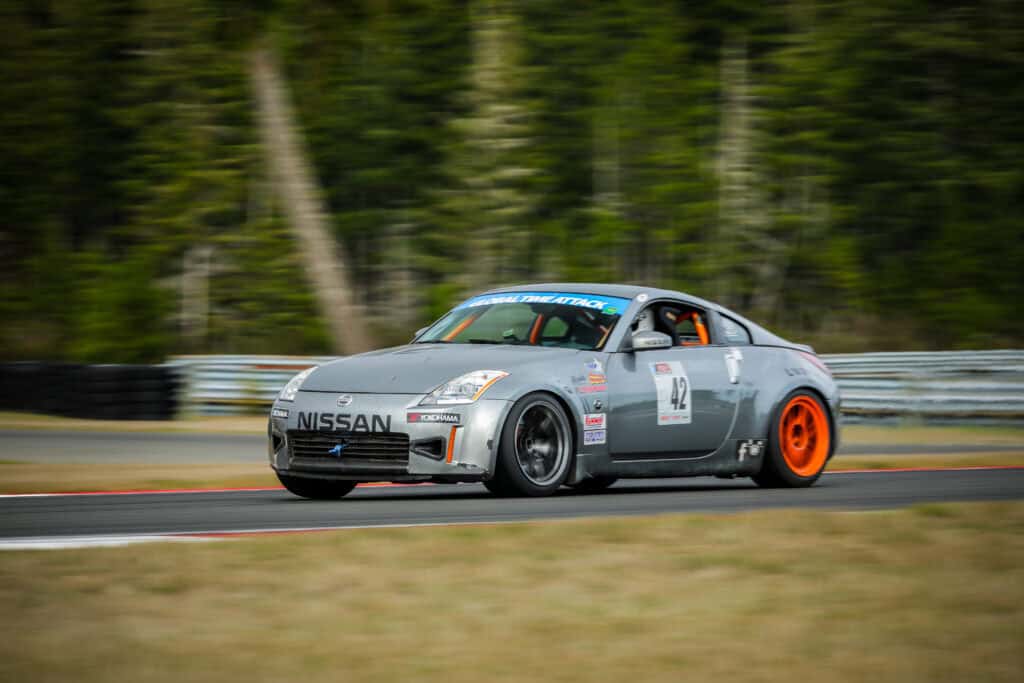
Silver-grey Nissan 350Z number 42 with an orange rear wheel cornering on a racetrack at the Ridge
Joel’s 350Z at the Ridge. Photo: Kirk Myhre / MC Motorsport Design

A Thank-You to NASA Northwest for Opening the Door

Lawrence’s weekend highlighted another reason we appreciate having NASA Northwest here.

He already had considerable track-day and time-attack experience, with serious speed in his Porsche GT3 Cup. He wanted to take the next step into wheel-to-wheel racing, including opportunities with the new Washington Enduro Cup.

But by late October, finding an available competition school was becoming difficult.

Being fast is one part of the preparation. Racing alongside other cars requires its own skills, judgment, and training, and Lawrence needed an opportunity to complete that work.

Gama connected him with Jason Perry, knowing NASA Northwest could accommodate individual competition-school instruction during race weekends.

Jason and Danielle Perry helped put a plan together. Lawrence completed the competition coursework over the weekend and participated in races, including some excellent, respectful battles with Mario.

A huge thank-you to Jason, Danielle, and the NASA Northwest crew for their flexibility and effort.

They helped an experienced driver find a practical path through the required training and onto the grid before the season ended. Growing motorsports takes people willing to make those opportunities possible.
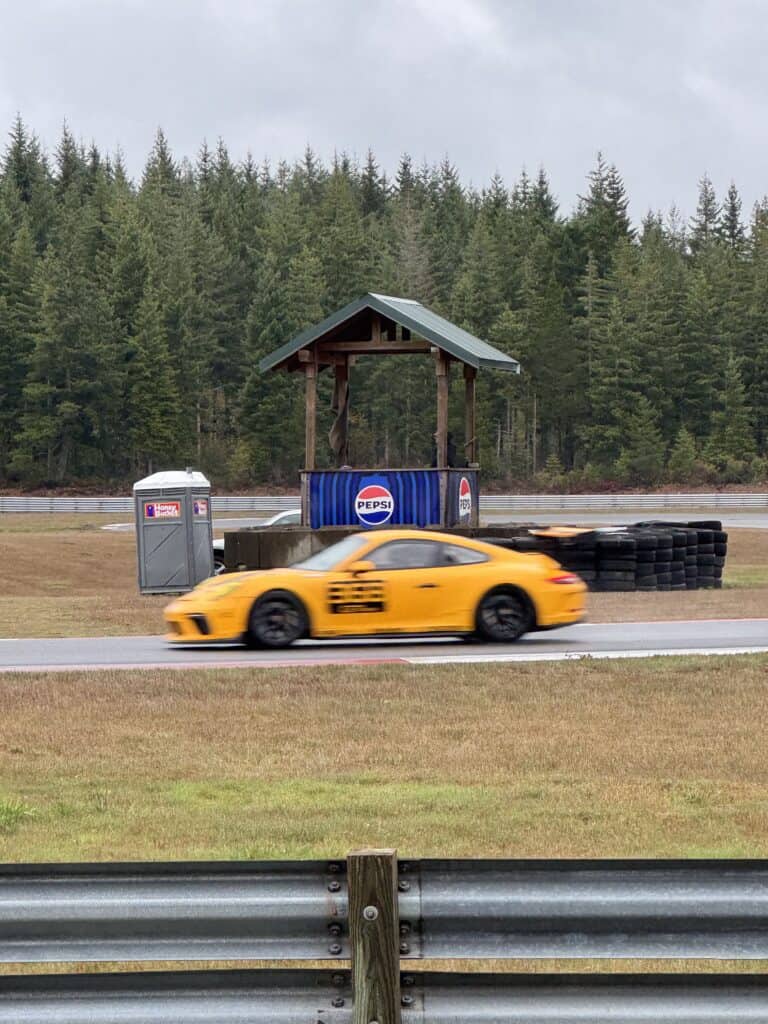
Yellow Porsche GT3 Cup race car at speed on a wet racetrack at the Ridge
Lawrence’s GT3 Cup at speed at the Ridge. Photo: Charlie.
Charlie capturing Lawrence’s GT3 Cup from the fence. Video: Meta Ray-Bans.

That weekend was also Charlie’s first race weekend with us — days at the track, nights in the RV, and a game night playing Minecraft Dungeons 2.

Looking Ahead With the Spec E46 Community

We also left the Ridge feeling grateful for the Spec E46 community and excited about what comes next.

The development work was encouraging, but the level of driving deserves recognition, too. The pace we’re seeing from Ron and several other drivers is the kind that puts people in contention for podiums and race wins.

Over the past several years, and especially this season, we’ve watched drivers become faster, more consistent, and better able to explain what they feel and act on what they learn.

That progress takes effort. It comes from reviewing laps, asking questions, trying something different, and showing up ready to work again.

Getting to be part of that process is one of the most rewarding things we do.

There are also more people interested in joining the class.

We enjoyed spending time with Mark and hearing about his interest in purchasing a Spec E46. A friend of his, racing an S2000 that weekend, was also considering the move. A longtime track driver and Honda enthusiast, he was drawn to a spec class because he wanted to focus on developing his driving through close competition.

We love hearing that.

Looking toward next year, we have drivers interested in continuing to compete here in the Northwest and traveling to California and other West Coast tracks. There are new challenges to take on and more opportunities to learn from one another.

Thank you to everyone who has raced with us, trusted us with their cars and development, shared feedback, or stopped by the paddock to talk about getting started.

Thank you to Tyler, Jordan, and the crew for the preparation, coaching, and problem-solving that made this weekend productive. And thank you to the organizers, instructors, volunteers, and workers who gave us one more opportunity to get on track.

We came to the Ridge ready to experiment.

We left with a faster Joel, a promising direction for our Spec E46s, valuable lessons from Ron’s feedback, and more people taking steps toward the racing they want to do.

That’s a pretty good way to finish a season.
Posted on

2019 Race Support Schedule

The staple of what we do is provide service to the racing community.  One of the primary aspects of that is to be at the track, to help you with the car set up and care, as well as trying to improve the performance of both you and the vehicle.  We want to announce and extend an open invite for those that are interested that we are here to help.  Our team has a calendar of events planned with room for additional support for each weekend as needed!  Our current ICSCC Conference as well as intended NASA NorCal events and SOVERN events will be listed below.  If there are any race weekends you would like some crew and coaching support for, please feel free to contact us via e-mail, phone or messenger!  Let us help you be your best on track!

Give us an E-mail or call to discuss options! raceronrails@gmail.com – (206)475-1114

ICSCC Conference Event Schedule:

  • April 19-21 (Fri-Sun) – Mission Race Way Park – British Columbia
  • May 3-5 (Fri-Sun) – Portland International Raceway – Portland, Oregon
  • May 10-12 (Fri-Sun) – Pacific Raceways – Kent, Washington
  • May 31-Jun 2 (Fri-Sun) – Spokane County Raceway Park – Spokane, Washington
  • Jun 14-16 (Fri-Sun) – Portland International Raceway – Portland, Oregon
  • July 19-21 (Fri-Sun) – Pacific Raceways – Kent, Washington
  • Aug 16-18 (Fri-Sun) Portland International Raceway – Portland, Oregon
  • Aug 23-25 (Fri-Sun) – The Ridge Motorsports Park – Shelton, Washington

SOVERN:

  • June 7-9 (Fri-Sun) – Spokane County Raceway Park – Spokane, Washington
  • July 5-7 (Fri-Sun) – Pacific Raceways – Kent, Washington
  • July 26-28 (Fri-Sun) – Portland International Raceway – Portland, Oregon
  • Sep 7-9 (Fri-Sun) – Portland International Raceway – Portland, Oregon
  • Sep 27-29 (Fri-Sun) – Pacific Raceways – Kent, Washington
  • October 5-6 (Sat-Sun) – Maryhill Hill Climb – Mary Hill, Washington

NASA NorCal:

  • Mar 15-17 (Fri-Sun) – Sonoma Raceway – Sonoma, California
  • Aug 2-4 (Fri-Sun) – Thunderhill Raceway – Willows, California
  • Sep 14-16 (Fri-Sun) – Mid-Ohio Sports Car Course – Lexington, Ohio

Current Unavailable dates:

 – Mar 3-4 (Sat-Sun)

– April  25-29 (Thus-Mon)

 – June 6-10 (Thurs-Mon)

 – June 22-25 (Sat-Tues)

 – July 11-15 (Thurs-Mon)

 – Aug 29 – Sep 1 (Thurs – Mon)

 – Sep 19-23 (Thurs-Mon)

 – Oct 17-21 (Thurs-Mon)

Posted on

Track Walk: The Ridge Motorsports Park

Welcome to The Ridge!  The Ridge is the newest track in the Pacific Northwest that is generally available to the public (Vancouver Island Motorsports Park opened recently but is a private track).

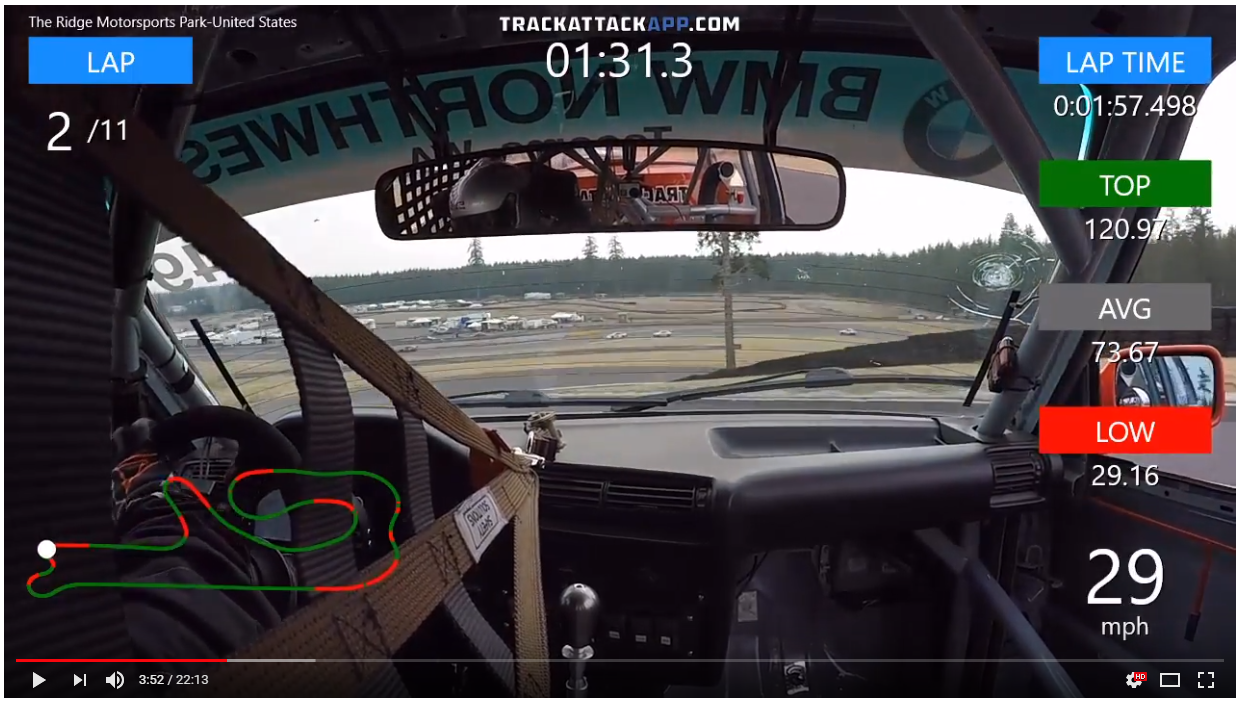
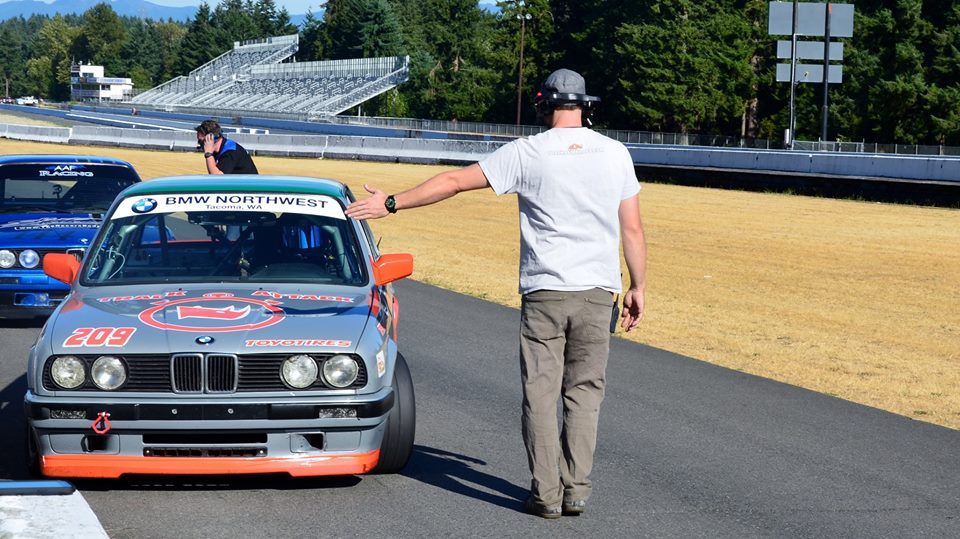
Similar to the Portland International Raceways (with a Chicane) track walk, we’ll use the Track Attack #209 PRO3 race car, a relatively low powered “momentum” car, to illustrate how to get around the track.  The session data we are  using for this is available here on Track Attack – feel free to request it.

We’ve also broken the track down into 6 segments, each segment is defined right before the major major braking/slowing down zones.

Braking a track down into sections, makes it easier for people ‘consume’ it and prioritize where to get focus.

Before you read on, watch this complete lap from a dry race in September of 2017.  Read the article and the re-watch the video.

YouTube player

Segment 1: The Uphill

This segment starts at s/f and goes all the way up to the first major braking zone (not including braking for T2) entering the Carousel.  The first thing here is that this segment is a 76ft climb in elevation.  The equivalent of an 8 story building.  Yeah.  So every single loss of mph as you make your way up the hill, will be penalized with a multiplier as you go uphill – keeping the momentum going is a top priority.

Momentum is important – check!  Turn 1 – get ready for a trouser check.  Turn 1, in some cars, can be taken flat, without lifting.  This is similar to T1 at Spokane but the distance between T1 apex and turn-in for T2 is not as long, so in cars that are faster than a Spec Miata, experiment with caution.  Personally, the most I’ve ever been able to get away with is a ~4/10 braking effort – just a tad more than a brush of the brakes, go back to tad of maintenance throttle and then back on the brakes, about the same amount for the downshift to 4th gear and then going back up the hill.

As you get the car past the apex of T2, it’s really important to get close to the curb of T3 but don’t take too big of a bite off of it, as it will send your car back to track-left, which is not the ideal line for the remainder of the complex.  Once you get to full-throttle, you absolutely cannot lift.  After T3, stay track-right, to setup a wide arch into T5 and then release the car to driver’s-right.  This whole time between T3 through T5, when you’re pinned to full throttle, you will feel the back end wanting to step out.  That’s ok – simple counter steering corrections (small ones), while staying flat, will take care of them.

After this, it’s smooth sailing to The Carousel – find a straight line to follow, that will set you up on track-right, for T6 (The Carousel), which is a long, flat left-hand sweeper.

Segment 2: The Carousel

This segment is just one corner.  Why?  It’s long and hard to get right.  This corner can be taken many ways but here is one that has proven well in racing and qualifying conditions.  Set yourself up track right but not necessarily right on the edge of the track.  Brake a little later than feels comfortable with a solid 6-7/10 effort and after the initial bite, start trailing off and turning into the corner, like if you were trying to double-apex the corner.

The backend may start to come out as you turn-in so get ready to catch the backend with some maintenance throttle.  Try to keep the car tucked in tight to the inside edge of the corner and if it washes out a little mid-corner, that’s ok and that just means you can back on throttle even more aggressively for corner-exit, because you don’t need as much steering input.

Don’t mind what looks like me driving off the course, that’s just a natural occurrence of margin of error of GPS signals and the stitching together of satellite images for maps.

About 35-40% through the corner, you want to be on-throttle and free here on out, you don’t lift.  Start your ascension to full-throttle and as you feel the backend come out, pause the throttle application and give it a steering correction but DO NOT LIFT!  For me, there is a single, tall tree out in the horizon of this corner and the instant I see that tree, I go full-throttle, no matter where I am.

From here, let the car release all the way to track-right, the very edge if needed.  A lot of people don’t get out here because they want to setup far left for the next segment and that’s a trade-off you can decide to make.

Segment 3: The Thumb

This is one of the trickiest parts of the track.  It combines a big compression and low-speed traction event at 8a and 8b but also a super hard, decreasing radius turn at T11 (aka The Thumb).

As you come out of The Carousel, it’s ok to stay driver’s left and then draw a straight line as you go downhill at 8a.  Stay on throttle until right before you feel the ground fall away, lift and synchronize the compression event with your braking.  When you do this right, you don’t need to brake as hard because the compression event gives more bite to front-end.  Downshift (if you have to), wait for the car to rotate a tick and then get back to maintenance throttle.  You want to get on full throttle here as quickly as you can but the sliding plus the acceleration means that it will be really easy to get on-power over-steer, so be aggressive but careful with your throttle application.  After you get to full throttle, it’s a full throttle ride all the way up the hill, which is another 36 foot climb (almost a 4 story building).  Every mph you unnecessarily drop or every split second of having to lift from throttle, will make you pay dearly at the top of the hill.

Where you brake for the thumb will be determined by the car and how fast you’re going.  In a PRO3 car, the engine is spinning at 6,500RPM and ~103mph and we wait to come off throttle just before the curbing on the left and are well into the brakes at those curbs.

You don’t need to track all the way to driver’s right to setup for the thumb, about mid-track is fine in most cars.  Next, is one of the hardest corners to get right – find the late apex and make it your job to hit that curbing with your LF tires.  Getting on those tires, in 3rd gear (in many cars, 2nd gear in Spec Miatas), means you can get on the throttle hard and have plenty of room on the exit of the corner.  Be ready for the car to wash out and go on the exit curbing and maybe even drop a rear tire on the exit of the corner but that’s ok – DO NOT LIFT!

Segment 4 & 5: The Ridge Straight

I’ve broken this segment into two segments because it contains two corners, which are taken very differently and I wanted to leave the last segment being the last corners before the front straight away.

First is the very deceiving Turn 12 right-hander.  It’s deceiving because you can actually car a good amount of speed here and the corner opens up quite a bit on the exit, which means there is a plenty of room for corrections if you maybe got on-throttle too early.

The trick here is to get to the apex and be on full-throttle at the apex.  There is a bump or bulge right at the apex, which will feel like it kicks your car away as you hit but get to full-throttle, stay in it and ride it out.  You’ll almost for sure have the car sliding a little just past exit – a simple steering correction will get it back under you and you can keep going.  Then start making your way over to track-right, to setup for the Ridge complex.

As you approach the corner, you’ll see that the ground starts falling away in the middle of the braking zone – YIKES!!!  This means you have to have your heavy braking done before the ground starts falling away.  Looking at the data, the drop-off is a 7 foot decline in elevation over a 150 foot distance.  150 feet when you’re travelling at 75mph, goes by pretty fast, so this is a split second decision.

As you approach turn-in for the corner, stay on the brakes ever so slightly, so that when you turn in full, the noise is loaded up and will help rotate the car.  It’s ok to bite off a little bit of the curb but don’t get over zealous.

Give it some throttle as soon as you get past the corner, turn for the right hander and stick to track-right as much as you can.  If at all possible, stay off the brakes but you might need to brush the brakes to help the front-end bite.

Segment 6: The Front Straight

The lap is almost over!  You’re barreling down the Ridge Complex, a nearly 80 foot drop and you need to decide what to do for the last corner before the main straight away.  There are couple school’s of thought:

  1. Geometrical fastest line: Swing out wide, carrying more speed because you have a wider arc, a single late apex at Turn 15 and then pin the throttle down until start/finish.
  2. Shortest distance line: Stay a little closer to the inside, use the banking in the corner, travel less distance and hit the apex of Turn 15 at the same spot.

This really depends on what kind of car you have and the track conditions on the outside of Turn 15.  In race weekends, that wide line isn’t used much, so there ends up being a lot of marbles out there.   Great for the rain but not for the dry.

At least in a PRO3 car, we have more grip than power, so as is with many of the other corners, the less distance we have to travel, the better so Option 2 is what you’ll see in the data.

Now, I can totally see an argument even for a PRO3 car to setup for a single flying lap to go super wide, throwing away the lap time for that current lap and setting up for a higher top speed going into Turn 1 or even setting up a competitor for a pass at the end of the straight.

You’ll see in the data that I’m on throttle about mid-corner and full-throttle at about 3/4 of the way of the corner.  After that, it’s about finding the straightest line possible through Turn 16 and the least amount of steering input all the way down the front straight away.

Conclusion: The Ridge is awesome.  Go drive it!

The Ridge is really a fun track.  Newer and well take cared of pavement and plenty of run off room in most corners.  You can get in trouble and it makes you pay but most of the time, it’s dirt and rocks on your car to go along with a bruised ego.

The facilities are constantly improving and with a motocross and a kart track that is a mini version of the big track, there’s few places that can compare.  The downside is that it is located about 30 minutes northwest of Olympia, WA and Shelton has limited hotels but coming out in an RV or camping, is an absolute blast.  Best of all, there are no drag races so every evening, you can do a complete track walk.

Check out the The Ridge Motorsports Park website and Motorsportsreg.com for upcoming events you can sign up for, to drive the Ridge!