There are worse ways to finish October than spending two consecutive weekends at the Ridge.
On October 24 and 25, Racer on Rails returned to Shelton for NASA Northwest’s Haunted Horsepower weekend. It was the closing chapter of our Pacific Northwest racing season, and we arrived with three cars, a few ideas to test, and an open mind about what we might learn.
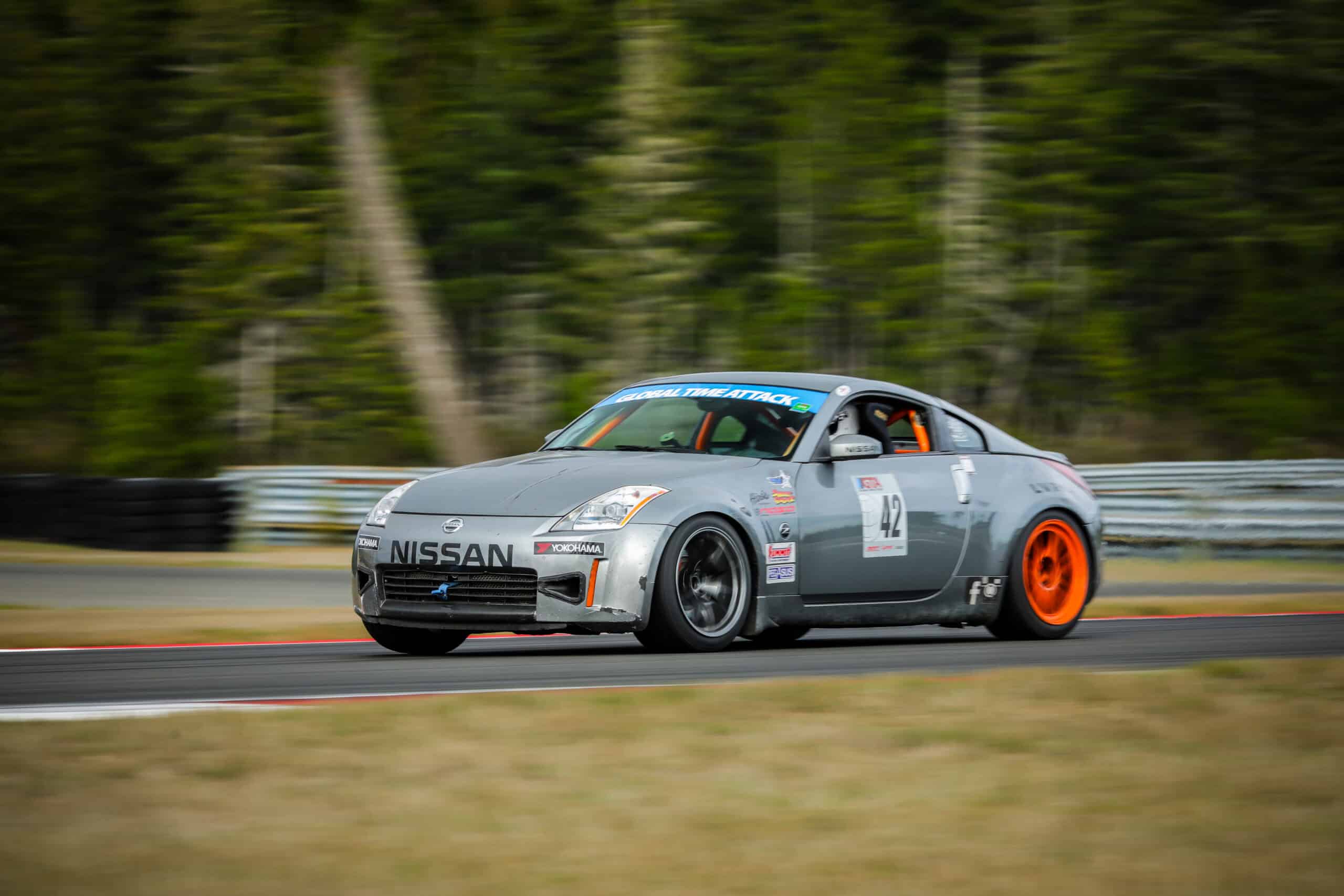
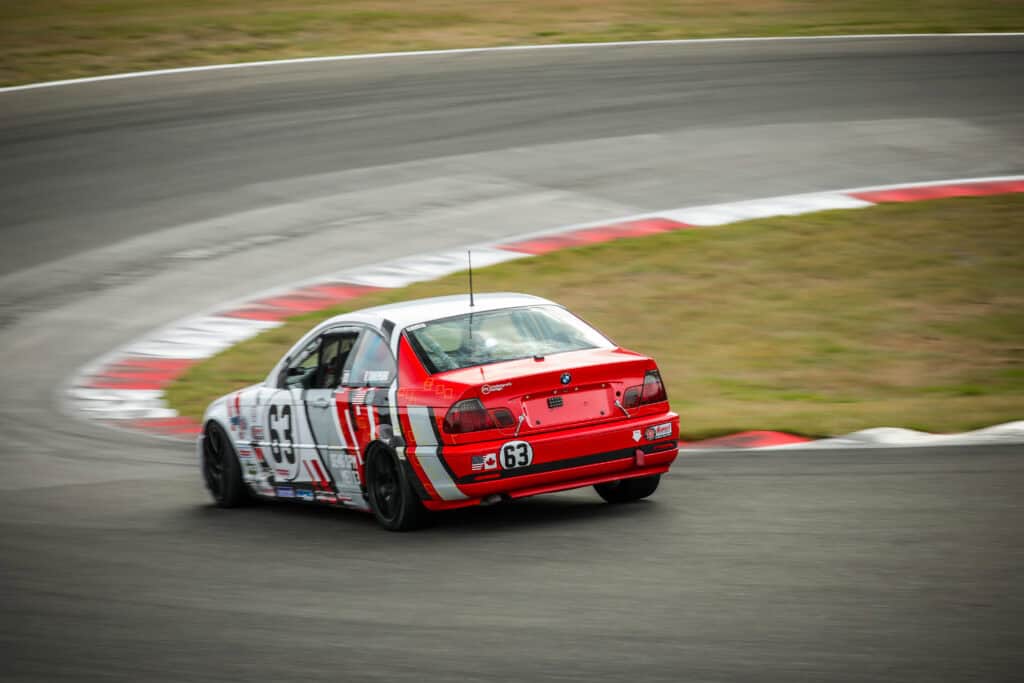
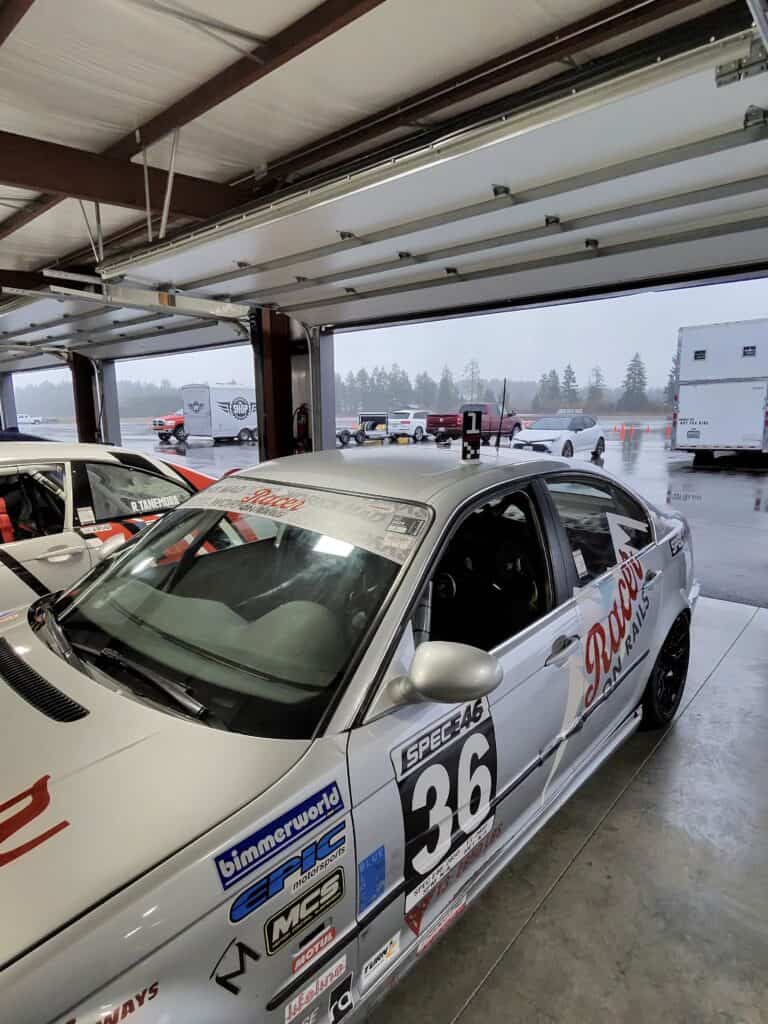
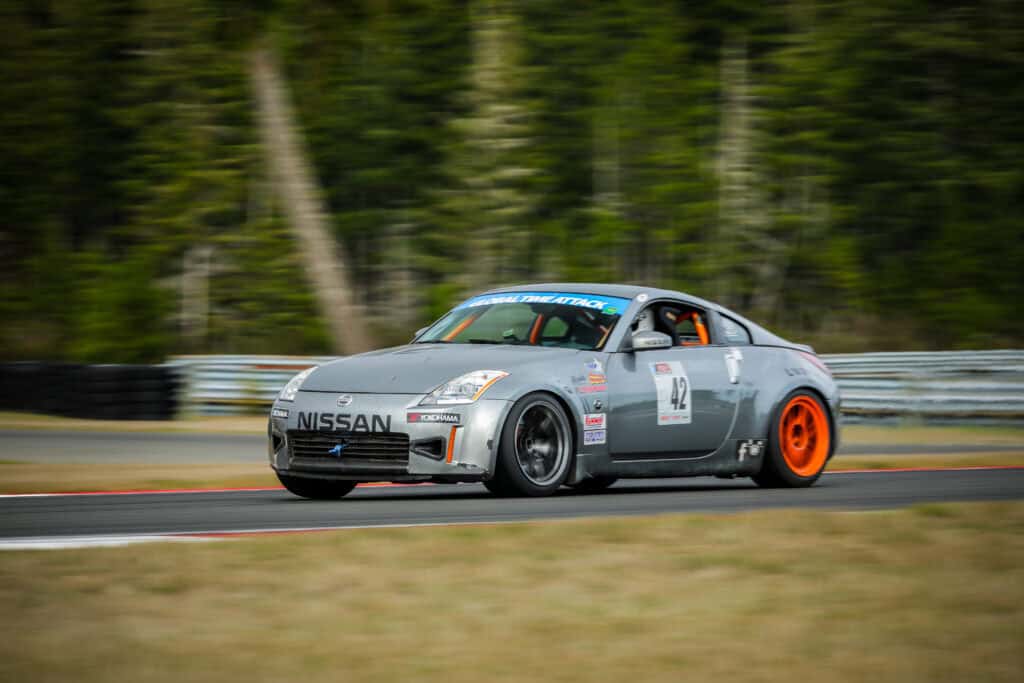
Ron brought his number 63 Spec E46. Gama drove our number 36 Silver Bullet — the numbers conveniently reversed. Joel Bergman joined us in his Nissan 350Z for his first NASA Time Trial weekend.
We also spent the weekend alongside Mario, whom we’d met at the previous event and helped get ready for this one, and Lawrence from GT Exchange, who was working toward his NASA racing license.
By Sunday afternoon, we had a new personal best to celebrate, a promising direction for our Spec E46 development, a mechanical mystery explained, and more reasons to be excited about the people joining our racing community.
NASA’s Return Brings More Ways to Get on Track
NASA — the National Auto Sport Association — returned to the Pacific Northwest in 2026. One of the most valuable things it brings is a connected set of opportunities for drivers at different stages.
- Arrive for your first-ever day on a racetrack and start in HPDE1 with an instructor.
- As your skills develop, progress through HPDE 1, 2, 3, and 4.
- From there, drivers who want to compete can work toward Time Trial or wheel-to-wheel racing, with the training and licensing each requires.
- Or keep enjoying driver education for its own sake. Racing doesn’t have to be the destination.
For someone looking at all the different organizations and wondering where to start, that structure helps. NASA brings instruction, advanced driving, timed competition, and racing into the same event community. This weekend gave us examples of almost that entire journey right in our own paddock.
Making the Most of a Quieter Weekend
Late October comes with some realities in Northwest racing. Budgets have been stretched over a long season. The weather is turning. Some drivers have already packed things away for winter.
The race fields were light, and we weren’t arriving with a championship to settle. We saw an opportunity to spend time testing, comparing, and developing.
Ron, Tyler, and Gama had been discussing whether lessons from our 370Z, Cayman, and other car-development work could translate to the Spec E46. Those conversations led us toward a substantially different setup direction from what we’d previously used.
Saturday’s expected dry, consistent conditions gave us a chance to evaluate it.
We didn’t know whether it would be faster. We didn’t know whether we would like it. We came prepared to drive it, listen to what the cars told us, and see where the evidence led.
The Silver Bullet Gives Us Something to Work With
Almost immediately, the Silver Bullet felt different.
The car was settled, compliant, and willing to put power down. Gama’s first impression was that it might be the most compliant Spec E46 he had ever driven.
That confidence mattered. Instead of constantly anticipating the car breaking loose, he could gradually ask more of it and explore where the limit actually was.
The lap times came into the one-minute-fifty-twos quickly. Getting into the fifty-ones took more commitment, but soon the laps were repeating: a 1:52.0, a 1:52.1, a 1:51.9, a 1:51.7.
The encouraging part was how consistently the car allowed that pace.
There was still work to do. Gama felt there was more time available in the braking and corner-entry phases, and more to explore through small setup changes. This was an initial day of testing, with room left to refine both the car and the driving.
We’ll keep the technical details in our notebook. What we can share is that we left Saturday with a clear reason to keep pursuing this direction.
Two Similar Setups, Two Different Experiences
Ron felt an improvement in his car, too. But his feedback included something Gama wasn’t experiencing in the Silver Bullet.
His number 63 remained edgy, especially under power. It felt more compliant than before, but it still wanted to step out. He couldn’t lean on it with the same confidence.
For Saturday’s final race, we swapped cars.
Gama drove Ron’s car, and Ron drove the Silver Bullet. That gave both drivers a direct comparison and helped us separate what was specific to the car from what might have been a difference in driving.
Gama came back with a similar assessment to Ron’s. The car was moving in the same general direction, but it didn’t fully settle. There was still an underlying nervousness.
The intended setups were the same. The experience behind the wheel wasn’t.
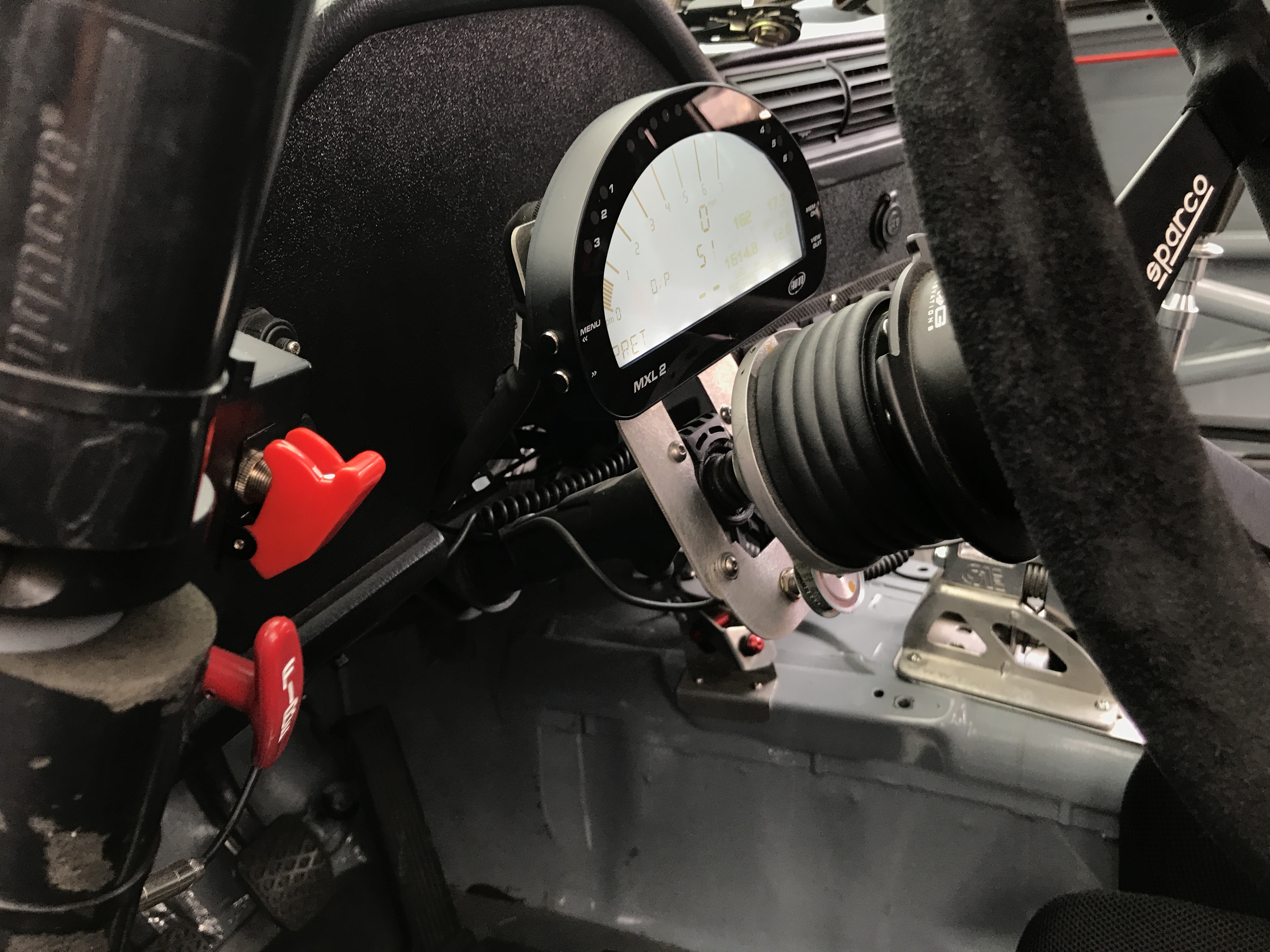
Sunday morning, Jordan found a significant clue while preparing the cars: a front sway-bar mounting component on Ron’s car had failed, leaving the bar connected at only one end.
That gave us a mechanical explanation consistent with the feedback. We couldn’t say precisely when the failure occurred, but we could say that Ron had identified a real difference, the car swap had reinforced it, and the inspection had uncovered a problem.
That’s a valuable development process: listen to the driver, compare carefully, and investigate.
Wet-Weather Learning — and Choosing the Best Seat Time
Sunday brought rain and a different assignment.
For the first wet race, Gama returned to the Silver Bullet and Ron drove his own car. Gama used his pace to give Ron a moving reference, watching the gap and increasing speed as Ron gained confidence.
Ron responded. He adapted, found speed, and at points maintained the gap even with the unresolved issue affecting his car.
For the final race, we decided the most useful thing we could do was give Ron the Silver Bullet.
That put him in a car we knew was behaving predictably, so he could concentrate on his wet driving without the sway-bar problem complicating every sensation and every piece of feedback.
Gama stepped out, and Ron took the seat.
With limited track time left in the season, that was where we felt it could provide the most value.
Joel’s 350Z: Preparing the Car for the Driver’s Next Step
Joel came into the weekend having already made significant progress in his 350Z.
Most of his recent experience had been with OnGrid, including timed competition. He was still building his fundamentals, but the development since earlier in the year had been substantial.
The Ridge is the track he knows best. When we saw another Time Trial opportunity there, with lighter attendance and the prospect of plenty of track time, Gama encouraged him to come out.
Joel jumped on it.
Before the weekend, though, we had a problem to address.
At his previous event, we had been managing brake heat and damaged caliper seals. Refurbished replacement calipers of the same general type hadn’t solved the underlying limitation.
Fortunately, our 370Z development had left us with some useful hardware. After Gama’s T3 car moved to Paragon six-piston calipers, its former Akebono calipers became available. Gama gave those to Joel, along with spare Paragon two-piece rotors.
Combined with fresh brake consumables and ducting, that gave Joel an upgraded front braking package.
Across two days of driving, we monitored the temperatures and were pleased with the results. The brakes delivered strong, consistent performance throughout the event.
That meant Joel could focus on driving.
An Early Mistake, Then a Deliberate Reset
Saturday didn’t begin exactly as Joel hoped.
On his first flying lap, a little too much enthusiasm at the carousel sent him wide, with a tire dropping into the dirt. He checked in with the Time Trial group leader, and the opening session passed without a useful flying lap.
He reset.
Between sessions, Joel reviewed his previous onboard laps and spent time visualizing what he wanted to do. We revisited the priorities from his last visit: finding the apex with his eyes, getting the car pointed, and coordinating throttle application with the release of steering angle.
The goal was to feel how those inputs worked together — to add power with intention, understand the car’s response, and manage the exit rather than hesitate through it.
His second session produced a small improvement.
The third brought a more significant step, into the low one-minute-fifty-fives and toward the fifty-fours. Traffic made it difficult to repeat the best laps, but the potential was there.
For his final session, the assignment was to put it together consistently.
He did.
In the clear laps near the end of that session, Joel repeatedly ran in the one-minute-fifty-fours. By our count, five of his final seven laps were in that range.
He finished with a personal best of 1:54.32 — approximately a second and a half faster than his August best.
That’s a substantial improvement. Just as satisfying was watching him back it up with multiple laps at a similar pace.
His theoretical best, combining his strongest sectors, was down in the low one-minute-fifty-threes. Sunday’s rain meant we didn’t get another dry day to see whether he could connect those pieces, but he left with a clear opportunity to pursue next time.
A mistake in the first session became a small part of a much better story: regrouping, applying a plan, and developing speed he could repeat.
A Thank-You to NASA Northwest for Opening the Door
Lawrence’s weekend highlighted another reason we appreciate having NASA Northwest here.
He already had considerable track-day and time-attack experience, with serious speed in his Porsche GT3 Cup. He wanted to take the next step into wheel-to-wheel racing, including opportunities with the new Washington Enduro Cup.
But by late October, finding an available competition school was becoming difficult.
Being fast is one part of the preparation. Racing alongside other cars requires its own skills, judgment, and training, and Lawrence needed an opportunity to complete that work.
Gama connected him with Jason Perry, knowing NASA Northwest could accommodate individual competition-school instruction during race weekends.
Jason and Danielle Perry helped put a plan together. Lawrence completed the competition coursework over the weekend and participated in races, including some excellent, respectful battles with Mario.
A huge thank-you to Jason, Danielle, and the NASA Northwest crew for their flexibility and effort.
They helped an experienced driver find a practical path through the required training and onto the grid before the season ended. Growing motorsports takes people willing to make those opportunities possible.
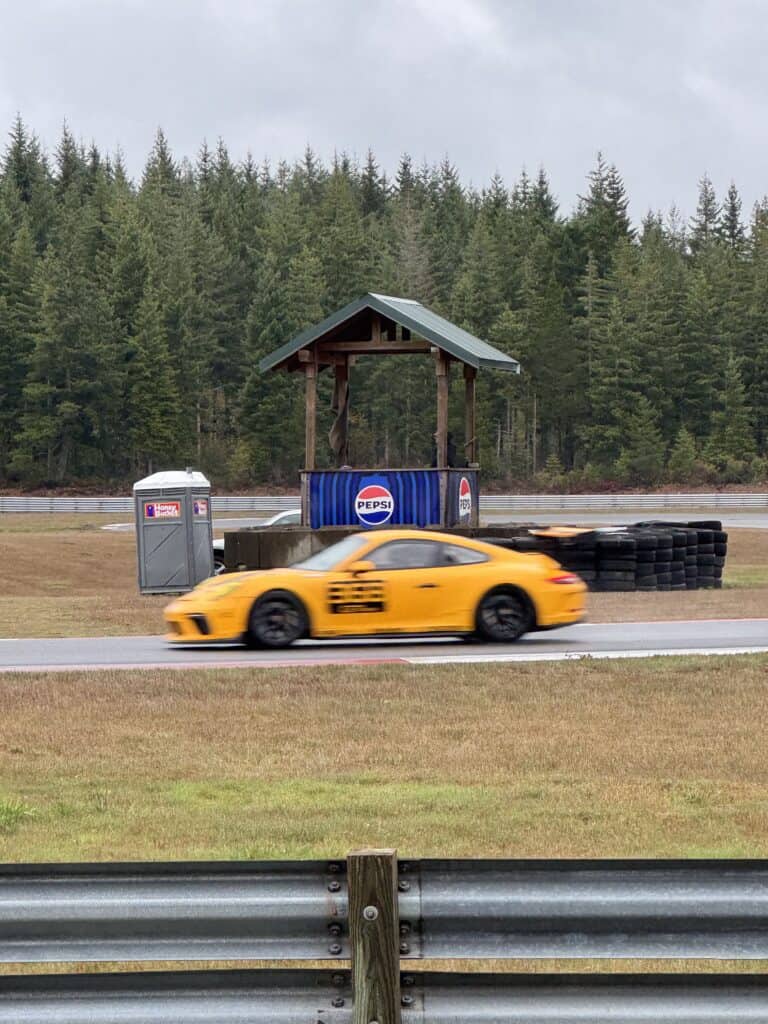
That weekend was also Charlie’s first race weekend with us — days at the track, nights in the RV, and a game night playing Minecraft Dungeons 2.
Looking Ahead With the Spec E46 Community
We also left the Ridge feeling grateful for the Spec E46 community and excited about what comes next.
The development work was encouraging, but the level of driving deserves recognition, too. The pace we’re seeing from Ron and several other drivers is the kind that puts people in contention for podiums and race wins.
Over the past several years, and especially this season, we’ve watched drivers become faster, more consistent, and better able to explain what they feel and act on what they learn.
That progress takes effort. It comes from reviewing laps, asking questions, trying something different, and showing up ready to work again.
Getting to be part of that process is one of the most rewarding things we do.
There are also more people interested in joining the class.
We enjoyed spending time with Mark and hearing about his interest in purchasing a Spec E46. A friend of his, racing an S2000 that weekend, was also considering the move. A longtime track driver and Honda enthusiast, he was drawn to a spec class because he wanted to focus on developing his driving through close competition.
We love hearing that.
Looking toward next year, we have drivers interested in continuing to compete here in the Northwest and traveling to California and other West Coast tracks. There are new challenges to take on and more opportunities to learn from one another.
Thank you to everyone who has raced with us, trusted us with their cars and development, shared feedback, or stopped by the paddock to talk about getting started.
Thank you to Tyler, Jordan, and the crew for the preparation, coaching, and problem-solving that made this weekend productive. And thank you to the organizers, instructors, volunteers, and workers who gave us one more opportunity to get on track.
We came to the Ridge ready to experiment.
We left with a faster Joel, a promising direction for our Spec E46s, valuable lessons from Ron’s feedback, and more people taking steps toward the racing they want to do.
That’s a pretty good way to finish a season.