Posted on

Walk This Way! Track Walks:

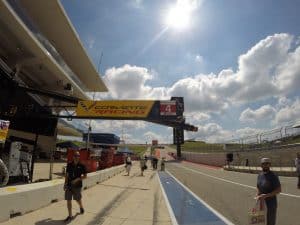
Looking out the pit-lane exit at Circut of the Americas

What: Track walks, why you like them, even if you don’t know it yet

If I knew then, What I know now:  I would have studied harder on these when I was younger.  I would be a better driver and team member overall, now as a result.

Walking the track before an event is a very important part of your race or track weekend.  It spreads across all forms of motorsports, and any amount of wheels used.  Getting your feet on the same ground you will be driving your car on will give you valuable perspective regarding placement or the vehicle, surface conditions, line options and so on.  It is a great way to get the track layout in your head prior to getting into or on your machine.  There are a couple of key things to pay attention to and try to do while on a track walk.  I will try to outline some of them to help you get the most out of your next track walk.  I will start with some of my experience from the first events I went to as a young lad in high school with my buddies.

A group of friends of mine in school were also into cars.  We would set up a couple of days a year where we would all meet up the day before an auto cross event, hang out at one of the guys cabins, and then take all of our cars to the event the next day.  Auto cross was a good introduction into motorsports as a driver for me.  The first day I went to an event was with the Porsche Club (PNW Region).  I had a little old VW Jetta that had some sticky tires on it.  We got to the event, stood through the drivers meeting, then everyone set out and walked around the course that had been set up.  A course walk at an auto cross is essential.  The track will never be the same from event to event, so getting a feel for the layout is an important first step.  Auto cross does not allow for a lot of set up and testing time, so getting the most out of your runs is key.   I learned how valuable it was.  I was able to pip my friend on our first time out, and he was driving a 911.  There were more events after that, and as I grew to understand the track walk it made perfect sense to me.

Flash forward 15 years and now we are doing track walks every week we go to the track.  I went out and rode a new Motocross track a few weeks back – I did not get a chance to walk it, but I took 4-5 laps at just above a walking pace just to feel the place out – 2 laps later I was ripping around just fine.   We will often times end our first night at the track with a track walk.  It is a great way to wind down after a work day, and also a good way to walk some miles if you did not get a chance to before!  My first race back after a couple of years of just crew work, I ended up racing at the Ridge in Shelton.  It is a place I had driven before, but it had been a while.  We took the time the night before the race to walk the track, twice actually.  It was great.  I had one of the instructors at the track walking with us and they provided great insight to where to place the car due to seems in the blacktop in braking zones.  Entry and exit lines were discussed.  Gear selection (which can depend a lot on your equipment) was discussed.  I felt a lot better after walking the track to just jump in the next day and go.  Everything was fresh in my mind again.

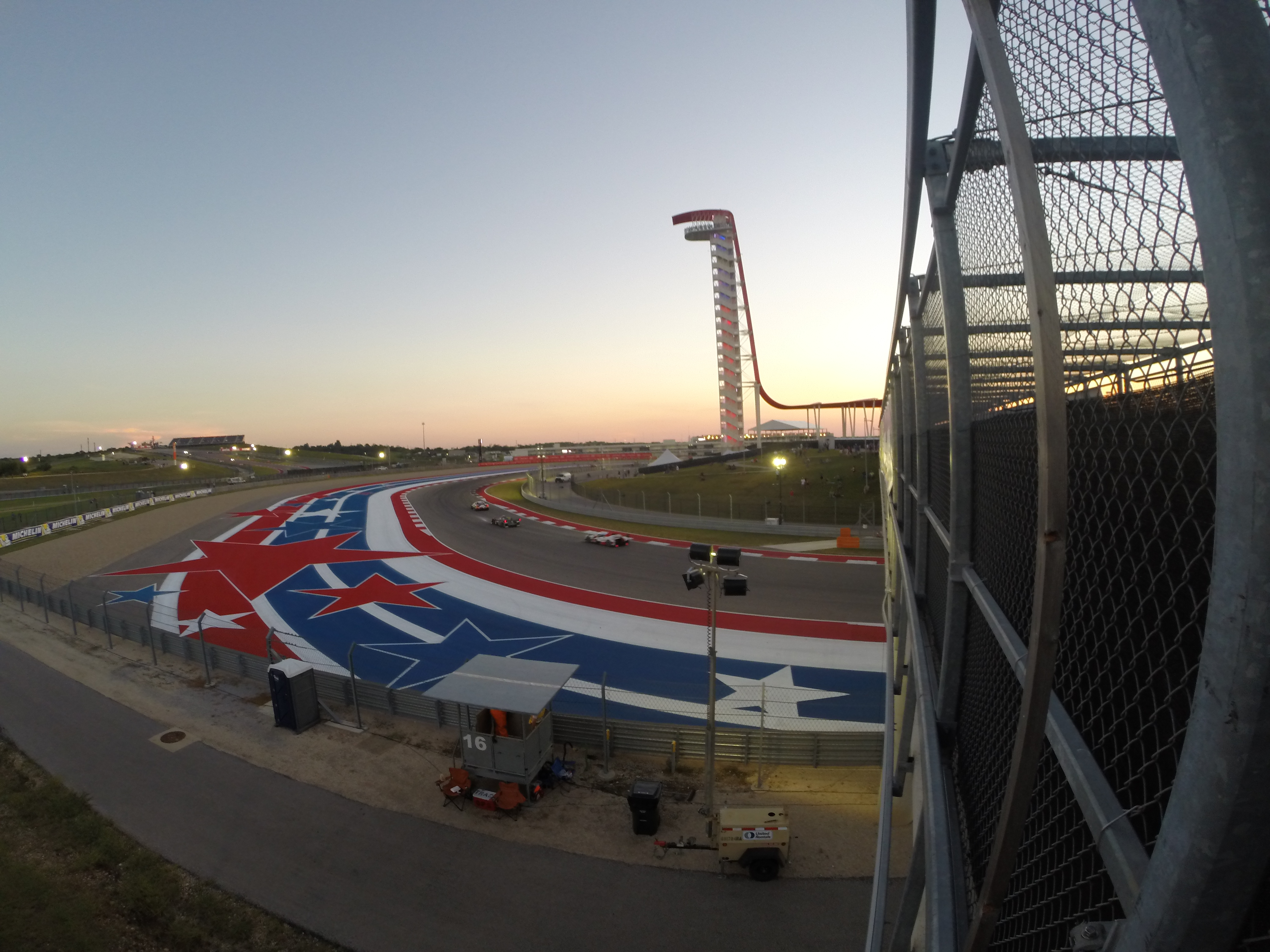
Elevated view of the turn 17-18 complex at Circut of the Americas

Gama asked me to do a track walk with him this weekend at Pacific Raceways in Kent.  We have a race this weekend in the Pro3 car and he will be the only driver for the team this weekend as Manu’s car had a mechanical issue we found during a post-race inspection (more on that later).  I was quick to agree, as I have had many track days there, and 2 school days at that track, but had never actually walked a full lap in all of my years.  I had been to points of the track, but not all of the way around on foot.  We will be walking the track tonight and I am going to make notes, and take pictures to share our experience with the walk!

We try to track walk every weekend.  it is good exercise, knowledge, and you will have a great feel for the layout the first time you are behind the wheel at speed.  Be prepared for a walk, and be prepared for weather as well!  Some tracks are large, and weather can be different from one side to the other.  One of the other things that will help you a lot with our track walk, is walking with someone with lots of knowledge of that track for insight.  Most racers are instructors also, so their points of view are sound usually!  Just walking the track can gain you a lot, but having someone there to compare notes and tips with is very beneficial.   Having someone that drives a similar vehicle is even better!

Posted on

When to Ask and Asking the Right Questions at the Track

Discussing things between sessions during a race weekend – People will often come ask us about what to do, or what is going on – Almost always it is appreciated!

What: The nitty gritty of asking questions when at the race track

If I knew then, what I know now:  I would spend a lot more time reading and less time relying on info from others


What do I do about…

Asking people questions or for advice at the track is a tricky subject to discuss.  Things like prep, common sense and skill all come into play.  What do I do about?  That is a question that gets asked at the track more than anything else.  What do I about [fill in the blank]….?

Asking questions at the track can be easy at first, and then more difficult as time goes on.  People are often willing to help out those that are new, or are obviously a fish out of water.  That tune changes over time.  People in the racing community are expected to hold themselves to a higher standard.  You are out there racing.  It is a serious thing, and can have serious consequences.

You should well and know what you are doing out there!  The ones that find trouble asking questions are those that do not make good notes for themselves, or that simply do not listen to the advice they are given.  It can get you a long way, or it can very much get you nowhere.

Drives will often discuss the race with each other, compare notes, and talk out any issues or incidents that may have occurred.  Often advice is asked for and provided

Don’t go fishing for what you want to hear

Getting help at the track can be tricky in itself.  Knowing when and how to ask any questions is almost more important than what you are asking.  A conversation I had last week with one of the other guys locally that runs some race car support on race weekends ended up with us comparing stories of things that people have said and done to us when we are at the track.

More often than not, the gripes we had were from people repeating the same questions, and expecting different answers, as well as asking the “pros” for advice on something, then asking all of the other “pros” until one of them says what you want to hear.

There are three types of people at the race track:

  1. The ones that are there to win
  2. The ones that are there for fun
  3. The ones that are there to try to prove something.

Types 1 and 2 are easy to work with

The guys and gals that want to win will often have well thought out questions about stuff in advance.  They are into improving, not bull shitting.  The ones out there to have fun are also easy.  They don’t expect much out of the weekend, and if they have a question, will generally be a softball question.

Type 3 on the other hand…

It is the ones that are out to prove something, wither to themselves, or someone else, that are the issue.  They must like to or somehow almost always end up ruining it for the rest of us.

In the shop I work at, we have internal conversations regarding this issue as well.  Often times people want to come with questions and problems, and rarely offer up a solution.  In our shop, if someone has a question, we work hard to train and teach them to use all of the resources at hand before going to someone else regarding the question.  The race track should be considered the same.

If you are about to go ask someone a question here are a few things to consider before you go.

Picking the right time to ask people for stuff is important.

Step 1: Have some background info about what you are asking.

If you are going to ask about tire pressures, be sure to know what you are currently running pre and post session.  Otherwise there is not a reference point to compare.

Feel has a lot to do with the tuning of a car and each driver will often have a different idea of what feels good.  We deal with this in our enduro car – getting the set up that everyone can work well with.  If you are going to ask about brakes, know what you would want to change about the braking experience (force, feel, pedal modulation…)  Having a plan once you have the answer, is crucial.

Step 2: Don’t go shopping for answers!

The second step is to not ask the same question to everyone in the paddock.  If you are that un-sure of what is going on or how something is or should be.  Then you are in over your head, and you need to take a step back to re-evaluate.

If you have an idea of what you are looking for as far as an answer, and nobody’s reply lines up with what you expect.  Going around to ALL of the people in the paddock until you hear the answer you are looking for is incorrect, and the root of that is that you, yourself are expecting an incorrect situation to be proper, and if people don’t seem to think that is the case, then people will try to prove them wrong, often failing to do so.

This does not necessarily mean that crowd-sourcing solutions will always result in the proper answer but if after asking a few people, who are more knowledgeable and experienced than you and it is not what you’re expecting, it is probably time to re-visit those expectations.

Step 3: Take and actually implement the answers you gathered.

If you are asking everyone up and down the paddock about all of the different things about racing, the cars or machines you race, schedule, timing and all of that.  You are doing it wrong.  We are all adults and should be treated as such when we do events like this.  Just think about how ridiculous you would feel if you showed up to try out for the Seahawks and you brought with you some basketball shoes, a baseball mitt, and your I-pod in its fancy arm band holder.  You are not making that team.

Racing is similar.  If you are showing up and asking questions right out of the truck.  Your best bet would be to get back in the truck, head back home, and think about what you have done, what you want to do, and how better to be prepared for it.  This is not to say that you need to know everything before heading out and trying racing, but this is a more complicated activity than just a pickup basketball game.  It’s important to do some homework and find people who you can shadow and ‘learn the ropes’.

Not the best time to ask this guy about tire pressures he might recommend for your car.

Step 4: Respect people’s time and professionalism

I see a lot at the track, the weekend warriors going up to the bigger outfits and teams, and plain out bugging them about stuff.  This is the biggest no-no I see at the track.  If you need something from one of the big teams, you had better be willing to pay for it.  The guys under the big tents, pay big dollars to have support when at the track.  Going to the people that support racers that are paying to get free advice, is a bit of a slippery slope.  It can cause high tensions since some people are paying to get the same info that you are seeking for free.  The owner of the outfit may or may not be willing to help, but if you come and bring something to the table, then it is great start!

Conclusion: In the end, it’s pretty simple – take what you know, what you can and be sure to have reasonable questions, at reasonable times for people at the track.

If you don’t, you will find it ever increasingly difficult to find solid advice and answers.  One of the main things we learned to love about team driver Gama, is that he will often have very prepared sets of questions dealing with specific items.  We had a conversation last week about new wheels.  He asked if he should get lighter weight wheels to try out.

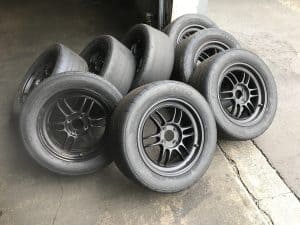
We talked about the idea (mostly because we all liked it) and discussed the pros-cons of light wheels.  The main issue being that often weight and strength will go hand in hand.  Gama then spent the time to research each wheel option for size, and spacer needs.  We ended up going with a new set of wheels to try.  Each one will be saving 4 pounds per corner but potentially not be as strong of a wheel.

He has asked me questions like this for years, and each time, has proven than he knows what he is asking about, is willing to accept the answer, even if it is not what he was expecting, and will take appropriate action when needed.  He is the type that wants to win!

Light eight, but not as strong. What is weight worth?!

Knowing little is not bad, but being a pain in the ass to everyone and not paying attention to people when you ask for advice is.  Depending on why type of person you are, asking questions and getting info at the track should not be a big deal.  Most participants are eager and enthusiastic, and will be willing helpers.  Asking the big name guys will get you a long way with the correct approach.  Remember that you should be having fun!  Having people be grumpy or mad at you is not fun, don’t be that guy or gal!


Posted on

Post Session/Day Checks to Prevent a Wreck!

Gama pulling data from the morning qualifying session.  We took a quick look at it before the race, but he will use the data and video after the day is over to study to find more speed!

What:  Things you should do after a session and a day/event to help you get faster, keep your car running well and safe!

If I knew then, what I know now:  I would have learned how to review and teach data early on in my driving and racing career.  No other aspect can make such a drastic change in speed of the car and driver.


Post track or race weekend activities are or at least, should be part of the process. There is are many things to think and consider after you are done with your event. The same trains of though will transfer to whatever you are using as a vehicle. There are both personal and mechanical things you want to pay close attention to after your even. As I have gotten older, and been around the race track more I have learned that there is a full circle process for every event.

Post-Session starts well before the session – get in the right mindset.  A learning mindset.

Start with your pre-event inspection, do the event, then debrief and do a post-day inspect. It is great time to learn about yourself and your equipment. A track day should be considered a learning day.

Even if you are not with an instructor, and have done many days before, you should always be learning and absorbing. I have come to some of the best revelations in the hours and days after an event that have helped me be better at driving, as well as managing cars and equipment in the pits and paddock when I am crewing for the weekend.

Track days cost money so you should want to maximize your value and smiles per mile. I will go through some of the things to consider post event, as well as some things I have learned, even recently.

Your New Post-Event Checklist:

  1. Thank the organizer and those who volunteered their time to make the day happen!
  2. Inspect and load up your stuff. This is an important step! It seems like it is busy work, and you will be tired. But being clean and organized when packing up will pay off on the other side, I promise.
  3. Wipe your car down and clean it up before loading up on a trailer or driving home.  I’ve been doing this lately with our PRO3 cars because it does a few things:
  1. It gets the tires and bugs off before they have a chance to harden up.
  2. You are close to the surface of the car, and can see if there was contact with another car, the ground, flying debris… its racing, expect something weird to come up.
  3. You also get a good chance to get it back into the trailer and if you rub against it later it does not soil you with dirt (brake dust mostly).
  4. You can take a look at all of your wheels and tires and make notes if you have cords showing, need to swap a tire side to side, or have an issue with one or more of the wheels. A wheel can crack pretty easy if it is not a forged wheel.
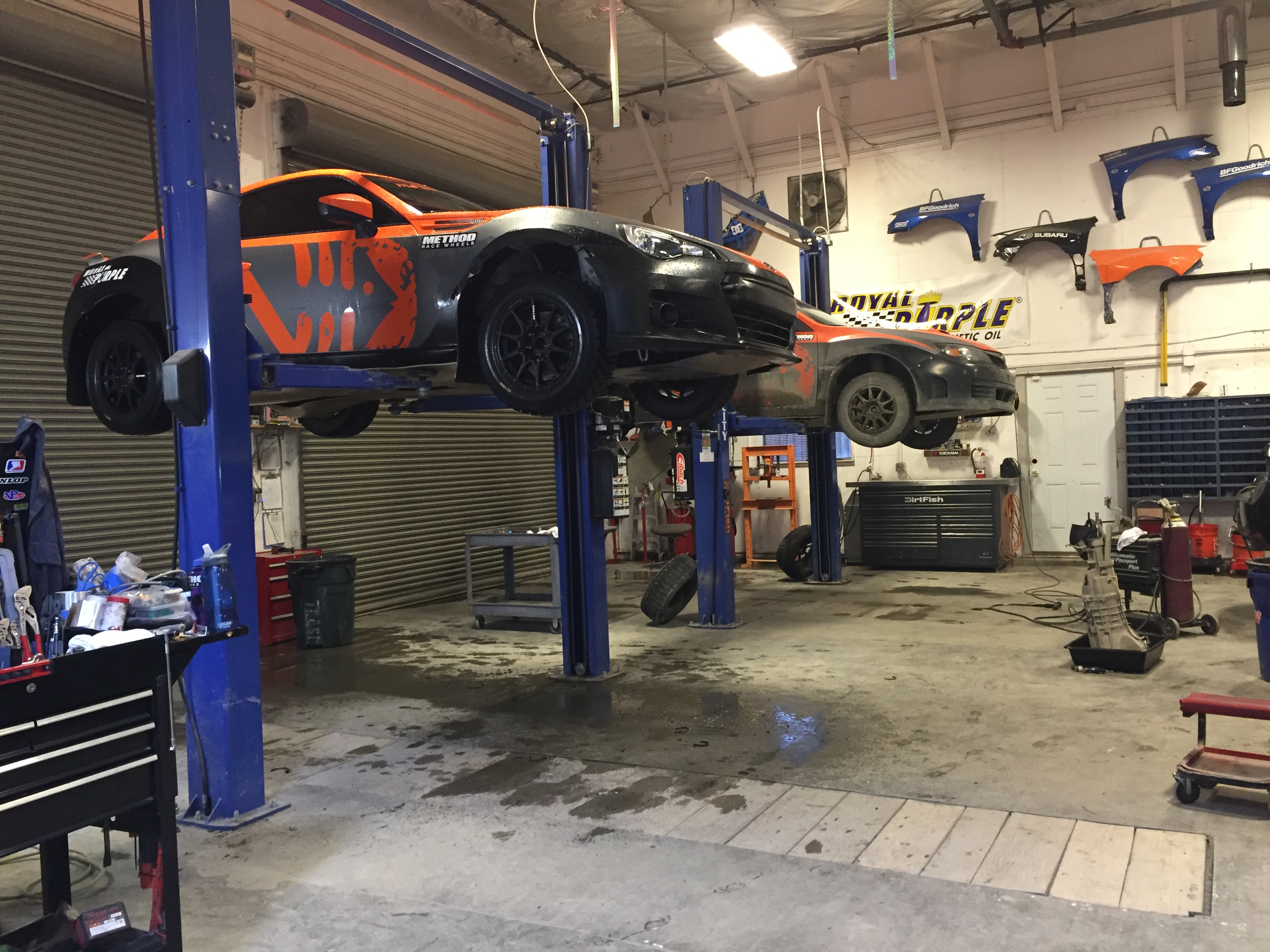
A couple Subaru BRZ’s on a rack after a day of students sliding around the gravel. Each day, every car is inspected from head to toe, looking for broken parts and doing maintenance as needed.
  1. Check your video and data and make sure you have everything downloaded and set up to review later. Data review is a major tool for driver education and video is a big part of that as well. Depending on what you are doing, how far along you are and what type of vehicle you are using, data and video may or may not be an option.

We went karting the other day after the Pro3 race ended, and I have been watching video from that. We were not taking it serious, but we are all skilled, and have been around racing for a long time. We were going pretty hard, and I was able to learn some things reviewing video just the video.

That being said. I went and rode a dirt bike in the wild the other day for the first time, and I had no video or date to review. I used memory. There were many lessons of that day, and I have had to recall them one at a time. I went from riding in the yard, to doing multiple laps on the full GP/enduro course with a few hours of riding. Thinking about what did and did not work for me. Tips from those I was with (which was the biggest help for me that day) and memory of the events unfolding yield a vivid memory of what you can focus on for your next event. One of the things I try to practice any time we go use rental karts is to work with traffic, both quicker and slower than myself.

I have had video from the last dozen or so times I have done, and it has helped a ton. I can manage traffic much better now without loosing much speed. Having data and knowing how to read and interpret that information will be the single biggest teacher for driving a car. Gama has been 1 second quicker at both tracks we have raced at this year from last year – and his car is the same. He has been spending lots of time reviewing data, video and training.

Gama has a lap from last year compared to a lap from his last weekend at Pacific Raceways.  The car is mostly the same, showcasing what can be done outside of changes to the car to help you better yourself.  This compares a 1:37.761 from this year to a 1:38.215 from July 2016.
  1. Review and inspect your equipment/tools. You will want to know what is what, before you unload the car for the next event. As I mentioned before, I like to get the car cleaned and then loaded before we even get back to the shop. Once we get everything back to the shop it is time to go over your notes from post session issues, as well as from clean up and loading of gear.
  2. Clean wheels and tires of tire poopies. Tire shops really appreciate not having to deal with clumps of tire when trying to balance a wheel. You can carefully check wheel and tires for issues at that time.
  3. Check your other equipment and spares situation. You may not have broken something, but someone else may have and you may have loaned something you had. Keep track so you can replace it even if it was a give away item from your spares. Making good notes on all of this stuff will save lots of time when you need to order brakes, tires, fuel and the like for your next event.
  4. Making sure the trailer is prepped for the next event; spare tires and parts, tools, tents will make load in much easier for the next event. Just this past week we found that the batter tray in Manu’s Pro3 car had been ripped out by an impact from the car being off track during the last race out. It ended up stalling the car for this past race, but we did not send him out with a 80-lb cannon ball in the trunk of the car rolling around. So win there. We are going to correct the issue, and take the chance to freshen up some of the 10 year of add-on wiring that has collected in the car. This is why we check stuff, better to be safe and sound, than risk ANY thing or anyone out at the track. Remember step one! Most of the people keeping your safe are donating their time. Don’t endanger them!
  5. Check yourself. How did you feel at the end of the day. Were you tired? Did you have a headache on the way home? What did you eat for lunch? Taking care of yourself starts at knowing how you feel after your event. It sounds silly, but just stop and think about how you feel after your event. Even as your are driving home. What did you recall. If you cannot recall much at that time, then something is up. If you have a headache on the way home. It was not the fumes. You are dehydrated. If you are starving, your meals of the day, and days prior were not properly set up. Be very honest with yourself in this regard.

You won’t always be perfect but having this checklist will help, even for the experienced and pros.

Non of use Racers on Rails are pros, and we all make errors. The idea here is to find and share as many ways, in as many aspects as we can to help minimize yours. Just this year alone, I have been working hard and am in the best shape of my life. I have been mindful of food and drink, sleep and physical effort.

Our first race weekend was the 6 hour enduro. It was cold. and wet. We had a hell of a time with the weather during the day. We went into the race a little but “whatever” and it showed. The whole day I never drank any water and barely ate. We had our first stop which was all but a calamity, and I about lost my mind on our crew for being so sloppy. We weren’t that sloppy. I was just hangry. The next day I was trashed. I had a bad headache from being dehydrated. I was a mess. I have been racing, and endurance racing for 12 years. I know better. So I re-counted the day. What happened? What did I do?

It was a cold and nasty day at the first race of the season. Ill prepared, we paid the price during the race and the next day.

I started the day with wet feet at 07:30. Never drank so much as a bottle of water all day. Did not eat much – there was no concessions at the track due to low turn out and weather. It was just so cold and gross. We, me specifically. Never even thought about it till it was much too late. Lesson learned. You can also determine if you are driving yourself tired or not as well. Driving or being on a bike can be taxing on your mind. It will happen and you wont even realize it. We have found that most of our mistakes on test and track days happen in the later half of the day. Brain capacity and function starts to slow down, like it or not. Again. We are not pros (and even the pros struggle with this stuff too)!

A long day at the track in the sun where everything is shiny and cool can really tucker you out if you are not prepared for it!

Be sure to add post event check list stuff to your weekend round up. It is important stuff. You can get the jump on cleaning and repair needs. Replacement parts have maximum amount of time to be procured. If you are busted, you know ahead of time rather than after you unload at the next event and waste your time there! It is always about the complete package in a performance and race environment. Being complete in your process is part of that package. It is a little bit of time and effort now, or a lot later. Take what you see, learn from it. We all make errors. They are learning experiences. It is big boy and girl rules out there. Make sure you arm yourself with the best equipment, and mind to make good choices. People count on you to do so. Take care, take time, and always remember to have fun!

Posted on

Collateral Damage – Headlights

What: Stuff breaks when you go on track, this time – headlights and driver side mirror.

If I knew then what I know now:  Consider two layers of Lamin-x on your headlights and depending on your car, have a backup set of headlights.  If your OEM headlights are glass, see if there are plastic alternatives.

Check out:


Reality check – stuff will break

It kind of sucks but that is a fact of the track-life.  When you go on a race track, autocross course, rally stage, drag strip, etc. your car is going to be flying through the air at normally illegal speeds and changes in speed.

Bugs, rocks, small birds, rubber from tires and even parts from other cars will at some point, leave their mark on your beauty.  After this most recent race weekend at Spokane County Raceways, my headlights finally bit the dust.

Lamin-x, film, racing, headlights, bmw, e30
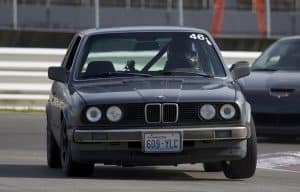
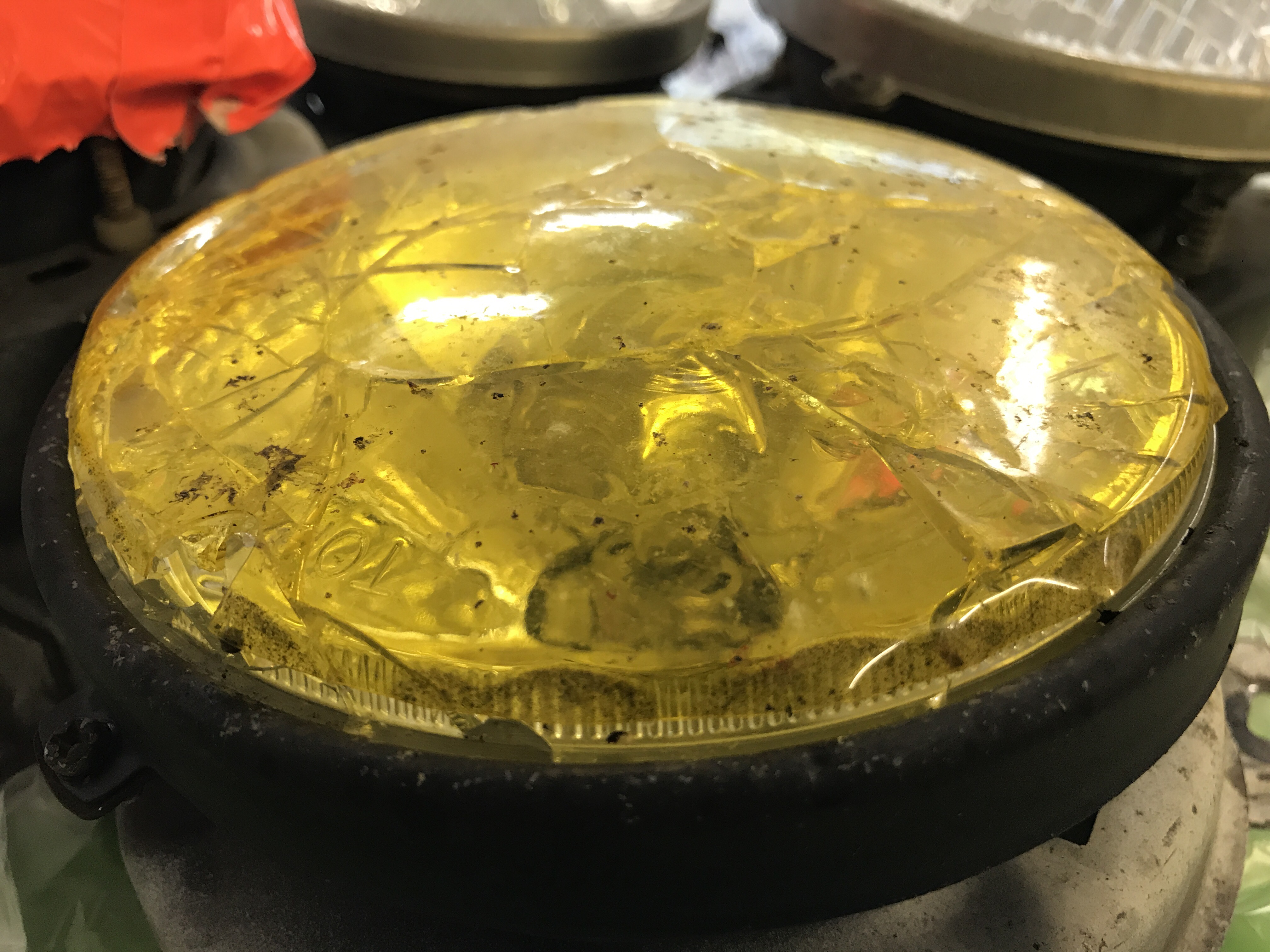
Doesn’t look too bad, right? Well the high-beams are duct taped because they were completely broken and the Lamin-x film was keeping the low-beams together.
an up-close look reveals a not as pretty picture. Eek!

The fix – new (to me) headlights and new Lamin-x

Although the remaining races for the year are during the day, we are in the Pacific Northwest and that means there is always a chance for rain.  When it rains, I prefer to have all the lights on, just to make sure other cars on track can see me.

To fix the headlights, at least for an E30, there are a few different options:

    • Replace just the light bulb: These light bulbs are old school and thus the whole light bulb and actual headlamp assembly are one-piece.  In most modern cars today, there is a headlamp assembly and somehow screwed to the inside, is the actual bulb.  So you can replace either the headlamp assembly or the bulb but we don’t have that option here.  To buy the integrated headlight, head over to Amazon and you can easily get one, like this one below (click on this link or the image below to go to Amazon and buy).  Each bulb will run you about $45/bulb.  Check to make sure you are ordering the right thing – the high or low beams.  They are not inter-changeable.  On the plus side, there are no side dependencies.  So the low or high beam bulb can fit on the left or right side of the car.
    • Replace the whole assembly: You can also choose to replace the whole assembly, which includes the bulbs and the frame that holds the bulbs in place and is screwed into the radiator support area.  Normally, this is too much for broken headlights but this is where eBay is your friend.  There is an option to buy brand new and even LED and projector headlight assemblies, which are awesome but pricey.  Here is an option from Amazon.  Beware though, these look awesome but are just as fragile as the OEM stuff.  Keep that in mind before buying and taking back on track.  🙂

Ebay to the rescue

As you can see from the Amazon search results, a new, truly new and even aftermarket set of the full assembly headlights can run $200+. Instead, I went to eBay and was able to find a used set of the full headlight assembly for just over $80. This is also less money than buying new (intgrated) bulbs and the already come in the assembly.  Click through the banner ad below to see search results that I used to get my new (to me) headlights.


Install in less than 5 minutes
Because I was replacing the whole assembly, all I had to do was:

  1. Remove 6 clips that pinch the headlight assembly to the grill that surrounds the headlights.
  2. Unscrew two screws for each headlight area, that holds the grill to the front area of the car.
  3. Unscrew two other screws that hold the headlight assembly to the radiator support.
  4. Disconnect the bulbs from the wiring harness.

And they’re off!

Out with the old, in with the new (to me)!

Lamin-x for extra protection

While the old bulbs were off, I cleaned off the new bulbs with generic window/glass cleaner and then installed a set of #prospec yellow tinted Lamin-x film covers.  These are the same ones I had previously but this time I put them all four headlights.  You can get these almost anywhere: Amazon, eBay or where I got them, ECS Tuning.  These are the exact product I ordered.  But since we fund this site through affiliate marketing, here is a link to Amazon, for the exact same product, of which clicking and buying helps keep this site alive.


Back to looking good for the next race!

In under 10 minutes total, including cleaning, taking pictures and moving slowly as I was recovering that day from minor surgery, old broken headlights were replaced with fresh, low cost, new (to me) headlights with extra protection from Lamin-x.

Back to looking fresh!

I think about headlights and even windshields as almost consumables. If I can go the rest of the year without having to replace them again, that’ll be great. But with the next race at Pacific Raceways, where there is gravel off-track and people love to drop tires, I’m not very hopeful.

The lights that will strike fear into my competitions mind and heart. Move out of the way!!!
Posted on

Building a track car – what to buy and what to upgrade when

What: Building a track car – things to consider and make sure you do when building your dream car for the track.

If I knew then what I know now: Power is almost always the last thing to focus on.  Most modern cars are plenty powerful enough.

Check out: These are some of the best bang for the buck items for your track day car:


So you want to go to the track and don’t have a car yet, but you want something of your own.  Cool, what to do now?  Here are some key variables to consider:

Overall budget

First thing your going to have to decide is how much money you want to put into this car, that you are realistically only going take on track a few times a year.  One major thing is, at the track things, can go sideways in a hurry. Always remember on any given day the track may consume the car, hopefully not you as well but we will go over that here in a bit. The main thing again is to have fun right?  If your scared of the car your driving, you may not want to build that car into a track car.

It’s better to drive a slow car, fast than to drive a fast car slow.

Something that was said to me early on in driving was “It was better to learn how to drive a slow car fast rather than be the guy that drives a fast car slow”.

Front-Wheel, Rear-Wheel or All-Wheel Drive?

Also what drive-train lay out do you want? A good rule of thumb is you should track something that has a similar layout to the car you drive all the time. This will best translate the things you learn at the track to the street. OK we have thought about the things above and some personal preferences as well, Time to choose a car.

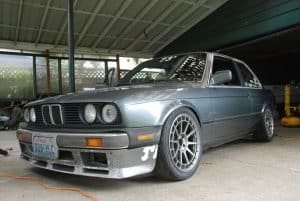
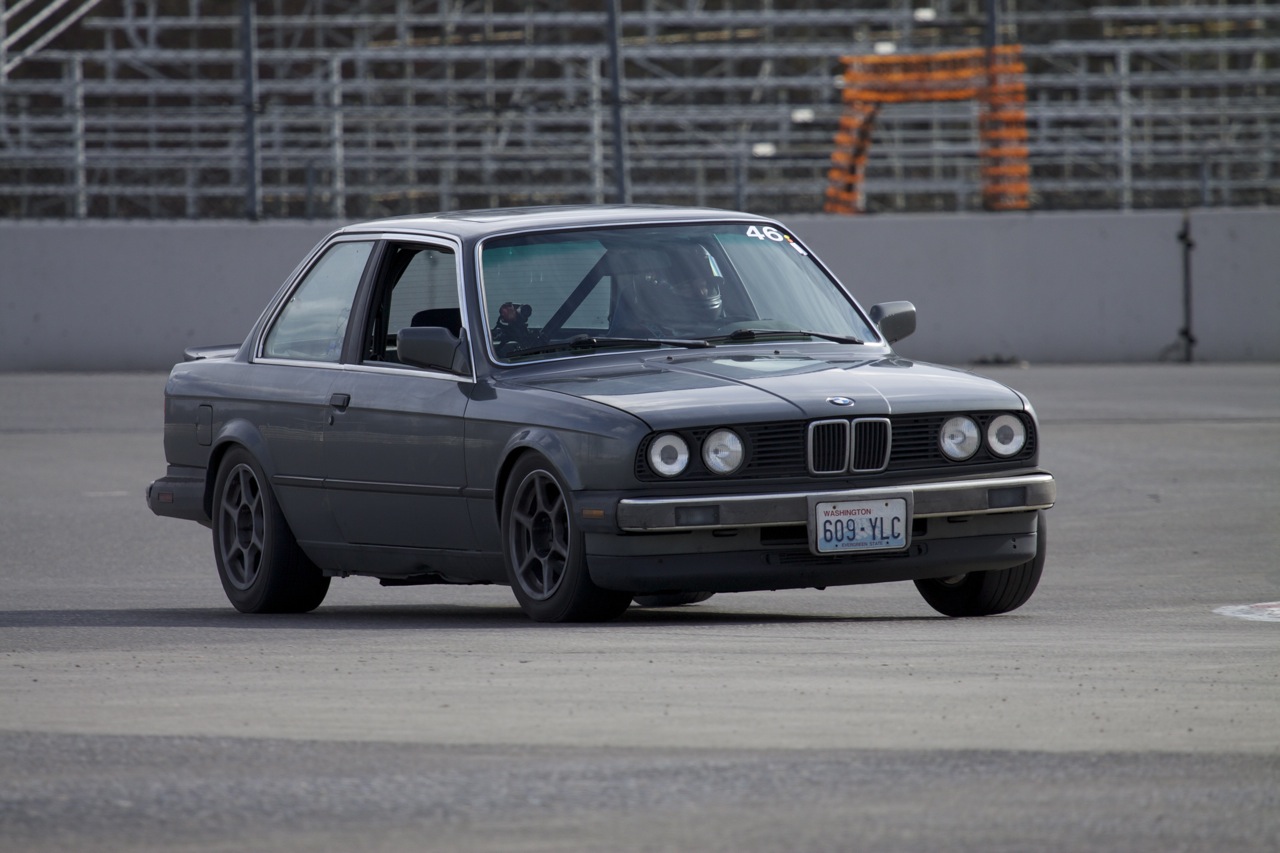
E30 BMW 325is track car at PIR

I like to drive a slow car, fast type of a style.  Slow is also a relative term.  By modern super car standards a car like a 2002 BMW M3 would be slow with 333bhp and 3400lbs.  Think of that for a second, a Mclaren P1 has almost 1000bhp. Three times more! WOW.  That being said the BMW M3 is one of the most common cars around due to its chassis, motors, and driver feel.  Not just M3’s but most 3 series BMW’s are great track cars.  Porsche Cayman, 911’s of all years and 944’s also make good lapping cars.  Mazda makes a handful of great cars with good driver dynamics in both front and rear wheel drive. Honda’s, Toyota’s, Nissan’s, Lotus’, Ford Mustang, Gt86 cars, the list goes on and on but most (not all) of the car listed above don’t carry a large price premium to acquire.

You got your car, now what?

Once you found a car its time to take a look at it. A track car should not leak, squeak, rattle, hiss, buzz, clunk or shake. Any of these items will need to be addressed before even the first track event. You must have a reliable car to take to the track. Breaking down or oiling down the track doesn’t only ruin your day but all others as well do to lost time from cleanup and decreased track condition.

Car up on stands getting checked out before the next event.

Lets get it ready to go fast. What are the two most important systems in a car? Steering and braking. At a minimum the entire suspension and brake system should be inspected with a fine tooth comb. Replace any and all worn items. At this time depending on what is worn out an upgrade may get to pop in.

Lapping prep basics has taught me that having a set of track brake pads is the most beneficial item you can do to your car to make it last the entire day. Nothing worse than calling it a day because you used all your brake pad in two session. I would also try to do braided brake lines at this time as well. They just help with the pedal feel when you really get on it hard. I have always had great results with Performance Friction Brakes, Carbotech Brakes, Stoptech brakes, and Wilwood brakes for pads, brake lines rotors, and calipers. I could be happy with this prep level on a car. Driving a car on soft suspension and street tires with killer brakes can be a hoot!

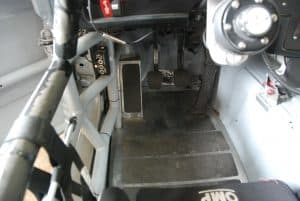
Good pedal placement and a clean foot well can make heal toe shifting easier.

Brakes – check!  Shocks and Springs are next!

So you have done a couple days now and the brakes are good but you are gaining a thirst for G force. Whats next? Lets do some shocks and springs. I would suggest going with a coil over setup with a linear rate spring (most good kits are). Having a shock and spring combo that works together as one makes a car become so much more predictable. The build up to the adhesion limit is far less sudden in this case. Sway bars are a common upgrade as well. That being said a good coilover setup (read chassis tuning) may not require them. A lot of times I have put a stiffer sway bar on a car only to place it at full soft or in some cases remove it all together. I would stick with one step at a time on this one. Bushings are a great upgrade as well for chassis stability. Street cars are built to be quite and comfy. These rubber stockers allow some chassis parts to move a lot as to not upset the ride comfort. At the track this movement will cause the car to never feel like it really takes a set, always kinda moving around. In the past we have used Ground Control products, BC Racing products, Fortune Auto products, JRZ shocks, Motion Control Suspension and would not hesitate to use any of them for future projects.

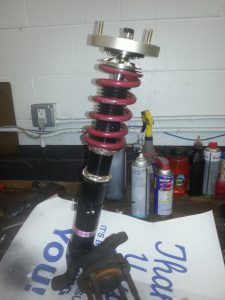
A front E30 coilover assembly using a BC Racing shock.

The Meaty Tire Thread!

A set of good track rubber is always fun. A good set of R compound tires can up your grip game by a massive amount. The soft grippy compounds and large tread block size allows the tire to stick to the road once it gets to operating temperature. The tread blocks being as large as possible keeps the tire tread pattern from deforming or getting torn off as they pass there heat tolerance. This can have a side effect that can catch you off guard. The enhanced grip level means your speed is higher and your lateral load is higher and the then sudden loss of traction at the tire limit is much more dramatic than it would be on street tires. Most good tires do give you some warning before they will slide.

There is nothing that beats that grip though. Toyo Tires, Nitto Tires and Hankook Tires make good lasting, high grip, user friendly track tires. There are many others but keeping cost in mind these are what I shop for most of the time.  Check out Tire Rack for usually solid deals and good availability.

Nice big Toyo Tires Proxes RR track tire.

More Speed Requires More Safety – Don’t Skimp Out on Your Life

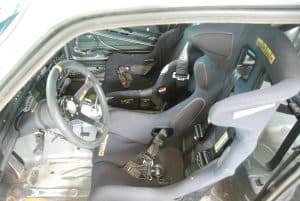
Well now the car has better brakes, an upgraded suspension, and we have some nice grippy tires. That means we are moving pretty fast now. One of the thing I have learned in my years going to the track. Safety is NOT over rated. The better the safety gear the better the chance you can walk away from a big one. Good basic safety harnesses do a great job of keeping you planted in the seat at the track. Even a set of four point belts with a stock seat can get you headed in the right direction.

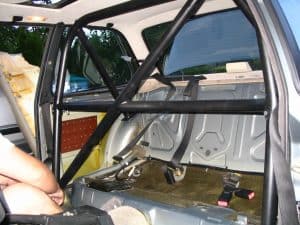
Being able to stay planted in your seat with out having to hold yourself into the car allows you to have smoother, softer inputs that upset the car less in a reaction maneuver. Upgrading the seat to one with deeper sides and some better shoulder support just bring your stability in the car to the next level. A note to remember when shopping for seats. It is not recommended to run a fixed back racing shell without some type of rollover protection. In the case of a rollover a reclining seat is designed to fold/ break in a way to prevent the occupant from being crushed if the roof caves in.

Sorry if this is sounding a little dark but its the real deal. If you were in a rollover with a racing seat the seat would not fold and the roof would make contact and there is a high chance of getting crushed. A roll bar or roll cage is never a bad idea when going fast. I have run a rear roll bar and a race seat for years in my track car. Just having the piece of mind of knowing I have done the best I could with the budget I had, I felt as safe as I could be for the speeds I am driving. I am planning on installing a full cage in my car as the plan for speed increases.

I also run a set of six point harnesses, a Momo head restraint seat, and a Hans device attached to my Arai gp6 helmet. More on helmets later.

Fire is also a possibility. With increased speed comes increased stress and increased heat. There are many combustible fluids in a car: fuel, oil, brake fluid, gear oil, and that is just some fluids. A track car should at minimum have a small fire extinguisher. A complete fire suppression system plumbed into the car is best. They are not that much money in the grand total. Bimmerworld sells a kit for a few hundred dollars. When you have spent now thousands of dollars, it seems like a waste to have is burn to the ground because you didn’t want to spend a little more. Sparco, Momo, OMP, Schroth, Arai, Hans, Alpinestar, Adidas are all brands I would recommend.

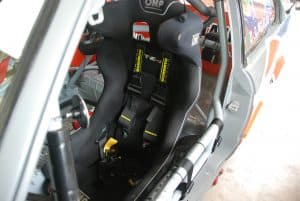
A nice safe driver safety cell area.

How about that. Now we have a sweet track car. The car of our liking, the one that fits you like a glove, the one you have always wanted. It’s all leak free and reliable. It stops on a dime with the sweet brakes, it drive like its on rails with the tuned suspension, it has the grip from the sticky tires, and you have piece of mine being planted in your car with all of your protective gear keeping you safe. Now you can worry about you at the track rather than if the car can handle what your putting it through.

A super charged bmw E36 M3 track car preped by the Racer on Rails crew.

If you noticed I never got into adding power. The things above will make your car much faster than you think. Being able to hold a higher corner speed and have a shorter stopping distance will get you way better lap time results than just tossing horsepower at it. It all needs to work as a balanced package. Once you want to add power after your skills have bounded, a key item to remember is not to add to much. You don’t want to have more power than the car, tires, brakes, ect can handle. Back to the scary car thought. Its always easy to add more power to a car. So I say just roll it in rather than shoot for the moon.

Posted on

What to Wear at the Track

What: What to wear at the track – literally, everything, including underwear in some cases.

If I knew then what I know now:  I would be way more comfortable (and safe) at the track.

Check out:  Your local or online outdoors stores such as Cabela’s, Dick’s Sporting Goods and of course, Amazon.


There are two thing to look at here: Paddock clothing and driving clothing.

They are not really to many differences with paddock wear over driver gear. there are a couple specific items that are not good for both tasks. The major one is foot wear. Head wear is also greatly different. You should also always review your track event rules as well. Some clubs allow shorts and a tee shirt, while others require long pants and sleeves. Weather is also something to take into consideration. Never good to be caught in the rain with no coat. Layers are your friend. One other thing. your cloths will take a beating at the track and working on the car.

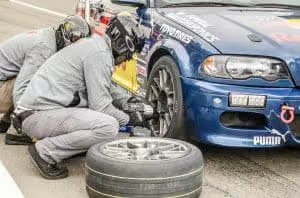
Checking tires on the grid before 25 hours of racing.

Outerwear

Pants, shirts, socks. I have found that most work wear and outdoors/ hiking gear translates well to the paddock and driving. Modern outdoors pants are great. A lot of them are made of a combination of canvas and fire hose. This makes them rugged and allows for an element of stretch to the fabric.

Pants – Outdoor Research is local to us and makes a product called the Deadpoint Pants that we have been using in both driving and crewing for a few years now and I am on the same pair. They also happen to be SPF rated for the sun.

Shirts are kinda open. Tee shirts are good for pit work in the paddock. They tend to get thrashed pretty fast. having a nice breathable over shirt is nice to have so you done have to look grunge all day. Again outdoor/ hiking gear works great and also available SPF rated.

Having good sun shelter for long hot days will help keep you from getting beat down by the sun rays – checkout our blog post on tents for more about shelter.

For socks we once again travel to the outdoors section for some Smart wool socks. The moister wicking and the thickness help you stay comfortable on your feet. Also with no synthetics fire risk is lower. There are lots of good company’s that sell great work wear and outdoor wear. Carhart, Dickies, Patagonia, Outdoor Reasearch, Filson, Outdoor Emporium/ Sportco, Cabels are companies I have used items from at the track for extended amounts of time.

Good gear makes working in harsh environment way easier.

Footwear: Good driving boots are terrible for standing around. Good shoes for walking and standing usually are cumbersome to drive in. It is best to bring two types of shoe to the track. If your not willing to do that you should find a shoe that works for you for doing both activities.

Places like Keen shoes, Lems shoes, Addias shoes, Piloti shoes make decent dual duty shoes. If you are hip to the two shoes shuffle then any shoe you find comfortable to stand and walk in is highly recommended. Remember to always take the weather into account, you don’t want to have wet socks all day.

Driving boots have a sole role in life. To give you the best feel to the pedals while giving you the best access for space in the pedal box due to the compact size without all that padding that makes your paddock shoes so soft. Being able to move your feet around help the ability to heal toe down shift easier, left foot brake, and get on and off the dead pedal better. Most are also fire resistant, not all but most. All the good driver safety gear company’s: Addias, Alpinestar, OMP, Sparco, Simpson, Momo, Oakley, and OMP and Sparco have budget minded brands like the OMP Sport line.

As you can see here both drivers and crew need fire resistant clothing sometimes.

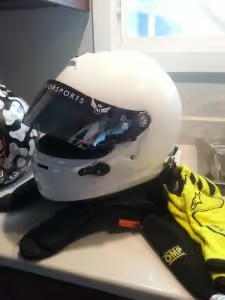
Headgear. Another item that differs a lot depending on application. Lets start with helmet. There is one bottom line here. Don’t cheap out on your life. Get the best helmet you can afford. I tend to stick to a couple brands. I am familiar with their quality and fit. Arai is my absolute go to for motorsport driving. The way it fits and feels, the weight, the visibility works the best for me.

There is one bottom line here. Don’t cheap out on your life.

The others on my list (motorcycle, biking, ect) are Stilo and Bell helmets. You should make sure to try on a couple different brands. The helmet shell shape play a roll in how it may fit you. The brands listed above all sell different pad inserts to help them fit person to person better on most of the motorsports lines.

An associated item to consider is a head and neck restraint system. If you are running racing harnesses in your car this is a highly recommended item. They help support the weight of the helmet and limit the motion of your neck in the case of a heavy impact.

Hans has been the standard for years. Necksgen is another company that has developed a quality product. There are ones now that work with a 3 point safety belt as well. I haven’t tried one yet so i can’t comment on that yet. just remember safety is never over rated. As far as paddock gear goes again review the weather and think sun shelter. This is pretty basic, just trying to keep the elements at bay.

I love my safety gear!
Posted on

Day 15 – I can’t believe this is happening

This is the last day of iRacing before the big race weekend at Portland International Raceways.  The goal today was the same – another 20+ lap sessions, with no accidents, pushing for consistent, fast but not personal best laps.  Just get into a rhythm and pound out lap, after lap, after lap – all near the limit (or at least mine).

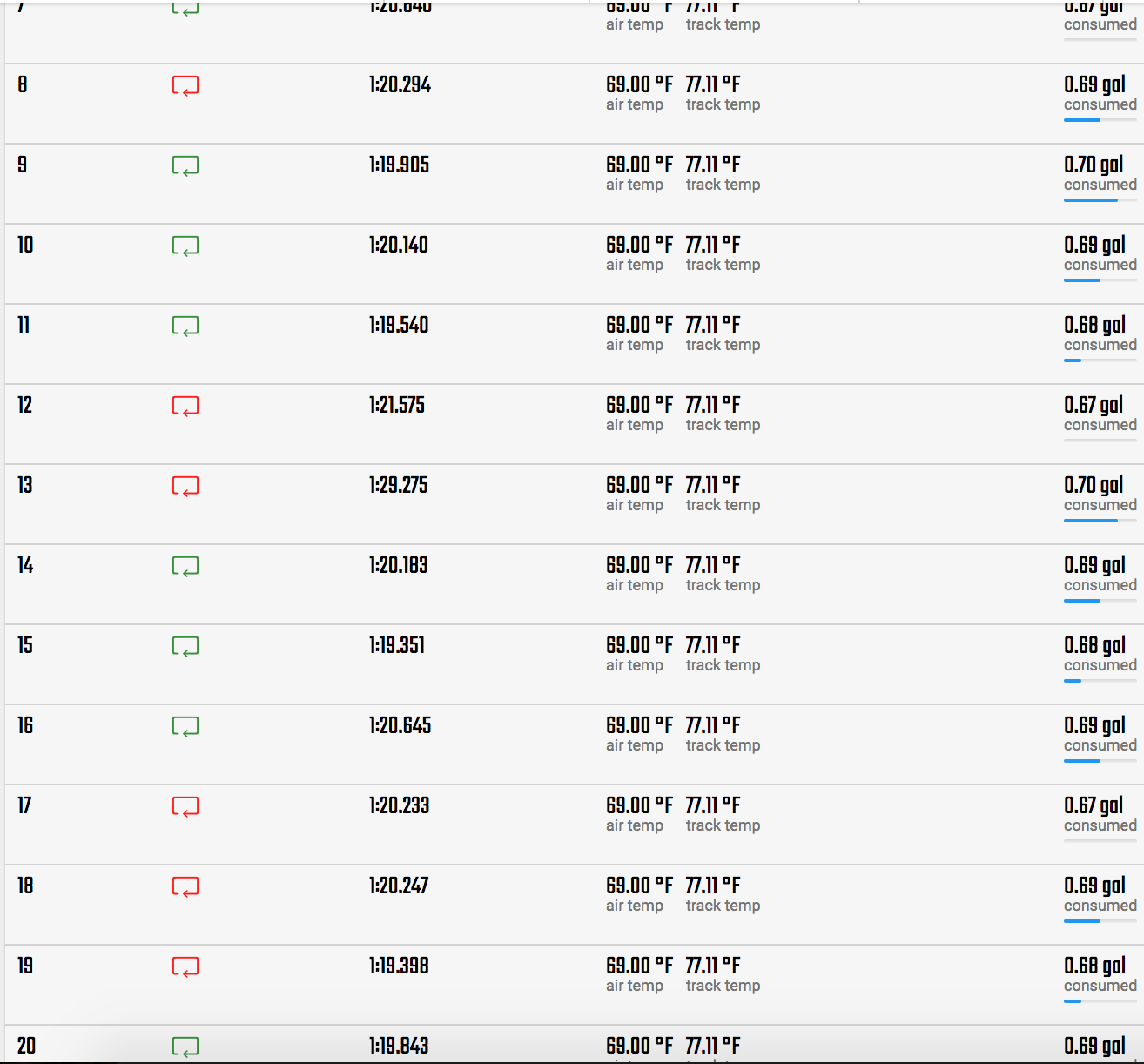
The session started off normal, with low-1:20 lap times steadily falling and then suddenly, lap 6 – BOOM! 1:19.410 – new personal best.  

I smell blood in the water…

That lap was good but there were some small mistakes, I can do better.  So I put my head down and starting pounding away trying to repeat it and make improvements.  over the next 10 or so laps, I got close several times and even spinning at one point, but keeping it out of the wall.

I checked up, let the tires cool down, as I would in real life and went back at it.

More mid-1:19’s and suddenly… 1:19.351 – another half tenth shaved off.  But I wanted more, especially with a low fuel load, I knew I could do it.  So I pushed on but ultimately, I dropped a tire on the exit of the chicane and ended up with a 1:19.398.

Oh so close!!!

What happened?

I found that if I can slow down, just a tiny bit more, in the entrance of the ‘esses’ and turn 7 and the chicane, I was able to get the car turned faster and back on throttle and full throttle, sooner. Same lesson from before, just applying it better and better.

Check out the throttle traces of the graph below.

Slow down earlier, get the car turned and then get back on throttle.

Now seeing as that new personal best was done at the end of the session, with yes lower fuel – it was also well past the peak performance of the tires. Something I started thinking about today, as I have been preparing for the Portland race this weekend, is that I’ve noticed that many times, in a real world race, my fastest lap of the race comes in around lap 2-4.

This is when the tires, brakes and everything are at their prime conditions. I wonder what could happen if we did a low fuel run, with just 5 or so laps and fresh tires? I am thinking that the lap times would come down significantly!