
Watkins Glen International is a circuit that demands confidence.
Across its 3.45-mile Grand Prix layout, the speed is high, the consequences of hesitation are real and the car is almost always being asked to do more than one thing at a time. Braking zones arrive while the chassis is still loaded, elevation changes alter the balance beneath the driver and many of the most important corners require commitment well before the exit comes into view.
It is also one of North America’s most historic racing venues. Competition around Watkins Glen dates back to the first postwar road race through the village in 1948, and the circuit has remained one of the country’s defining motorsport destinations ever since.
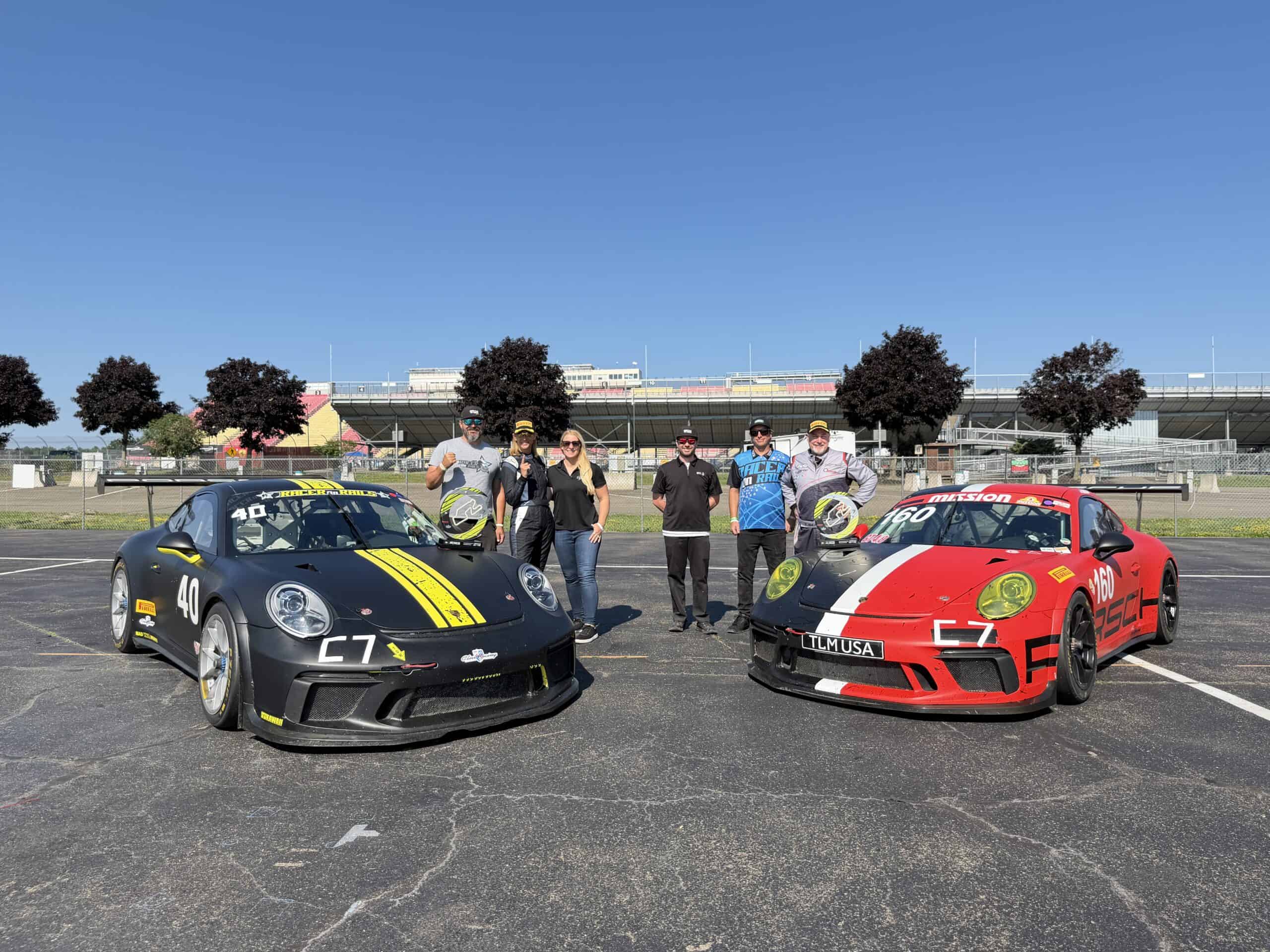
For Racer on Rails, the Porsche Club of America Club Racing weekend presented two very different driver-development stories.
Longtime friend and client Thad Berger was returning to competition after a hiatus caused by a major rebuild of his car. Alongside him was Ann Doherty, whom we have supported throughout the season and who arrived at The Glen with momentum already building.
Ann’s program also included support from professional driver and coach Pippa Mann. The Racer on Rails crew consisted of Jordan Allen, serving as car chief for Ann’s 991.2-generation Porsche 911 GT3 Cup car; Ian Anderson, serving as car chief for Thad; and Tyler Campbell, working as race engineer and driver coach across both programs.
Tyler supported both drivers directly while collaborating with Pippa throughout Ann’s weekend.
The drivers arrived from different starting points, but the objective was the same: build trust in the car, sharpen the communication between driver and crew and turn that confidence into repeatable performance.
Carrying Momentum into the Weekend
Ann arrived at the PCA weekend with valuable recent experience at Watkins Glen.
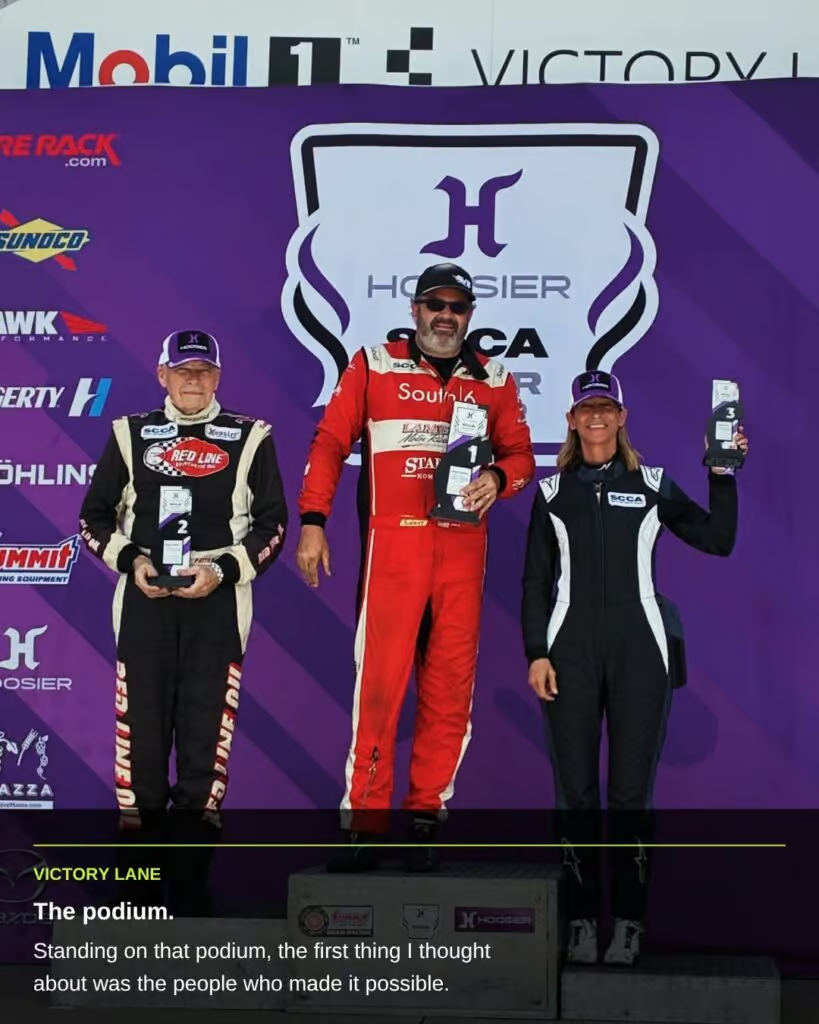
Only a couple of weeks earlier, Racer on Rails had supported her during the SCCA race weekend at the same circuit. A combination of simulator work, preparation and focused coaching allowed her to arrive ready to perform, ultimately producing a third-place finish in Sunday’s race.
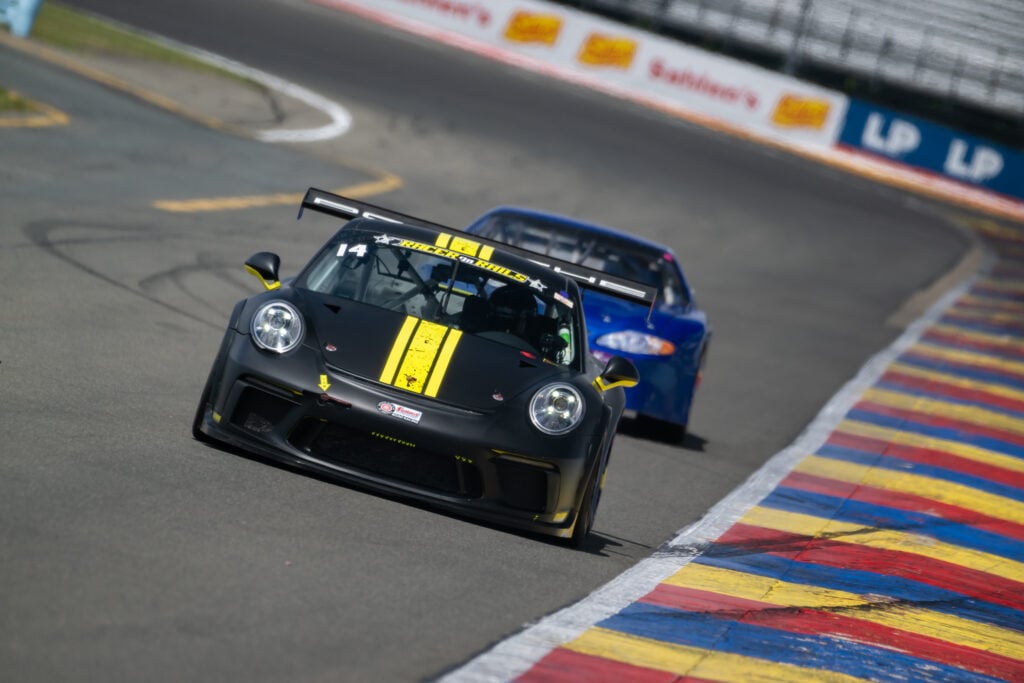
That recent experience meant the PCA weekend did not begin with Ann needing to relearn the circuit. Instead, she could immediately begin refining her driving, exploring the limits of the car and building on the progress already made.
Friday opened with two practice sessions before the field moved into qualifying and the weekend’s first race.
Ann quickly showed that the earlier preparation had carried over. She set a new personal-best lap and qualified second in GTC7 for the non-points race.
GTC7 is PCA Club Racing’s class for 2017 through 2021 Porsche 991.2-generation Cup cars. With the machinery tightly controlled by the regulations, performance comes down heavily to preparation, setup, execution and the driver’s ability to consistently extract speed from the platform.
When an issue struck the initial race leader, Ann was in position to capitalize.
She stayed composed, managed the race and brought the car home for the victory. Along the way, she continued lowering her personal best, eventually producing a 1:55.2 lap time before the end of Friday.
The victory was the visible result, but the larger story was the progression behind it.
Ann was becoming increasingly comfortable asking more from the car, and increasingly precise when describing what she needed from it.
Developing the Car as the Pace Increased
As Ann became faster, the setup needed to evolve with her.
The car that helps a driver build confidence early in their development is not always the same car they need once the pace begins to increase. As Ann carried more speed, committed earlier and asked more from the front axle, her feedback began to change.
Throughout Friday and Saturday, the team worked through a series of adjustments designed to preserve the confidence she had built while giving her the response she needed at a higher level of commitment.
She wanted more authority from the front of the car. At the same time, the increase in her pace meant she no longer needed the same level of aerodynamic stability she had previously relied upon.
Jordan and Tyler continued adjusting the platform around that feedback, while Tyler and Pippa worked together to maintain a consistent coaching framework.
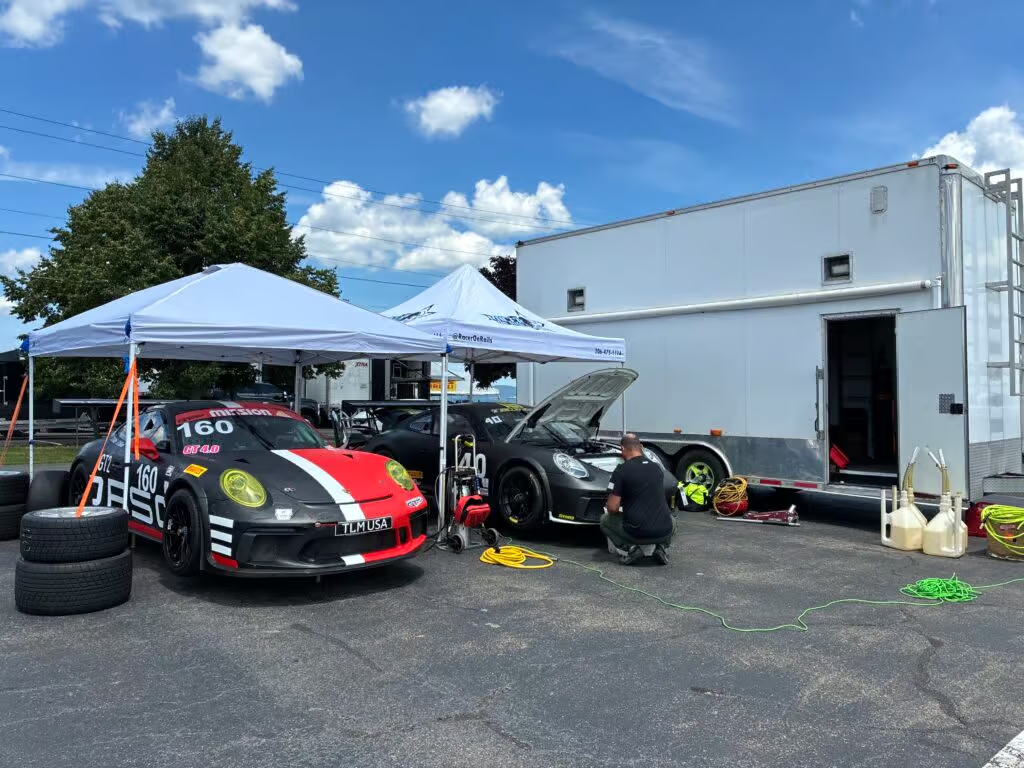
The goal was not simply to make the car faster on paper.
It was to give Ann a car she understood, trusted and could use.
By the end of the process, the car was responding in a way that allowed her to drive with greater confidence. The lap times followed, but more importantly, so did the consistency.
Fighting Forward in the Heat
Saturday presented a different challenge.
Temperatures climbed, the points-race fields grew larger and Ann found herself racing in the middle of a group that included several newer 992-generation Cup cars.
Traffic became more difficult. The heat changed the car. The racing became more physical.
Despite those conditions, and some light contact from another competitor, Ann stayed in the fight. She managed the car, remained composed and finished second in GTC7 in the first points race.
The second points race was equally demanding.
The conditions continued to test both driver and car, and Ann did not feel as comfortable as she had earlier in the weekend. Even so, she continued working through the difficulty rather than allowing it to dictate the race.
The result was another second-place class finish.
Across the three sprint races, Ann earned:
- One GTC7 victory
- Two GTC7 second-place finishes
- A new 1:55.2 personal-best lap
More importantly, the weekend showed that the speed developed through simulator work, preparation, engineering and coaching could be carried into changing conditions and converted into repeatable race results.
Rebuilding Rhythm with Thad
While Ann entered the weekend carrying recent Watkins Glen momentum, Thad’s program began from a very different position.
Thad has considerable experience at The Glen, but his return followed an extended break while his car underwent a fresh rebuild. That rebuild followed a major incident at Road Atlanta in 2024, when another car lost control on the back straight and collected Thad’s Porsche, causing significant damage to the passenger side.
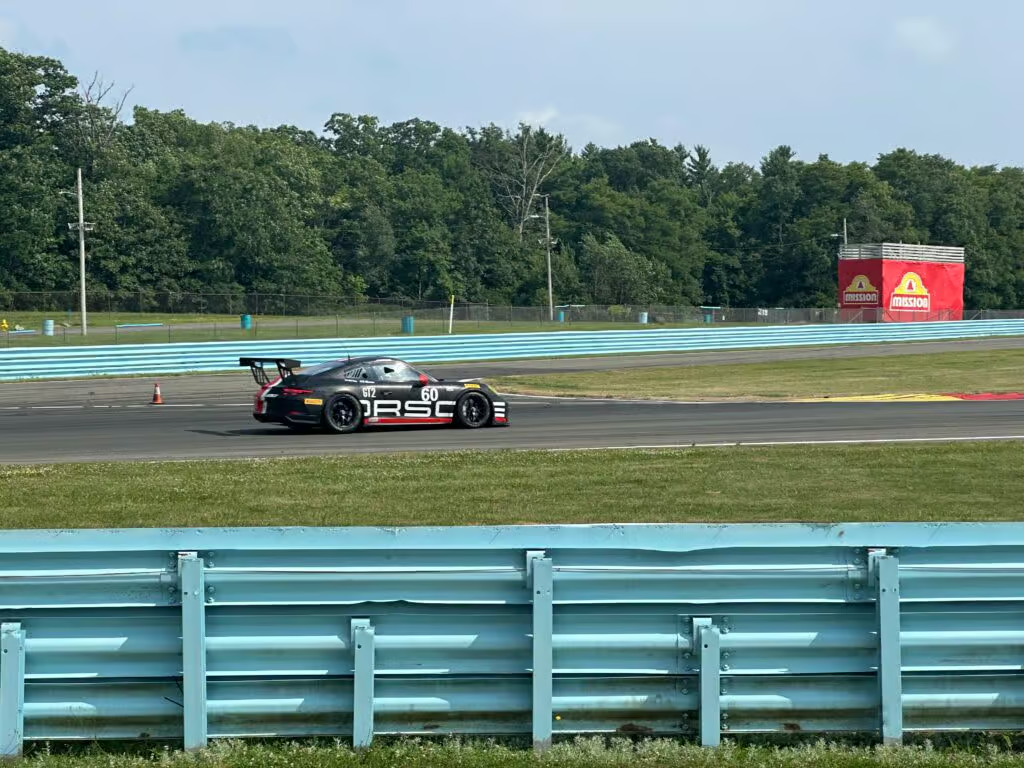
Before arriving at Watkins Glen with Racer on Rails, he had completed only one shakedown weekend with another team.
The familiarity with the circuit was still there.
The immediate trust in the rebuilt car was not.
We began the weekend with a baseline setup and then worked methodically through a series of changes intended to give Thad a car that responded the way he expected.
That process became an important driver-development exercise.
Thad is an experienced racer with significant seat time, but much of that experience had been instinctive. He had not previously spent as much time developing the language needed to describe the car’s behavior, identify what he wanted changed and anticipate how a particular adjustment should affect the platform.
After every session, we separated the conversation into two connected areas.
First, we reviewed the driving itself: lap strategy, execution, traffic management and the places where Thad could make better use of the car.
Then, we discussed the car.
We worked to identify what he was feeling, what he was asking the chassis to do and which adjustments could help the platform better support those instincts.
Before making each change, we talked through the expected effect. When Thad returned from the next session, he could confirm whether he felt what we had anticipated.
That feedback loop allowed him to connect a mechanical adjustment to the sensation behind the wheel.
It also gave the team increasingly precise information to work with.
Building Pace Through Understanding
With each session, Thad’s understanding of the car improved.
As his confidence in the platform grew, so did his confidence in his own feedback. He became more decisive when describing the car, more deliberate in his requests and more comfortable pushing once the setup began responding as expected.
The progress accelerated quickly.
By the later sessions, Thad was not simply setting personal-best laps. He was doing it while managing traffic, racing other cars and completing passes.
That combination of improving pace, racecraft and consistency became especially valuable in the two points races.
Despite qualifying several positions behind where he would eventually finish, Thad raced his way forward to third in class in both races.
Across the two contests, he completed a combined six in-class passes, earning two hard-fought podium finishes.
For a driver returning after a long interruption and adapting to a freshly rebuilt car, those results represented much more than two trophies.
They demonstrated what can happen when experience, engineering feedback and a structured development process begin working together.
Finding the Limit
The confidence built throughout the weekend carried directly into Sunday’s enduro.
As Thad became increasingly comfortable with the car, he began pushing harder than he had at any earlier point in the weekend.
While attacking Turn 8, he found the limit and spun the car.
After the spin, the Porsche would not restart, bringing the enduro to an early conclusion. It was not the ending anyone planned, but it was also not a reason to discount the progress that came before it.
Ian immediately began investigating the no-start condition and identified the cause within a couple of hours. With replacement parts on the way, the car should be repaired and ready for its upcoming International GT and Trans Am weekend.
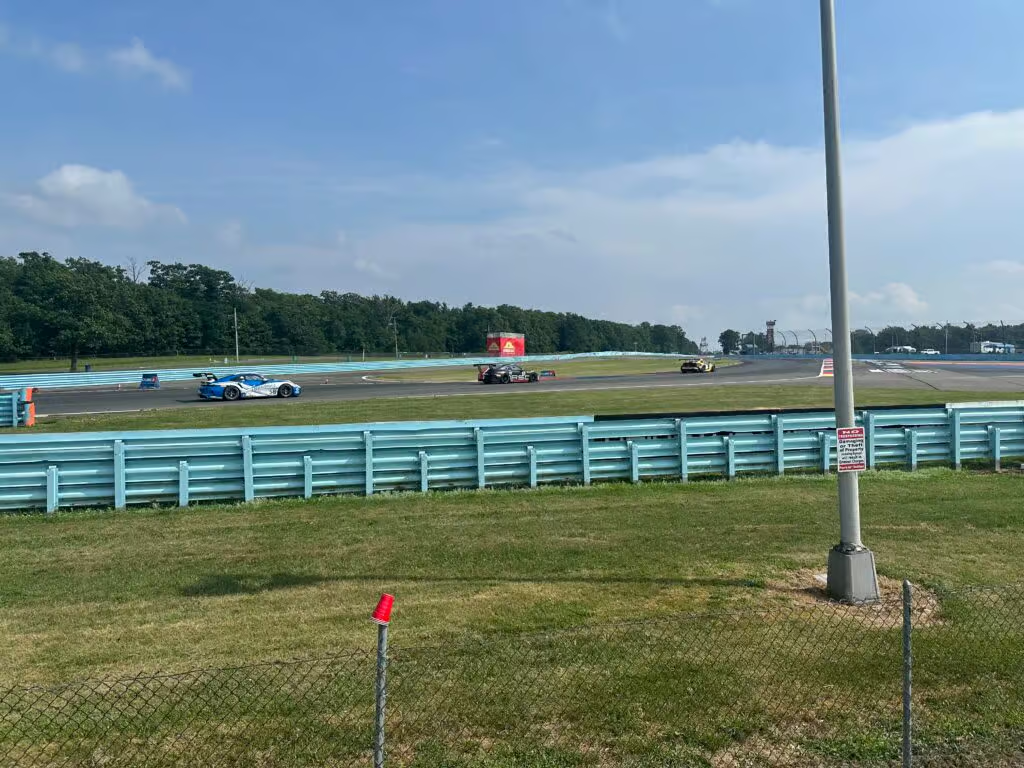
The spin was another piece of information.
Thad had started the weekend rebuilding trust in a freshly rebuilt car. By Sunday, he had become comfortable enough to push beyond where he had previously been willing to go.
Finding the limit is part of racing.
Sometimes that lesson arrives through a faster lap. Sometimes it arrives through a moment that creates a new problem for the crew to solve. Either way, it establishes the next step in the development process.
Thad returned from a lengthy hiatus, improved with every session, developed a stronger understanding of both the car and his own feedback, completed six in-class passes and earned podium finishes in both points races.
By Sunday, he was no longer searching for confidence.
He was using it.
Two Drivers, One Development Process
Ann and Thad arrived at Watkins Glen from very different starting points.
Ann carried momentum from her recent SCCA podium and used it to attack the weekend immediately. She set new personal bests, won Friday’s race and added two second-place finishes in the points races.
Thad arrived needing to rebuild rhythm and trust after time away from the car. Through a methodical process of setup changes, feedback and coaching, he rediscovered his pace and converted that progress into two podium finishes of his own.
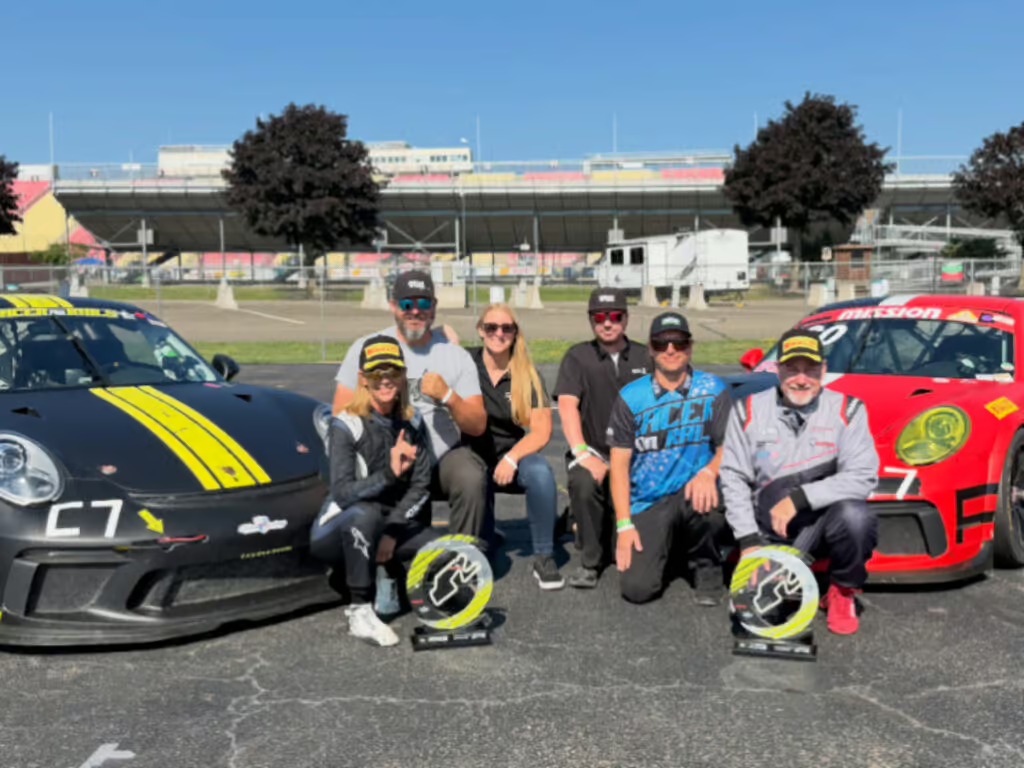
Between them, the Racer on Rails drivers earned:
- One GTC7 victory
- Two GTC7 second-place finishes
- Two class third-place finishes
- Six in-class passes for Thad
- A new 1:55.2 personal best for Ann
Jordan Allen and Ian Anderson kept both cars supported through a demanding weekend, while the combined engineering and coaching effort from Tyler Campbell and Pippa Mann helped turn driver feedback into measurable progress.
There were trophies, personal-best laps and plenty of close racing.
But the most important result was the confidence built across both programs.
At a place as fast and demanding as Watkins Glen, confidence is not simply a feeling.
It is performance.