Posted on

Racer on Rails at Portland: Heat, Heart, PRO3 Lessons, and Runoffs Testing at The Dash for Kids

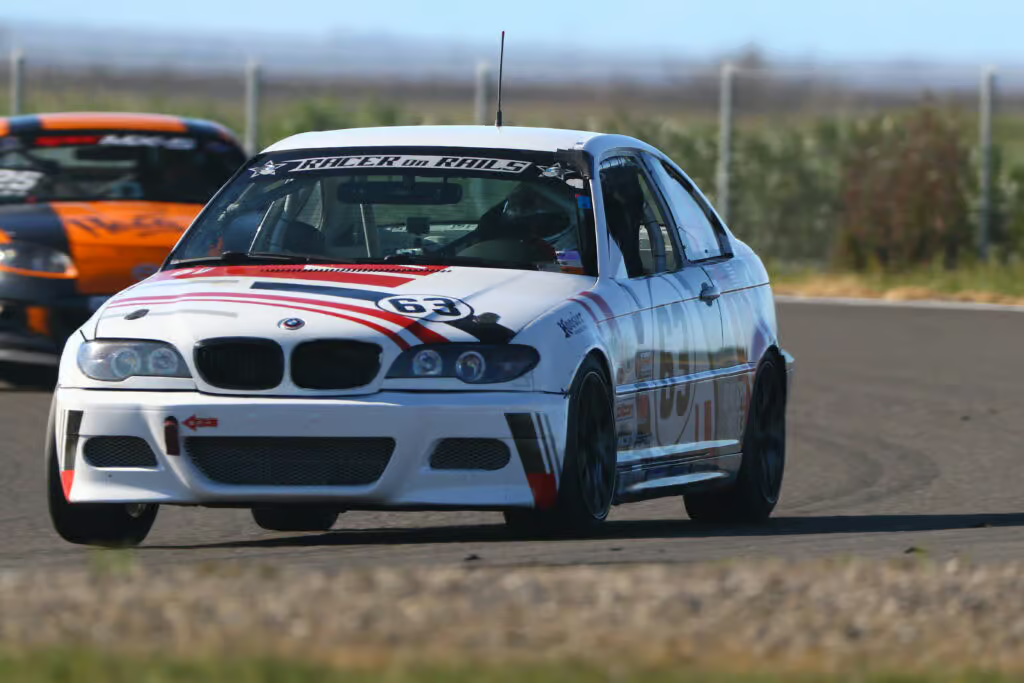
Ron Tanumera driving through the PIR festival chicane in the Racer on Rails BMW PRO3 race car.

Portland International Raceway has a way of making club racing feel bigger than the lap chart.

Maybe it is the setting. PIR sits inside Delta Park in North Portland, tucked into one of the more unique pieces of motorsport geography in the country. Long before it became a racetrack, the land was Vanport, a wartime city built to house Kaiser shipyard workers during World War II. At its peak, Vanport was home to nearly 40,000 people and was the second-largest city in Oregon. In 1948, the city was destroyed by flooding. Years later, the remaining street grid helped form the bones of what would eventually become Portland International Raceway, with the first Rose Cup race held in 1961.

That history matters. PIR is not just another track carved into an empty field. It is a public park, a community gathering place, and one of the great regional motorsports homes in the Pacific Northwest. It is flat, fast in places, technical in others, and just awkward enough to reward drivers who can get the car rotated, settled, and back to power without wasting motion.

For this weekend, Racer on Rails returned to PIR with Cascade Sports Car Club for an ICSCC Conference race weekend, The Dash for Kids XLII.

For anyone newer to Northwest club racing, ICSCC, often simply called “Conference,” is the International Conference of Sports Car Clubs. Founded in 1957, it is an association of independent sports car clubs across Oregon, Washington, and British Columbia, and it remains one of the core regional racing structures in the Pacific Northwest. One of the things that makes Conference special is that it is very much club-powered. Drivers are represented through their member clubs, and those clubs participate in the governance of the series. It creates a regional racing culture that feels practical, involved, and very connected to the people actually building, towing, fixing, flagging, and racing the cars.

Cascade Sports Car Club is one of those foundational clubs. Cascade began in 1953 as the 4-Cylinder Sports Car Club of Oregon, changed its name to Cascade in 1956, and has grown into a club with a year-round schedule that includes track days, driver education, road racing, rallies, and volunteer support for major events at PIR.

The Dash for Kids is one of Cascade’s signature weekends. It blends Conference championship road racing with a community charity event, including race car rides, paddock access, family activities, and fundraising for local organizations. The 2026 event marked the 42nd running of The Dash, with race car rides offered during lunch on Saturday and Sunday for donations to the charity.

That meant this weekend had two lanes of purpose for us.

One lane was competition and development.

The other was community.

And, by the end of the weekend, we got a full serving of both.

The Racer on Rails Plan

Originally, we expected to have three drivers on the weekend but one driver had to bow out last minute which left us with two primary competition programs. The silver lining was that open third slot gave us an opportunity to bring out the Racer on Rails #136 Spec E46 race car to give some lunch time charity rides! Can’t complain about that!

For Ron, the goal was not results-first. The goal was development-first.

Ron’s larger arc this season has been about building the kind of adaptable driving skill that transfers across platforms. He has driven Spec E46, the Porsche Cayman GT4, Spec Racer Ford 3, and now PRO3. The long-term objective is not simply to be fast in one car. It is to become the kind of driver who could step into an endurance team environment and be trusted: aware, consistent, confident, mechanically sympathetic, and able to keep the car in a competitive window.

That is a very different target than chasing a single lap time.

PRO3 is an excellent tool for that kind of work.

The class began in the Pacific Northwest in 2002, growing out of a group of BMW E30 racers and friends connected to the Puget Sound BMW CCA scene. It has since become one of the strongest amateur racing classes in ICSCC, the PNW, West Coast and if the group raced nationally, it would be one of the largest racing classes at any weekend, with large grids and deep competition.

It also has a very specific personality. People often casually describe PRO3 as a spec class, and while the rules are restrictive, it is better understood as a tightly controlled, Improved Touring-based formula. The cars are BMW E30 325i chassis with stock M20B25 engines, controlled tires, and rules designed to keep the emphasis closer to the driver ability end of the spectrum rather than spending or exotic development.

More importantly, they are analog. No ABS. No traction control. No stability control. Many cars run without power steering. The braking window is narrow, the tires are easy to over-ask, and the car will absolutely tell on you if your inputs are sloppy. That makes PRO3 one of the best classrooms in Northwest racing.
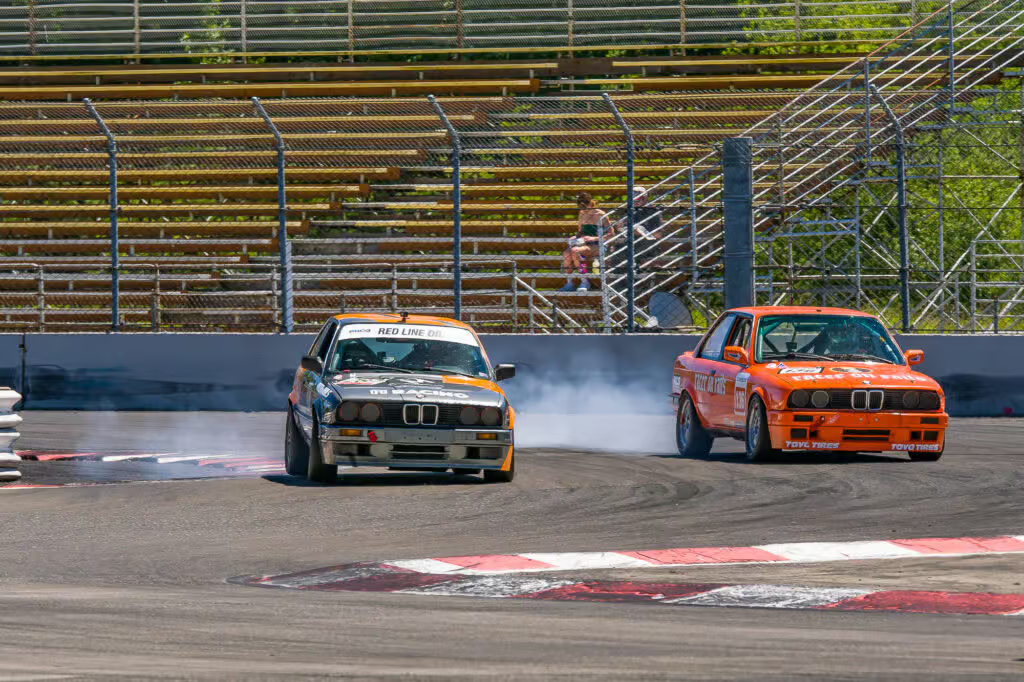
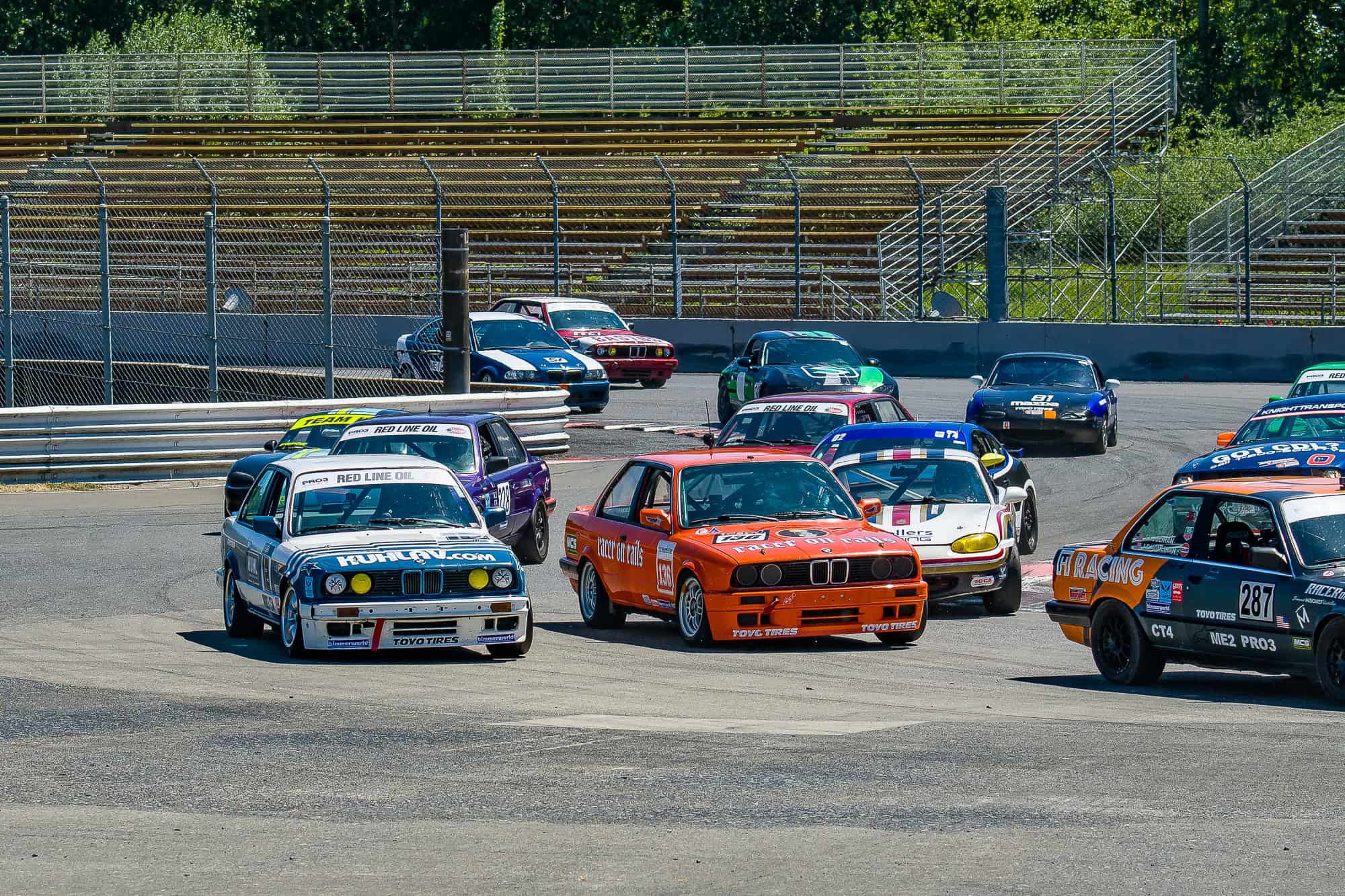
John Hoolihan and Ron Tanemura demonstrating just how analog the PRO3 race cars - locking up going into T1 at PIR.
John Hoolihan and Ron Tanumera demonstrating just how analog the PRO3 race cars – locking up going into T1 at PIR.
(C) 2025 Doug Berger | DBPics

It is also where Gama started racing, and that matters. We have seen it again and again: drivers who can run at the front in PRO3 tend to carry that skill into almost anything else they drive. It teaches commitment, car control, racecraft, mechanical sympathy, and humility. The car is not going to save you. You have to do the work.

For Gama and the 370Z, the weekend had a different purpose. This was a test event for the SCCA Runoffs at Road America later in the year. On paper, PIR and Road America do not look like twins. Road America is longer, faster, and more dramatic, with far more elevation change. But from a setup and systems-testing perspective, PIR still gives us useful information.
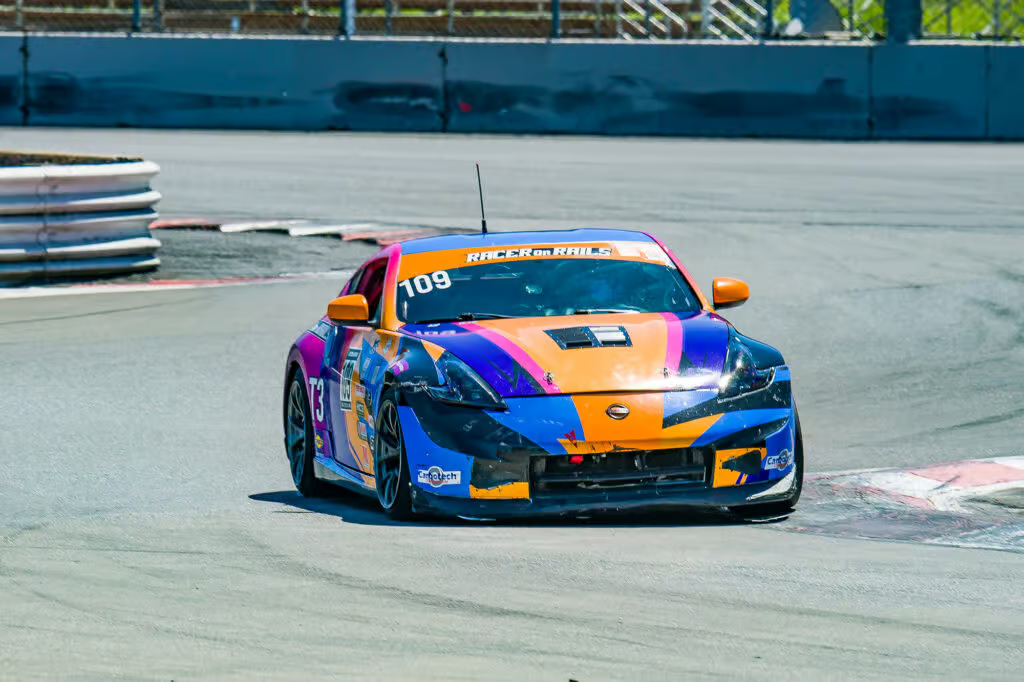
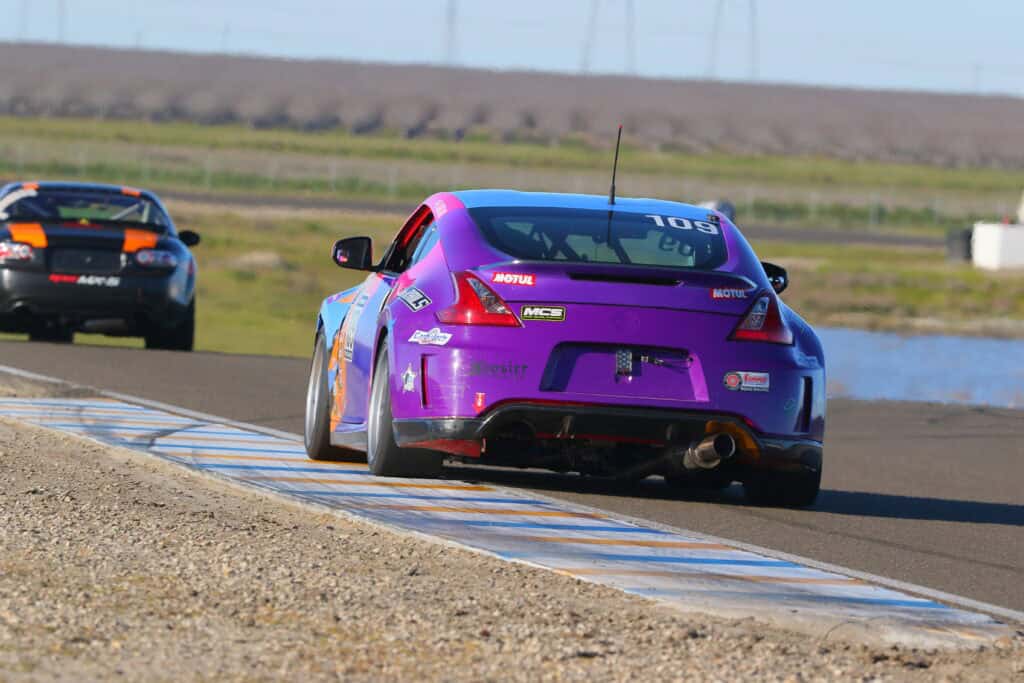
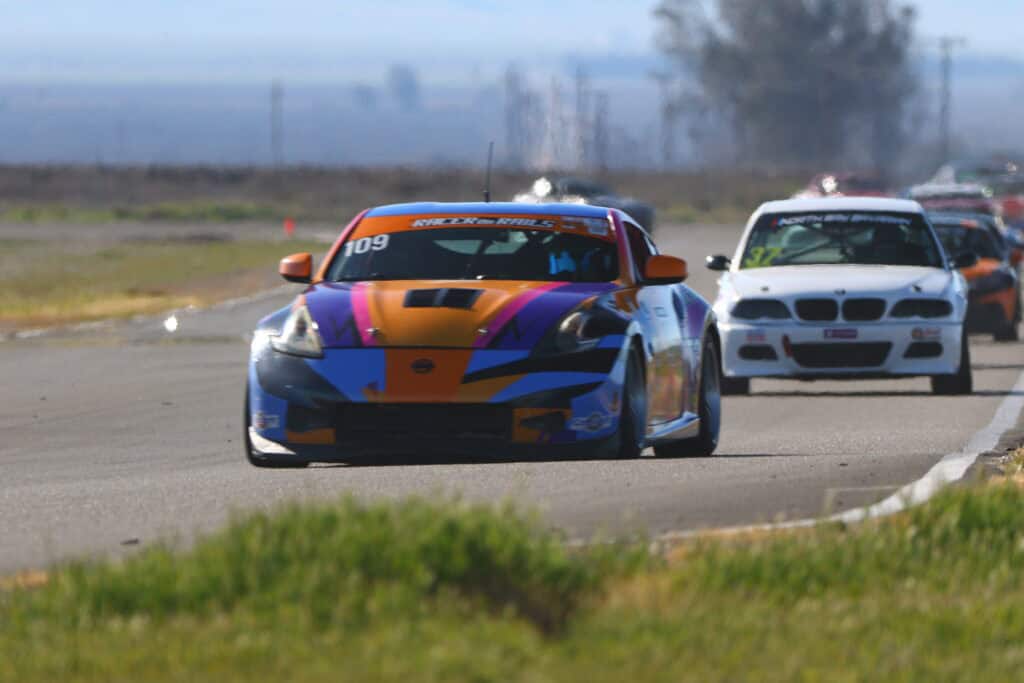
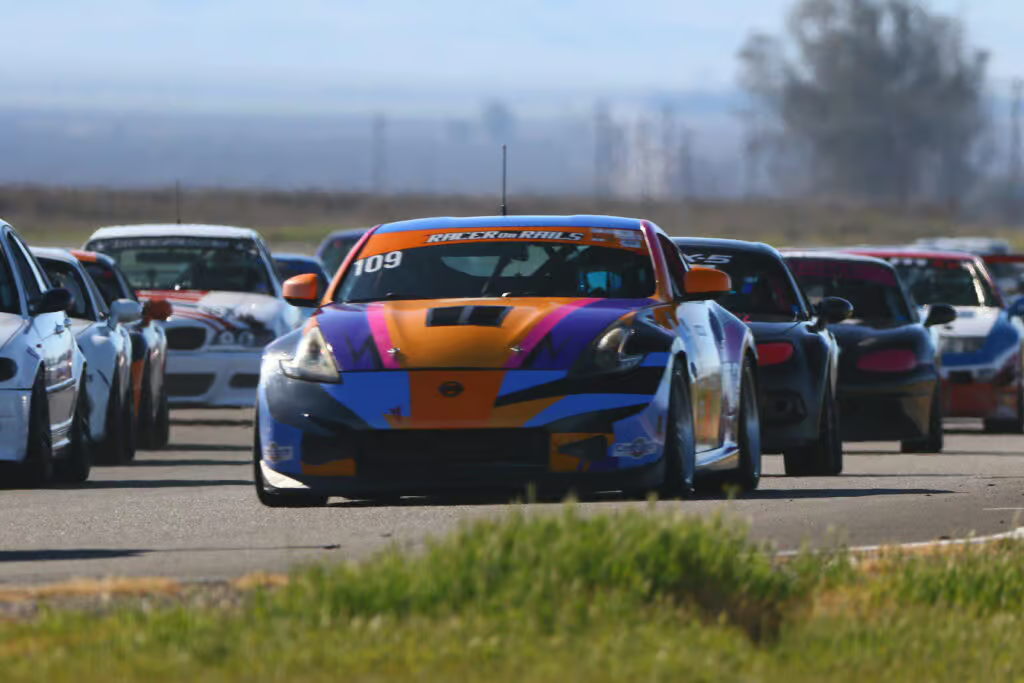
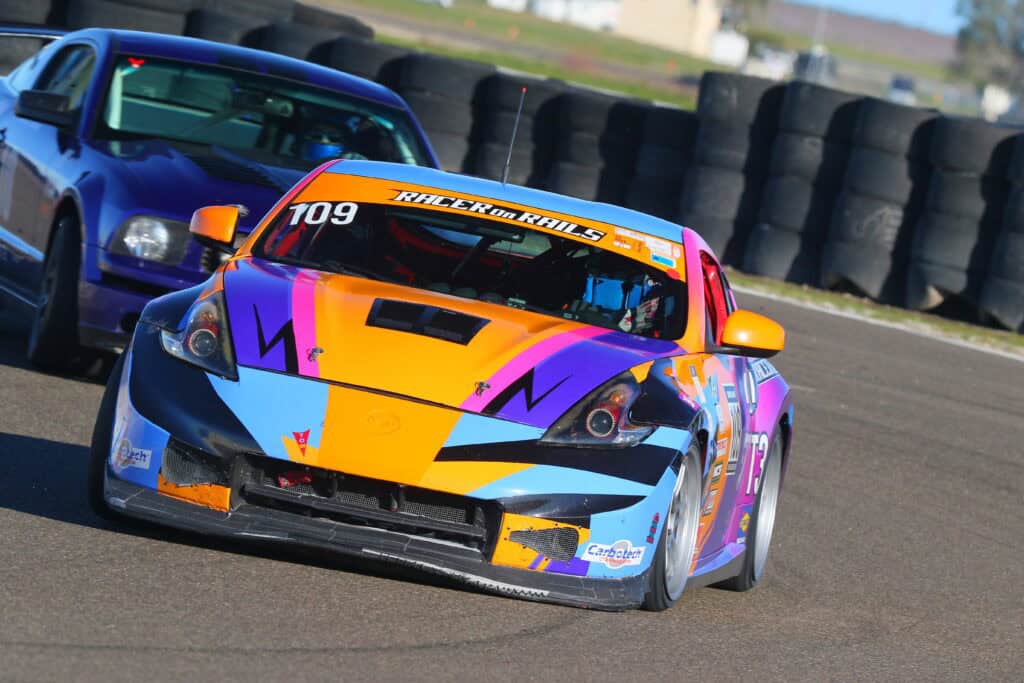
Gama Aguilar bombing through the PIR Festival Chicane in his 2011 Nissan 370Z Nismo road race car, running in SCCA Touring 3 Specification.
(C) 2025 Doug Berger | DBPics

PIR’s flatness, surface, braking zones, and mechanical-grip demands make it one of the best regional proxies available to us. It would not answer every Road America question, but it could answer some important ones: Do we have real pace? Can the car stay cool? Can we run hard in race conditions? Can we trust the package over a longer stint?

With hot weather forecast in the mid to high 90’s Fahrenheit across the weekend, those questions became even more relevant.

Friday: Promise for the Z, Trouble for the PRO3

Friday test day split into two very different stories.

For the 370Z, the car felt good right away. Track space was limited, and with traffic it was difficult to build a truly representative lap, but the underlying feeling was positive. The plan became straightforward: use Friday to get the car into its window, then put on a new sticker tire set Saturday morning and take two shots at qualifying.

The first shot would come in the morning mini-enduro qualifying session.

The second shot would come in Group 4, where Gama had also entered in ST. Group 4 had faster big-bore traffic, but fewer cars overall. That gave us a better chance of finding the clean air needed to see what the car could really do.

Ron’s Friday was much less tidy.

The PRO3 car developed shifter issues, possibly tied to a deeper transmission issue (Note – We would later confirm the transmission itself was healthy; the shifter issue was the real culprit). Rather than force the car through a compromised test day and risk making things worse, the team made the right call: park it early, diagnose what we had, and prepare to get Ron back on track Saturday.

That kicked off one of those classic club-racing logistics adventures.

Mitchell drove back up to Seattle on Friday evening, grabbed the spare transmission from the shop, and headed back down early Saturday morning. By 7:00 a.m., the team was back under the lift, working to get the transmission into the car and get Ron back in the fight.

No velvet rope. No magic wand. Just people, tools, caffeine, and the quiet soundtrack of “well, this is what racing asks today.”

Saturday Morning: Thrash, Traffic, and One Clean Lap

The team got the PRO3 car back together Saturday morning, but the shifter assembly continued to fight back. It had come loose and was operating strangely enough that even after the transmission swap, there was still work to do.

The good news: the team got it functioning.

The bad news: Ron missed qualifying for both Saturday races.

That meant he would start from the back.

For a driver-development weekend, that is not always a bad thing. It is not convenient. It is not ideal. It definitely makes the day louder. But it gives a driver exactly the kind of work that cannot be simulated cleanly: traffic, starts, passes, imperfect rhythm, and the need to adapt to the car you have rather than the car you wish you had.

Meanwhile, Gama rolled into Saturday morning qualifying on new tires hoping to get a clean representative lap in the 370Z.

That part did not go to plan.

By the time we got to pre-grid, there were already more than 25 cars lined up. The decision was to go to the back and create space, but with 50-plus cars on track, including a large Spec Miata field, there simply was not enough clear racetrack to put the lap together. Then the session ended early due to an incident.

So we waited for Group 4.

This time, the track-space plan finally worked. Fewer cars. Faster traffic. A better rhythm. And then, finally:

1:23.592.

https://www.instagram.com/reel/DZnKfwEgRnP

That lap put Gama P9 overall in Group 4 qualifying and P1 in ST. More importantly, it gave us the first clean signal that the 370Z had real pace in the package.

Was it perfect? No.

There was still time left on the table. Based on feel, predictive timing, and the work Gama and Tyler had done around the car’s potential, the estimate was that a 1:23.2 was likely available in that session. With a cleaner sticker-tire run and a true max-effort qualifying format, the team believes a 1:23.0, and possibly even a 1:22.8, was realistic, even in with temperatures already at 80F by 9am.

But for the goal of the weekend, the message was clear: the car had the nationally competitive pace we expected.

Now we needed to find out if it could survive the heat.

Ron Starts at the Back and Gets to Work

Ron’s Saturday was the kind of day that can turn into a throwaway if the driver lets it.

He did not.

After missing qualifying, he started from the back in Group 2 and worked his way forward to P10 in a 22-car PRO3 field, with a best lap of 1:31.721.

Then he backed it up in Group 5, finishing P5 in CT4 with a best lap of 1:31.210.

That was a big deal.

Not because P10 or P5 are magic numbers by themselves, but because of how he got there. Ron had to adapt after a messy mechanical start to the weekend. He had to race from the back. He had to get close to other cars, work through battles, and keep the car moving forward.
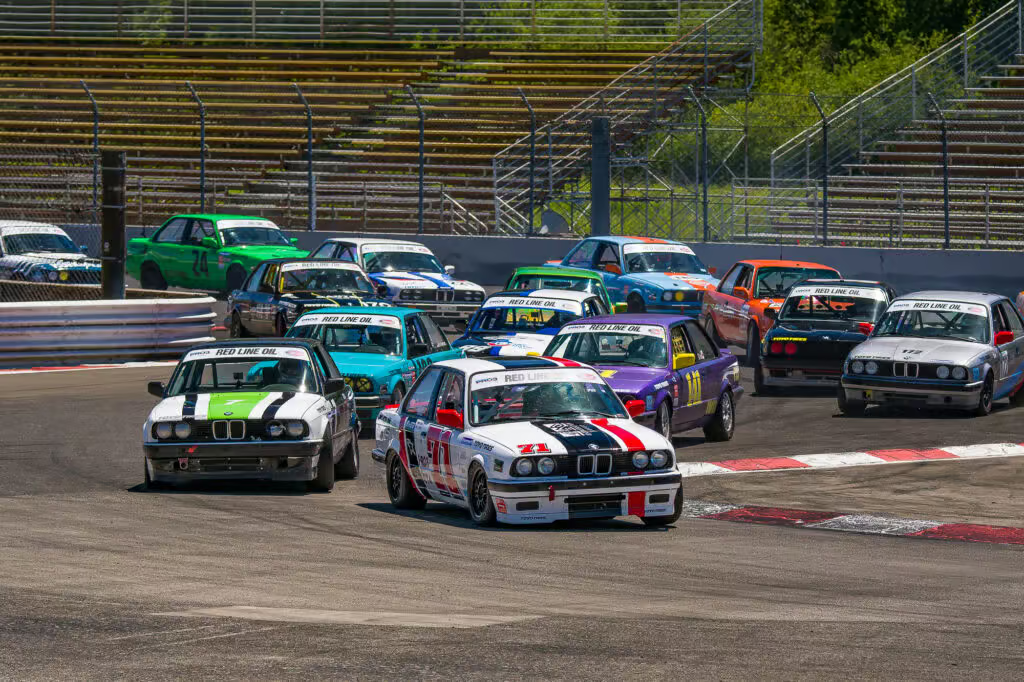
Ron making moves early in the Group 1 PRO3 race, starting from the back.
Ron making moves early in the Group 1 PRO3 race, starting from the back. (C) 2025 Doug Berger | DBPics

This is exactly the kind of growth we wanted from PRO3.

In clean air, drivers can work on lap time. In traffic, they have to work on craft. Portland forced Ron into the craft side of the ledger, and by the end of Saturday he was not just circulating. He was racing people. He was putting the car in places that mattered. He was becoming more comfortable with the car moving around underneath him.

That is the good stuff.

Not shiny, not always obvious from the outside, but very real.

The 370Z Race: Pace Confirmed, Cooling Not Yet Solved

Saturday afternoon, the 370Z lined up for the Group 4 race.

The goal was not necessarily to chase the race result. The goal was to run the car hard in heat and see what we had from a reliability and cooling standpoint.

The afternoon temperatures were already brutal, climbing from around 90 degrees toward the mid-90s as the race went on. That was useful. We are unlikely to see those exact conditions at Road America in early October, but that was the point. If the car could stay cool at full tilt in this environment, we would have a lot more confidence heading into the Runoffs.

Unfortunately, the race showed us that there is still work to do.

Early on, the car was running normally in clean air. Then, after a full course yellow around six or seven laps in, water temperature warnings started to appear. The car was not done, but it was no longer free to race at full attack. Gama had to manage it with lift-and-coast into braking zones, short-shifting around 7,000 rpm, and rolling back into throttle more gently than normal.

That kept the car alive and allowed us to finish, winning ST with a best race lap of 1:24.826.

But the result was not the lesson.

The lesson was that if we had needed to battle hard, defend, attack, or run nose-to-tail for position, we would have been compromised. The pace is there. The car is closer. But the cooling system still needs more margin before Road America.
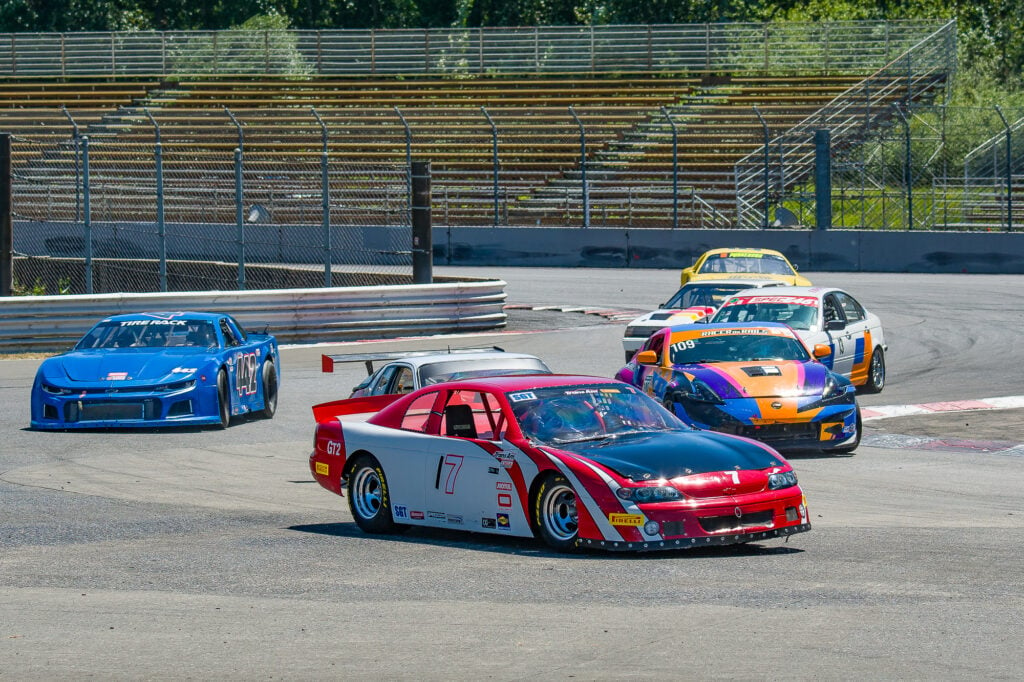
Gama Aguilar bombing through T1 at Portland International Raceway in his Nissan 370Z Nismo.
Gama Aguilar bombing through T1 at Portland International Raceways in his Nissan 370Z Nismo. (C) 2025 Doug Berger | DBPics

That was valuable information.

We had also entered the one-hour mini enduro, which would have been the closest proxy for the 45-minute Runoffs race distance. But with the car already showing heat-management limits, and with the afternoon only getting hotter, there was no reason to keep poking the dragon with a torque wrench.

We had learned what we needed to learn.

The team made the call to park the car for the rest of the weekend. The official results show the 370Z as a DNS for the mini enduro, which was exactly the right decision.

Sometimes the smartest lap is the one you do not run.

Sunday Morning: Ron Finds Another Gear

Sunday morning was Ron’s chance to reset.

The car was back. The conditions were better than they would be later in the day. The goal was to make the most of the cooler track before the heat came in.

Ron got after it.

In Group 2 qualifying, he dropped into the 1:30s with a 1:30.946, good for P11 in PRO3.

Then, in Group 5 qualifying, he put together a 1:30.554 and qualified P1 in CT4.

Pole position. 💪🏾

The first pole position of Ron’s driving career. Let’s go!!!
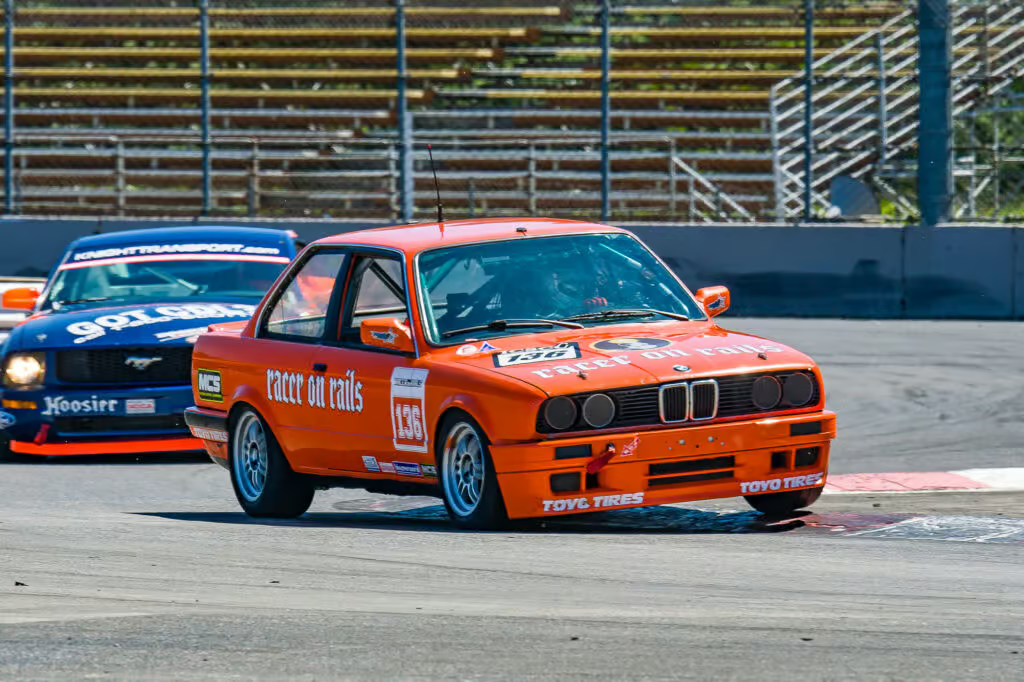
Ron getting after it through the festival chicane.
Ron getting after it through the festival chicane. (C) 2025 Doug Berger | DBPics

That moment deserves to breathe a little.

Ron’s weekend started with the car parked early, a transmission run to Seattle, a Saturday morning thrash, missed qualifying, and back-of-grid starts. By Sunday morning, he had settled himself, kept building, and put the car at the top of the CT4 sheet.

That is not just pace. That is resilience.

And in a PRO3-based car, it means something. These cars do not give you lap time for free. You have to ask the right questions with your hands, feet, eyes, and timing, then listen carefully when the car answers back.

Ron was getting more comfortable throwing the car around. More comfortable letting it move. More comfortable staying in the fight when the environment got messy.

That is the development arc.

Sunday Afternoon: Racing in the Skillet

By Sunday afternoon, PIR was hot.

Very hot.

Air temperatures were deep into the 90s, with track temperatures well above 130 degrees. No one was expecting record pace in those conditions. This was about execution, racecraft, and keeping the car underneath you while everyone else was dealing with the same greasy, overheated racetrack.

In the Group 2 PRO3 race, Ron had challengers all around him. That is what happens when you start to make your presence known. People race you differently. They expect you to be there. They fight harder.
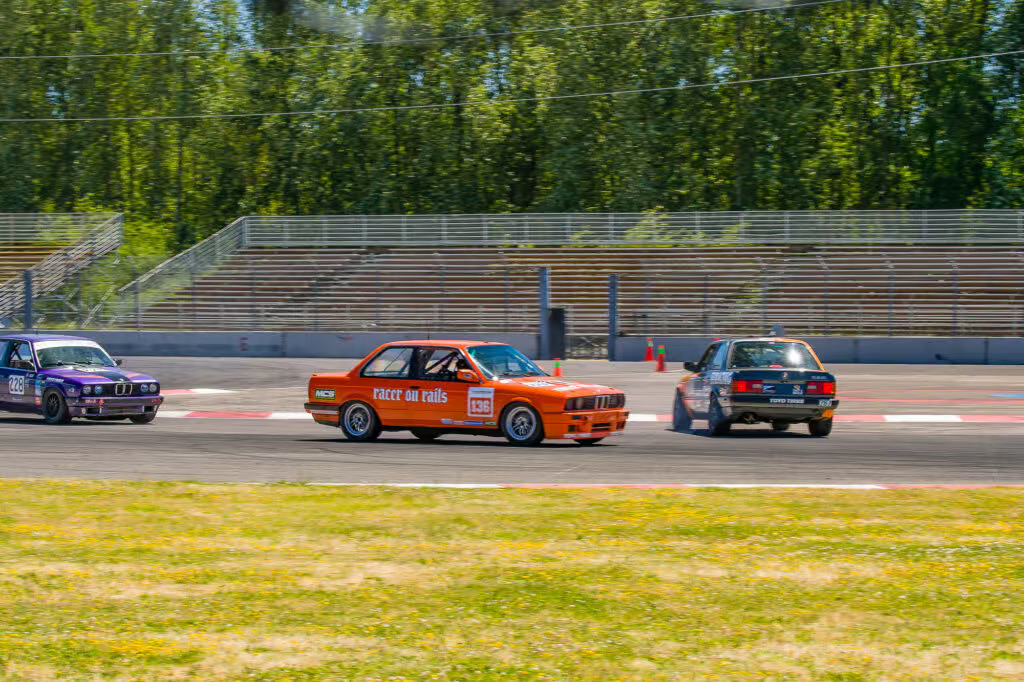
Not an inch to give in PRO3 racing, little mistakes have big time costs.
Not an inch to give in PRO3 racing, little mistakes have big time costs. (C) 2025 Doug Berger | DBPics

Ron started in position, battled early, and kept working through the race. He got past the group he had been racing with the day before and finished P8 in PRO3, only a couple of seconds behind the next cluster of cars up the road. His best lap was a 1:31.354 in the heat.

P8 in PRO3 is nothing to sneeze at.

That mid-pack and front-mid-pack zone in PRO3 is filled with serious drivers. In a class that deep, moving from “learning the car” into “competing with the pack” is a meaningful step.

Then came the Group 5 CT4 race.

Starting from pole, Ron got mugged at the start and had to fight for the rest of the race with Payden Baxter and Matthew King. It turned into exactly the kind of race he needs more of: pressure, passing, defending, imperfect lines, and decisions that had to be made quickly.

He finished P3, on the podium, with a best lap of 1:31.164. That was barely off his Saturday CT4 race pace and impressively close to his cooler-session qualifying benchmark, considering the heat.

Mega.

A first pole. A podium. A P8 in PRO3. A weekend that began with mechanical drama and ended with real signs of competitive belonging.

Awesome work, Ron.

More Than Lap Time

The biggest thing from Ron’s weekend is that the progress was not just numerical.

Yes, the lap times improved. Yes, the results got better. Yes, he put the car on pole in CT4 and ended the weekend with a podium.

But the more important part is that he had to keep the fundamentals alive when the racing got loud around him.

That is one of the hardest transitions for any developing driver. It is one thing to drive well in clean air when the plan is simple. It is another thing to drive well when someone gets alongside, a start gets messy, the car moves underneath you, or a pass does not happen in one corner.

Portland gave Ron a full buffet of those moments.

The next step is making that craft more deliberate and more repeatable. Not just being fast, but being able to access the driving under pressure. Not just getting close to cars, but knowing what to do with that closeness. Not just reacting to a battle, but shaping it.

That is exactly why we wanted him in PRO3.

Dash for Kids: The Other Reason We Were There

While the racing side of the weekend gave us plenty to work through, The Dash for Kids gave the weekend a bigger frame.

During lunch on Saturday and Sunday, racers and teams offered ride-alongs in race cars and exotic cars, with donations going toward the weekend’s charity. Cascade’s format makes the paddock feel open and welcoming, with spectators able to see the cars, talk with drivers and crew, and get a closer look at the machinery that usually flashes by from the other side of the fence.

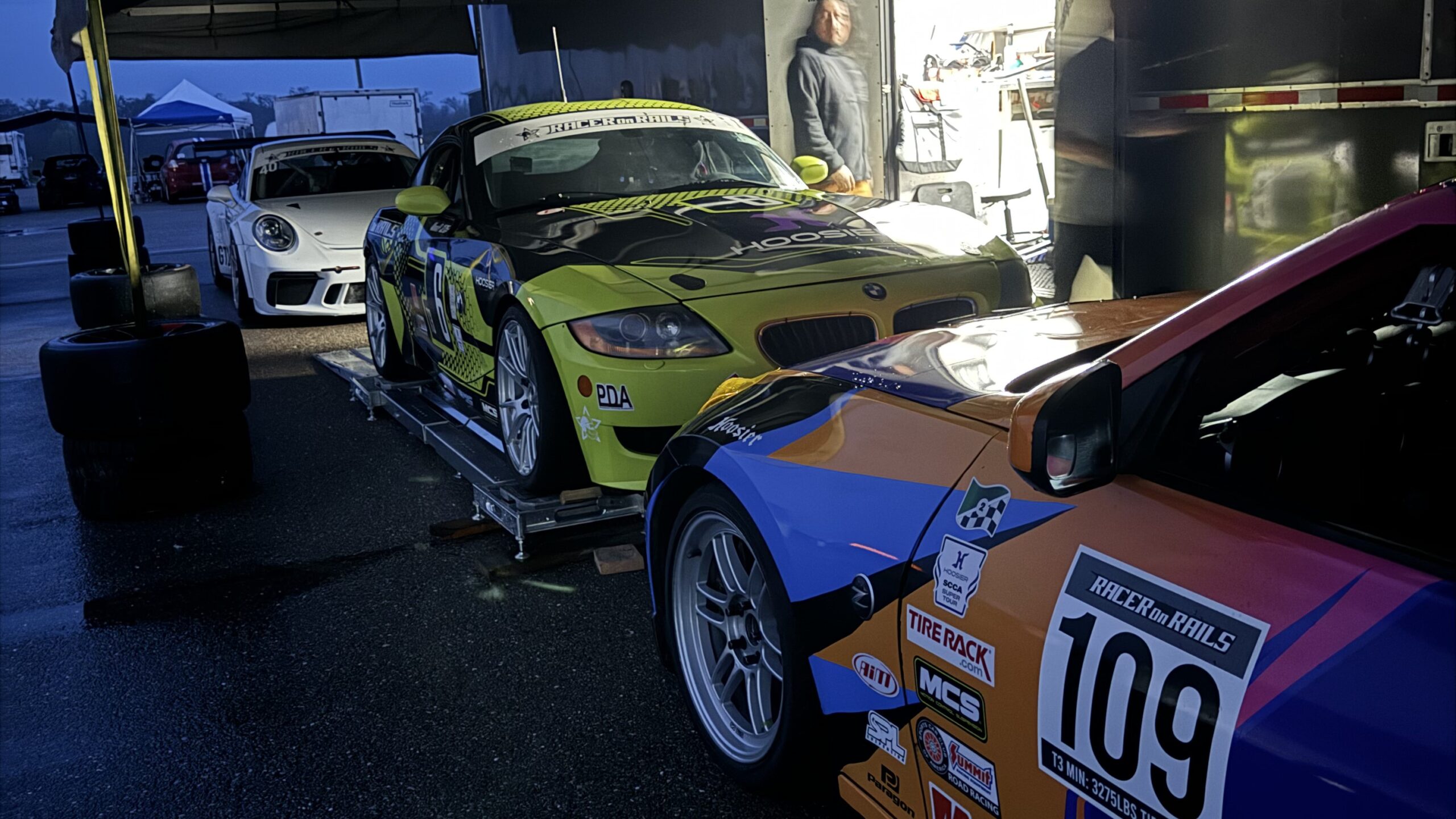
For Racer on Rails, that meant bringing down the Silver Bullet Spec E46, installing the extra seat, and joining the ride program.

After making the decision to park the 370Z, that actually became a perfect pivot. The competitive work was done. The car had told us what we needed to know. So instead of forcing more laps into worsening heat, we cooled down, reset, and had fun giving people rides around PIR.

That is a good race weekend.

Not because every plan worked perfectly. It did not.

Because the weekend gave us the right answers.

The 370Z showed pace, then showed us the next engineering problem. Ron got hit with mechanical adversity, then turned the weekend into one of his strongest development steps of the year. The team handled a transmission swap, shifter issues, hot conditions, traffic, race starts, and charity rides.

That is club racing in full color.

Final Takeaways

For Gama and the 370Z, Portland confirmed that the car has real speed. The 1:23.592 in Group 4 qualifying was the cleanest read of the weekend, and the team believes there is more available with a true max-effort qualifying format and cleaner track space. But the race also confirmed that cooling remains a priority before Road America. The car can run. The car has pace. Now it needs more thermal margin.

For Ron, Portland was a major step.

He missed Saturday qualifying, started from the back, raced forward, kept improving, put the car on pole for the first time in his driving career, finished P8 in a very competitive PRO3 field, and ended the weekend with a CT4 podium.

More importantly, he became a little more of the driver he is working to become.

Adaptable. Confident. Aware. Comfortable in the fight.

That is what we came for.

And with The Dash for Kids wrapping the weekend in community, ride-alongs, family energy, and a reminder that racing can be both serious and generous, Portland gave us exactly the kind of weekend that sticks around after the trailer doors close.

Goals. Smiles. Memories.

That one checks all three.
Posted on

SCCA Hoosier Super Tour – Buttonwillow The Circuit

High Performance Race Cars on Track at Racer on Rails.

The Setting: Why Buttonwillow Matters

The opening round of our 2026 SCCA season brought us to Buttonwillow Raceway Park for the first SCCA Hoosier Super Tour of the year, February 21 – 22, 2026.

We raced on The Circuit configuration — Buttonwillow’s newer layout that’s been operating for over a year now and we were here last year, for the very first competition race weekend and event ever held at the new track. Ron competed here twice last season. For the rest of the team, we’ve logged time here supporting customers. But this was our first time bringing the Nissan 370Z to this configuration in race trim.

Touring 3 remains one of the most competitive, tightly regulated classes in SCCA road racing. The cars are production-based, but execution is everything. Small setup shifts matter. Tire management matters. Driver discipline matters.

Buttonwillow’s The Circuit layout also brings a very different technical personality compared to the original “Buttonwillow 13CW” configuration that many West Coast racers grew up on. Traditional Buttonwillow rewards aggression, commitment over bumps, and managing long-flowing corner sequences with a little bit of chaos built into the surface and sightlines. The Circuit, by comparison, feels more modern and much more precise. The pavement quality is smoother, the transitions are faster, and the corners tend to stack technical decisions on top of each other.

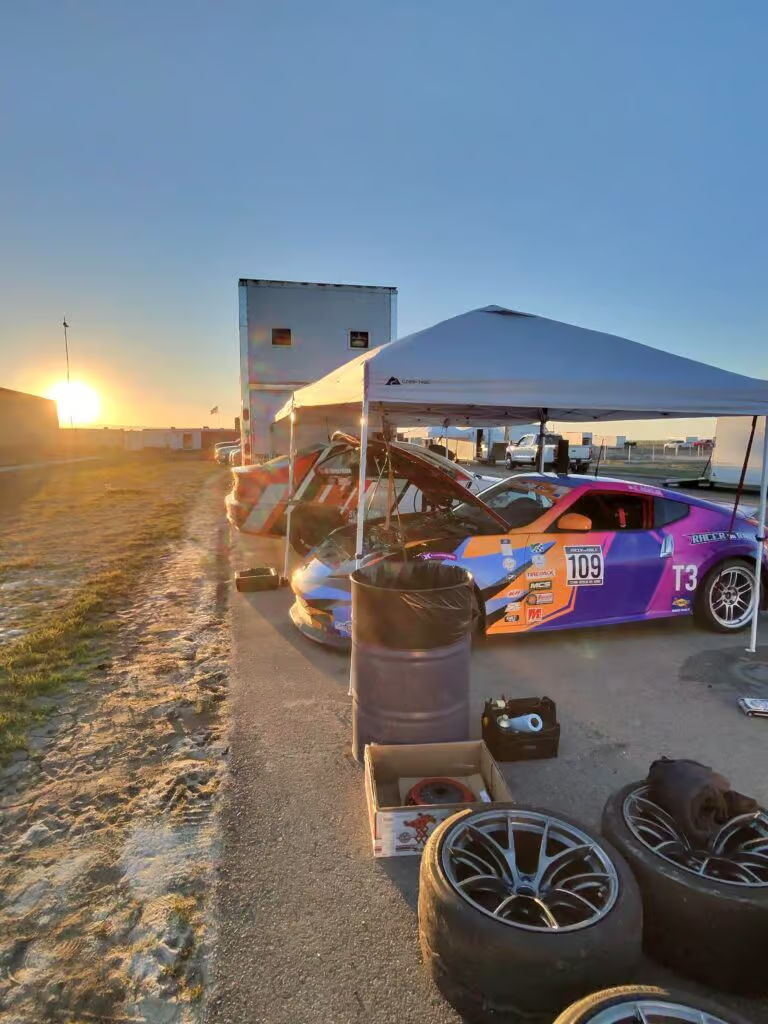
Sun is setting at Buttonwillow The Circuit – when the sun goes down, the air and track temps drop fast in February.

Several sections reward sacrificing entry speed to maximize minimum corner speed and throttle commitment on exit, while other complexes punish even tiny balance mistakes with lost momentum that carries for multiple corners afterward. It’s also a track where aero drag, mechanical grip, brake release timing, and tire temperature management all become more interconnected than people initially expect. A car that feels “pretty good” for one lap can quickly become difficult over a race run if the balance isn’t properly managed. In many ways, The Circuit feels less like old-school club racing Buttonwillow and more like a purpose-built modern technical circuit that rewards disciplined engineering and adaptable drivers.

At just over 2.5 miles in length, The Circuit combines roughly two dozen corners and transitional elements ranging from slow, technical rotation zones to fast, committed sweepers that reward precision and patience. The layout constantly shifts between decreasing-radius corners, long loaded exits, quick direction changes, and several areas where throttle timing matters more than outright bravery. For Touring 3 cars, gearing becomes especially important because many sections sit right on the edge between carrying momentum in a taller gear versus risking upsetting the platform with an additional shift.

The track surface itself is relatively smooth compared to the original Buttonwillow layouts, but the environment still plays a huge role in grip evolution. Located in California’s Central Valley, the circuit is frequently impacted by wind carrying fine dust and sand onto the racing line, while dramatic temperature swings between cold mornings and warmer afternoons can significantly change tire behavior and overall balance throughout a race weekend.

Buttonwillow’s Circuit layout rewards rhythm and precision. There aren’t many places to hide mistakes. It’s a track that exposes imbalance — mechanical or mental.

That made it the perfect place to start the year.


The Mindset: Process Over Outcome

Coming into the weekend, our objectives were clear:

  • Establish a stable performance baseline for the 370Z
  • Continue refining Ron’s throttle application and adaptability
  • Validate our tire pressure management process
  • Execute cleanly as a team

We intentionally chose to run lightly used tires instead of bolting on fresh rubber. Not to handicap ourselves, but to operate with discipline and long-term planning in mind.

For Ron, this season is about expanding his toolbox. He’s put in serious off-season work — simulator training, Porsche ice driving, DirtFish advanced programs — all focused on becoming more adaptable and decisive with inputs.

Ron Tanemura carving corners in his Touring 3 BMW Spec E46

For the team, this season is about raising our operational standard. When something breaks, we fix it properly. When development is needed, we create bandwidth for it.

No chasing. No scrambling.

Build it right.


The Weekend Story

The Journey South

Jordan and Ian drove the truck down through snow over the Oregon passes. Enough weather to keep things interesting, but they maintained traction and avoided chains. We arrived in California clean and on schedule.

That matters more than people think.


Testing: Cold Mornings, Steady Gains

Thursday brought cold temps and passing showers. Ron used early sessions to reacquaint himself with slip and rotation. By Friday he was back at 2:00.0 pace — only tenths off his personal best from last year at this track.

The 370Z test sessions were structured and deliberate. Controlled three-lap tire validation runs. Minor line adjustments through Turn 3, 5, 8, and 10. By Friday afternoon, we were consistently in the 1:56s with room left in the data.

The car was stable. Predictable. Repeatable.

Baseline established.


Mechanical Curveballs

Late Friday we discovered the Nissan’s clutch was nearing end-of-life.

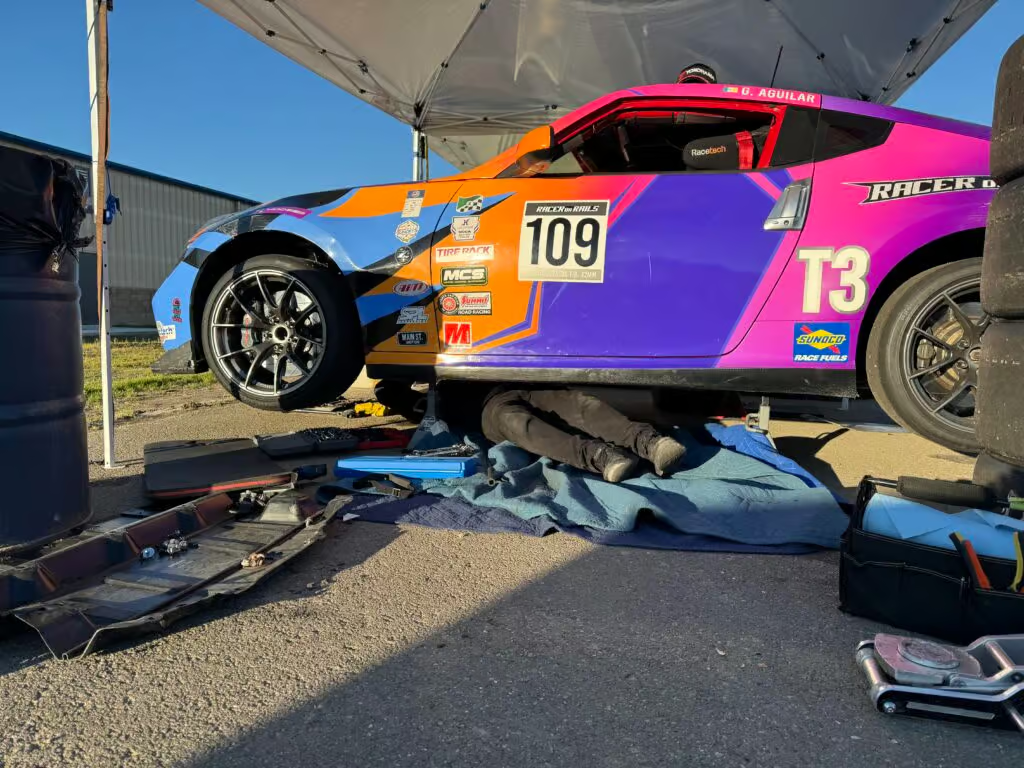
Ian working his tail and back off, getting the clutch replaced on the Touring 3 Nissan 370z Nismo

Saturday morning became paddock surgery.

Transmission out.
Clutch replaced.
Qualifying missed.

Ron’s clutch was also right at a season’s worth of cycles, so we proactively replaced his as well. Two clutch jobs in one weekend.

It wasn’t glamorous work, but it was done calmly and correctly.

That’s culture.


Saturday Race: From the Back

Starting P28 overall after missing qualifying, the only direction was forward.

The opening lap was tight but clean. From there, it was controlled aggression and patience.

Twenty-two passes in twenty-five minutes.

Finished:

  • P6 overall
  • P2 in Touring 3

Fastest lap of the race would have placed us P2 on the grid for Sunday.

Gama in his Nissan 370z Nismo working his way through field during race 1.

All on used tires.


Sunday: Clean Execution

Sunday qualifying required careful temperature management after diagnosing a cooling fan issue. Despite traffic on both flying laps:

  • P2 in class
  • P4 overall
Gama and Ron making laps and loving every braking zone at Buttonwillow The Circuit

The race start was steady. The leaders stretched a gap as the rear tires began to show their age around lap five. Turn 1 required finesse and progressive inputs to manage increasing rotation.

Post-race inspection confirmed tire edge wear consistent with heavy cycling.

Final result:

  • P2 in class

Not quite the fight for P1 we would have liked, but an honest and disciplined run.

Starting the Race 2 from the front of the grid but not enough pace to truly challenge for P1.

Ron: Double Podium Weekend

Ron started P3 in class Sunday and battled closely with Spec MX-5 cars running in STL for additional seat time. Those cars were quick and the racing was tight.

There was side-to-side contact exiting Turn 3 that pushed him wide, but he stayed composed and fought back.

He finished:

  • P3 in class
  • Double podium weekend

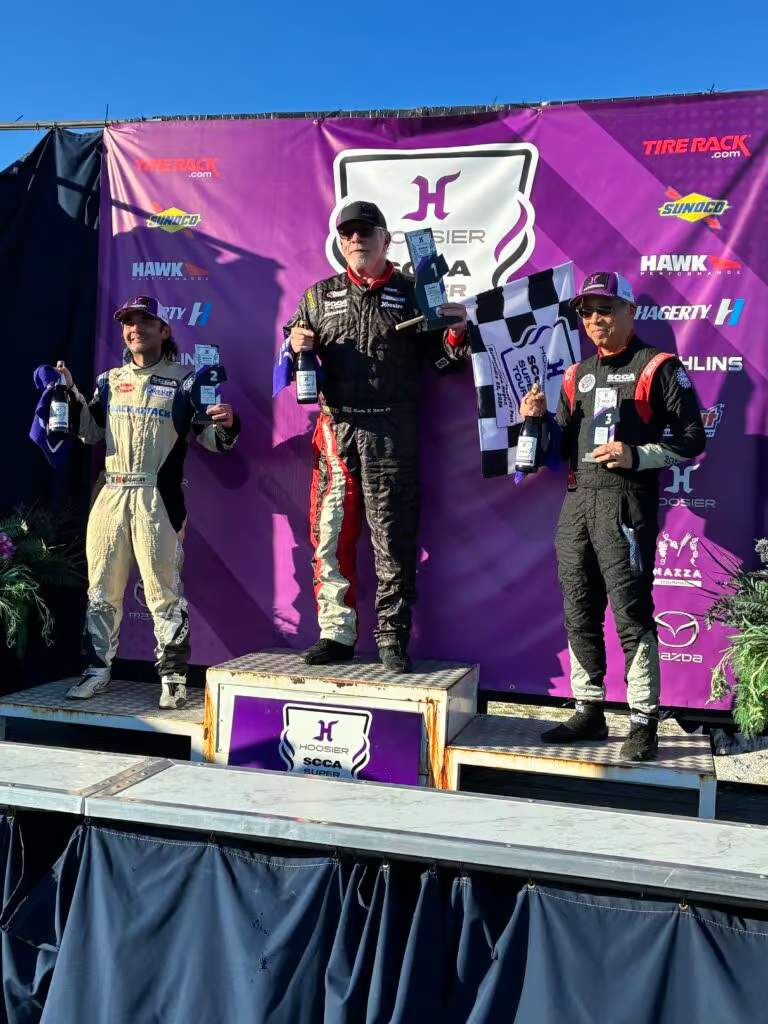
Both races resulted in an all-Pacific Northwest podium sweep, with Scotty B White completing the trio.

Ron left energized and sharper. More sensitive to the car. More decisive on throttle. Clear on what to improve next.

That’s exactly what this weekend was for.

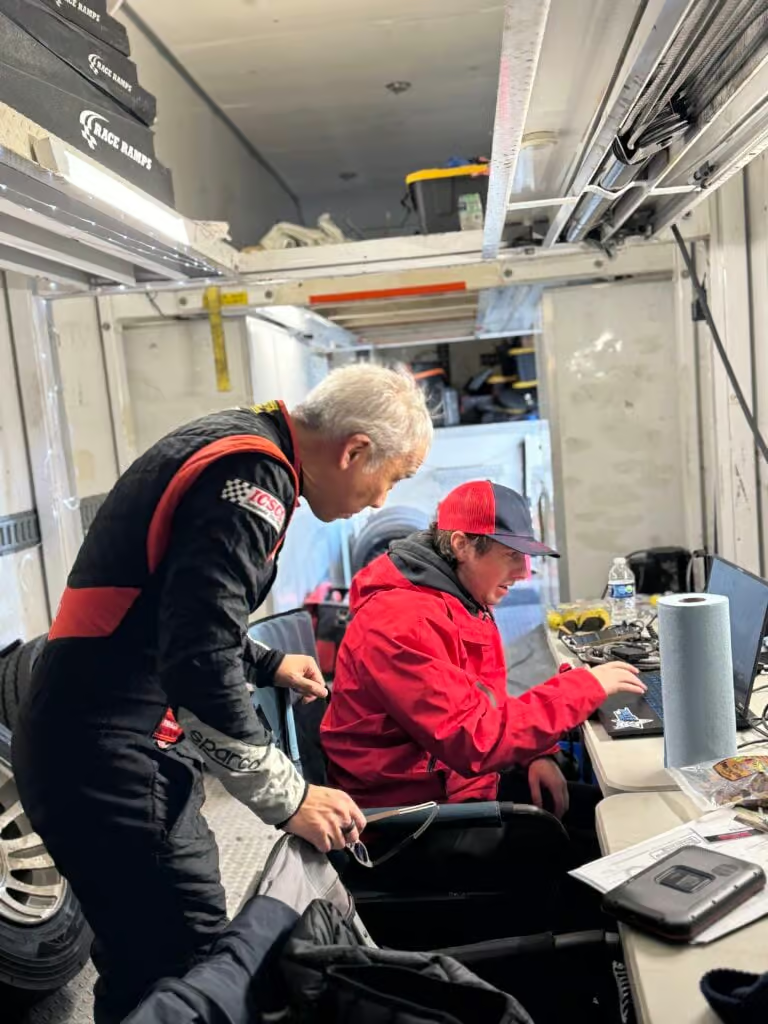
Tyler and Ron obsessing over the data, trying to figure out how to go faster, faster!

What We Take With Us

We worked through:

  • Snow-covered travel
  • Two clutch replacements
  • Cooling fan troubleshooting
  • Traffic-filled qualifying sessions
  • Tire degradation management

None of it materially impacted our results.

More importantly, the 370Z now has a clear and repeatable performance baseline. The upgraded big brake kit performed flawlessly. The car responds predictably to setup changes.

That’s a full PNW podium sweep for the Buttonwillow Hoosier Super Tour

We leave Buttonwillow not chasing something unknown — but building on something understood.

That’s the difference.

Goals were pursued with discipline.
Smiles were earned in the paddock and at dinner tables.
Memories were made in the moments that required composure.

Next stop: Sonoma Raceway with NASA.

The foundation is set.
Now we build.

Gama making most of the camber near corner apex to get the most speed through the corner.
Posted on

SCCA Touring 3 Nissan Nismo 370Z #109 — Build Overview

Introduction

Every race car has a story, and our goal with these build overviews is to pull back the curtain a bit and share the why behind each one. Not just the spec list or the shiny parts bolted on, but the decisions that shaped the build, the lessons we learned the hard way, how the car performs today, and where we’re taking it next. Think of this as a guided walk through the full journey — the good, the bad, the breakthroughs — so that whether you’re dreaming up your first build, refining a current project, or planning something wild for the future, you’ve got real-world insight to draw from. And hey, if any of this sparks ideas or you’re curious about building a similar car, we’re always happy to talk shop and help you get pointed in the right direction.

Gama shaking down and testing things to figure out the brakes in his 2011 Nissan Nismo 370Z in SCCA Touring 3 Class

How We Ended Up in a Nissan 370Z for Touring 3

Our path to campaigning a Nismo Nissan 370Z in SCCA Touring 3 didn’t start with a Z-car at all — it started with a fleet of BMW Spec E46s and a once-in-a-lifetime opportunity.

Back in 2021, the SCCA Runoffs were being held at the Indianapolis Motor Speedway. That’s bucket-list territory. There was absolutely no way we were going to miss the chance to race at Indy, so we brought our Spec E46 drivers and cars and dove into T3 with both feet.

That first year was awesome. The SE46 was decently competitive and, with a 2,950-lb minimum weight in Touring 3 (vs. 2,850 in the spec class), we still felt like the platform had room to grow. We were optimistic.

Even a hurricane couldn’t slow down the field enough to make a Spec E46 competitive at big tracks like VIR

But 2022 at VIR changed everything.

VIR is the polar opposite of Indy when what matters most is top-end speed. And in T3, you simply cannot hide from that reality. While the front-running cars were consistently touching 138–140 mph top speeds, our Spec E46s were essentially tapped at 136 mph, and in reality at VIR, we were barely seeing 132 mph with a draft.

So even if the chassis could somehow theoretically match the lap times, the racing wasn’t viable. It was a harsh reality check, but a necessary one.

Time for a Change

After the 2022 Runoffs, we evaluated realistic alternatives:

  • BMW Z4 M Coupe
  • Nissan 370Z

We also had a 2010 Porsche Cayman PDK ready to build, but the timeline and development curve didn’t match our Runoffs schedule.

The turning point came when a proven, nationally competitive T3 370Z changed hands and landed with our friend Chris Hart. Suddenly, we had access to race-winning data and real experience. Combined with the 370Z’s double-wishbone geometry — perfect under T3’s 3.5-degree camber limit — the choice became clear.


Buying the Car — A True Nismo

In mid-2023, we bought a 2011 Nissan 370Z Nismo — a true, original-owner Nismo.

Because the shop was at max capacity, the entire initial teardown happened in the driveway. Full interior strip, seam sealer removal, weight reduction — everything. We delivered a perfect rolling chassis to Fabtek for a cage that matched Chris’s championship-proven design.

Cage & Safety Fabrication

Once Fabtek completed the cage, we resprayed the interior in OEM Nismo red and began the race against time to assemble the car before the 2023 Runoffs at VIR.


2023 Runoffs — The ABS Reality Check

We made it to VIR… but the first test day exposed the 370Z’s biggest flaw: its factory ABS logic.

We experienced full-on ICE mode, where the ABS system dramatically reduces braking pressure unpredictably. It ended our Runoffs before the weekend truly began — but thank God, the car and driver were safe.

Post-Runoffs: Fixing the Brakes

That failure changed everything. We went deep into:

  • pad compounds
  • rotor configurations
  • wheel-speed ratios
  • heat management
  • master cylinder behavior
  • ABS trigger logic

We broke things. Tested everything. Logged everything. Even pushed for rule adjustments when needed.

And now? The brakes are one of the absolute strengths of the car.


Current State of the Car

Chassis

  • 2011 Nissan 370Z Nismo
  • SCCA-compliant Fabtek cage
  • OEM interior respray (red)
  • OEM front strut bar
  • No additional chassis stiffening (per T3 rules)

Interior & Safety

  • Racetech 119 seat
  • Schroth 6-point
  • Safecraft nets
  • Lifeline fire system
  • OMP wheel
  • Helmet blower + cool shirt
  • Lots of heat shielding at the transmission tunnel to protect driver’s feet

Brakes

  • Paragon PA015 calipers
  • Paragon 2-piece rotors
  • Carbotech XP12 front pads / 1521 rear pads
  • Motul RBF660
  • Goodridge stainless lines
  • Racer on Rails custom brake ducts
  • Fully optimized ABS strategy

Suspension

  • MCS 3-way coilovers
  • Eibach T3-compliant springs
  • SPL adjustable arms & endlinks
  • AFE sway bars
  • Urethane diff mount

Engine

  • Nissan reman VQ37HR
  • Z1 baffled oil pan
  • OEM intakes (required)
  • 42mm restrictor
  • Motordyne test pipes
  • Z1 single-exit exhaust
  • ECUTek tuned on 100 octane
  • Comprehensive cooling upgrades
It's a Z battle at the 2025 SCCA Runoffs!
It’s a Z battle at the 2025 SCCA Runoffs!

Aero

  • OEM Nismo V1/V2 aero
  • Race Louvers center hood louver
  • OEM body panel constraint for T3

Electronics

  • AIM MXS v2 + SmartyCam 3 dual
  • Switch-Pro control system
  • Full auxiliary sensor package
  • Motorola long-track radio

Drivetrain

  • CAE shifter (350Z variant custom-adapted)
  • Tomei 1.5-way LSD
  • OEM mounts (urethane where allowed)
  • Diff & trans coolers
  • Enkei RFP1 18×10.5 + Hoosier A7s

Racing & Driving Highlights

???? 2024 Hoosier Super Tour Win — NOLA Motorsports Park

The car’s first national-level win (but technically a P2 due to post-race adjustment). New track, technical course, colder weather and still figuring out the brakes.

Video:

???? 2025 CAT Majors Win — Road America

90°F, extreme humidity, and the car delivered a dominant run once we were in clear air.

Video:

???? Global Time Attack — The Ridge Motorsports Park

Unrestricted laps on Yokohama A052s showed the Z’s true potential.

Video:


What We’ve Learned

  • The car loves mechanical grip.
  • Weight distribution & stiffness tuning are critical.
  • The ABS and braking system is both the biggest weakness and the biggest opportunity.
  • Heat management is everything in longer races/sessions and when air temps get above 80F.
  • The Z rewards smooth inputs and stability.
  • Parts availability is excellent with the right partners.

Future Direction — Where #109 Is Headed

  • More engine & cooling refinement
  • Testing Paragon PA015 big-brake upgrade
  • Further alignment/tire data development
  • Weight management improvements
  • Full prep for 2026 Hoosier Super Tour + Runoffs

Thinking About Building a Production-Based Race or Track Car?

If this build sparks any questions, ideas, or “should I do this with my car?” thoughts, reach out. Whether you’re dreaming up a production-based track car, considering something in the SCCA Touring 3 or Touring 2 world, or want to explore a power-to-weight package similar to this build, we’re always happy to help you think through the right path.

From full builds to setup refinement, from brake and cooling solutions to driver development, we love partnering with drivers to create fast, reliable, confidence-inspiring cars. If something here resonated with you — let’s talk.

Posted on

New Track, New Car, Who Dis?

The second stop in the 2024 SCCA Hoosier Super Tour schedule for the team was NOLA Motorsports Park – a new track for all the drivers and most of the team. Relatively flat, built on a swamp and host of SRO GT Americas race events the past few years, NOLA ended up being a decently technical track and the Louisiana weather initially welcomed us with 70F, sunny and with a breeze weather. But once the test day came, the cold air from up north and a weather system from down south decided to join the party and aside from Sunday, we had low 40F temps, rain, and wind. Why do we even leave the PNW to go racing???

Thoughts on NOLA

Flat, minor (but critical) banking in some corners, no point-n-shoot corners and not a lot of time above 120mph meant that balancing the car in the cornering bits was going to be a premium.

NOLA has 16 corners with 10-11 of them (depending on how you count the corners) are right hand corners and there are two sections of the track where you have consecutive right hand-corners, which makes those left-side tires important. From Turn 4, you are only making right hand turns until Turn 10! Turn 4 is a slower speed corner which requires a good amount of mechanical grip. Turns 5, 6 and 7 are higher speed corners where you are trying really hard to not over-slow for turns 5 and 6 but as you try to carry the speed into those corners, the left rear tire is taking a beating from the slight high-speed yaw action when trying to rotate the car and then accelerating through the corner.

The esses complex is relatively straight forward but carrying speed into Turn 9 (the first ess) is critical and sets up the rhythm through the rest of the complex.

Finally, the left side tires only get a mini-break before needing to turn hard at Turn 13 and then suffer through a long duration compound section of Turns 13-14, which leads onto the main straightaway.

If you’d like a more detailed walkthrough of the track, check out this video that came in super handy from ASM and Tom O’Gorman.

YouTube player
Credit: ASM + TOMO Coaching

Ann’s new baby shark! 991.2 Porsche GT3 Cup Car

As some of you may have read in past posts, Ann has been developing at a rapid pace the past couple of years and driven the wheels off a Porsche Cayman GT4 Clubsport, mostly in SCCA GT2 and T1 classes. At the end of the 2023 season, with the repairs needed on the car from a failed tire during the runoffs, Ann made the decision to move on from the Cayman and jump into a GT3 Cup Car. So she spent the off-season looking for options and just in time for the NOLA race, we took delivery of her new steed on the Wednesday before the race weekend. Exciting but yikes!

With her car being new to the team and her and limited information of the running state, we set low expectations for the weekend: get the car on track, have it circulate consistently and have Ann start to build confidence in the car. Any specific result was not a consideration at all for the weekend.

Look at the butt on that! Yeah – it must work out. Ann’s new 991.2 Porsche GT3 Cup Car!

Jordan got to work on the car and after completing a full inspection, we were in decent shape! There were a couple of suspension bits to monitor, some to proactively replace but aside from that, it was just work to get the car personalized to Ann’s preferences and get the car out on the track so we could know more confidently, what we had on our hands. The car was ready to test on Friday but straight up gross, wet, and cold conditions, we made the team decision we’d wait until Saturday where there was a window of potential dry weather.

Saturday started off wet but the rain started slowing around 9-10am, just in time for qualifying. Ann went out on wet tires in case it started raining again (it didn’t) for her maiden voyage and by the end of the session, we had a clean bill of health! By the afternoon race, we fitted a set of the used tires the car came with and sent her out to get more laps, see what breaks and build confidence! After race 1, she moved up several positions, finished P6, nothing broke and ended the race with the last 2-3 laps at a decent enough pace where we could actually start looking at performance.

On Sunday, we finally got a break in the weather with the system that ended up delaying the Daytona 500, moving south of us, leaving us with clear skies but COLD winds. Beggars can’t be choosers! Ann continued to take time off her lap times during qualifying and exchanged places to finish P6 out of 13 in her first race! In race 2, Ann picked right back up where she left off, took another 2 seconds off her fastest lap time to finish with 4 laps in the low 1:50’s. All again on 2 year old used tires with unknown number of heat cycles. Safe to say that Ann is loving her new Porsche GT3 Cup Car and is ready to build on this for the next race at Road Atlanta!

One last thing on Ann to put things in perspective. Just a few years ago, she had never been on a race track, let alone raced wheel to wheel. ~3 years in and developing at a very high rate in a Cayman GT4 Clubsport which is mega fast but has a lot of driver aides, she decided to move onto a monster of a platform. She not only jumped in with full confidence to drive, but she truly slayed this beast on her first outings in it. Incredible job, Ann!!!

Ann driving back into the pits from her first on-track session in her new Porsche 911 GT3 Cup Car!

Dave continues building on his BMW Z4 M Coupe

Dave took his new-to-him BMW Z4 M-Coupe out at Sebring for the first race weekend and made solid progress on the new platform but NOLA brought a whole new set of challenges with the weather and the gearing. The Z4M has won the SCCA Runoffs the last 2 years in a row, in large part due to the M3 based gearing. Nice and tall gears to let it stretch it’s legs out on the long straight aways. NOLA doesn’t have any long straight aways, so we knew going into the weekend that the gearing wouldn’t be optimal for the car but we’d still make the most of it.

Dave took part in all of the test day sessions but as covered previously, the conditions were horrible so they were good for getting a sense of the track from simulator preparations but gave next to no representative data for what ended up being dry the rest of the weekend.

Dave (and Gama) qualified on Saturday AM on wet tires (along with the rest of the field) but it ended up being damp to drying track surface. In race 1 Dave got out to a good start, avoided spinning on the oil left by a T4 car that dropped oil around the final corners leading to the main straight away and finished P6, one spot behind Gama who spun on that oil and had to battle his way back from last place.

On Sunday, Dave worked committing to throttle in one smooth motion during qualifying and dropped another almost 2 seconds from his personal best! In the race, which finally brought some track temperature with the sun appearing, he built on those learnings, took advantage of mistakes from other drivers and came in P5, chipping away at the gap to P4! Road Atlanta should be better suited for the powerhouse BMW Z4M with that long back straight away, two uphill sections where torque pays off big time and it being Dave’s 3rd time back to the track!

NISMO 370Z Starts to Deliver on it’s Potential

At Sebring, we saw signs that the 370z could compete for podium positions but rain in the wiring and dealing with the ice mode issue held us back from being able to truly show the car’s potential. Fast forward to NOLA where the brake vacuum controller that was requested to be allowed, was approved (yay!!) but not legal until March 1st, we had to figure out how to make due with an ABS System that could freak out at any point. We tried a few different things and while not perfect, they were good enough for us to feel comfortable running the car for the weekend.

On the morning of the test day, we decided to switch to wet tires due to the rain that had started but a wheel stud failed when trying to remove the wheel. Ugh! Memo jumped on the problem and 3-4 hours later, the car was ready to go, only to make the last test session of the day, just to make sure everything stayed together. Hats off to Memo’s effort and problem solving – as we chatted on the sidelines through the repair, had this type of an issue occurred while any of us drivers would have been there on our own – game over. Someone help me push this thing into the trailer but with Memo and or team on-hand, dang near anything can come up and as long as it’s safe, they’ll get the car back on the grid.

In the Saturday AM qualifying, we went out on wet tires like everyone else and finished P4, believing we had more pace in the car and on the second row, so all the things to play for. In the Saturday afternoon race, towards the end of lap 2, someone lost an engine, dropped oil all around the last couple corners. In the heat of the battle and with wet spots all around, I didn’t spot the oil (though the team had radio’ed it in) and got caught out when the rear tires hit the oil.

It took me a bit to get the car re-fired and out of the completely soaked grass but got going again, put my head down, worked my way back to P5 and was catching the leading group at 1-2 seconds per lap (of which I didn’t realize at the time and was somewhat frustrated with my pace).

The next day for the Sunday AM qualifying, we swapped on some lower heat cycle tires (specifically, the tires that I used during the VIR Runoffs in the installation laps/sessions) and a new tire on the front left corner. Better tires but still not a full on sticker run. First flying lap was good but I wasn’t pushing 100% and tires weren’t fully into the working window. The 3rd flying lap I let it all out and found myself a very fast Danny Stein in his Mazda STL car which provided a nice tow around the track, which resulted in a 1:55.2XX and pole for T3! On the next lap, I was slightly up on that 1:55.2XX lap time and I was going for another flyer to try and improve. I braked at the same point for Turn 1, did my downshift, turned in and then full front end lock up – sigh. This would end up being a telling sign of the rest of the day.

For the race, we decided to raise the car all around to help with compliance around the bumpy track. Thanks to fellow Nissan racers Rick Kulach and Richard Baldwin, we were able to get our hands on some taller front springs and made the change in time for the race.

YouTube player
Watch the Sunday Touring 3 Race where Gama Aguilar starts in P1 and leads from flag to flag.

When the race started, I focused on getting a good start and ideally not be competing for the corner going into Turn 1. Luckily that happened and after the first lap, decided to pump out the fastest laps I can could muster so that I could build a healthy gap to P2. All was going to plan until I locked up going into T13 and had to take the escape road. Lesson learned that even though I thought the tires were still fresh, it was simply too much speed for this *awesome* (sarcasm) brake system to handle. From then on, I focused on braking a little earlier and softer in all braking zones, knowing I’d be leaving some time on the table but that would be better than locking up and flying off the track.

My plan was to steadily build the gap so that by the time we hit lapped traffic, I could use that pull away. Unfortunately, the rest of the competitors were not aware of my plan. haha

Sometime about mid-way through the race, someone lost a big lip spoiler or some strip of something that was 4-5′ long and right at the exit of Turn 8 of which I didn’t see until it was too late to do anything but run right over it. There was some loud banging as it went under the car and I had to slow to figure out if anything had impacted the handling/safety of the car. No issues but I lost a solid 1-2 seconds.

The next couple of laps, I had to take Turn 8 more cautiously so that I could see where that object was and not run over it again. Perfect. 🙁

Some laps later, Richard’s 350Z had a tire failure and he pulled off to the right of the essess, causing a local yellow. I ran up on a lapped T3 Mustang right in that spot and there went my entire gap to P2. From then on, it was a battle to steadily build up that gap.

2011 Nissan NISMO 370Z SCCA Touring 3 Spec at night with lights on.
Clearly bias but look at this thing!

Another thing that I have been struggling with is the shifter and specifically, the 5th to 4th shift where the shifter doesn’t self-center and will easily drop into 6th gear, not 4th gear. That shift is critical for Turn 8 and I had to over slow to make sure I got the shift done right and even then, I screwed it up a couple of times – another .5-.75 seconds lost on each screw up.

With a few laps left in the race, started coming up fast on a T4 car going into the essess and made the judgement call to make the pass before we got perpendicular to the standing yellow flag – barely made it!

Finally, going into the last lap, I was focused on matching or improving my personal best, knowing the left side tires were struggling. Half way through the lap, I was almost matching my fastest lap but knew I was vulnerable in the essess due to the 5th to 4th shift but still had a decent run through the section. P2 car was on my rear bumper so going into Turn 13, I ran a more defensive line, braked earlier and softer, go the downshift done and when I started turning, the front end locked up again.

My only choices were to continue plowing forward and straight into the grass, of which when that happens, I would have likely lost control of the car until it hit the asphalt again OR come of the brake and straighten the wheel so I could take the escape road. I did the second path as I had earlier in the race, then focused on making sure I didn’t make contact with anyone while rejoining the course. Coasted through the escape road, looked to my right, saw no cars and then rejoined with a primary concern of not causing a wreck.

Ended the race in P1 but post-race, the stewards felt like I gained an unfair advantage by taking the escape road and while that wasn’t my intent at all, I had no argument against it. Minor disappointment but in the grand scheme of things, very pleased with the results.

We made it through a weekend without the brake vacuum regulator and no damage to the car or other cars, learned more about the car and finally got consecutive on-track sessions to build base level confidence in the car. This car is finally showing the potential we know it has!

Mega thanks to the whole Racer on Rails team that made the NOLA SCCA Hoosier Super Tour weekend a massive success! Next up is Road Atlanta in March where the team is looking to build on success and momentum in 2023. Let’s go!!!