IRDC’s Tribute to the Volunteers at The Ridge August 2026
A weekend of new baselines, mechanical problem-solving, family racing, an almost-first win, a new T3 Cayman coming alive, and one final lap we didn’t know was a goodbye.
IRDC Tribute to the Volunteers at The Ridge Motorsports Park, August 15–16, 2026.
First, a tribute where it belongs
Before the drivers, the lap times, the setup changes, or the mechanical drama, this weekend belongs to the volunteers.
IRDC’s Tribute to the Volunteers weekend at The Ridge Motorsports Park is named for the people who make club racing possible: corner workers, grid, timing and scoring, tech, registration, safety crews, stewards, and everyone else who gives up a weekend so the rest of us can go racing. There is no green flag without them, and there are no stories like the ones below without them either. Thank you!!
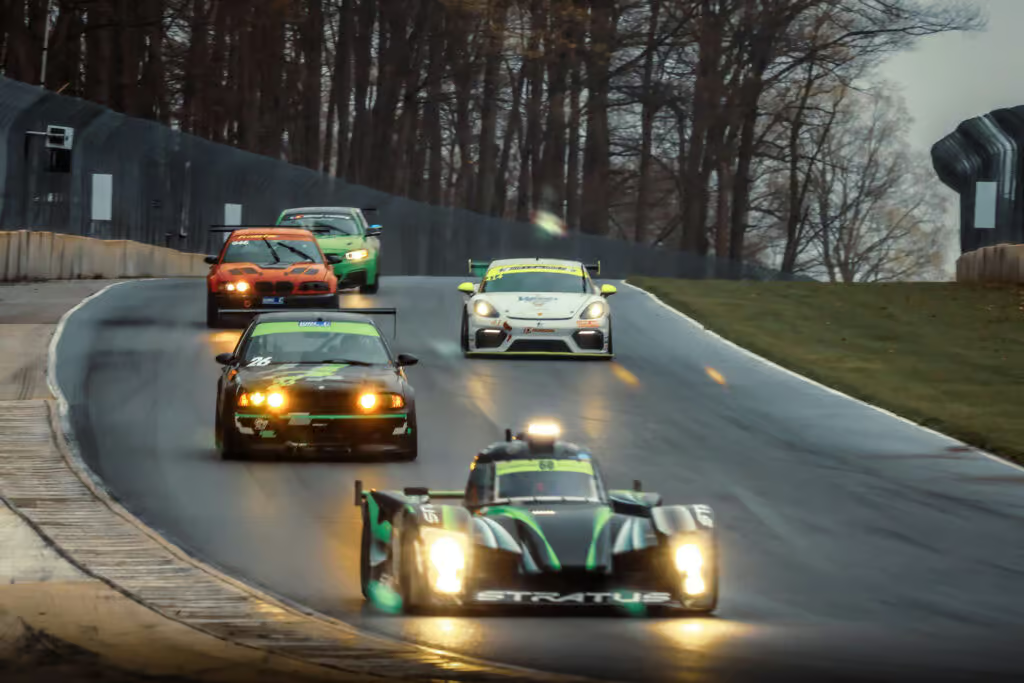
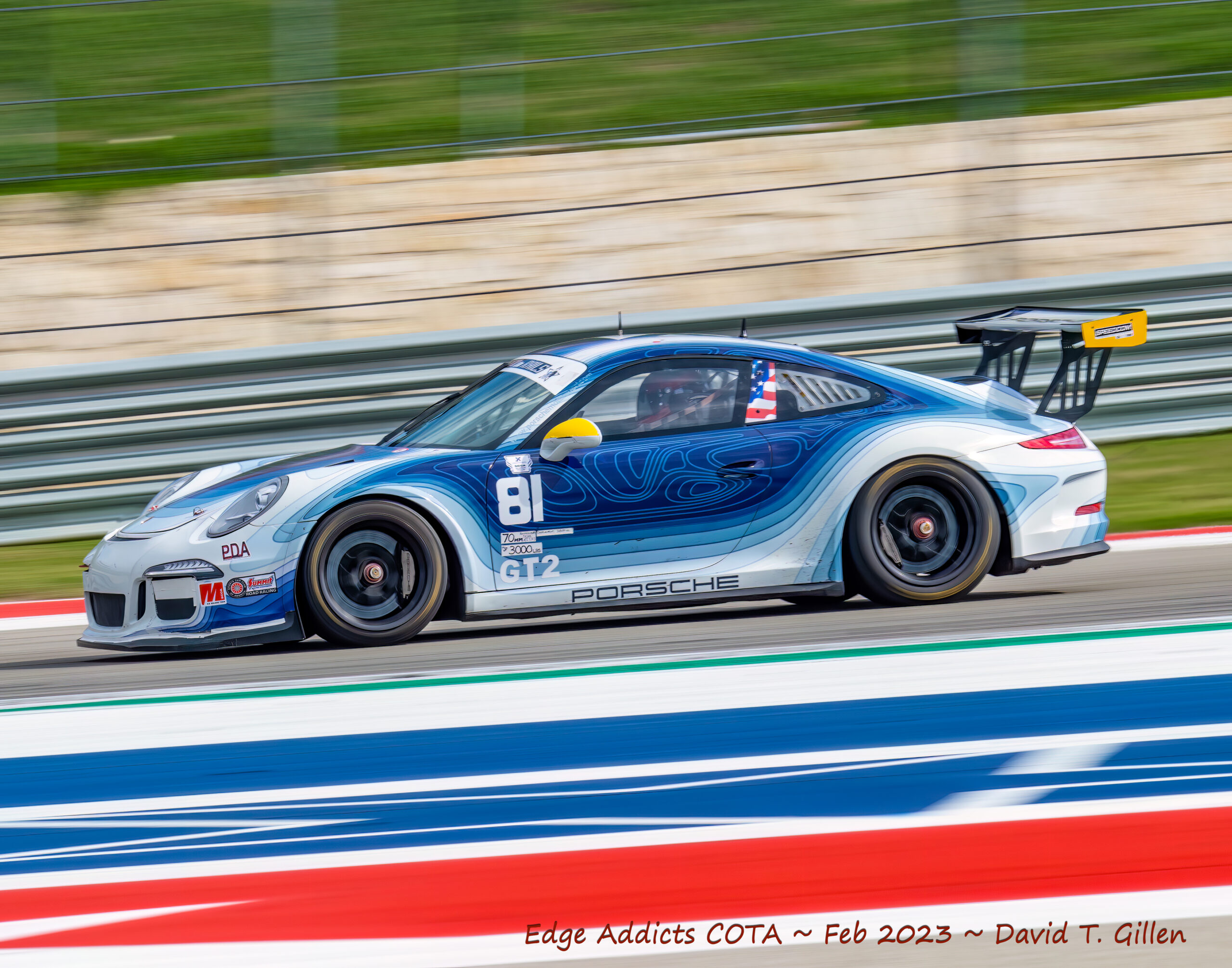
The weekend also had a little extra energy this year. The Conference calendar is different enough that this wasn’t quite the usual end-of-season punctuation mark, and IRDC used the weekend to debut a new Porsche & Ginetta Cup concept. More than a dozen Porsches and Ginettas took the green on Sunday, which made for a pretty remarkable first outing for something that had come together on a very short runway.
For Racer on Rails, though, the biggest theme of the weekend was something we talk about constantly: development does not look the same for every driver. Sometimes progress is a faster lap. Sometimes it is doing the same lap over and over. Sometimes it is learning to race at the front. Sometimes it is keeping a difficult weekend from unraveling. Sometimes it is simply remembering why you love driving the car in the first place.
We got a little bit of all of it.
Matt Apeland: first make it repeatable
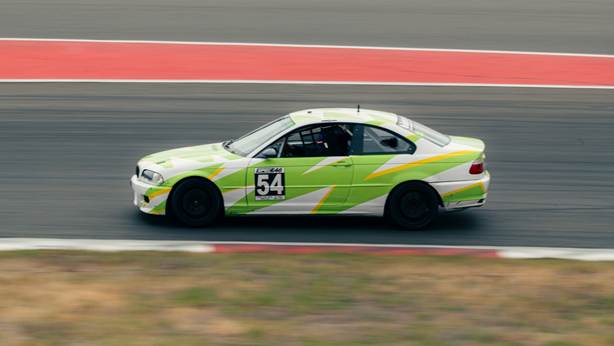
Matt Apeland’s #54 Spec E46 at The Ridge.
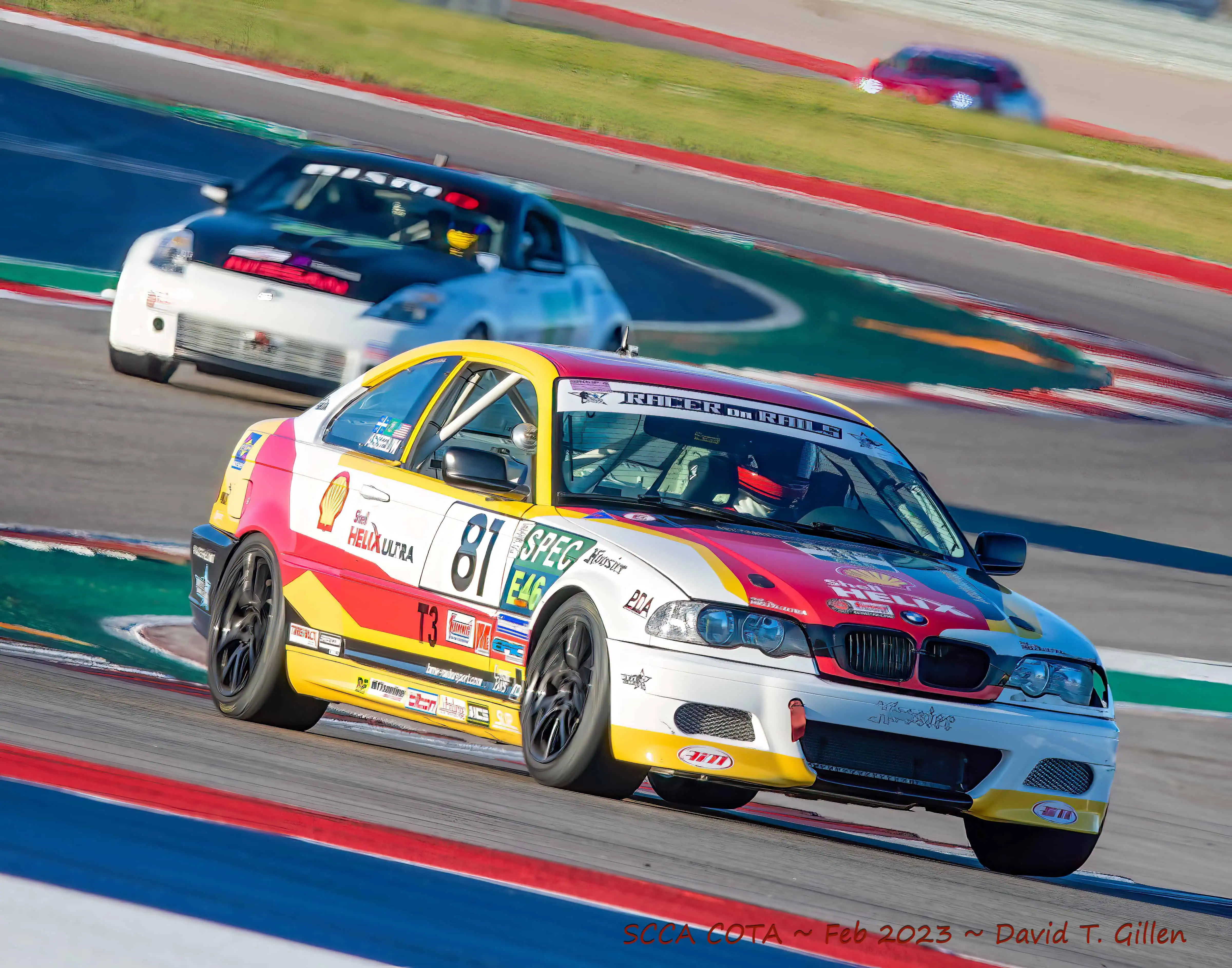
Matt came into the weekend still early in his racing journey and excited after a strong previous outing with us. He now has a properly developed Spec E46 underneath him, which means the biggest opportunity is increasingly the same one every driver eventually confronts: turning isolated good moments into a repeatable process.
Friday gave us the baseline. Matt could produce a good lap, but the spread between laps was still too wide. So the assignment for Saturday was deliberately boring: consistency.
Before we can ask a driver to change one braking point, one turn-in, or one throttle application, we need confidence that the rest of the lap will stay reasonably constant. Otherwise you are changing five variables at once and trying to learn from static.
We went deep on that idea with Matt, including one of the exercises Gama used when he was first learning: sit in the race car, watch onboard video from a faster driver, and physically mimic the steering, shifts, brake release, and throttle application. Not because the motions need to be copied robotically, but because repetition starts teaching the body what a lap is supposed to feel like.
Matt committed to it. By Sunday, the stopwatch started reflecting the change. He got into the 1:57s, including an official 1:57.820, and more importantly began backing the pace up with a string of laps in the 1:58s rather than one lonely hero lap surrounded by much larger swings.
When he climbed out and saw what he had done, his summary was better than anything we could write for him: “I’m a believer. The process works.”
That was the win.
Montey Mathison: earn the pace twice
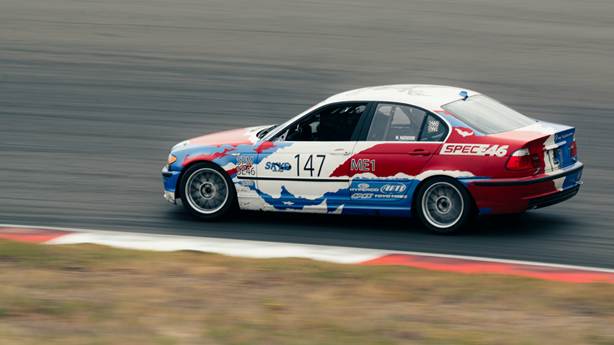
Montey Mathison’s #147 Spec E46.
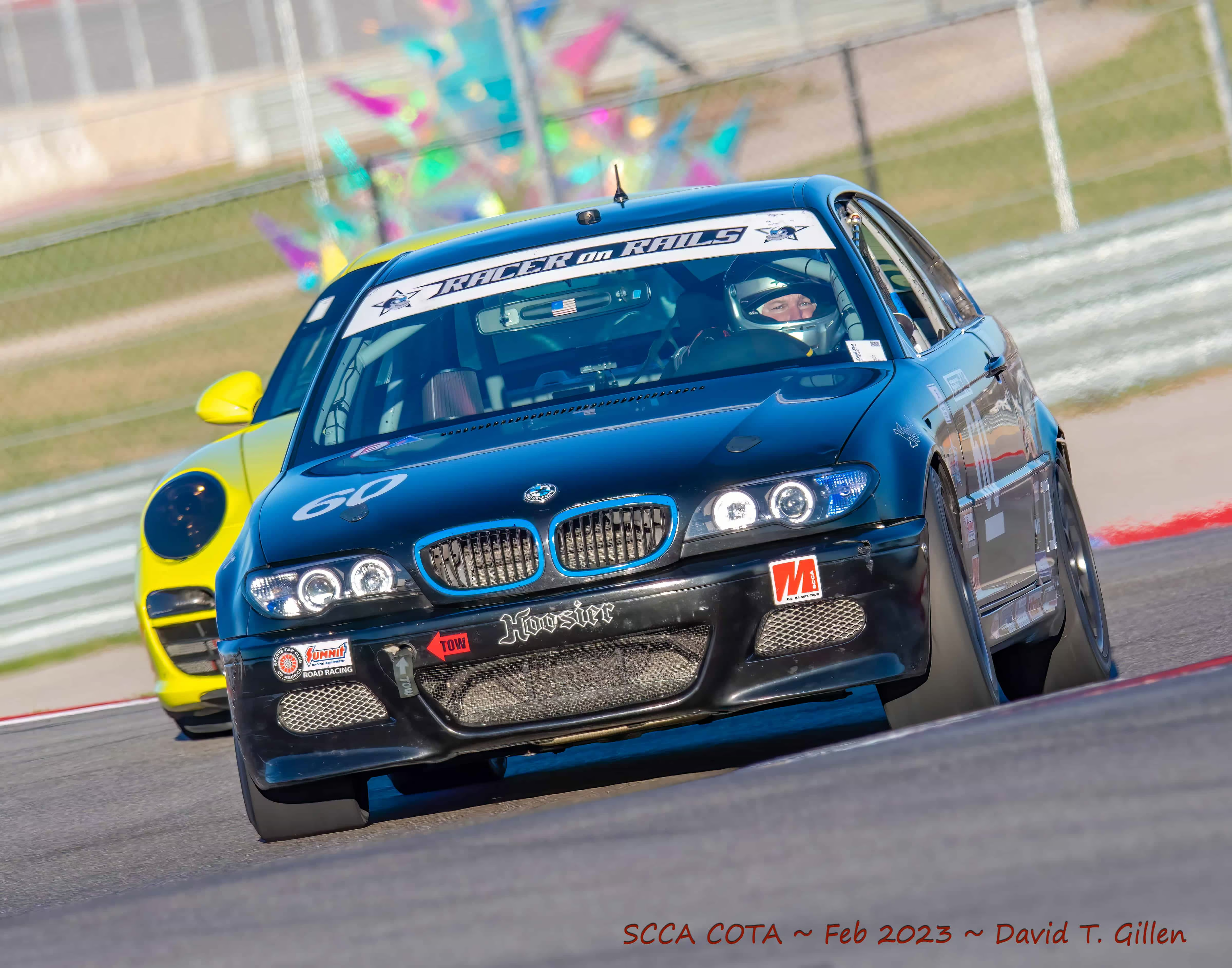
Montey is 18 and has been building real momentum this season. Over the previous couple of weekends he had started closing the gap to some of our quickest Spec E46 drivers, so he arrived at The Ridge with confidence and, naturally, expectations.
Then Friday handed him a car that simply would not make the power it should.
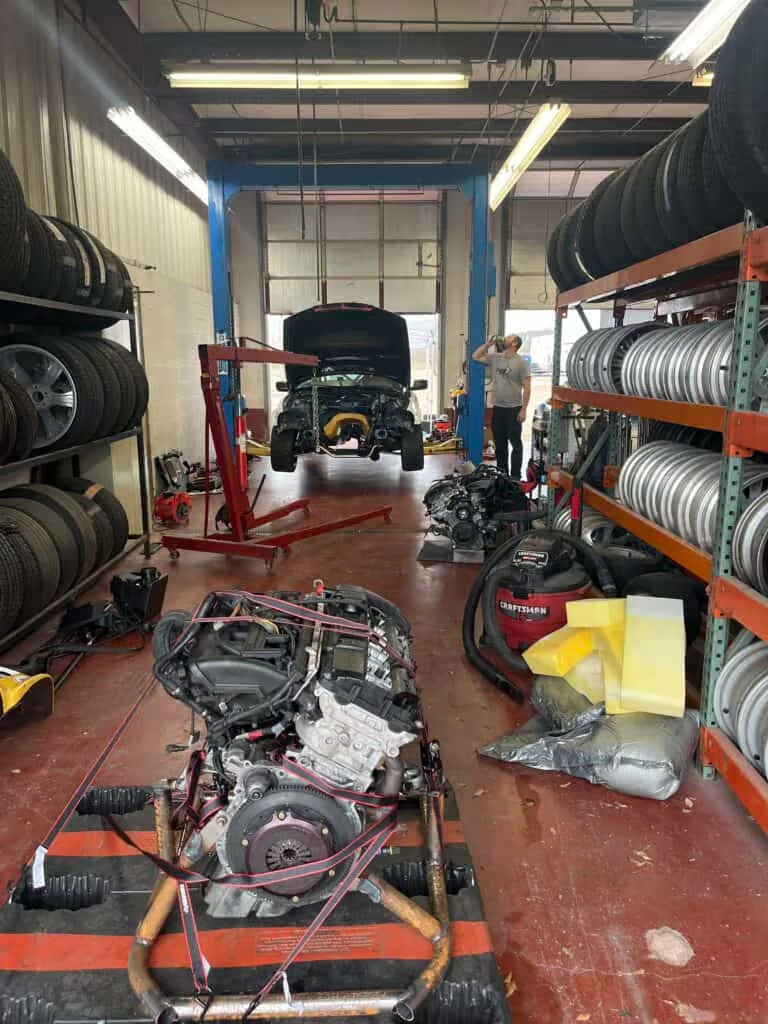
We worked through the usual suspects until the trail finally led to the ECU connection, where we found corrosion. Swapping in our spare ECU brought the car back to life. It cost Montey track time, but once the problem was solved he did exactly what we wanted to see: he reset, got back to work, and returned to pace.
Sunday qualifying produced a 1:52.565, and he finished third in Spec E46 with a 1:52.975 best race lap. Those numbers put him right back in the conversation with the front half of our group after spending a meaningful chunk of the weekend troubleshooting instead of driving.
That is a different kind of development. The fast lap matters. So does the ability to have the weekend go sideways, get the car back, and immediately resume the work.
Ron Tanemura: the weekend kept trying to stop him
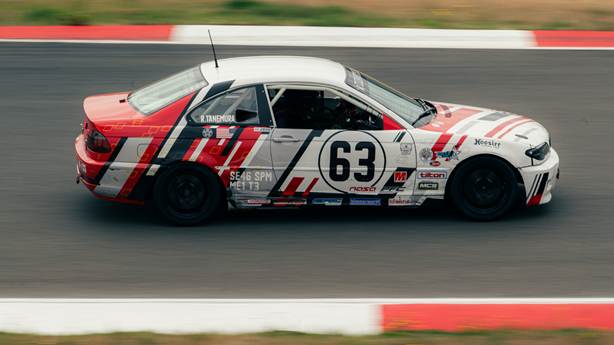
Ron Tanemura’s #63 Spec E46.
Ron was quick essentially from the moment the weekend started. On Friday we could see that he had the pace to run near the front of the Spec E46 field.
Naturally, that is when the shifter selector rod decided to leave the chat.
The CAE shifter’s selector rod came apart late in the test day and left Ron without a way to select gears. We overnighted a replacement. It arrived too short. So on Saturday morning René made the run back to the shop for Silver Bullet, our E36, so Ron could keep racing.
Then Silver Bullet developed an electrical problem and shut off late in Saturday’s race.
Race cars have timing.
The good news was that by then we had sourced the correct selector rod for Ron’s own Spec E46. Sunday he was back in the #63, qualified fourth in class, and raced his way to second place, finishing just 0.641 seconds behind the winner. There were still learning moments, including an ambitious move that cost him momentum, but that is exactly the point. He was racing in the part of the field where those decisions matter.
The part that stuck with us most did not come from the timing sheet. Multiple people independently came up during the weekend to tell us how impressed they were with Ron’s development. They have watched him try different cars, put in the work, take coaching seriously, and keep showing up. Now they are watching the pace and racecraft arrive with it.
Respect in a paddock is difficult to shortcut. Ron has earned his.
Anthony Lo: the result hurt. The driving didn’t.
We were not providing Anthony’s trackside support this weekend, but he is absolutely a Racer on Rails driver, and we need to pause here for a massive shoutout.
Anthony qualified second in Spec E46 with a 1:52.098. In the race he ran a 1:51.459, the fastest Spec E46 lap of the race, and put himself in position to take his first class win.
Then, on the final corner of the final lap, contact sent him around and the result disappeared.
That part is brutal. Racing can be brutally literal about where you cross the line, even when that line does a terrible job of describing how you drove.
Anthony’s result was disappointing. His performance was anything but.
He showed that he now has the pace to race at the very front, the composure to stay there, and the speed to win. The first victory will matter when it comes, but this weekend showed that the capability has already arrived.
Dirk Groeneveld: the T3 Cayman comes alive
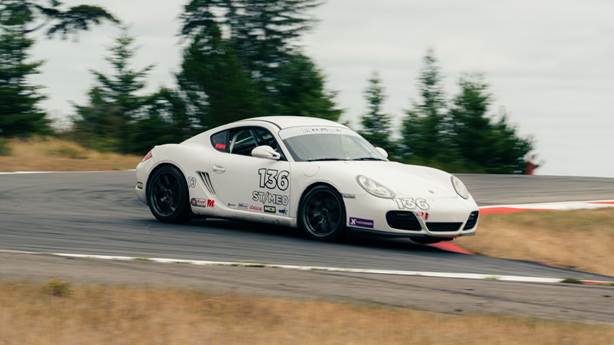
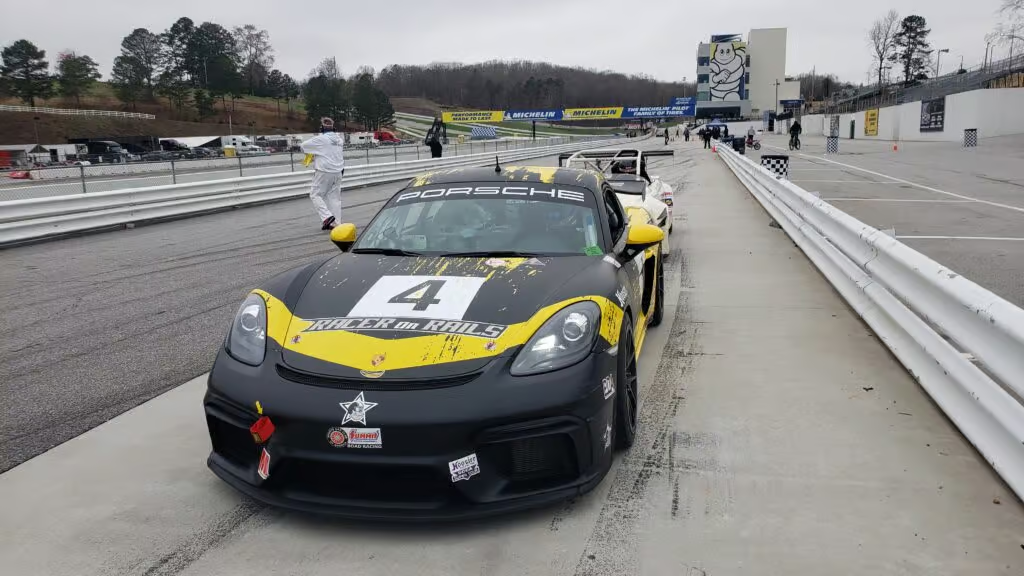
Dirk Groeneveld’s 2010 Porsche Cayman Base, now developed as an SCCA Touring 3 car.
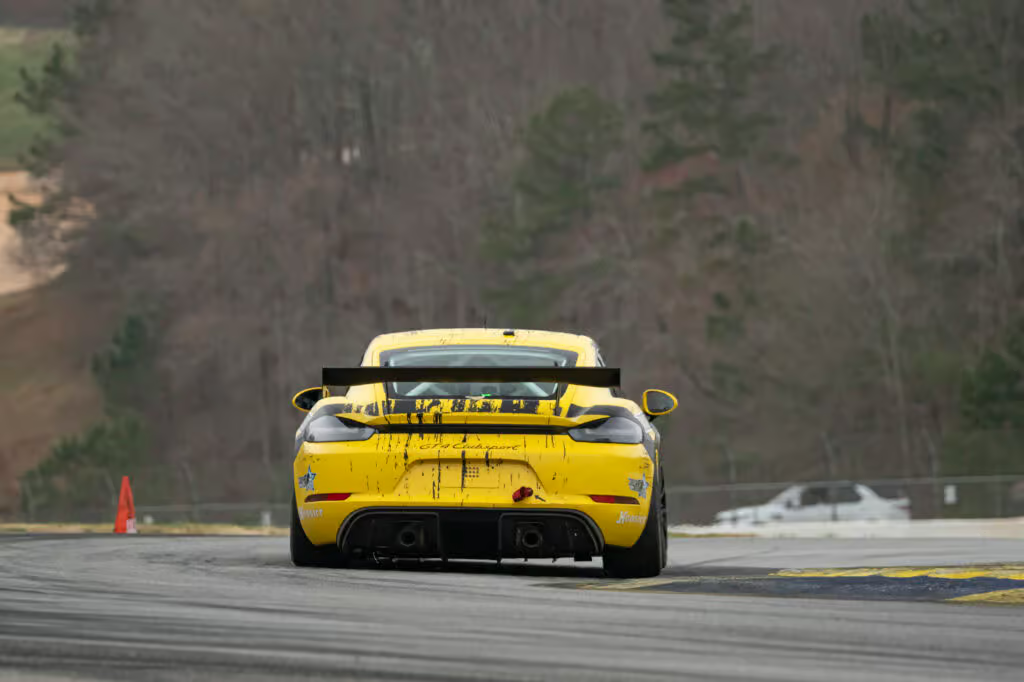
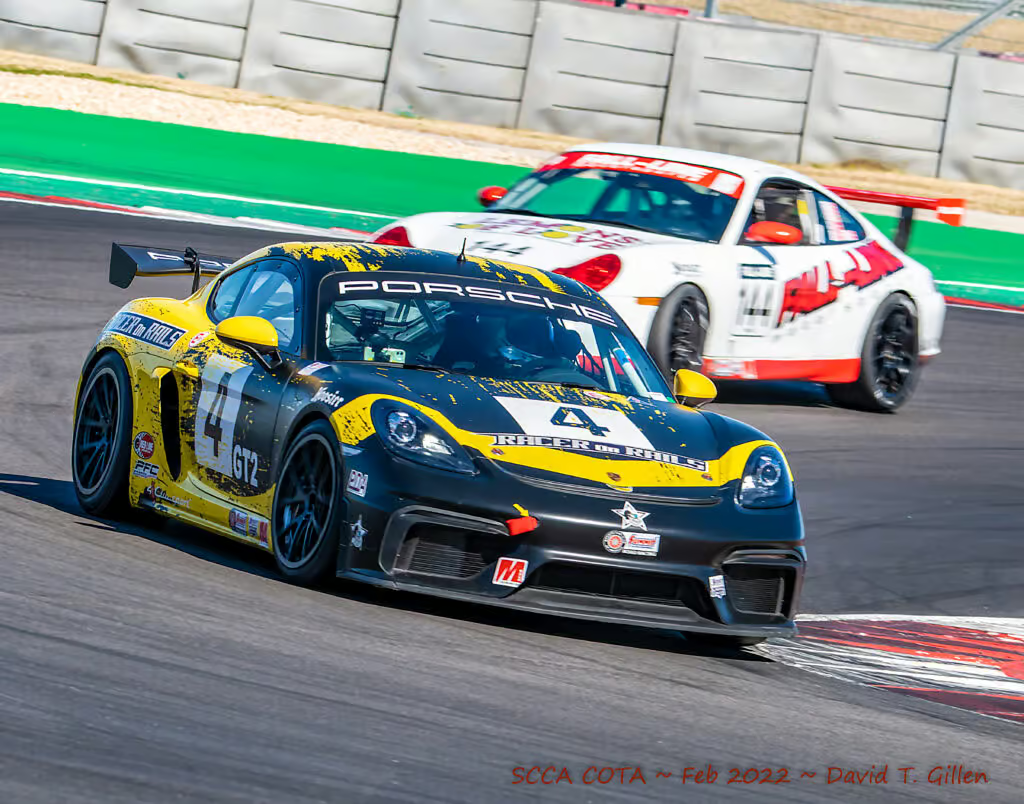
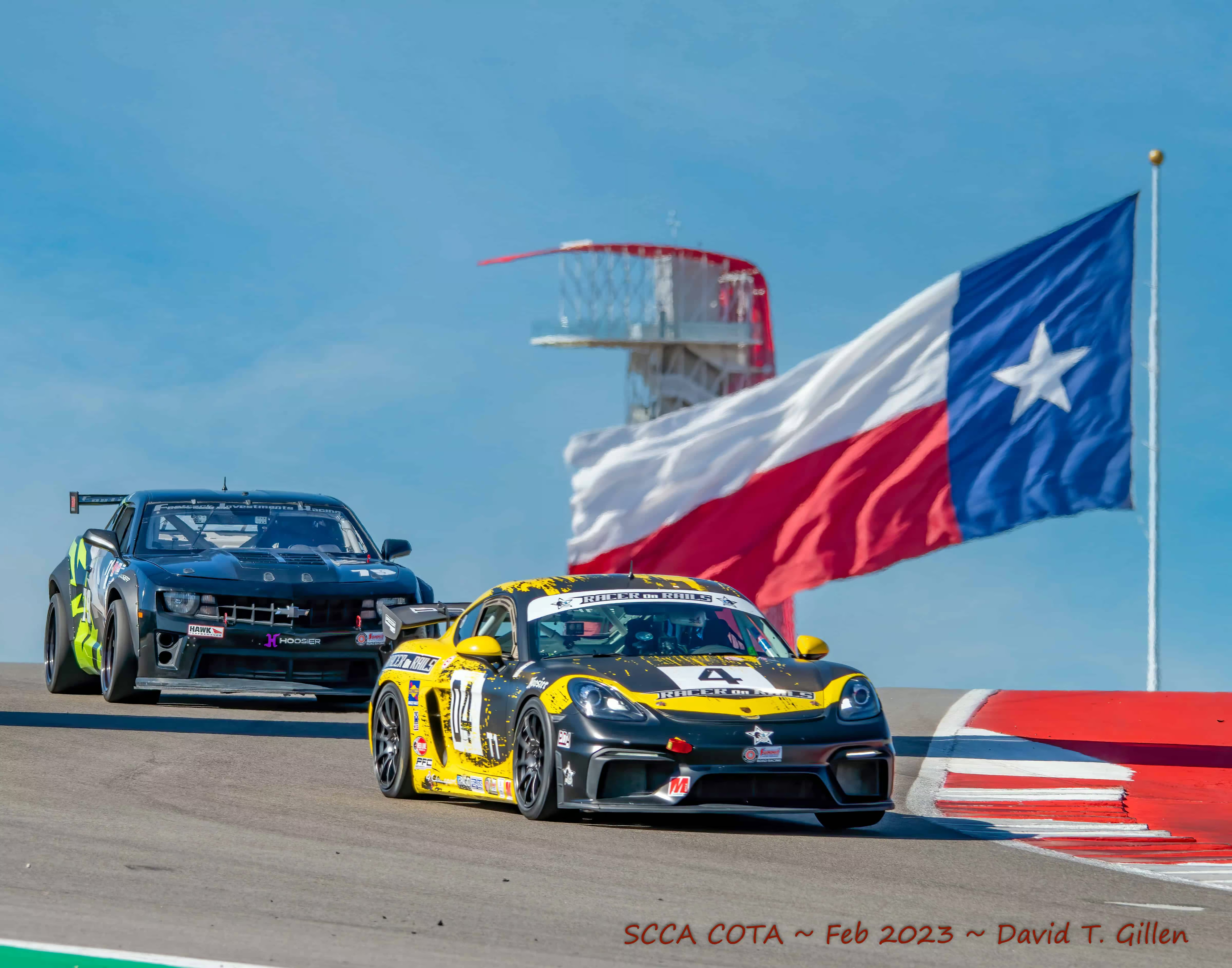
Dirk’s weekend was a milestone for both driver and car: the first official race weekend for his 2010 Porsche Cayman Base that we have been developing into an SCCA Touring 3 car.
The previous test days had been productive but each uncovered another small issue to solve. The biggest lingering problem was an intermittent power cut that appeared to be torque limiting when the car moved outside the operating assumptions Porsche built into a street car. Before this weekend we updated the tune, put fresh tires on the car, and moved to a staggered tire setup.
Friday was the first time everything simply worked.
Dirk initially came back describing the car as if he were still wrestling with it. Then we asked the obvious question: what are the lap times?
Low 1:50s. Then the 1:49s.
That changed the conversation. The Cayman was already seriously quick, and Dirk was doing it on Hoosier R7s rather than a qualifying-style A7. Over the rest of the weekend he continued learning what the car wanted and where the next limits lived. By Sunday, the questions were less about whether the concept worked and more about tire capacity, brake thermal management, and how much more performance is still buried in the chassis.
Dirk won ST both days, but this weekend was never really about collecting class wins. It was a shakedown, and it gave us a new performance baseline for a car we have only begun to optimize.
There was also a much more important layer to the weekend. Dirk’s dad was visiting from Germany and was able to be there to see the car, experience the paddock, and watch his son properly lean on it. Dirk has not had a huge amount of seat time over the last year and admitted that his physical race fitness still needs rebuilding, but the driving itself was at a very high level.
Fast car. Fast driver. Dad there to see it. That one felt special.
Matt Dawson: Assignment -> Maximum Fun
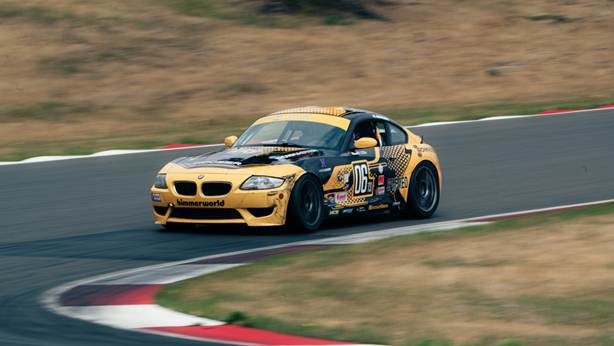
Matt Dawson stretching the legs of his BMW Z4 M Coupe.
Not every weekend needs to be a crusade for the last tenth.
Matt Dawson brought his BMW Z4 M Coupe with a beautifully straightforward objective: drive the thing, enjoy it, and have fun.
We did have to earn some of that fun. A power-steering fitting began leaking on the test day and cost him some track time while we repaired it. Then Matt introduced an unexpected coaching exercise of his own by showing up with a set of Toyo R888s he wanted to use up.
Those tires offered dramatically less lateral grip than the Hoosiers he normally drives, which meant the technique had to change. We talked about approaching it almost like a wet track: do more of the braking and acceleration with the car straight, reduce the demand for combined grip, and square off corners where appropriate.
It became a useful experiment in adapting the driver to the grip available rather than waiting for the car to feel the way you want it to feel.
Then he bolted the Hoosiers back on and went back to enjoying the Z4. On Sunday he finished third in SPM with a 1:50.921 best lap.
There are worse ways to spend a weekend than learning something useful and repeatedly revving an S54 toward the top of the tach. Man that car sounds good!!!
John and Mat Hennessy: the part you remember
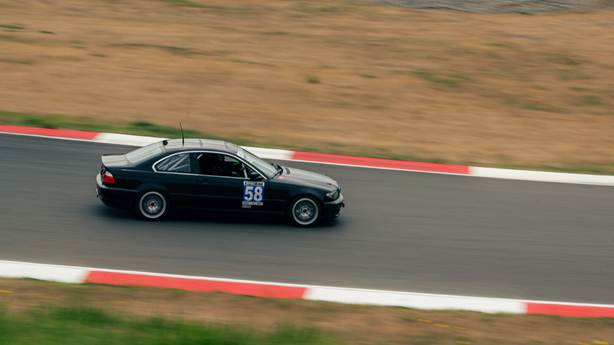
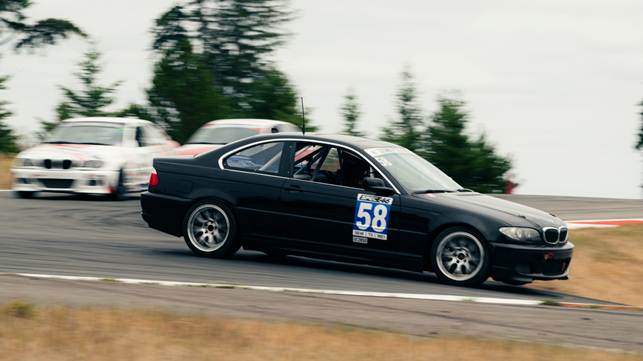
The Hennessys’ #58 Spec E46.
John and Mat Hennessy have been racing with us for years, sharing their #58 Spec E46 across different groups and coming together for the mini enduro.
The car itself has lived a full race-car life and has a list of service work waiting for it, but it kept doing its job this weekend. John had some excellent battles, including time near the front of the Spec E46 fight and exchanges with Ron. Matt ran around his usual pace and got his own share of good racing. The #58 also came home second in ME1 in Saturday’s mini enduro.
The lap times and positions are nice. They are not the reason this story matters.
Watching a father and son share a race car, split sessions, debrief together, and keep coming back to do this year after year is one of those things that quietly reminds you what the sport can be. Gama told them as much over the weekend: he hopes that when his own kids are older, he gets to share some version of this with them.
A race result lasts until the next race. Getting to do something you love with your kid can become part of a family’s language.
Harry and Lola Hollander: an unexpected addition to the tent
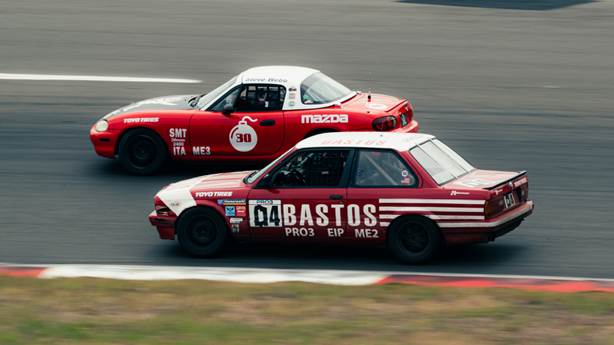
The Hollanders’ Bastos-liveried #04 PRO3 BMW in traffic.
Harry and Lola Hollander were not originally part of our weekend plan.
We had met them previously while they were finishing novice licensing and exploring where they wanted to race. They ultimately went the PRO3 route and bought the familiar Bastos-liveried #04 BMW. At The Ridge they found themselves needing some last-minute trackside support and asked if we could help.
We were clear about the deal: we had not seen the car before, we did not know its condition, and our technician resource would be shared. But we had capacity to help, so we would tackle one problem at a time and do everything we could to keep them driving.
The car made sure we had problems to tackle.
Despite that, Harry and Lola made essentially the whole weekend, missing only one session, and more importantly they were able to focus enough on their driving to make real progress. Both improved their personal bests by multiple seconds.
Lola’s Sunday race included a 1:59.453, putting her under the two-minute mark at The Ridge. Harry’s PRO3 best that day was 2:01.236.
Which means the official family leaderboard now says Lola beat Dad by 1.783 seconds.
We will allow her to decide how frequently that fact needs to be mentioned.
For us, this was a good reminder of what track support is supposed to accomplish. The goal is not simply to make a broken thing unbroken. It is to create enough stability around the driver that the weekend can still become productive, enjoyable, and worth remembering.
One last run in the Cayman
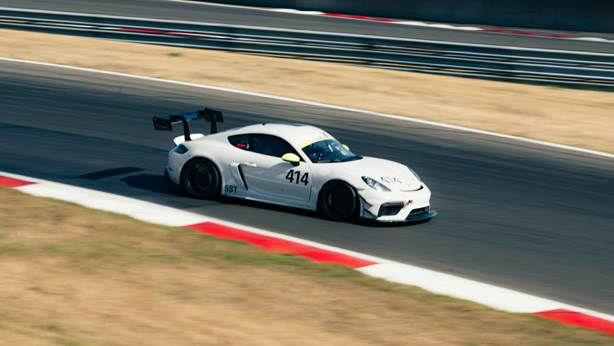
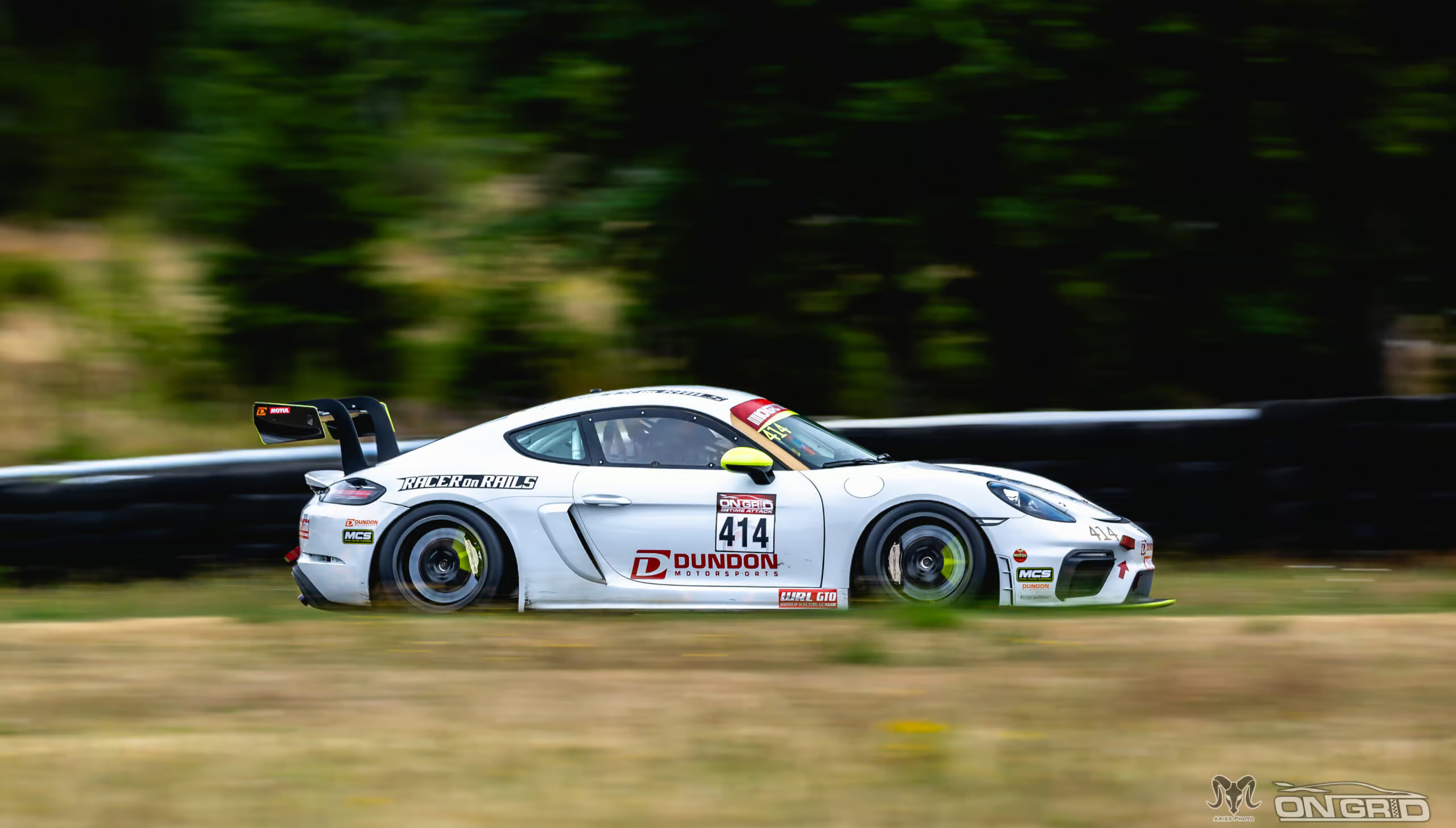
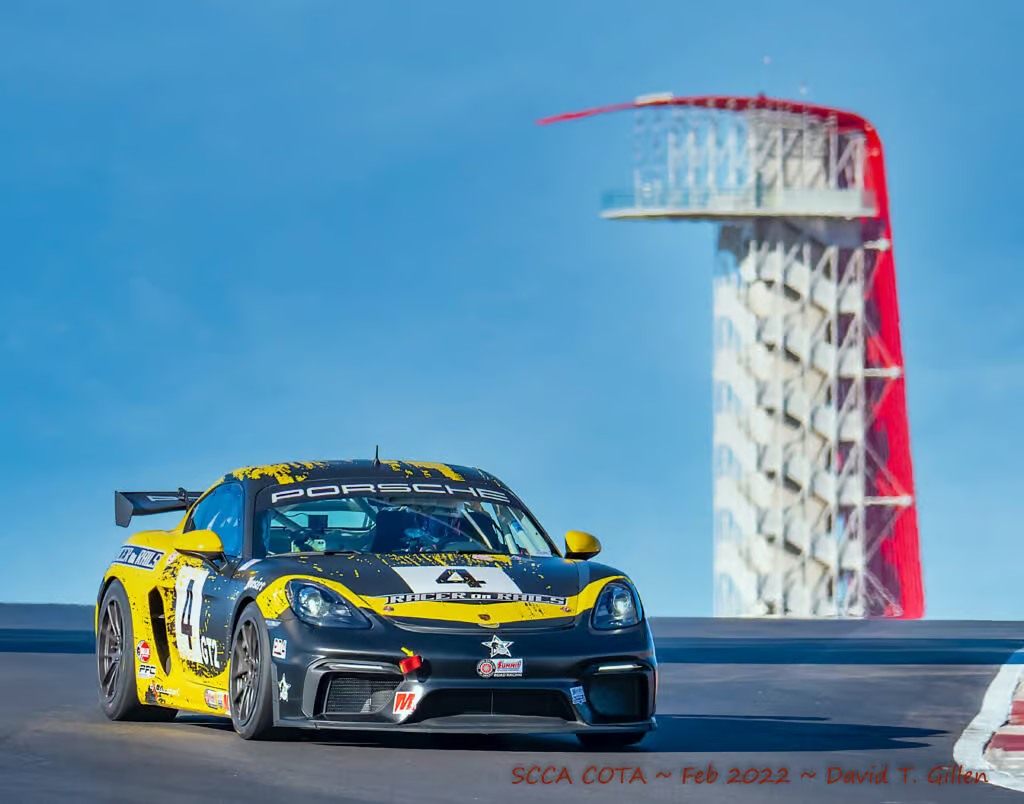
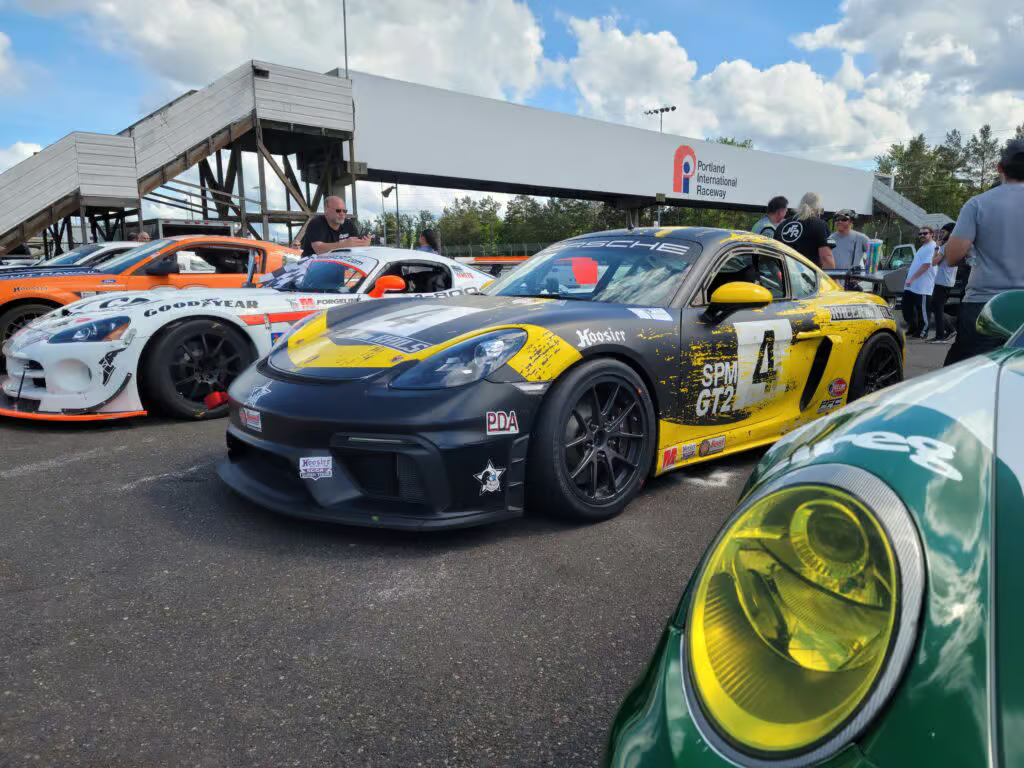
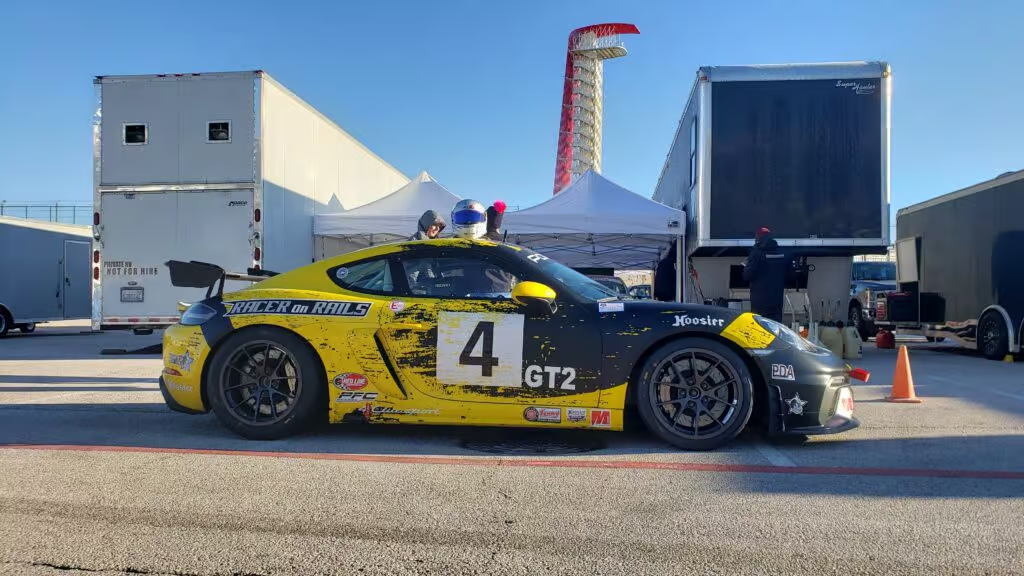
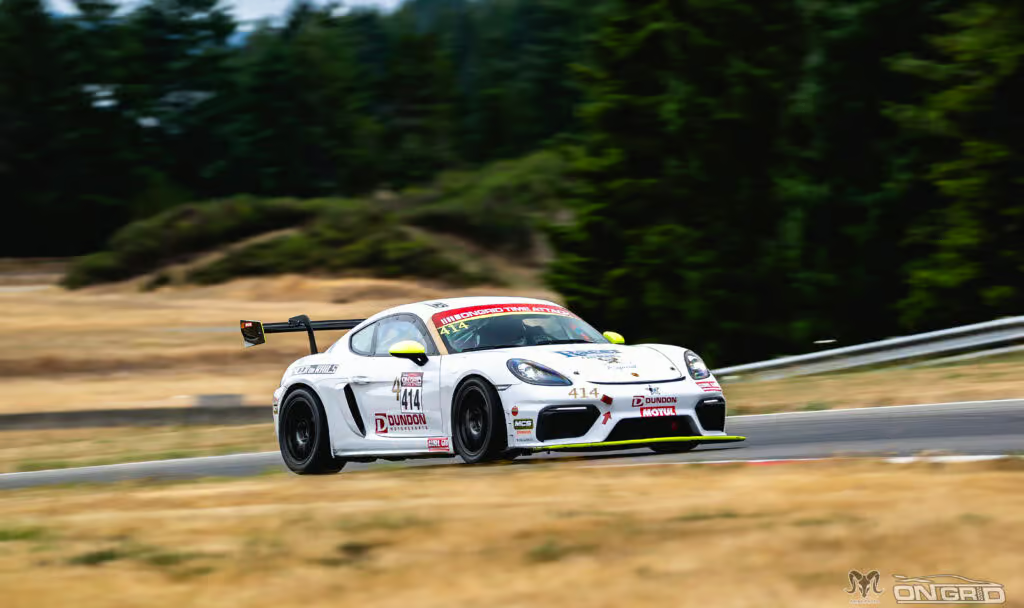
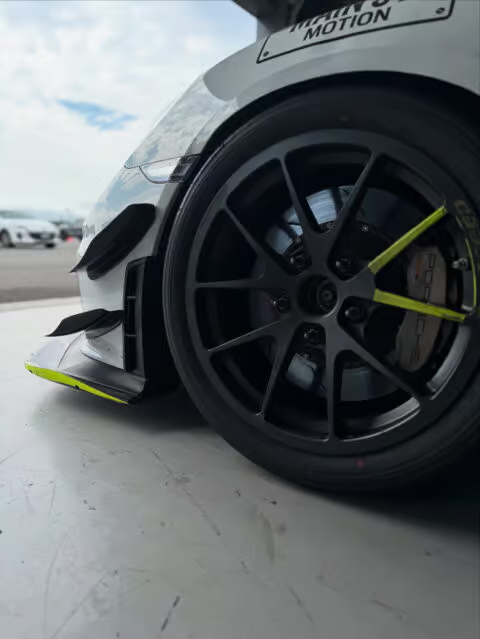
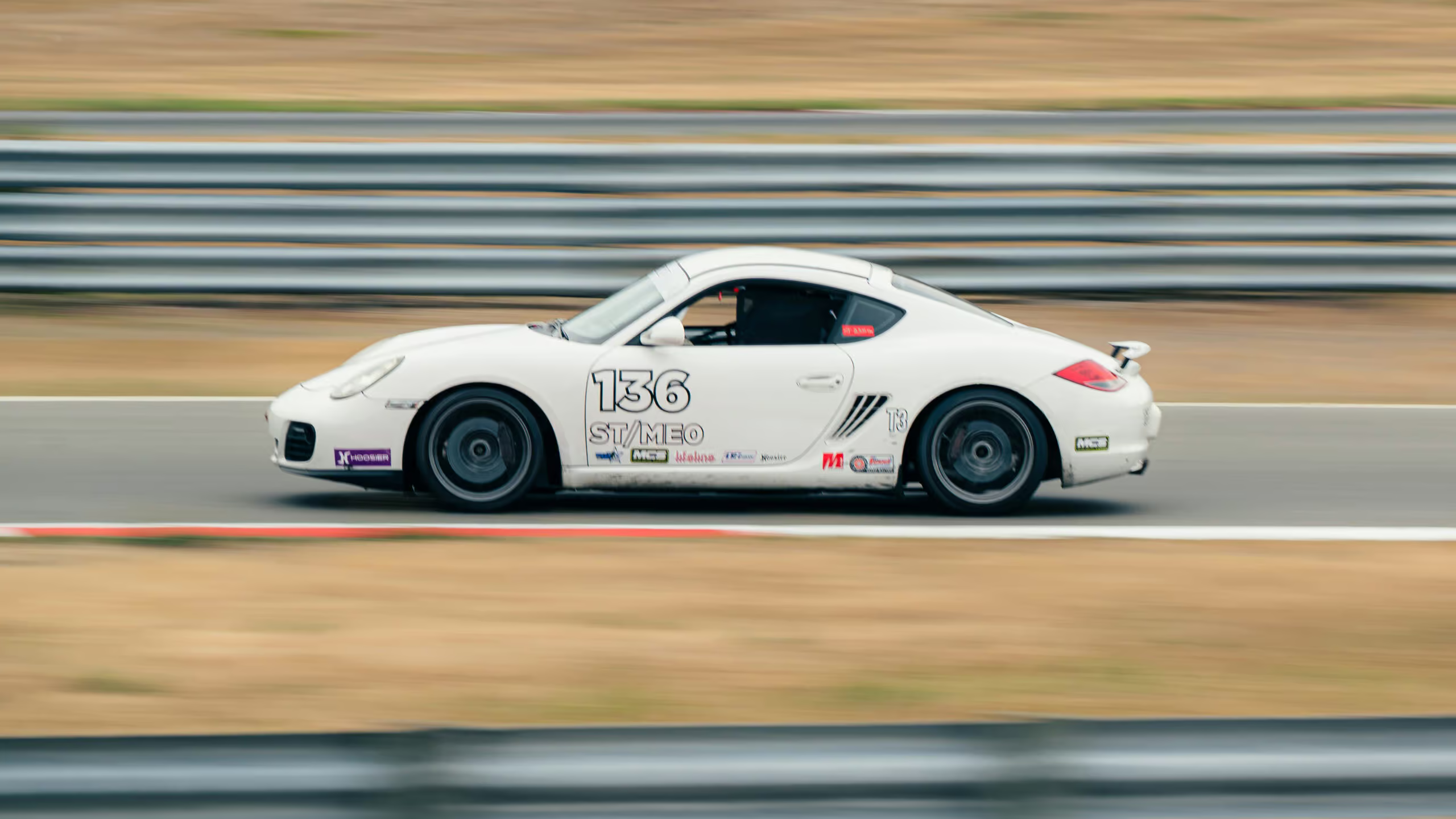
The #414 Cayman during what unexpectedly became its final race weekend with Racer on Rails.
Gama’s assignment for the weekend was supposed to be straightforward: prepare for the upcoming Gridlife GLGT race at Laguna Seca.
We could not get the required series tires in time, so the Cayman went to The Ridge on old Yokohama A052s, both sets date-stamped in 2023 and already carrying plenty of heat cycles. The plan was to re-establish a driver baseline, work on setup, then return the following weekend with reduced power and the correct tires for a much more representative Laguna test.
Friday went well. On the first set of old tires the car felt good and ran in the 1:44 to 1:45 range while we worked through setup changes.
Saturday was stranger. We installed the set that visually looked healthier because it had more tread, only to discover that it was actually even older. The car developed enormous front-end push, especially in the left-hand corners that make up so much of The Ridge. At first we went hunting for setup or mechanical problems. By the end of the day the answer was wonderfully unglamorous: the tires were simply done.
Sunday we went back to the less-dead set, and the car came back underneath Gama immediately.
That afternoon brought the inaugural Porsche & Ginetta Cup race. The Cayman was in an awkward performance island: not quick enough on those tires to fight the 991.2 and 992 Cup cars, but significantly faster than much of the rest of the field. So instead of racing another car, Gama spent the stint racing the lap.
He qualified at 1:45.183. Through the race, he kept finding small pieces, convinced there were still a few tenths scattered around the circuit. On lap eight, the final lap, he put together a 1:45.502, his fastest lap of the race.
He climbed out excited about coming back the following weekend with fresh tires and the next round of changes.
The Cayman sold the next day.
We thought we were establishing a baseline for what came next. It turned out we were putting a period on the end of the Cayman’s chapter with Racer on Rails.
There are worse ways for a race car to say goodbye than setting its best lap of the race on the final lap.
Development is bigger than a result
Looking back, that is what we will remember about Tribute to the Volunteers.
Matt Apeland learned that speed becomes useful when it is repeatable. Montey Mathison lost track time and then immediately found his pace again. Ron Tanemura fought through two different cars trying to strand him and still finished second. Anthony Lo showed race-winning speed even though the result did not survive the final corner. Dirk Groeneveld and the T3 Cayman established an entirely new performance baseline. Matt Dawson used a low-grip tire experiment as an excuse to learn and then went back to having fun. John and Matt Hennessy reminded us why sharing this sport with family matters. Harry and Lola Hollander turned a last-minute support request into personal bests and a little father-daughter scoreboard drama. And the #414 Cayman gave us one final great lap before moving on to its next chapter.
That is driver development to us.
It is not just making the stopwatch smaller. It is engineering, preparation, coaching, racecraft, physical readiness, problem-solving, repetition, reflection, and knowing when the objective for the day is simply to enjoy the machine.
And none of it happens without a community willing to make racing possible.
So one more time: thank you to IRDC, Conference, The Ridge, and especially every volunteer who worked the weekend. We got to do the fun part because you were there.
See you at the track.
— Racer on Rails
If you are building a track or racing program around your own goals, reach us at gofaster@raceronrails.com.