What: First sprint race weekend of the year, shaking down the car with new upgrades, testing and experiencing the highs and lows of racing.
If I knew then, what I know now:
- Make no assumptions on communication! Make sure everyone on your team knows exactly what is happening and when. We lost a day to shake down the car and found an obscure issue with the new transmission resulting in more lost track time on Saturday.
- Make sure you know what kind of qualifying is happening, open session or pressure style and adjust tire pressures accordingly.
- Plan where you want to be on pre-grid for open session qualifying wisely so that you can benefit from drafting other cars in class and even faster cars.
Products that made life easier in this post:
- Harbor Freight 2-in-1 Convertible Hand Truck 600lbs – this bad boy made loading and unloading the trailer with three sets of tires a breeze. Our backs are still thanking us!
Kick off to the sprint season
As I mentioned the 6 Hours on the Ridge post, I primarily race with ICSCC, which is a sprint race focused sanctioning body. Aside from the endurance races that bookend the start and end of the season, each race weekend is made up of the following elements (for the most part):
- Friday test and tune – usually for race cars only but sometimes includes High Performance Driver Education (HPDE drivers).
- Saturday – Practice, qualifying, non-points races and a 1 hour endurance race.
- Sunday – Final qualifying and points races
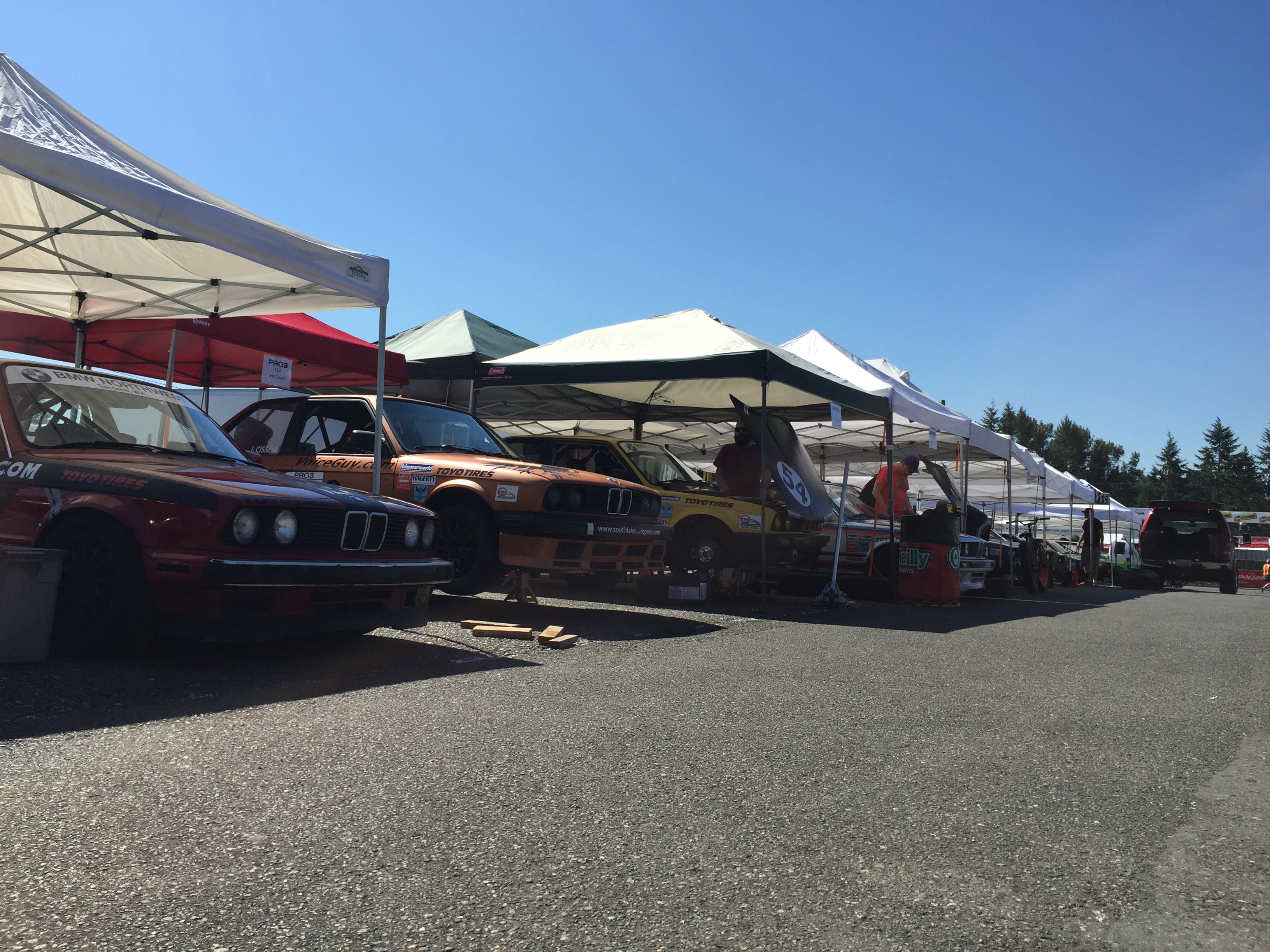
Here is a picture of the announcement for the race weekend of which if you do a couple of groups, that is plenty of track time. This weekend and for the full year, I did Group 1 (the main group for the PRO3 annual championship) and the Mini-Enduro.

Shaking down a refreshed car
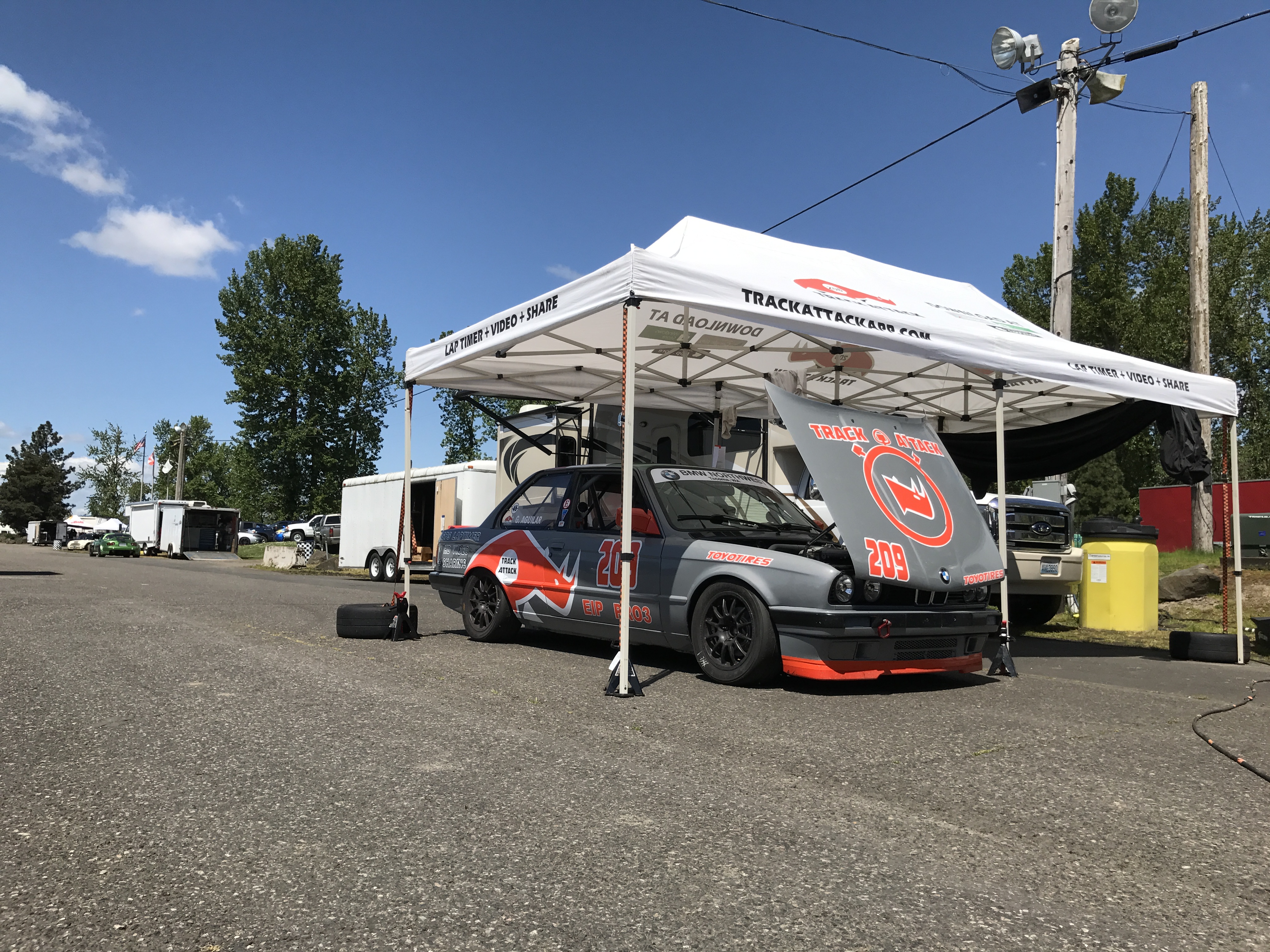
Initially I was supposed to get the #209 Track Attack PRO3 car back from Advanced Auto Fabrications at the 6 hour race but when they were doing final checks on it, they found that the newly rebuilt transmission wouldn’t go into third gear. So we decided to have that fixed and bring it down for this weekend, where I would shake the car down and ‘take delivery’ from all the repairs and upgrades they did.
What I did not make explicitly clear was that I expected AAF and crew to be there on Friday, which they would do more often than not, but not always. I even checked in the Monday prior to make sure all was on schedule but I did not explicitly ask about Friday.
Big mistake because when we drove down on Thursday night, so we could be all unloaded and ready to drive on Friday AM, the gigantic black AAF hauler was nowhere to be seen. AAF and crew decided to skip the test and tune due to the limited amount of track time and forecasted rain in the morning. They’re not scared of rain, just that if it isn’t supposed to rain on Saturday or Sunday, the risk of damage is higher than the benefit.
Regardless, we made the most of the day by working on odds and ends in the RV, spend some quality time with the family, caught up on work and chatted with folks up and down the paddock. The AAF crew showed up on Friday evening and by Saturday AM, was all set for the first on-track session.

As I got going in the morning practice run, it took me a few laps to get into the groove of things, remember the course and get up to speed. Initially letting several cars pass me but then quickly catching and passing them again. Lap times were solid, with nearly a .8 second improvement from the year prior. SWEET!
When we came off the track, a fellow PRO3 driver mentioned that they saw smoke coming out of the back of my car, a light smoke but consistent. We checked the car and sure enough, the rear and under body was coated with transmission oil. We were leaking somewhere from this newly rebuilt transmission that aside from this, seemed to be running great.

Over the next several hours, we went step by step, replacing the main rear transfer seal and then the shifter seal. We thought we had it addressed but after the non-points race, still had oil.
Long story short, it turns out that when the transmission was sent for a rebuild, they took my old transmission in as a core and sent back a different transmission, from an older model of the E30, which had a different kind of shift mount assembly. This assembly had two bolts that mounted to the top of the transmission, which served the purpose of securing the assembly and sealing two bolt holes into the transmission itself.
We don’t run the OEM shifter assembly, opting instead for the incredibly awesome CAE shifter assembly, which meant those holes were completely exposed and the source of the leak. This obscure situation had never come up with this crew of people who have been racing E30’s for over 10 years and built and rebuilt dozens of PRO3 cars.
We didn’t figure this out until Saturday early evening, after we opted to not run the 1 hour endurance race, to save the transmission (if it kept leaking) for the Group 1 qualifying and racing on Sunday. We felt the risk was too high to run low on transmission oil in the 1 hour and potentially damage the transmission itself.
In conclusion, lack of communication and shaking down the car resulted in a completely lost Friday of running and 1 hour of endurance racing. Sigh.
Qualifying
For the weekend, we had two qualifying sessions, one for the 1 hour endurance race and qualifying times for the Group 1 race.
1 Hour endurance race pressure qualy
Something unique to the Cascade Sports Car Club, which I love is pressure qualifying. One out lap, one flying lap and one in lap. Unfortunately, we did not realize this until we got to grid and didn’t adjust the tire pressures accordingly to compensate for the much fewer laps we’d run. At least everyone else was in the same boat. I love this type of qualifying because it eliminates the ‘draft’ variable – this is all on you as a driver, to make a fast lap happen there and then. Not relying on getting a draft from a faster car or following and learning from a faster driver. At a track like PIR, especially with no chicane on the front straight, a draft can make a HUGE difference, in the order of .25 seconds or more if you can get the right draft on the front and back straights.
Here is the video of my ME2 qualifying lap, which put me on pole for ME2 class but was a solid one second slower than my fastest laps in a regular qualifying session.

Group 1 qualy
Qualifying for Group 1 was spread across the fastest lap times in the Saturday non-points race and Sunday AM qualifying. The fastest time across those two sessions would count towards the final grid placement.
In the Saturday AM race, I qualified 4th with a mid-1:22 lap time and finished the race in 3rd. It was an excellent race, where I got a great start and was running in 2nd before turn 2 of the first lap. I tried to hitch myself to Brian Bercovitz, the eventual race winner but he got away and was stuck battling with Corey Peters for 2nd place. I ran in 2nd for about half of the race but I ended up going too hot into turn 1, went wide and that was enough of a mistake for Corey to capitalize. That meant Kyle Byers in the #55 PRO3 car was on my tail. We ended up battling pretty hard, exchanging some bumper paint but nothing serious – just good, solid, respectful, hard racing. He ended up getting a little sideways on the second bump he gave me and that was enough for me to pull away and finish in third, with a lap time of 1:22.274 and a new personal best.

I would normally post the video here but I forgot to hit ‘record’ – I’ll try to get the videos from Corey and Kyle to share.
Sunday AM qualy brought out excellent conditions; dry, sunny and a cool breeze in the low 60’s. I got on the grid early and was the lead PRO3 car on track but after a few laps, I realized I was reproducing low 1:22 lap times while everyone else was running in a pack and getting help with drafts. So I came into the hot pits, checked tire pressures and waited for the right pack to come by and tail them.
I eventually got behind the pack with Corey Peters coming off of the back straight but he quickly picked up on my game and pulled off on the main straight away. No issues, there was still another couple of cars to get behind. On a decent flyer though, another driver, who I used for a draft and got by on turn 1 decided it was time to race and dove in to overtake in turn 7. Why?!?!?! What makes this more frustrating is that he then pulled off and slowed down that same lap, in the following straight away. I can’t confirm but I think he also picked up on what I was planning and decided to ruin my lap.
No issues again and finally, I saw Brian Bercovitz and got behind him for one last final flying lap. All looked good, with the predictive lap timer showing a 1:21.8xx for the first part of the lap but then I missed a downshift to third on the only left hand turn on the course. This ended up still producing a solid lap time but I ended up qualifying in 5th place, where as if I would have executed, I would have qualified third and possibly 2nd in class.
The Main Race
The goal was simple: get a solid start, make up a couple positions in the traffic and be in the top three by the end of lap 1. This would give me a fighting chance to get near the front and try to stick with Brian, who was on pole for our class. I found during qualifying that if I could get behind him, I was able to keep the gap nearly the same.
Below is the race video and note, it has no data overlay. The reason? I didn’t complete a single lap. I got a solid start and wedged myself in a position to go after 2nd, 3rd and possibly first by turn 7. Unfortunately, up ahead, a Spec E46 car went off to the left and tried to get themselves back on the track without waiting for the pack to go by (my opinion). When his front tires, who were turned to the right, hooked up on the track surface, they gripped and shot him across the track and into the on-coming pack of angry PRO3 cars.

I saw it happening, moved to the right but still got a glancing blow on the rear quarter panel. Initially I thought all was well because it didn’t really knock me anywhere but as soon as we hit turn 7 (right hand turn leading to the back straight), I saw and heard heavy tire rub and then the cabin was engulfed in tire smoke. I went into the hot pits, got checked for fire but the damage was too much. We could have swapped tires and rolled the fender in the hot-pit but we would have gone a couple laps down and I didn’t think it was worth it and called it a day.
Conclusion
It was a tough way to start the sprint season but when you sign up to go racing, this is a potential outcome that can happen any weekend. I take 100% accountability for what happened and don’t blame the Spec E46 driver in any way. All things considered, had a great time with friends and family, personal best lap times, fixed teething issues on the car and was still able to take it home, running and with some cosmetic repairs needed before the next race. There were three other cars involved in the incident and they would take my place in an instant as their cars did not fair as well.