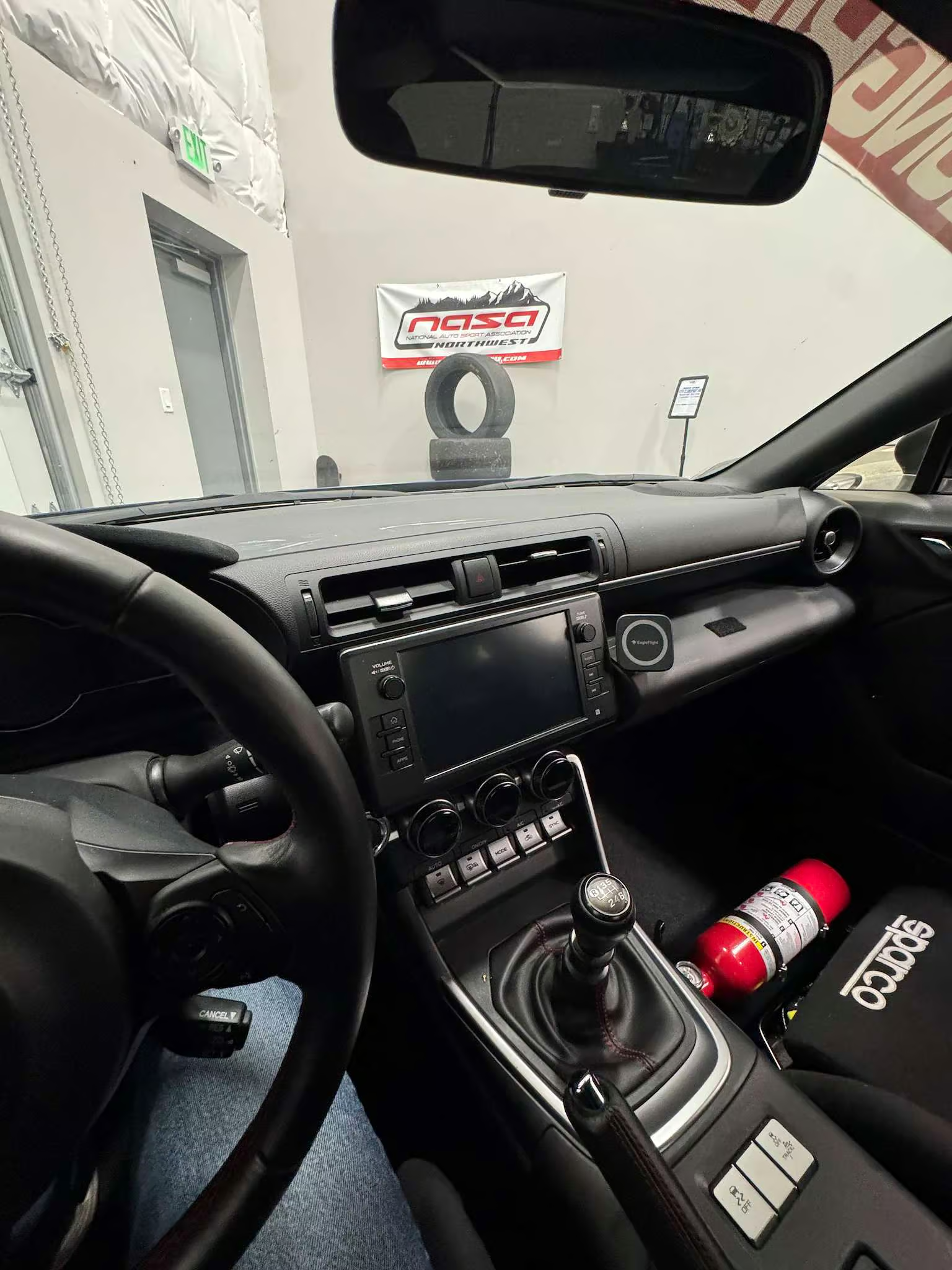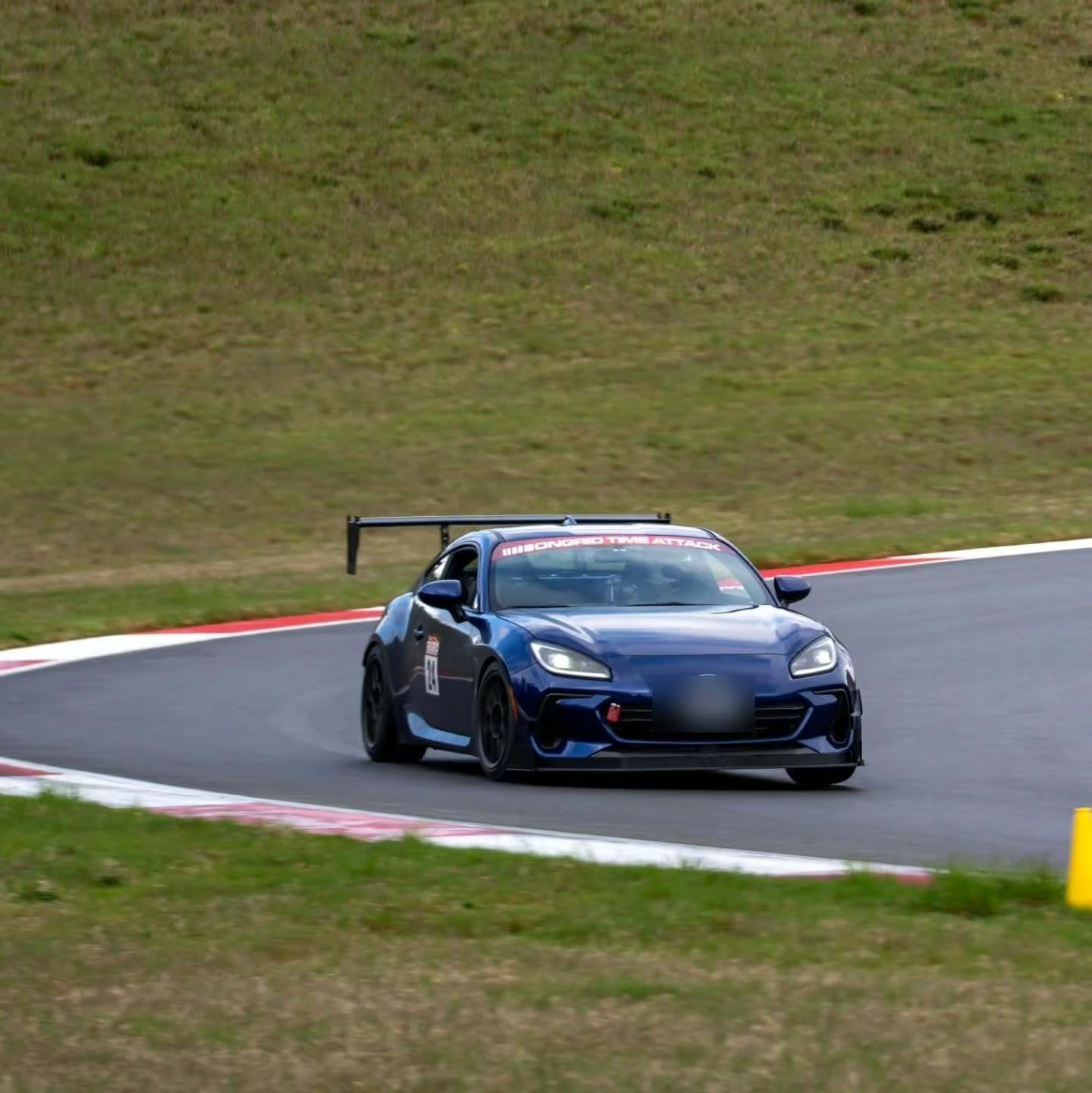
The car before the driver
Before we get to Jeremy and his BRZ, the car itself deserves a proper introduction. This is a post about a time-attack build, and the build only makes sense if you know what the starting point is.
The Subaru BRZ is a small, light, rear-wheel-drive coupe with a flat-four engine mounted low in the nose. Two small rear seats, a six-speed manual or automatic, no turbo, no all-wheel drive. That last part surprises people. Subaru built its name on all-wheel drive, and here is its only rear-drive car.
It exists because Toyota wanted it to exist. In 2008 Toyota bought a stake in Fuji Heavy Industries, Subaru’s parent company, and Toyota engineer Tetsuya Tada pitched a simple idea: a modern version of the AE86, the little rear-drive Corolla from the 1980s that became a legend in club racing, rally, and drifting. Light, cheap, rear-drive, fun at legal speeds. Subaru had the engine. Toyota had the vision and the funding.
Subaru said no at first — a rear-drive coupe did not fit the brand — and the project stalled for six months. Then Toyota put Subaru’s engineers in a prototype, let them drive it, and they changed their minds. The concept showed in 2009, the production car debuted in December 2011, and the first cars rolled off Subaru’s Gunma plant in February 2012.
BRZ stands for Boxer, Rear-wheel drive, and Zenith. The 86 is Hachi-Roku, Japanese for eight-six, after the AE86.
First generation vs second generation
The first BRZ ran from the 2013 model year to 2020. Its engine was the FA20, a 2.0-liter flat-four making 200 horsepower and 151 lb-ft of torque. A 2017 refresh bumped manual cars to 205. The car weighed about 2,700 to 2,800 pounds. The chassis was so good people forgave the engine. Mostly.
The engine had one real flaw: the torque dip. Between about 3,500 and 4,500 rpm the FA20 went soft, right where you want midrange on track. You learned to drive around it, but you should not have had to.
The second generation fixed it. The car debuted in November 2020 and reached the US as a 2022 model, with the FA24 — a 2.4-liter flat-four making 228 horsepower and 184 lb-ft of torque. Peak torque arrives at 3,700 rpm instead of 6,400, the dip is gone, and zero to 60 dropped from about 6.2 seconds to 5.4.
The chassis got stiffer — Subaru claims 50 percent more torsional rigidity and 60 percent more front lateral bending rigidity — with aluminum for the roof, hood, and front fenders. A base manual is 2,815 pounds, about 17 pounds more than the lightest first-gen car. Same formula, same layout, same Torsen limited-slip differential, still no turbo. They did not mess with what worked.
The numbers, side by side. The jump from the first generation to the second is big. The gap between the BRZ and the GR86 is small.
| First generation BRZ (2013–2020) | Second generation BRZ (2022–) | Second generation GR86 (2022–) | |
|---|---|---|---|
| Chassis code | ZN6 / ZC6 | ZD8 | ZN8 |
| Engine | FA20 2.0L flat-four | FA24D 2.4L flat-four | FA24D 2.4L flat-four |
| Power | 200 hp (205 manual, 2017+) | 228 hp @ 7,000 rpm | 228 hp @ 7,000 rpm |
| Torque | 151 lb-ft (156, 2017+) | 184 lb-ft @ 3,700 rpm | 184 lb-ft @ 3,700 rpm |
| Weight, manual | ~2,689–2,800 lb | 2,815 lb (Premium) | 2,811 lb |
| Differential | Torsen LSD | Torsen LSD | Torsen LSD |
| Spring rates, F/R | — | 30 / 35 N/mm | 28 / 39 N/mm |
| Sway bars, F/R | — | 18.3 mm hollow / 14 mm | 18 mm solid / 15 mm |
| Front knuckles | — | Aluminum | Steel |
Same engine, same output, same differential, and the scales barely notice the badge. The differences are in the suspension tuning, not the car.
BRZ vs GR86: same car, different handshake
People ask this constantly, so here it is plainly. The BRZ and the GR86 are the same car with different suspension tuning, different styling, and different badges. Same engine, same gearbox, same weight within a few pounds.

The tuning difference is real. Toyota went softer in front and stiffer in the rear — front springs about 7 percent softer, rears about 11 percent stiffer. The sway bars follow the same split, and the BRZ mounts its rear bar to the body where the GR86 mounts it to the subframe. The BRZ also gets aluminum front knuckles where the GR86 uses steel.
What that means on track is simple. The GR86 is the playful one — it rotates more easily and the tail steps out sooner and more gradually. The BRZ is more neutral, with more front bite and a more stable baseline. In MotorTrend’s head-to-head the GR86 was quicker on the skidpad and the figure eight, and the BRZ stopped one foot shorter. Neither is the wrong answer. They are two calibrations of the same idea, and both respond to the same parts.
The factory track trim is the tS, tuned by STI. The first-gen tS was a 500-car US special in 2018; the second-gen tS came back for 2024, manual only.
Why this platform works on track
There are faster cars. There are no faster cars that are this cheap to run this hard.
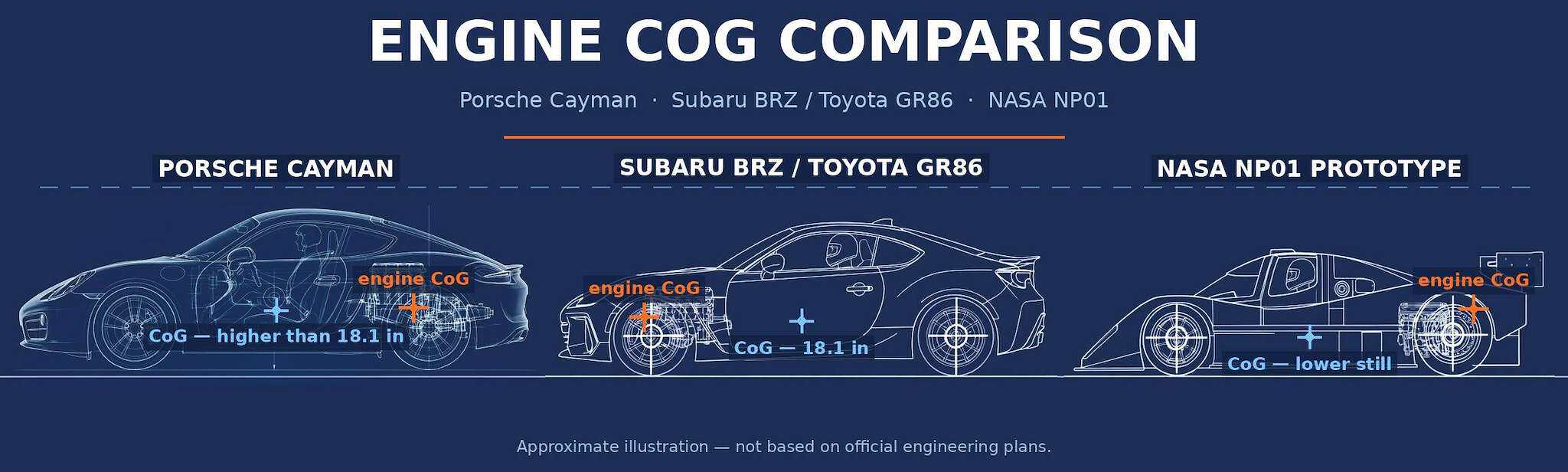
The BRZ weighs about 2,800 pounds. Its center of gravity is 18.1 inches off the ground — lower than a Porsche Cayman or a Ferrari 458, by Subaru’s launch figures. The weight split is 53/47 front to rear. The result is a car that tells you what it is doing before it does it, and that is the whole job of a track car.
Running costs are the other half. Tires, brakes, and crash parts are affordable, and the aftermarket is enormous. A track day in a BRZ costs a fraction of a track day in a Cayman, and the BRZ is fast enough that the comparison is not embarrassing.
The platform has receipts. Toyota’s GR Cup in North America runs identical GR86 Cup cars and the grids run 30 cars deep. In Japan, the GR86/BRZ Cup regularly draws over 100 entries per event. The car was designed to be raced in identical form, and it has been, for more than a decade.
Closer to home, the PRO86 class in the Pacific Northwest runs first-generation cars as a spec series. Jeremy’s car is second generation, so it is not PRO86-legal — which is exactly why it is a time-attack car.
Two honest notes: stock brakes fade on track, and the FA24 has a widely discussed oiling question on sustained high-G use — the kind of thing a serious build addresses with baffling and oil control. Build items, not reasons to pick a different car.
How many are out there
Not that many, which is part of the charm. Toyota has sold just over 200,000 86s worldwide across the first generation, and Subaru about 90,000 BRZs. In the US through the end of 2025, the count is about 58,300 BRZs and about 124,200 Toyota twins. The BRZ has never sold more than 10,000 in a US year. The Toyota outsells it by more than two to one, every year except 2021.
A BRZ is the rarer twin at any track day — you will see a dozen GR86s before you see one.
The motorsport record
The BRZ’s biggest win came in Japan. In 2021 the second-gen BRZ GT300 won the Super GT championship in its debut season — Subaru’s first-ever Super GT title. Takuto Iguchi and Hideki Yamauchi drove car number 61 to a win at Sugo and pole position in four of eight races.
One thing to get right: the Nurburgring. The BRZ itself has a thin record there — privateer entries in 2014 and 2016 both retired. The Ring wins belong to the Toyota 86, which won its class in 2012, and to the WRX STI, Subaru’s factory Ring car.
The platform has its own one-make ladder, too. Toyota’s GR Cup in North America runs identical GR86 Cup cars, built at Toyota’s GR Garage in Mooresville, North Carolina. It started in 2023 and has run four seasons, with four different champions: Tyler Gonzalez in 2023, Gresham Wagner in 2024, Westin Workman in 2025, and Spike Kohlbecker in 2026. A champion cannot come back and defend the title. The rule is written to push drivers up to faster cars.
And they do go up. Every champion before Kohlbecker moved into the GR Supra GT4 EVO2. Gonzalez and Wagner ran GT4 America together and finished second in the Silver class, and Workman stepped up to GT4 America and IMSA’s VP Racing SportsCar Challenge in 2026. Other graduates went to the Michelin Pilot Challenge. Drivers arrive from karting and Mazda MX-5 Cup — Workman came up through karting and Mazda before Toyota signed him as a development driver — and the same ladder runs in Japan, where the GR86/BRZ Cup draws more than 100 cars an event, and in Australia, where the 2026 GR Cup champion, Cooper Barnes, is headed to Super2.
Where you can run one
Close to home, the calendar is full. OnGrid Time Attack runs at The Ridge Motorsports Park and Pacific Raceways — the two tracks Jeremy runs this car at — and SCCA Time Attack shares the weekend when Global Time Attack comes to The Ridge. The PRO86 class runs first-generation cars as a spec series in the Pacific Northwest, so a second-generation car like Jeremy’s runs time attack instead.
Nationally, the ladder goes further. Global Time Attack runs a three-event championship — Thunderhill, The Ridge, and the Buttonwillow finals — in classes from Enthusiast to Unlimited, for street-legal factory cars. Toyota’s GR Cup runs identical GR86 Cup cars across the country, and its champions graduate to GT4. SCCA runs a Time Trials national tour with stops across the country. A BRZ or GR86 fits all of it.
So that is the car
A light, rear-drive coupe built by two companies that disagreed about almost everything except the brief. A second generation that fixed the first one’s one real flaw. A chassis racers trust enough to build entire series around. Rare enough to notice, cheap enough to actually race.
That is what Jeremy started with. Here is what he did with it.
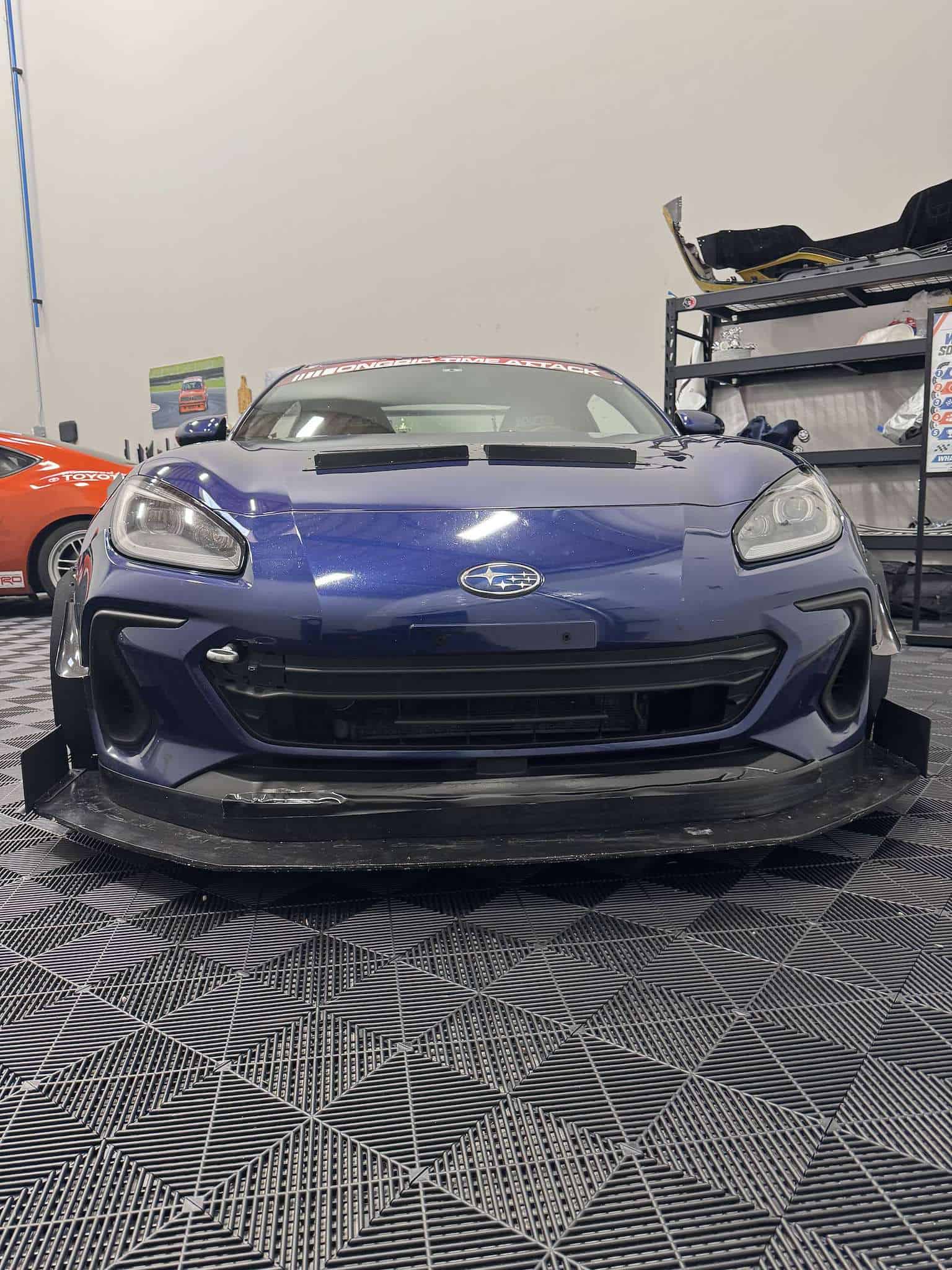
Jeremy Ussery’s approach to his BRZ #24 starts with a clear brief: “Keep it near stock power outputs, add lightness, simplify, aero, and drive the piss out of it.”
His parts list follows that direction. The second-generation BRZ combines near-stock power with suspension, braking, aero and weight-reduction changes for time attack. Here is the build, using Jeremy’s own list.
Power: near stock, on purpose
The FA24 2.4-liter stays near stock. That’s not a compromise — it’s the plan.
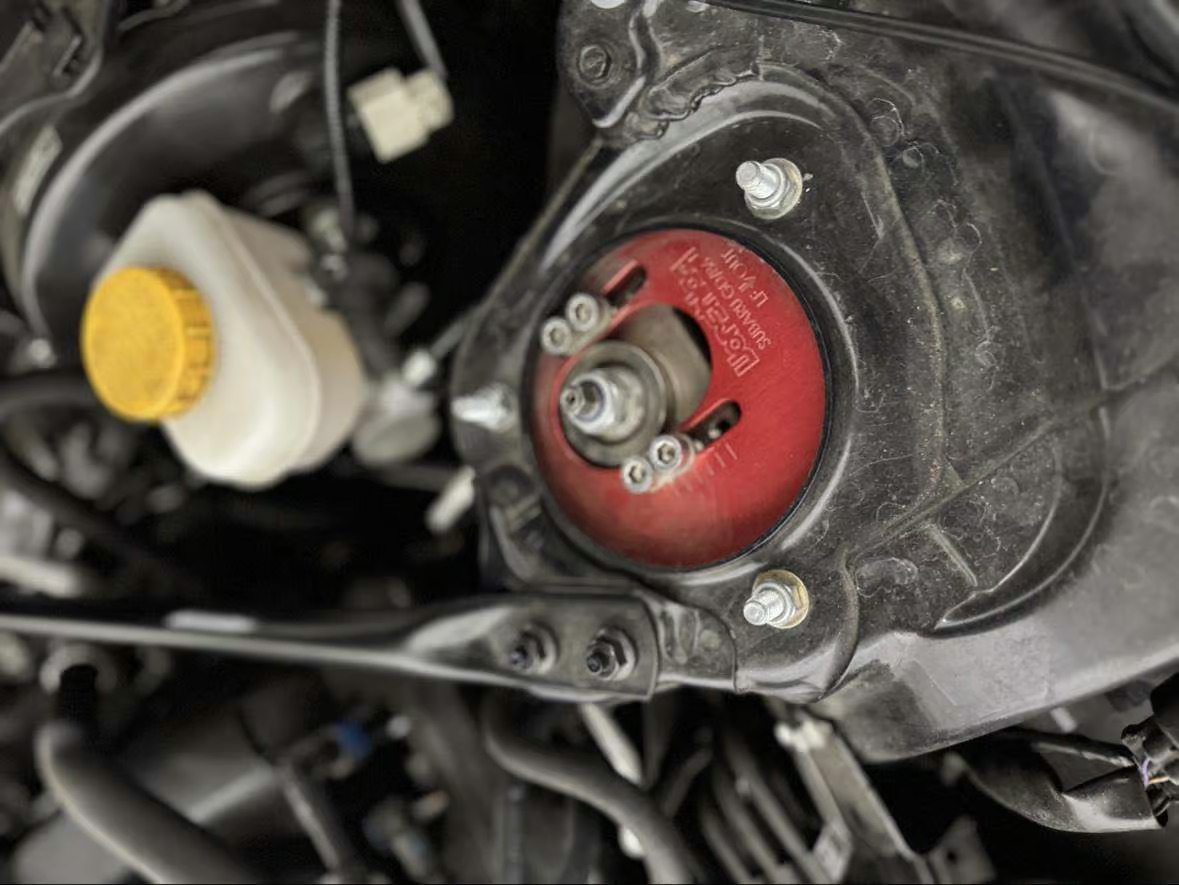
JDL unequal-length header. A tune from Counter Space Garage. HKS single-exit exhaust. That’s the power list. The focus of Jeremy’s list is not a larger power number. Much of the work is elsewhere on the car.
Suspension and brakes: the working end
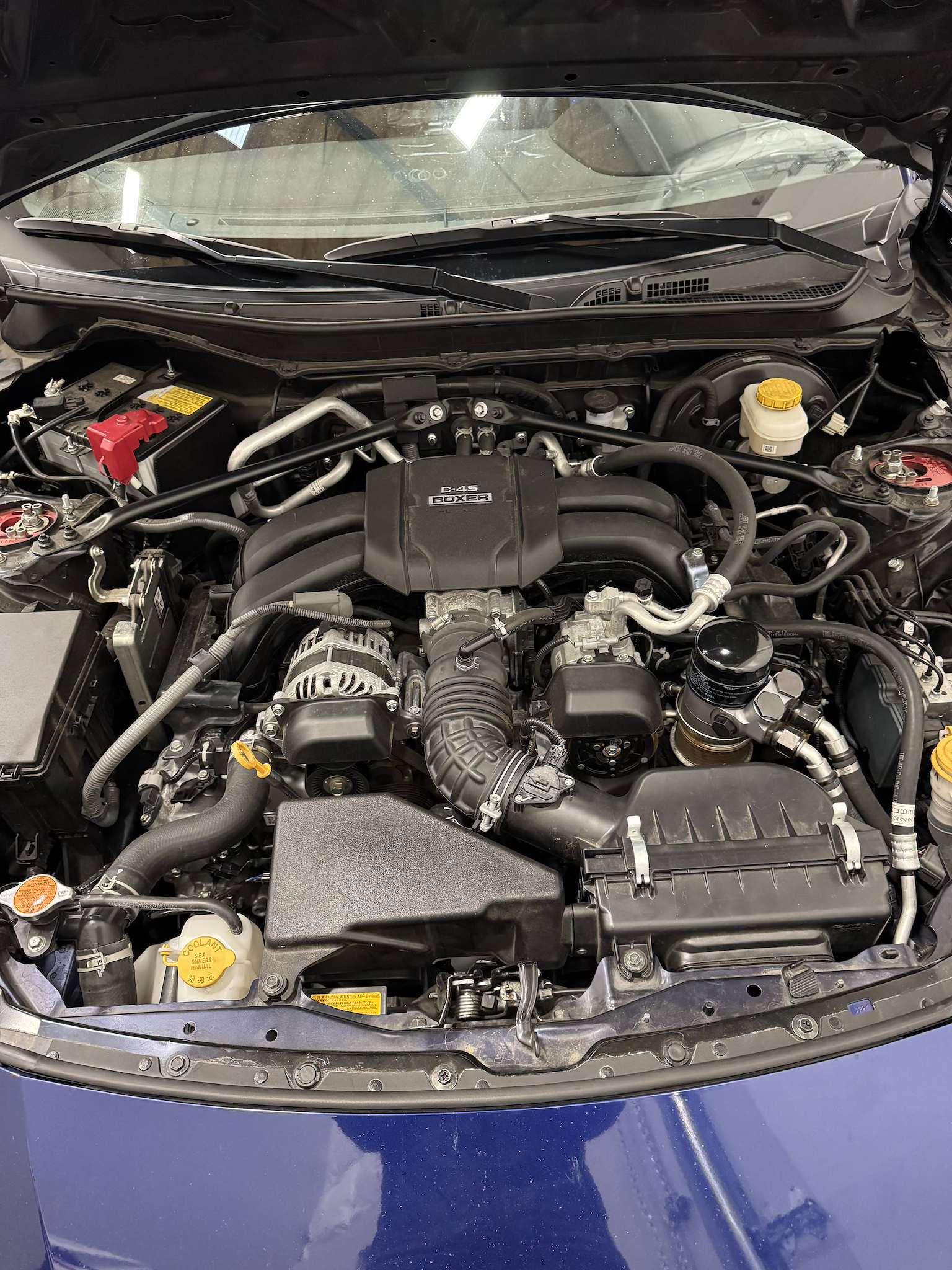
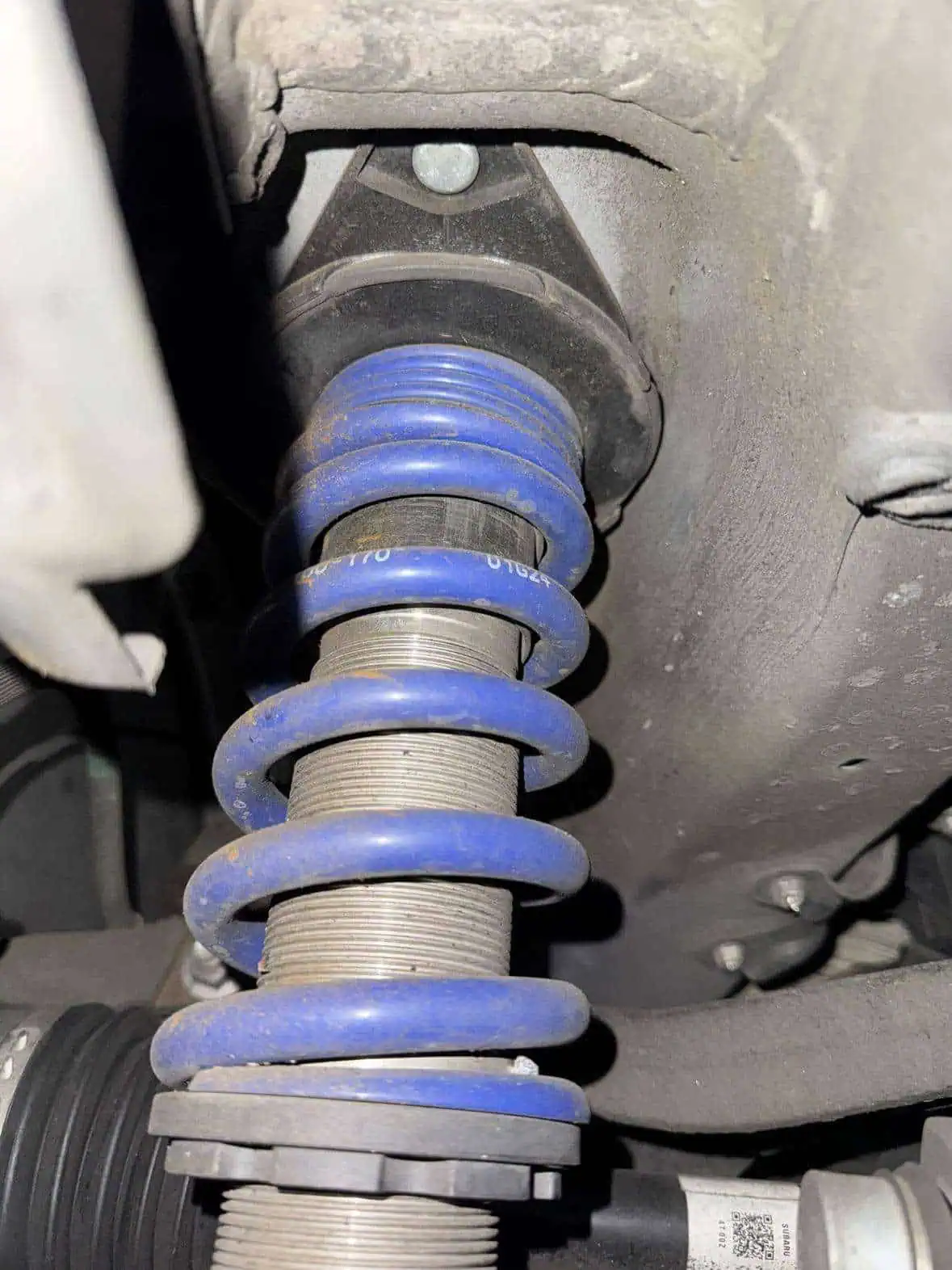
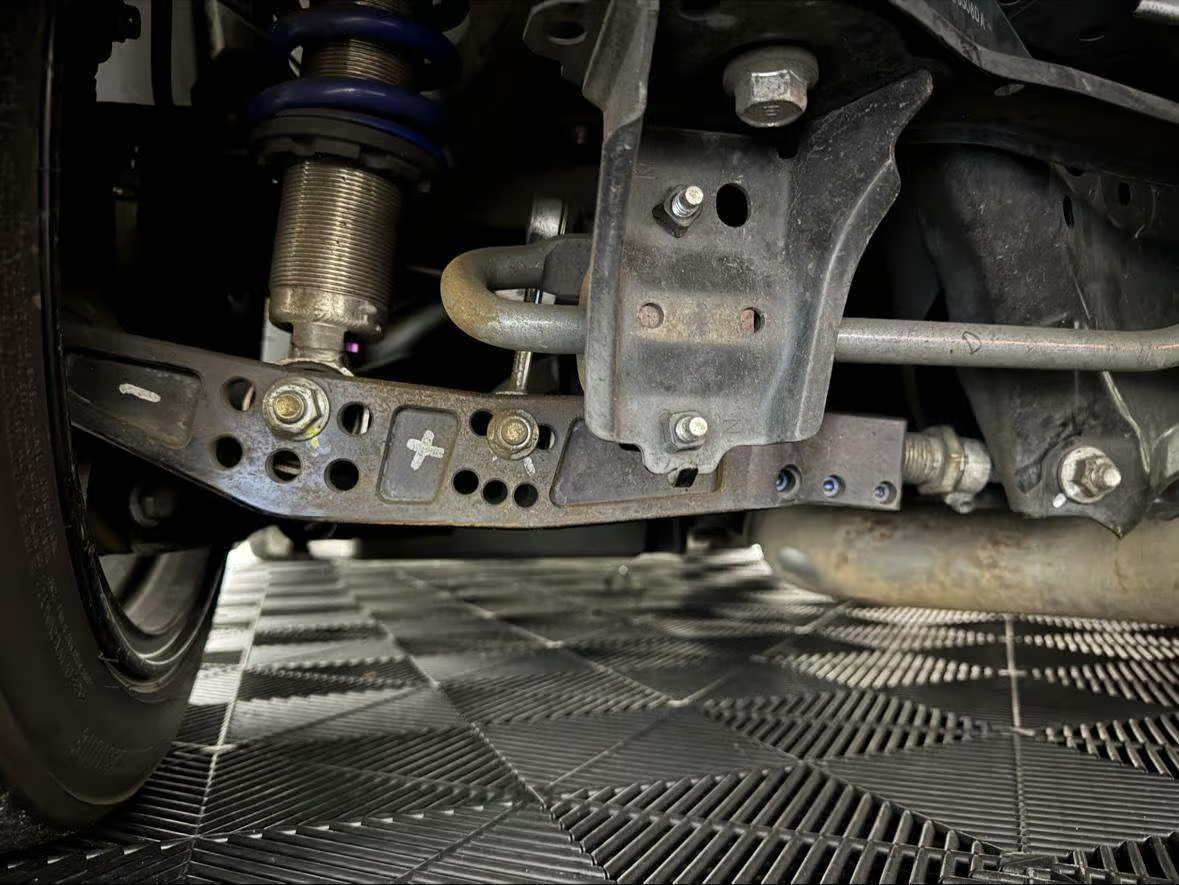
Race Comp Engineering Tarmac 2 coilovers. RCE sway bars. SPL lower control arms. Corner balance and alignment done here at Racer on Rails. Brembo BM4 big brake kit up front.
Aero: built for the job
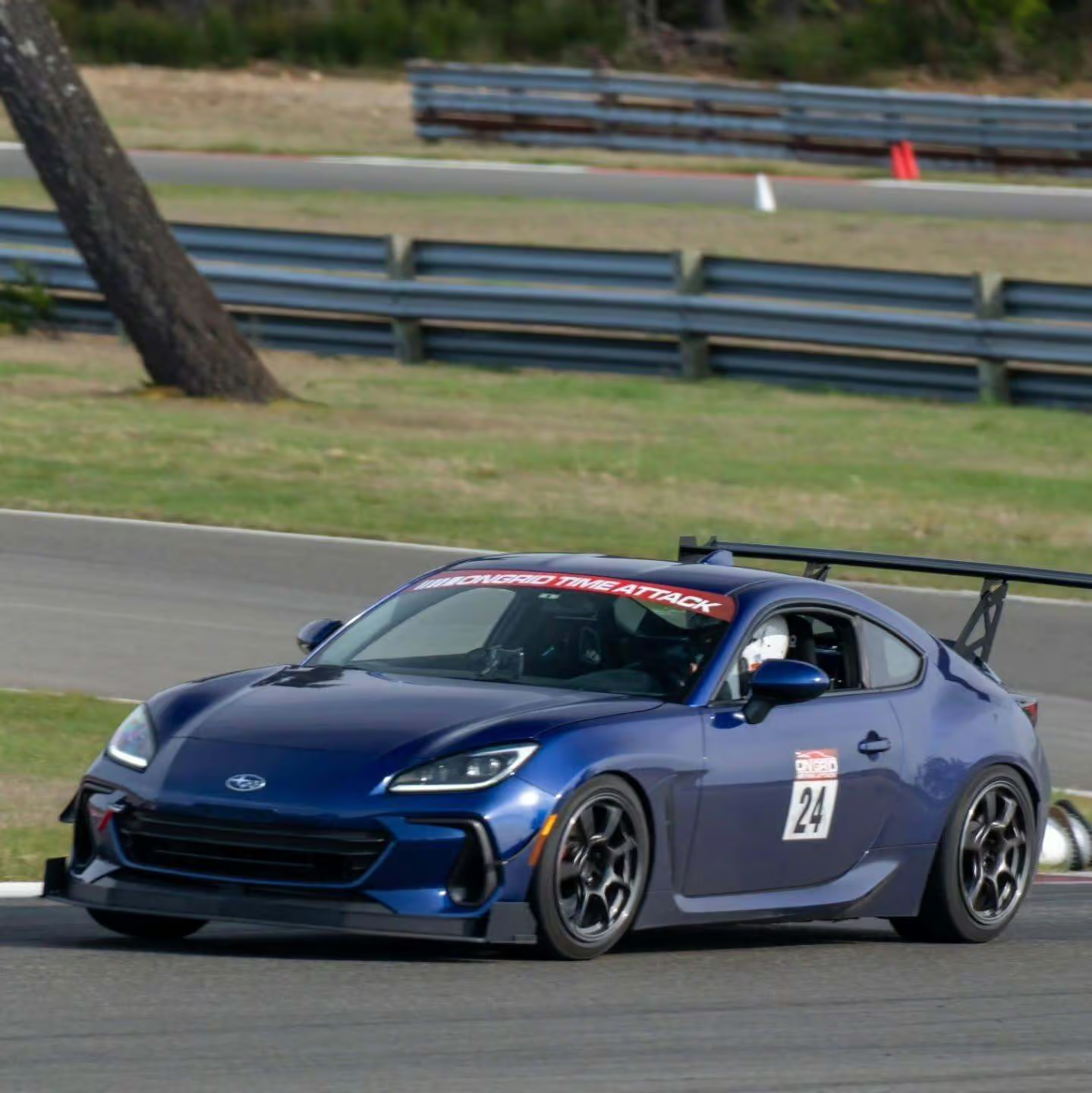
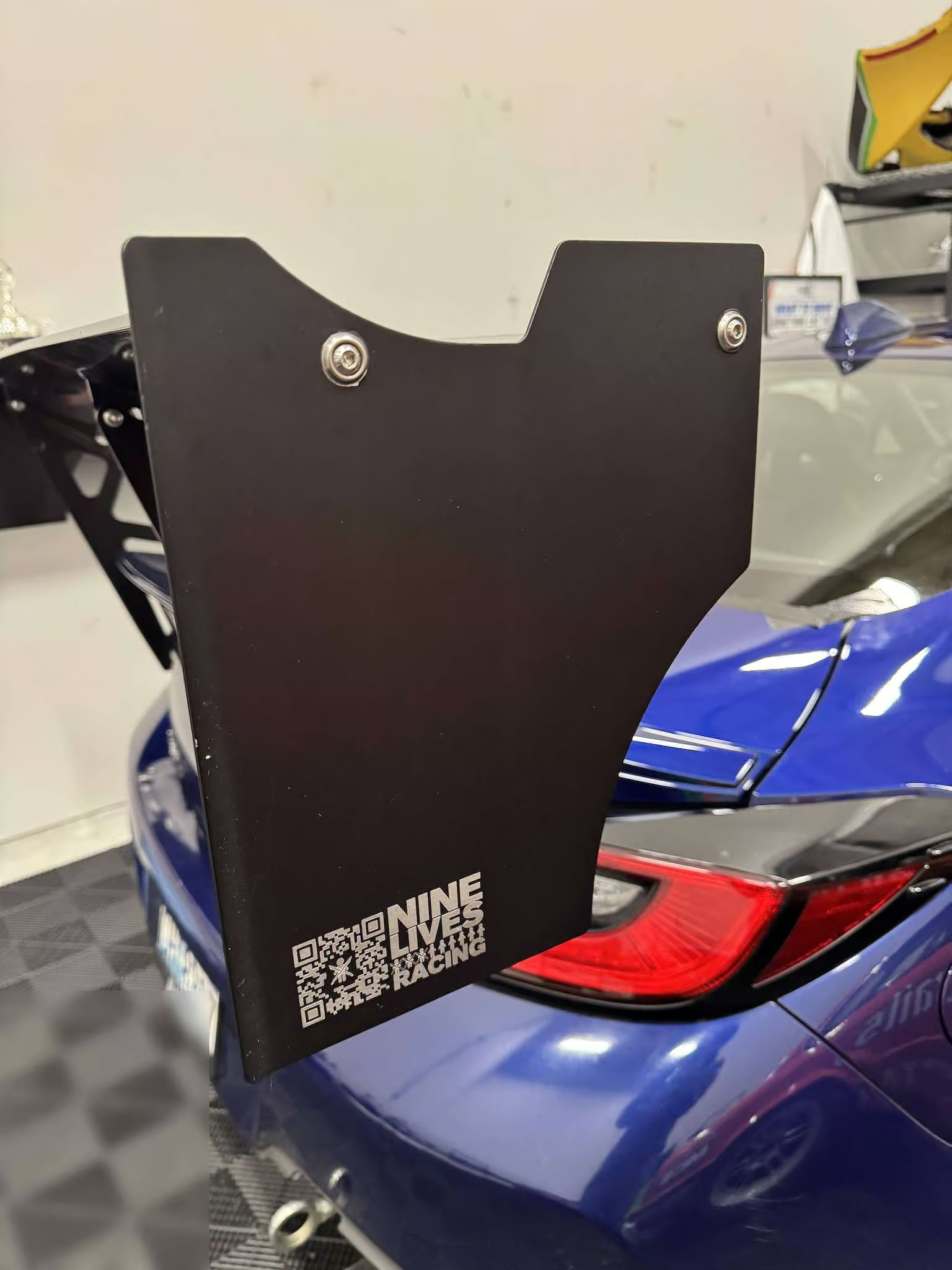
Phalanx Dynamics built the custom splitter and endplates. Race Louvers hood and fender vents and a chassis-mounted 9 Lives Racing rear wing complete the aero list Jeremy supplied.
Wheels and tires: wide and sticky
17×10 Konig Ultragrams, wrapped in 255/40/17 Bridgestone Potenza RE-71RZs.
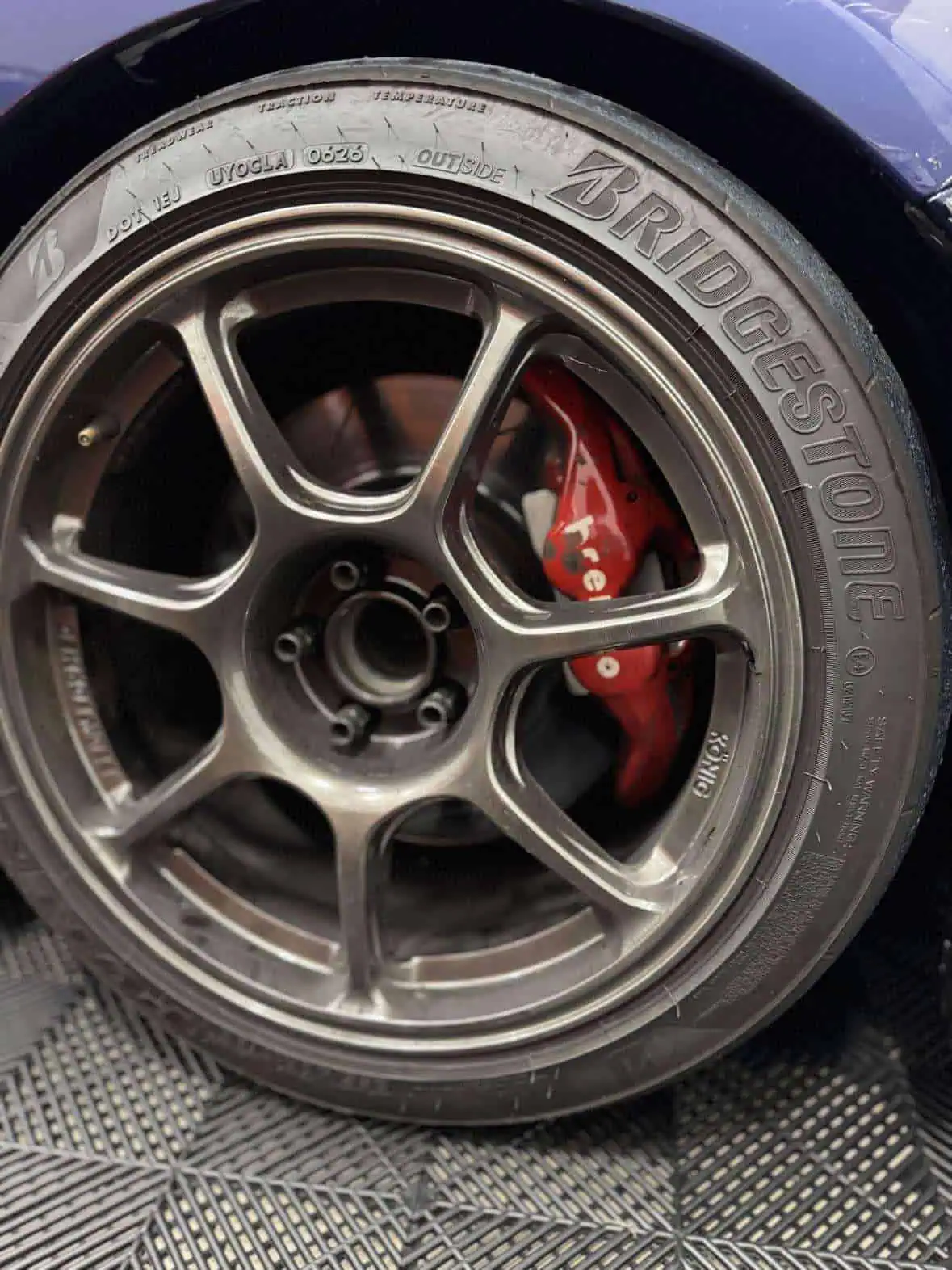
Ten inches wide on a BRZ is a serious footprint. It is another choice consistent with the direction Jeremy described: focus the build beyond the engine.
The rest: oil, diff, and weight
Verus high-capacity oil pan. Jackson Racing oil cooler. OS Giken differential, tuned by Shaftworks. Sparco Evo seats. And weight reduction — the unglamorous line on the list, and the one that makes everything else work better.
The diff deserves a line of its own. An OS Giken, tuned by Shaftworks, is the kind of part that doesn’t show up in a photo and decides how the car puts power down coming off a corner. Same story as the rest of the build: spend where it matters, skip where it doesn’t.
What’s next for Jeremy
Time attack is where he’s been — OnGrid Time Attack, in this car. But the build list isn’t the end of the story.
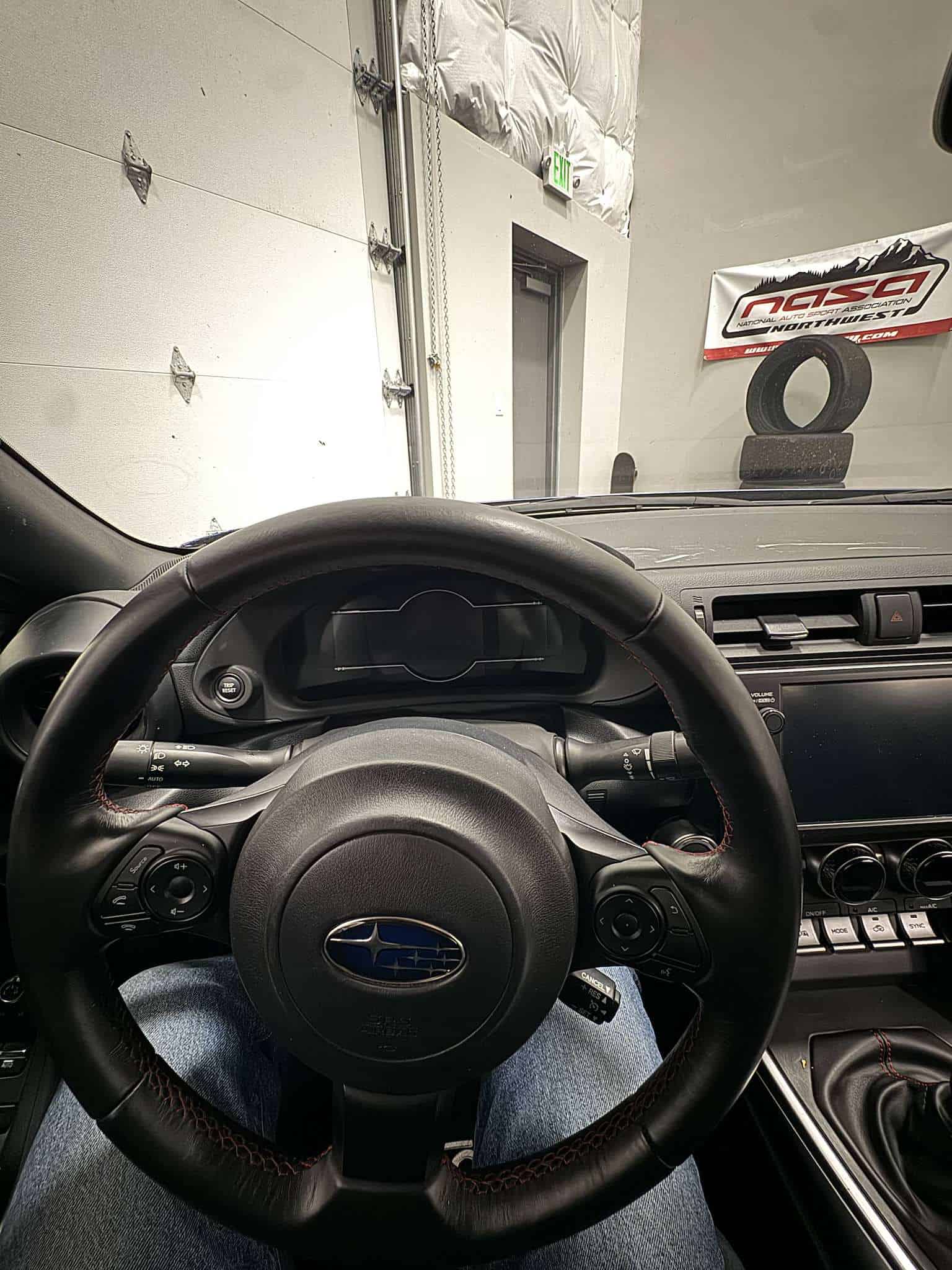
Jeremy’s next step is wheel-to-wheel racing. He is building a Spec E46 with Vishnu Vijayan, with his debut planned for 2027.
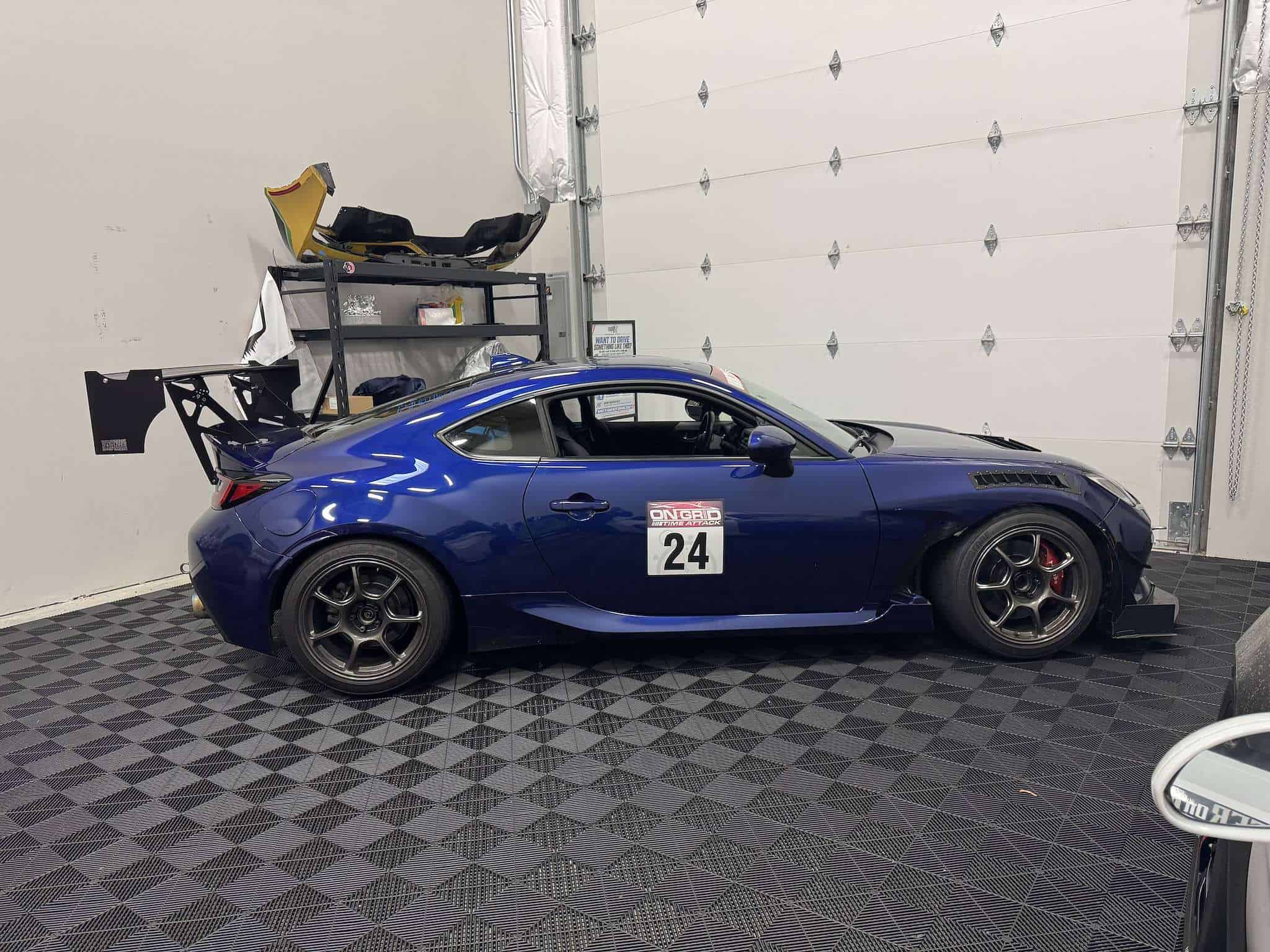
Come see it
Jeremy’s #24 and Colin’s #10 PRO86 are in our showroom through November 30. One is built for time attack; the other for spec racing. Come look at the choices behind each, and tell us what you want your own driving to become.