Posted on

Race Report 4: Virginia International Raceways SCCA Hoosier Super Tour 2022

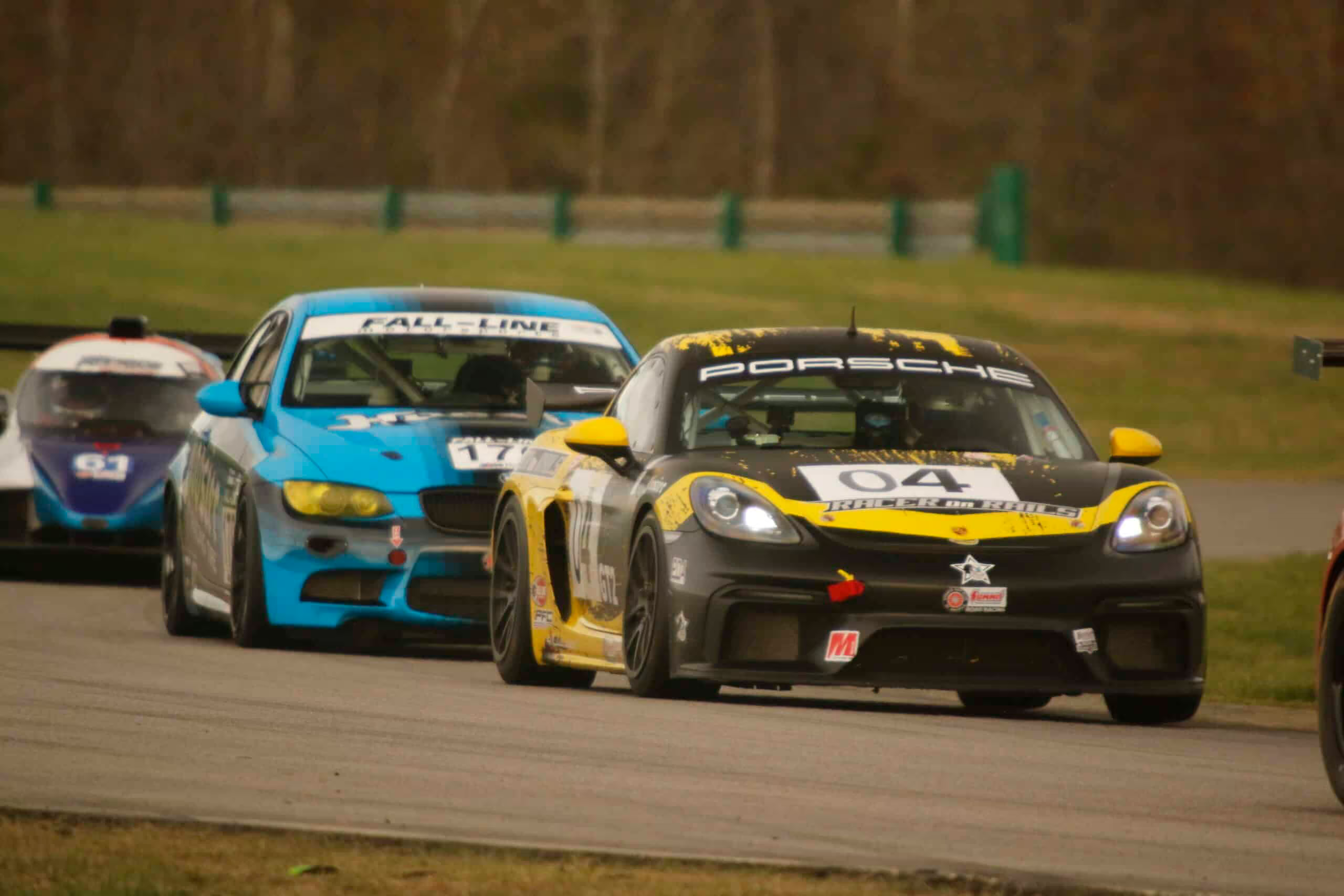
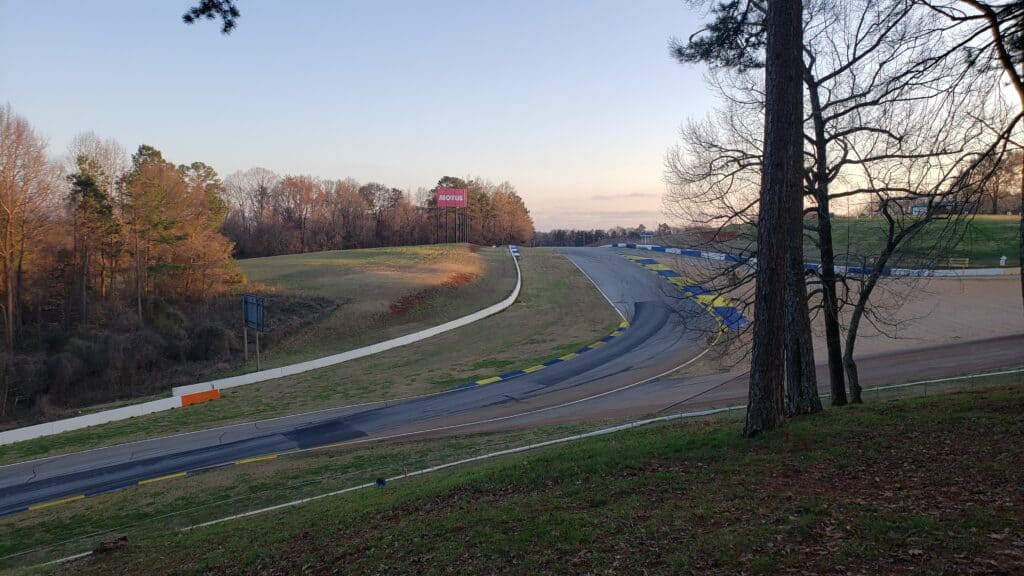
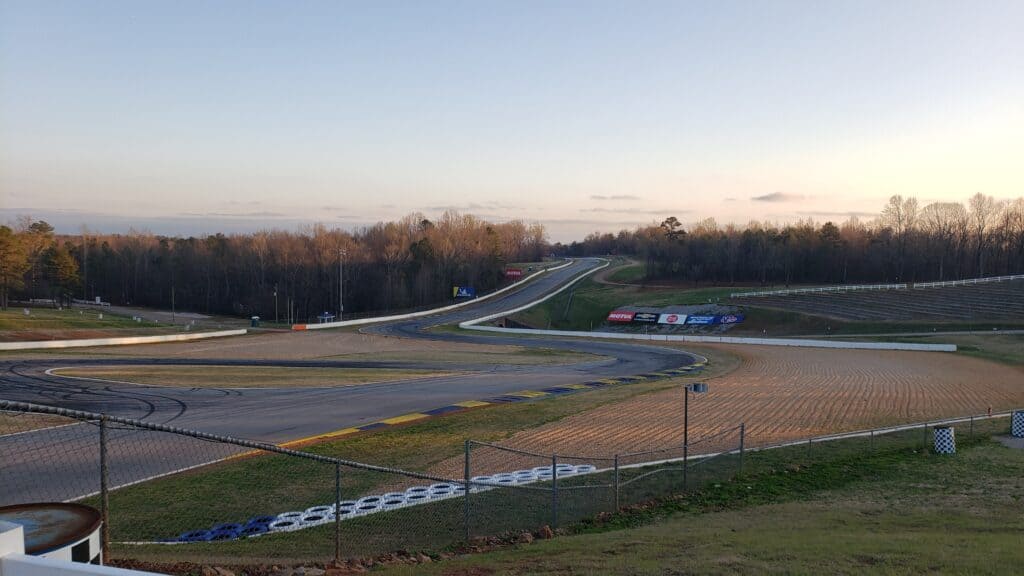
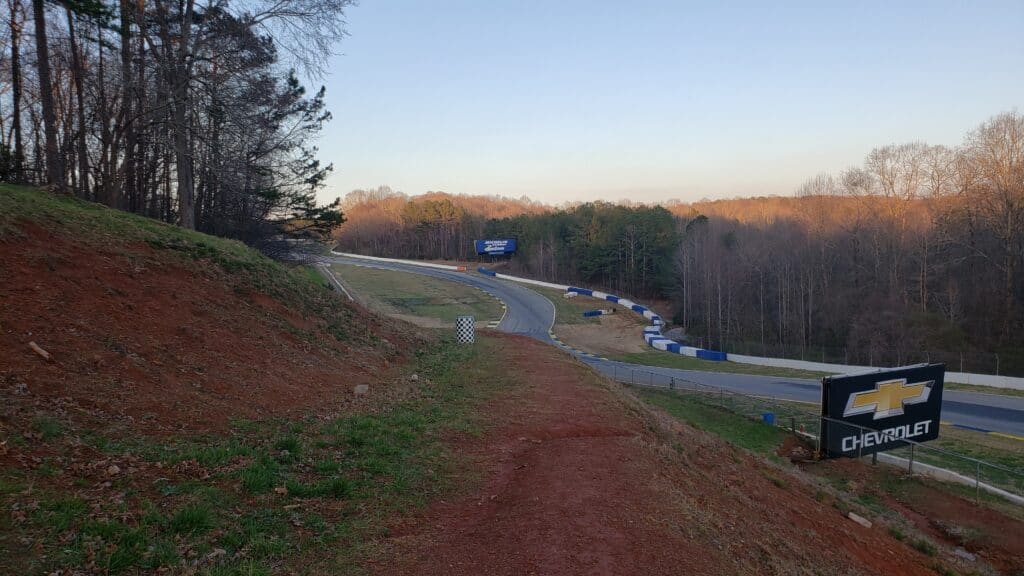
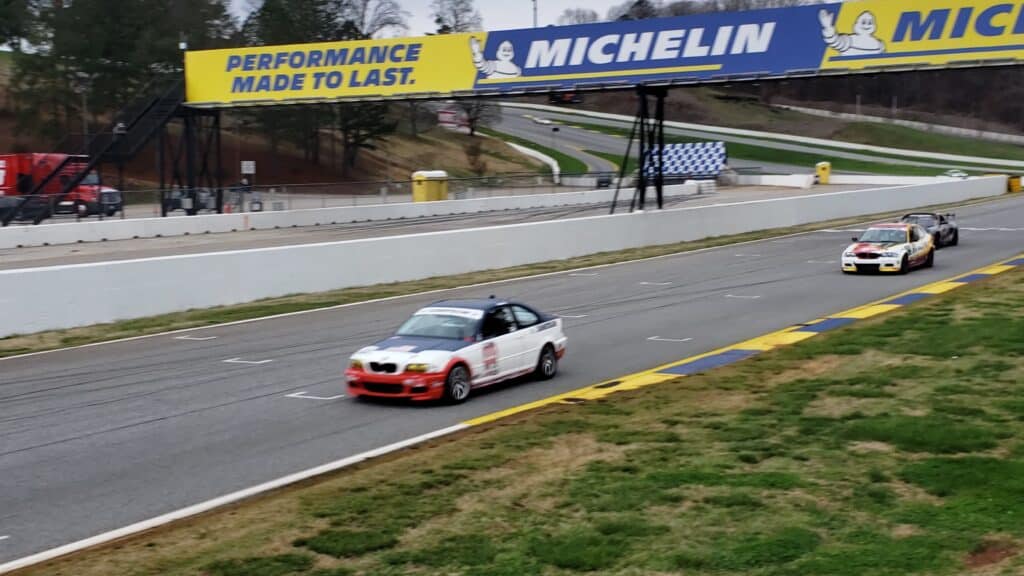
The 4th and final stop of the 2022 Southeast Winter trip for the team was historic Virginia International Raceways, located just north of the Virginia/North Carolina border, in Alton, VA.

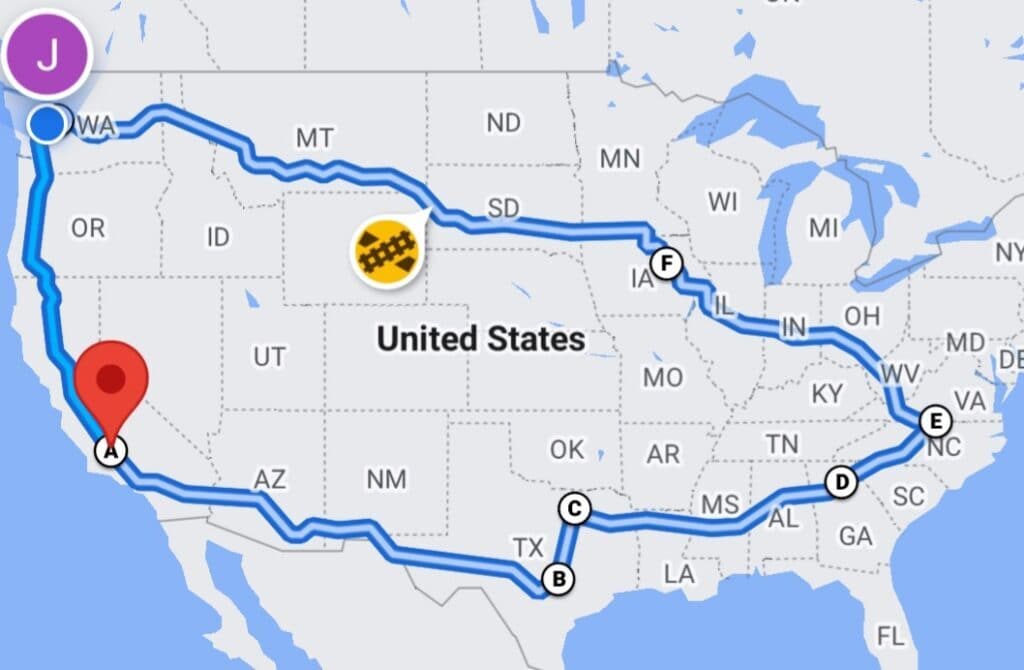
Before dive into the weekend, below is the map we took from January – April and covered nearly 7k miles and through the winter season across most of the country which resulted in catching the cold and wet weather at nearly each stop. Wow!

4 stops and ~7k miles over 4 months. Hats off to Jordan and Memo who drove our trucks, trailers and cars for every single mile.

Preparing for VIR

Road Atlanta ended up being a primer for VIR for the team. VIR is almost like a bigger Road Atlanta in that it is made up of mostly medium and high speed corners. Proper technique and equally proper commitment are critical to get into a groove and start attacking the lap times.

Just as before, each driver logged multiple hours in the simulator so that we all knew the track by heart and could dive into the test day with a focus on establishing a baseline performance and chipping away at the times.

On average, each driver (and crew member) had nearly 100 laps at VIR on Assetto Corsa with similar or the exact same cars as we were driving in real life.

Thursday Test Day – More Inclement Weather (Massive Thunderstorm Edition)

We all arrived and were fully setup on Wednesday night for the weekend and Thursday morning we awoke to some dew on the grass, dry track and chance of a shower here or there throughout the day. The first session was dry and we all got out and started familiarizing ourselves with the track in real life. Conclusion? The simulator model was pretty spot on!

A few minutes after our session ended, a thunder storm rolled in and another, and another, and another. We had 2, maybe 3 cells roll through and the middle two sessions were shot. Not just because it was raining but torrential downpour and the poor souls who decided to go out (and survived) ended up getting black flags in each session as the conditions were just horrible. Further, the forecast didn’t call for rain during the weekend so using up new rain tires under those circumstances wasn’t a good use of the tires.

Completely unedited and it only took a few minutes of rain before we had water running on the ground.

By the afternoon, the cells had passed and the track started drying. We all went out and while times were slower (transitioning to dry conditions), it was valuable time to further familiarize ourselves with the track.

Learning, Improving and Delivering Results!

The weekend had a similar progression as we’ve had at the other stops but we arguable started off at the highest point to start the weekend. All three drivers came out strong out of the gate and were within striking distance of podium positions, just needed to put our heads down and keep chipping away at the times.

Every session was an opportunity to learn and while unseasonably cold air rolled through on Friday night, everyone steadily chipped away at the times and at worst, were in a mid-pack battle but still within striking distance for a podium.

BMW Spec E46 Touring 3 SCCA
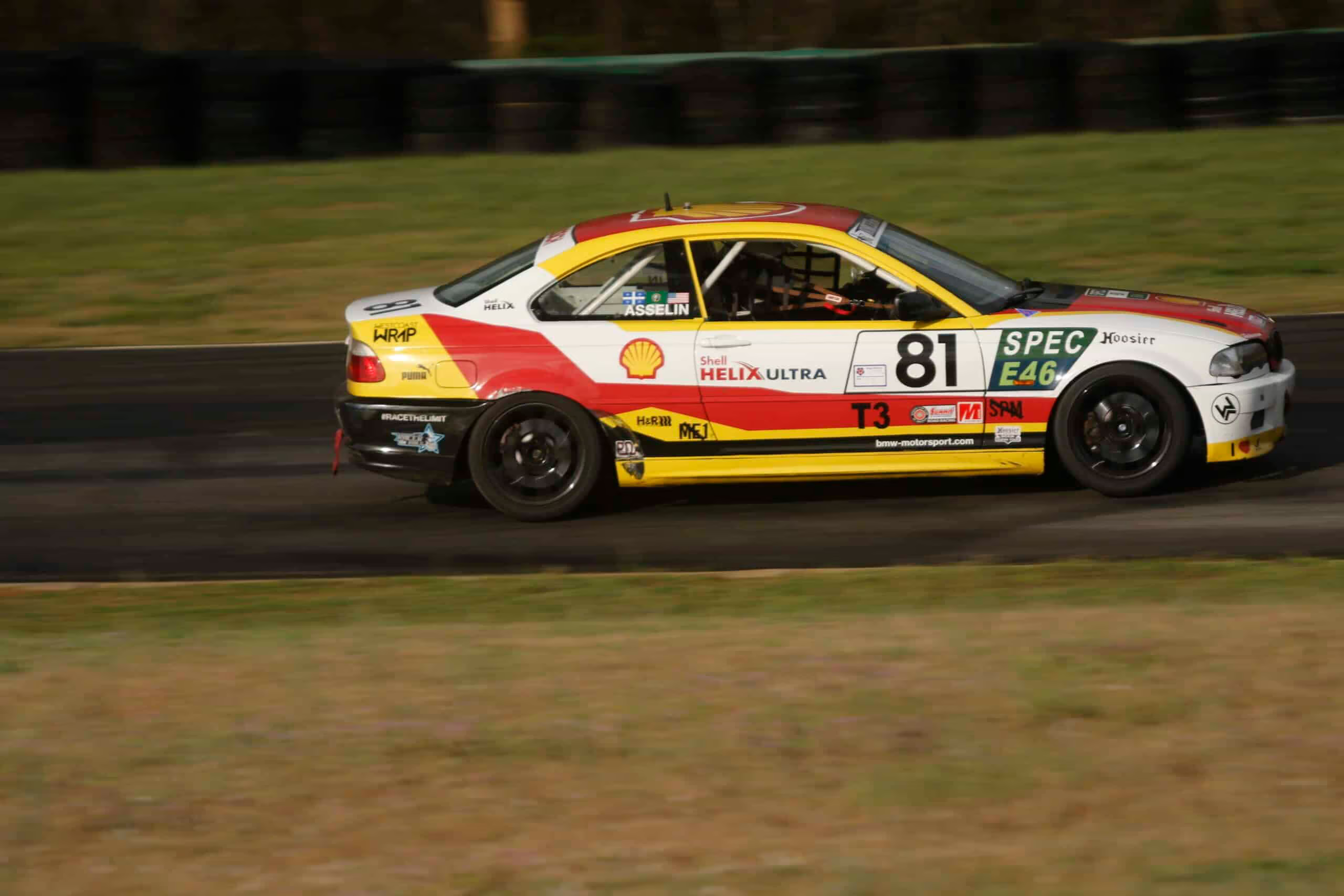
Simon in his Touring 3 Spec E46 managing transitioning conditions.

Below is a look at three of the corners we focused on across most drivers.

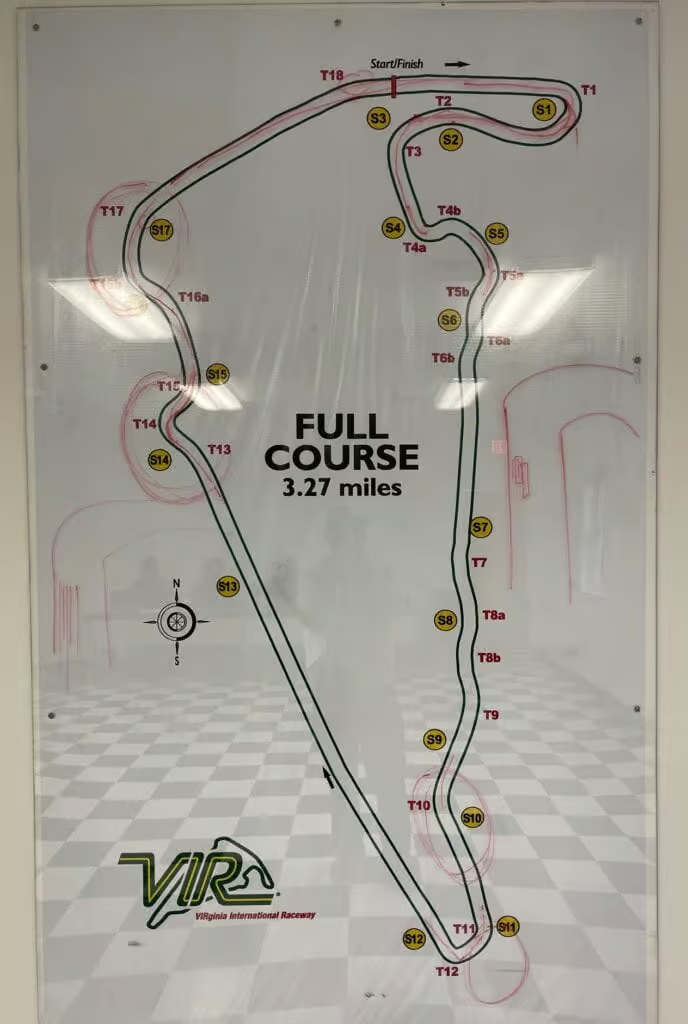
Sweet track map of VIR full course with a clear plexiglass on top that makes for great white board discussions about lines, markers and passing zones.

VIR Corner Focus 1: NASCAR Bend (Turn 3)

NASCAR Bend is the first left-hand corner/complex of the lap where it’s a bit of an awkward, somewhat off-camber corner where there isn’t a ton of time to be gained but very easy to over-slow and lose time. It feels a lot like Turn 6 at Portland International where it’s key to maintain minimum speeds and spend as little time as possible in the complex.

None of us really felt like we consistently hit the corner right but we aimed at being on-throttle at the apex, ascending to full throttle and carrying enough speed that the car had no choice but to use all of the exit curbing on the right. Getting out on that curbing then gave us a wider arch for the next left hand corner, which then left us track left to setup the run through the esses.

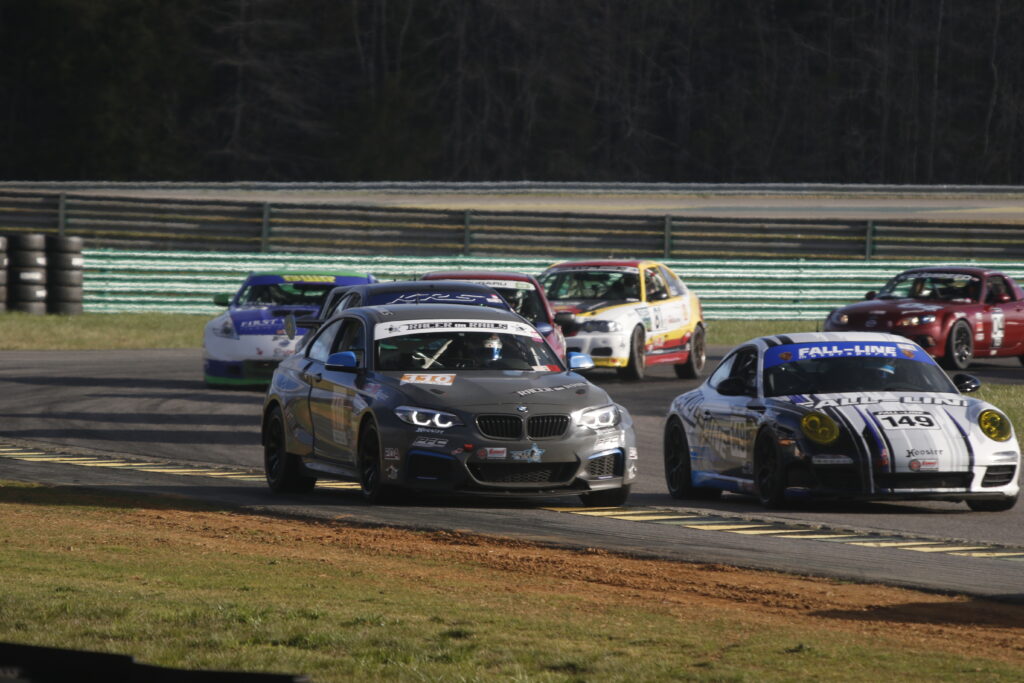
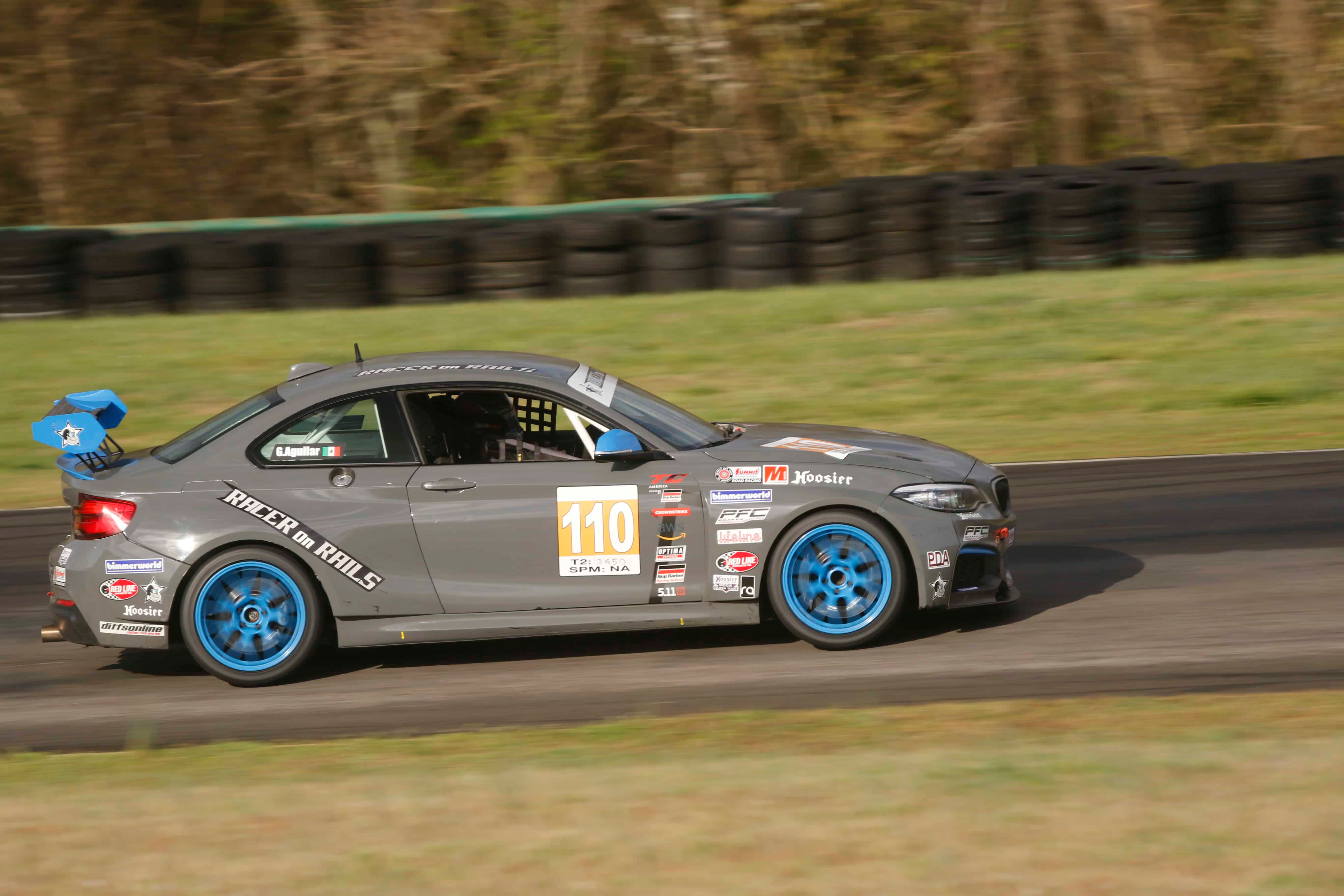
BMW M240iR in Touring 2 class at VIR NASCAR Bend
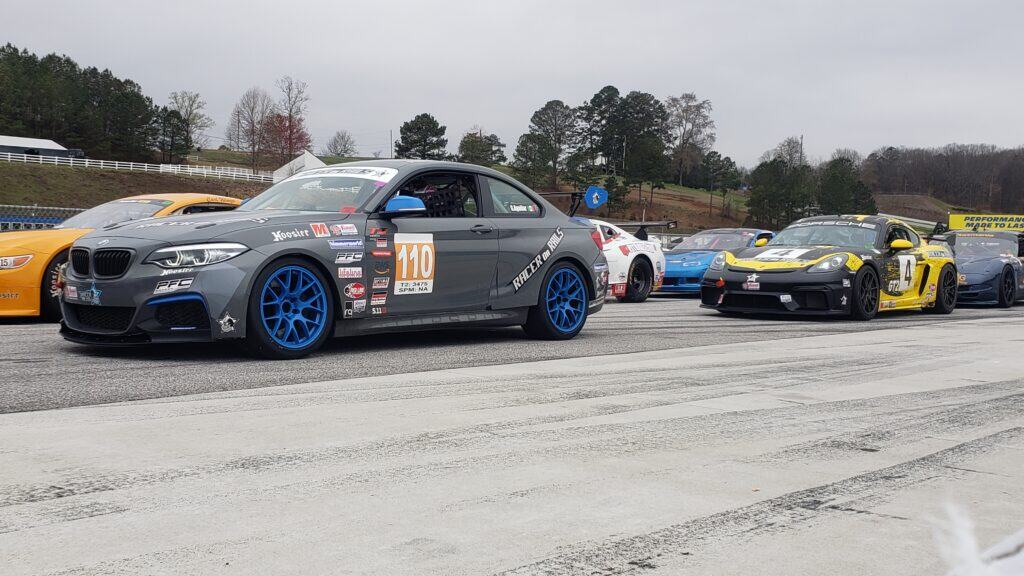
Gama in the Racer on Rails #110 BMW M240iR using all the exit curbing coming out of NASCAR Bend at the start of the Sunday race.

VIR Corner Focus 2: Southbend (exit of the Uphill Esses)

Before there is any controversy, yes – the Uphill Esses (Climbing Esses) are a pretty unique experience. There are few tracks in the world where you are flat out in 5th gear (or 6th gear) and you enter a corner section… without lifting. Thanks to the hours each driver spent in the simulator, after the first few laps in dry conditions, we were all able to take them flat but once you have the right line and rhythm, there’s not much more to them. HOWEVER! What you do on the exit of the Esses is something else.

Check out the Sunday Race 3 video in the M240iR and specifically this video is placed on a flying lap where the car gets light at 129mph and while being flat full throttle. (Note – rewind to start to watch the climb from P5 to P3 in Touring 2 class)

YouTube player

First, yes – it is possible to stay flat through the entire uphill essess complex but doing so compromises the entry into Southbend, of which is a high-speed left hand corner where you’re trying to keep your minimum speed above 90mph.

We found in the simulator that under most conditions, that was the trade-off and instead focused on having the car balanced and turned correctly to brush off minimal speed at Southbend and then carrying that speed into Oak Tree.

VIR Corner Focus 3: Oak Tree

Very much wish we could have been here when Oak Tree had the actual tree still standing. It’s an interesting and challenging corner to begin with but having the tree creating a arch across the corner, would have been majestic. But that’s life and we still enjoyed the scenery and challenge of the corner.

Open wheelers/formula cars showing the line through Oak Tree.

While it’s referred to as a single corner, it’s more like two corners in one and it is *not* a slow speed corner. The entry is best when you can brake into the corner and in a straight line. You can also brake less than you initially think, because the entry is uphill so the grip increases, the further into the corner you go. There is a moment of releasing the brake about mid corner, a focus on getting wide to the left to open up the radius of the corner and then attack the apex with full throttle application right at or before the apex.

In recent years, VIR has added extra pavement beyond the traditional FIA exit curbs which means more track and thus the ability (and requirement) to use all of that extra track on exit. Oak Tree leads to the longest straight away, which makes it the most important corner to hit well and consistently. In the BMW M240iR, we were hitting in the low 140-142mph without a draft and up to 145mph with a draft. The Porsche Cayman GT4 Clubsport was consistently hitting 150mph+ before braking for “Rollercoaster”, which was indeed, a roller coaster!

Race Results: Gains and Podiums

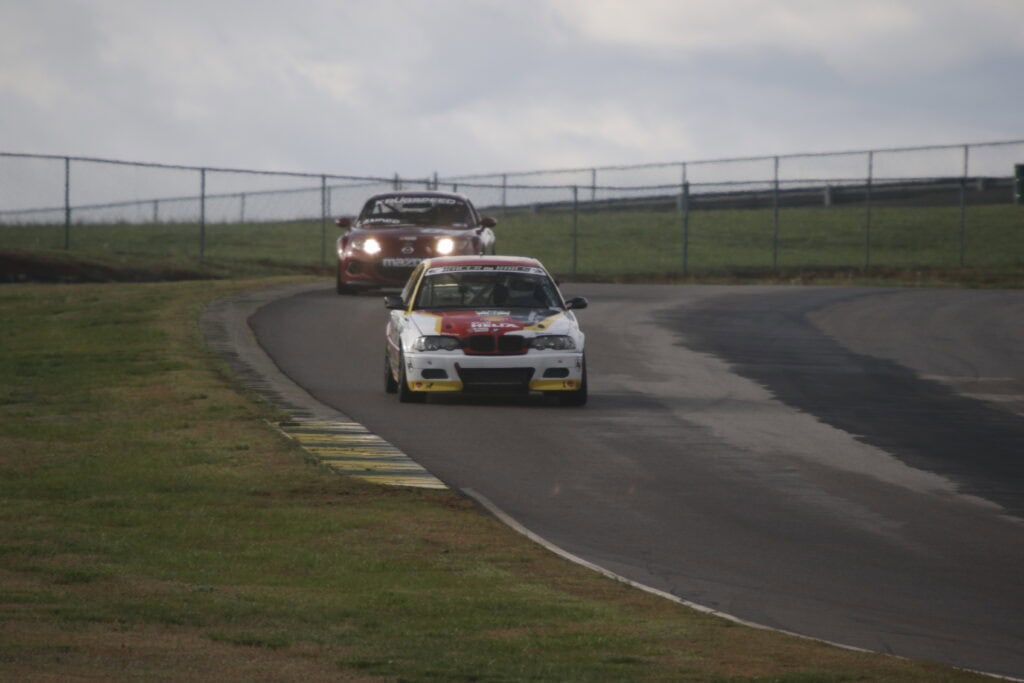
Saturday was a tough day for everyone – full course yellows (not caused by any of our drivers) were rampant, despite dry conditions. There were no gains on personal bests and we all found ourselves battling below the pace we each had demonstrated but struggling to get past cars with better straight line speed.

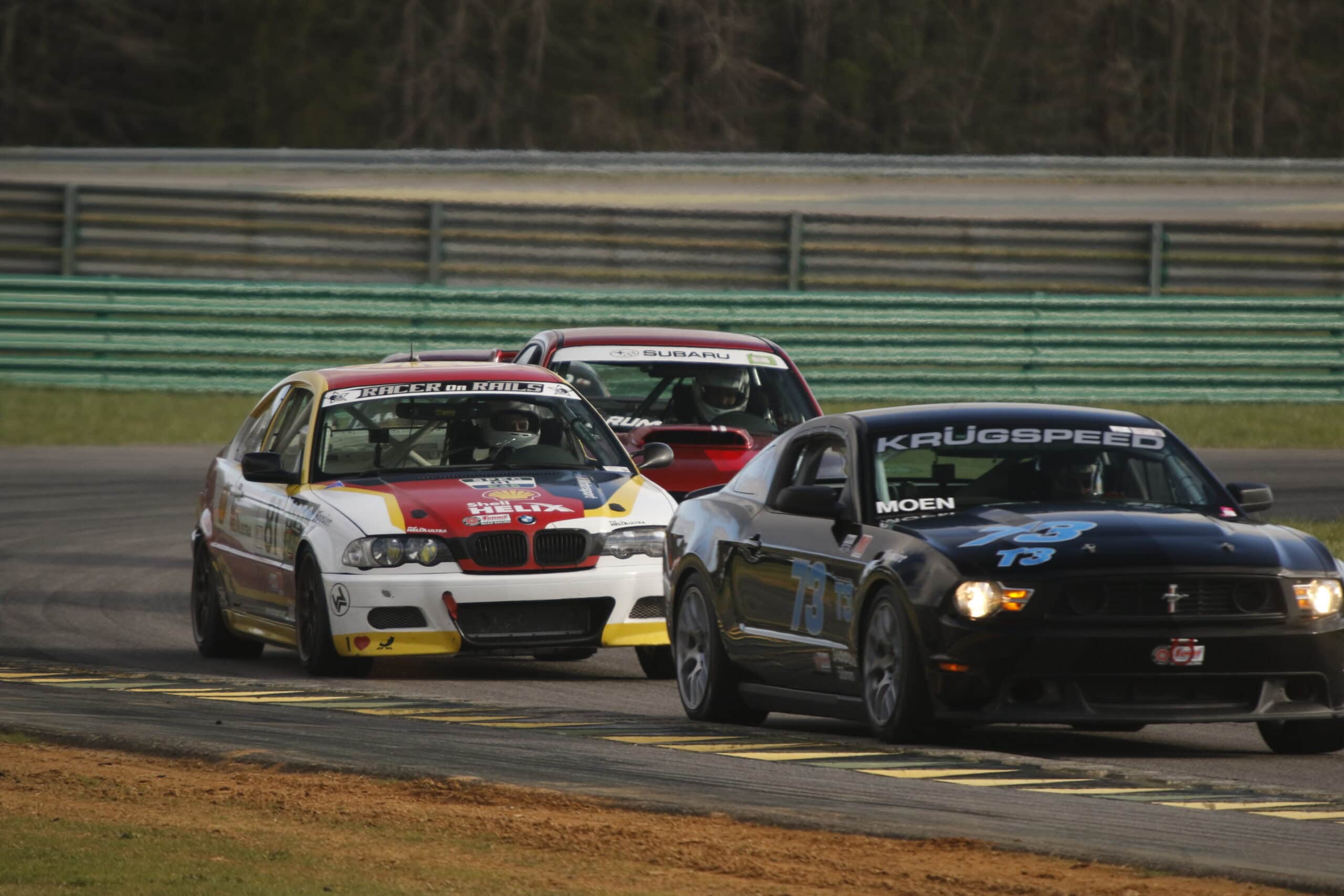
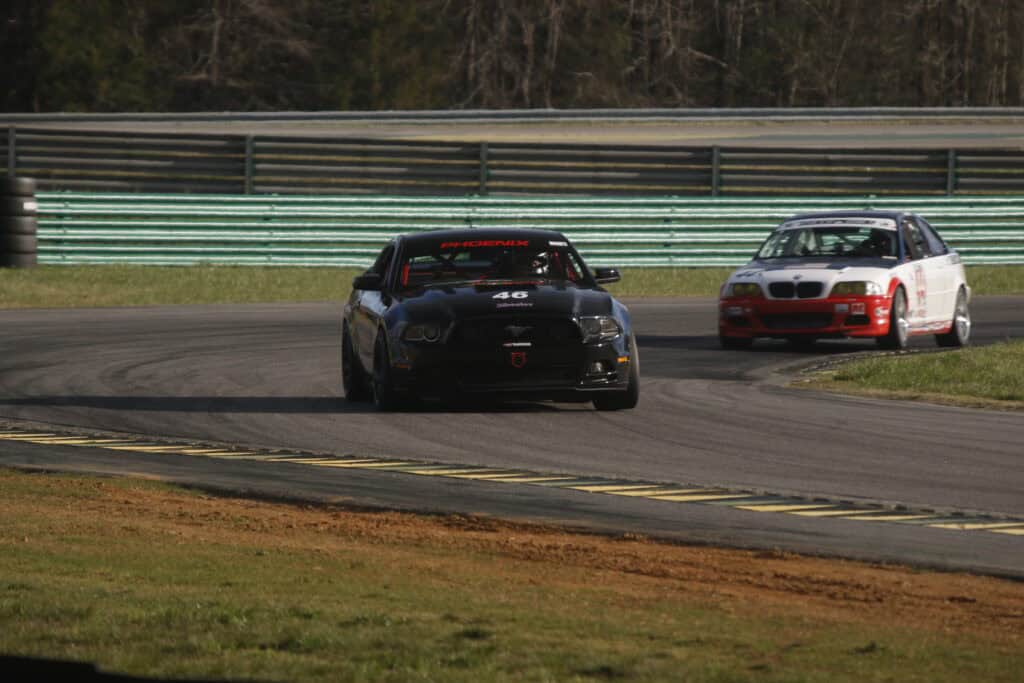
Dave looking for a way past a T3 Mustang at VIR

Sunday, we all hit the reset button and focused on getting solid starts, creating our own track position/space and getting after it.

Touring 3 Race: Dave and Simon both pounced on mistakes by other drivers and picked up a spot individually, putting Simon in P3 and Dave in P7 before a full course yellow came out that eventually ended the race due to an STU car that had gone deep into the tire wall at the end of the back straight away. Driver and car were all okay. Both ended up with their personal best lap times right before the FCY and were it not for the FCY, each felt like they had the rhythm and pace to further improve.

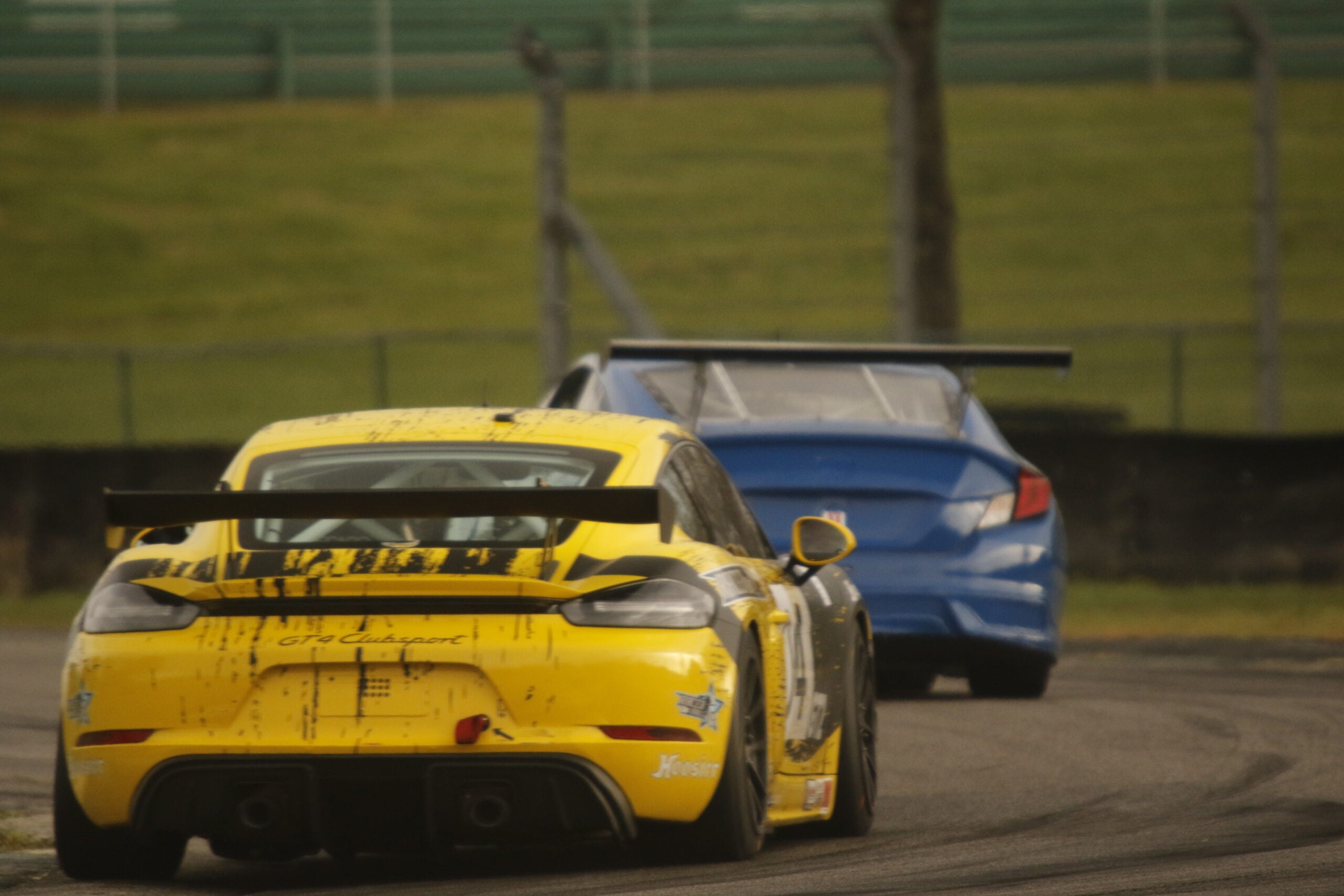
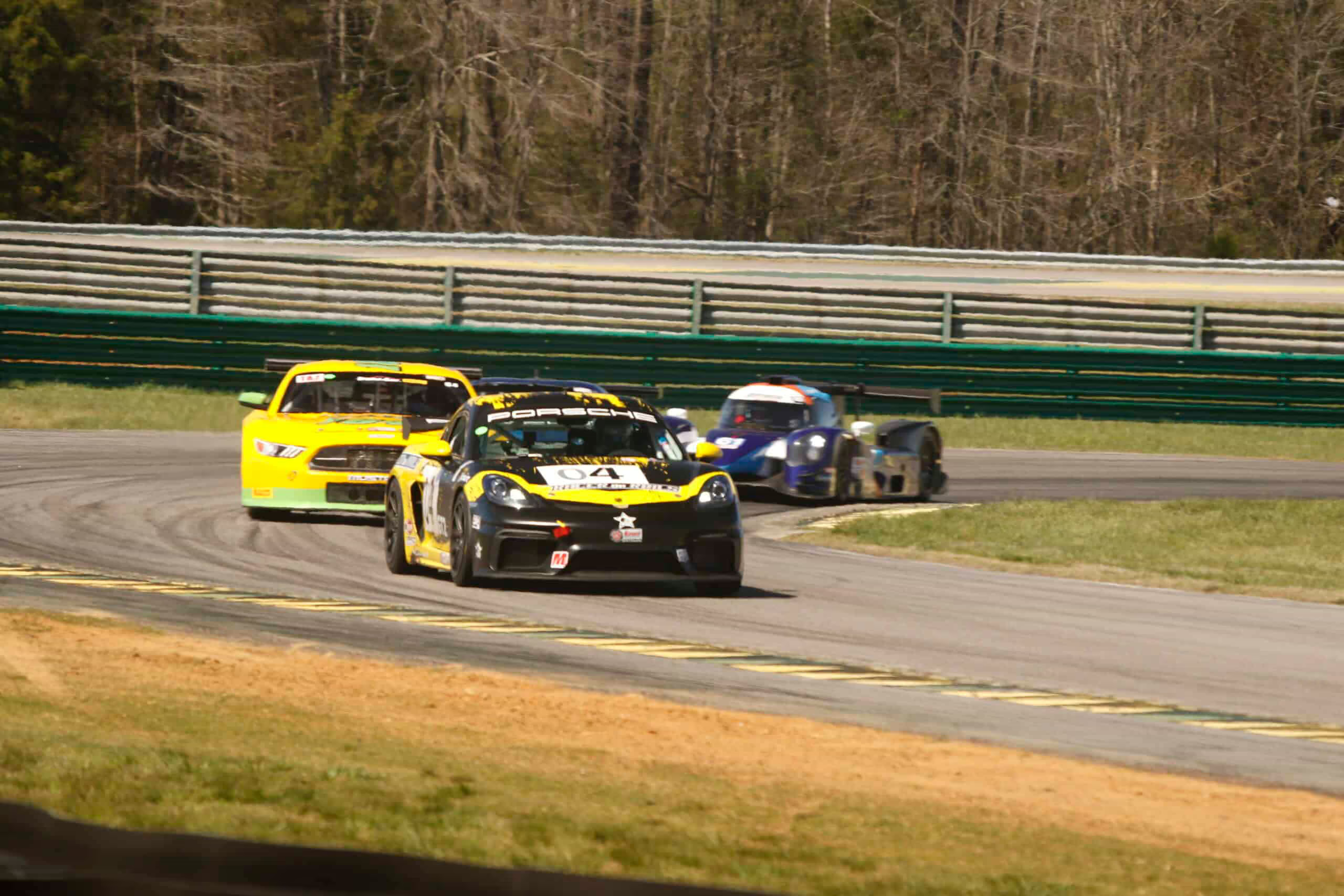
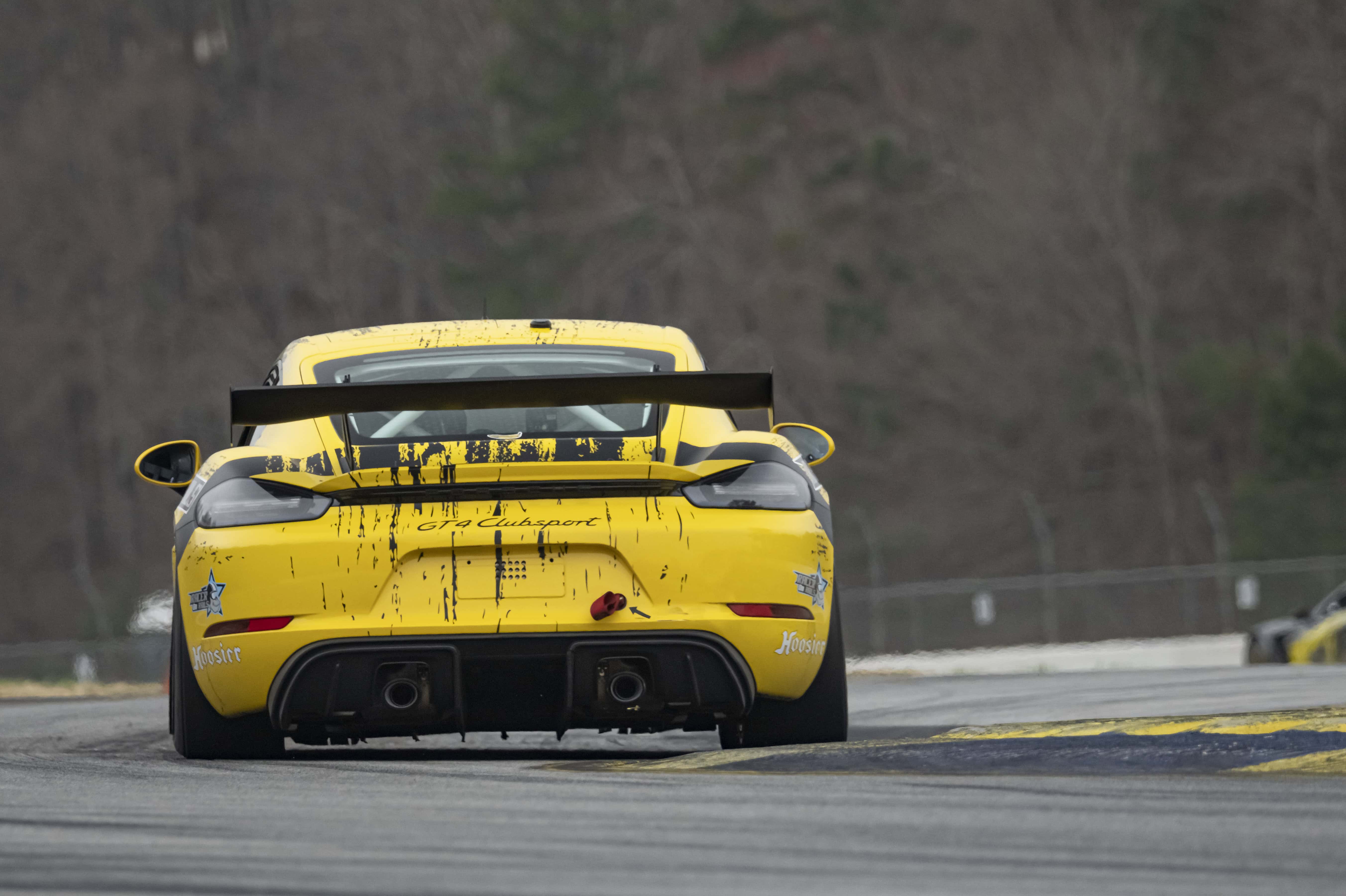
GT2 Race: Ann started in P5 with a mega qualifying effort and quickly jumped into P3 on the first lap with some assertive moves. With a gang of TA2 cars, tube-frame chassis RX7’s and many other ground pounders, her nimble and incredibly impressive under braking, Cayman GT4 Clubsport was under constant attack on the long back and front straight aways but she was able to create distance in the handling sections of the track.

Unfortunately there was a 3 lap long Full Course Yellow which took away the entire gap that she had built up and as soon as the green flag was thrown for the restart, she was back under attack and sitting duck for cars that had nearly a 10mph speed trap advantage.

Ann defended hard but ended up losing two positions by the end to finish in P6 BUT she fired in her fastest lap of the weekend on the final lap of the race.

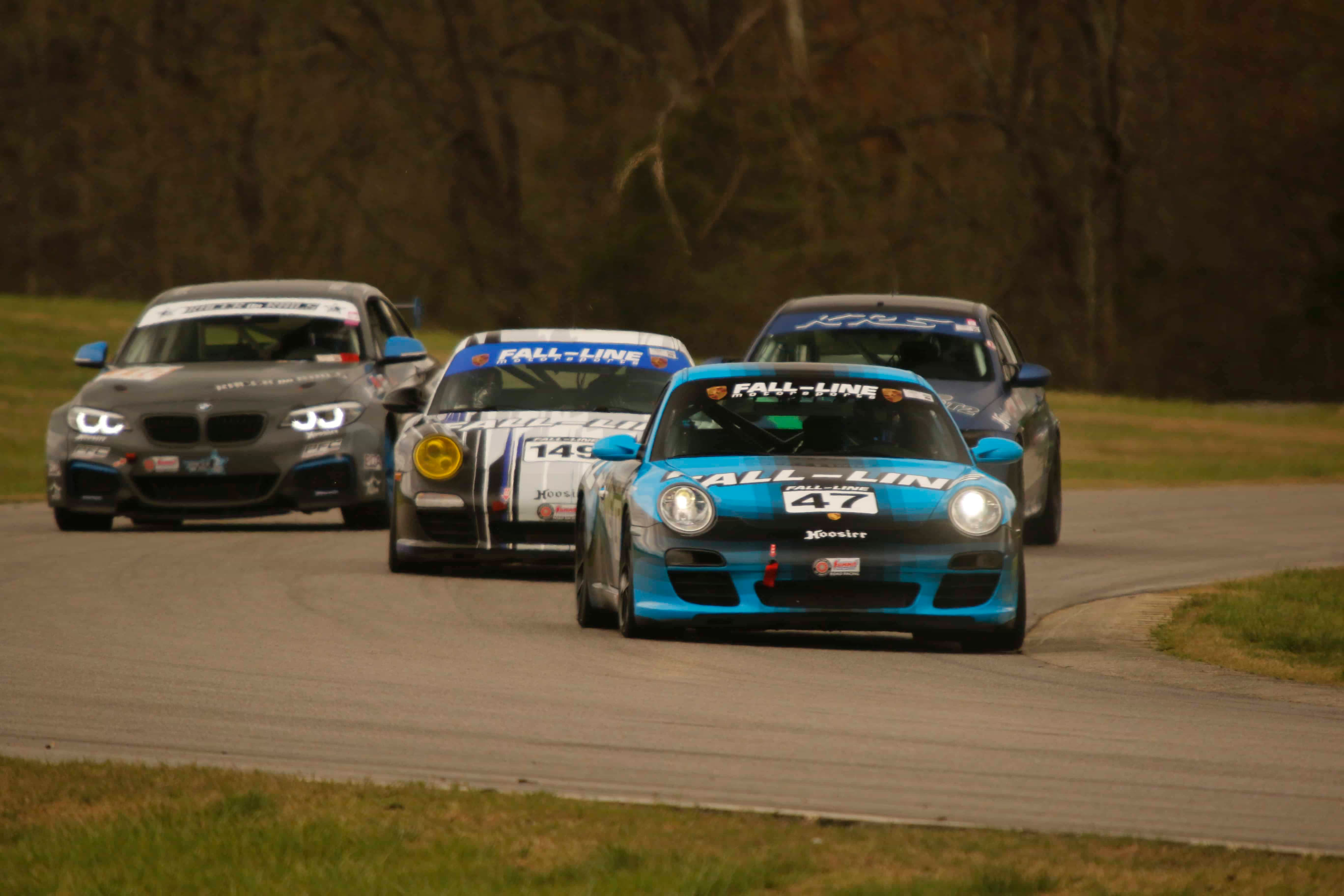
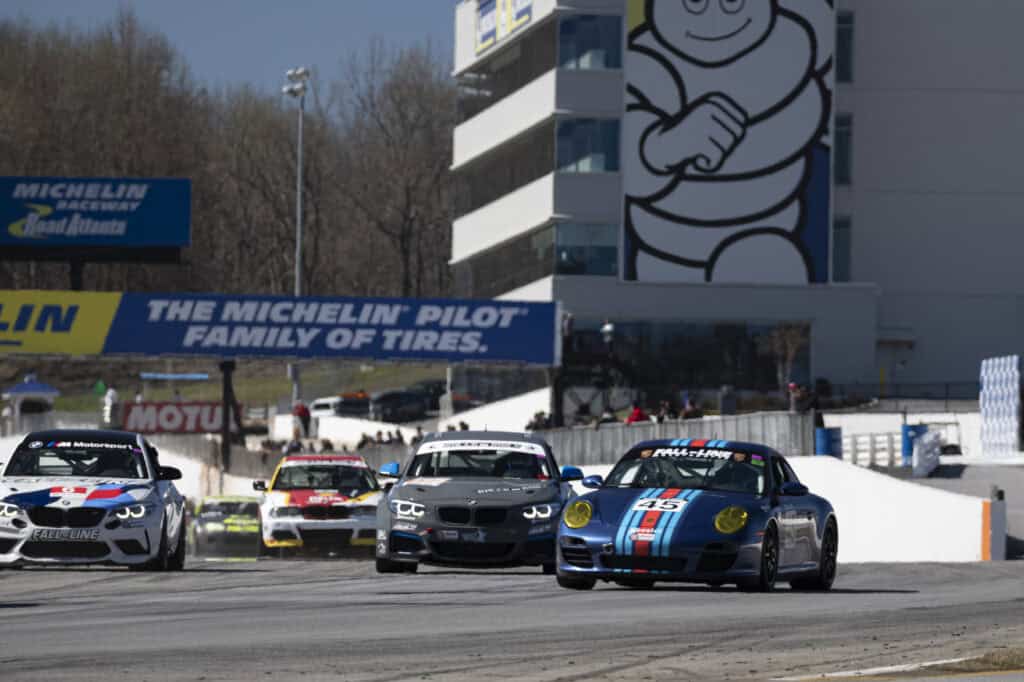
Touring 2 Race: Gama was once again behind the #110 BMW M240iR for this race and faced similar challenges to the previous races – great under braking, handling but lacking 8-10mph to other BMW’s and 10-14mph to the Porsche’s. It became very clear on the Saturday race that if he wasn’t able to keep them behind them before the end of the back straight (coming off of Oak Tree), he’d be stuck behind them for the rest of the race.

The goal was simple – get a solid start (tough with a turbo car), get positions and keep them behind before T13 (Rollercoaster) and then create a gap in the handling sections.

The start was above average but still nothing compared to the naturally aspirated cars. Fortunately, they left a giant gap going into braking for T1 and was able to recover a lost position under braking. The next two laps (switching to first person mode) I was looking for a gap and specifically coming out of the uphill essess because I had noticed the Porsche’s were struggling to carry speed and get a good exit out of Southbend.

In lap 3 of the race, it happened – 997 Porsche got too sideways on the exit and I pounced, getting by him before braking for Oak Tree.

I was getting better exits out of Oak Tree than the Porsche but by about the middle of the straight away, I was a sitting duck so for one lap, I defended like a lion. Right after exiting the corner, I signaled to the Porsche that he’d have to pass me somewhere else on this one lap as I slowly moved from one side of the track to the other so that I could break a draft he might get (not that the Porsche needed it). He got the message and stayed behind.

From then on, I put my head down and carried as much speed as I could through Hog Pen (final corner sequence of the lap) and onto the front straight. I had created just enough of a gap that I didn’t think he could make a credible move into turn 1, so last second, I moved back to the left to brake at normal spot and line. The Porsche ducked in to out-brake me into Turn 1 but the line was WAY too shallow for braking that late and with the additional speed the Porsche’s carry, so he easily washed out and off-track.

From then on, I put my head down and hammered out two new personal best lap times (in the 2:04’s) and was chipping away and making my way through traffic. Aside from a big mistake, I simply didn’t have the straight line speed to compete for better than P3.

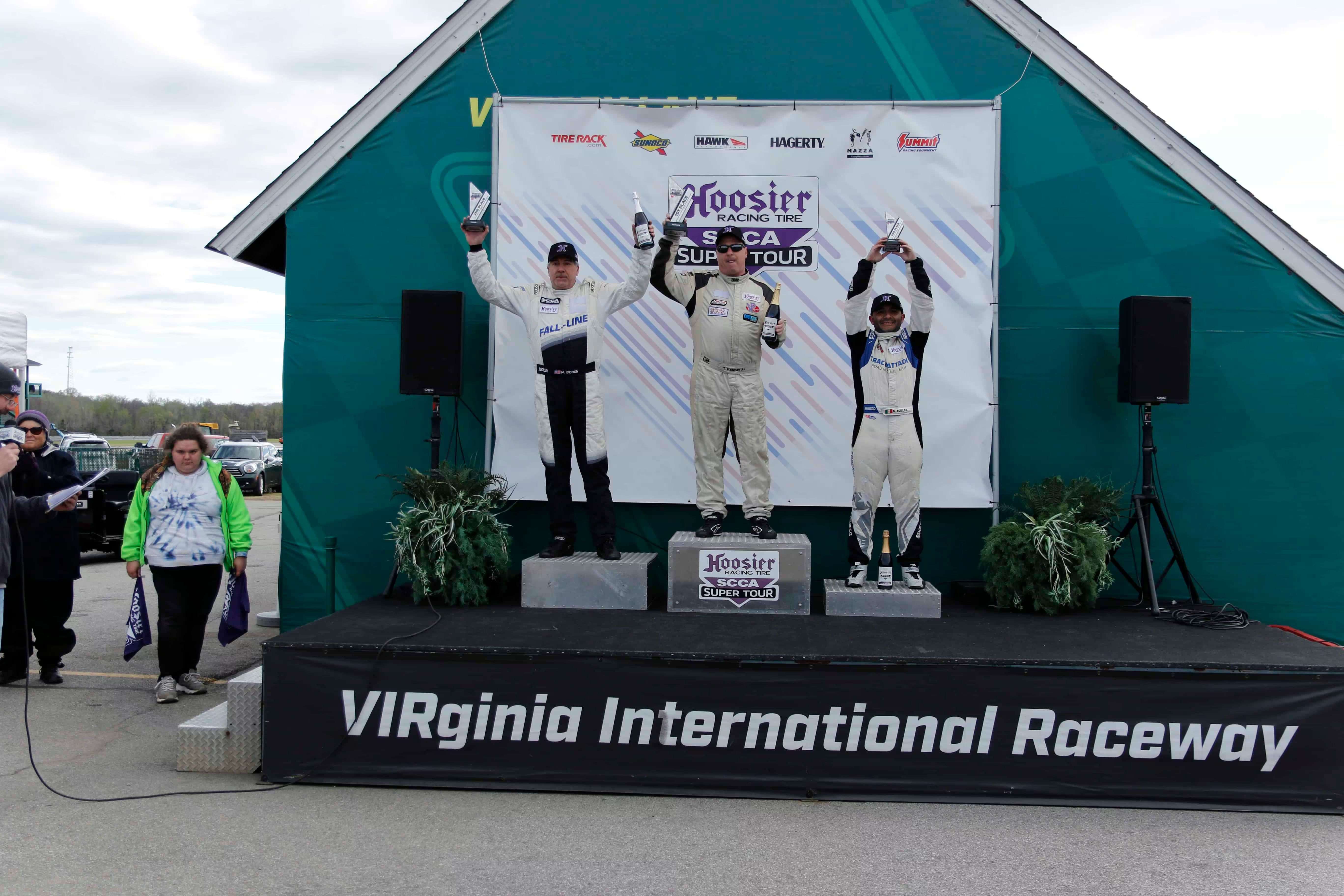
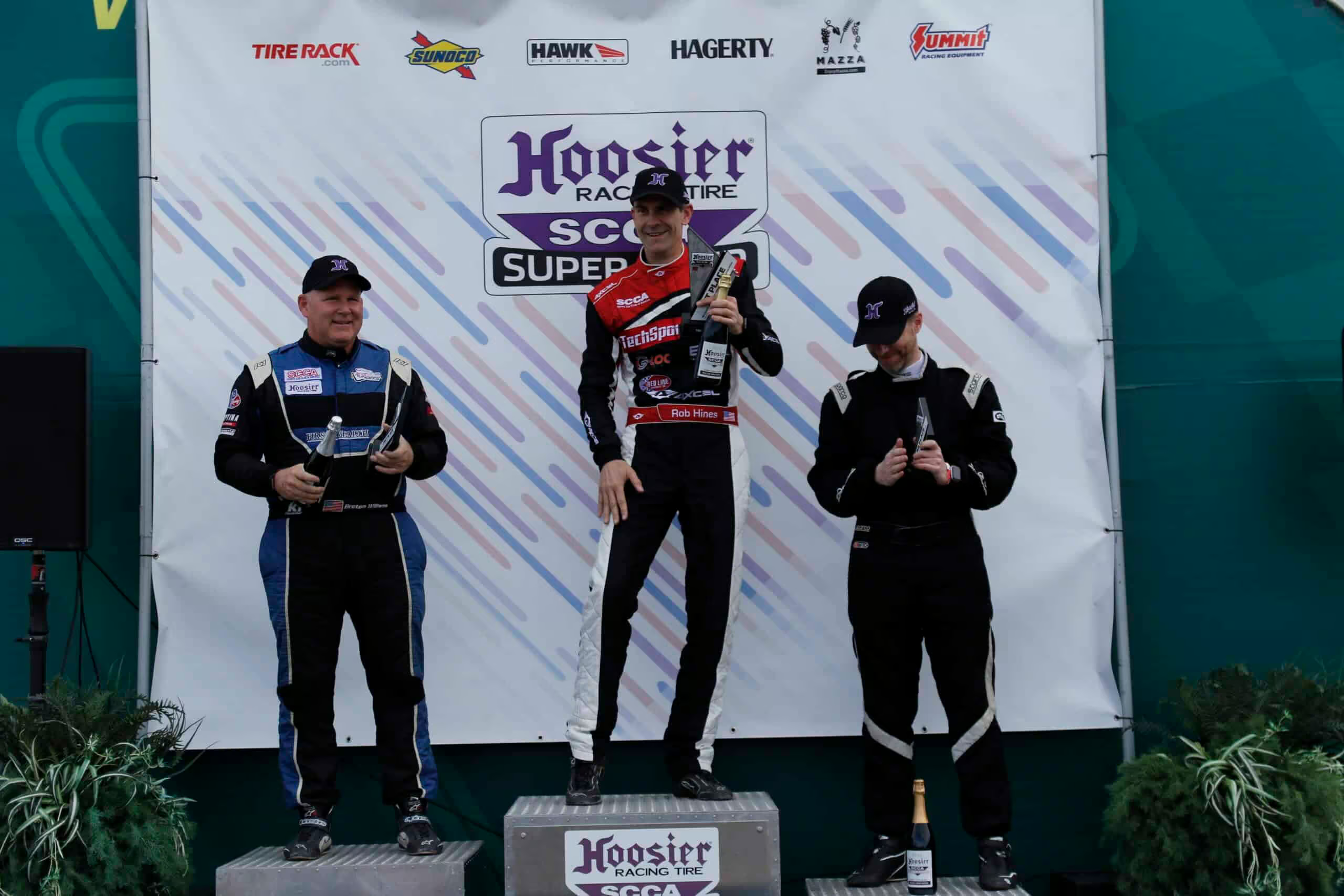
Full course yellow came and my gap had been erased. The following 10-12 minutes were some of the most nerve racking of my life – I was sitting duck on the restart so I’d have to pull some magic out again but luckily, the race ended under FCY and for the first time in my life, I was beyond grateful for that result. P3 in Touring 2 class at Virginia International Raceways and against a fleet of Fall Line Porsche’s and BMW’s – what a weekend!
What’s Next?

We’re a little late in publishing this report but after this we make our way back to the Pacific Northwest to start the regional racing season with races at Portland International Raceways, Pacific Raceways and Spokane County Raceway in May.

VIR was an amazing experience overall and great practice and data gathering for when we return in September for the 2022 SCCA Runoffs.

Posted on

Race Report 3: Micheline Raceway Road Atlanta SCCA Hoosier Super Tour

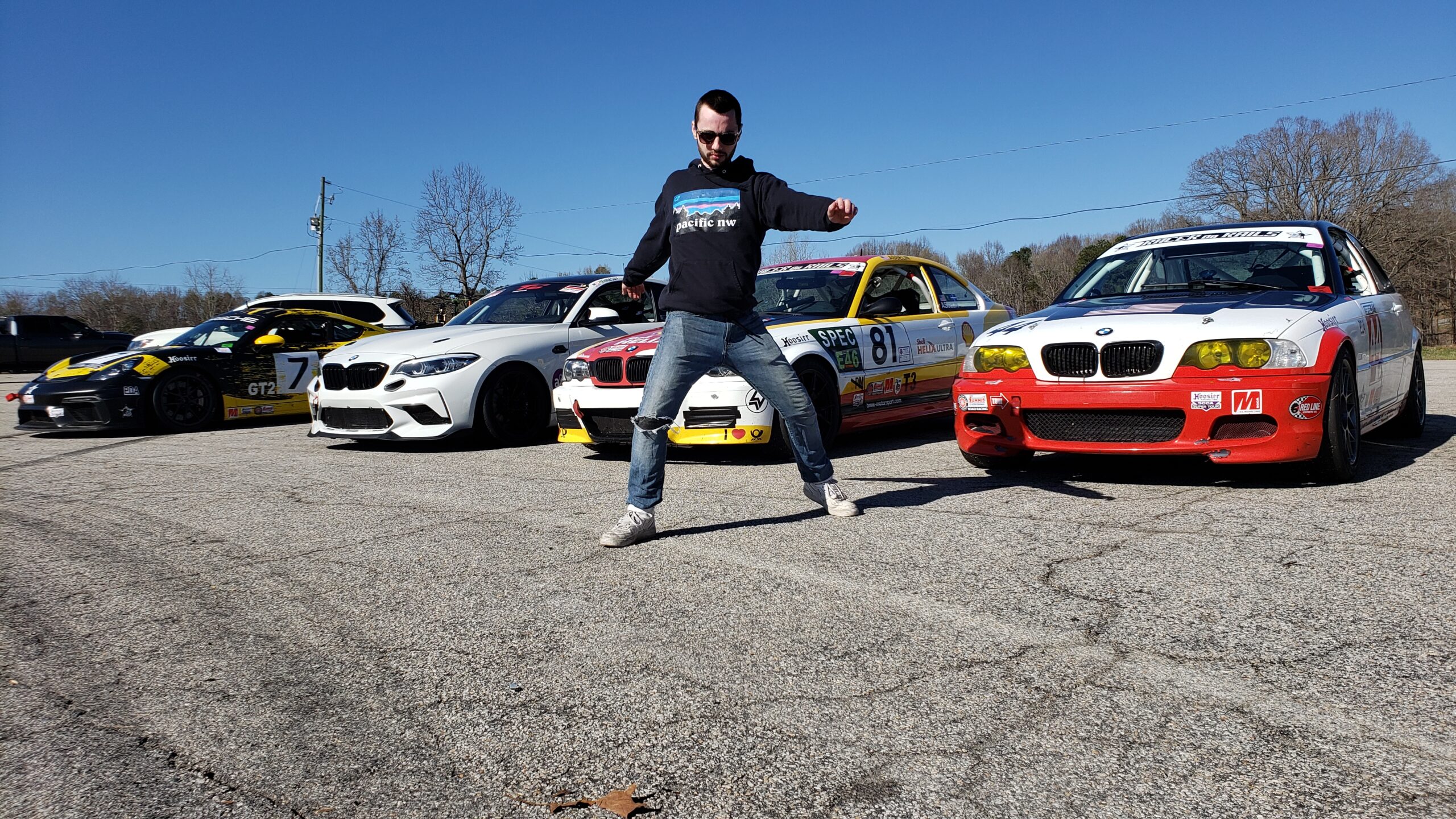
Tyler doing his Road Atlanta Happy Dance

The third stop in our 2022 race schedule and “Winter Sun Bird” trip took us to Michelin Raceway Road Atlanta! Extra emphasis on the quotes re the Sun Bird portion as that was the goal behind the trip – go chase the sun during the winter, warm up and hit some bucket list race tracks.

Want to know how the previous two stops went? Get caught up by checking out our Buttonwillow and Circuit of the Americas Race Reports.

Rolling into the Road Atlanta main paddock on load-in day. Lifetime achievement unlocked!

For the third race in a row, the northern cold decided to chase after us! We landed on Wednesday, got everything staged up and finally got a full day’s worth of testing/practice on Thursday which made a massive difference for each driver in terms of getting up to speed on the track and a baseline direction for a setup.

On Friday we had an AM practice and a first qualifying session but while we were all catching some Z’s overnight, a massive weather system came through the area, dumping rain everywhere and putting on a solid light show. By the time the system had moved through, a deep cold front had settled in and we awoke to 22F air temps and snow flurries throughout the day.

Yes – it was SNOWING throughout the day, coupled with a friendly breeze that included 30-40mph gusts of wind that dropped the windchill into the mid-teens. We still got out there and made progress but that might have been one of the toughest days for drivers and crew to be at the track – bone chilling air temps, super cold track, multiple laps needed to warm up tires and nice and slick grass waiting to give anyone who dares come off the track surface, an express trip into the comfy arms of the walls surrounding the Road Atlanta.

Thoughts on Road Atlanta as a circuit

This was the first time for all but one driver to drive Road Atlanta but that one driver only had a half lap under their belt from the previous experience because of black flag incidents of people going off spectacularly. This ended up being an indicator of things to come for our weekend as well.

Sunset shot of Turn 5 at Michelin Raceway Road Atlanta – the uphill exit elevation change is MUCH larger than it seems from in-car videos and even this picture.

For those that are from the Pacific Northwest, Road Atlanta has a similar feeling and characteristics to Pacific Raceways – it’s old school. Both tracks were built and opened up in the 1960’s/1970’s and are filled with mostly medium speed to high speed corners. All corners and segments are high commitment with an emphasis on getting into a rhythm and flowing speed into the corner.

The slowest corner at Road Atlanta is Turn 7 with a minimum speed in our cars of around 47-50mph and multiple corners with minimum speeds of 70 and 90mph at the apexes.

The back straight from Turn 7 to Turn 10a is about as long as front straight away of Pacific Raceways – pretty dang near terminal velocity for many cars.

Looking back counter-course to Turns 10a and 10b at the end of the back straight away where the goal is to brake as late as possible while still clipping the apex curbs hard and getting to full throttle as soon as possible past the 10a apex.

While each driver had at least 10 hours of simulator preparation and training before the weekend, everyone had at least a little shock when we finally got on track. Here are a few comments from the drivers after the first couple of sessions:

  • The elevation changes from entering and exiting the esses are real and much more dramatic than it seems from in-car video.
Looking back at the entry of the esses, counter-course. Picture is taken from the hillside on driver’s right and about level elevation to the entry of the esses.
  • Use as much of the exit curbing of Turn 5 is critical but if there’s gravel or the painted surfaces are wet, forget about it. The car is already barely holding on as it goes through bumps and any extra steering input or unanticipated wheel spin and the car can come around real quick.
  • The elevation drop for braking at T10a is real – it takes a few laps to gather the confidence to brake where you can in the simulator but that compression helps slow the car down.
  • The hill at Turn 11 and more importantly, the downhill run from it afterwards is STEEP! Like very, very steep. As you crest over the hill, there is nothing to see but the bridge and the sky – is a similar feeling to the bypass or the crow’s nest at Thunderhill but you stay full throttle flat the whole time and are in 5th gear shortly after the peak.
  • Staying flat at Turn 12 is ‘easy’ in the simulator but not so much in real life. Some drivers got near staying flat throughout the weekend but with it being the first time racing here, slick grass conditions and MANY cars that met their ends on the front straight (and ruined multiple sessions and races), we decided to optimize for completing the weekend and having all the cars in one piece.
Dave and Simon bombing through Start/Finish in their Spec E46’s in Touring 3.

A weekend of massive breakthroughs and results!

The goals for these race weekends have been simple: 1. Have fun and 2. Become better drivers.

We’re firm believers in that when we focus on the improvement process and having fun, the results will come on their own and that belief continues to pay dividends.

Spec E46’s in Touring 3 Class

Both Dave and Simon put in 10+ hours of simulator training before weekend so from the start, they knew where they were going but with the conditions being extremely cold on qualifying day 2 and race 1, the biggest challenge for both was trusting that the car could do what they’ve done in the simulator and seen some of the super talented drivers in the Southeast do on race weekends.

Simon took the approach of picking out one single corner and with the help of Ray Phillips, sending it harder than he had sent it before and more than he felt like the car could do but trusting in the guidance from Ray and that the car could handle it. The result? During Race 1, Simon sent it into Turn 5 faster than he had done in any session and was so committed that he stayed flat through the whole exit and even through an almost opposite lock correction AND that ended up being his best lap time of the race.

From then on, he built on that confidence to establish a new normal, made some moves and ended up with his first race win ever and at Road Atlanta in an SCCA Super Hoosier Tour race! WOW!!!

Simon driving through Start/Finish on the final lap of Race 1 to claim his first race win at Road Atlanta!

Dave had been chipping away at rebuilding his pace after the rollover at Buttonwillow to start the season. It might seem like a simple thing – you have a major incident, no major injuries – just jump right back in right? Well that’s exactly what Dave did but even then, it still takes some time to work through the mental blockers of simply sending it and trusting the car and track will hold.

On Sunday afternoon, the biggest breakthrough came with Seth Thomas on the radio coaching him through traffic and making moves. Unfortunately Dave’s battery was low and when we finally were released from grid, the car wouldn’t fire – so we had to push start his car which meant he’d start the race at the back of the entire field which isn’t great but that might have been the extra fuel for letting things go – what was there to lose?

With Seth’s help, Dave turned it up, made pass after pass, improved his personal best lap time by nearly 3 seconds and finished in P2 after Simon had contact during a FCY restart and did a precautionary drive through the hot pits to make sure the car was safe to continue racing.

Simon and Dave making up a Racer on Rails double podium on Sunday!

To top it all off, we found out after the weekend that P3 on the Saturday race was disqualified so Dave ended up with two podium finishes at Road Atlanta!

Porsche Cayman GT4 Clubsport in GT2 Class

Ann came into the weekend looking to build on the gains she made at Circuit of the Americas and did she ever! Similar to Dave and Simon, Ann had multiple mini moments of simply letting go, trusting the car and driving the pee brains out of her car.

Ann’s Porsche Cayman GT4 Clubsport exiting Turn 3, squatting and putting down the power! Chris Green | ChrisGreenPhoto.com

In each session she found more and more pace. Saturday’s Race 1 looked like it would be the big breakthrough but traffic hurt her start and a high horsepower Corvette got around her which ended up being nearly impossible to get around once it got in straight line. Further, the race had 3 lengthy full course yellows and in the end, there was 5-6 actual flying laps in the race.

For Race 2 on Sunday, the air had warmed up and the races had gone green flag for most racing laps and Ann turned it on. Per Ann, she let her car do her thing and switched from trying to force the car to do things and instead let her free. Her personal best lap time dropped by nearly 2 seconds from the prior day, moved up 4 positions into P9 overall, P5 in GT2 and she had the pace for a P3. At the rate Ann is developing, she’s going to need to start making room in her bags for souvenirs.

BMW M240iR running in Touring 2

This was the second race weekend with the M240iR but the first knowing ahead of time that this would be the car. I (Gama) put in several hours of work in the simulator before the weekend and had a good sense of how the car would handle. At the end of the test day, I got a 4-5 window of traffic free laps to establish a consistent pace and on the prior weekend’s race tires. The pace looked good and we knew there was a bit more on the table with fresh tires and maybe a draft here and there. The big question was the track conditions.

Friday AM we scrubbed in a new set of tires so that they were prime for Qualy 1 on Friday afternoon. The whole day we were watching the weather and knew showers were in the order. Apparently the locals or regulars knew something was up because a race broke out on the out-lap and we completed one flying lap. I ended up backing up to give me space for a lap and potential second one but as we were halfway through the second flying lap (and I was almost a second up on the first lap), black flag came out and back to the hotpits we went. We ended up being released and I went out but the track had too much rain on it and was considerably slower (braking for 10a to test the track limits was “interesting”).

Gama testing the limits of the exit curbs of Turn 12

The Touring 2 field was small and there was a split start between the Touring cars and the ST cars so the net impact was negligible but it was still disappointing to not be able to put together a proper flying lap.

On Saturday, we were the last race group and while the snow flurries had cleared, the cold clear winter air started cooling down and it was a brisk 30F by the race start. It was so cold that the M2CS in P3 of Touring 2 spun right as we exited pit lane and went head first into the wall. Luckily the driver and car were okay and able to make the race but a lap down.

The two Porsche’s in P1 and P2 were well prepared and optimized for Touring 2 class as we saw right away their ability to stretch legs in 4th gear and pull away. It was clear that at the very best we could hope to stick close enough to catch a bit of draft and capitalize on a mistake if it were to come up. The race was plagued with FCY’s and only a couple laps after a restart, a Honda Civic lost it on the exit of T12 and made contact with the walls, ending the race under a black flag all.

Gama and Ann patiently waiting to be let loose at pre-grid during the Thursday test day.

On Sunday we got warmer weather and thankfully, many more racing laps. Started P3 and held P3 at the start with little contention but once again the Porsche’s ran away and there wasn’t much pressure from behind so the focus was on putting down consistent and fast laps. A few laps in, a FCY that last only 3 laps.

On the restart, my goal was to stick with the Porsche’s through the first sector where we had a better shot and be on their heels for the long back straight but as I got a jump on the Cayman, I had to move to the left to avoid tagging his rear. In doing so, I left a lane open on the inside of which the BMW M2CS pounced on and while I quickly reacted and moved to cover the lane, he had already established overlap or close enough to it that I had to concede the space.

Restart 1 of the Sunday race with the BMW M2 CS getting a run and the inside line through Turn 1. Chris Green | ChrisGreenPhoto.com

We went side by side all the way up to Turn 3 but he had the inside and it’s near impossible to go 2-wide into the esses with any speed so I gave up the position.

The rest of the race was a similar story to COTA where I was able to stick with the M2CS, eating up most or all of the gaps in the corners but the M2 having just enough additional straight line speed to pull away.

There was a point with a couple laps to go where we were catching lapped traffic and I saw the opportunity to box him in on the exit of Turn 10a behind the lapped car and impact his ability to accelerate. The move worked but the M2 still had the low end torque to squeeze through the two cars and that was the end of the race – P4 and less than a second away from P3.

Gama on the bumper of the BMW M2CS in the #110 Racer on Rails 2015 BMW M240iR at the finish of Sunday’s Race 2.

The written description not enough? Watch the whole race!

YouTube player

All in all, a great weekend for the Racer on Rails Team as the cars ran well all weekend, drivers improved and we took home a collection of hardware!

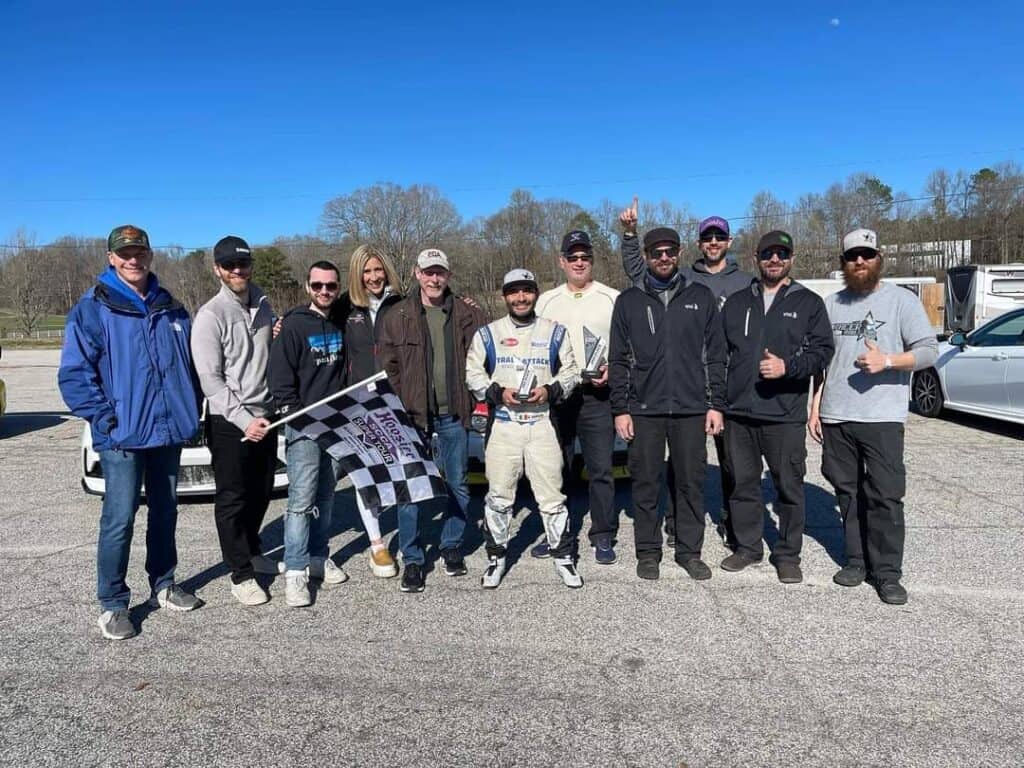
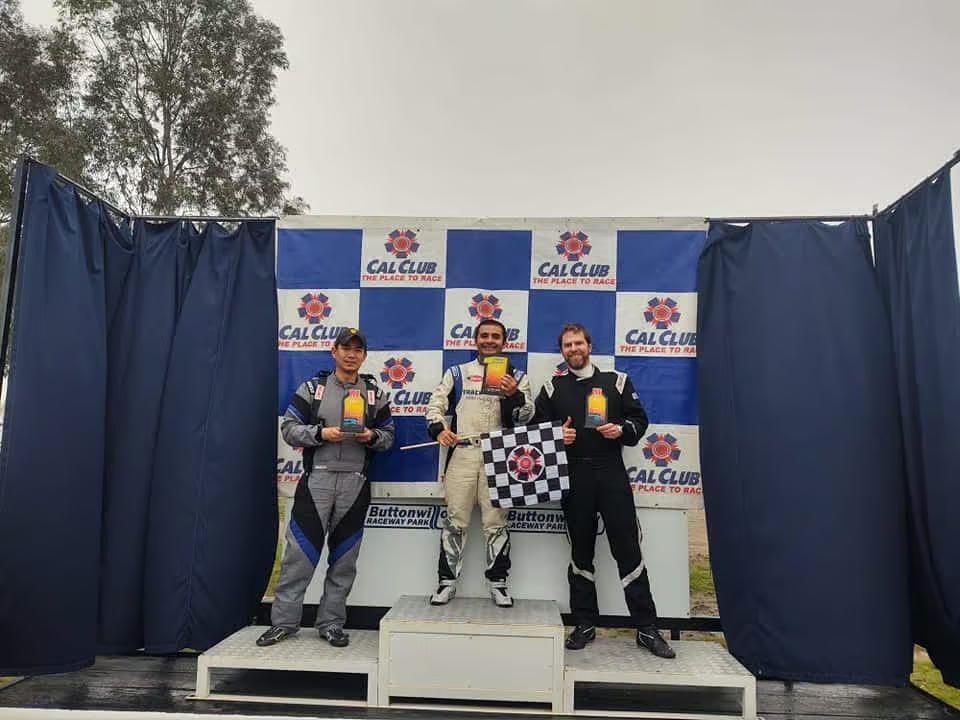
Racer on Rails team signing off from Road Atlanta! From left to right: Seth Thomas, Simon Asselin, Tyler Campbell, Ann Doherty, Ray Phillips, Gama Aguilar, Dave Orem, Bryce Allen, Memo Calderon, Jordan Allen, Reid Morris.

Our next stop takes us to Virginia International Raceways on April 7 – 10, 2022. Can’t wait!

Posted on

Race Report 1: Buttonwillow SCCA US Majors January 14 – 16 2022

Fully loaded team for SCCA weekend at Buttonwillow

2022 is going to be a busy and exciting race schedule for the Racer on Rails crew and the first stop was this past weekend at Buttonwillow Raceway Park.

Note, originally we were supposed to be at Sebring International Raceways for the SCCA Hoosier Super Tour but the beautiful white Christmas we had in the PNW overstayed its welcome and by the time we need to have the trucks on the road to the SE, all the passes out of WA were closed due to blizzard conditions and the alternate route going down the west coast and across the SW was riddled with freezing or snow conditions in New Mexico, Texas and even parts of Alabama.

So with about 10 days’ notice, we made the change to instead to go sunny southern California where last year, we attended this same race but it was held at Autoclub Motor Speedway in Fontana, CA.

The Team

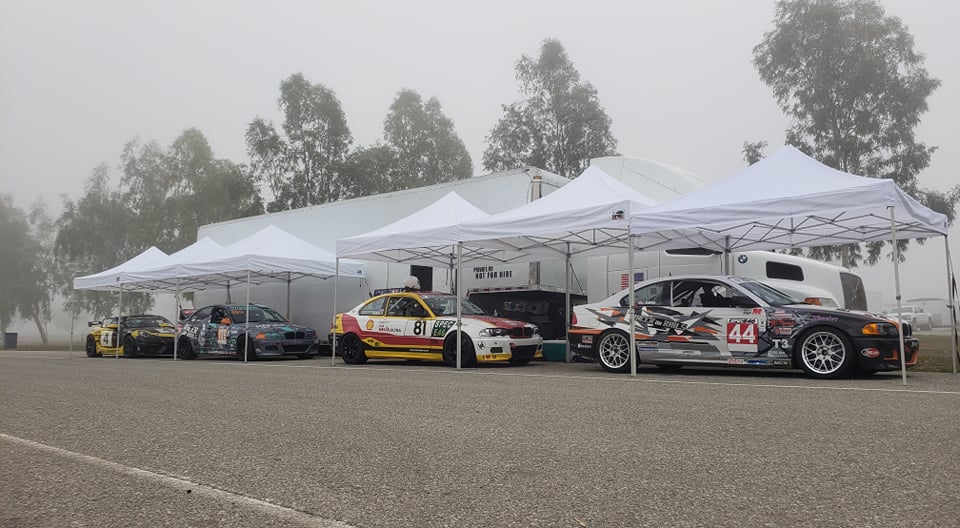
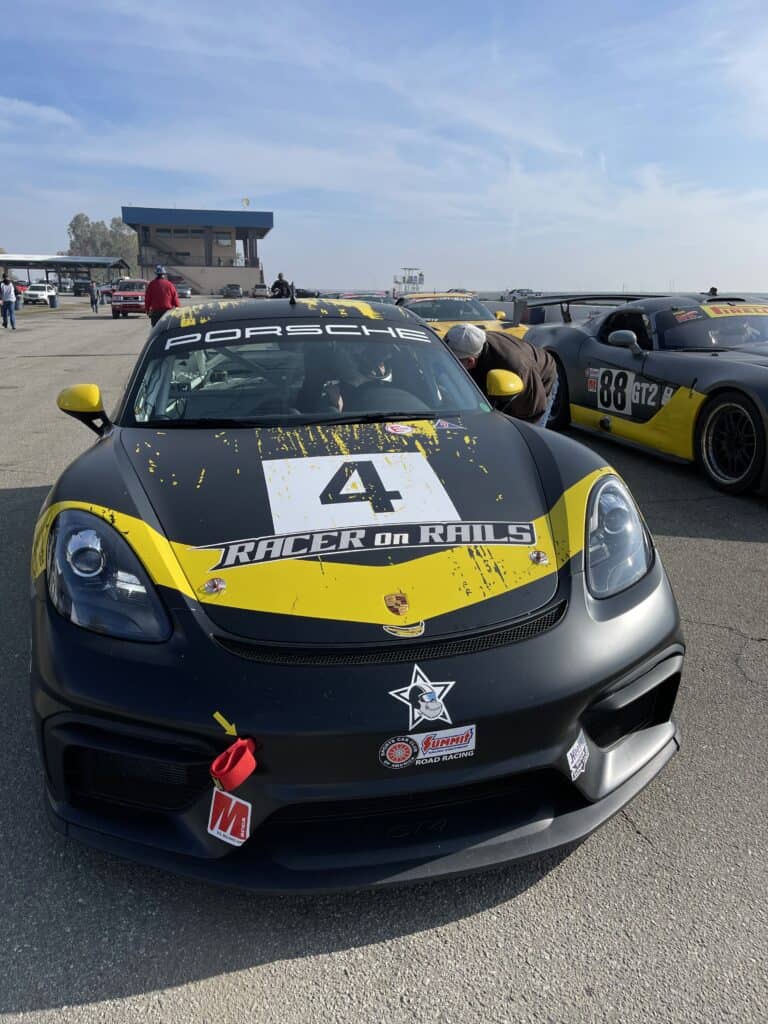
For the first race, we had three Spec E46’s running in Touring 3 (T3) trim and one Porsche Cayman GT4 Clubsport running in GT2 class.

Racer on Rails drivers - 3 Spec E46's and one Porsche Cayman GT4 Clubsport
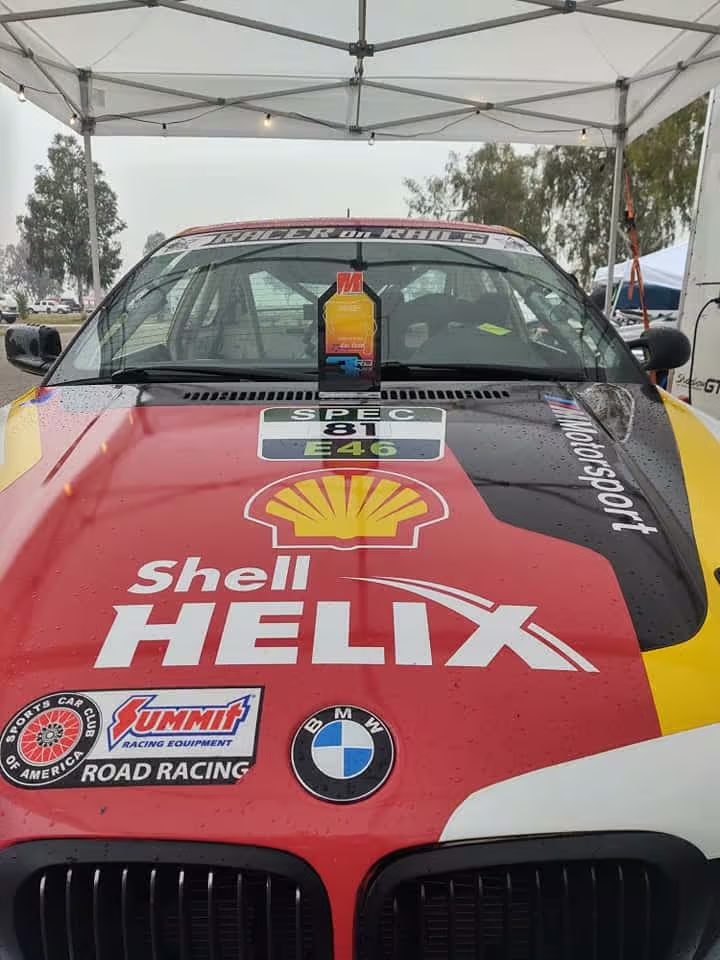
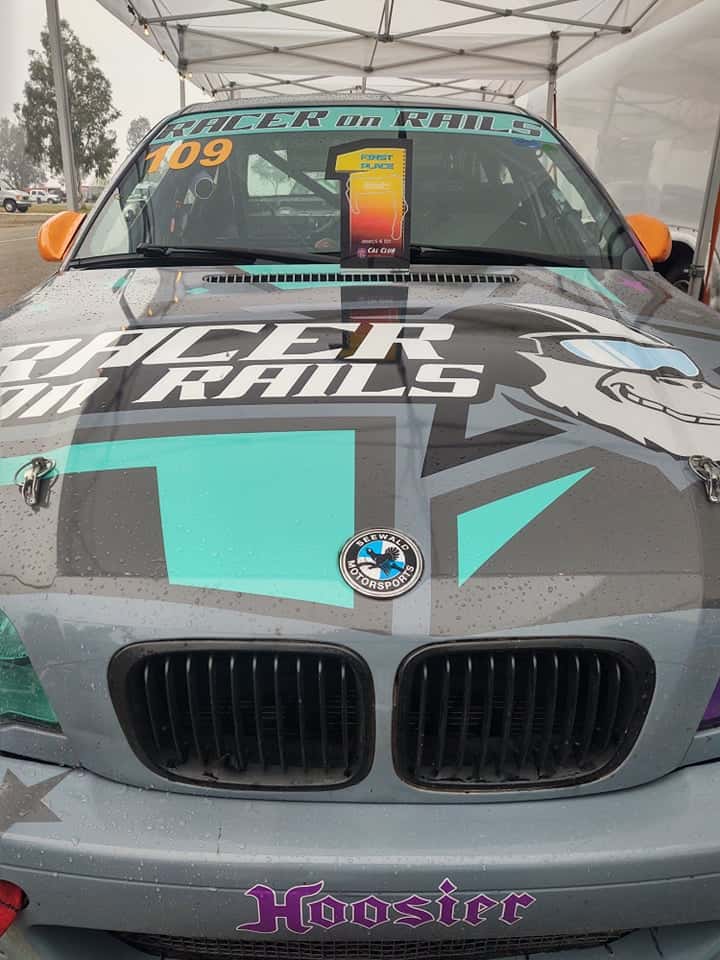
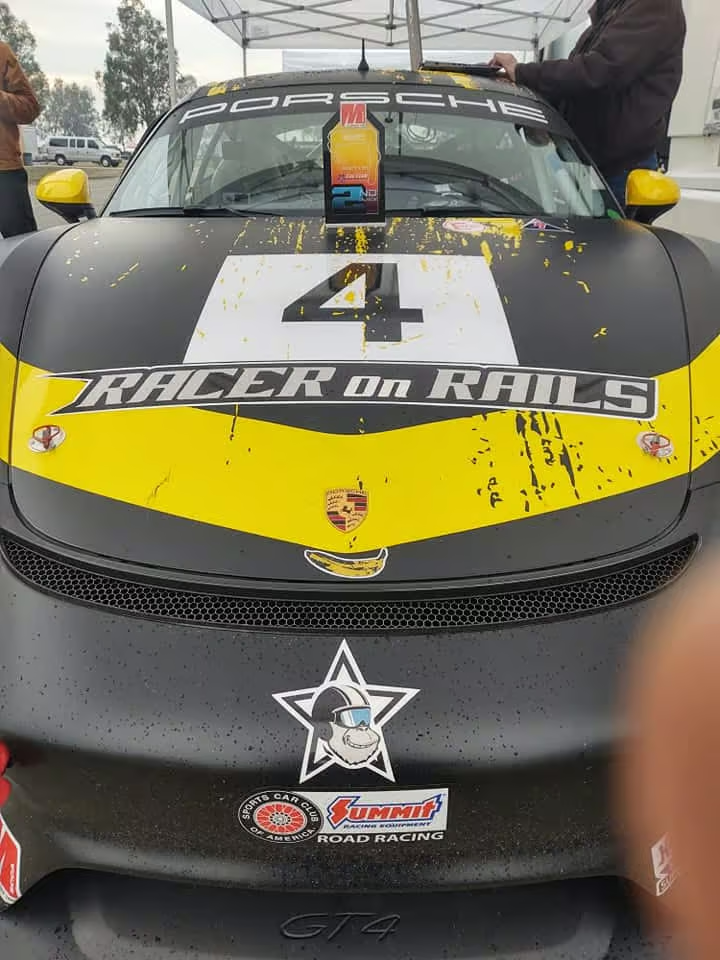
#44 Dave Orem, #81 Simon Asselin, #109 Gama Aguilar and #4 Ann Doherty

The normal crew of Jordan, Bryce and Gama were on hand but this was also the first official race weekend with our new Motorsports Director, Memo Calderon and our service advisor, Reid Morris.

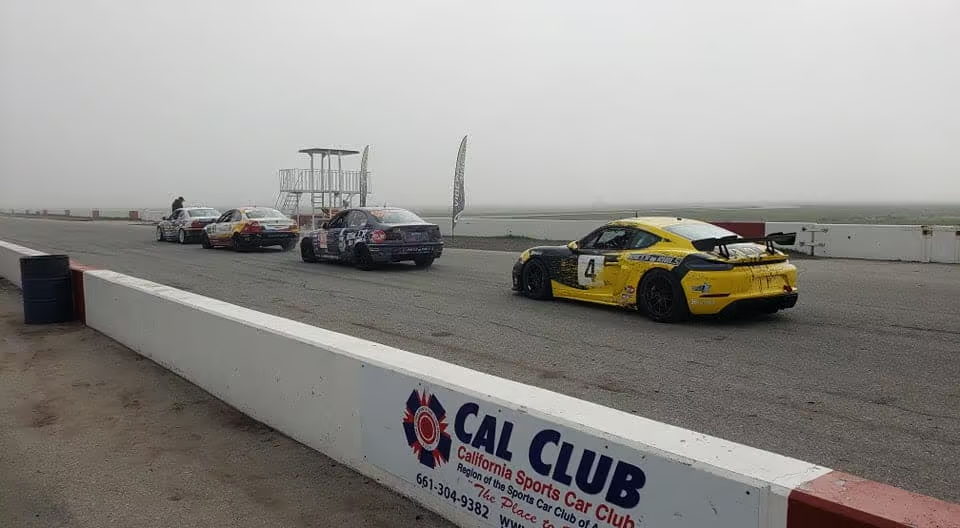
The Fog

Not going to mince words here, it was a tough weekend and mostly due to dense fog that rolled in each night and resulted in each morning’s scheduled run groups to be postponed due to low visibility conditions.  One of the locals at one of the on-site race shops with a retail space mentioned that it had been close to 27 years since they had seen such thick fog and turns out that the volcano eruption in Tonga might have contributed to the fog conditions.

In the end, each day we didn’t get started on-track until 11am – 12noon. On the Friday test day, the run groups ran per the schedule as the organizer simply picked up when we started and had the 3 run groups doing 20 minute sessions each hour, until 5pm.

Racer on Rails cars ready to go on-track but under a fog hold on the Friday test day

Thank You Safety Equipment!

There is never a shortage of reasons to not skimp on safety equipment choices, design and preventative maintenance as we never plan on having an issue where safety equipment is needed but we’re always glad when it’s there and it works.

We had two incidents on the test day:

  1. Failed front-right lower ball joint in the control arm (SE46): The #109 SE36 running in T3 trim got a near complete overhaul prior to the 2021 SCCA Runoffs at Indy, which included brand new lower control arms. Unfortunately it got taken out on lap 1 of the race which resulted in a front end impact with at least energy going through the suspension components but not a direct hit or contact. All in, the control arm and lower ball joint had 1-1.5 hours of run time prior to this weekend. On the very first session when the fog broke, lap 2, braking for Sunset corner (the last corner before s/f), the inner lower ball joint failed and the car went plowing through the corner and came to a stand still on the exit of the corner. On top of needing to make repairs to get the car back up and running, it also caused a black flag which ended running for everyone else.
  2. Rollover on the exit of the kink before Phil Hill: With the fog and being in mid-January, the track was not just green each morning from fog moisture but also stone cold. It was 38F on Friday morning and barely broke 50F once the fog cleared for the afternoon. This meant really tough conditions in terms of finding grip and in the 3rd session of the test day, the #44 took the same line as in previous laps with maybe a tiny bit more steering angle, hit the curb of the kink like normal but this time it upset the car a tad bit too much and the backend came around. The car slid off-track and when it hit the dirt, which with the moisture and temperatures was more like mud, the wheels hooked into the dirt and the car barrel rolled. We’ll have another post in the future to dissect and share how the cage and all the safety equipment faired.

Making Lemonade Out of Lemons

New track, very limited run time and low grip conditions – what do you do? Make the most of it and work on the learning process! Expectations for big results are low, so instead focus on developing and that’s exactly what each driver did, with the help of driver coaches Seth Thomas and Ray Phillips!

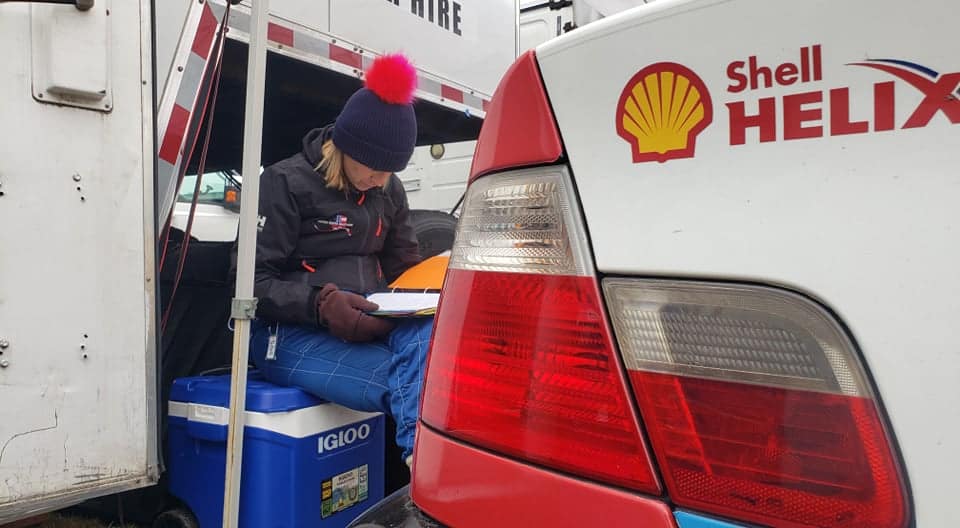
Porsche Cayman GT4 Clubsport driver, Ann Doherty, studying the track notes and areas of improvement.
Ann D studying her track notes and mentally preparing for the next time on-track.

Through the coaching from Seth and Ray, each driver made progress across the limited running and culminated in a podium position for each driver! Below are some areas that were focused on throughout the weekend:

  • Squaring off corners better in low grip/wet conditions and to setup exit of the following straights
  • Timing of transitions from brake to gas and vice versa
  • Establishing a connection or translation layer between what driving Buttonwillow in the simulator felt like relative to real life
  • Mentality to have when going into a race with changing conditions (both getting worse and getting better)
  • How to explore grip when conditions are improving
Ray Phillips doing a quick debrief after a session while in post-session tech.

Moving forward to COTA in February

So we came out of Buttonwillow with 3 of the 4 cars running, 4 trophies, 1 race win, 5+ second improvements in dry running lap times from Friday afternoon to Sunday afternoon, a new T3 track record for Buttonwillow CW14 configuration with a 1:55.376 and ready for the next round at Circuit of the Americas February 4 – 6, 2022.

  • Simon made gains across both races and had an epic battle with a T3 Porsche Boxer, having led a good part of Race 2
  • Ann made a massive step from Saturday to Sunday, dropping 8 seconds in one day and snagging two podium positions in GT2
  • Dave had limited running due to the incident but was fully healthy after being checked out by medics and will be back on track for COTA
  • Gama won race 1, broke the track record by multiple seconds and was leading race 2 (and in a battle with an STU car) but the coolant expansion tank failed, resulting in an overheating engine which forced him to retire the race but not before improving on the track record

With one new track for most of our drivers under our belt, we can adjust the preparation in the simulator and the development plans for the test day and each of the on-track race sessions.

Thanks to the team, Ann, Dave, Simon, Ray, Seth and everyone from the Cal Club who made this weekend possible and making the most out of a pretty tough first race of the year.

Stay tuned for more of our adventures in 2022!

Posted on

Track Walk: The Ridge Motorsports Park

Welcome to The Ridge!  The Ridge is the newest track in the Pacific Northwest that is generally available to the public (Vancouver Island Motorsports Park opened recently but is a private track).

Similar to the Portland International Raceways (with a Chicane) track walk, we’ll use the Track Attack #209 PRO3 race car, a relatively low powered “momentum” car, to illustrate how to get around the track.  The session data we are  using for this is available here on Track Attack – feel free to request it.

We’ve also broken the track down into 6 segments, each segment is defined right before the major major braking/slowing down zones.

Braking a track down into sections, makes it easier for people ‘consume’ it and prioritize where to get focus.

Before you read on, watch this complete lap from a dry race in September of 2017.  Read the article and the re-watch the video.

YouTube player

Segment 1: The Uphill

This segment starts at s/f and goes all the way up to the first major braking zone (not including braking for T2) entering the Carousel.  The first thing here is that this segment is a 76ft climb in elevation.  The equivalent of an 8 story building.  Yeah.  So every single loss of mph as you make your way up the hill, will be penalized with a multiplier as you go uphill – keeping the momentum going is a top priority.

Momentum is important – check!  Turn 1 – get ready for a trouser check.  Turn 1, in some cars, can be taken flat, without lifting.  This is similar to T1 at Spokane but the distance between T1 apex and turn-in for T2 is not as long, so in cars that are faster than a Spec Miata, experiment with caution.  Personally, the most I’ve ever been able to get away with is a ~4/10 braking effort – just a tad more than a brush of the brakes, go back to tad of maintenance throttle and then back on the brakes, about the same amount for the downshift to 4th gear and then going back up the hill.

As you get the car past the apex of T2, it’s really important to get close to the curb of T3 but don’t take too big of a bite off of it, as it will send your car back to track-left, which is not the ideal line for the remainder of the complex.  Once you get to full-throttle, you absolutely cannot lift.  After T3, stay track-right, to setup a wide arch into T5 and then release the car to driver’s-right.  This whole time between T3 through T5, when you’re pinned to full throttle, you will feel the back end wanting to step out.  That’s ok – simple counter steering corrections (small ones), while staying flat, will take care of them.

After this, it’s smooth sailing to The Carousel – find a straight line to follow, that will set you up on track-right, for T6 (The Carousel), which is a long, flat left-hand sweeper.

Segment 2: The Carousel

This segment is just one corner.  Why?  It’s long and hard to get right.  This corner can be taken many ways but here is one that has proven well in racing and qualifying conditions.  Set yourself up track right but not necessarily right on the edge of the track.  Brake a little later than feels comfortable with a solid 6-7/10 effort and after the initial bite, start trailing off and turning into the corner, like if you were trying to double-apex the corner.

The backend may start to come out as you turn-in so get ready to catch the backend with some maintenance throttle.  Try to keep the car tucked in tight to the inside edge of the corner and if it washes out a little mid-corner, that’s ok and that just means you can back on throttle even more aggressively for corner-exit, because you don’t need as much steering input.

Don’t mind what looks like me driving off the course, that’s just a natural occurrence of margin of error of GPS signals and the stitching together of satellite images for maps.

About 35-40% through the corner, you want to be on-throttle and free here on out, you don’t lift.  Start your ascension to full-throttle and as you feel the backend come out, pause the throttle application and give it a steering correction but DO NOT LIFT!  For me, there is a single, tall tree out in the horizon of this corner and the instant I see that tree, I go full-throttle, no matter where I am.

From here, let the car release all the way to track-right, the very edge if needed.  A lot of people don’t get out here because they want to setup far left for the next segment and that’s a trade-off you can decide to make.

Segment 3: The Thumb

This is one of the trickiest parts of the track.  It combines a big compression and low-speed traction event at 8a and 8b but also a super hard, decreasing radius turn at T11 (aka The Thumb).

As you come out of The Carousel, it’s ok to stay driver’s left and then draw a straight line as you go downhill at 8a.  Stay on throttle until right before you feel the ground fall away, lift and synchronize the compression event with your braking.  When you do this right, you don’t need to brake as hard because the compression event gives more bite to front-end.  Downshift (if you have to), wait for the car to rotate a tick and then get back to maintenance throttle.  You want to get on full throttle here as quickly as you can but the sliding plus the acceleration means that it will be really easy to get on-power over-steer, so be aggressive but careful with your throttle application.  After you get to full throttle, it’s a full throttle ride all the way up the hill, which is another 36 foot climb (almost a 4 story building).  Every mph you unnecessarily drop or every split second of having to lift from throttle, will make you pay dearly at the top of the hill.

Where you brake for the thumb will be determined by the car and how fast you’re going.  In a PRO3 car, the engine is spinning at 6,500RPM and ~103mph and we wait to come off throttle just before the curbing on the left and are well into the brakes at those curbs.

You don’t need to track all the way to driver’s right to setup for the thumb, about mid-track is fine in most cars.  Next, is one of the hardest corners to get right – find the late apex and make it your job to hit that curbing with your LF tires.  Getting on those tires, in 3rd gear (in many cars, 2nd gear in Spec Miatas), means you can get on the throttle hard and have plenty of room on the exit of the corner.  Be ready for the car to wash out and go on the exit curbing and maybe even drop a rear tire on the exit of the corner but that’s ok – DO NOT LIFT!

Segment 4 & 5: The Ridge Straight

I’ve broken this segment into two segments because it contains two corners, which are taken very differently and I wanted to leave the last segment being the last corners before the front straight away.

First is the very deceiving Turn 12 right-hander.  It’s deceiving because you can actually car a good amount of speed here and the corner opens up quite a bit on the exit, which means there is a plenty of room for corrections if you maybe got on-throttle too early.

The trick here is to get to the apex and be on full-throttle at the apex.  There is a bump or bulge right at the apex, which will feel like it kicks your car away as you hit but get to full-throttle, stay in it and ride it out.  You’ll almost for sure have the car sliding a little just past exit – a simple steering correction will get it back under you and you can keep going.  Then start making your way over to track-right, to setup for the Ridge complex.

As you approach the corner, you’ll see that the ground starts falling away in the middle of the braking zone – YIKES!!!  This means you have to have your heavy braking done before the ground starts falling away.  Looking at the data, the drop-off is a 7 foot decline in elevation over a 150 foot distance.  150 feet when you’re travelling at 75mph, goes by pretty fast, so this is a split second decision.

As you approach turn-in for the corner, stay on the brakes ever so slightly, so that when you turn in full, the noise is loaded up and will help rotate the car.  It’s ok to bite off a little bit of the curb but don’t get over zealous.

Give it some throttle as soon as you get past the corner, turn for the right hander and stick to track-right as much as you can.  If at all possible, stay off the brakes but you might need to brush the brakes to help the front-end bite.

Segment 6: The Front Straight

The lap is almost over!  You’re barreling down the Ridge Complex, a nearly 80 foot drop and you need to decide what to do for the last corner before the main straight away.  There are couple school’s of thought:

  1. Geometrical fastest line: Swing out wide, carrying more speed because you have a wider arc, a single late apex at Turn 15 and then pin the throttle down until start/finish.
  2. Shortest distance line: Stay a little closer to the inside, use the banking in the corner, travel less distance and hit the apex of Turn 15 at the same spot.

This really depends on what kind of car you have and the track conditions on the outside of Turn 15.  In race weekends, that wide line isn’t used much, so there ends up being a lot of marbles out there.   Great for the rain but not for the dry.

At least in a PRO3 car, we have more grip than power, so as is with many of the other corners, the less distance we have to travel, the better so Option 2 is what you’ll see in the data.

Now, I can totally see an argument even for a PRO3 car to setup for a single flying lap to go super wide, throwing away the lap time for that current lap and setting up for a higher top speed going into Turn 1 or even setting up a competitor for a pass at the end of the straight.

You’ll see in the data that I’m on throttle about mid-corner and full-throttle at about 3/4 of the way of the corner.  After that, it’s about finding the straightest line possible through Turn 16 and the least amount of steering input all the way down the front straight away.

Conclusion: The Ridge is awesome.  Go drive it!

The Ridge is really a fun track.  Newer and well take cared of pavement and plenty of run off room in most corners.  You can get in trouble and it makes you pay but most of the time, it’s dirt and rocks on your car to go along with a bruised ego.

The facilities are constantly improving and with a motocross and a kart track that is a mini version of the big track, there’s few places that can compare.  The downside is that it is located about 30 minutes northwest of Olympia, WA and Shelton has limited hotels but coming out in an RV or camping, is an absolute blast.  Best of all, there are no drag races so every evening, you can do a complete track walk.

Check out the The Ridge Motorsports Park website and Motorsportsreg.com for upcoming events you can sign up for, to drive the Ridge!


Posted on

The Impact of Drafting: Extra Data and Gluten Free

Shake and Bake!

We’ve long heard and talked about drafting and bump drafting – how they can make or break a qualifying time, depending on what kind of car you are in and what section of the track you can catch a tow. The fundamentals behind a draft are simple:

  1. The goal is to get from one point on the track to another point, as quickly as possible.
  2. You can do that by slowing down less through a corner (carrying a higher minimum speed). This could be through having ‘better’ tires for better grip, adding downforce for better grip, braking less and/or getting back on throttle quickly.
  3. You can also focus on accelerating faster between the two points by adding more power, reducing the friction on the accelerating drive-train (lightened flywheel, gears or driveshaft as examples), increasing grip on the tires that are driving acceleration OR reduce the forces that are barriers to accelerate through – such as the air itself (e.g. reducing down-force).

We’re going to assume that you are not in formula 1 or some other series that has active aero such as a Drag Reduction System (DRS), so the only option you have to reduce down-force is to have another car punch a hole in the air, for you.

I don’t get it – the air, is the air.  Why does this matter?

For the uninitiated, let’s take a minute and explain why this is important.  You know those videos of reporters that go outside and report on a big wind storm or hurricane?  They go in front of the camera and try to walk against the wind and they get pushed back or can barely move forward.  This is analogous to what your car is experiencing.  The reporter is trying to walk against a 100mph+ wind and your car is trying to drive through the air, at 100mph+.

YouTube player

When the reporter steps inside from the hurricane, it is much easier for them to walk, jog, run and even sprint!  The reporter not only moves faster but they use up less energy.

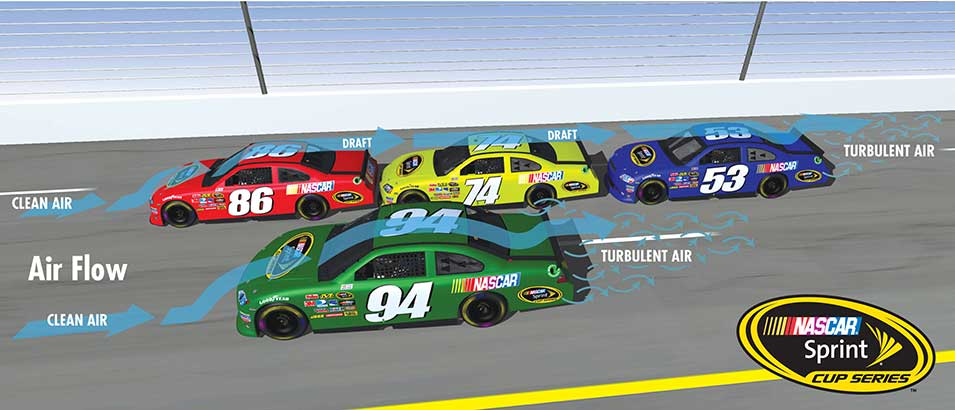
When a car is in front of your car on a race track, they are somewhat eliminating that “100mph” wind resistance, letting you step into a bubble of protection and as you get closer, that effect gets even stronger, making it almost feel like you and your car get sucked.

You gotta shake it, before you bake it!

Now we all know from the documentary/autobiography “Talladega Nights, The Ballad of Ricky Bobby“, that you can even use this to create a sling-shot effect.  Where the trailing car tucks into draft of a car, gets sucked in and at the very, very last-minute pops out and can motor past the car that gave them the “tow”.

YouTube player

Ok but for reals now – here is the real thing.

This is used quite often in wheel to wheel racing conditions and sometimes, can be used in qualifying or time attack situations, when the stars align.

What does a draft look from the data perspective?

Below is a session from Spokane County raceways in June 2017.  Spokane is an old school track with a very long straight away, 1,300+ yards long and in most cases, hitting near the rev limiter ( at the top of 5th gear in a PRO3 car.  At least in a PRO3 car, after exiting Turn 8, it’s full throttle past three turns, before braking for Turn 2.

On this day, it was a dry and windy Sunday, with qualifying in the AM and temperatures in the low 70’s.  I went out knowing that I had to setup to get my fastest laps in lap 3 or 4 – when tires would be in their optimal performance window. If I couldn’t get my target lap time then, I’d have to back off, let the tires cool off and have another go at it.

After getting things warmed up, I put together two flying laps where I felt like I gave it nearly my best and being one of only two people to get into the 1:37’s over the weekend lap time from Saturday.

Check out the gradual increase in lap time delta – usually evidence that one lap has a draft and the other doesn’t.

So, what do we have?

  1. The purple lap is where I caught an ok but not great draft.
  2. Towards the end of the green lap is when I started catching the cars in front.
  3. Air Fuel Ratio seems to be about the same on both laps
  4. At the start of the lap, there was zero difference in lap time.
    1. As I start making it farther down the straight-away, the speed difference starts growing, reaching a peak of almost 2mph
    2. By the end of the straight-away and right before the brakes were hit, the green lap was already .188 seconds slower.

I felt like I had left some on the able and backed off to let things cool down for a couple laps and setup two more laps, trying to catch a draft on those as well.

This time, with some video evidence!  What happened:

  1. The red lap ended up being faster than the green lap but that was with not much of a draft.
  2. The red lap, I got a solid draft on the back straight away, where we’ll focus the analysis.
    1. Like the previous lap, the difference in straight-away speed was between 1-1.5mph, through the whole back straight.
    2. You can see the delta graph, where the green lap was shaping up to be just as good as the previous lap.
    3. Engine RPM was also consistently 50-100 RPM higher for the green lap, indicating that the it was able to rev more freely with the lower resistance from the air.

Unfortunately, the car that gave me the tow on the back straight, also didn’t give me the easiest of paths to go through turn 4 (which is totally within their right) and that essentially killed the lap.

Conclusion: The draft is strong!

There is a ton of variables that go into determining the impact of the draft, such as the weather conditions, the track and the type of car.  In this case, with a PRO3 car, which is more of an aerodynamic brick, having something else punch a hole in the air made a difference of .15-.2 seconds on each of the straight-aways.

I think that if I could have lined up a draft on both straights, it could have reduced each of those fast laps by another .2 seconds at least.  How big of a deal is this?  I lost pole position on both days but less than .1 seconds.  In fact, in this video below – we took the video of the fastest segments from that session, stitched them together and this would have been a 1:37.437 – almost .5 seconds faster than the fastest lap and .2 seconds faster than my fastest rolling lap.

YouTube player

This has generally been what I’ve experienced at most tracks on the calendar because each as a decent straight-away.

Catching a draft in qualifying versus in a race is the same but it is very difficult to control this in a race.  My suggestion is if you can, work with another driver and help each other out.  Take turns having one car have a go at it and then switch, allowing that switch lap to when you let the tires cool down.

Working together is very common in karting and in light-weight and powered classes, like Spec Miata.  In the future, we’ll do a write up like this with a spec Miata and looking at the quantified impact of bump drafting!


Posted on

Pad Knock-Back for Drivers: What is it, how to anticipate it and how to best clean up your undies!

It was August 2015 at Portland International Raceways – the second time at Portland of the year, running the chicane configuration.  It was the second year with my BMW E30 PRO3 race car and this year, was sporting a fresh engine, baller status OS Giken rear-slip LSD rear differential and a fresh exterior paint job.

On the second session of the day, I am feeling good and starting to get into a groove.  Come off turn 7 into the back-straight away, hammer down… 4th gear… 5th gear… BRAKES, hit the FIA curbing on the left, downshift, back to throttle… BRAKES!!!  I said BRAKES!!!  OH $H!%!?!?!?!  No BRAKES!!! Grass… sliding… spinning… no, please no wall!!!  Pump the brake pedal again… oh, brakes!  They work!  I’m alive!  The car isn’t destroyed!  But WTF just happened?!?!?

This is the infamous pad knock-back zone at PIR

What is it?

Pad Knock-back is when for various reasons, the brake pad loses contact with the caliper piston that presses the brake pad against the brake rotor/disc.  The contact is lost for one of two reasons (below) and the result is that the driver goes to apply the brakes and the pedal falls to the floor, with little to no brake pressure on that first application.  The brake system is moving the piston but the piston lost contact with the pad, so it’s moving air and slowing down nothing.

As soon as the the driver releases the brake pedal and pumps the pedal again, the pressure usually returns and the brakes work again.  The problem is that sometimes drivers don’t realize what has happened and don’t hit the brake pedal again, that second time around at all or in time.  And bad stuff can happen when you need to hit the brakes but they aren’t there.

How and why #1: Worn out caliper components

Caliper components live a hard life, especially on a race car.  They are called on to not only slow the car down aggressively with degressive braking but also help the car rotate with long durations of trail-braking.

All of this hot and cold and hot and cold and hot and cold… action makes seals burn up, brake fluid overheat or even boil if it contains water or air bubbles and the metal components deform and lose their snug fit amongst the other brake components.  According to this great and much more technical deep dive analysis from NASA Speed News, even a slightly deformed rotor can cause the pads to separate from the pistons and the pistons to fall deep into their bores.

The fix? Rebuild or replace your calipers at least.  For us, this quickly fixed the problem.  On that first experience, we had back in August of 2015, we bled the brakes and went out for a 1 Hour mini endurance race – the brakes felt better but were still getting knock back every lap before braking for turn 12.

Before Sunday AM qualifying, we sourced a new set of calipers from Advance Auto Fabrication (who also did all of the off season upgrade work), got them installed and presto!

Putting the finishing touches on new calipers for the weekend at Portland International Raceways

Pad nock-back was gone! Over the subsequent years and travels to various tracks we realized that PIR uniquely had the most FIA curbing of all the tracks on our schedule. If a set of calipers had more than 3 race weekends on them prior to heading to PIR, we’d slap on a new/rebuilt set of calipers.

Here is a video of a competitive race at PIR – note the use of the FIA curbing towards the end of each lap (turns 10 – 12):

YouTube player

How and why #2: Driving hard on the curbing/gators

You might have fresh brake components but if you’re driving hard, eating up apexes and letting the car track out, odds are you are driving on the curbing, if the track has them.

Tracks have a variety of curbing designs but the end result is almost always the same, they cause vibrations that can and do shake up brake components – pad knock-back! This is so common that if you were to watch any pro-level sports car racing on TV or online, you’ll see brake lights light up as the cars are roaring through straight-aways. The drivers aren’t brake checking or trying to confuse a trailing opponent. They are lightly tapping the brakes to get the pistons seated back next to the pads and ultimately, make sure they have a brake pedal.

This is part of what happened to us in Portland in 2015 and just about every other time we went back. But this past June of 2017, we were at Spokane County Raceways, who does have apex and exit curbing.

Here is a pretty fast qualifying lap at Spokane County Raceways.  Note the elevation chart – it shows that it is pretty flat but if you listen closely, each of one those changes in elevation is going over a seam in the road.  Each of those bumps plus the curbing result in harsh vibrations applied to the braking system.

YouTube player

We’ve been there twice before this, all have been 3-4 days of being on track and not a single issue.

Well this year, we were competing for pole and wins – nearly breaking the track record for a PRO3 car on Sunday AM qualifying. Sunday afternoon, final race of the season – qualified 2nd and was ready to make a great start and pull away.

Coming around the final turn and… GREEN FLAG! Full throttle in 3rd gear… I got a decent start and I have the inside for turn 2. Exit of turn 2 and in the lead, barely positioning myself for the outside of turn 4. Full throttle… 3rd gear… 4th gear… 5th gear… wait for it, wait for it, wat for it… BRAKES! NO BRAKES!?!? WTF is going on? I don’t want to die!

Note – Spokane is an old school track. High speed, built on a budget and in the high desert of Eastern Washington. The pavement nowadays is good. Not great, not horrible – but good. Stay on track with maybe a dropped wheel here and there, and everything is good. Go on an excursion, there will be pain. There are big rocks and boulders watching the action, waiting for a visit.

I was able to pump the brake pedal and luckily – this was the first lap of the race. We were still in traffic with faster cars so we weren’t going at full speed for that corner, which is usually a 4th gear corner.

We’ll update this post later on with the video from the race but what does pad knock-back look from a data standpoint?

An not annotated version of the pad knock-back session

Here is what is really happening on the lap

A few positions were the only thing lost in this occasion but it hammered home the lesson, always pump the brake pedal in between braking zones.

What should you do? Pump that brake!

The more I’ve been racing and steadily improving, getting closer to the front of the pack, stuff just keeps breaking or getting tweaked.  It’s a natural consequence of just pushing the equipment to the limit.  The braking system is not just the most powerful system on road racing and street cars, but it is the thing (and how it’s used) that separates the good from the great and the great from the greatest.
If you watch any form of pro-level racing, even NASCAR, you’ll see the drivers pumping that brake with their left foot because pad knock-back and other potential failures are a fact of life.  It happens all the time, so from now on, assume it will happen every time you go on track, every lap and on just about every braking zone.  PUMP THAT BRAKE!

YouTube player

Posted on

No training or exercise for 2 months = Not great performance

Surgery…

On July 7th, 2017 I went in for what was supposed to be a minor surgery.  I was diagnosed with a non-cancerous cyst, which is quite common except for it was located right on top of my tailbone (not on the tailbone but right next to it).  This meant that I was regularly sitting on it, especially when I would slouch.

It had originally come up 3 or 4 years ago after 6 months of karting all the time.  I thought it was just a result of all that trauma to my tailbone.  It was an annoyance but never very painful until this past June, during the second Portland International Raceways weekend.  After the first day of testing, I woke up sore all over my body and my cyst was really tender.
YouTube player

I ignored all the pain and discomfort and made it through the weekend but went to the doctor the following week.  It turned out that my cyst had gotten so swollen, it was infected and those body aches, were my body fighting the infection.

Long story short, I needed surgery to have it completely removed.  It is a straight-forward procedure and usually within a week, someone can go back to normal activities, but because of the location, the recovery was at least 2 weeks and possibly up to 2 months before feeling ‘normal’ again.  Well for me, it ended up being the 2 months.

+ Bad Decisions

For 2 months, I wasn’t able to workout, do much simulator training and was on various combinations of pain medications.  2 weeks after the surgery, I decided to compete in a race at Pacific Raceways, where I got pole and finished P2 but I needed help getting into the car, out of the car and was icing my incision all day long.

A week after the Pacific race, I was reading to my kiddo and his friend, but I was also laid up, trying to take the load off my incision.

The next couple of weeks were really tough.  I don’t know how differently or faster things would have healed if I had not raced but I think it slowed things down.  A checkup with the surgeon a couple weeks later showed everything looked good but she was surprised to hear that I was in so much pain.

I headed her advice and just tried to rest up, sprinkling in some yoga and days of more walking.  1.5 months after the surgery was the August 19-20 Dash for Kids race, back at Portland International Raceways.

Our setup at Portland International Raceways

= Sub-Par Performance

During the race weekend, we decided to hit the ‘reset’ button on our suspension setup, seeking coaching and advice from the 2016 PRO3 Champion, Olivier Henrichot (a future post on that experience).  We made dramatic changes to the setup, where in the end, I was able to hit the same lap times as before, with less of an effort and more confidence in feedback from the car.

All good things except, I was beat.  On Friday, we had 4 total on-track session and I awoke on Saturday AM, full-body sore.  Saturday, was a typical day of practice, qualifying and the 1-hour race, of which this time, I was splitting seat time with Olivier. We won the race but I again felt beat, after a 30 minute stint.

The next morning, we only had qualifying in the AM and the main race in the afternoon; not a ton of physical workout time.  I qualified P2 and was ready to go for the win during the race.  But about 5 laps into the race, my lower back started hurting.  Halfway through the race, it was throbbing and I was actively thinking about it during the front and back straightaways.  Not a good.

Qualified P2 for the main PRO3 race on Sunday

Long story short, I did not perform anywhere near my full or regular potential and one big reason that I was just not physically fit enough.  Here is the race video from the weekend, of which again, isn’t all bad and 1 year ago, I would have been thrilled to finish P3.

YouTube player

But How Did I Do So Well at Pacific?

I’m not entirely sure but I think that while I was in pain during the race, I still had more of my strength, stamina and was also on lots of Ibuprofen, which could have masked some of the pain.  At Portland, I think my strength, stamina and reflexes were not at the same level.  This variables resulted in a heavier mental toll and it started impacting me even worse.

At the end of the day, it’s not like I really sucked.  I still finished on the podium, against a couple of strong drivers that I’ve battled with all year.  Jeff McAffer, who overtook me for P2, had a really strong race, with the fastest lap of the race.  Olivier and I also won the 1-Hour endurance race!

The main point is that to perform at or near peak levels, you need to be mentally and physically at your peak.  I know there are drivers that aren’t into physical fitness and they are solid, if not incredible drivers.  They have other strengths, such as functional fitness and years and years of experience.  I don’t have more than a few years of racing experience, so I rely on physical fitness as a way to compete.

Moving Forward

For me personally, I am much healthier now and turning my training back up.  It will be some time before I’m as physically as fit as before but that is the goal.  And if in the future, I am injured, I am going to bite the bullet and rest/heal properly before trying to get back into the cockpit.


Posted on

Walk This Way! Track Walks:

Looking out the pit-lane exit at Circut of the Americas

What: Track walks, why you like them, even if you don’t know it yet

If I knew then, What I know now:  I would have studied harder on these when I was younger.  I would be a better driver and team member overall, now as a result.

Walking the track before an event is a very important part of your race or track weekend.  It spreads across all forms of motorsports, and any amount of wheels used.  Getting your feet on the same ground you will be driving your car on will give you valuable perspective regarding placement or the vehicle, surface conditions, line options and so on.  It is a great way to get the track layout in your head prior to getting into or on your machine.  There are a couple of key things to pay attention to and try to do while on a track walk.  I will try to outline some of them to help you get the most out of your next track walk.  I will start with some of my experience from the first events I went to as a young lad in high school with my buddies.

A group of friends of mine in school were also into cars.  We would set up a couple of days a year where we would all meet up the day before an auto cross event, hang out at one of the guys cabins, and then take all of our cars to the event the next day.  Auto cross was a good introduction into motorsports as a driver for me.  The first day I went to an event was with the Porsche Club (PNW Region).  I had a little old VW Jetta that had some sticky tires on it.  We got to the event, stood through the drivers meeting, then everyone set out and walked around the course that had been set up.  A course walk at an auto cross is essential.  The track will never be the same from event to event, so getting a feel for the layout is an important first step.  Auto cross does not allow for a lot of set up and testing time, so getting the most out of your runs is key.   I learned how valuable it was.  I was able to pip my friend on our first time out, and he was driving a 911.  There were more events after that, and as I grew to understand the track walk it made perfect sense to me.

Flash forward 15 years and now we are doing track walks every week we go to the track.  I went out and rode a new Motocross track a few weeks back – I did not get a chance to walk it, but I took 4-5 laps at just above a walking pace just to feel the place out – 2 laps later I was ripping around just fine.   We will often times end our first night at the track with a track walk.  It is a great way to wind down after a work day, and also a good way to walk some miles if you did not get a chance to before!  My first race back after a couple of years of just crew work, I ended up racing at the Ridge in Shelton.  It is a place I had driven before, but it had been a while.  We took the time the night before the race to walk the track, twice actually.  It was great.  I had one of the instructors at the track walking with us and they provided great insight to where to place the car due to seems in the blacktop in braking zones.  Entry and exit lines were discussed.  Gear selection (which can depend a lot on your equipment) was discussed.  I felt a lot better after walking the track to just jump in the next day and go.  Everything was fresh in my mind again.

Elevated view of the turn 17-18 complex at Circut of the Americas

Gama asked me to do a track walk with him this weekend at Pacific Raceways in Kent.  We have a race this weekend in the Pro3 car and he will be the only driver for the team this weekend as Manu’s car had a mechanical issue we found during a post-race inspection (more on that later).  I was quick to agree, as I have had many track days there, and 2 school days at that track, but had never actually walked a full lap in all of my years.  I had been to points of the track, but not all of the way around on foot.  We will be walking the track tonight and I am going to make notes, and take pictures to share our experience with the walk!

We try to track walk every weekend.  it is good exercise, knowledge, and you will have a great feel for the layout the first time you are behind the wheel at speed.  Be prepared for a walk, and be prepared for weather as well!  Some tracks are large, and weather can be different from one side to the other.  One of the other things that will help you a lot with our track walk, is walking with someone with lots of knowledge of that track for insight.  Most racers are instructors also, so their points of view are sound usually!  Just walking the track can gain you a lot, but having someone there to compare notes and tips with is very beneficial.   Having someone that drives a similar vehicle is even better!

Posted on

When to Ask and Asking the Right Questions at the Track

Discussing things between sessions during a race weekend – People will often come ask us about what to do, or what is going on – Almost always it is appreciated!

What: The nitty gritty of asking questions when at the race track

If I knew then, what I know now:  I would spend a lot more time reading and less time relying on info from others


What do I do about…

Asking people questions or for advice at the track is a tricky subject to discuss.  Things like prep, common sense and skill all come into play.  What do I do about?  That is a question that gets asked at the track more than anything else.  What do I about [fill in the blank]….?

Asking questions at the track can be easy at first, and then more difficult as time goes on.  People are often willing to help out those that are new, or are obviously a fish out of water.  That tune changes over time.  People in the racing community are expected to hold themselves to a higher standard.  You are out there racing.  It is a serious thing, and can have serious consequences.

You should well and know what you are doing out there!  The ones that find trouble asking questions are those that do not make good notes for themselves, or that simply do not listen to the advice they are given.  It can get you a long way, or it can very much get you nowhere.

Drives will often discuss the race with each other, compare notes, and talk out any issues or incidents that may have occurred.  Often advice is asked for and provided

Don’t go fishing for what you want to hear

Getting help at the track can be tricky in itself.  Knowing when and how to ask any questions is almost more important than what you are asking.  A conversation I had last week with one of the other guys locally that runs some race car support on race weekends ended up with us comparing stories of things that people have said and done to us when we are at the track.

More often than not, the gripes we had were from people repeating the same questions, and expecting different answers, as well as asking the “pros” for advice on something, then asking all of the other “pros” until one of them says what you want to hear.

There are three types of people at the race track:

  1. The ones that are there to win
  2. The ones that are there for fun
  3. The ones that are there to try to prove something.

Types 1 and 2 are easy to work with

The guys and gals that want to win will often have well thought out questions about stuff in advance.  They are into improving, not bull shitting.  The ones out there to have fun are also easy.  They don’t expect much out of the weekend, and if they have a question, will generally be a softball question.

Type 3 on the other hand…

It is the ones that are out to prove something, wither to themselves, or someone else, that are the issue.  They must like to or somehow almost always end up ruining it for the rest of us.

In the shop I work at, we have internal conversations regarding this issue as well.  Often times people want to come with questions and problems, and rarely offer up a solution.  In our shop, if someone has a question, we work hard to train and teach them to use all of the resources at hand before going to someone else regarding the question.  The race track should be considered the same.

If you are about to go ask someone a question here are a few things to consider before you go.

Picking the right time to ask people for stuff is important.

Step 1: Have some background info about what you are asking.

If you are going to ask about tire pressures, be sure to know what you are currently running pre and post session.  Otherwise there is not a reference point to compare.

Feel has a lot to do with the tuning of a car and each driver will often have a different idea of what feels good.  We deal with this in our enduro car – getting the set up that everyone can work well with.  If you are going to ask about brakes, know what you would want to change about the braking experience (force, feel, pedal modulation…)  Having a plan once you have the answer, is crucial.

Step 2: Don’t go shopping for answers!

The second step is to not ask the same question to everyone in the paddock.  If you are that un-sure of what is going on or how something is or should be.  Then you are in over your head, and you need to take a step back to re-evaluate.

If you have an idea of what you are looking for as far as an answer, and nobody’s reply lines up with what you expect.  Going around to ALL of the people in the paddock until you hear the answer you are looking for is incorrect, and the root of that is that you, yourself are expecting an incorrect situation to be proper, and if people don’t seem to think that is the case, then people will try to prove them wrong, often failing to do so.

This does not necessarily mean that crowd-sourcing solutions will always result in the proper answer but if after asking a few people, who are more knowledgeable and experienced than you and it is not what you’re expecting, it is probably time to re-visit those expectations.

Step 3: Take and actually implement the answers you gathered.

If you are asking everyone up and down the paddock about all of the different things about racing, the cars or machines you race, schedule, timing and all of that.  You are doing it wrong.  We are all adults and should be treated as such when we do events like this.  Just think about how ridiculous you would feel if you showed up to try out for the Seahawks and you brought with you some basketball shoes, a baseball mitt, and your I-pod in its fancy arm band holder.  You are not making that team.

Racing is similar.  If you are showing up and asking questions right out of the truck.  Your best bet would be to get back in the truck, head back home, and think about what you have done, what you want to do, and how better to be prepared for it.  This is not to say that you need to know everything before heading out and trying racing, but this is a more complicated activity than just a pickup basketball game.  It’s important to do some homework and find people who you can shadow and ‘learn the ropes’.

Not the best time to ask this guy about tire pressures he might recommend for your car.

Step 4: Respect people’s time and professionalism

I see a lot at the track, the weekend warriors going up to the bigger outfits and teams, and plain out bugging them about stuff.  This is the biggest no-no I see at the track.  If you need something from one of the big teams, you had better be willing to pay for it.  The guys under the big tents, pay big dollars to have support when at the track.  Going to the people that support racers that are paying to get free advice, is a bit of a slippery slope.  It can cause high tensions since some people are paying to get the same info that you are seeking for free.  The owner of the outfit may or may not be willing to help, but if you come and bring something to the table, then it is great start!

Conclusion: In the end, it’s pretty simple – take what you know, what you can and be sure to have reasonable questions, at reasonable times for people at the track.

If you don’t, you will find it ever increasingly difficult to find solid advice and answers.  One of the main things we learned to love about team driver Gama, is that he will often have very prepared sets of questions dealing with specific items.  We had a conversation last week about new wheels.  He asked if he should get lighter weight wheels to try out.

We talked about the idea (mostly because we all liked it) and discussed the pros-cons of light wheels.  The main issue being that often weight and strength will go hand in hand.  Gama then spent the time to research each wheel option for size, and spacer needs.  We ended up going with a new set of wheels to try.  Each one will be saving 4 pounds per corner but potentially not be as strong of a wheel.

He has asked me questions like this for years, and each time, has proven than he knows what he is asking about, is willing to accept the answer, even if it is not what he was expecting, and will take appropriate action when needed.  He is the type that wants to win!

Light eight, but not as strong. What is weight worth?!

Knowing little is not bad, but being a pain in the ass to everyone and not paying attention to people when you ask for advice is.  Depending on why type of person you are, asking questions and getting info at the track should not be a big deal.  Most participants are eager and enthusiastic, and will be willing helpers.  Asking the big name guys will get you a long way with the correct approach.  Remember that you should be having fun!  Having people be grumpy or mad at you is not fun, don’t be that guy or gal!


Posted on

Post Session/Day Checks to Prevent a Wreck!

Gama pulling data from the morning qualifying session.  We took a quick look at it before the race, but he will use the data and video after the day is over to study to find more speed!

What:  Things you should do after a session and a day/event to help you get faster, keep your car running well and safe!

If I knew then, what I know now:  I would have learned how to review and teach data early on in my driving and racing career.  No other aspect can make such a drastic change in speed of the car and driver.


Post track or race weekend activities are or at least, should be part of the process. There is are many things to think and consider after you are done with your event. The same trains of though will transfer to whatever you are using as a vehicle. There are both personal and mechanical things you want to pay close attention to after your even. As I have gotten older, and been around the race track more I have learned that there is a full circle process for every event.

Post-Session starts well before the session – get in the right mindset.  A learning mindset.

Start with your pre-event inspection, do the event, then debrief and do a post-day inspect. It is great time to learn about yourself and your equipment. A track day should be considered a learning day.

Even if you are not with an instructor, and have done many days before, you should always be learning and absorbing. I have come to some of the best revelations in the hours and days after an event that have helped me be better at driving, as well as managing cars and equipment in the pits and paddock when I am crewing for the weekend.

Track days cost money so you should want to maximize your value and smiles per mile. I will go through some of the things to consider post event, as well as some things I have learned, even recently.

Your New Post-Event Checklist:

  1. Thank the organizer and those who volunteered their time to make the day happen!
  2. Inspect and load up your stuff. This is an important step! It seems like it is busy work, and you will be tired. But being clean and organized when packing up will pay off on the other side, I promise.
  3. Wipe your car down and clean it up before loading up on a trailer or driving home.  I’ve been doing this lately with our PRO3 cars because it does a few things:
  1. It gets the tires and bugs off before they have a chance to harden up.
  2. You are close to the surface of the car, and can see if there was contact with another car, the ground, flying debris… its racing, expect something weird to come up.
  3. You also get a good chance to get it back into the trailer and if you rub against it later it does not soil you with dirt (brake dust mostly).
  4. You can take a look at all of your wheels and tires and make notes if you have cords showing, need to swap a tire side to side, or have an issue with one or more of the wheels. A wheel can crack pretty easy if it is not a forged wheel.

A couple Subaru BRZ’s on a rack after a day of students sliding around the gravel. Each day, every car is inspected from head to toe, looking for broken parts and doing maintenance as needed.

  1. Check your video and data and make sure you have everything downloaded and set up to review later. Data review is a major tool for driver education and video is a big part of that as well. Depending on what you are doing, how far along you are and what type of vehicle you are using, data and video may or may not be an option.

We went karting the other day after the Pro3 race ended, and I have been watching video from that. We were not taking it serious, but we are all skilled, and have been around racing for a long time. We were going pretty hard, and I was able to learn some things reviewing video just the video.

That being said. I went and rode a dirt bike in the wild the other day for the first time, and I had no video or date to review. I used memory. There were many lessons of that day, and I have had to recall them one at a time. I went from riding in the yard, to doing multiple laps on the full GP/enduro course with a few hours of riding. Thinking about what did and did not work for me. Tips from those I was with (which was the biggest help for me that day) and memory of the events unfolding yield a vivid memory of what you can focus on for your next event. One of the things I try to practice any time we go use rental karts is to work with traffic, both quicker and slower than myself.

I have had video from the last dozen or so times I have done, and it has helped a ton. I can manage traffic much better now without loosing much speed. Having data and knowing how to read and interpret that information will be the single biggest teacher for driving a car. Gama has been 1 second quicker at both tracks we have raced at this year from last year – and his car is the same. He has been spending lots of time reviewing data, video and training.

Gama has a lap from last year compared to a lap from his last weekend at Pacific Raceways.  The car is mostly the same, showcasing what can be done outside of changes to the car to help you better yourself.  This compares a 1:37.761 from this year to a 1:38.215 from July 2016.

  1. Review and inspect your equipment/tools. You will want to know what is what, before you unload the car for the next event. As I mentioned before, I like to get the car cleaned and then loaded before we even get back to the shop. Once we get everything back to the shop it is time to go over your notes from post session issues, as well as from clean up and loading of gear.
  2. Clean wheels and tires of tire poopies. Tire shops really appreciate not having to deal with clumps of tire when trying to balance a wheel. You can carefully check wheel and tires for issues at that time.
  3. Check your other equipment and spares situation. You may not have broken something, but someone else may have and you may have loaned something you had. Keep track so you can replace it even if it was a give away item from your spares. Making good notes on all of this stuff will save lots of time when you need to order brakes, tires, fuel and the like for your next event.
  4. Making sure the trailer is prepped for the next event; spare tires and parts, tools, tents will make load in much easier for the next event. Just this past week we found that the batter tray in Manu’s Pro3 car had been ripped out by an impact from the car being off track during the last race out. It ended up stalling the car for this past race, but we did not send him out with a 80-lb cannon ball in the trunk of the car rolling around. So win there. We are going to correct the issue, and take the chance to freshen up some of the 10 year of add-on wiring that has collected in the car. This is why we check stuff, better to be safe and sound, than risk ANY thing or anyone out at the track. Remember step one! Most of the people keeping your safe are donating their time. Don’t endanger them!
  5. Check yourself. How did you feel at the end of the day. Were you tired? Did you have a headache on the way home? What did you eat for lunch? Taking care of yourself starts at knowing how you feel after your event. It sounds silly, but just stop and think about how you feel after your event. Even as your are driving home. What did you recall. If you cannot recall much at that time, then something is up. If you have a headache on the way home. It was not the fumes. You are dehydrated. If you are starving, your meals of the day, and days prior were not properly set up. Be very honest with yourself in this regard.

You won’t always be perfect but having this checklist will help, even for the experienced and pros.

Non of use Racers on Rails are pros, and we all make errors. The idea here is to find and share as many ways, in as many aspects as we can to help minimize yours. Just this year alone, I have been working hard and am in the best shape of my life. I have been mindful of food and drink, sleep and physical effort.

Our first race weekend was the 6 hour enduro. It was cold. and wet. We had a hell of a time with the weather during the day. We went into the race a little but “whatever” and it showed. The whole day I never drank any water and barely ate. We had our first stop which was all but a calamity, and I about lost my mind on our crew for being so sloppy. We weren’t that sloppy. I was just hangry. The next day I was trashed. I had a bad headache from being dehydrated. I was a mess. I have been racing, and endurance racing for 12 years. I know better. So I re-counted the day. What happened? What did I do?

It was a cold and nasty day at the first race of the season. Ill prepared, we paid the price during the race and the next day.

I started the day with wet feet at 07:30. Never drank so much as a bottle of water all day. Did not eat much – there was no concessions at the track due to low turn out and weather. It was just so cold and gross. We, me specifically. Never even thought about it till it was much too late. Lesson learned. You can also determine if you are driving yourself tired or not as well. Driving or being on a bike can be taxing on your mind. It will happen and you wont even realize it. We have found that most of our mistakes on test and track days happen in the later half of the day. Brain capacity and function starts to slow down, like it or not. Again. We are not pros (and even the pros struggle with this stuff too)!

A long day at the track in the sun where everything is shiny and cool can really tucker you out if you are not prepared for it!

Be sure to add post event check list stuff to your weekend round up. It is important stuff. You can get the jump on cleaning and repair needs. Replacement parts have maximum amount of time to be procured. If you are busted, you know ahead of time rather than after you unload at the next event and waste your time there! It is always about the complete package in a performance and race environment. Being complete in your process is part of that package. It is a little bit of time and effort now, or a lot later. Take what you see, learn from it. We all make errors. They are learning experiences. It is big boy and girl rules out there. Make sure you arm yourself with the best equipment, and mind to make good choices. People count on you to do so. Take care, take time, and always remember to have fun!